PgDog alternatives
5 products compared · Updated November 23, 2026
The short answer
The strongest alternatives to PgDog are Supabase, PgBouncer and Pgpool-II. Supabase suits early-stage product teams that want a managed Postgres backend with auth, storage and APIs built in. PgBouncer suits teams running a single PostgreSQL primary that need a small, proven connection pooler and nothing more. Pgpool-II suits teams with read replicas who want self-hosted pooling and automatic failover without sharding.
Your shortlist, at a glance
Read the comparisons ↓- PPgBouncerNot publishedTeams running a single PostgreSQL primary that need a small, proven connection pooler and nothing more
- PPgpool-IINot publishedTeams running a single PostgreSQL primary with read replicas who want self-hosted pooling and automatic failover.
 GitHub ProjectsFrom $0 / user / monthEngineering teams that already host code on GitHub and want their tasks tracked alongside pull requests
 SupabaseFrom $25/moEarly-stage product teams that want a managed Postgres backend with auth, storage and APIs already built in
 Amazon BusinessNot publishedSmall and mid-sized businesses and enterprises that need centralized approval and spend reporting for everyday supplies
About PgDog and its alternatives
PgDog is an open-source connection pooler, load balancer and sharding proxy for PostgreSQL. According to its site, it can share a few Postgres connections among a very large number of clients, route reads to replicas, detect failovers, and shard a database without application changes, while keeping cross-shard transactions atomic.
When comparing alternatives, weigh what each product actually covers. Some tools handle only connection pooling, others add replica routing or failover, and only a few address horizontal sharding. Check pricing structure, regional availability, integrations with your existing stack, support options and contract terms, since many of these products do not publish pricing on their sites.
Explore the alternatives
- PNot published
1.PgBouncer
Best for: Teams running a single PostgreSQL primary that need a small, proven connection pooler and nothing more
- Pricing
- Not published
- Category
- Other
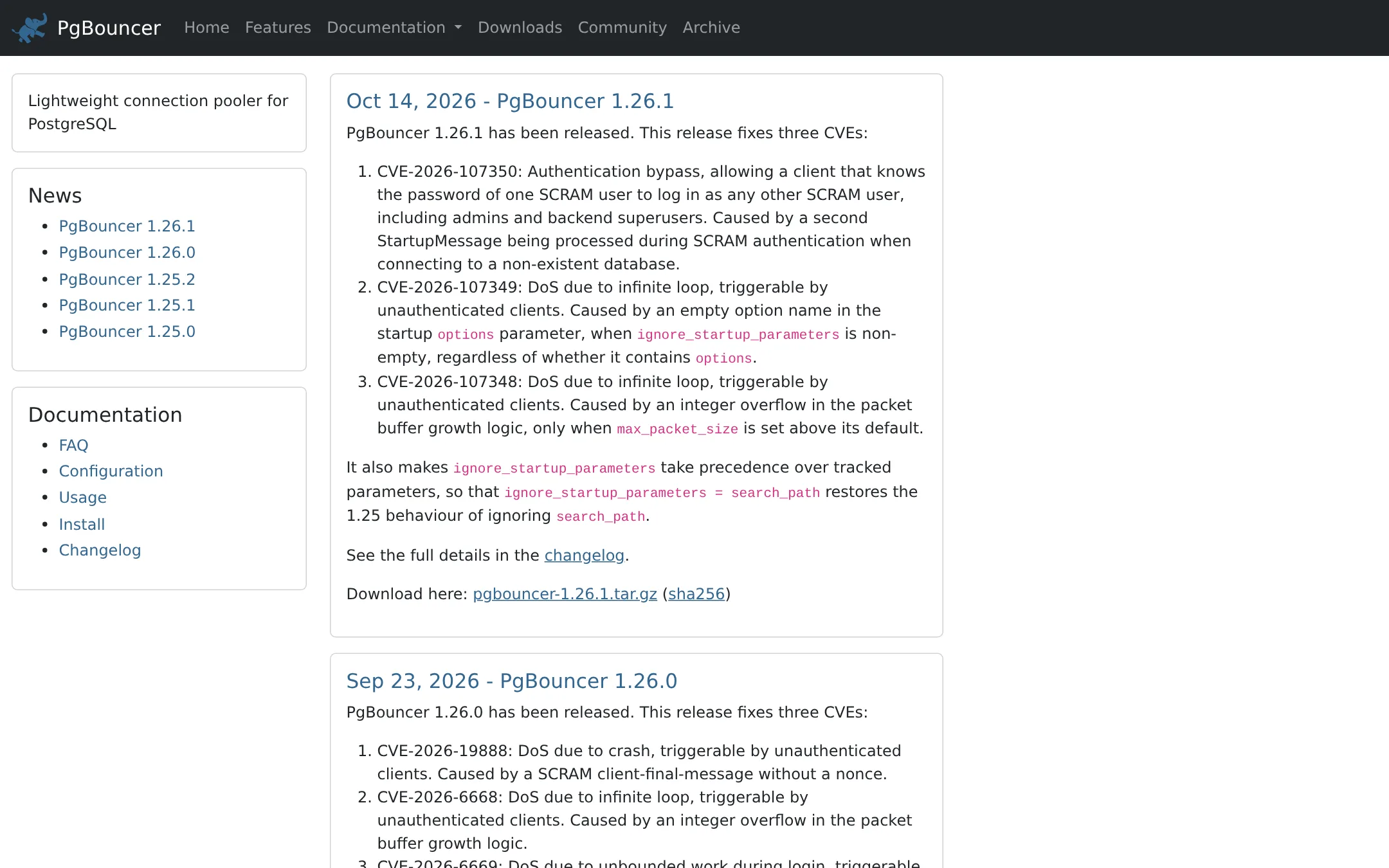
PgBouncer is a lightweight connection pooler for PostgreSQL. Teams pick it when they only need to share a limited number of database connections among many application clients, without adding load balancing or sharding. It is a narrow tool, so a team that wants read replica routing, failover handling or horizontal sharding in the same product would look at PgDog instead.
Where it is strong
- Lightweight, focused on connection pooling
- Recent releases fix several security issues, including authentication and denial-of-service bugs
- Open source, with downloads and checksums published on the site
Where it falls short
- Does not provide read/write splitting, replica load balancing or sharding in the material here
- Recent versions required urgent security patches, so teams need to track releases closely
- Pricing:
- Pricing is not published on the site.
- PNot published
2.Pgpool-II
Best for: Teams running a single PostgreSQL primary with read replicas who want self-hosted pooling and automatic failover.
- Pricing
- Not published
- Category
- Other
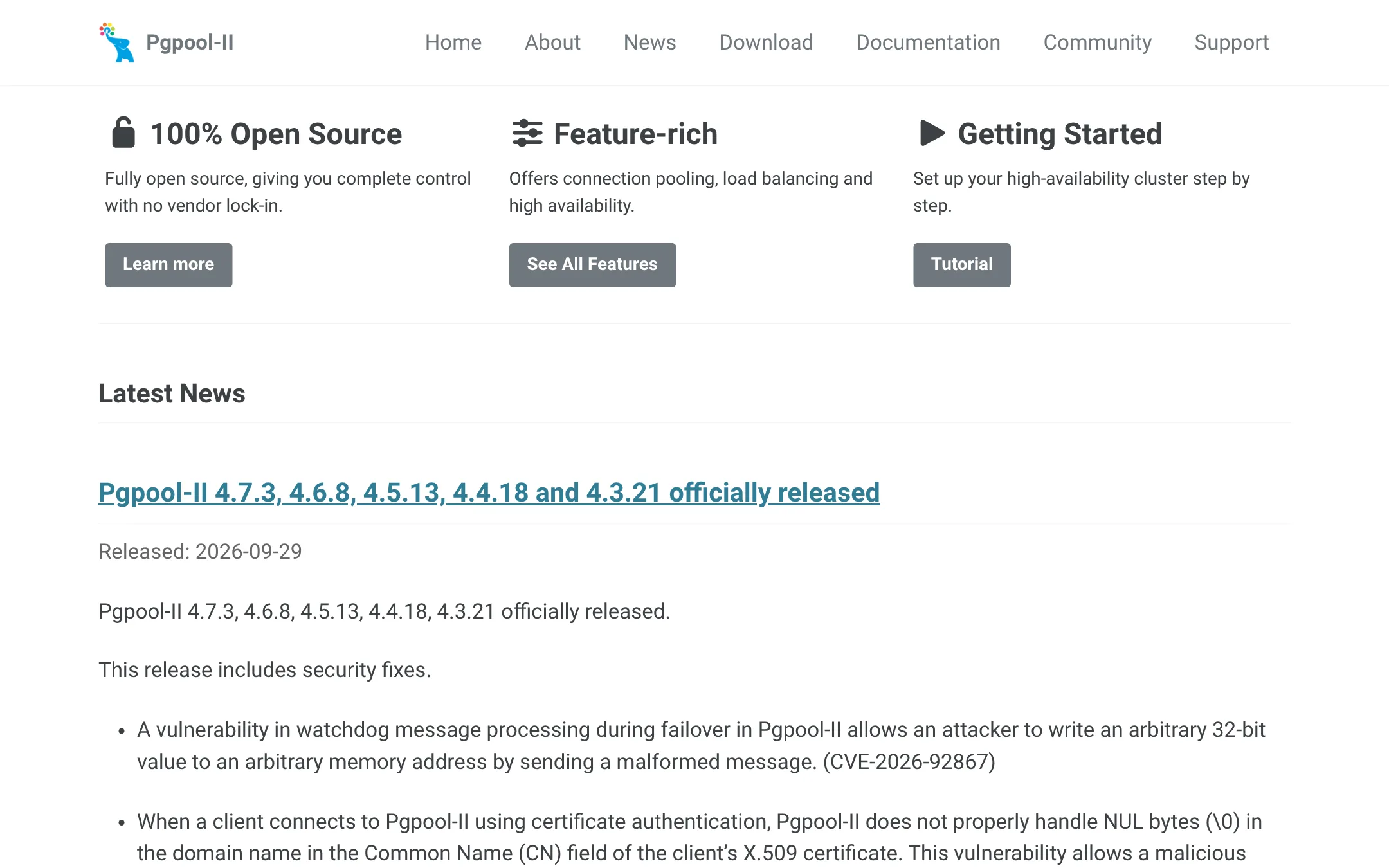
Pgpool-II is open-source middleware that handles connection pooling, load balancing and high availability for PostgreSQL. Teams pick it when they want a mature, self-hosted pooler and replica load balancer without adopting a new database scaling platform. It is a better fit when the goal is pooling and failover rather than horizontal sharding.
Where it is strong
- Fully open source with no vendor lock-in.
- Covers connection pooling, load balancing and high availability in one middleware.
- Documented step-by-step tutorial for setting up a high-availability cluster.
Where it falls short
- The site does not list sharding or cross-shard transactions, which PgDog centers on.
- The latest news covers a batch of security fixes in watchdog and authentication code, so you need to track patch releases closely.
- Pricing:
- Pricing is not published on the site.
- From $0 / user / month
3.GitHub Projects
Best for: Engineering teams that already host code on GitHub and want their tasks tracked alongside pull requests
- Pricing
- From $0 / user / month
- Category
- Productivity & Project Management
GitHub Projects is a planning and issue-tracking layer that sits next to repository code, with boards, issues, and pull requests in one place. Someone would choose it over PgDog when the need is coordinating engineering work rather than running a PostgreSQL connection pooler, load balancer, or sharding proxy. It does not touch database traffic at all.
Where it is strong
- Work items sit in the same place as the code and pull requests they relate to.
- A free tier covers unlimited public and private repositories and issues with projects.
- Team plan adds required reviewers, code owners, and draft pull requests.
Where it falls short
- It does not handle database connections, replicas, or sharding, so it cannot replace PgDog's role.
- Advanced features such as SCIM, SAML single sign-on, and data residency sit behind the Enterprise plan.
- Pricing:
- Free plan at $0 USD, Team at $4 USD per user per month, and Enterprise at $21 USD per user per month, with Copilot access included in Enterprise.
- From $25/mo
4.Supabase
Best for: Early-stage product teams that want a managed Postgres backend with auth, storage and APIs already built in
- Pricing
- From $25/mo
- Category
- Developer Tools
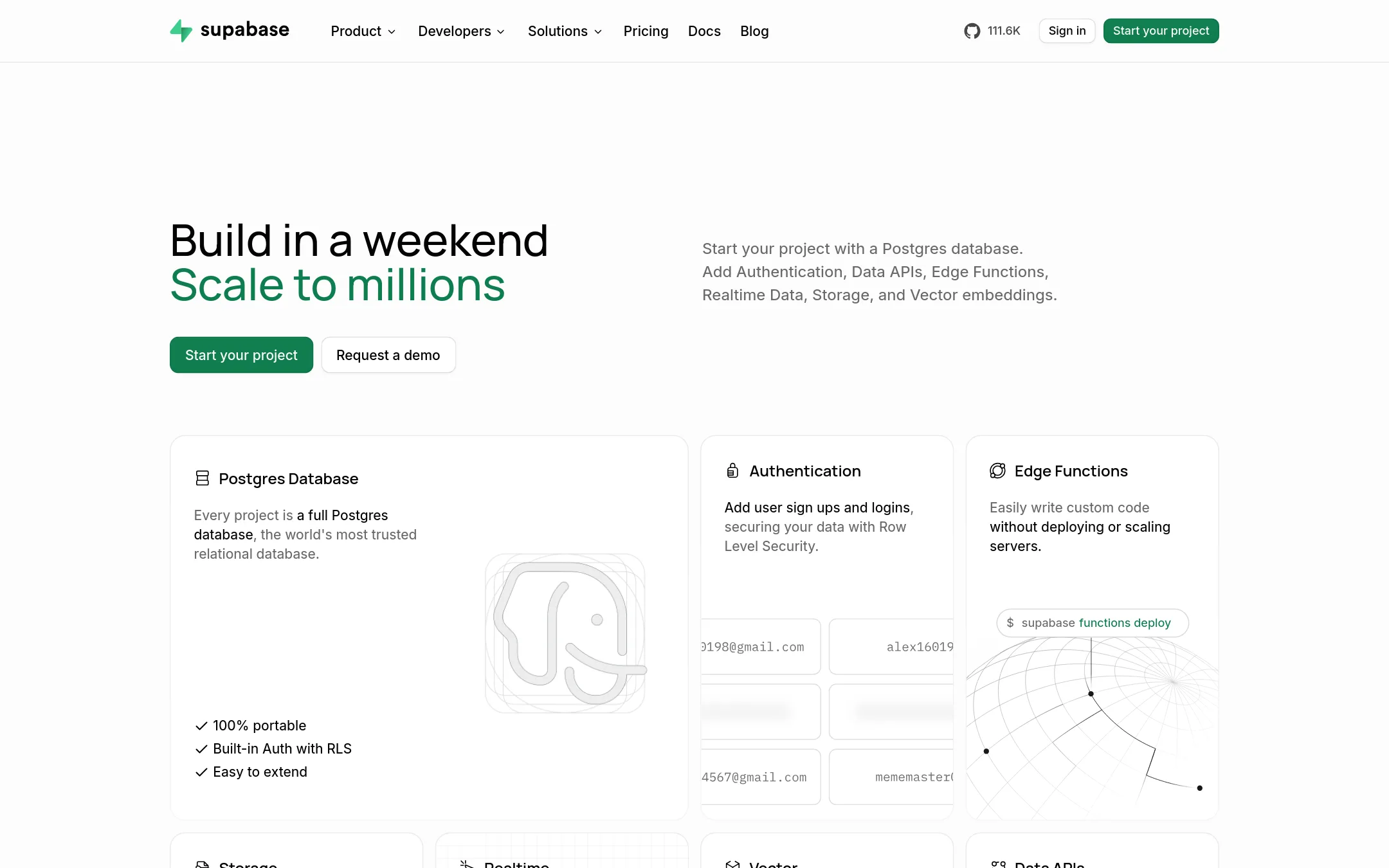
Supabase is a hosted platform built around a Postgres database, with authentication, row level security, realtime, storage, edge functions and vector search included. A team would pick it over PgDog when they want a full backend with a dashboard and managed services, rather than a proxy that handles connection pooling, read replica routing and sharding for a Postgres database they run themselves.
Where it is strong
- Postgres database with built-in auth, row level security, storage, realtime and REST APIs in one project
- Free tier available for passion projects, with 50,000 monthly active users and 500 MB of database
- Compute can be scaled from a Micro instance up to dedicated 64 vCPU instances with 256 GB RAM
Where it falls short
- The site does not describe sharding or cross-shard transactions, which PgDog is built for
- Free projects pause after one week of inactivity and are limited to two active projects
- Pricing:
- Pricing is not published on the site in the form of a single regional figure, but the Pro plan starts at $25 per month with the first project included, the Team plan is $599 per month, and Enterprise is custom.
- Not published
5.Amazon Business
Best for: Small and mid-sized businesses and enterprises that need centralized approval and spend reporting for everyday supplies
- Pricing
- Not published
- Category
- E-commerce
Amazon Business is a procurement site for buying office, janitorial, and other business supplies, with approval flows, spend reports, and bulk discounts. A founder would pick it over PgDog only if they need to buy physical supplies for the company, since PgDog is a PostgreSQL proxy and does not overlap with that use.
Where it is strong
- Approval workflows and purchasing guardrails across an organization
- Spend analysis with pre-built and custom reports
- Quantity discounts and case-pack buying on a large product range
Where it falls short
- Covers business supplies, not database or developer infrastructure
- Prime Business membership is mentioned on the site, but pricing details are not shown in the supplied text
- Pricing:
- Pricing is not published on the site.
See more comparisons in Developer Tools alternatives.
FAQ
Questions about PgDog alternatives
What is the closest alternative to PgDog for connection pooling alone?
PgBouncer is a lightweight connection pooler for PostgreSQL and is the narrowest option here. It shares a limited number of database connections among many clients but does not provide read/write splitting, replica load balancing or sharding. Teams that only need pooling on a single primary often start with it.
Which alternative handles replicas and failover without sharding?
Pgpool-II covers connection pooling, load balancing and high availability in one self-hosted middleware. Its site does not list sharding or cross-shard transactions, which are central to PgDog. Teams running a primary with read replicas who want automatic failover often evaluate it first.
Is Supabase a direct replacement for PgDog?
Not really. Supabase is a hosted platform around a Postgres database that includes auth, row level security, realtime, storage and edge functions. Its site does not describe sharding or cross-shard transactions, so it suits teams wanting a full managed backend rather than a proxy for a database they run themselves.
Do any of these tools help with sharding?
Based on the material reviewed, PgDog is the only product here that describes sharding, cross-shard transactions and replicated tables. PgBouncer, Pgpool-II and Supabase do not list sharding in the supplied text. Teams needing horizontal sharding should confirm capabilities directly with each vendor.
Which options are not database tools at all?
GitHub Projects is a planning and issue-tracking layer next to repository code, and Amazon Business is a procurement site for office and business supplies. Neither handles database connections, replicas or sharding. They appear here because some buyers search for PgDog while looking for general engineering or purchasing software.
Last updated November 23, 2026.