Pipekit alternatives
6 products compared · Updated November 3, 2026
The short answer
For teams already on Argo Workflows, Pipekit offers a managed control plane with enterprise support. The strongest alternatives are Apache Airflow for teams wanting a free, self-hosted, Python-native orchestrator with a large community. Prefect for data and ML teams that want to turn Python functions into durable workflows without managing Argo. And Temporal for teams building mission-critical applications that need durable, fault-tolerant workflow orchestration with built-in state recovery.
Your shortlist, at a glance
Read the comparisons ↓ Argo CDOpen sourceTeams already on Kubernetes that need declarative, Git-based application deployments with a UI, and prefer open-source tooling over a paid control plane.
 Apache AirflowOpen source (free)Data engineering teams that want a free, self-hosted, Python-native orchestrator with extensive integrations and no vendor lock-in.
- PPrefectNot publishedData and ML teams that want to turn Python functions into durable workflows without learning a new DSL or managing Argo infrastructure.
- TTemporalFrom $0.042/GBhrTeams building mission-critical applications that need durable, fault-tolerant workflow orchestration with built-in state recovery and automatic retries.
- KKubeflow PipelinesNot publishedTeams already invested in Kubernetes who need a free, open-source ML workflow platform with deep integration across the Kubeflow ecosystem.
- FFlyteNot publishedAI and data teams that need durable, dynamic pipelines with automatic retry and resource optimization, plus real-time model serving.
About Pipekit and its alternatives
Pipekit is a managed control plane for Argo Workflows. It centralizes running, monitoring, and governing Argo across teams, clusters, and clouds, with enterprise support from the Argo maintainers. It is known for eliminating the operational complexity of scaling Argo, offering SSO, RBAC, audit logs, and multi-cluster orchestration.
When comparing alternatives, weigh pricing structure (per-cluster vs. usage-based vs. free), deployment options (self-hosted vs. managed), integrations with your existing stack, support and SLAs, and contract terms. Consider whether you need a control plane for Argo or a different orchestration paradigm entirely.
Explore the alternatives
- Open source
1.Argo CD
Best for: Teams already on Kubernetes that need declarative, Git-based application deployments with a UI, and prefer open-source tooling over a paid control plane.
- Pricing
- Open source
- Category
- Developer Tools
Argo CD is the open-source GitOps tool for continuous delivery on Kubernetes. Choose it instead of Pipekit when you want a free, community-driven way to deploy applications declaratively, without paying for a managed control plane or enterprise support.
Where it is strong
- Fully open source and free to use
- Declarative GitOps with a built-in UI
- Part of the broader Argo ecosystem for workflows and rollouts
Where it falls short
- No managed control plane or enterprise support
- Requires self-hosting and managing your own infrastructure
- Pricing:
- Pricing is not published on the site.
- Open source (free)
2.Apache Airflow
Best for: Data engineering teams that want a free, self-hosted, Python-native orchestrator with extensive integrations and no vendor lock-in.
- Pricing
- Open source (free)
- Category
- Analytics & Data
Apache Airflow is an open-source workflow orchestrator that lets you define pipelines in Python and run them on your own infrastructure. Choose it instead of Pipekit if you want full control over your orchestration stack, prefer a large community and ecosystem, and are comfortable managing your own workers, scheduler, and message queue.
Where it is strong
- Pipelines are pure Python, so you get dynamic generation and full flexibility.
- Huge community and many plug-and-play operators for cloud services.
- Open source with no licensing costs and easy contribution via PRs.
Where it falls short
- You must operate and scale the scheduler, workers, and queue yourself.
- No built-in enterprise governance like SSO/RBAC or audit logs out of the box.
- Pricing:
- Pricing is not published on the site.
- PNot published
3.Prefect
Best for: Data and ML teams that want to turn Python functions into durable workflows without learning a new DSL or managing Argo infrastructure.
- Pricing
- Not published
- Category
- Other
Prefect is a workflow orchestration platform for data, ML, and agents. You write workflows as plain Python with a decorator, and Prefect handles scheduling, retries, and recovery. Choose it over Pipekit if you want a Python-native orchestrator with managed or self-hosted compute options, rather than a control plane for Argo Workflows.
Where it is strong
- Plain Python decorators make workflows easy to write and review.
- Runs on managed compute, your VPC, or anywhere in between.
- Open-source core with a 30-minute response SLA on enterprise plans.
Where it falls short
- Pricing details are not listed, so cost comparison requires contacting sales.
- No native Argo Workflows support, so teams already on Argo would need to rewrite workflows.
- Pricing:
- Pricing is not published on the site. Plans include Hobby (free), Starter, Team, and Enterprise, with serverless credits from 500 mins/mo on Hobby to custom on Enterprise.
- TFrom $0.042/GBhr
4.Temporal
Best for: Teams building mission-critical applications that need durable, fault-tolerant workflow orchestration with built-in state recovery and automatic retries.
- Pricing
- From $0.042/GBhr
- Category
- Other
Temporal is a durable execution platform that guarantees your code picks up exactly where it left off after failures, with built-in retries, timers, and state persistence. Choose it instead of Pipekit if you need to orchestrate long-running business processes, AI agents, or complex workflows that require precise state recovery and live interaction, rather than managing Argo Workflows at scale.
Where it is strong
- Durable execution: workflow state survives crashes and deploys with no checkpointing code
- Built-in retries, timers, signals, and saga compensation for failure-prone logic
- Open-source (MIT) with self-host or cloud options, no vendor lock-in
Where it falls short
- Pricing is usage-based and can be unpredictable for high-volume workloads
- Not designed for Argo Workflows, so migrating from Pipekit means rewriting workflows in Temporal SDKs
- Pricing:
- Temporal Cloud starts with $150 free credits for 90 days, no base monthly fee, then $0.042/GBhr for active storage and $0.00105/GBhr for retained storage, plus actions-based usage.
- Switching from Pipekit:
- Moving from Pipekit to Temporal requires rewriting your Argo Workflows into Temporal SDK code, as the two systems are architecturally different.
- KNot published
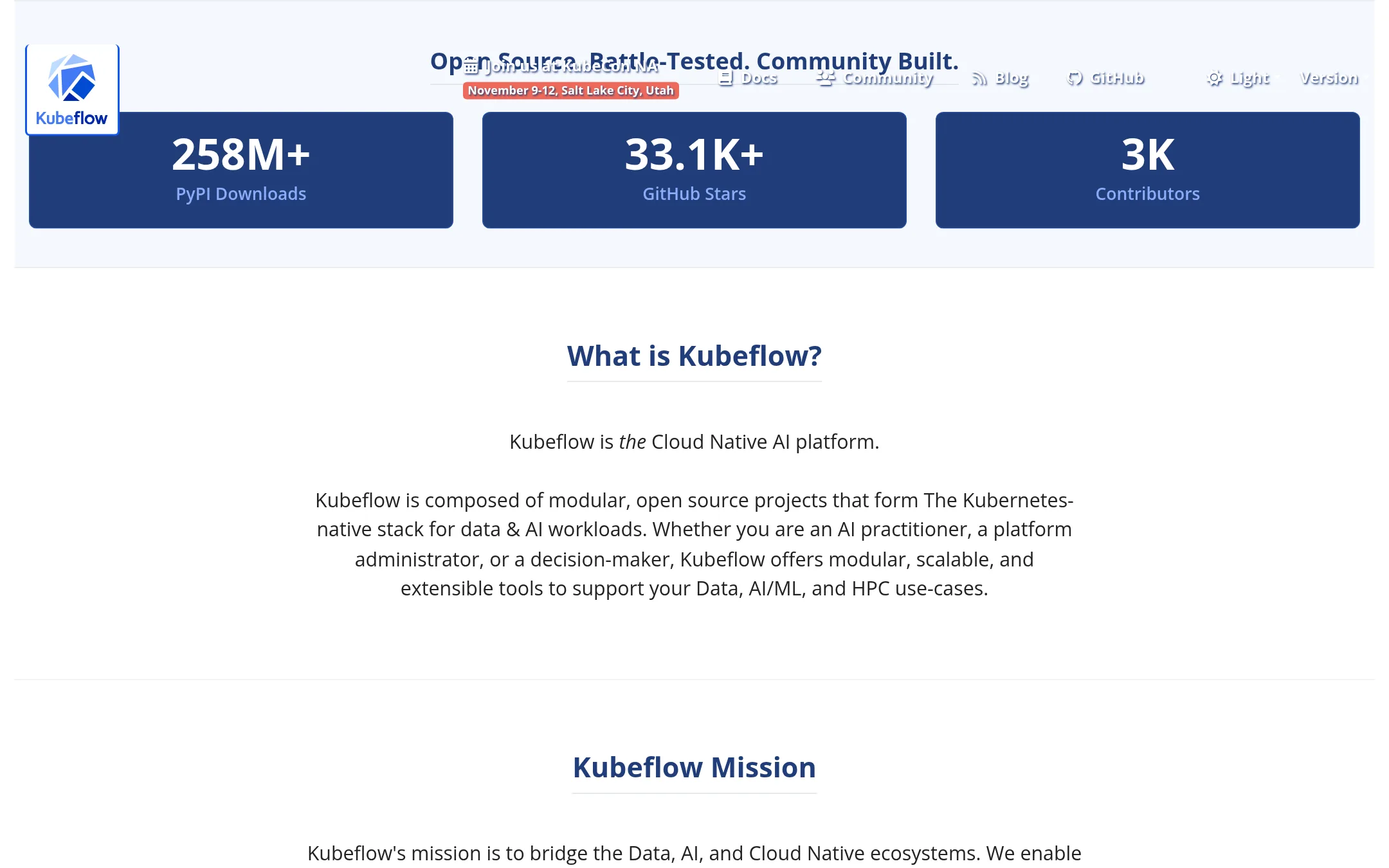
5.Kubeflow Pipelines
Best for: Teams already invested in Kubernetes who need a free, open-source ML workflow platform with deep integration across the Kubeflow ecosystem.
- Pricing
- Not published
- Category
- Other
Kubeflow Pipelines is an open-source platform for building and deploying machine learning workflows on Kubernetes. You would choose it over Pipekit if you want a Kubernetes-native ML pipeline solution without per-cluster licensing costs and prefer to manage your own infrastructure.
Where it is strong
- Open source and free to self-host
- Kubernetes-native, runs on any cloud or on-prem
- Includes components for notebooks, training, and AutoML
Where it falls short
- Requires your own Kubernetes expertise to operate
- No enterprise support or SLA unless you buy from a vendor
- Pricing:
- Pricing is not published on the site.
- FNot published
6.Flyte
Best for: AI and data teams that need durable, dynamic pipelines with automatic retry and resource optimization, plus real-time model serving.
- Pricing
- Not published
- Category
- Other
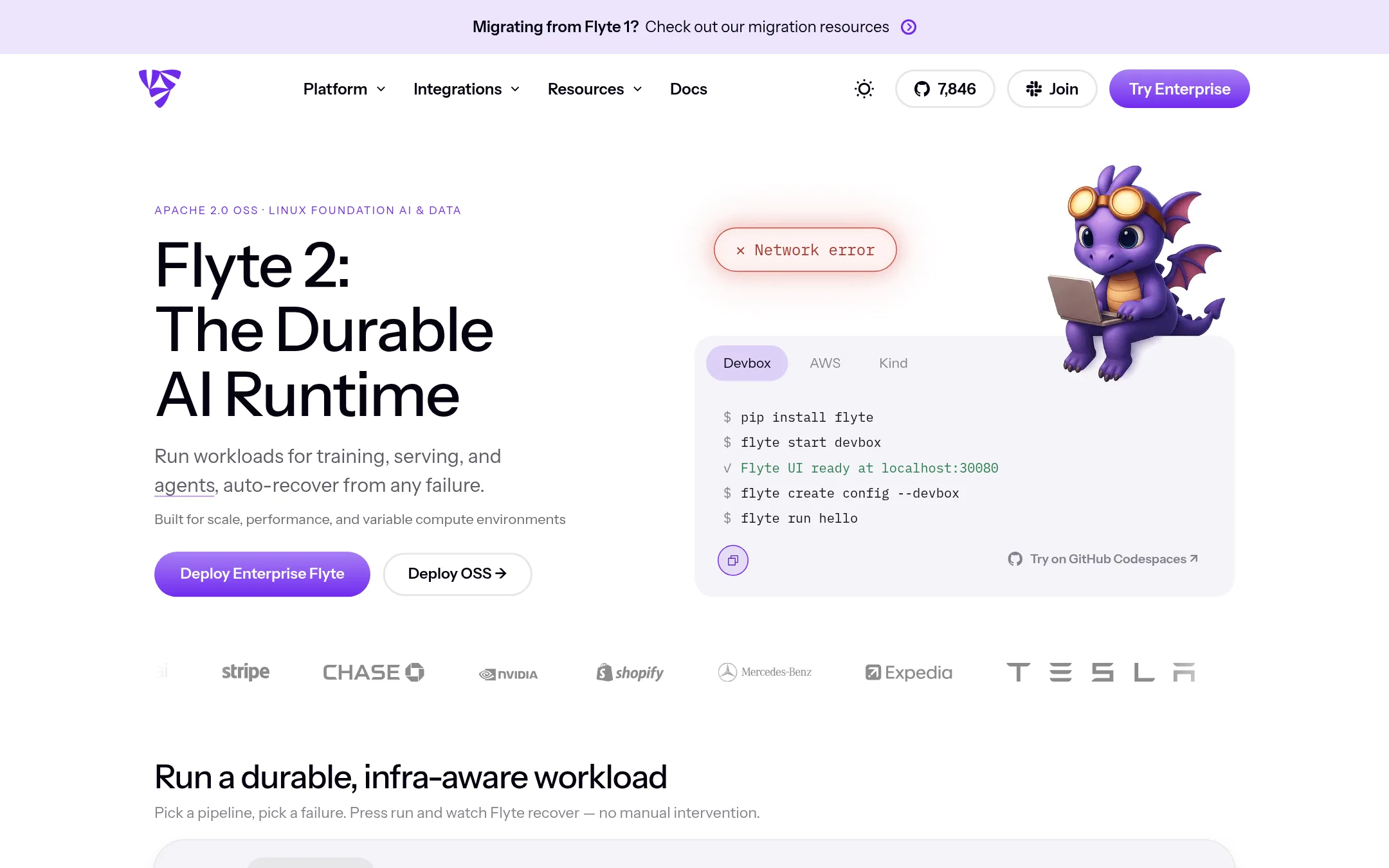
Flyte is a durable, infra-aware orchestration platform for AI and data pipelines, with SDKs in Python, TypeScript, Rust, Go, and Mojo. Choose it over Pipekit if you need dynamic, agent-style workflows with automatic retries and resource resubmission, or if you want to serve real-time model endpoints alongside your pipelines.
Where it is strong
- Write workflows in pure Python or other languages, no DSL or YAML
- Automatically retries failed tasks and resubmits with corrected resources
- Serves long-running apps like Streamlit, FastAPI, vLLM, and SGLang
Where it falls short
- No managed control plane or enterprise support directly from Flyte
- Pricing not published, so cost comparison with Pipekit is unclear
- Pricing:
- Pricing is not published on the site.
- Switching from Pipekit:
- Moving from Pipekit to Flyte means rewriting Argo workflows into Flyte's SDK-based model, which is a significant change if you rely on Argo's native constructs.
See more comparisons in Developer Tools alternatives.
FAQ
Questions about Pipekit alternatives
What is the main difference between Pipekit and Apache Airflow?
Pipekit is a managed control plane for Argo Workflows, while Airflow is a self-hosted, open-source orchestrator. Choose Airflow if you want full control and a Python-native approach, but be ready to manage your own infrastructure.
Which alternative is best for teams already using Argo Workflows?
If you want to stay on Argo but need enterprise support and a control plane, Pipekit is the direct fit. Argo CD is a free GitOps option for deployments, but it does not provide a managed control plane or enterprise support.
How does Prefect compare to Pipekit for data pipeline orchestration?
Prefect lets you write workflows in plain Python with a decorator and offers managed or self-hosted compute. It is simpler for data teams but does not support Argo Workflows, so migrating from Pipekit would require rewriting workflows.
What should I consider when evaluating pricing for these alternatives?
Pipekit charges $799 per cluster per month. Temporal uses usage-based pricing with free credits. Airflow, Argo CD, Kubeflow Pipelines, and Flyte are open source with no published pricing, so you pay for infrastructure and support.
Which alternative is best for mission-critical applications needing fault tolerance?
Temporal is designed for durable execution with built-in retries, timers, and state recovery. It is ideal for long-running business processes and AI agents, but it is not Argo-based, so you would need to rewrite workflows.
Last updated November 3, 2026.