Ploomber alternatives
6 products compared · Updated November 17, 2026
The short answer
The three strongest alternatives to Ploomber are Prefect, Dagster and ZenML. Prefect suits data and engineering teams that need retries, approvals and audit logs for Python pipelines or agent workflows without hosting a scheduler. Dagster suits data teams running dbt and Snowflake that want asset lineage and failure impact tracking. ZenML suits startups and ML teams that run pipelines on their own cloud and also need eval and trace monitoring for agents.
Your shortlist, at a glance
Read the comparisons ↓- KKubeflow PipelinesNot publishedPlatform teams already running Kubernetes that want open source ML pipelines on their own clusters
- MMetaflowNot publishedData science and ML teams that want to run workflows on their own AWS, Azure, Google Cloud, or Kubernetes infrastructure
- ZZenML$39/mo StarterStartups and ML teams that run pipelines on their own cloud and need eval and trace monitoring for AI agents
- PPrefectHobby, Starter, Team, Data and engineering teams that run Python pipelines or AI agent workflows and need retries, approvals and audit logs without hosting a scheduler
- DDagster$10/mo + $0.040/creditData teams running dbt and Snowflake pipelines that need asset lineage, freshness tracking and failure impact analysis
 Apache AirflowNot publishedEngineering teams with Python skills that need scheduled data and ML pipelines they control themselves
About Ploomber and its alternatives
Ploomber is a platform that describes itself as Heroku for AI. This page could not load the Ploomber website at the time of writing, so the description of its product is limited to its tagline. Teams usually look at Ploomber when they want to deploy AI work without managing the underlying infrastructure.
When comparing alternatives in this category, weigh the pricing structure first, since some tools bill by credit or seat and others publish no prices at all. Check which regions and cloud platforms each tool runs on, and whether it is open source and can be self-hosted. Look at the integrations you already depend on, the support and security features tied to each tier, and the contract terms, including trial length and any limits on the number of projects or agents.
Explore the alternatives
- KNot published
1.Kubeflow Pipelines
Best for: Platform teams already running Kubernetes that want open source ML pipelines on their own clusters
- Pricing
- Not published
- Category
- Other
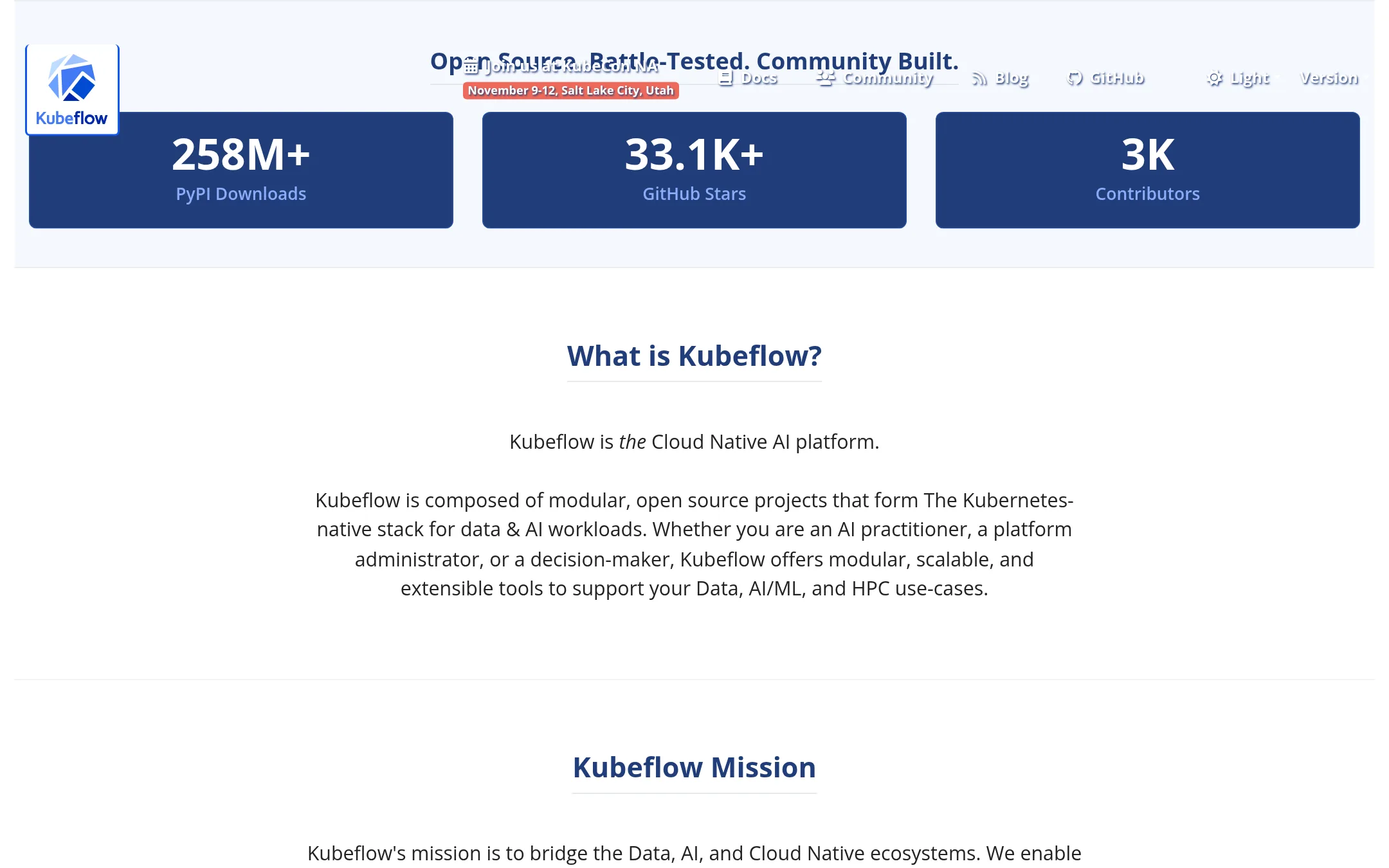
Kubeflow Pipelines is a platform for building and deploying portable, scalable machine learning workflows on Kubernetes. Teams already running Kubernetes and wanting an open source, self-hosted pipeline system would pick it over Ploomber, which is positioned as a hosted way to deploy AI work without managing the infrastructure yourself.
Where it is strong
- Open source, with the code available to inspect and self-host
- Runs the same workflows on a laptop, on-premises, or in any cloud
- Sits alongside related Kubeflow components such as Trainer, Katib and Notebooks
Where it falls short
- Requires Kubernetes knowledge to set up and run
- The site does not describe a hosted option comparable to Ploomber's managed deployment
- Pricing:
- Pricing is not published on the site.
- MNot published
2.Metaflow
Best for: Data science and ML teams that want to run workflows on their own AWS, Azure, Google Cloud, or Kubernetes infrastructure
- Pricing
- Not published
- Category
- Other
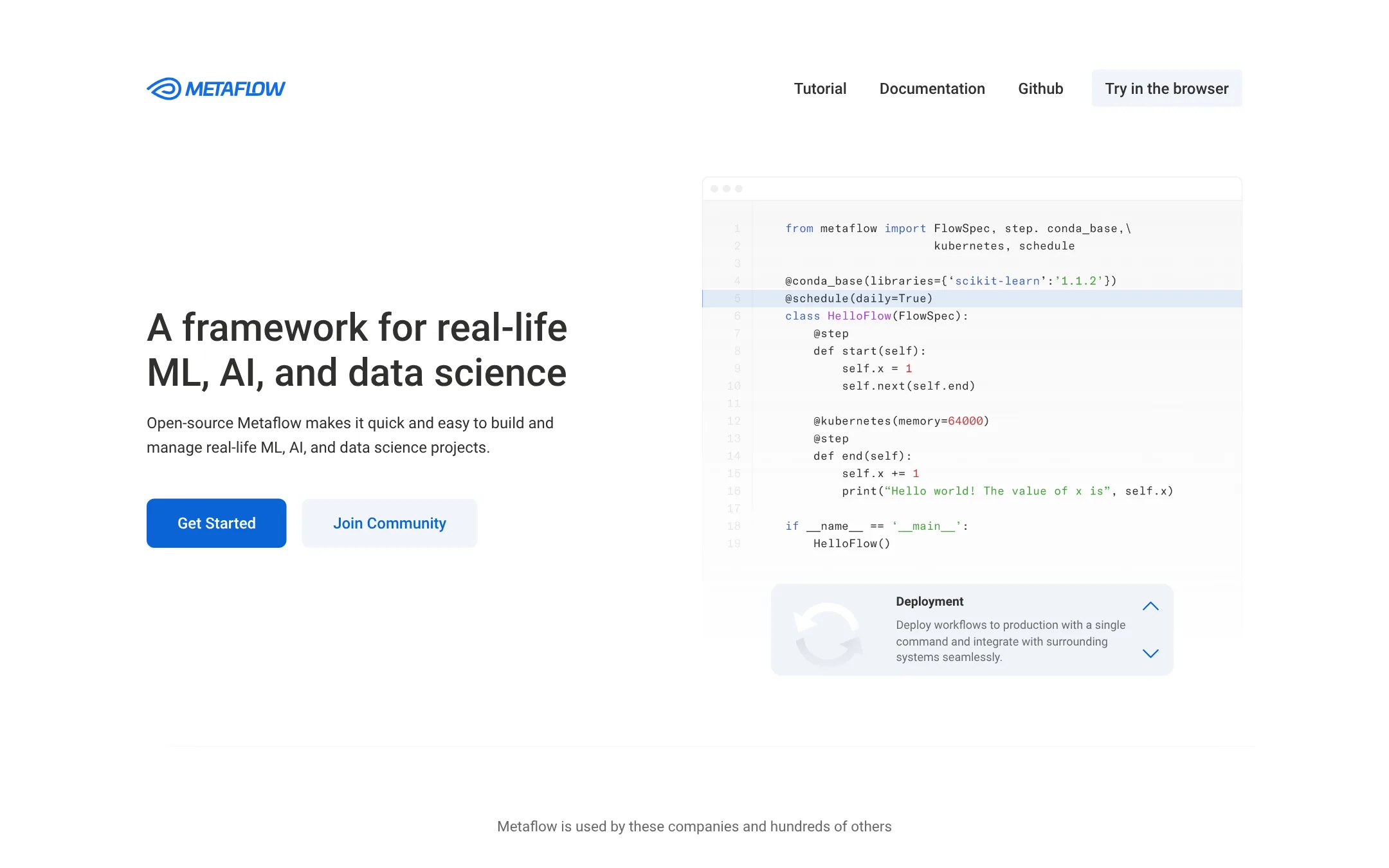
Metaflow is an open-source Python framework for building ML, AI, and data science workflows. It tracks and versions variables automatically, and lets you move a flow from a laptop to AWS, Azure, Google Cloud, or a Kubernetes cluster you run yourself. Pick it over Ploomber when you want to keep the stack on your own cloud account and need experiment tracking built into the flow.
Where it is strong
- Open source, and developed at Netflix before its 2019 release.
- Runs on AWS, Azure, Google Cloud, or a custom Kubernetes cluster.
- Tracks and stores flow variables automatically for debugging and experiment tracking.
Where it falls short
- The site describes it as a framework for Python workflows, so teams wanting a hosted, click-to-deploy service will need to set up the infras
- The site does not describe a hosted platform or a managed offering for AI app deployment as Ploomber's tagline does.
- Pricing:
- Pricing is not published on the site.
- Z$39/mo Starter
3.ZenML
Best for: Startups and ML teams that run pipelines on their own cloud and need eval and trace monitoring for AI agents
- Pricing
- $39/mo Starter
- Category
- Other
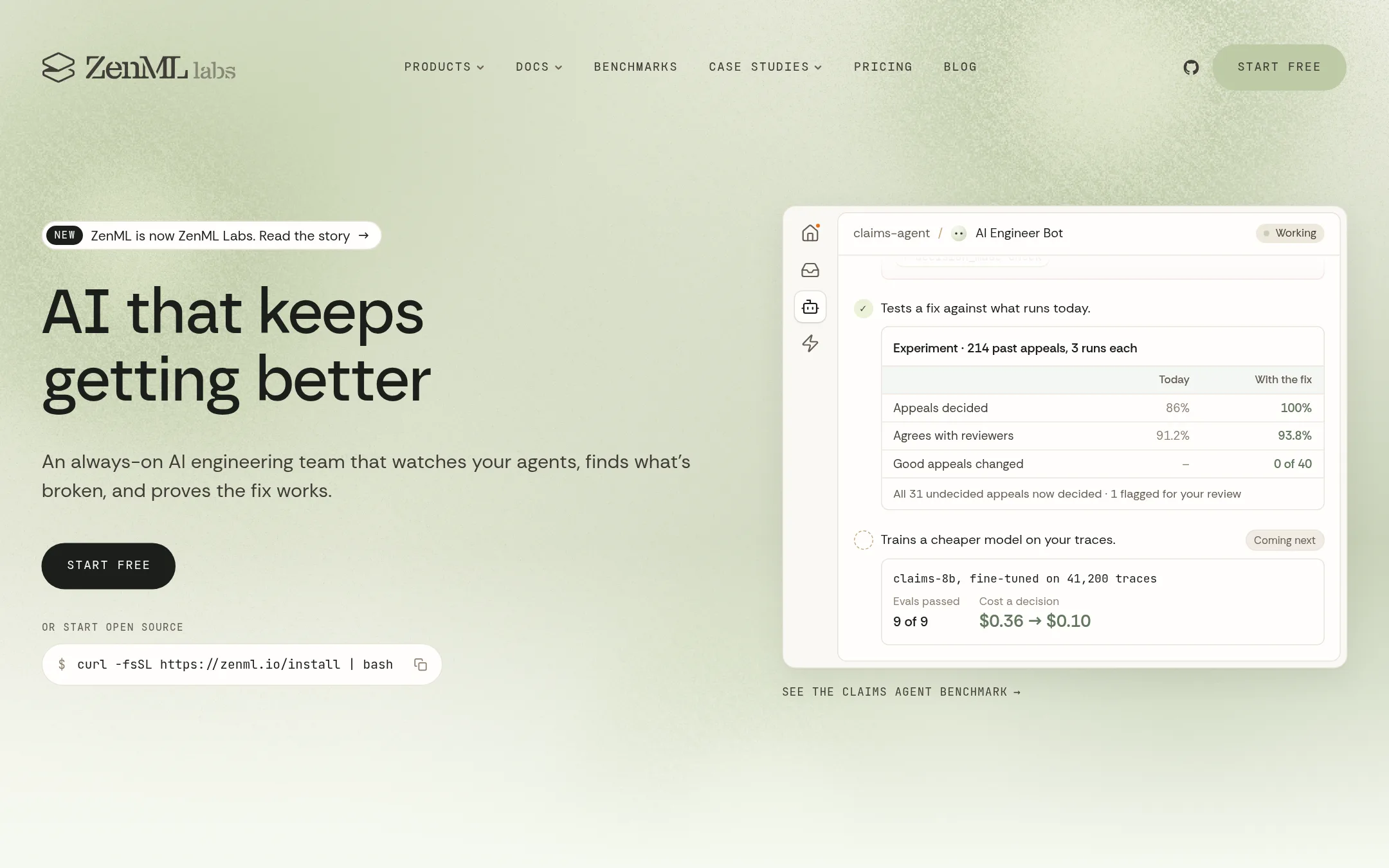
ZenML is an open-source framework for running ML pipelines and AI agents on infrastructure you already have, with runs, artifacts and model versions recorded. Its paid Pro tier adds hosted AI engineers that watch agent traces and pipeline runs, find gaps in evals, and test fixes. Someone would pick it over Ploomber when they want to orchestrate pipelines on their own cloud or Kubernetes and also need eval and trace monitoring for agents.
Where it is strong
- Runs pipelines on Kubernetes, Vertex, SageMaker or AzureML without rewrites
- Imports traces from Langfuse, LangSmith, Braintrust and others
- Open source under Apache 2.0, so you can use it on your own machines
Where it falls short
- Hosted Pro Starter covers only one AI agent and one ML project
- The fine-tuning engineer is listed as coming next, not yet available
- Pricing:
- ZenML Pro Starter costs $39 a month for one AI agent and one ML project, with a 14-day trial and no credit card, and Enterprise is custom.
- PHobby, Starter, Team,
4.Prefect
Best for: Data and engineering teams that run Python pipelines or AI agent workflows and need retries, approvals and audit logs without hosting a scheduler
- Pricing
- Hobby, Starter, Team,
- Category
- Other
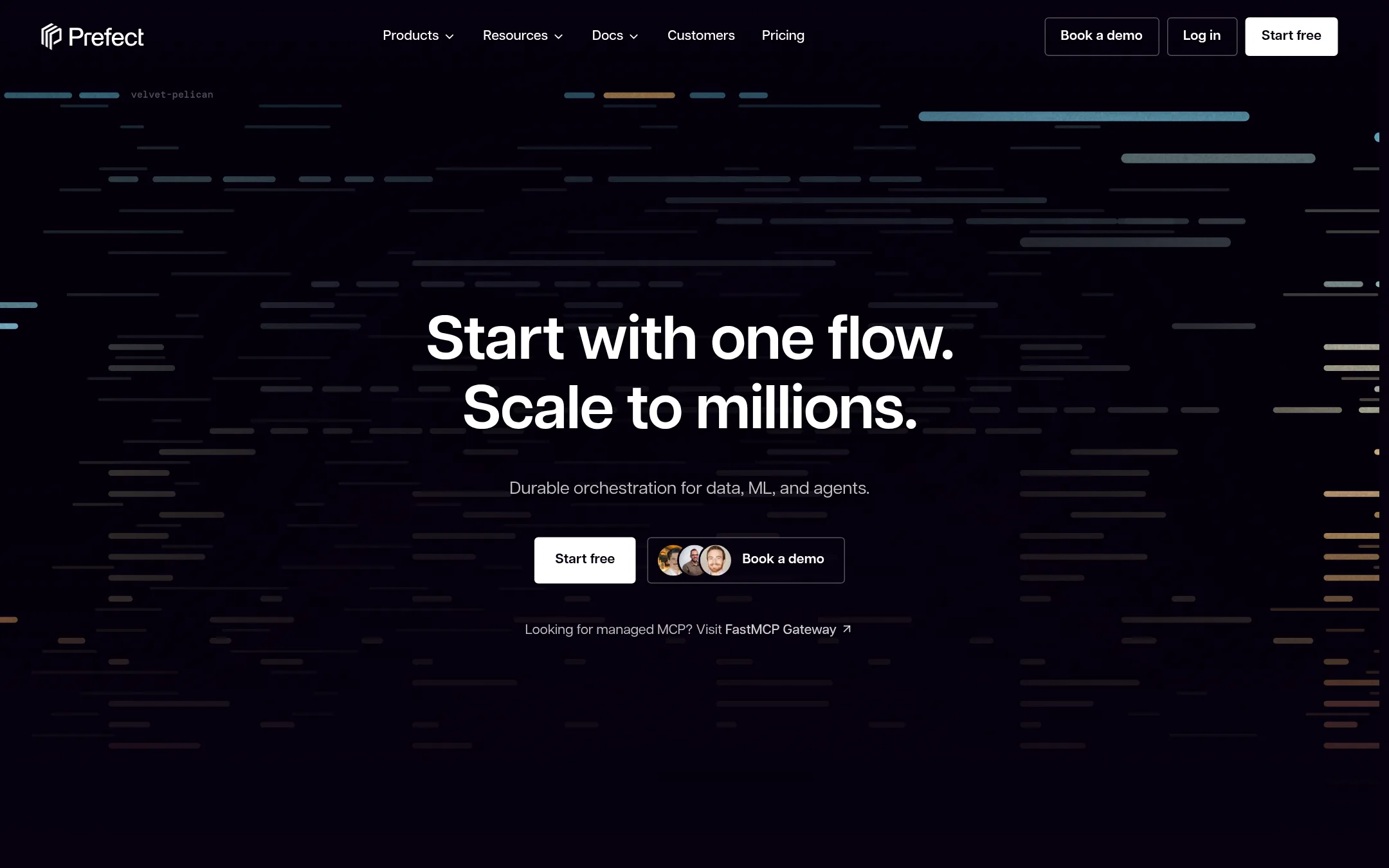
Prefect orchestrates Python data pipelines and AI agent workflows, with retries, durable execution and human approval steps built into the engine. Teams pick it over Ploomber when they need governed, multi-step workflows with pauses for review and checks on each result, or when they want a managed control plane instead of running their own infrastructure.
Where it is strong
- Turns any Python function into a durable workflow with one decorator
- Built-in retries and crash recovery, so you do not write that code yourself
- Open source core under Apache 2.0, with a managed service running the same engine
Where it falls short
- Advanced security features such as SSO, SCIM, audit log retention and PrivateLink sit on the higher tiers
- Its product set is broader than a single workflow tool, with Dagster and FastMCP alongside it, so the scope is larger to evaluate
- Pricing:
- Pricing is published with a Hobby tier, a Starter plan, a Team plan and a custom Enterprise plan, but the page text does not list the dollar amounts for each tier.
- D$10/mo + $0.040/credit
5.Dagster
Best for: Data teams running dbt and Snowflake pipelines that need asset lineage, freshness tracking and failure impact analysis
- Pricing
- $10/mo + $0.040/credit
- Category
- Other
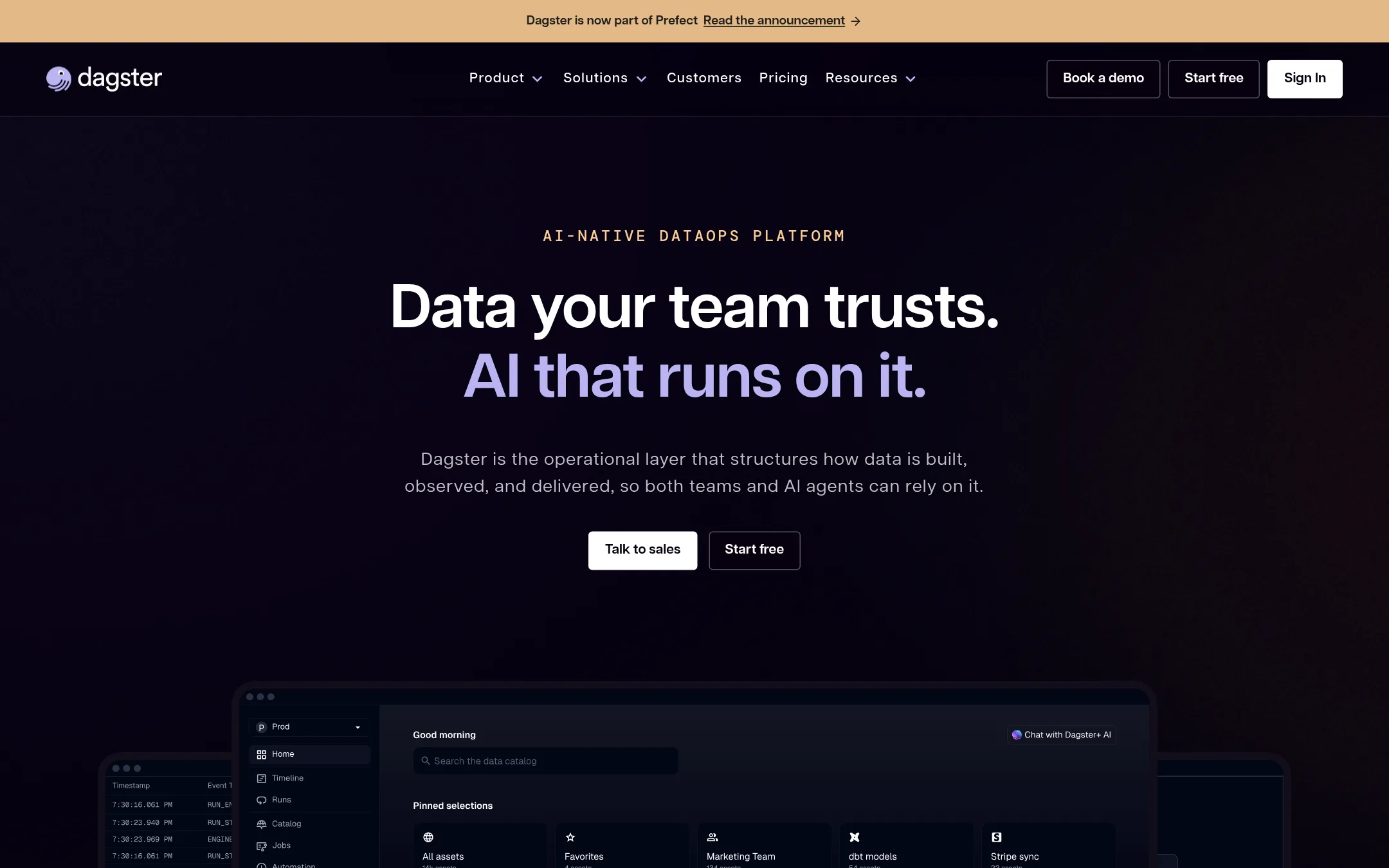
Dagster is a data orchestrator that organises pipelines around the data assets they produce, not just the tasks that run. It tracks lineage, freshness and failure impact across tools like dbt and Snowflake. Teams pick it over Ploomber when they want asset-level visibility and observability across a whole data stack rather than a simple way to deploy AI apps.
Where it is strong
- Asset-centric design shows lineage and downstream impact when a job fails.
- Native dbt and Snowflake integrations without custom glue code.
- Open source core that can be self-hosted, with a 30-day free trial on paid plans.
Where it falls short
- Costs rise with credits (per asset materialization and op run), so heavy workloads need budgeting.
- Advanced features such as SSO, SCIM, SIEM export and uptime SLAs sit on the Pro plan.
- Pricing:
- Pay-as-you-go plans run from $10/month plus $0.040 per credit on Solo, and $100/month plus $0.035 per credit on Starter, with Pro priced custom.
- Not published
6.Apache Airflow
Best for: Engineering teams with Python skills that need scheduled data and ML pipelines they control themselves
- Pricing
- Not published
- Category
- Analytics & Data
Apache Airflow is an open source platform for writing, scheduling and monitoring workflows in Python. It suits teams that want to build their own pipelines across data transfer, ML model training and infrastructure tasks, with a web UI for tracking task status and logs. Someone would pick it over Ploomber when they want to run and manage workflows themselves rather than use a hosted deployment service for AI apps.
Where it is strong
- Pipelines are written in plain Python, including dynamic task generation in loops
- Ships with plug-and-play operators for Google Cloud, AWS, Azure and other third-party services
- Open source, and the code can be extended with your own operators
Where it falls short
- The site does not describe a hosted offering, so you should expect to run and maintain the infrastructure yourself
- It is a workflow orchestrator, so it does not cover the app deployment side that Ploomber focuses on
- Pricing:
- Pricing is not published on the site.
See more comparisons in AI & Machine Learning alternatives.
FAQ
Questions about Ploomber alternatives
What is the best alternative to Ploomber for a team that wants to run its own pipelines?
Apache Airflow and Kubeflow Pipelines are open source options that run on infrastructure you manage. Airflow suits Python teams that want to write and schedule their own workflows, and Kubeflow suits platform teams already running Kubernetes. Neither is described on its site as a hosted deployment service like Ploomber.
Which alternative has a free or trial option?
Dagster offers a 30-day free trial on its paid plans. ZenML Pro Starter has a 14-day trial that needs no credit card. Prefect lists a Hobby tier, though its page text does not give the price for each tier.
How do the prices compare?
Dagster's Solo plan starts at $10 a month plus $0.040 per credit, and its Starter plan at $100 a month plus $0.035 per credit, with Pro priced custom. ZenML Pro Starter costs $39 a month for one AI agent and one ML project. Airflow, Kubeflow Pipelines and Metaflow do not publish pricing on their sites.
Which tool is best for data teams using dbt and Snowflake?
Dagster is built around the data assets a pipeline produces, and it tracks lineage, freshness and failure impact across dbt and Snowflake. Its site says these integrations work without custom glue code. Teams with heavy workloads should budget for credit-based costs.
Which alternatives support AI agent monitoring?
ZenML's Pro tier includes hosted AI engineers that watch agent traces and pipeline runs, and it imports traces from Langfuse, LangSmith and Braintrust. Prefect lists retries, durable execution and human approval steps for agent workflows. Metaflow tracks variables for experiment tracking, but its site does not describe agent-specific monitoring.
Last updated November 17, 2026.