
Pluralith alternatives
6 products compared · Updated November 8, 2026
The short answer
The three strongest Pluralith alternatives are Infracost, Terrateam and Cloudcraft. Infracost suits engineering teams with growing AWS, Azure or GCP bills that want cost estimates in every pull request. Terrateam suits platform teams with large Terraform or Terragrunt monorepos that need approval gates and drift control in pull requests. Cloudcraft suits teams already on Datadog that want live diagrams of multi-cloud environments for incident response.
Your shortlist, at a glance
Read the comparisons ↓ InfracostFrom $0/mo (1,000 runsEngineering teams with growing AWS, Azure or GCP bills that want cost estimates in every pull request
- TTerraform VisualNot publishedTeams that want a Terraform diagram tool and have checked its current features directly, since the site could not be reviewed here
- CCloudcraftFree in DatadogTeams already on Datadog that run multi-cloud or multi-account environments and want live diagrams for incident response
 BrainboardFree tier + Pro + EntePlatform and cloud teams that want self-serve infrastructure with standard templates across AWS, Azure, GCP and OCI
- TTerrateamFrom $1,000/moPlatform teams with large Terraform or Terragrunt monorepos that need approval gates and drift control in pull requests
- AAtlantisNot publishedEngineering teams with many Terraform repos that want pull request based plan and apply with approval gates for production changes
About Pluralith and its alternatives
Pluralith is a tool that visualises and documents Terraform infrastructure automatically. According to its site, it runs terraform plan in a pipeline, generates a diagram on every pull request, posts that diagram as a comment, and adds drift detection, cost data through Infracost and compliance data through Regula.
When comparing alternatives in this category, weigh the pricing structure first, since some tools charge flat monthly fees, some charge by CI run volume, and some are open source and self-hosted. Check which cloud providers and infrastructure-as-code tools each product supports, whether its integrations fit your CI system, how much support comes with each tier, and what the contract terms require.
Explore the alternatives
- From $0/mo (1,000 runs
1.Infracost
Best for: Engineering teams with growing AWS, Azure or GCP bills that want cost estimates in every pull request
- Pricing
- From $0/mo (1,000 runs
- Category
- Analytics & Data
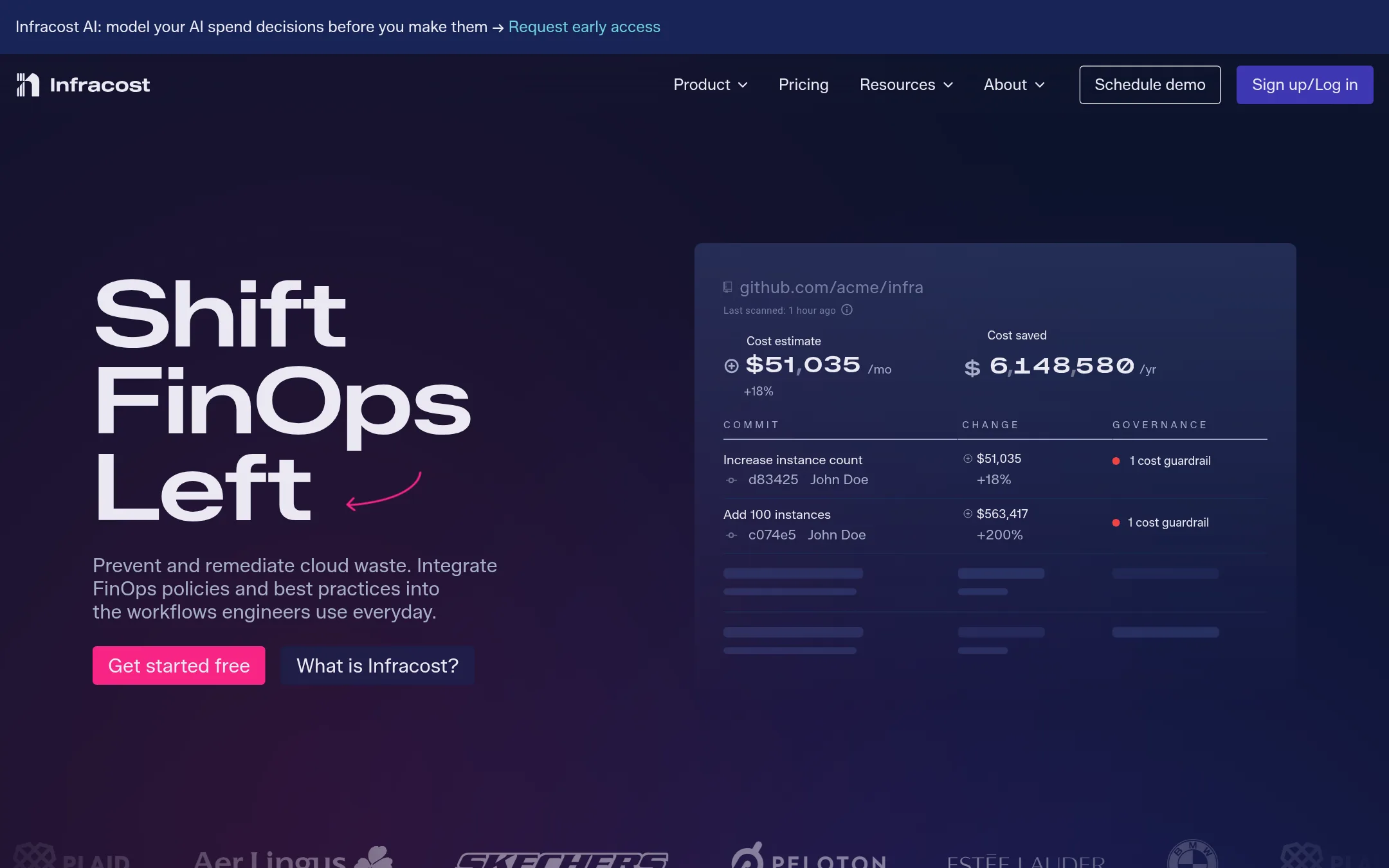
Infracost estimates what Terraform, CloudFormation and CDK changes will cost before they ship, and posts that estimate in the pull request. It also adds FinOps policies, cost guardrails and autofix workflows so cost problems get caught in the engineering process. Choose it over Pluralith when your main concern is cloud spend rather than architecture diagrams or compliance checks.
Where it is strong
- Cost estimates appear in pull requests for Terraform, CloudFormation and CDK
- Cost guardrails and policies stop budget overruns before deployment
- Covers AWS, Azure and GCP services
Where it falls short
- It focuses on cost, so it does not draw architecture diagrams like Pluralith
- Governance features such as SSO group mapping and custom policies sit in the Enterprise tier
- Pricing:
- The CI/CD plan is free with 1,000 runs per month, Starter is $250/mo with 10,000 runs, Cloud is $1,000/mo, and Enterprise is by quote.
- TNot published
2.Terraform Visual
Best for: Teams that want a Terraform diagram tool and have checked its current features directly, since the site could not be reviewed here

- Pricing
- Not published
- Category
- Other
Terraform Visual is a tool for visualising Terraform projects. The alternative's website returned a connection error when fetched, so the supplied facts do not describe what it does in detail. A team might consider it if they want a diagram tool for Terraform and do not need the pull request comments, drift detection and compliance checks that Pluralith provides.
Where it is strong
- Focused on visualising Terraform projects
- Could be a simpler option for basic diagrams
- Worth checking directly for its current feature set
Where it falls short
- Its website could not be reached when this entry was prepared
- No public pricing information was found
- Pricing:
- Pricing is not published on the site.
- CFree in Datadog
3.Cloudcraft
Best for: Teams already on Datadog that run multi-cloud or multi-account environments and want live diagrams for incident response
- Pricing
- Free in Datadog
- Category
- Other
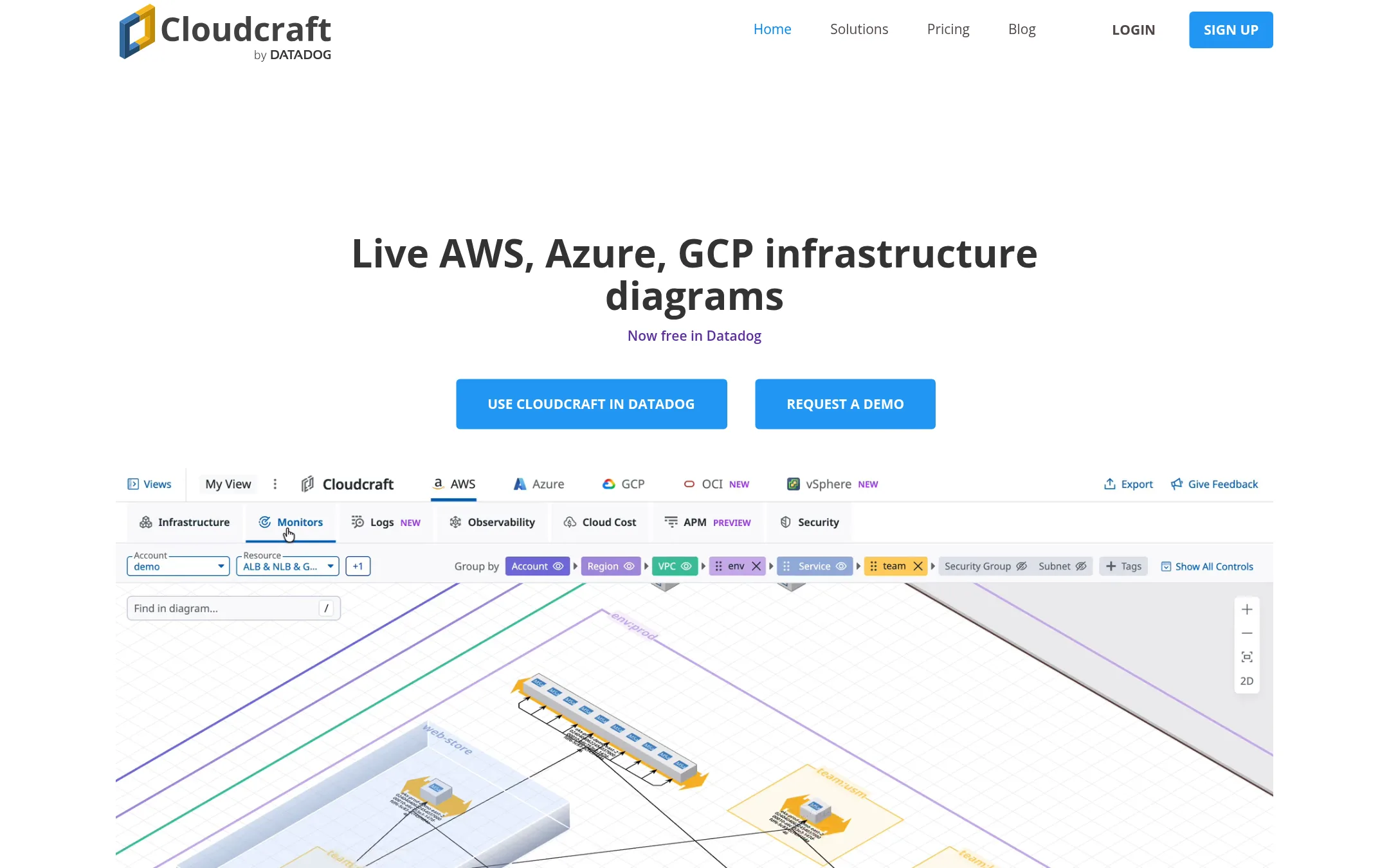
Cloudcraft draws live diagrams of AWS, Azure, GCP, Oracle Cloud and VMware vSphere environments, then overlays alerts, logs, security findings and costs on them. Pluralith builds its diagrams from Terraform code and plan output, so it suits teams that want docs generated in pull requests. Cloudcraft suits teams that already run Datadog and want a diagram of what is actually running.
Where it is strong
- Shows live state from AWS, Azure, GCP, Oracle Cloud and vSphere on one diagram
- Overlays alerts, error logs and Kubernetes issues so you can trace problems to the source
- Adds cost heatmaps and security misconfiguration overlays using data Datadog already collects
Where it falls short
- Requires a Datadog subscription to get the overlays
- Diagrams reflect deployed infrastructure, not Terraform plan changes before apply
- Pricing:
- Pricing is not published on the site beyond the statement that Cloudcraft is free within a Datadog subscription, with unlimited users and diagrams.
- Free tier + Pro + Ente
4.Brainboard
Best for: Platform and cloud teams that want self-serve infrastructure with standard templates across AWS, Azure, GCP and OCI
- Pricing
- Free tier + Pro + Ente
- Category
- Developer Tools
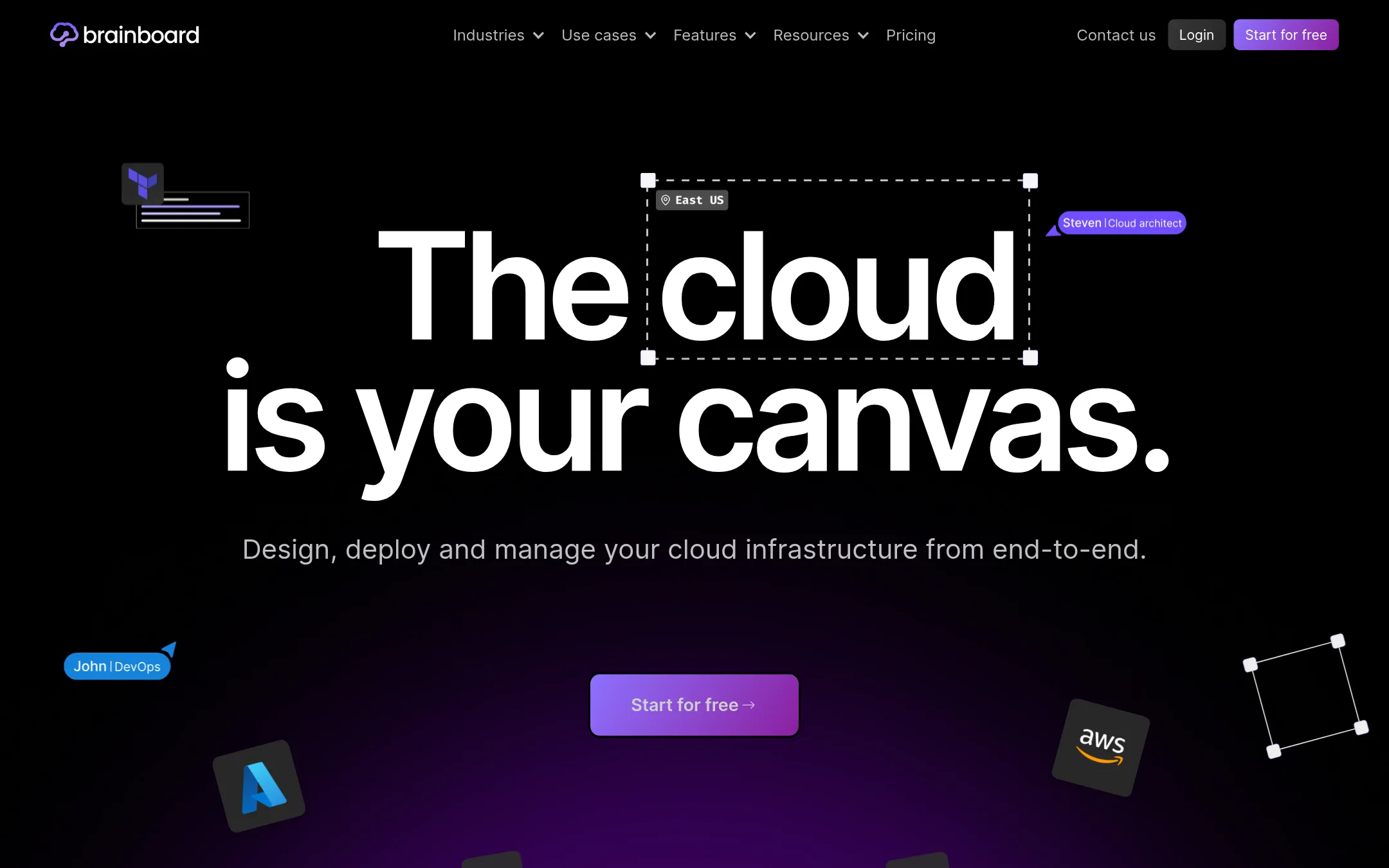
Brainboard is a visual cloud designer that generates Terraform or OpenTofu code as you draw, then handles deployment through an embedded CI/CD engine and drift detection. Teams pick it over Pluralith when they want to design and deploy infrastructure from the same canvas, not just document what already exists in a plan.
Where it is strong
- Generates Terraform code automatically from the visual design
- Covers AWS, Azure, GCP, OCI and Scaleway in one workspace
- Includes drift detection on schedules and a visual CI/CD engine
Where it falls short
- Its focus is building and deploying infrastructure, so it does less pure documentation of plans than Pluralith
- Import from Azure and AWS and self-hosting are limited to the Enterprise plan
- Pricing:
- Pricing is published on the Brainboard site as a Free tier with unlimited architectures and Terraform generation, a Pro plan for small teams billed monthly or yearly, and an Enterprise plan with custom quotes, though the figures are not in the text supplied he
- TFrom $1,000/mo
5.Terrateam
Best for: Platform teams with large Terraform or Terragrunt monorepos that need approval gates and drift control in pull requests
- Pricing
- From $1,000/mo
- Category
- Other
Terrateam runs Terraform, OpenTofu, Terragrunt, CDKTF and Pulumi from pull requests, posting plans, cost estimates and policy results as comments, with apply gates and dependency-ordered runs across large monorepos. Pick it over Pluralith when you need to run and govern infrastructure changes in CI, not just document and visualise them.
Where it is strong
- Plans every pull request and posts the plan, cost and policy results as a comment
- Runs changes in dependency order and in parallel across thousands of workspaces
- Approval gates per environment, with drift detection on schedules that can reconcile automatically
Where it falls short
- Focused on running changes, so it does not produce the diagrams and documentation that Pluralith is built around
- Free tier caps users and runs, and the paid tier is a flat monthly fee rather than usage-based
- Pricing:
- Pricing is published for Free (small teams, 3 users, 50 runs a month), Orchestration Pro at $1,000 a month billed annually, and Infrastructure as a Database at a starting price on an annual contract.
- ANot published
6.Atlantis
Best for: Engineering teams with many Terraform repos that want pull request based plan and apply with approval gates for production changes
- Pricing
- Not published
- Category
- Other
Atlantis runs Terraform plan and apply from pull request comments, so changes are reviewed and applied inside the normal Git workflow. You would choose it over Pluralith if your main need is safe, approval-gated Terraform execution and audit logs rather than diagrams and documentation.
Where it is strong
- Runs Terraform plan and apply from pull request comments
- Requires approvals before applies, and developers can submit changes without holding cloud credentials
- Self-hosted, with support for GitHub, GitLab, Bitbucket and Azure DevOps
Where it falls short
- The site does not describe diagrams, cost estimates or compliance checks like Pluralith offers
- Being open source, it relies on volunteer contributions for support
- Pricing:
- Pricing is not published on the site.
See more comparisons in Security & Privacy alternatives.
FAQ
Questions about Pluralith alternatives
What does Pluralith do?
Pluralith visualises and documents Terraform infrastructure directly from the codebase. According to its site, it runs terraform plan under the hood, posts a diagram as a pull request comment, and shows drift, cost and compliance data on the diagram. Its Dashboard keeps a visual history of Terraform plans.
Which alternative is best if my main concern is cloud cost?
Infracost is the strongest fit for that need. It estimates what Terraform, CloudFormation and CDK changes will cost and posts the estimate in the pull request, and it adds cost guardrails and policies. It does not draw architecture diagrams the way Pluralith does.
Which alternative should I choose if I want to run Terraform changes from pull requests?
Terrateam runs Terraform, OpenTofu, Terragrunt, CDKTF and Pulumi from pull requests and posts plans, cost estimates and policy results as comments. It offers approval gates per environment and drift detection on schedules. It suits large monorepos, though its free tier caps users and runs.
Can I get live diagrams of what is actually deployed?
Cloudcraft draws live diagrams of AWS, Azure, GCP, Oracle Cloud and VMware vSphere environments. It overlays alerts, logs and security findings, but it requires a Datadog subscription to get those overlays. Its diagrams reflect deployed infrastructure rather than Terraform plan changes before apply.
Is there an alternative I should check carefully before relying on it?
Terraform Visual's website could not be reached when its entry was prepared, so its features and pricing are not confirmed here. Check its current feature set and pricing directly before deciding. Brainboard is another option to review if you want to design and deploy infrastructure from one visual canvas.
Last updated November 8, 2026.