
Plytix alternatives
8 products compared · Updated November 2, 2026
The short answer
For most teams, Akeneo is the strongest alternative to Plytix if you need enterprise-grade governance and AI-ready data. Salsify suits large brands and retailers requiring deep supplier onboarding and syndication. For AI-first content generation and image standardization, Hypotenuse AI is the best fit, especially for large catalogs.
Your shortlist, at a glance
Read the comparisons ↓ AkeneoNot publishedEnterprise brands and retailers with complex catalogs, global markets, and strict data governance requirements.
 SalsifyNot publishedLarge brands and retailers that need supplier onboarding, GDSN synchronization, and advanced syndication across the digital shelf.
- PPimcoreFrom $9,900Large enterprises that need a unified data and experience platform with on-premise or PaaS deployment options.
- CCatsyNot publishedManufacturers, B2B brands, and wholesale distributors that need retailer-specific templates and complex product data management.
 InriverCustom quoteLarge manufacturers and distributors with complex product portfolios that need a flexible, enterprise-grade PIM with AI orchestration and global syndication.
- PProductsupNot publishedE-commerce teams that need to manage and optimize product feeds across many marketplaces, comparison shopping engines, and social channels.
 Hypotenuse AINot publishedEcommerce teams with large catalogs that need AI-driven content generation and image standardization to speed up product onboarding.
 SyndigoNot publishedLarge brands and retailers that need to syndicate product data to thousands of retail partners with built-in compliance requirements.
About Plytix and its alternatives
Plytix is a product information management (PIM) platform that also includes digital asset management (DAM), AI content tools, and feed management. It is known for being user-friendly, with a free forever plan and a setup that takes about a week. The platform centralizes product data, optimizes it for channels, and distributes it automatically.
When comparing alternatives, weigh pricing structure, especially whether costs are transparent or require a sales call. Consider regional support and integrations with your existing ERP, ecommerce channels, and marketplaces. Evaluate contract terms, such as whether there is a free tier or a long implementation period. Also check if the tool covers PIM and DAM or focuses only on feed management.
Explore the alternatives
- Not published
1.Akeneo
Best for: Enterprise brands and retailers with complex catalogs, global markets, and strict data governance requirements.
- Pricing
- Not published
- Category
- E-commerce
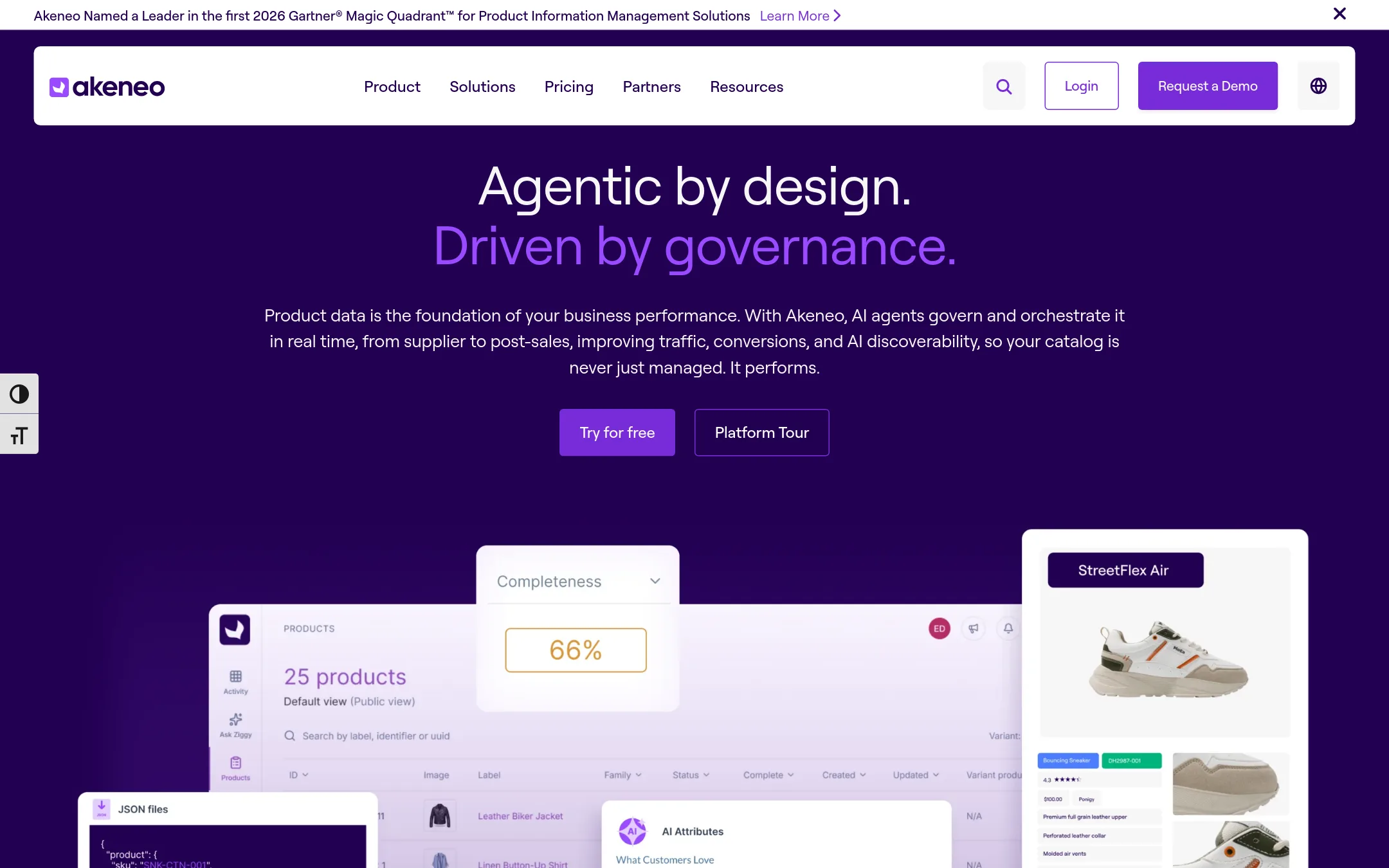
Akeneo is a product experience management platform that centralizes, enriches, and syndicates product data across channels. It is a good fit for larger enterprises that need deep governance, supplier onboarding, and AI-driven data preparation for LLMs and agentic commerce.
Where it is strong
- Strong governance and validation rules for data quality.
- AI-powered supplier data onboarding and channel mapping.
- Recognized as a Leader in Gartner's PIM Magic Quadrant.
Where it falls short
- Pricing is not transparent. Likely enterprise-level.
- Implementation may be longer and more complex than Plytix's one-week setup.
- Pricing:
- Pricing is not published on the site.
- Switching from Plytix:
- Moving from Plytix to Akeneo involves migrating your product data and reconfiguring channel mappings, which may require more setup time due to Akeneo's enterprise focus.
- Not published
2.Salsify
Best for: Large brands and retailers that need supplier onboarding, GDSN synchronization, and advanced syndication across the digital shelf.
- Pricing
- Not published
- Category
- E-commerce
Salsify is an enterprise-grade product experience management platform that centralizes product data, syndicates it across channels, and uses AI to automate content workflows. Choose it over Plytix if you're a large brand or retailer needing deep supplier onboarding, GDSN data pools, and digital shelf analytics at scale.
Where it is strong
- Strong supplier onboarding and validation tools for retailers
- GDSN data pool support for global supply chain compliance
- AI-powered automation embedded in workflows
Where it falls short
- Pricing not transparent. Likely enterprise-level contracts
- Heavier implementation than Plytix, with more complex setup
- Pricing:
- Pricing is not published on the site.
- PFrom $9,900
3.Pimcore
Best for: Large enterprises that need a unified data and experience platform with on-premise or PaaS deployment options.
- Pricing
- From $9,900
- Category
- Other
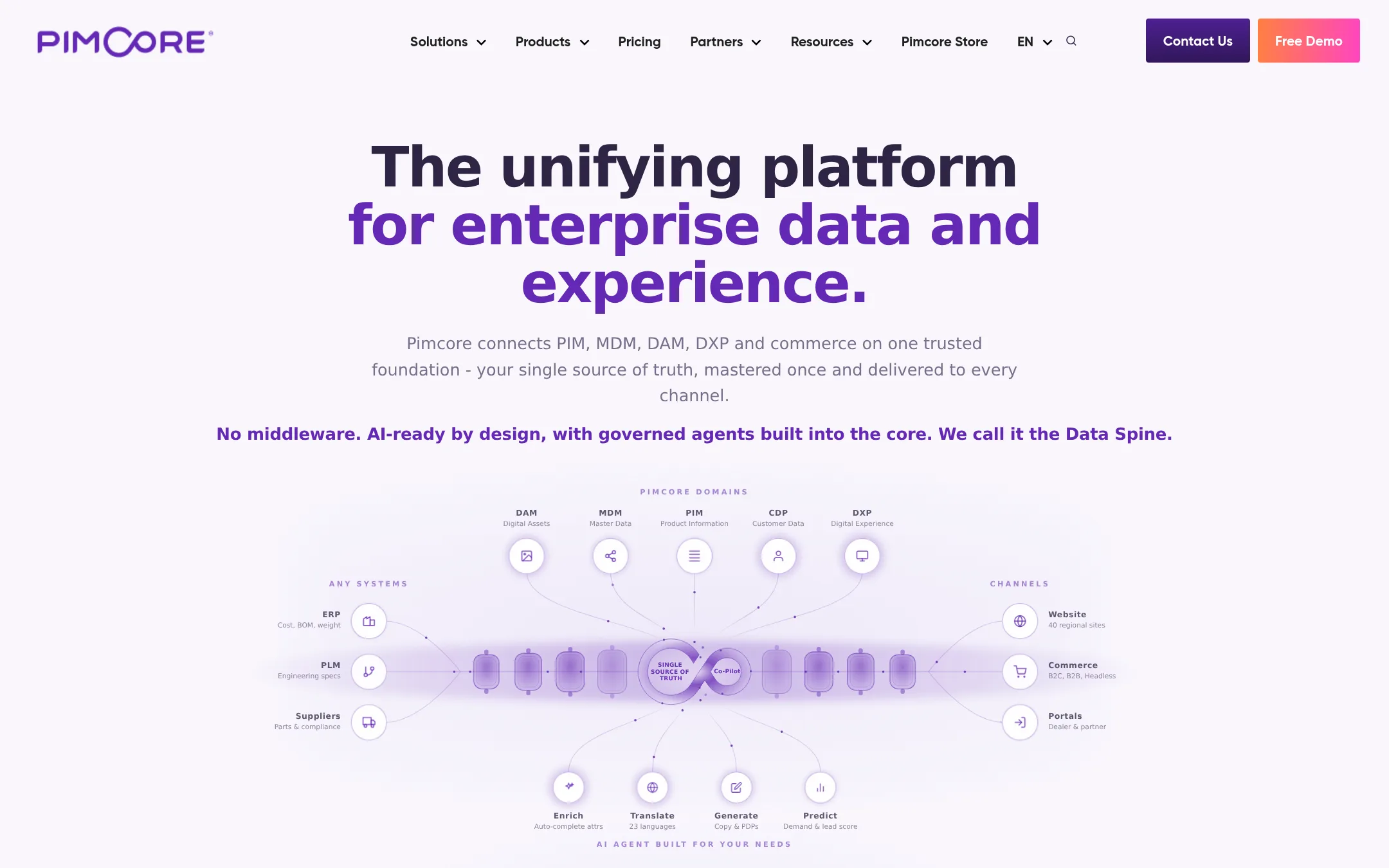
Pimcore is an enterprise platform that combines PIM, MDM, DAM, DXP, and commerce into one system. You would choose it over Plytix if you need deep data modeling, governance, and a full experience management suite, not just product content distribution.
Where it is strong
- Combines PIM, MDM, DAM, DXP, and commerce in one platform
- No seat limits or product count restrictions
- On-premise or fully managed cloud options
Where it falls short
- Higher entry price than Plytix's free tier
- Advanced features like CDP require Enterprise edition
- Pricing:
- Pricing starts at $9,900 for the Professional Edition, $29,900 for Enterprise, and custom pricing for PaaS.
- Switching from Plytix:
- Moving from Plytix involves migrating your product data model and asset repository, and likely reconfiguring channel integrations.
- CNot published
4.Catsy
Best for: Manufacturers, B2B brands, and wholesale distributors that need retailer-specific templates and complex product data management.
- Pricing
- Not published
- Category
- Other
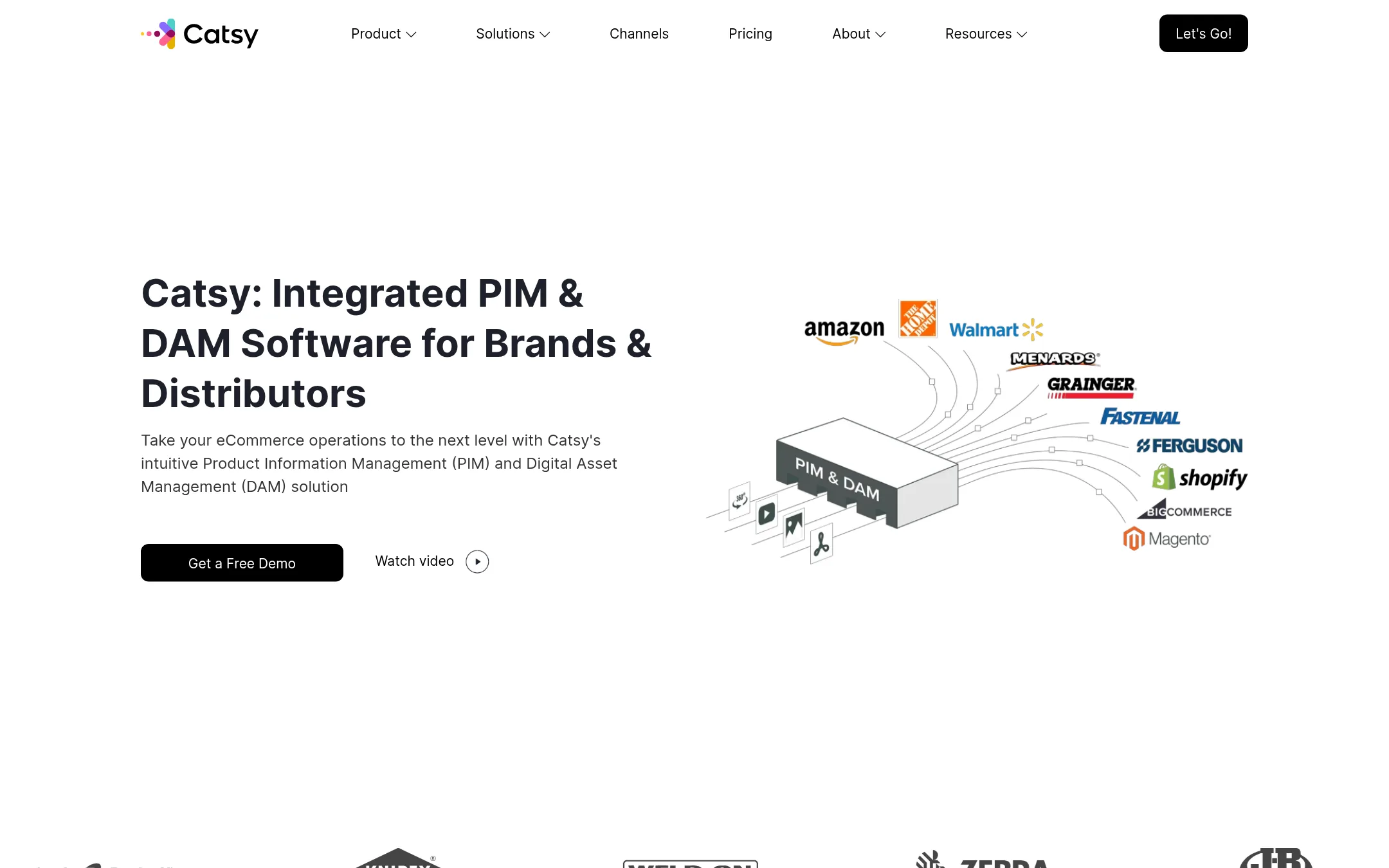
Catsy is an integrated PIM and DAM platform built for manufacturers, B2B brands, and wholesale distributors. It centralizes product data and digital assets, with a focus on retailer-specific templates and content readiness. Choose Catsy over Plytix if you need a system tailored to complex spec sheets, component kits, and multi-variant SKUs, with strong support for retailer syndication.
Where it is strong
- Integrated PIM and DAM in one platform
- Retailer-specific export templates
- Granular access control and audit history
Where it falls short
- Pricing not disclosed publicly
- Less emphasis on AI features compared to Plytix
- Pricing:
- In the United States, pricing is not published on the site.
- Custom quote
5.Inriver
Best for: Large manufacturers and distributors with complex product portfolios that need a flexible, enterprise-grade PIM with AI orchestration and global syndication.
- Pricing
- Custom quote
- Category
- E-commerce
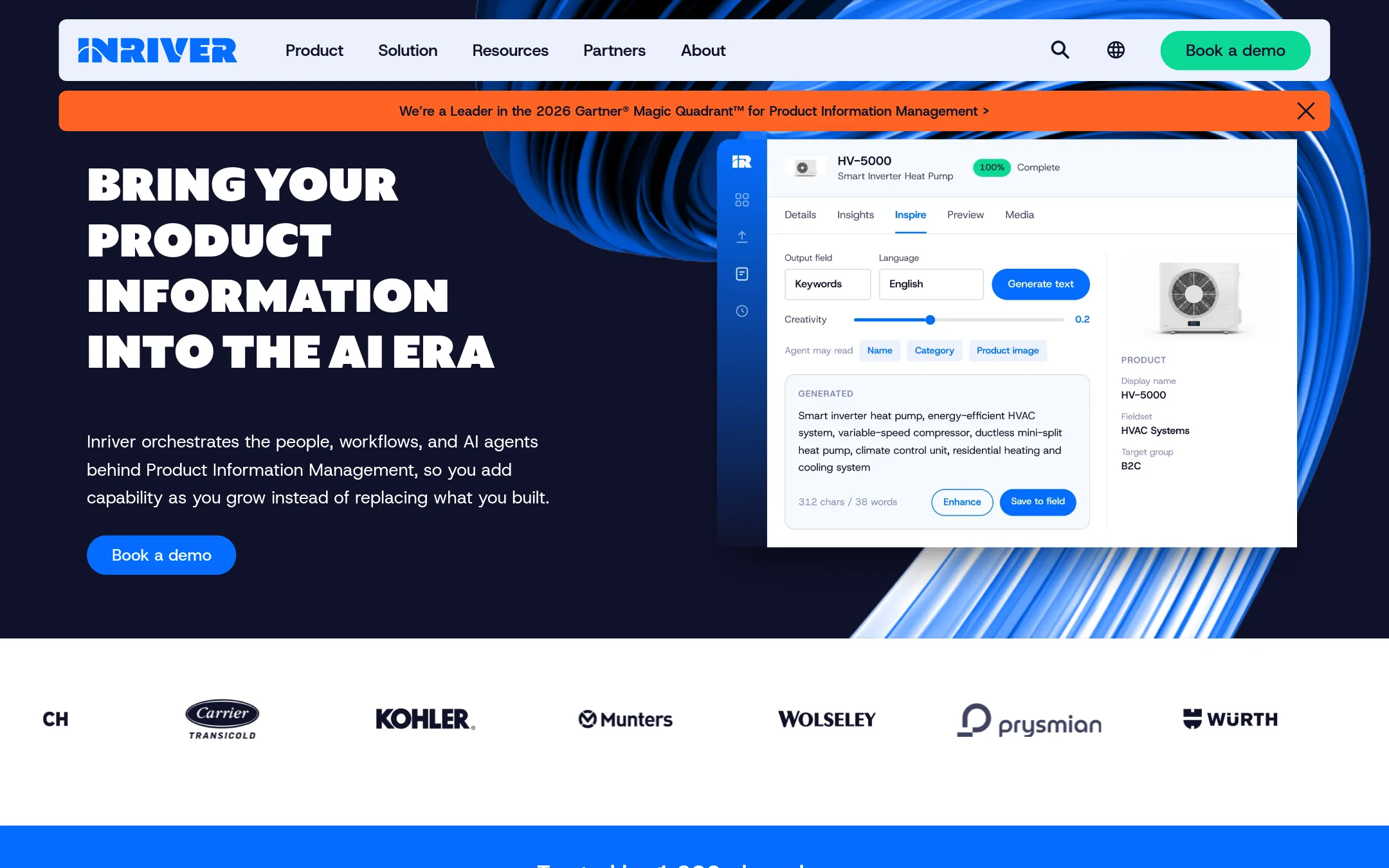
Inriver is an enterprise-grade PIM that orchestrates people, workflows, and AI agents around product data. Choose it if you have complex, high-volume product data across many systems and need a flexible data model that adapts as you grow, rather than Plytix's simpler, channel-focused approach. It is built for organizations that need deep governance, syndication, and digital shelf analytics in one platform.
Where it is strong
- Flexible data model adapts to your business, not the software
- Built-in API-based syndication and digital shelf analytics
- AI agents can query product data directly via MCP support
Where it falls short
- Pricing is not transparent and requires a sales conversation
- May be overkill for smaller teams that just need basic PIM and DAM
- Pricing:
- Pricing is not published on the site. Plans are fully customizable and require booking a demo.
- Switching from Plytix:
- Moving from Plytix means re-modeling your product data into Inriver's flexible structure, which can take longer than Plytix's one-week setup.
- PNot published
6.Productsup
Best for: E-commerce teams that need to manage and optimize product feeds across many marketplaces, comparison shopping engines, and social channels.

- Pricing
- Not published
- Category
- Other
Productsup is a feed management and product data syndication platform that helps retailers and brands distribute product content to hundreds of sales channels. Choose it over Plytix if your priority is broad channel coverage and feed optimization rather than a full PIM/DAM system.
Where it is strong
- Strong feed management for hundreds of channels
- Channel-specific optimization and targeting
- Centralized product data distribution
Where it falls short
- No PIM or DAM capabilities like Plytix
- Site was unreachable at the time of review
- Pricing:
- Pricing is not published on the site.
- Not published
7.Hypotenuse AI
Best for: Ecommerce teams with large catalogs that need AI-driven content generation and image standardization to speed up product onboarding.
- Pricing
- Not published
- Category
- E-commerce
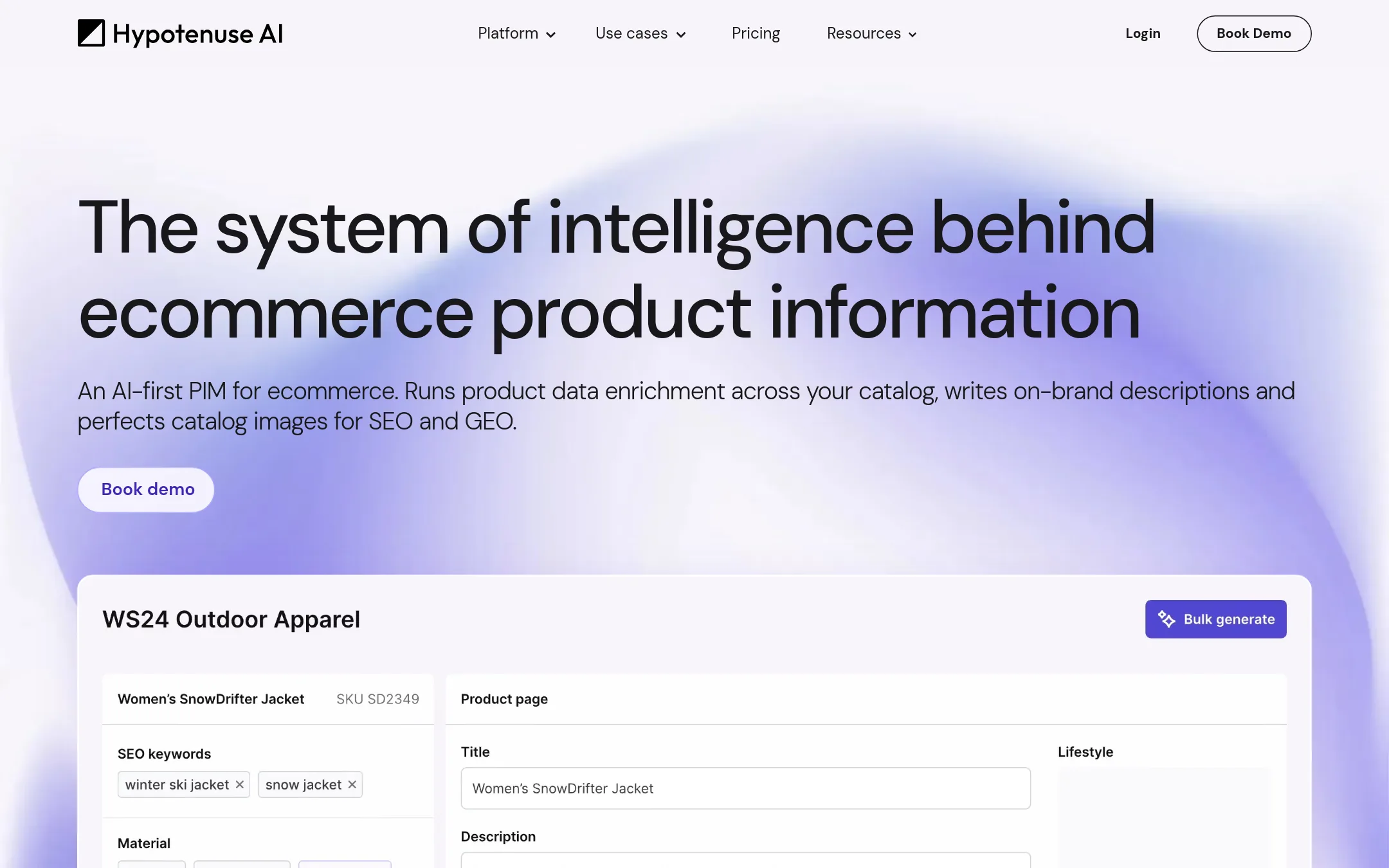
Hypotenuse AI is an AI-first product experience management platform that automates data enrichment, content generation, and image enhancement for ecommerce catalogs. Choose it over Plytix if your priority is using AI to fill missing attributes, write SEO-ready descriptions, and standardize images at scale, rather than managing a broader PIM/DAM system.
Where it is strong
- AI auto-enrichment fills missing attributes from web, UPC, and spec sheets
- Generates thousands of on-brand product descriptions in one click
- Enhances and standardizes images to studio quality with AI
Where it falls short
- No published pricing, so cost transparency is limited
- Focuses on AI content and images, not a full PIM/DAM like Plytix
- Pricing:
- Pricing is not published on the site.
- Not published
8.Syndigo
Best for: Large brands and retailers that need to syndicate product data to thousands of retail partners with built-in compliance requirements.
- Pricing
- Not published
- Category
- E-commerce
Syndigo is a product experience management platform that centralizes product data and syndicates it to a large retail network. You would choose it over Plytix if you are a large brand or retailer that needs to meet specific retailer requirements and manage data at scale across many channels.
Where it is strong
- Network of 3,500+ retailers with requirements built in
- Validates data against nearly 4,000 retailer requirements
- Includes MDM, GDSN, and vendor central capabilities
Where it falls short
- Pricing is not public, likely enterprise-level
- May be more complex than needed for smaller teams
- Pricing:
- Pricing is not published on the site.
See more comparisons in E-commerce alternatives.
FAQ
Questions about Plytix alternatives
Which alternative is best for a small team with a limited budget?
Pimcore has a starting price of $9,900, which may be high for small teams. Plytix itself offers a free tier, but among alternatives, Hypotenuse AI has no published pricing, so you would need to contact them. For a small team, consider whether you need a full PIM or just feed management, as Productsup might be simpler but lacks PIM features.
Which alternative has the most transparent pricing?
Pimcore is the only one with published pricing, starting at $9,900 for Professional and $29,900 for Enterprise. All other alternatives, including Salsify, Akeneo, Syndigo, Inriver, Productsup, and Catsy, do not publish pricing and require a sales conversation. Hypotenuse AI also does not list pricing.
Which alternative is best for large retailers needing supplier onboarding?
Salsify is the strongest for supplier onboarding and validation, with GDSN data pool support. Syndigo also offers a network of 3,500+ retailers with built-in requirements, making it suitable for large-scale syndication. Akeneo provides supplier onboarding but is more focused on governance and AI readiness.
Which alternative offers AI features comparable to Plytix?
Hypotenuse AI is the most AI-centric, automating content generation and image enhancement. Akeneo and Inriver also have AI capabilities, such as AI-powered supplier data onboarding and AI agents for querying product data. Plytix itself includes AI editing, but these alternatives may offer more advanced AI workflows.
Which alternative is best for manufacturers with complex product data?
Catsy is tailored for manufacturers and wholesale distributors, with retailer-specific templates and support for complex spec sheets and multi-variant SKUs. Inriver also suits large manufacturers with flexible data modeling and AI orchestration. Pimcore offers deep data modeling but at a higher entry price.
Last updated November 2, 2026.