
Podman alternatives
12 products compared · Updated October 30, 2026
The short answer
The strongest Podman alternatives are Docker for teams wanting a supported, enterprise-grade workflow with a GUI and hosted registry, Kubernetes for production-scale orchestration, and Rancher Desktop for developers who want a simple desktop GUI with built-in Kubernetes. Docker suits teams needing managed support, Kubernetes suits production workloads, and Rancher Desktop suits developers on macOS, Windows, or Linux.
Your shortlist, at a glance
Read the comparisons ↓ DockerFrom $9/user/moTeams that want a supported, enterprise-grade container workflow with a desktop GUI and hosted registry.
- ccontainerdNot publishedPlatform teams building Kubernetes nodes or custom container runtimes that need a CNCF-graduated runtime with a minimal feature set.
 LXDNot publishedTeams running Ubuntu-based infrastructure that need to manage both system containers and virtual machines from a single tool.
- RRancher DesktopNot publishedDevelopers on macOS, Windows, or Linux who want a simple desktop GUI for Kubernetes and container work without managing separate tools.
- OOrbStackFree / $8 per user/moMac developers who want a drop-in Docker Desktop replacement with better performance and battery life.
 FinchNot publishedSaaS companies that need to integrate with payroll, HR, and benefits systems without building and maintaining each connection themselves.
 BuildahNot publishedTeams that build container images in CI/CD pipelines and want a daemonless, rootless build tool without the overhead of a full runtime.
 CRI-ONot publishedKubernetes clusters that need a minimal, OCI-compliant runtime without the extra tooling of Podman.
 DiversionSee websiteA scalable, cloud-native Perforce and Git alternative
 KubernetesNot publishedTeams running production workloads that need multi-node container orchestration, automated scaling, and high availability.
 SingularitySee websiteSecure, portable containers for HPC, AI/ML and edge workloads
 Argo CDSee websiteDeclarative continuous delivery with a fully-loaded UI for Kubernetes GitOps.
About Podman and its alternatives
Podman is a free, open source container tool for managing pods, images, and Kubernetes. It is known for being fast, light, secure, and compatible with Kubernetes, with support in Visual Studio Code, GitHub Actions, and Kind.
When comparing alternatives, weigh pricing structure, regions, integrations, support, and contract terms. Some tools are free or open source, while others require paid plans or sales quotes. Check which integrations matter to your workflow, whether support SLAs are needed, and if contract terms fit your procurement process.
Explore the alternatives
- From $9/user/mo
1.Docker
Best for: Teams that want a supported, enterprise-grade container workflow with a desktop GUI and hosted registry.
- Pricing
- From $9/user/mo
- Category
- Developer Tools
Docker is a commercial container platform with a graphical desktop app, hosted image registry, and enterprise governance features. Choose it over Podman if your team wants a managed, supported experience with built-in security scanning and SSO, rather than assembling open-source tools yourself.
Where it is strong
- Desktop app with GUI for managing containers and images
- Docker Hub hosts public and private images with pull rate limits
- Enterprise plans include SSO, audit logs, and support SLAs
Where it falls short
- Paid plans required for team features and support
- Desktop app has usage limits on free tier
- Pricing:
- Docker Personal is free. Pro is $9 per user/month (annual) or $11 monthly. Team is $15 per user/month (annual) or $16 monthly. Business is $24 per user/month. Docker Hardened Images start at $5k per repository.
- Switching from Podman:
- Moving from Podman to Docker means replacing the container runtime and CLI, but your OCI images and Dockerfiles remain compatible.
- cNot published
2.containerd
Best for: Platform teams building Kubernetes nodes or custom container runtimes that need a CNCF-graduated runtime with a minimal feature set.
- Pricing
- Not published
- Category
- Developer Tools
containerd is a low-level container runtime that manages the full container lifecycle, from image transfer to execution. You would choose it over Podman when you are building a container platform or orchestrator and need a stable, embeddable runtime layer rather than a user-facing CLI and pod management tool.
Where it is strong
- CNCF graduated project with a mature, stable codebase
- OCI image and runtime spec support for broad compatibility
- Multi-tenant CAS storage for global images
Where it falls short
- No built-in pod or Kubernetes orchestration features
- Requires additional tooling for image building and management
- Pricing:
- Pricing is not published on the site.
- Not published
3.LXD
Best for: Teams running Ubuntu-based infrastructure that need to manage both system containers and virtual machines from a single tool.
- Pricing
- Not published
- Category
- Developer Tools
LXD is a system container and virtual machine manager from Canonical, focused on running full Linux systems rather than individual application containers. Choose it over Podman when you need to operate entire OS images or VMs as part of your infrastructure, especially if you are already invested in the Ubuntu ecosystem.
Where it is strong
- Runs full Linux containers and VMs
- Backed by Canonical with enterprise support
- Integrates with Ubuntu's security and compliance tooling
Where it falls short
- Tied closely to Ubuntu and Canonical services
- Not a drop-in replacement for OCI container workflows
- Pricing:
- Pricing is not published on the site.
- RNot published
4.Rancher Desktop
Best for: Developers on macOS, Windows, or Linux who want a simple desktop GUI for Kubernetes and container work without managing separate tools.
- Pricing
- Not published
- Category
- Other
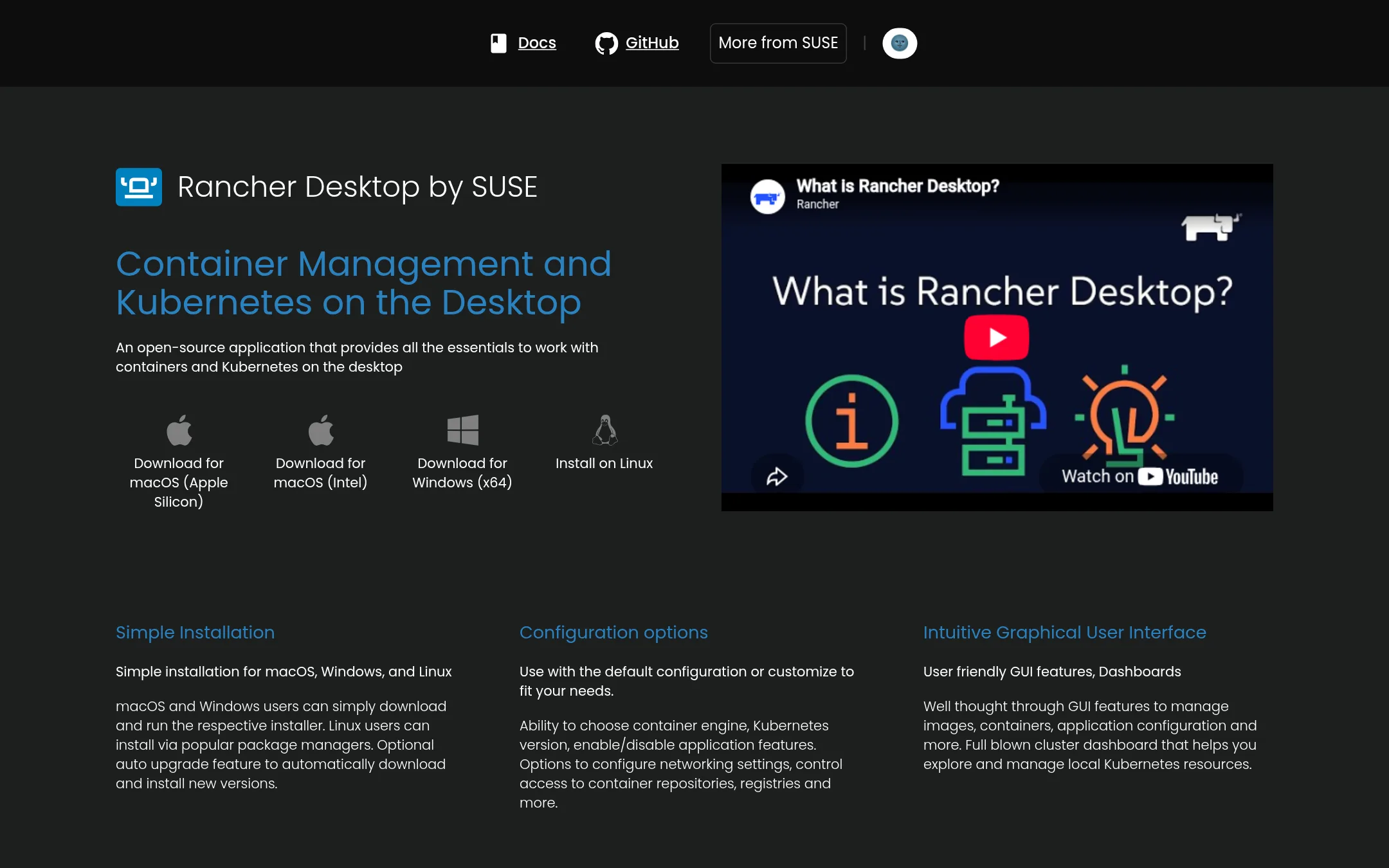
Rancher Desktop is a desktop app that bundles Kubernetes, containerd or Docker, and CLI tools like kubectl and helm. Choose it over Podman if you want a GUI-driven workflow with built-in Kubernetes and don't need Podman's daemonless architecture.
Where it is strong
- Bundles docker, nerdctl, kubectl, helm, and more out of the box
- GUI for configuring Kubernetes version, container engine, and VM resources
- Port forwarding for Kubernetes services with one click
Where it falls short
- Uses a VM on macOS and Linux, so it is heavier than Podman's daemonless approach
- Windows support relies on WSL2, which may not suit all environments
- Pricing:
- Pricing is not published on the site.
- Switching from Podman:
- Moving from Podman means adopting a GUI-centric workflow and a VM-based runtime, so existing Podman CLI habits may not carry over directly.
- OFree / $8 per user/mo
5.OrbStack
Best for: Mac developers who want a drop-in Docker Desktop replacement with better performance and battery life.
- Pricing
- Free / $8 per user/mo
- Category
- Other
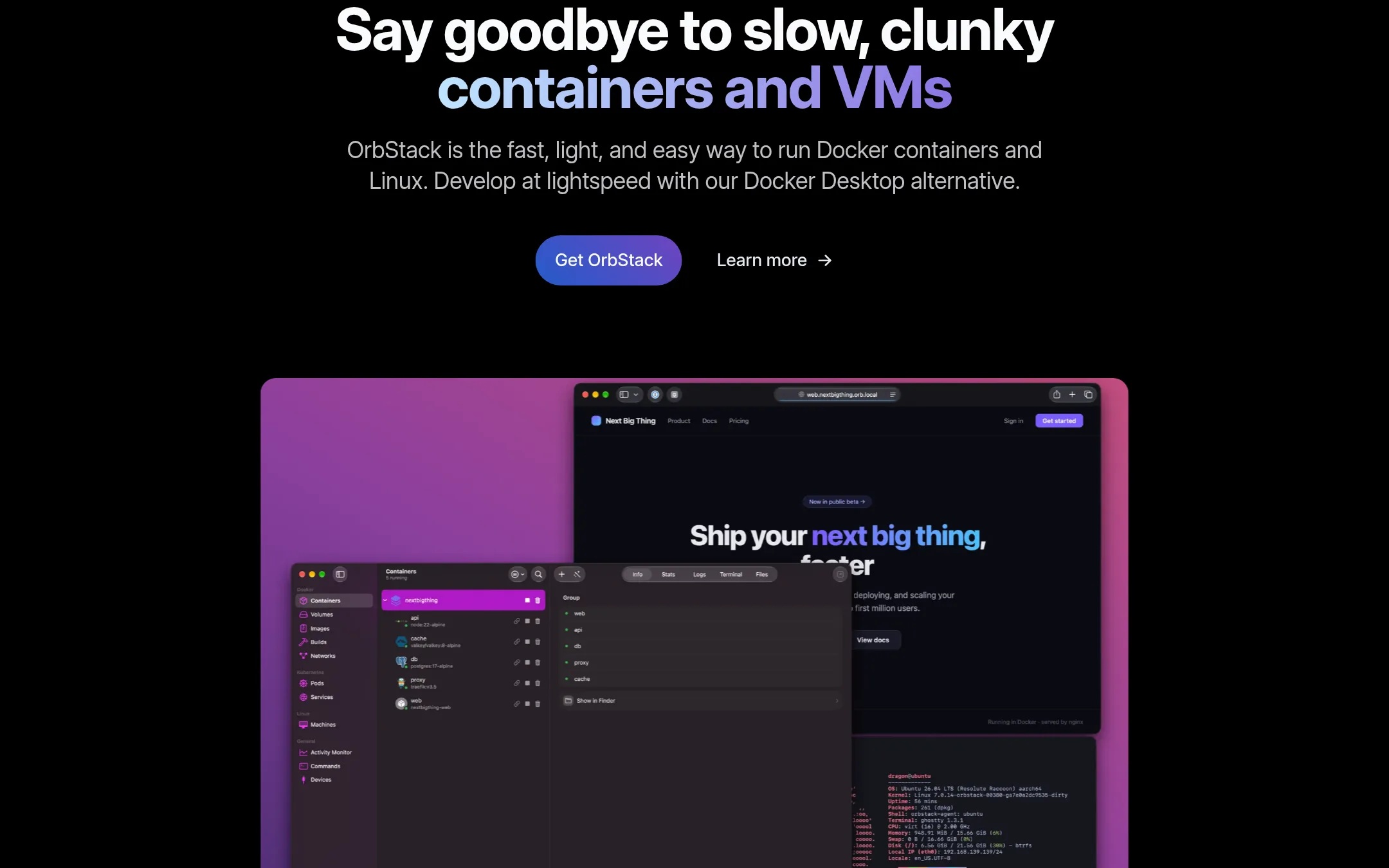
OrbStack is a fast, lightweight Docker Desktop replacement for macOS. You would choose it over Podman if you want a native app with low resource usage and easy Linux VM management, rather than a CLI-first, daemonless container tool.
Where it is strong
- Starts in seconds with low CPU and disk usage
- Runs containers, Kubernetes, and Linux distros
- Drop-in replacement for Docker Desktop
Where it falls short
- Mac-only, no Linux or Windows support
- Pro required for commercial use
- Pricing:
- Free for personal use. Pro is $8 per user per month, billed annually at $96. Enterprise pricing is contact sales.
- Switching from Podman:
- Moving from Podman means switching to a Docker-compatible workflow, since OrbStack uses Docker commands and Compose rather than Podman's CLI.
- Not published
6.Finch
Best for: SaaS companies that need to integrate with payroll, HR, and benefits systems without building and maintaining each connection themselves.
- Pricing
- Not published
- Category
- Finance & Accounting
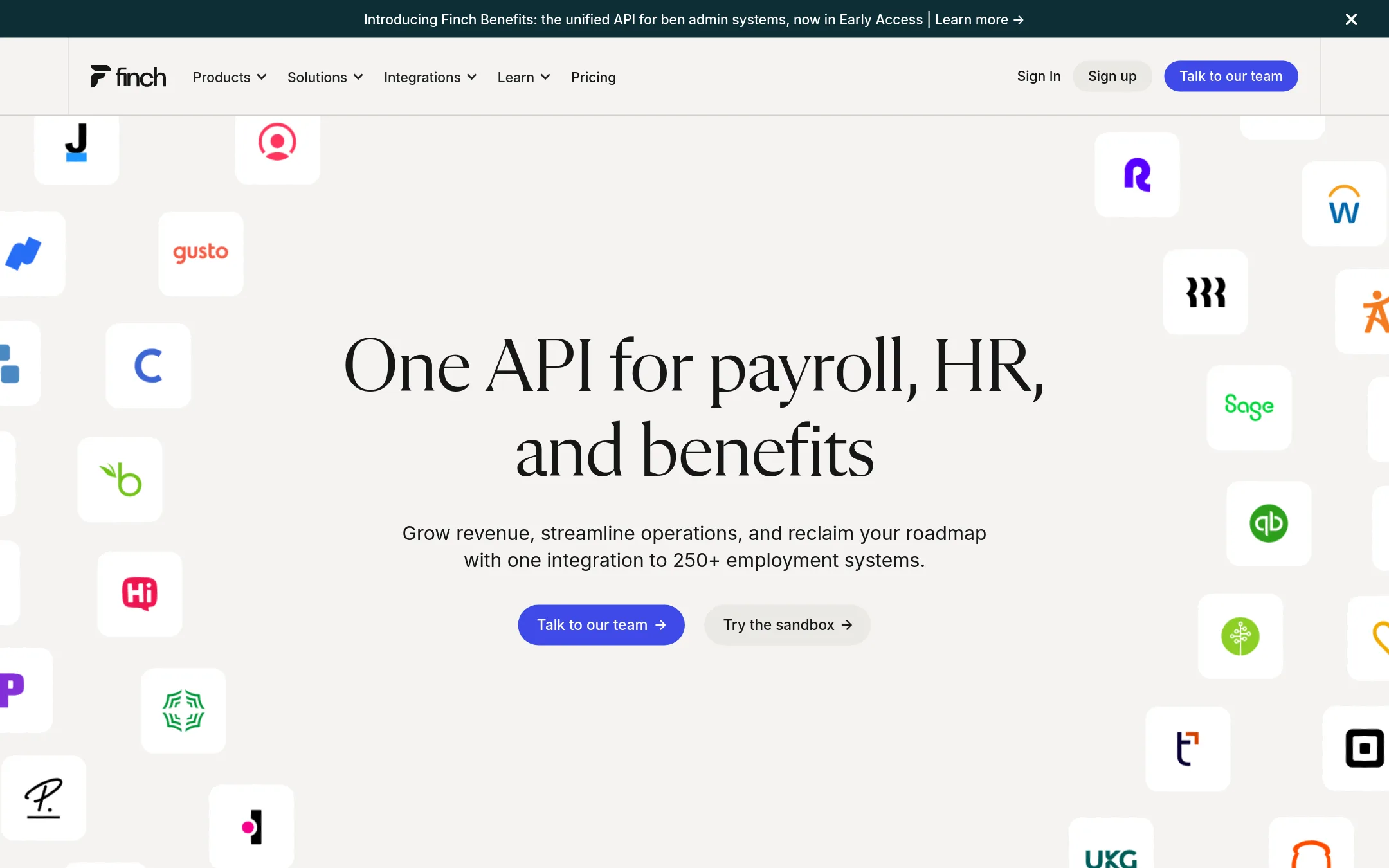
Finch is a unified API for payroll and HR data, giving you one integration to 250+ employment systems. You would choose it instead of Podman when your product needs to connect to payroll, HR, or benefits providers, not when you need container tooling.
Where it is strong
- One API to 250+ payroll and HR systems
- Unified data format across providers
- Handles build and maintenance of integrations
Where it falls short
- No container or Kubernetes features
- Pricing requires contacting sales
- Pricing:
- Pricing is not published on the site.
- Not published
7.Buildah
Best for: Teams that build container images in CI/CD pipelines and want a daemonless, rootless build tool without the overhead of a full runtime.
- Pricing
- Not published
- Category
- Developer Tools
Buildah builds OCI container images without needing a full container runtime or daemon. You would choose it over Podman when you only need to build images, not run containers, and want a lighter, more scriptable tool for CI pipelines.
Where it is strong
- No daemon required, works in rootless mode
- Builds OCI-compliant images directly
- Integrates well with Kubernetes build workflows
Where it falls short
- Does not run containers, so you still need a runtime like Podman
- No built-in pod or Kubernetes orchestration features
- Pricing:
- Pricing is not published on the site.
- Switching from Podman:
- Moving from Podman to Buildah means giving up container running and pod management, and adapting your build scripts to Buildah's CLI.
- Not published
8.CRI-O
Best for: Kubernetes clusters that need a minimal, OCI-compliant runtime without the extra tooling of Podman.
- Pricing
- Not published
- Category
- Developer Tools
CRI-O is a container runtime built specifically for Kubernetes, implementing the CRI to run OCI-compliant containers. You would choose it instead of Podman when you need a lightweight, Kubernetes-native runtime that integrates directly with kubelet, rather than a general-purpose container tool.
Where it is strong
- Optimized for Kubernetes, passes Kubernetes tests
- Supports any OCI-compliant runtime, including runc and Kata Containers
- Uses CNI for networking, works with Flannel, Weave, OpenShift-SDN
Where it falls short
- Not a general-purpose container tool. No CLI for building or managing images
- Requires Kubernetes or kubelet to be useful, not for standalone container workflows
- Pricing:
- Pricing is not published on the site.
- Switching from Podman:
- Moving from Podman to CRI-O means adopting Kubernetes as the orchestration layer, since CRI-O is a runtime for Kubernetes, not a standalone container manager.
- See website
9.Diversion
Developer Tools
A scalable, cloud-native Perforce and Git alternative
- Not published
10.Kubernetes
Best for: Teams running production workloads that need multi-node container orchestration, automated scaling, and high availability.
- Pricing
- Not published
- Category
- Developer Tools
Kubernetes is an open source orchestrator for deploying, scaling, and managing containerized applications across clusters. You would choose it instead of Podman when you need to run containers at scale in production, with automated rollouts, self-healing, and horizontal scaling across multiple machines.
Where it is strong
- Automated rollouts and rollbacks
- Self-healing and horizontal scaling
- Runs on-premises, hybrid, or public cloud
Where it falls short
- Steeper learning curve than Podman for local development
- Requires cluster setup and management for full benefits
- Pricing:
- Pricing is not published on the site.
- Switching from Podman:
- Moving from Podman to Kubernetes involves shifting from single-node container management to cluster orchestration, which requires learning new concepts like pods, services, and deployments.
- See website
11.Singularity
Developer Tools
Secure, portable containers for HPC, AI/ML and edge workloads
- See website
12.Argo CD
Developer Tools
Declarative continuous delivery with a fully-loaded UI for Kubernetes GitOps.
See more comparisons in Developer Tools alternatives.
FAQ
Questions about Podman alternatives
What is the best Podman alternative for a small team that wants a GUI?
Rancher Desktop is a good choice for developers who want a simple desktop GUI with built-in Kubernetes. It bundles docker, nerdctl, kubectl, and helm out of the box. It is free and open source, though it uses a VM on macOS and Linux.
Which alternative offers the most enterprise support?
Docker offers enterprise plans with SSO, audit logs, and support SLAs. OpenShift from Red Hat also provides managed editions and built-in security, but requires a paid subscription and contact with sales. Docker is more straightforward for teams needing a supported container workflow.
Are there free alternatives to Podman?
Yes, Kubernetes, containerd, Buildah, and CRI-O are open source and free to use. Rancher Desktop is also free. Docker has a free Personal tier, but team features require a paid plan. OrbStack is free for personal use but requires a paid Pro plan for commercial use.
What is the best alternative for running containers in production at scale?
Kubernetes is the strongest choice for production workloads that need multi-node orchestration, automated scaling, and high availability. OpenShift and Rancher add enterprise management and support on top of Kubernetes. For simpler mixed workloads, HashiCorp Nomad is a lighter alternative.
Which alternative is easiest to migrate to from Podman?
Docker is the most direct drop-in replacement because it offers a similar CLI and workflow, plus a desktop GUI. OrbStack is a drop-in replacement for Docker Desktop on macOS, so it is easy for Mac users. Rancher Desktop also bundles familiar tools like docker and kubectl.
Last updated October 30, 2026.