
Polis alternatives
12 products compared · Updated November 3, 2026
The short answer
For structured public consultation, Loomio offers transparent pricing and clear decision workflows, making it ideal for nonprofits and cooperatives. Decidim suits public institutions needing a self-hosted, customizable participation platform. CitizenLab (Go Vocal) is best for governments running multiple engagement projects with AI analysis, though its pricing is opaque.
Your shortlist, at a glance
Read the comparisons ↓ LoomioFrom $39/moDistributed teams, cooperatives, unions, and nonprofits that need transparent, asynchronous decisions with voting and audit trails.
- CConsider.itNot publishedGovernment agencies and nonprofits running structured public consultations or stakeholder alignment dialogues.
- DDiscourseNot publishedTeams and organizations that want a self-hosted or managed forum with deep customization, SSO, and plugin support for long-running community conversations.
 MattermostNot publishedGovernment, defense, and critical infrastructure teams that require self-hosted or air-gapped collaboration with strict data sovereignty.
 SlackNot publishedTeams that need a central hub for daily communication, file sharing, and automated workflows across projects.
- RRedditNot publishedCommunities that want open-ended discussion on any topic, with voting and moderation, rather than a focused platform for structured public input.
 DecidimNot publishedPublic institutions, cooperatives, and civic organizations that want full control over their participation platform and need features like participatory budgeting and proposal workflows.
 Democracy EarthNot publishedDecentralized communities, DAOs, and civic organizations that want to run their own tamper-proof elections with anonymous voting and custom voting rules.
 AragonNot publishedTeams launching or running DAOs and protocols that need onchain governance, tokenomics, and multi-chain support.
- CCitizenLabCustom quoteLocal and regional governments that need to run many engagement projects with built-in AI analysis and reporting.
 ColonyNot publishedOn-chain teams and DAOs that need flexible payments, batch payouts, and streaming salaries without monthly fees.
DAOhausNot publishedCommunities that want to launch a Moloch-style DAO with shareholder governance and open-source code.
About Polis and its alternatives
Polis is an open-source platform for gathering public opinion through real-time, AI-driven consensus mapping. It is built for public participation and deliberation, with contributions from a global community.
When comparing alternatives, weigh pricing structure (per-user vs flat), deployment options (hosted vs self-hosted), geographic data residency, integrations with existing tools, and support or contract terms. Some tools publish transparent pricing, while others require contacting sales.
Explore the alternatives
- From $39/mo
1.Loomio
Best for: Distributed teams, cooperatives, unions, and nonprofits that need transparent, asynchronous decisions with voting and audit trails.
- Pricing
- From $39/mo
- Category
- Communication & Collaboration
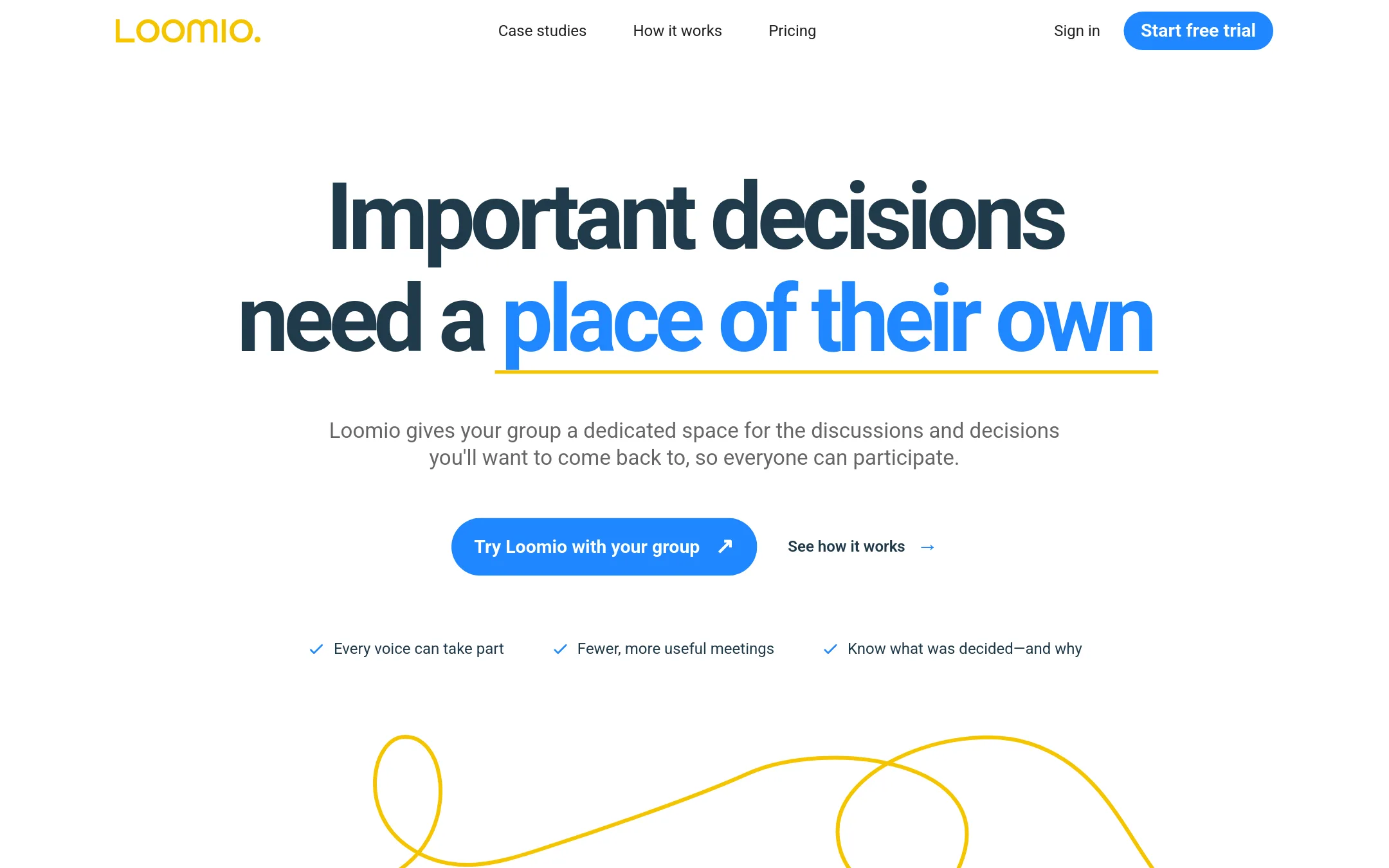
Loomio is a structured decision-making tool for groups that need to discuss, vote, and record outcomes with full context. Choose it over Polis when your team or organization wants a clear, repeatable path from proposal to decision, with searchable records of the reasoning behind each outcome.
Where it is strong
- Whole-group pricing with no per-user fees
- Export discussions and decisions as CSV, HTML, or JSON
- Hosting region choice: USA, EU, or Australia
Where it falls short
- Starter plan lacks subgroups, limiting multi-team use
- No built-in real-time chat. Relies on email notifications
- Pricing:
- Starter is $399/year or $39/month for up to 30 members. Pro is $999/year or $99/month for up to 3,000 members (commercial) or $499/year or $49/month for up to 300 members (nonprofit).
- Switching from Polis:
- Moving from Polis involves setting up your group structure and migrating any existing discussions manually, as Loomio has no automated import from Polis.
- CNot published
2.Consider.it
Best for: Government agencies and nonprofits running structured public consultations or stakeholder alignment dialogues.
- Pricing
- Not published
- Category
- Other
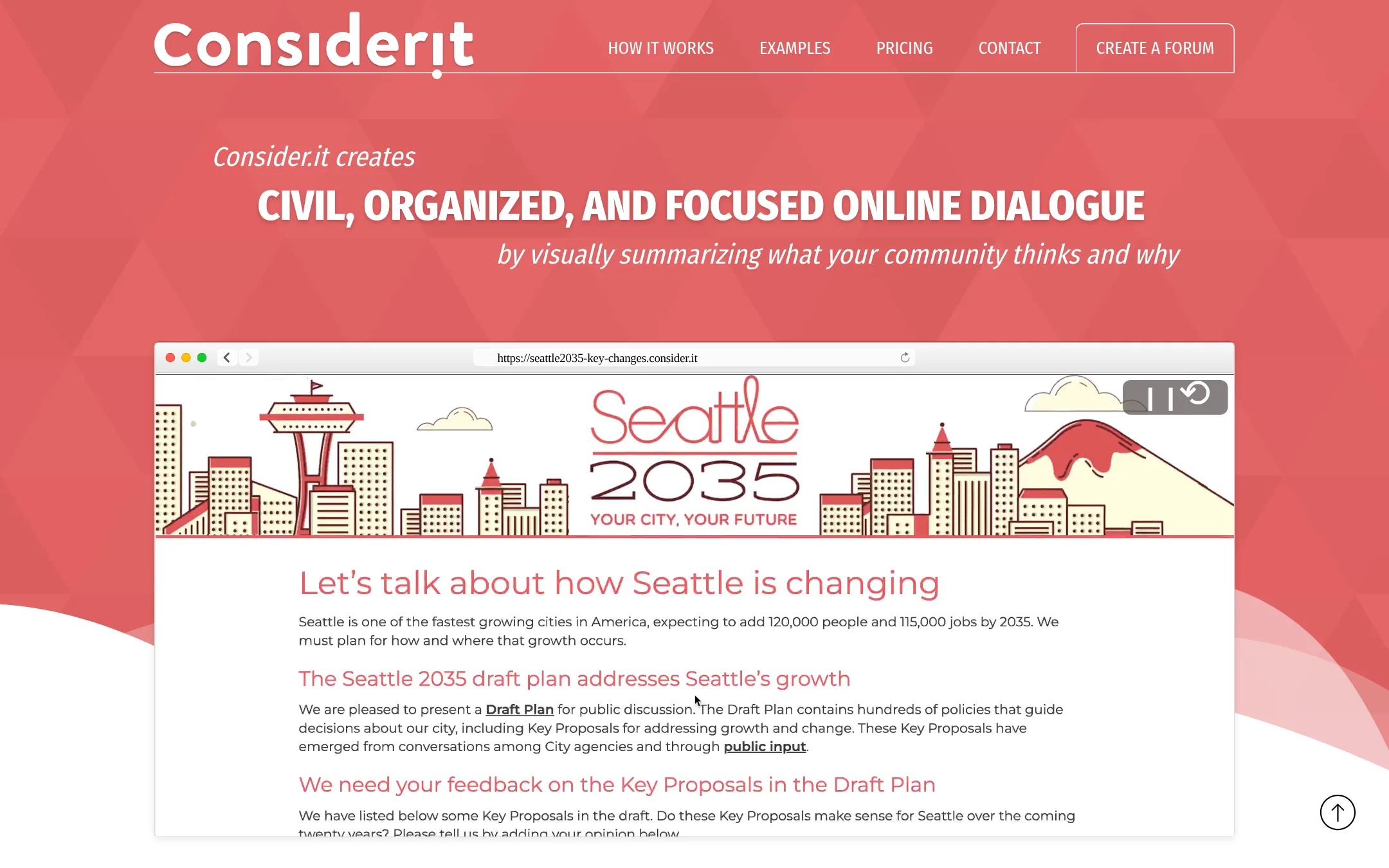
Consider.it is an online forum for community engagement that visually summarizes what a group thinks and why. It is suited for public agencies, nonprofits, and organizations that need structured, moderated dialogue around proposals or strategies, rather than Polis's real-time, AI-driven consensus mapping.
Where it is strong
- Visually summarizes community opinions and reasons
- Helps build buy-in and legitimacy for proposals
- Team provides engagement strategy support
Where it falls short
- Pricing is not public, likely requires a sales conversation
- Less real-time, algorithmic consensus mapping than Polis
- Pricing:
- Pricing is not published on the site.
- DNot published
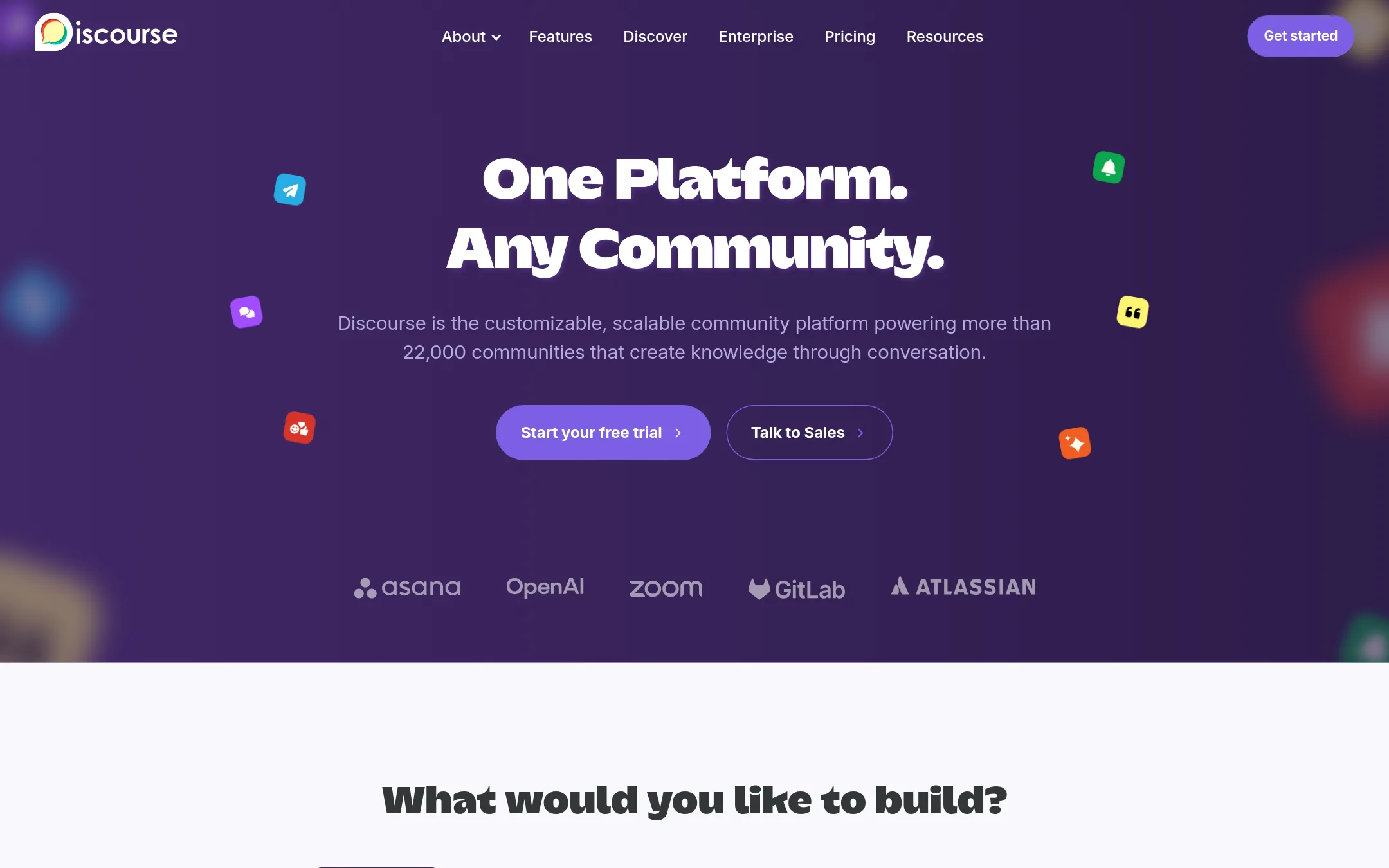
3.Discourse
Best for: Teams and organizations that want a self-hosted or managed forum with deep customization, SSO, and plugin support for long-running community conversations.
- Pricing
- Not published
- Category
- Other
Discourse is a full-featured community platform for forums, chat, and support. Choose it instead of Polis when you need a persistent, structured discussion space with categories, moderation, and customization, rather than a lightweight tool for gathering opinions.
Where it is strong
- Unlimited members and chat on all plans
- Open source codebase with no vendor lock-in
- SSO, SAML, and OAuth2 authentication options
Where it falls short
- Pricing not transparent. Requires contacting sales for most plans
- Heavier setup and moderation compared to Polis
- Pricing:
- Pricing is not published on the site. Plans are Free, Pro, Business, and Enterprise with custom quotes.
- Not published
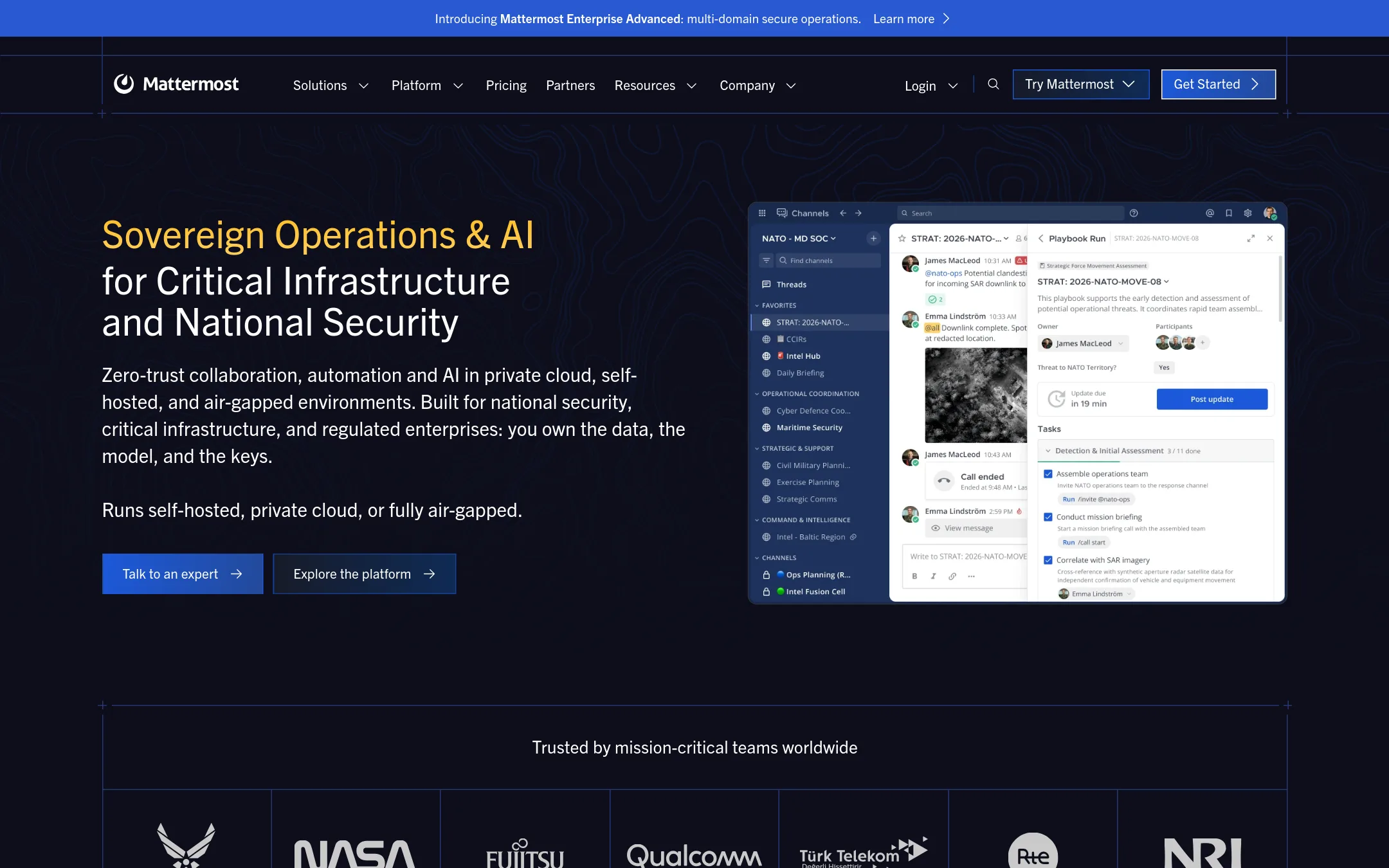
4.Mattermost
Best for: Government, defense, and critical infrastructure teams that require self-hosted or air-gapped collaboration with strict data sovereignty.
- Pricing
- Not published
- Category
- Communication & Collaboration
Mattermost is a secure collaboration platform for teams that need full control over their data and infrastructure. Choose it over Polis when you need messaging, workflow automation, and AI capabilities inside your own perimeter, especially for regulated or classified environments.
Where it is strong
- Deploy on-prem, private cloud, or fully air-gapped networks
- Includes workflow automation, boards, and sovereign AI agents
- Federation with Microsoft Teams, Matrix, and XMPP
Where it falls short
- Pricing requires contacting sales. No public tiers
- Heavier setup than cloud-only tools, aimed at enterprise ops
- Pricing:
- Pricing is not published on the site. A free limited-use edition of Enterprise Advanced is available for technical evaluation.
- Not published
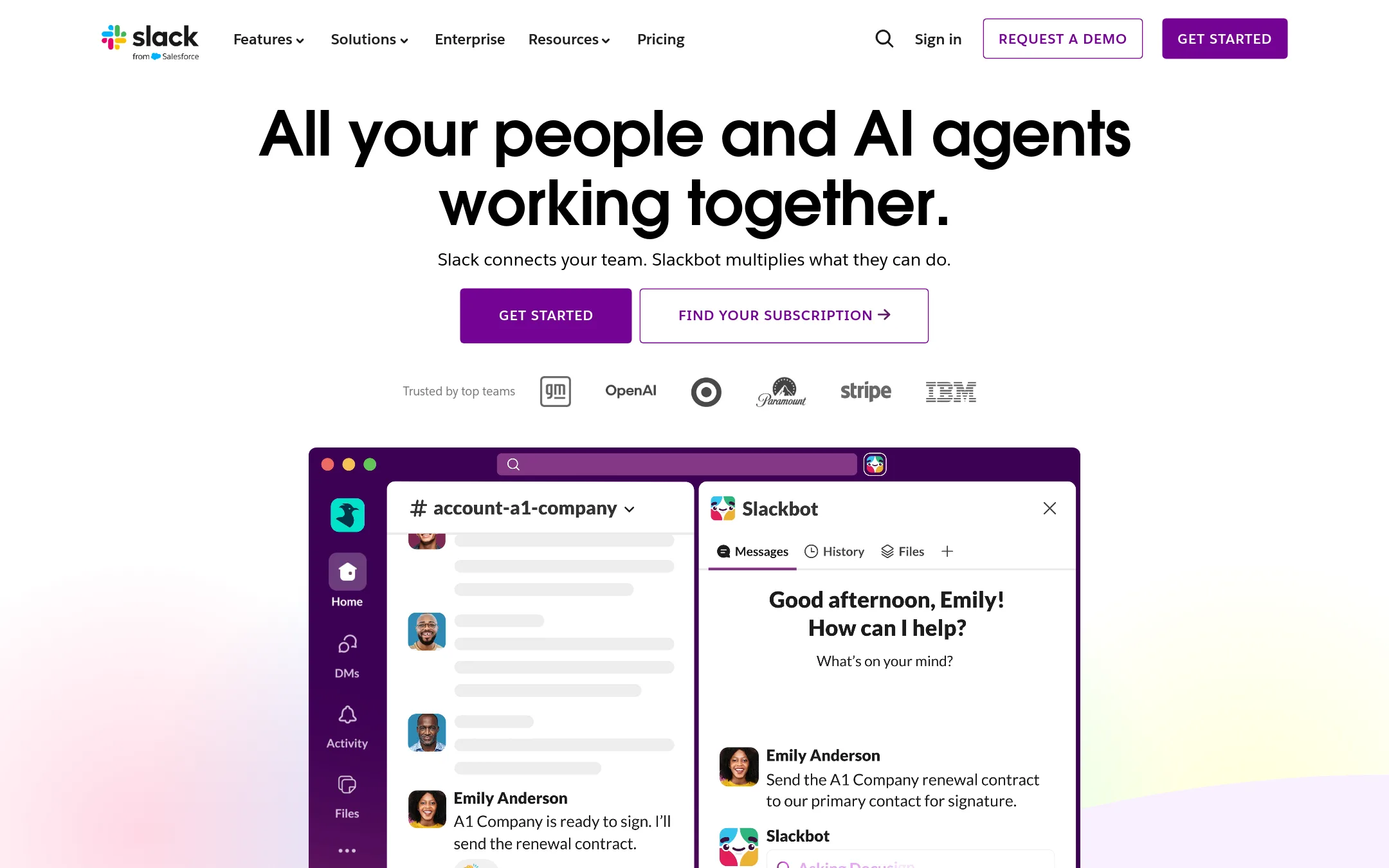
5.Slack
Best for: Teams that need a central hub for daily communication, file sharing, and automated workflows across projects.
- Pricing
- Not published
- Category
- Communication & Collaboration
Slack is a team communication and collaboration platform with channels, messaging, and workflow automation. Choose it instead of Polis when your goal is ongoing team coordination and project management rather than gathering public opinion or running structured deliberations.
Where it is strong
- Channels organize conversations by project or topic
- Workflow Builder automates repetitive tasks without code
- Integrates with 2,600+ apps like Salesforce and Jira
Where it falls short
- Free plan limits message history to 90 days
- AI features require paid plans and may have usage limits
- Pricing:
- Pricing is not published on the site.
- Switching from Polis:
- Moving from Polis to Slack means replacing structured public deliberation with open-ended team chat, so you would need to set up channels and workflows for any similar engagement.
- RNot published
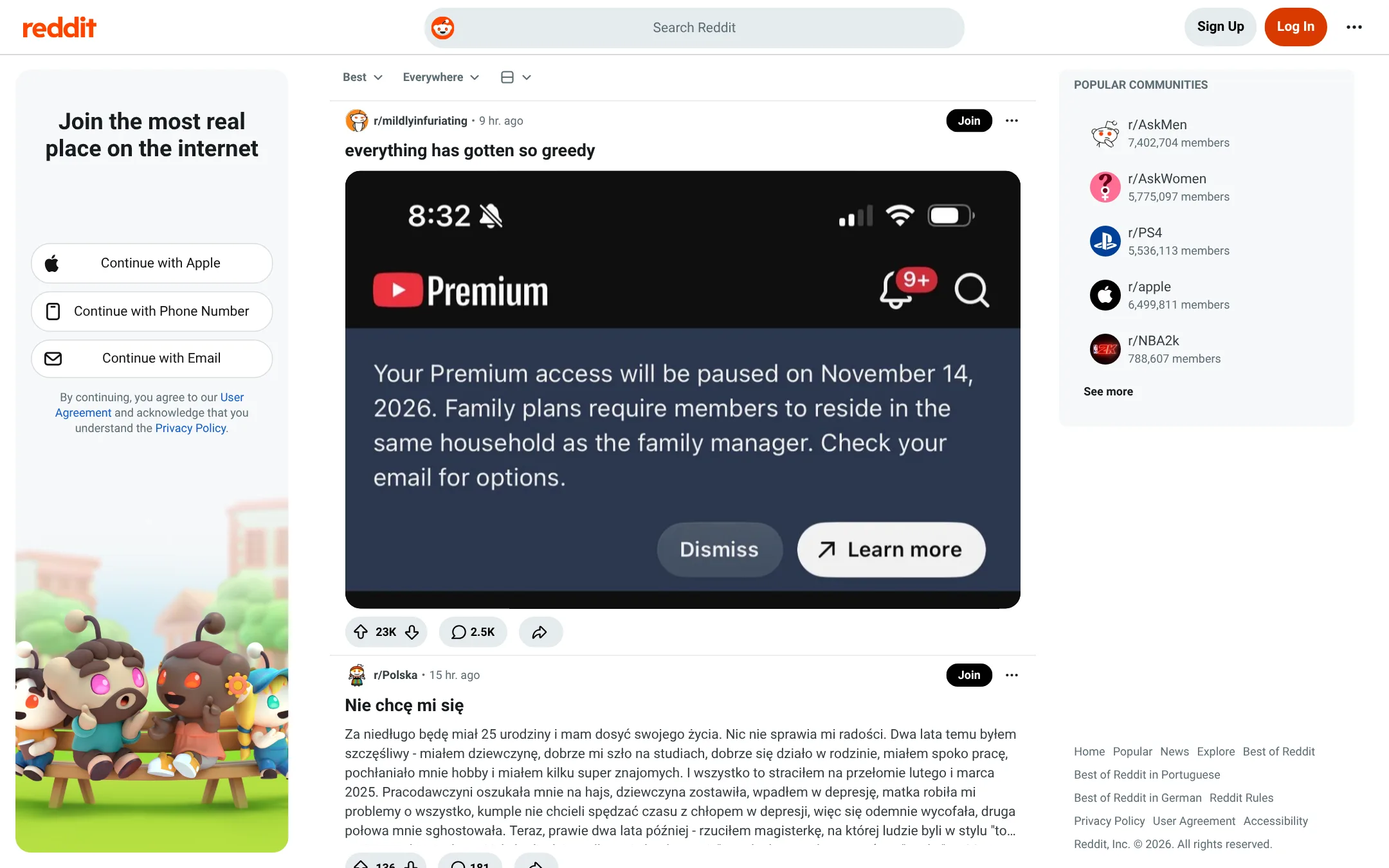
6.Reddit
Best for: Communities that want open-ended discussion on any topic, with voting and moderation, rather than a focused platform for structured public input.
- Pricing
- Not published
- Category
- Other
Reddit is a massive public forum where millions of people discuss topics in thousands of subreddit communities. You would choose it instead of Polis if you want broad, organic public conversation rather than a structured tool for collective decision-making or deliberation.
Where it is strong
- Huge existing user base across many topics
- Free to join and participate
- Subreddit structure lets you create focused communities
Where it falls short
- No built-in tools for structured deliberation or consensus
- Content and moderation vary widely by community
- Pricing:
- Pricing is not published on the site.
- Not published
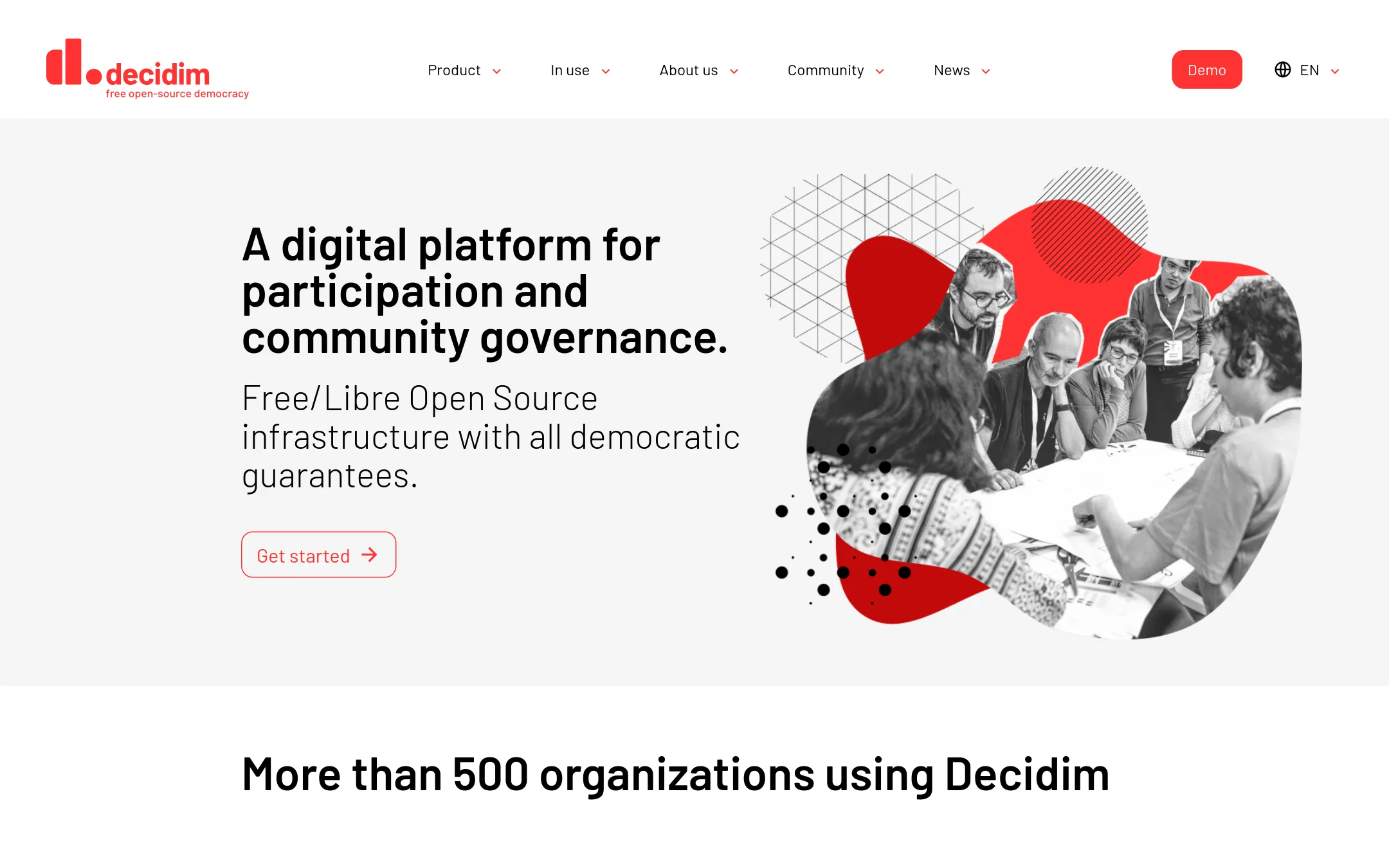
7.Decidim
Best for: Public institutions, cooperatives, and civic organizations that want full control over their participation platform and need features like participatory budgeting and proposal workflows.
- Pricing
- Not published
- Category
- Other
Decidim is a free/libre open-source platform for running participatory processes, collecting proposals, voting, and organizing meetings. Choose it over Polis when you need a self-hosted, customizable tool for large-scale citizen engagement and democratic governance, not just a deliberation widget.
Where it is strong
- Open source with no vendor lock-in. Install on your own server
- Supports participatory budgeting, weighted voting, and proposal merging
- Backed by a global community and used by 500+ organizations
Where it falls short
- Requires technical resources to install and maintain
- No hosted service mentioned. You manage your own infrastructure
- Pricing:
- Pricing is not published on the site.
- Not published
8.Democracy Earth
Best for: Decentralized communities, DAOs, and civic organizations that want to run their own tamper-proof elections with anonymous voting and custom voting rules.
- Pricing
- Not published
- Category
- Other
Democracy Earth is an open-source, blockchain-based governance platform for running elections and voting systems with cryptographic privacy guarantees. You would choose it over Polis when you need censorship-resistant, self-sovereign voting with flexible models like quadratic or liquid democracy, and when you want to deploy your own governance protocol rather than use a hosted public tool.
Where it is strong
- Supports multiple voting models: majority, ranked choice, quadratic, liquid democracy, and custom rules.
- Anonymous voting with cryptographic guarantees, preventing double-voting while keeping votes private.
- Open-source and self-sovereign, so you can fork and run your own instance.
Where it falls short
- Requires blockchain infrastructure (Ethereum/Base) and technical setup, unlike Polis's simpler hosted approach.
- No published pricing, so cost is unclear for organizations evaluating it.
- Pricing:
- Pricing is not published on the site.
- Switching from Polis:
- Moving from Polis involves adopting a blockchain-based voting protocol, which means setting up your own deployment and learning a different governance model.
- Not published
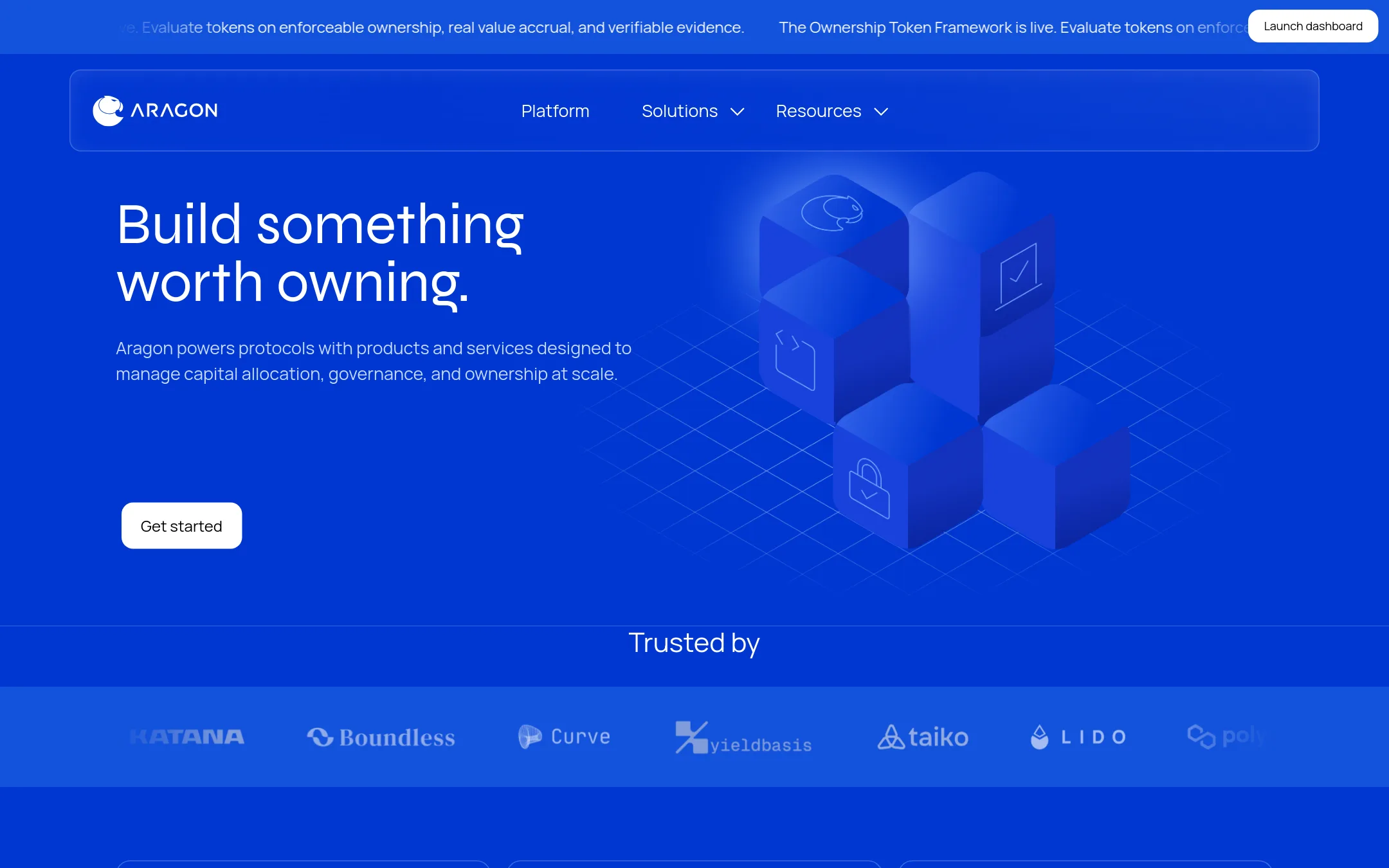
9.Aragon
Best for: Teams launching or running DAOs and protocols that need onchain governance, tokenomics, and multi-chain support.
- Pricing
- Not published
- Category
- Other
Aragon is a platform for creating and managing onchain organizations, with modular governance, tokenomics, and access control tools. Choose it over Polis if you need to run a DAO or protocol with token-based voting and treasury management on Ethereum.
Where it is strong
- Modular governance primitives that can be upgraded without redeployments.
- Audited and trusted with over $35B in assets governed.
- Supports thousands of organizations across multiple chains.
Where it falls short
- No public pricing, so budgeting requires contacting sales.
- Focused on onchain organizations, not general public consultation like Polis.
- Pricing:
- Pricing is not published on the site.
- CCustom quote
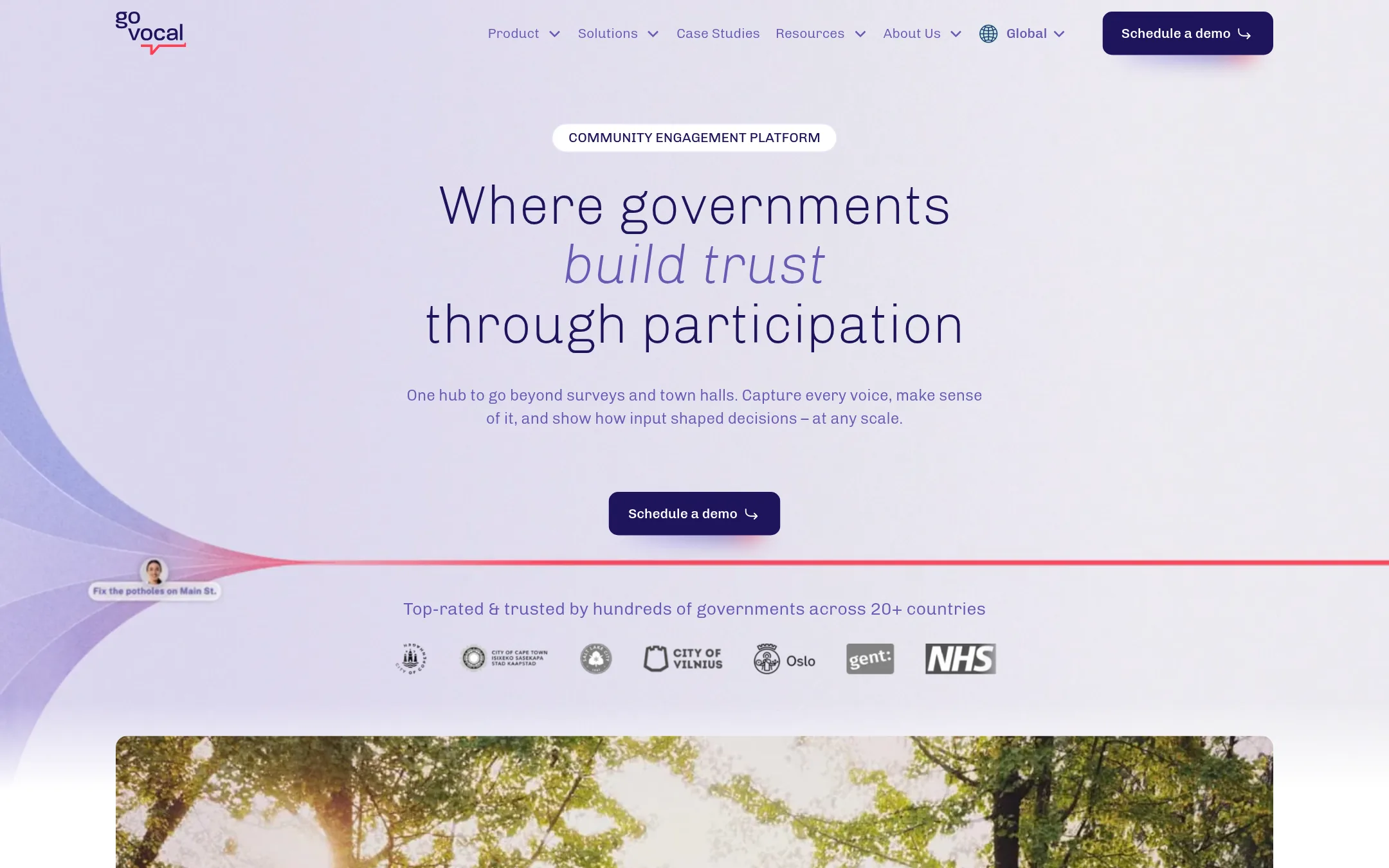
10.CitizenLab
Best for: Local and regional governments that need to run many engagement projects with built-in AI analysis and reporting.
- Pricing
- Custom quote
- Category
- Other
CitizenLab (now Go Vocal) is a full community engagement platform for governments, with surveys, ideation, mapping, and AI-powered analysis. Choose it over Polis when you need to run multiple structured participation projects with reporting and stakeholder management, not just open deliberation.
Where it is strong
- Includes AI-powered analysis and reporting to reduce manual work
- Offers multiple participation tools: surveys, ideation, mapping, document annotation
- Plans scale from small teams to enterprise with SSO and ArcGIS integration
Where it falls short
- Pricing is not transparent. Requires contacting sales for a quote
- AI features like Sensemaking are limited on lower tiers
- Pricing:
- Pricing is not published on the site. Plans start with Essential (1 project, 1 admin seat) and scale to Enterprise with custom quotes.
- Not published
11.Colony
Best for: On-chain teams and DAOs that need flexible payments, batch payouts, and streaming salaries without monthly fees.
- Pricing
- Not published
- Category
- Other
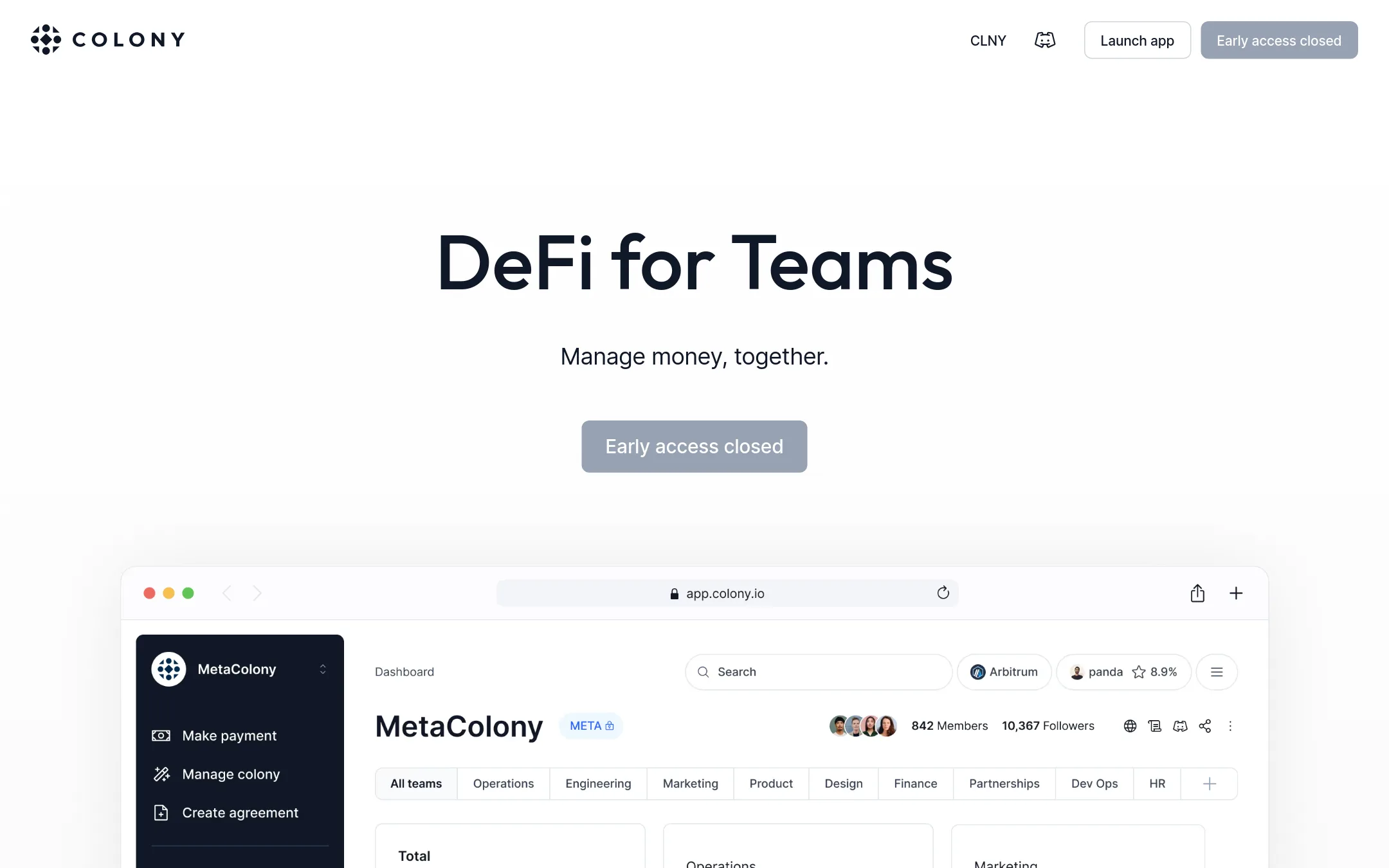
Colony is a decentralized finance suite for teams and DAOs that need to manage payments, budgets, and decision-making on-chain. Choose it over Polis when your organization wants to move money collectively across EVM chains, not just run public consultations.
Where it is strong
- Free to create colonies, no monthly fees
- Supports batch payments via CSV upload
- Crypto-to-fiat off-ramp at 1% fee
Where it falls short
- Requires EVM-compatible blockchain use
- Off-ramp fee applies to fiat conversions
- Pricing:
- Pricing is not published on the site.
- Not published
12.DAOhaus
Best for: Communities that want to launch a Moloch-style DAO with shareholder governance and open-source code.
- Pricing
- Not published
- Category
- Other
DAOhaus is a protocol for creating and running decentralized organizations, with governance handled by shareholders. You would choose it instead of Polis when you need a full DAO framework for coordinating a community around a mission, rather than a tool for public opinion gathering.
Where it is strong
- Open source, so you can read, improve, and fork the code.
- Governed by its users and builders, giving the community a say.
- Designed for purpose-driven coordination and governance.
Where it falls short
- No pricing details are listed, so cost is unclear.
- Focused on DAO governance, not on public opinion or deliberation like Polis.
- Pricing:
- Pricing is not published on the site.
See more comparisons in Other alternatives.
FAQ
Questions about Polis alternatives
What is the best alternative to Polis for a small nonprofit with limited budget?
Loomio offers transparent pricing starting at $399/year for up to 30 members, with a nonprofit discount. It provides structured decision-making and voting without per-user fees. Consider.it is also an option but requires contacting sales for pricing.
Which alternative supports self-hosting for data sovereignty?
Decidim is a free/libre open-source platform you can install on your own server, giving full control. Mattermost also supports on-prem or air-gapped deployment but is more focused on collaboration than public consultation. Both avoid vendor lock-in.
Are there alternatives with transparent pricing?
Loomio publishes its pricing publicly, with Starter at $399/year and Pro at $999/year. Most other alternatives, including Mattermost, Democracy Earth, and CitizenLab, do not list prices and require contacting sales.
Which alternative is best for government agencies running many engagement projects?
CitizenLab (Go Vocal) is designed for governments, offering multiple participation tools like surveys, ideation, and mapping, plus AI-powered analysis. It scales from Essential to Enterprise plans, but pricing requires a sales quote. Decidim is also a strong self-hosted option for public institutions.
Can I use a blockchain-based alternative for tamper-proof voting?
Democracy Earth supports anonymous voting with cryptographic guarantees and multiple voting models like quadratic and liquid democracy. It requires Ethereum/Base infrastructure and technical setup. Aragon is another option for onchain governance but focuses on DAOs rather than public consultation.
Last updated November 3, 2026.