PoplarML alternatives
12 products compared · Updated November 4, 2026
The short answer
For teams that need to deploy and scale AI workloads without managing infrastructure, Modal and RunPod are the strongest alternatives to PoplarML. Modal suits AI teams that want autoscaling GPU compute with per-second billing, while RunPod offers flexible GPU infrastructure across 31 regions. For teams that want to run open-source models via API, Replicate is a strong choice with usage-based pricing and a large model catalog.
Your shortlist, at a glance
Read the comparisons ↓- RReplicateFrom $0.000025/secTeams that want to run or fine-tune existing open-source models via API, without building their own ML deployment pipeline.
 Hugging FaceFrom $9/mo PROTeams that want to host, share, and deploy open-source models with community collaboration and flexible GPU options.
 ModalFrom $0.000164/secAI teams that need to deploy and scale inference or training workloads across many GPUs without managing infrastructure.
- BBananaNot publishedAI teams shipping high-throughput inference workloads who want autoscaling GPUs and full DevOps tooling without managing infrastructure.
 CortexCustom quoteEngineering leaders and platform teams at larger organizations that need visibility and governance across services and AI coding agents.
 Amazon BusinessNot publishedProcurement teams and organizations that need to control purchasing, enforce compliance, and analyze spend across Amazon's catalog.
- RRecordBookNot publishedSmall and medium businesses that want a simple, mobile-first way to manage records and workflows without touching ML infrastructure.
Microsoft Azure CycleCloudConsumption-basedResearch teams and enterprises running HPC workloads on Azure that need fine-grained control over cluster orchestration and scaling.
- BBasetenNot publishedTeams that need to serve custom or open-source models in production with strict latency and uptime requirements, such as those building AI-powered products for healthcare, finance, or enterprise.
 RunPodFrom $0.05/GB/mo storaAI teams that need flexible GPU infrastructure for training, fine-tuning, and production inference without managing their own hardware.
 CoreWeaveCustom quoteTeams running large-scale AI training or inference workloads that need dedicated GPU clusters and managed infrastructure.
- TTogether AIFrom $0.15/1M tokensAI teams that need a complete platform for open-source model inference, fine-tuning, and GPU compute at production scale.
About PoplarML and its alternatives
PoplarML is a platform that lets you deploy machine learning models with a single command. It is known for simplifying the deployment process, so you can focus on building rather than managing infrastructure. When comparing alternatives, weigh pricing structure, regions, integrations, support, and contract terms. Some tools charge per second, others per token, and some require a sales call for a quote. Consider where you need to run workloads, what integrations you rely on, and whether you need enterprise support or a self-serve option.
Explore the alternatives
- RFrom $0.000025/sec
1.Replicate
Best for: Teams that want to run or fine-tune existing open-source models via API, without building their own ML deployment pipeline.
- Pricing
- From $0.000025/sec
- Category
- Other
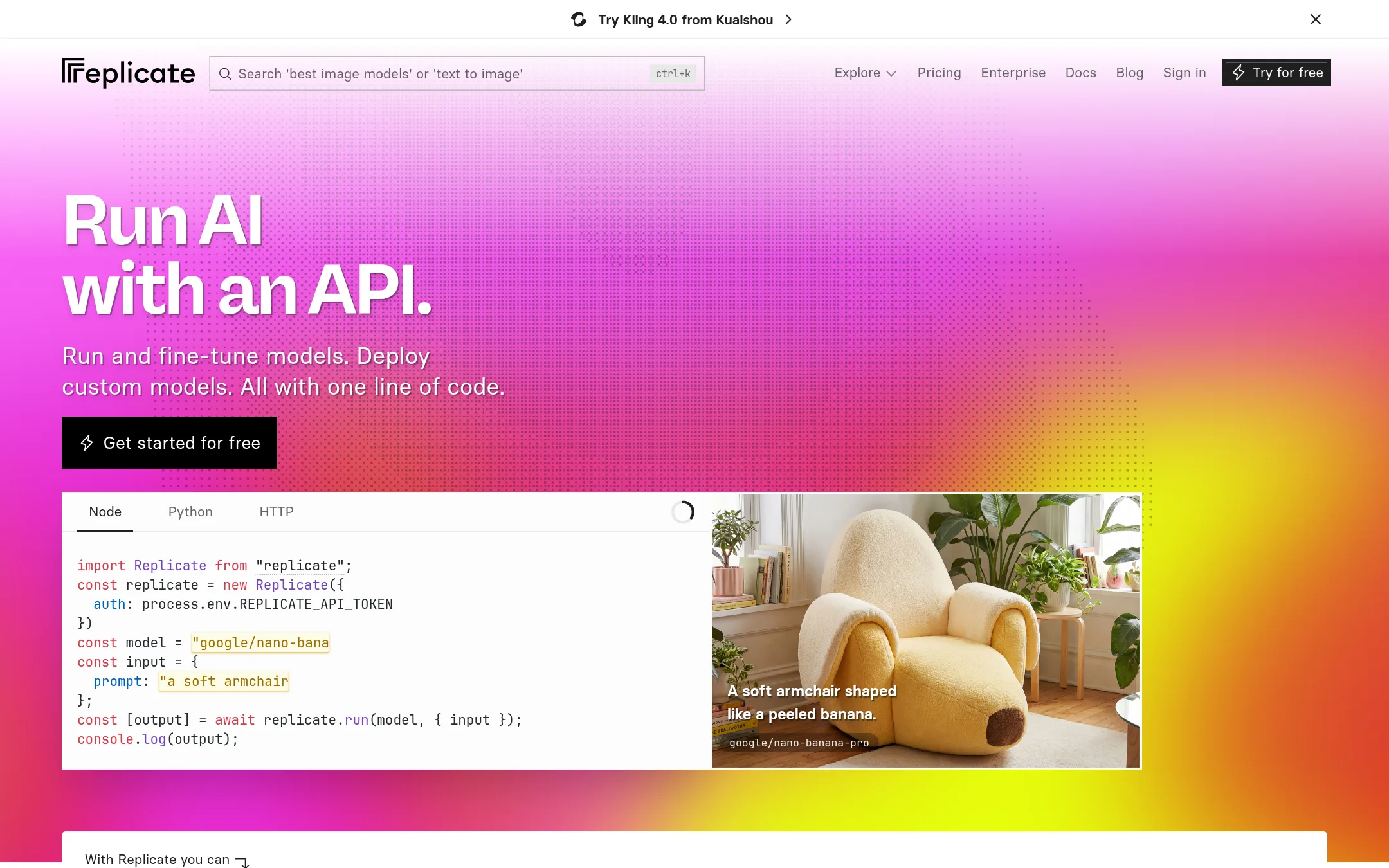
Replicate is a cloud API for running and fine-tuning open-source machine learning models, with one-line code deployment. Choose it over PoplarML if you want access to a large catalog of community models and pay only for compute time, without managing your own infrastructure.
Where it is strong
- Thousands of community models ready to run with one line of code
- Fine-tune models with your own data
- Scales to zero when idle, so you don't pay for unused GPUs
Where it falls short
- Pricing per second can be unpredictable for long-running tasks
- Private models require dedicated hardware, which costs more
- Pricing:
- Pricing is usage-based: CPU at $0.000025/sec, Nvidia T4 GPU at $0.000225/sec, Nvidia L40S at $0.000975/sec, Nvidia A100 at $0.001400/sec, and Nvidia H100 at $0.001525/sec.
- Switching from PoplarML:
- Moving from PoplarML involves re-packaging your models with Cog and adjusting to Replicate's API, but the one-line deployment approach is similar.
- From $9/mo PRO
2.Hugging Face
Best for: Teams that want to host, share, and deploy open-source models with community collaboration and flexible GPU options.
- Pricing
- From $9/mo PRO
- Category
- AI & Machine Learning
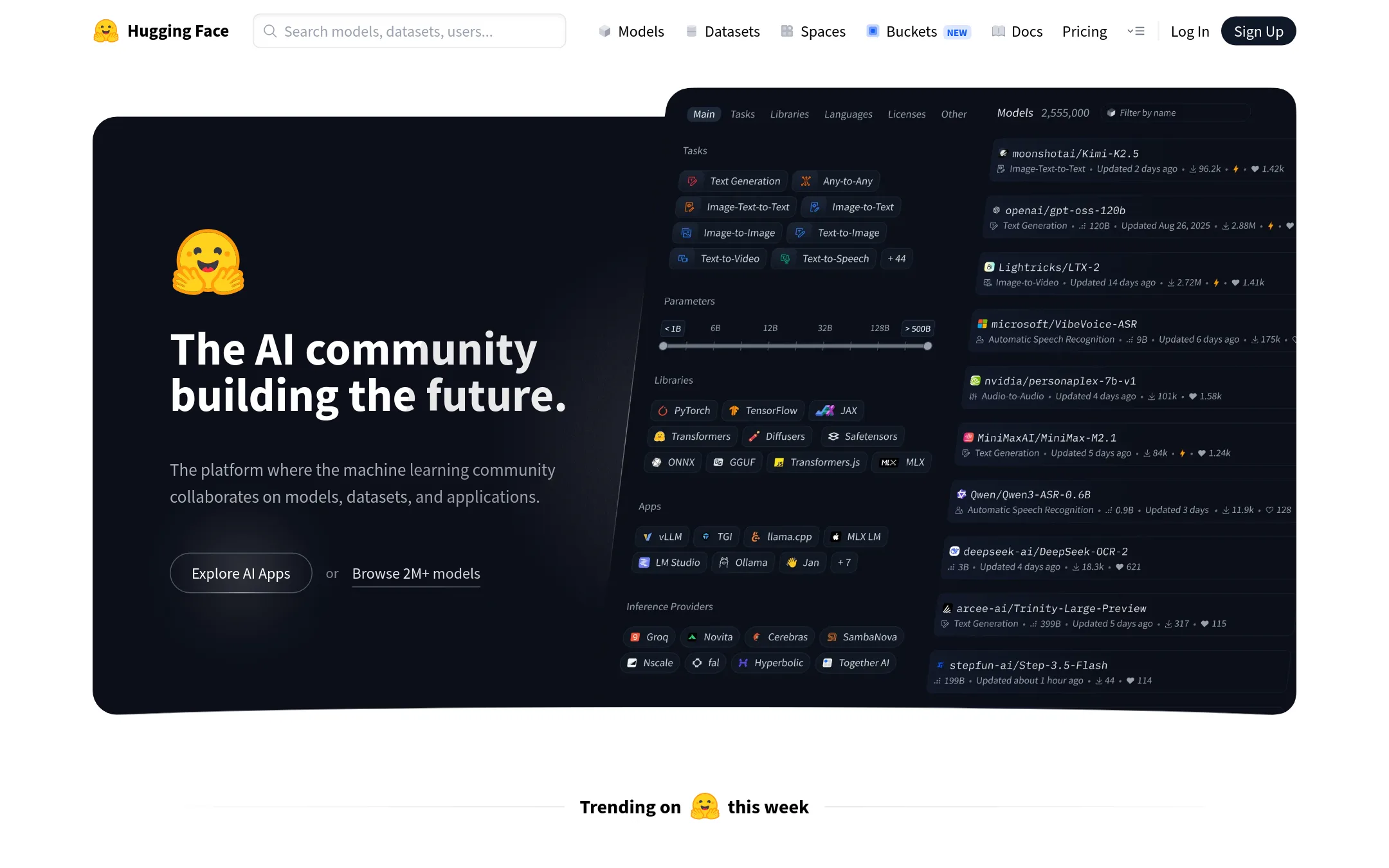
Hugging Face is a hub for open models, datasets, and Spaces, with built-in compute and inference options. Choose it when you want to collaborate on ML artifacts and deploy models without managing your own infrastructure, rather than using PoplarML's one-command deployment.
Where it is strong
- Host unlimited public models, datasets, and Spaces for free.
- Pay-as-you-go GPU and inference options with no cold starts.
- Large community and open-source tooling for collaboration.
Where it falls short
- Pricing for storage and compute can add up for heavy usage.
- Focus on open-source sharing may not suit private, proprietary deployments.
- Pricing:
- Pricing starts at $9/month for PRO, $20/user/month for Team, GPU Spaces from $0.03/hour, and dedicated inference from $0.033/hour.
- Switching from PoplarML:
- Moving from PoplarML involves re-hosting your models on the Hugging Face Hub and configuring Spaces or Inference Endpoints, which may require adapting to their Git-based workflow.
- From $0.000164/sec
3.Modal
Best for: AI teams that need to deploy and scale inference or training workloads across many GPUs without managing infrastructure.
- Pricing
- From $0.000164/sec
- Category
- AI & Machine Learning
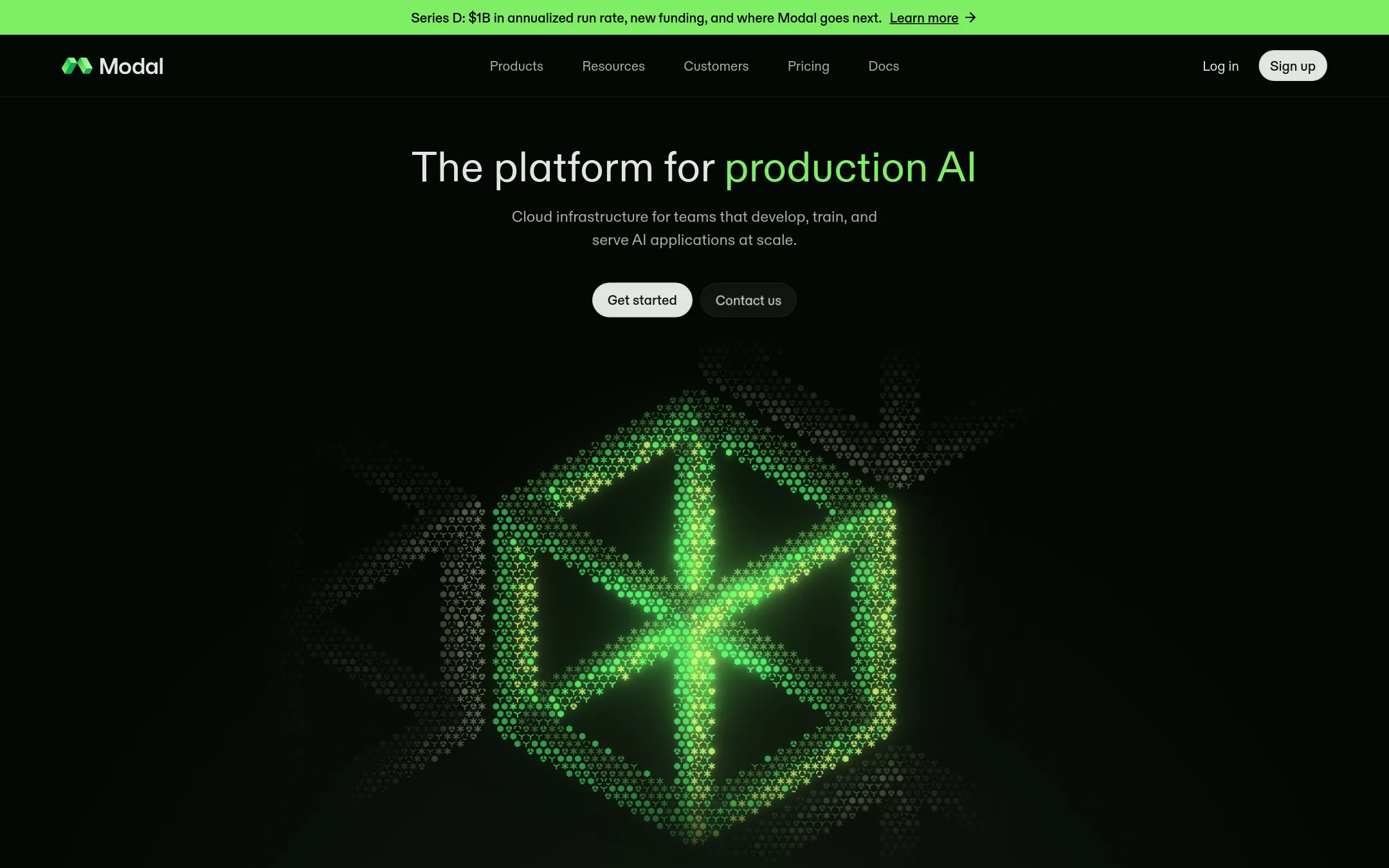
Modal is a serverless platform for AI workloads, covering inference, training, and sandboxes for agents. You would choose it over PoplarML when you need to run large-scale, GPU-intensive jobs with autoscaling and pay only for actual compute time.
Where it is strong
- Autoscales to thousands of GPUs and back to zero, so you only pay for what you use.
- Supports inference, training, and sandboxes in one platform.
- SOC 2 Type II compliant and HIPAA ready for enterprise use.
Where it falls short
- Pricing is per-second, which can be unpredictable for steady workloads.
- Sandboxes are billed at 3x the base rate, which may be costly for long-running tasks.
- Pricing:
- Pricing is usage-based: GPUs start at $0.000164/sec for an Nvidia T4 and go up to $0.001972/sec for an Nvidia B300. The Starter plan includes $30/month free compute, and the Team plan costs $250/month plus compute.
- Switching from PoplarML:
- Moving from PoplarML to Modal means rewriting your deployment scripts to use Modal's Python SDK or CLI, and adjusting to its serverless billing model.
- BNot published
4.Banana
Best for: AI teams shipping high-throughput inference workloads who want autoscaling GPUs and full DevOps tooling without managing infrastructure.
- Pricing
- Not published
- Category
- Other
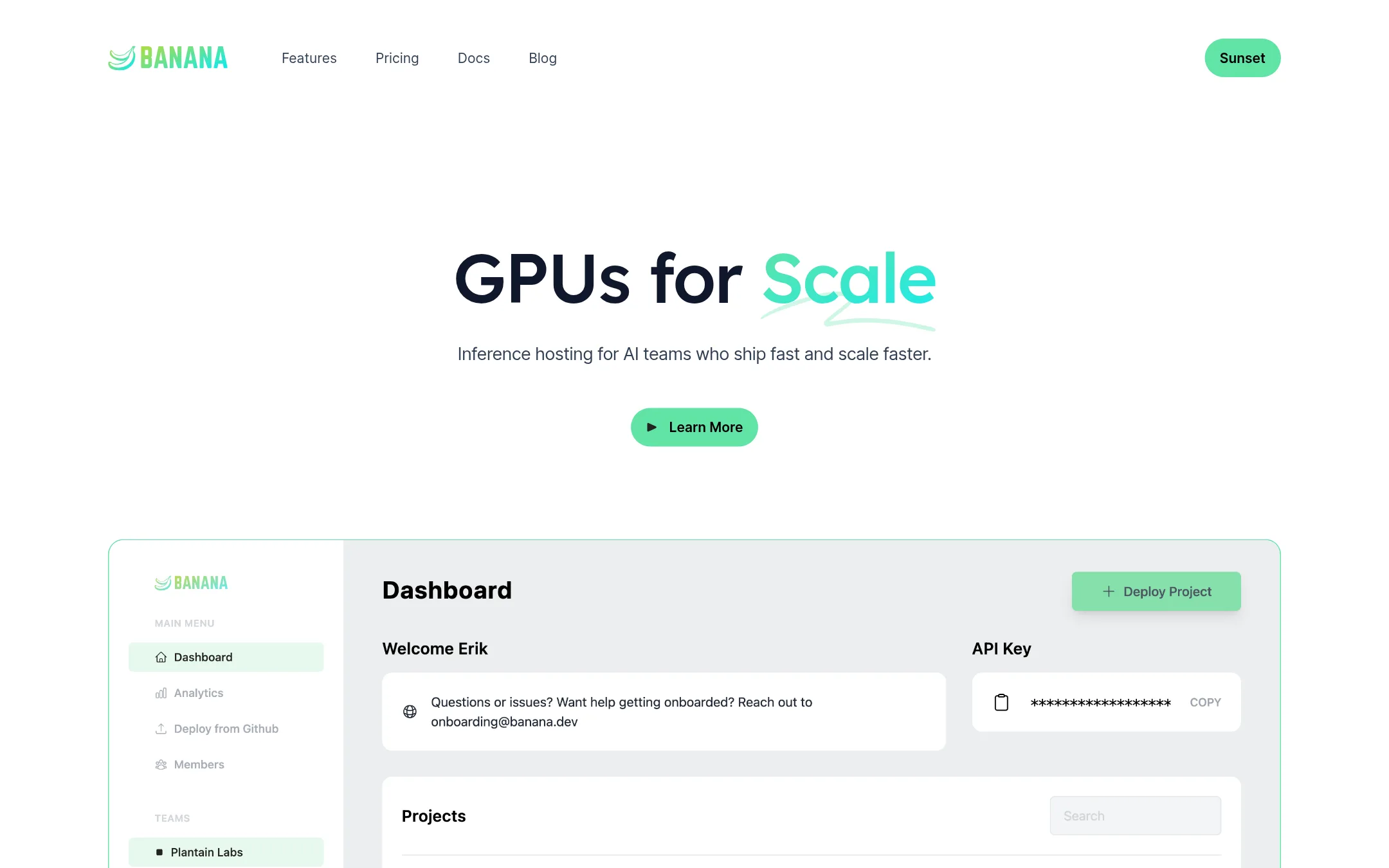
Banana is a GPU inference hosting platform that autoscales compute and charges a flat monthly rate plus the cost of compute, with no markup on GPU time. Choose it over PoplarML if you need high-throughput inference with built-in observability, CI/CD, and an open API, and you prefer a serverless model that scales automatically.
Where it is strong
- Autoscaling GPUs keep costs low and performance high.
- Pass-through pricing with zero markup on GPU time.
- Built-in observability, analytics, and automation API.
Where it falls short
- Pricing details are not public, so you must contact sales.
- Banana Delivery is only available in San Francisco, which may not matter for most users.
- Pricing:
- Pricing is not published on the site.
- Custom quote
5.Cortex
Best for: Engineering leaders and platform teams at larger organizations that need visibility and governance across services and AI coding agents.
- Pricing
- Custom quote
- Category
- Developer Tools
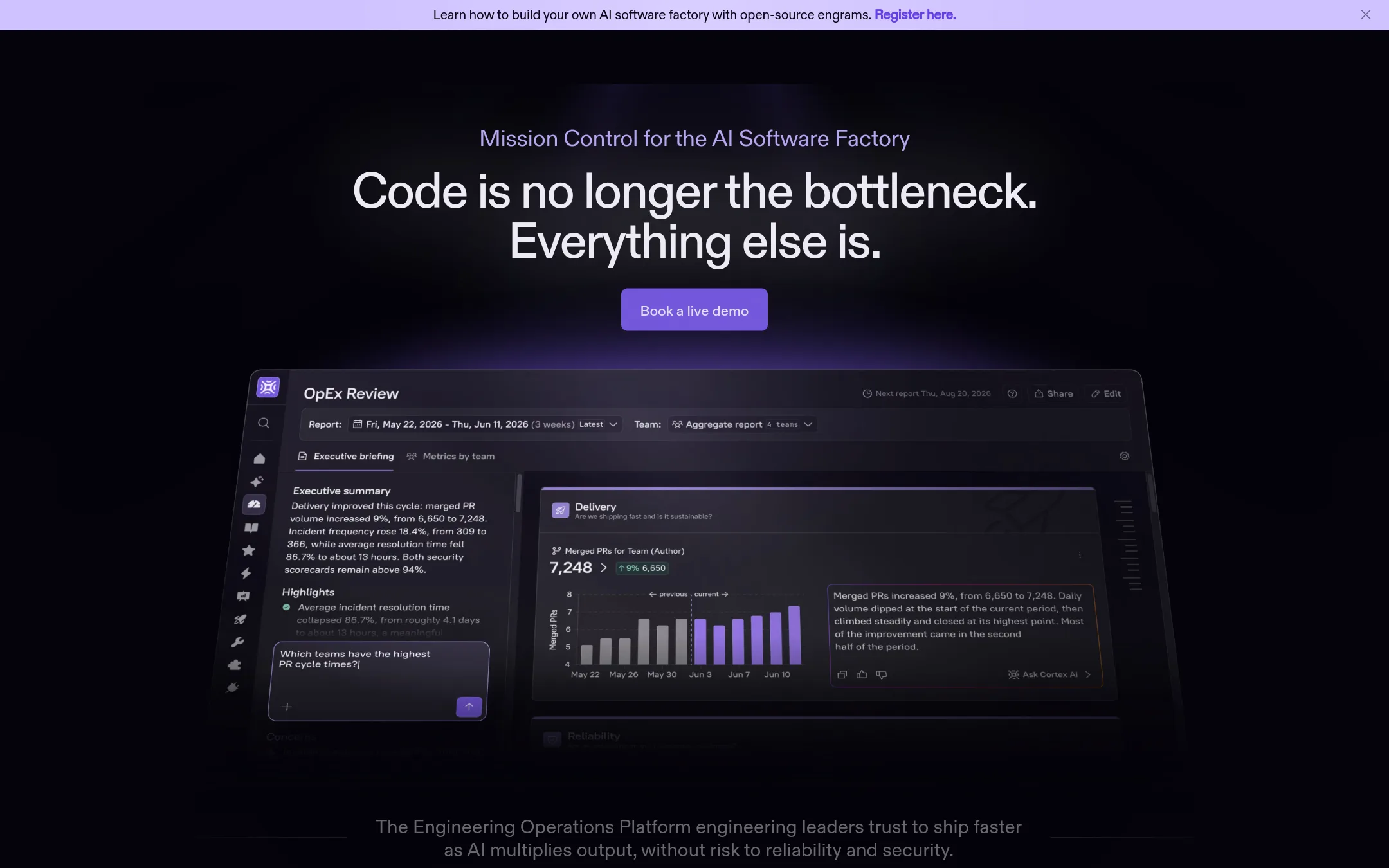
Cortex is an internal developer portal that tracks service ownership, production readiness, and AI adoption across your engineering org. You would choose it over PoplarML if your bottleneck is managing and governing many services and AI agents, not deploying ML models.
Where it is strong
- Reduces MTTR by 75% and saves 24 hours per newly created service
- 50+ out-of-the-box integrations plus a plugin framework
- SOC Type 2 and ISO/IEC 27001:2022 certified
Where it falls short
- Pricing is not transparent. Requires a sales conversation
- Focused on service governance, not ML model deployment, so it won't replace PoplarML for that use case
- Pricing:
- Pricing is not published on the site. It is custom per-seat and scales with org size, so you must contact the team for a quote.
- Switching from PoplarML:
- Moving from PoplarML means shifting from model deployment to engineering operations, so you'd likely keep PoplarML for ML and adopt Cortex for broader governance.
- Not published
6.Amazon Business
Best for: Procurement teams and organizations that need to control purchasing, enforce compliance, and analyze spend across Amazon's catalog.

- Pricing
- Not published
- Category
- E-commerce
Amazon Business is a procurement platform for buying supplies in bulk, with approval workflows, spend analytics, and compliance controls. Choose it instead of PoplarML if your team needs to manage purchasing, not deploy machine learning models.
Where it is strong
- Bulk discounts and case packs for supplies
- Approval flows and centralized purchasing controls
- Pre-built and custom spend reports
Where it falls short
- No machine learning deployment features
- Requires an Amazon account and may not suit non-Amazon procurement
- Pricing:
- Pricing is not published on the site.
- RNot published
7.RecordBook
Best for: Small and medium businesses that want a simple, mobile-first way to manage records and workflows without touching ML infrastructure.
- Pricing
- Not published
- Category
- Productivity & Project Management
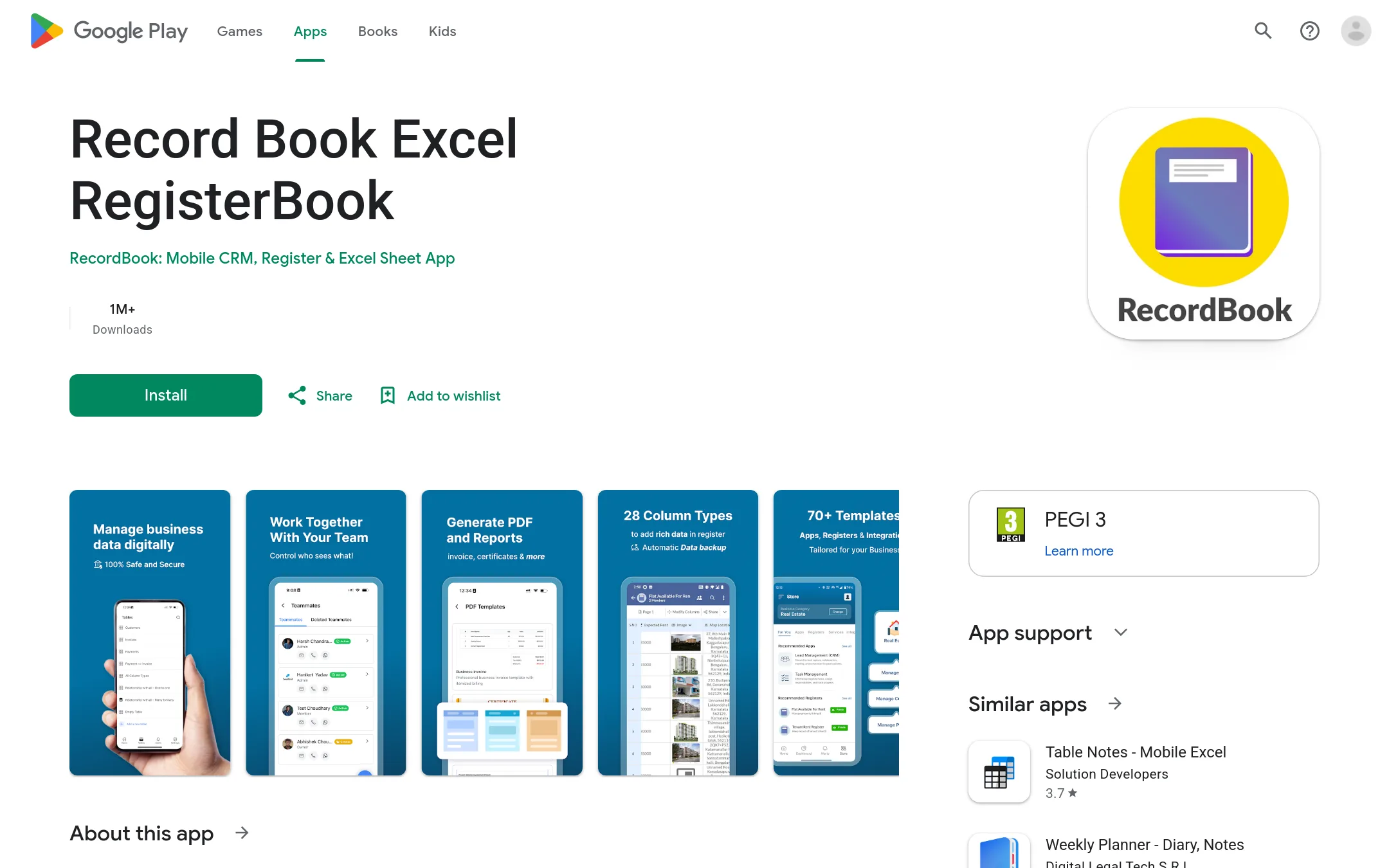
RecordBook is a mobile app that positions itself as an Airtable-like tool for small and medium businesses, focused on organizing records and workflows. Choose it over PoplarML if your team needs a lightweight, on-the-go data management solution rather than a machine learning deployment platform.
Where it is strong
- Mobile-first design for on-the-go data entry and management.
- Airtable-like flexibility for custom records and workflows.
- Targets a large SMB market, suggesting ease of use.
Where it falls short
- No pricing information available, making cost comparison difficult.
- Limited to Android via Google Play, so iOS users are excluded.
- Pricing:
- Pricing is not published on the site.
- Consumption-based
8.Microsoft Azure CycleCloud
Best for: Research teams and enterprises running HPC workloads on Azure that need fine-grained control over cluster orchestration and scaling.
- Pricing
- Consumption-based
- Category
- Developer Tools
Microsoft Azure CycleCloud is an HPC orchestration tool for managing and scaling compute clusters on Azure, aimed at teams that need to run large-scale simulations, rendering, or batch workloads. You would choose it over PoplarML if your work is centered on HPC cluster management rather than one-command ML model deployment, and you are already invested in the Azure ecosystem.
Where it is strong
- Deep integration with Azure services like Virtual Machines, Storage, and Batch.
- Supports a wide range of HPC workloads, including AI and deep learning.
- Offers cost-saving options like Azure reservations and savings plans.
Where it falls short
- Requires Azure expertise and is more complex than a one-command deployment tool.
- Pricing is not transparent. You need to use the calculator to estimate costs.
- Pricing:
- In the United States, Azure pricing is consumption-based. You pay only for the resources you use, with options like reservations and savings plans for consistent usage. Specific CycleCloud pricing is not listed on the page.
- Switching from PoplarML:
- Moving from PoplarML to CycleCloud means abandoning one-command deployment and instead managing cluster infrastructure and orchestration manually.
- BNot published
9.Baseten
Best for: Teams that need to serve custom or open-source models in production with strict latency and uptime requirements, such as those building AI-powered products for healthcare, finance, or enterprise.
- Pricing
- Not published
- Category
- Other
Baseten is a full platform for serving, training, and executing AI models, with a focus on high performance and reliability for production workloads. You would choose it over PoplarML if you need to run custom or open-source models at scale, with features like dedicated inference, model APIs, and a control layer for governance.
Where it is strong
- Supports training, serving, and execution on one platform
- Delivers 99.99% uptime with multi-cloud capacity and failover
- Handles billions of inference calls per week for customers like OpenEvidence
Where it falls short
- Pricing is not transparent, likely requires a sales conversation
- May be overkill for simple one-command deployments that PoplarML targets
- Pricing:
- Pricing is not published on the site.
- From $0.05/GB/mo stora
10.RunPod
Best for: AI teams that need flexible GPU infrastructure for training, fine-tuning, and production inference without managing their own hardware.
- Pricing
- From $0.05/GB/mo stora
- Category
- AI & Machine Learning
RunPod is a full AI developer cloud that gives you GPU pods, serverless endpoints, and multi-GPU clusters in one account. You would choose it over PoplarML if you need direct control over GPU hardware, want to scale from zero to thousands of workers automatically, and prefer a pay-as-you-go model with no idle costs.
Where it is strong
- Supports over 30 GPU SKUs across 31 global regions.
- Serverless endpoints scale to zero, so you pay only for active compute.
- Sub-200ms cold starts with FlashBoot, reducing warm-up latency.
Where it falls short
- Pricing is complex, varying by GPU type and workload, so cost estimation requires careful planning.
- No built-in model deployment workflow like PoplarML's one-command deploy. You handle container and handler setup yourself.
- Pricing:
- Storage starts at $0.05/GB/mo. GPU pricing varies by type and workload, with reserved capacity and contract pricing available through enterprise sales.
- Switching from PoplarML:
- Moving from PoplarML means rethinking your deployment pipeline, as RunPod requires you to write your own handler and manage GPU instances rather than using a single deploy command.
- Custom quote
11.CoreWeave
Best for: Teams running large-scale AI training or inference workloads that need dedicated GPU clusters and managed infrastructure.
- Pricing
- Custom quote
- Category
- AI & Machine Learning
CoreWeave is a cloud infrastructure provider for AI workloads, offering GPU compute, storage, and networking at scale. Choose it over PoplarML when you need raw compute power for training or inference rather than a one-command deployment tool.
Where it is strong
- High-performance NVIDIA GPUs (H100, B200, GB200) for demanding workloads.
- Managed services like CoreWeave Forge and ARIA for AI iteration and observability.
- Direct-to-expert support with cross-trained engineers.
Where it falls short
- Pricing is not transparent. Requires contacting sales.
- Geared toward enterprise-scale users, not simple one-command deployments.
- Pricing:
- Pricing is not published on the site. You must contact sales for quotes, though committed usage can get up to 60% off on-demand prices.
- TFrom $0.15/1M tokens
12.Together AI
Best for: AI teams that need a complete platform for open-source model inference, fine-tuning, and GPU compute at production scale.
- Pricing
- From $0.15/1M tokens
- Category
- Other
Together AI is a full-stack AI cloud for running open-source models at scale, with serverless inference, fine-tuning, GPU clusters, and dedicated capacity. Choose it over PoplarML if you need a broad platform for training, deploying, and serving models across text, image, video, and audio, rather than a simple one-command deployment tool.
Where it is strong
- Serverless inference for many open models with per-token pricing
- Dedicated GPU instances with guaranteed performance and autoscaling
- Fine-tuning and post-training tools built in
Where it falls short
- Pricing is complex with many model-specific rates
- Requires understanding of cloud infrastructure concepts
- Pricing:
- Serverless inference starts at $0.15 per 1M input tokens for GLM-5.3-Flash. Dedicated H100 GPUs are $5.49 per GPU per hour on-demand.
See more comparisons in AI & Machine Learning alternatives.
FAQ
Questions about PoplarML alternatives
What are the main differences between PoplarML and these alternatives?
PoplarML focuses on one-command deployment of ML models. Alternatives like Modal and RunPod offer more control over GPU infrastructure and scaling. Replicate and Together AI provide API-based access to open-source models with usage-based pricing.
Which alternative is best for teams that need to scale to thousands of GPUs?
Modal and RunPod both support scaling to thousands of GPUs. Modal autoscales to zero and charges per second, while RunPod offers serverless endpoints that scale to zero and supports over 30 GPU SKUs. CoreWeave also provides large-scale GPU clusters but requires a sales conversation for pricing.
Are there any alternatives with transparent, self-serve pricing?
Yes, Hugging Face, Modal, Replicate, and Together AI publish pricing on their sites. Hugging Face starts at $9/month for PRO, Modal has per-second GPU rates, Replicate lists per-second rates for CPU and GPUs, and Together AI charges per token for serverless inference. Others like Cortex and Baseten require contacting sales.
Which alternative is best for running open-source models without managing infrastructure?
Replicate and Hugging Face are strong choices. Replicate offers thousands of community models with one-line code deployment and usage-based pricing. Hugging Face provides free hosting for public models and pay-as-you-go GPU options. Together AI also supports open-source models with serverless inference and fine-tuning.
What should I consider regarding regions and data residency?
RunPod supports 31 global regions, which is the most among the alternatives. Modal and CoreWeave are cloud-based and likely offer multiple regions, but specifics are not listed. If you need specific geographic deployment, check each provider's region availability before committing.
Last updated November 4, 2026.