
Porter alternatives
11 products compared · Updated October 16, 2026
The short answer
For teams that want to deploy into their own AWS, GCP, or Azure account with minimal DevOps, Porter is the direct choice. If you prefer a simpler, usage-based platform without managing your own cloud, Railway or Heroku are strong alternatives. For AI workloads needing GPU support and multi-cloud flexibility, Northflank is the best fit.
Your shortlist, at a glance
Read the comparisons ↓ HerokuFrom $25/mo per dynoDevelopers and small teams who want zero-infrastructure deployment with managed data services and a rich ecosystem of add-ons.
 BioRenderNot publishedResearch labs, pharma teams, and academic scientists who need to produce publication-quality figures and graphs without design skills.
 Vercel Image OptimizationFrom $0.05/1K transforTeams already using Vercel for web apps that need automatic image optimization and global CDN delivery.
 RailwayFrom $1/mo + usageDevelopers and small teams who want to deploy apps quickly without dealing with cloud account setup or cluster management.
 Fly.ioFrom $0.0030/hrTeams that want global low-latency deployment with per-second billing and support for AI agent workloads.
 AWS ParallelClusterPay-as-you-goResearch teams and engineers running HPC workloads on AWS who need direct control over cluster configuration.
 Google Cloud HPCNot publishedTeams running AI training, scientific simulations, or other HPC workloads that need Google Cloud's raw compute power and are comfortable managing their own infrastructure.
Microsoft Azure CycleCloudPay-as-you-goTeams running large-scale HPC workloads on Azure that need fine-grained control over cluster orchestration.
 DokkuNot publishedDevelopers and small teams who want a lightweight, self-hosted Heroku-like platform on one inexpensive server.
 NorthflankFrom $2.70/moAI-native teams that need to deploy GPU workloads and run containers across multiple clouds or on-premises Kubernetes.
- SShiprocketFree, then ₹199/moIndian eCommerce sellers and D2C brands that need domestic and international shipping, courier selection, and COD settlement.
About Porter and its alternatives
Porter is a platform as a service that deploys applications into your own AWS, GCP, or Azure account. It automates cluster setup, builds, previews, autoscaling, and security patches, and charges only for the resources your apps use. Porter is known for letting you keep your infrastructure in your own cloud while avoiding DevOps overhead.
When comparing alternatives, weigh the pricing structure: per-second billing, per-container costs, or resource-based fees. Consider whether you need to deploy into your own cloud account or are fine with a managed platform. Also check region coverage, integrations with your existing stack, support options, and contract terms like volume discounts or free tiers.
Explore the alternatives
- From $25/mo per dyno
1.Heroku
Best for: Developers and small teams who want zero-infrastructure deployment with managed data services and a rich ecosystem of add-ons.
- Pricing
- From $25/mo per dyno
- Category
- Developer Tools
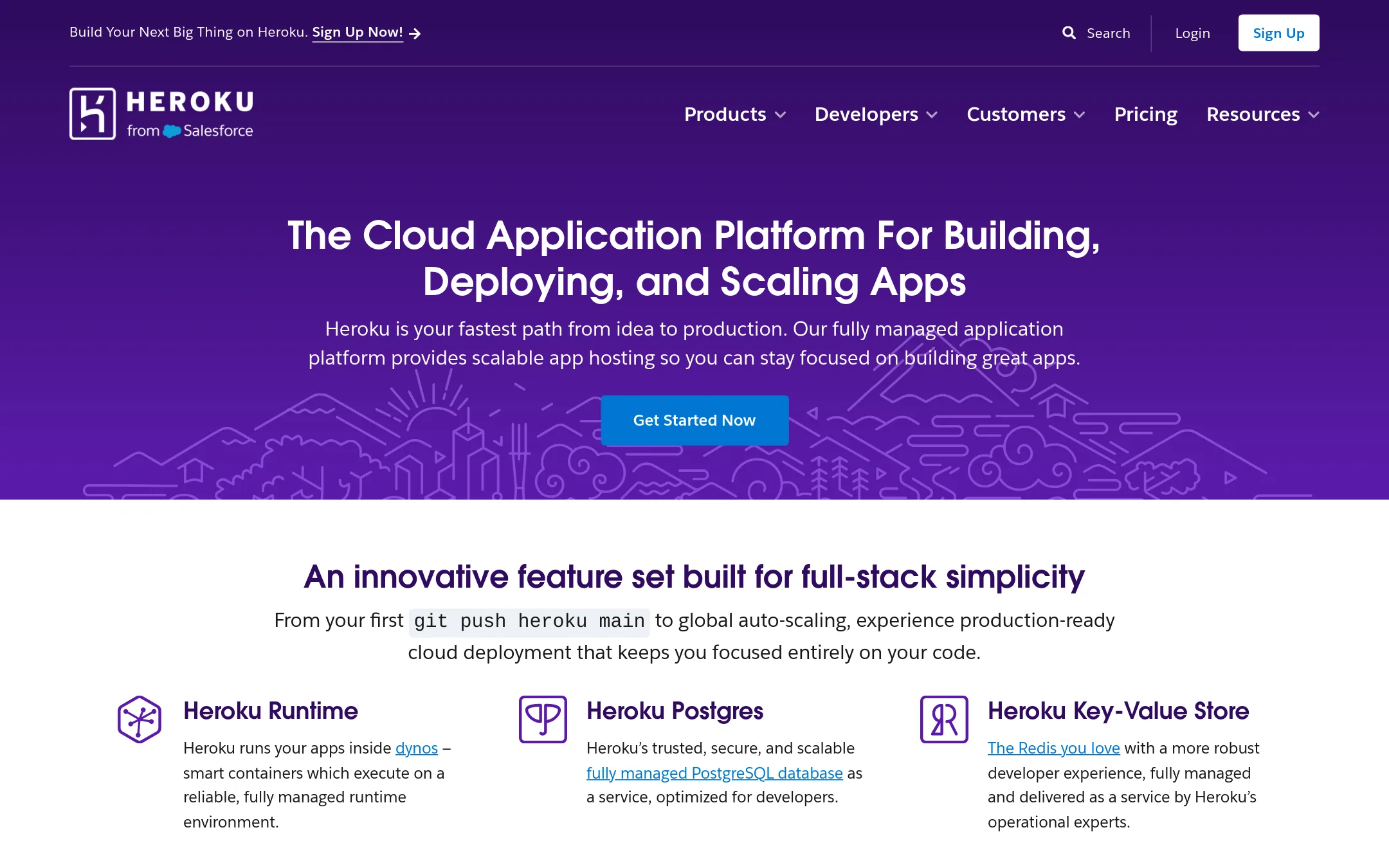
Heroku is a fully managed platform that runs your apps in dynos and handles Postgres, Redis, and add-ons, so you don't touch the underlying infrastructure. Choose it over Porter if you want the simplest possible deployment experience and don't need to run things in your own AWS, GCP, or Azure account.
Where it is strong
- Fully managed platform: no cluster or Kubernetes to operate.
- Built-in Postgres, Redis, and add-ons for quick setup.
- Simple scaling and rollback with clear dyno tiers.
Where it falls short
- Runs on Heroku's own infrastructure, not your cloud account.
- Costs can grow quickly at scale compared to Porter's resource-based pricing.
- Pricing:
- Dynos start at $25/month for Standard-1X, with Eco and Basic tiers available. Data services and AI pricing are listed separately.
- Switching from Porter:
- Moving from Porter means re-deploying your apps to Heroku's platform and reconfiguring any cloud-specific integrations, since Heroku doesn't use your own AWS/GCP/Azure account.
- Not published
2.BioRender
Best for: Research labs, pharma teams, and academic scientists who need to produce publication-quality figures and graphs without design skills.
- Pricing
- Not published
- Category
- Design & Creative
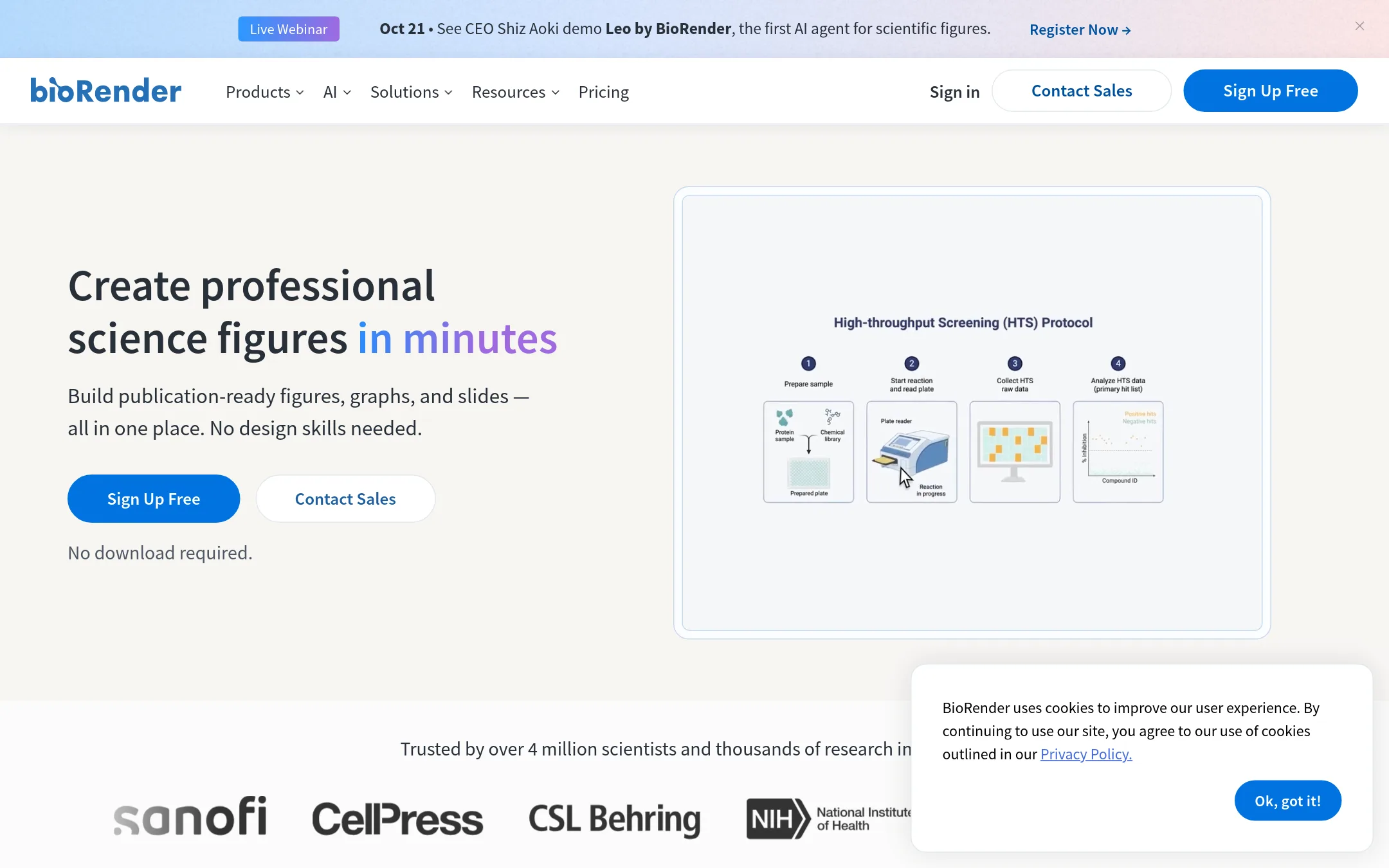
BioRender is a specialized tool for creating scientific figures, graphs, and presentations, with a library of vetted icons and AI-assisted editing. Choose it over Porter when your team needs publication-ready scientific visuals, not application deployment infrastructure.
Where it is strong
- Vast library of scientifically accurate, vetted icons and templates.
- AI agent (Leo) can generate and edit figures from sketches or descriptions.
- Used by top journals and pharma companies, with 500,000+ citations.
Where it falls short
- Free plan figures cannot be used for publications or commercial purposes.
- Pricing details are not transparent. Requires contacting sales for team or institution plans.
- Pricing:
- Pricing is not published on the site. Plans are Free, Individual, Lab, and Institution, with add-ons like BioRender Graphing and AI-assisted figure generation.
- From $0.05/1K transfor
3.Vercel Image Optimization
Best for: Teams already using Vercel for web apps that need automatic image optimization and global CDN delivery.
- Pricing
- From $0.05/1K transfor
- Category
- Media & Entertainment
Vercel Image Optimization is a managed service for optimizing and delivering images at the edge. Choose it when you need fast, global image delivery with automatic optimization, especially if you're already on Vercel for hosting.
Where it is strong
- Automatic image optimization with modern formats
- Global CDN with edge caching
- Usage-based pricing with included monthly quota
Where it falls short
- Only for image optimization, not full app deployment
- Best used within Vercel ecosystem, less flexible for other clouds
- Pricing:
- Image optimization starts at $0.05 per 1K transformations after the first 5K included monthly. Cache reads and writes have separate included quotas.
- From $1/mo + usage
4.Railway
Best for: Developers and small teams who want to deploy apps quickly without dealing with cloud account setup or cluster management.
- Pricing
- From $1/mo + usage
- Category
- Developer Tools
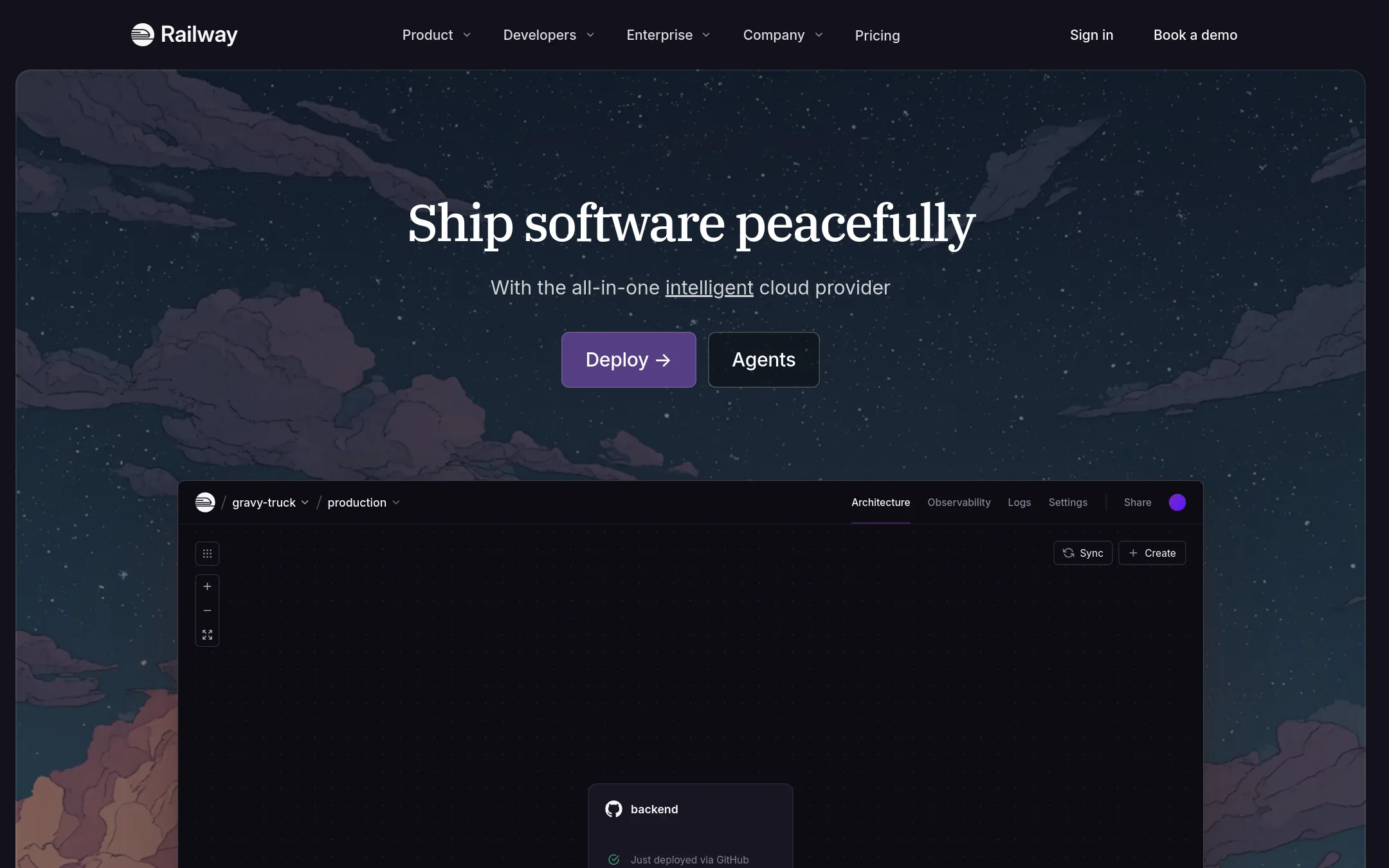
Railway is a managed cloud platform that deploys your code and handles networking, scaling, and observability. You'd choose it over Porter if you want a simpler, usage-based platform without managing your own cloud account or Kubernetes cluster.
Where it is strong
- Pay only for actual usage, billed by the second.
- Automatic previews for every PR and one-click rollbacks.
- Built-in networking, SSL, and load balancing from the start.
Where it falls short
- No option to deploy into your own cloud account on lower tiers.
- Enterprise features like HIPAA BAAs require a custom plan.
- Pricing:
- Free trial with $5 credits, then Hobby at $1/month with $5 monthly credits, Pro at $20/month with $20 credits, and Enterprise with custom pricing. Usage is billed per second (e.g., $0.00000772 per vCPU/sec).
- Switching from Porter:
- Moving from Porter means giving up your own cloud account and Kubernetes cluster, but Railway's auto-config and simple networking can make the transition straightforward.
- From $0.0030/hr
5.Fly.io
Best for: Teams that want global low-latency deployment with per-second billing and support for AI agent workloads.
- Pricing
- From $0.0030/hr
- Category
- Developer Tools
Fly.io runs your app on hardware-isolated VMs that boot in under a second and scale to tens of thousands of instances. Choose it when you want per-second billing, global regions, and a platform that also supports AI agents with checkpointable Sprites.
Where it is strong
- Billed by the second, so you only pay while machines run.
- 18+ regions worldwide for low-latency deployment.
- Sprites provide checkpointable, persistent VMs for AI agents.
Where it falls short
- Egress costs vary by region, up to $0.12/GB in Africa and India.
- No built-in migration from Porter. You'd redeploy your apps manually.
- Pricing:
- Machines start at $0.0030/hour for shared-cpu-1x with 256MB RAM. Managed Postgres starts at $38/month. Support plans start at $29/month.
- Switching from Porter:
- Moving from Porter means redeploying your apps on Fly.io and reconfiguring your CI/CD, since Fly.io uses its own CLI and workflows.
- Pay-as-you-go
6.AWS ParallelCluster
Best for: Research teams and engineers running HPC workloads on AWS who need direct control over cluster configuration.
- Pricing
- Pay-as-you-go
- Category
- Developer Tools
AWS ParallelCluster is a tool for building and managing HPC clusters on AWS. Choose it instead of Porter when you need fine-grained control over high-performance computing workloads, not a general-purpose PaaS for web apps.
Where it is strong
- Direct control over EC2, storage, and networking for HPC.
- Supports popular schedulers like Slurm and AWS Batch.
- Tight integration with AWS services and IAM.
Where it falls short
- Requires manual setup and management of clusters.
- No built-in CI/CD or preview environments for app deployment.
- Pricing:
- Pricing is not published on the site. AWS charges pay-as-you-go for underlying services.
- Not published
7.Google Cloud HPC
Best for: Teams running AI training, scientific simulations, or other HPC workloads that need Google Cloud's raw compute power and are comfortable managing their own infrastructure.
- Pricing
- Not published
- Category
- Developer Tools
Google Cloud HPC is a raw infrastructure service for running high-performance computing and AI workloads on Google's cloud. You would choose it over Porter when you need direct control over GPUs, TPUs, and large-scale compute clusters, rather than Porter's managed platform that abstracts away infrastructure.
Where it is strong
- Direct access to GPUs and TPUs for AI workloads
- Scalable infrastructure for large compute jobs
- Part of Google Cloud's broader ecosystem
Where it falls short
- No managed deployment layer. You handle infrastructure yourself
- Pricing is opaque and requires contacting Google for quotes
- Pricing:
- Pricing is not published on the site. The pricing page returned a 404 error.
- Pay-as-you-go
8.Microsoft Azure CycleCloud
Best for: Teams running large-scale HPC workloads on Azure that need fine-grained control over cluster orchestration.
- Pricing
- Pay-as-you-go
- Category
- Developer Tools
Azure CycleCloud is a tool for building and managing HPC clusters in Azure, aimed at workloads like simulations and batch processing. Choose it over Porter if you need deep control over cluster configuration and are already committed to the Azure ecosystem.
Where it is strong
- Deep integration with Azure services and HPC workloads
- Fine-grained control over cluster configuration and scheduling
- Supports a wide range of HPC job types and schedulers
Where it falls short
- Requires more manual setup and management than Porter
- Limited to Azure. No multi-cloud support
- Pricing:
- In the United States, pricing is consumption-based: you pay only for the cloud resources you use, with options like reservations and savings plans for compute.
- Not published
9.Dokku
Best for: Developers and small teams who want a lightweight, self-hosted Heroku-like platform on one inexpensive server.
- Pricing
- Not published
- Category
- Developer Tools
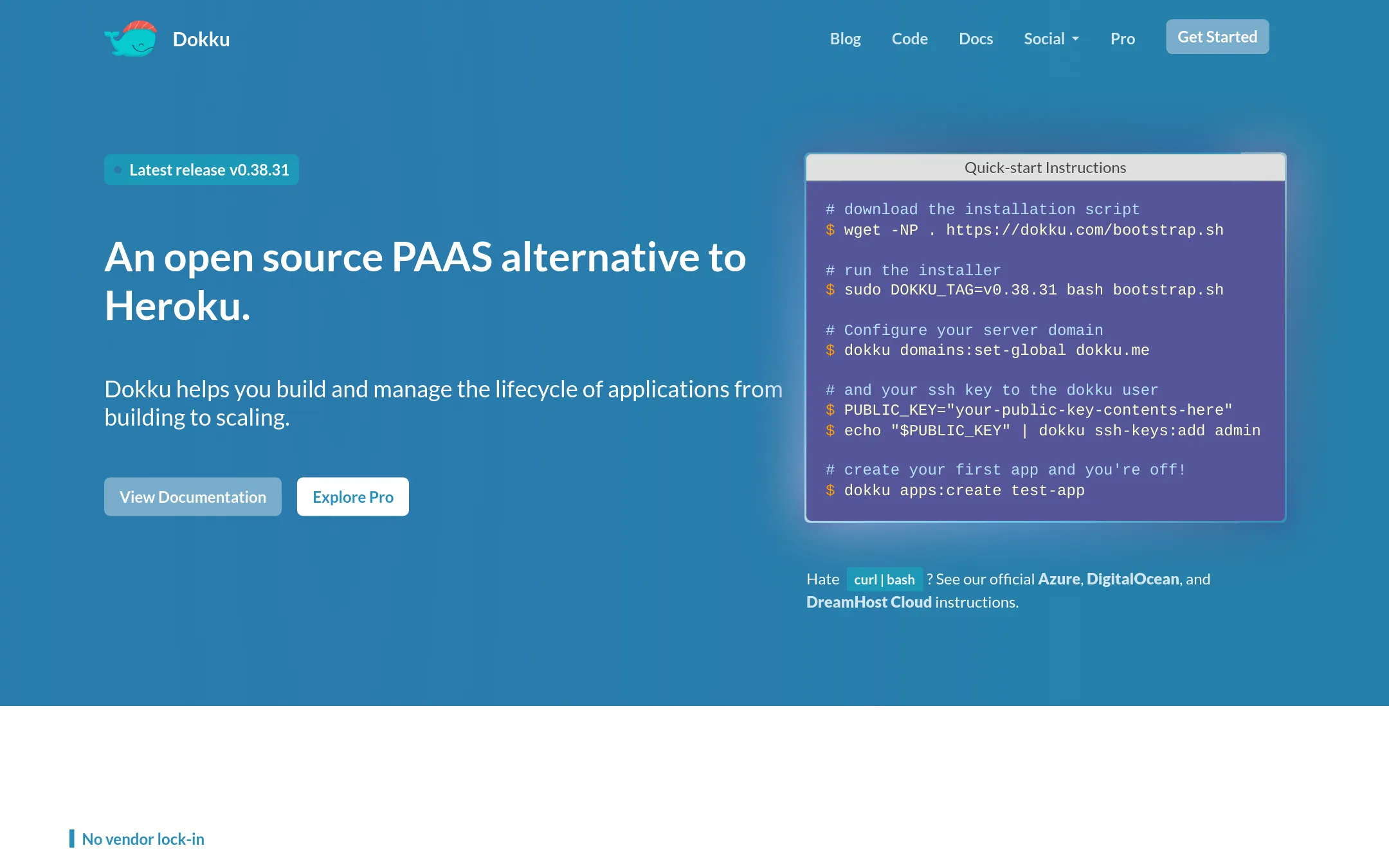
Dokku is a single-host PaaS that runs on your own hardware or a cheap cloud VM, using Docker and Heroku buildpacks. Choose it over Porter if you want a minimal, self-managed deployment platform with no vendor lock-in and are comfortable operating a single server.
Where it is strong
- No vendor lock-in. Runs on any hardware
- Extensible via plugins written in any language
- Uses familiar Heroku buildpacks and Git pushes
Where it falls short
- Single-host only, not designed for multi-cloud or high availability
- No managed Kubernetes or automatic scaling like Porter
- Pricing:
- Pricing is not published on the site.
- From $2.70/mo
10.Northflank
Best for: AI-native teams that need to deploy GPU workloads and run containers across multiple clouds or on-premises Kubernetes.
- Pricing
- From $2.70/mo
- Category
- Developer Tools
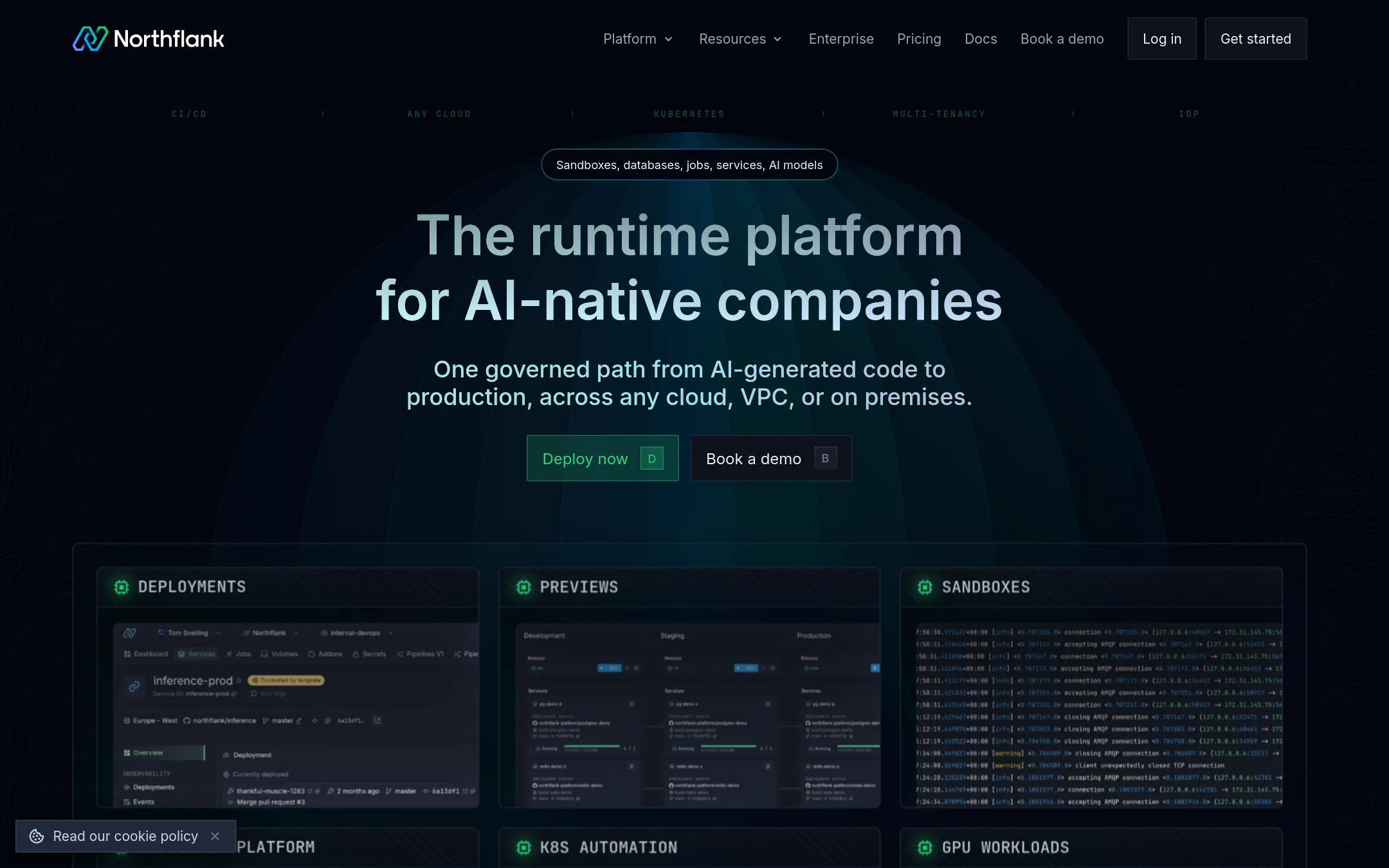
Northflank is a runtime platform that deploys containers, databases, and AI workloads on its own cloud or your Kubernetes cluster. Choose it over Porter if you need GPU support, multi-cloud flexibility, or a managed platform that can run on existing EKS, GKE, or AKS clusters.
Where it is strong
- Supports GPU workloads and spot instances for AI inference and training.
- Can deploy to your own AWS, GCP, Azure, or any Kubernetes cluster.
- Includes CI/CD, preview environments, and database management out of the box.
Where it falls short
- Pricing is per container, which can get complex for large deployments.
- No free tier for production. Sandbox only includes 2 services and 1 database.
- Pricing:
- Compute plans start at $2.70/month for 0.1 shared vCPU and 256 MB memory, with larger plans up to $3,312/month for 32 vCPU and 488 GB memory. Pricing is per container and does not include underlying cloud costs if you bring your own cluster.
- Switching from Porter:
- Moving from Porter to Northflank means reconnecting your Git repositories and reconfiguring your environments, but both support standard container deployments.
- SFree, then ₹199/mo
11.Shiprocket
Best for: Indian eCommerce sellers and D2C brands that need domestic and international shipping, courier selection, and COD settlement.
- Pricing
- Free, then ₹199/mo
- Category
- Other
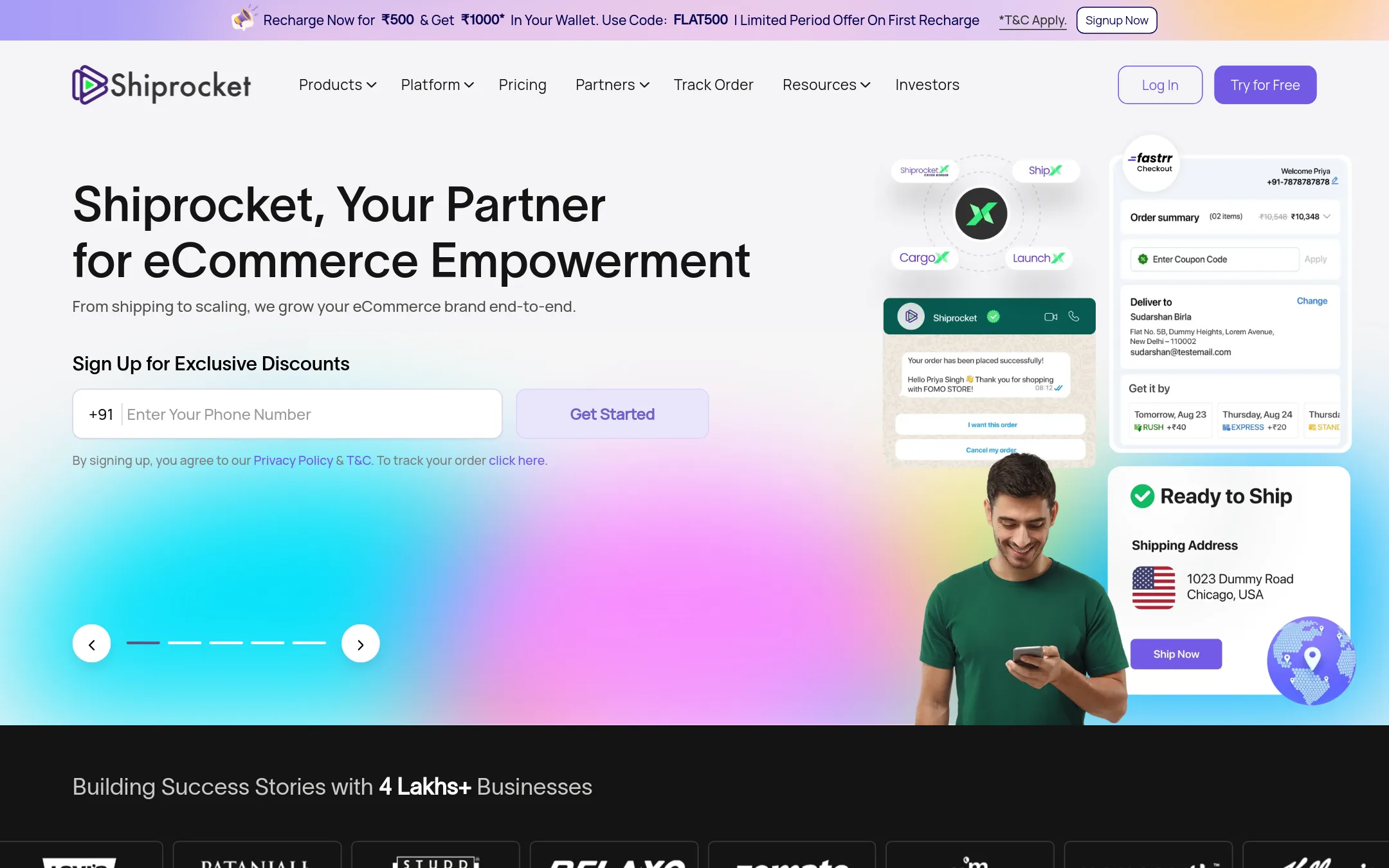
Shiprocket is an eCommerce shipping and logistics platform for Indian sellers, not a deployment tool. Choose it if you run an online store in India and need domestic and cross-border shipping, courier management, and COD reconciliation. It does not deploy or manage cloud infrastructure, so it is not a direct alternative to Porter.
Where it is strong
- Unified domestic shipping across 19,000+ pin codes and 42+ courier partners.
- Cross-border shipping to 220+ countries and territories.
- AI tools like Sense and Trends to reduce RTO and improve checkout.
Where it falls short
- Focused on shipping and logistics, not app deployment or cloud infrastructure.
- Pricing and features are tailored to India, with no global deployment capabilities.
- Pricing:
- Plans start free for up to 5 orders monthly, then ₹199, ₹499, and ₹799 per month for higher volumes. Shipping rates are additional.
See more comparisons in Developer Tools alternatives.
FAQ
Questions about Porter alternatives
Can I deploy into my own AWS, GCP, or Azure account with these alternatives?
Porter and Northflank allow you to deploy into your own cloud account or Kubernetes cluster. Railway and Heroku run on their own infrastructure, so you cannot use your own cloud account. Dokku runs on any hardware you provide, but it is single-host only.
How does pricing compare between Porter and these alternatives?
Porter charges based on the resources your applications use, with volume discounts above 40 vCPU or 80 GB RAM. Railway bills per second for actual usage, with a free trial and low-cost hobby plan. Heroku uses fixed dyno tiers starting at $25/month. Northflank charges per container, starting at $2.70/month for small instances.
Which alternative is best for AI workloads that need GPUs?
Northflank supports GPU workloads and spot instances for AI inference and training. Google Cloud HPC provides direct access to GPUs and TPUs but requires you to manage your own infrastructure. Porter also supports GPUs for training and inference, but it is not as specialized as Northflank for AI-native teams.
Are there any free tiers or trials available?
Railway offers a free trial with $5 credits, and a Hobby plan at $1/month with $5 monthly credits. Heroku has Eco and Basic tiers, though pricing details are not fully transparent. Porter does not list a free tier, but offers startup discounts and a 50% discount for non-profits. Northflank's Sandbox includes 2 services and 1 database, but it is not for production.
What about multi-cloud support?
Porter supports AWS, GCP, and Azure, and allows migration across clouds. Northflank can deploy to AWS, GCP, Azure, or any Kubernetes cluster. Heroku and Railway are limited to their own platforms. AWS ParallelCluster and Azure CycleCloud are each limited to their respective cloud.
Last updated October 16, 2026.