
QualGent alternatives
6 products compared · Updated November 13, 2026
The short answer
The three strongest alternatives to QualGent are Katalon Studio, BrowserStack and Maestro. Katalon Studio suits QA teams with mixed skill levels that need web, mobile, API and desktop testing in one platform. BrowserStack suits mobile and web teams that need broad real-device and cross-browser coverage across many tools. Maestro suits mobile teams that want readable, versioned UI tests they write and run themselves, starting free on their own devices.
Your shortlist, at a glance
Read the comparisons ↓- AAppiumNot publishedEngineering teams with in-house QA skills that want full control over scripted cross-platform UI tests
- MMaestro$250/device/moMobile teams that want readable, versioned UI tests they write and run themselves, starting free on their own devices.
 Katalon StudioNot publishedQA teams with mixed skill levels that need web, mobile, API and desktop testing in one platform with a shared system of record
- KKobitonFrom $83/moMobile QA teams that want real-device cloud access and Appium test automation with on-prem options.
 BrowserStackCustom quoteMobile and web teams that need broad real-device and cross-browser coverage across many tools in one platform
- SSauce LabsFrom $39/mo (annual)Engineering teams with existing Selenium, Appium or Cypress suites that need cross-browser and real-device coverage in CI/CD
About QualGent and its alternatives
QualGent is an AI mobile app quality assurance platform for iOS and Android. According to its site, it is known for its closed-loop approach: TrustLoop captures bugs from real app usage and turns them into structured reports and test cases, DevLoop lets coding agents verify features during development, and Enterprise routes each test to AI agents or human testers and brings the results into one release-readiness view.
When comparing alternatives in this category, weigh the pricing structure first. Some tools publish monthly plans with clear figures, while others quote enterprise contracts on request. Then check regions and device coverage, which matter most for mobile teams testing on real hardware. Look at integrations with your CI and project tools, the level of support and onboarding you get, and the contract terms, including whether higher tiers require annual commitments.
Explore the alternatives
- ANot published
1.Appium
Best for: Engineering teams with in-house QA skills that want full control over scripted cross-platform UI tests
- Pricing
- Not published
- Category
- Other
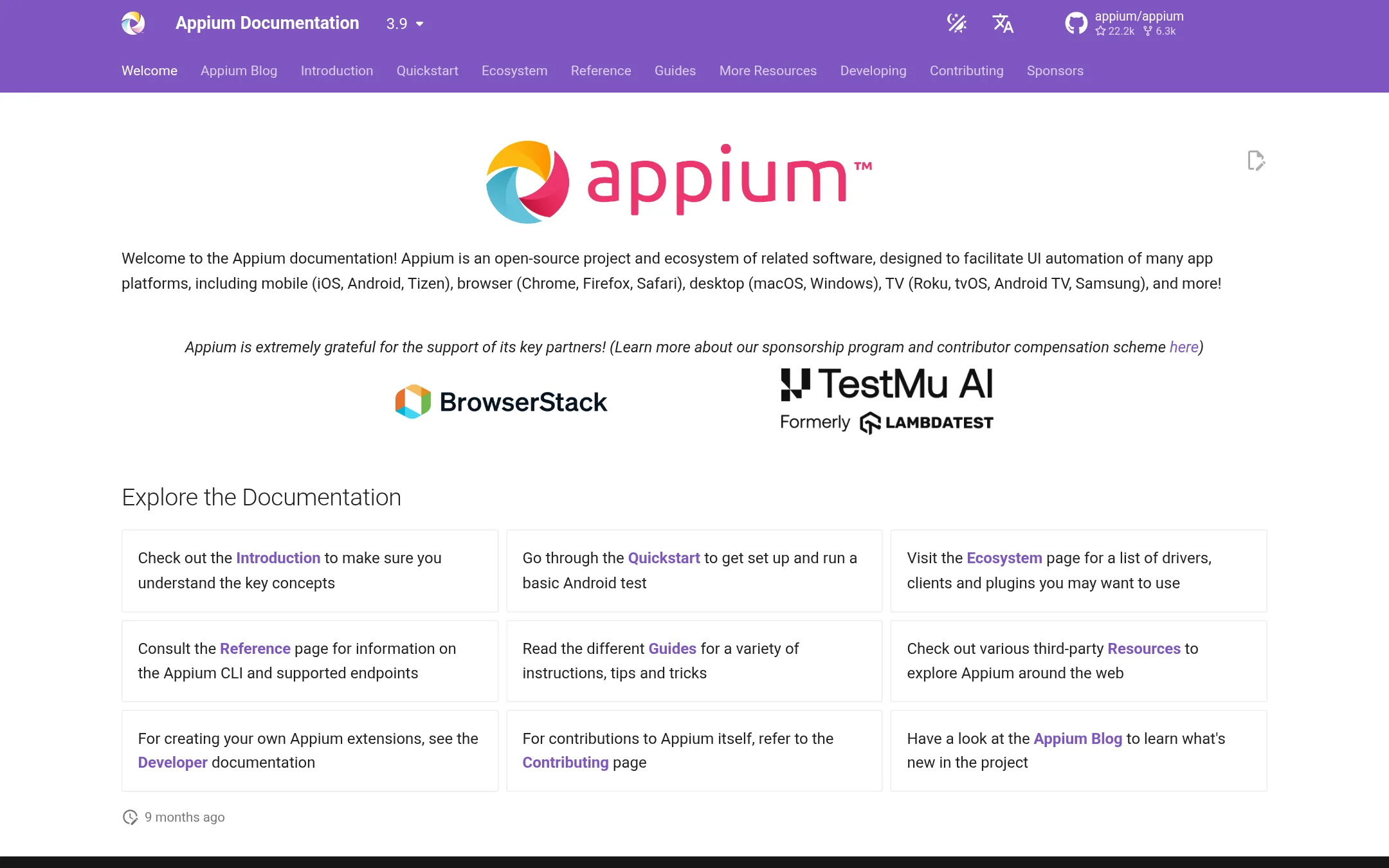
Appium is an open-source framework for automating UI tests across mobile, browser, desktop and TV platforms. A team would pick it over QualGent when they want to write and own their own test scripts, keep everything self-hosted, and avoid a commercial platform. QualGent instead offers AI agents that capture bugs and run tests on its own, with fewer scripts to maintain.
Where it is strong
- Open source, so there is no license fee to start
- Covers iOS, Android, browsers, desktop and TV from one project
- Large ecosystem of drivers, clients and plugins
Where it falls short
- Tests are scripted by hand, so teams carry the upkeep
- No AI agents that capture bugs from real usage or verify fixes automatically
- Pricing:
- Pricing is not published on the site.
- Switching from QualGent:
- Moving from QualGent to Appium means writing scripts for the flows QualGent currently generates or captures, and setting up your own device and reporting infrastructure.
- M$250/device/mo
2.Maestro
Best for: Mobile teams that want readable, versioned UI tests they write and run themselves, starting free on their own devices.
- Pricing
- $250/device/mo
- Category
- Other
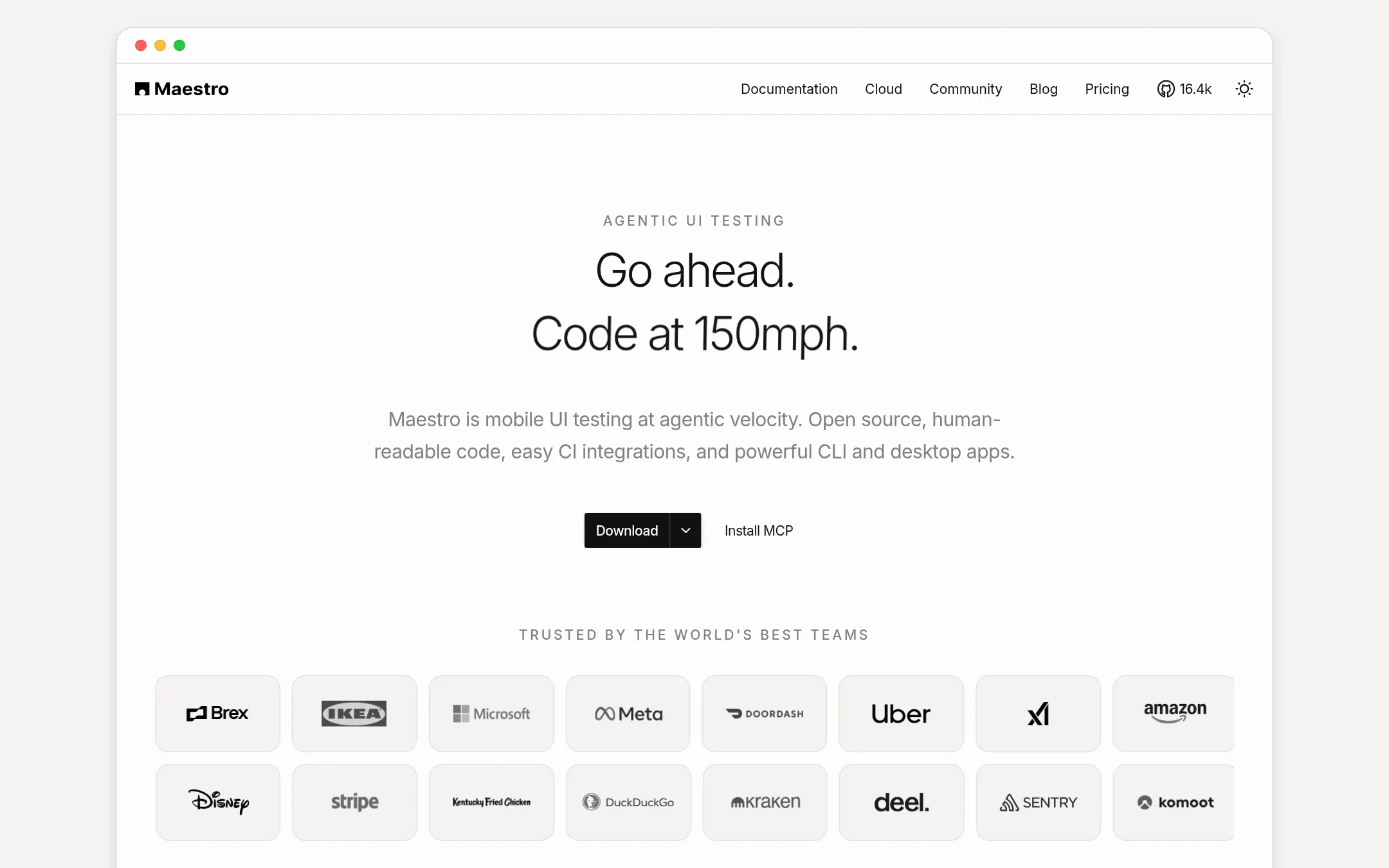
Maestro is an open source UI testing tool for iOS, Android and web. Tests are plain YAML flows that you can run locally from the CLI or in its desktop Studio, then scale across hosted devices in CI. Pick it over QualGent when you want to write and own your own tests with no vendor lock-in, and you do not need the captured-session bug reporting or human-verifier routing QualGent offers.
Where it is strong
- Free and open source for local runs, with tests written as human-readable YAML
- Covers iOS, Android and web from one tool, with an AI toolkit and MCP server for coding agents
- Hosted device cloud for parallel runs with CI and PR integration when you need to scale
Where it falls short
- Tests are scripted flows, so it does not capture real user sessions and turn them into bug reports the way QualGent's TrustLoop does
- Cloud pricing is per device and enterprise features like SSO and managed test cases sit behind custom contracts
- Pricing:
- The local CLI and Studio are free and open source, and cloud device runs cost $250 per device per month, with custom pricing for enterprise.
- Switching from QualGent:
- Moving from QualGent means rewriting or re-recording your coverage as Maestro YAML flows, since the two use different test formats and no migration path is listed on the site.
- Not published
3.Katalon Studio
Best for: QA teams with mixed skill levels that need web, mobile, API and desktop testing in one platform with a shared system of record
- Pricing
- Not published
- Category
- Developer Tools
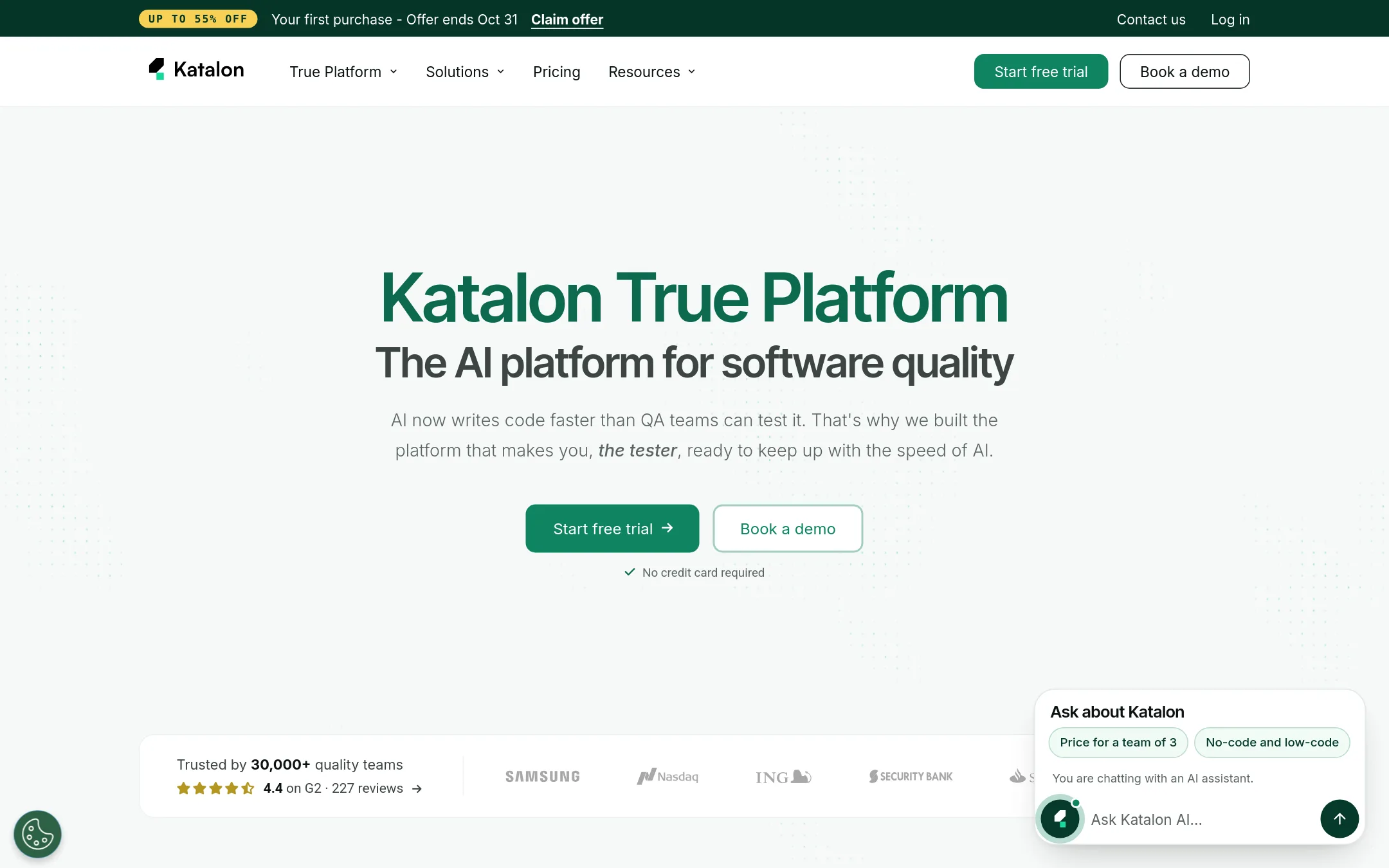
Katalon Studio is a test automation platform covering web, mobile, API and desktop apps, with AI-assisted test generation, self-healing and failure analysis. Teams pick it over QualGent when they want one tool that manages manual test cases, automated scripts and release evidence, or when they already run Selenium, Appium or Playwright and want to keep those scripts.
Where it is strong
- Covers web, mobile, API and desktop testing from one platform
- Keeps existing Selenium, Appium and Playwright tests working
- Manual test management, execution and evidence sit alongside automation in one record
Where it falls short
- Its focus is test management and automation, not closed-loop bug capture from real app usage the way QualGent's TrustLoop is
- Enterprise features such as SSO, audit logs and private deployment require a tailored annual contract
- Pricing:
- Pricing is not published on the site in a form with concrete figures. The Professional tier is listed with features and a Free tier for local use, while Enterprise is quoted on an annual contract basis.
- Switching from QualGent:
- Existing Selenium, Appium and Playwright scripts can be kept, but tests written against QualGent's own agents would need to be recreated in Katalon.
- KFrom $83/mo
4.Kobiton
Best for: Mobile QA teams that want real-device cloud access and Appium test automation with on-prem options.
- Pricing
- From $83/mo
- Category
- Other
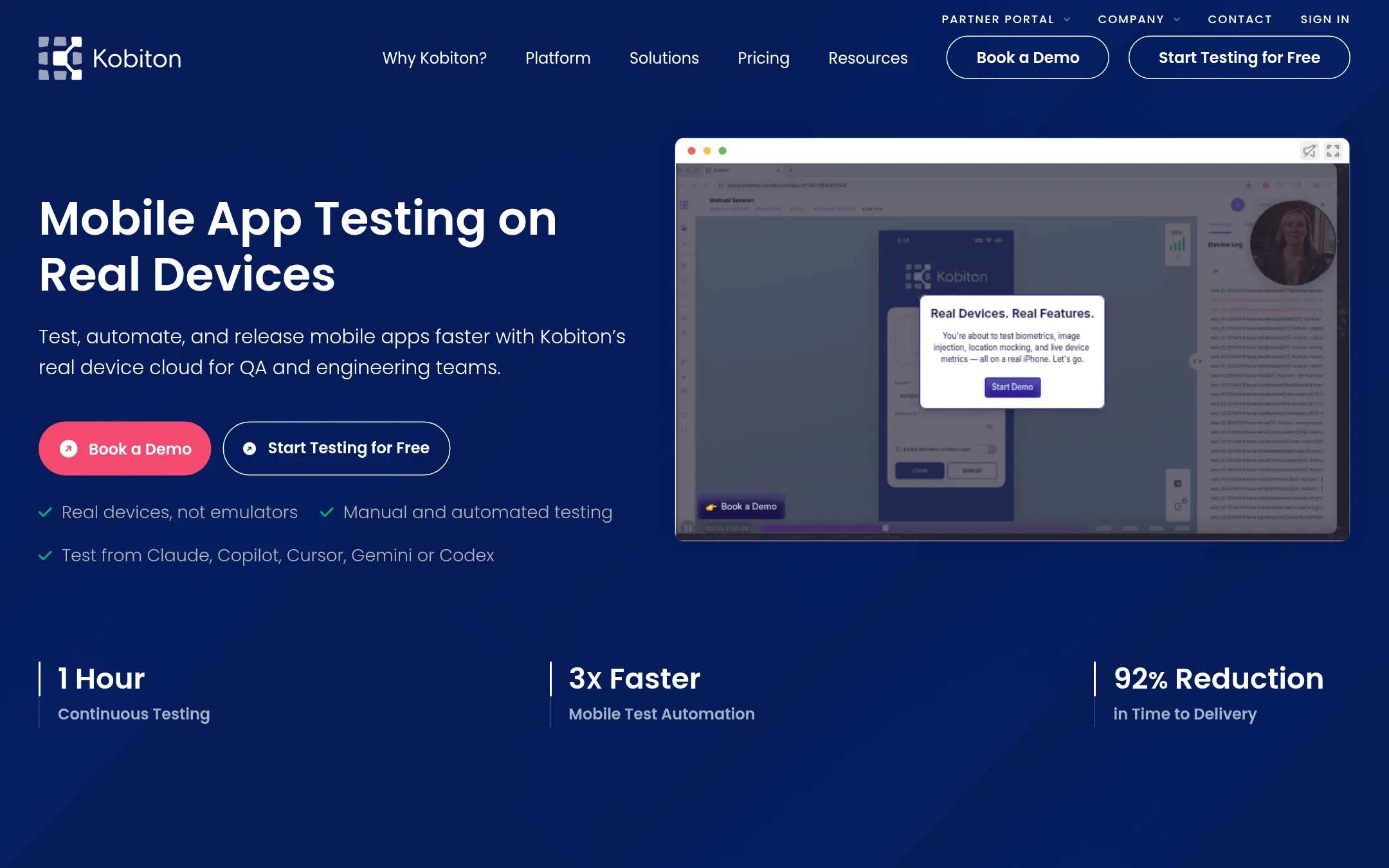
Kobiton is a mobile device testing platform that runs manual and automated tests on real devices, with a device cloud and on-prem lab options. Teams pick it over QualGent when they want to run their own Appium scripts or manual tests on a large real-device lab, or when they need on-prem devices and enterprise deployment control rather than an autonomous AI agent doing the testing.
Where it is strong
- Real devices in a cloud device lab, not emulators
- Supports both manual testing and Appium automation
- Enterprise customers can run fully on-prem devices
Where it falls short
- Test generation is Appium-based and less autonomous than QualGent's AI agent approach
- Higher tiers are sold on annual terms and Enterprise requires a sales conversation
- Pricing:
- Kobiton lists a Startup plan from $83 per month for 500 minutes, an Accelerate plan from $399 per month for 3,000 minutes, a Scale plan at 7,500 minutes per month on annual terms only, and Enterprise pricing on request.
- Switching from QualGent:
- Moving from QualGent to Kobiton means rebuilding your test coverage as Appium or no-code scripts on Kobiton's devices, since the two platforms do not share a test format.
- Custom quote
5.BrowserStack
Best for: Mobile and web teams that need broad real-device and cross-browser coverage across many tools in one platform
- Pricing
- Custom quote
- Category
- Developer Tools
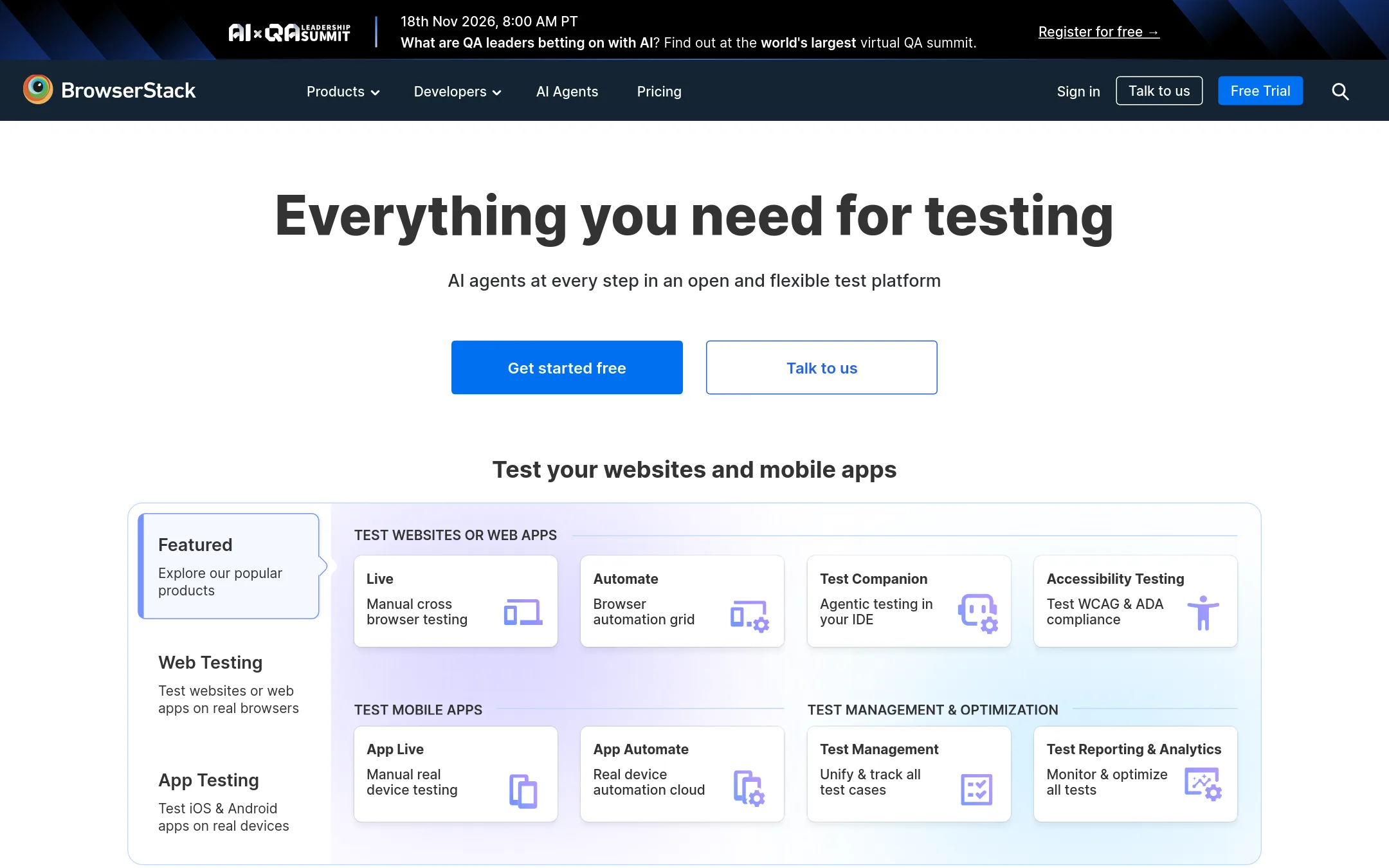
BrowserStack is a broad testing cloud with access to 35,000+ real iOS and Android devices plus thousands of browser combinations, aimed at teams that want one vendor for web, mobile, visual, accessibility and load testing. Pick it over QualGent when you need wide device and browser coverage, a mature set of CI integrations, or a suite of tools rather than an autonomous QA agent that captures bugs from real usage and routes tests to AI or humans.
Where it is strong
- Access to more than 35,000 real iOS and Android devices
- Covers web, app, visual, accessibility, load and manual testing in one place
- Over 150 integrations with CI/CD and project management tools
Where it falls short
- The site describes a wide product suite, so a small team may pay for tools it does not use
- Its focus is on running and managing tests, not on turning real user sessions into bug reports the way TrustLoop does
- Pricing:
- Pricing is not published in a single figure on the site, which shows plans by team size and product, with an Enterprise tier and a custom quote path.
- SFrom $39/mo (annual)
6.Sauce Labs
Best for: Engineering teams with existing Selenium, Appium or Cypress suites that need cross-browser and real-device coverage in CI/CD
- Pricing
- From $39/mo (annual)
- Category
- Other
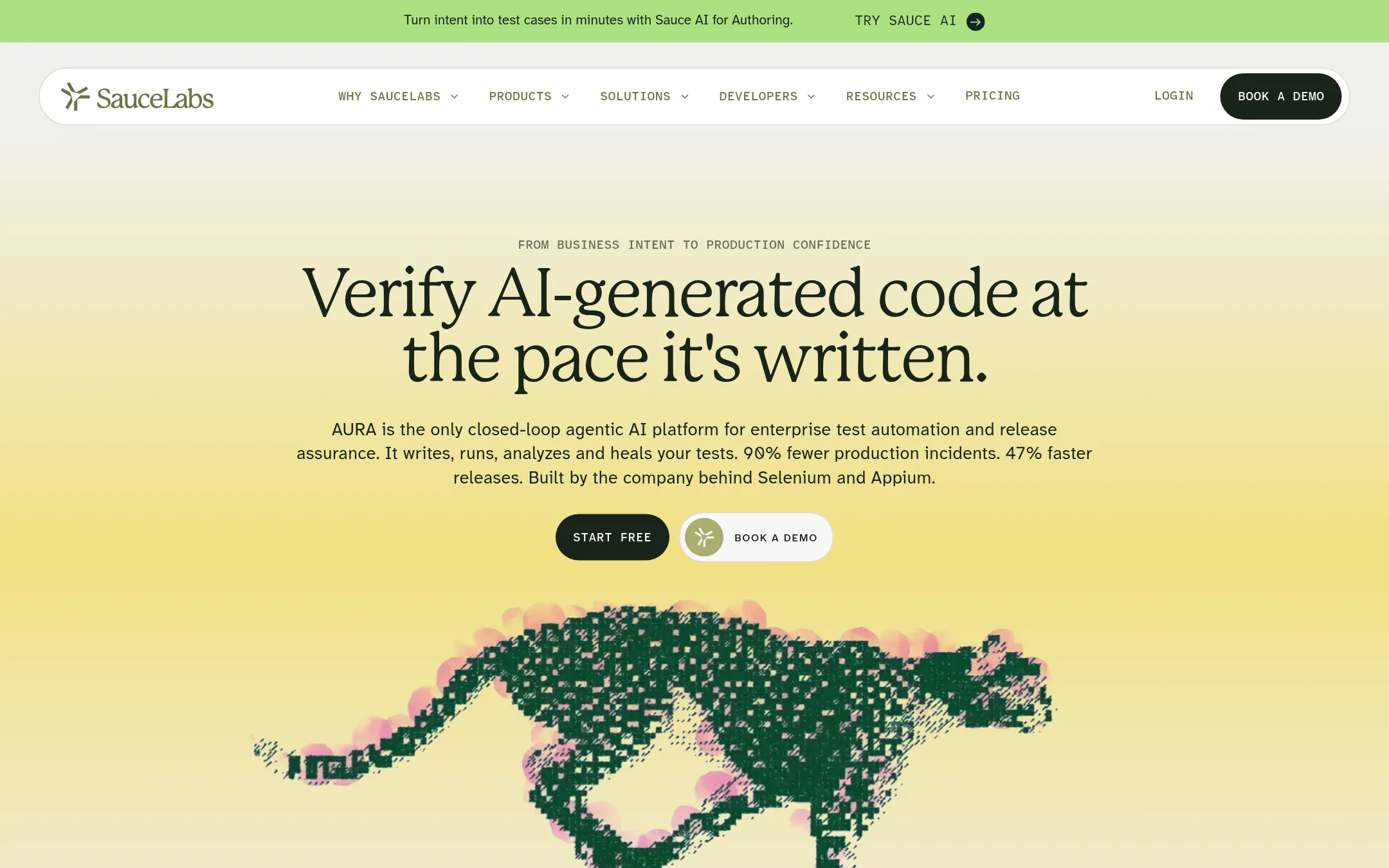
Sauce Labs is a broad test automation platform covering web, real devices, emulators and simulators, with framework support for Selenium, Appium, Cypress and others. Teams pick it over QualGent when they want cross-browser and device-cloud coverage across many frameworks, or when they need a large managed device fleet rather than a closed-loop QA system built around capturing real bugs and routing tests to AI or human verifiers.
Where it is strong
- Supports Selenium, Appium, Cypress, Playwright, Espresso and XCUITest across many CI/CD platforms
- Offers access to thousands of real devices, emulators and browser and OS combinations
- Publishes self-serve plans with clear monthly and annual prices
Where it falls short
- Its AI features like test authoring and insights are tied to Enterprise-level offerings
- It is a broad testing platform rather than a system that captures real-user bugs and routes verification between AI agents and humans
- Pricing:
- Plans start at $39 per month billed annually for Live Testing, $149 for Virtual Device Cloud and $199 for Real Device Cloud, with Enterprise plans quoted separately and Mobile App Distribution at $249 per month billed annually.
- Switching from QualGent:
- Moving from QualGent would mean rebuilding captured bug reports and regression tests in a framework Sauce supports, since the sources give no migration path.
See more comparisons in Developer Tools alternatives.
FAQ
Questions about QualGent alternatives
Which alternative is best if I want to write and own my own mobile tests?
Maestro and Appium both let you write and run your own tests. Maestro uses readable YAML flows and its local CLI and Studio are free and open source, while Appium is an open source framework that covers mobile, browser, desktop and TV. Both require your team to maintain the scripts themselves.
Which option gives the widest real-device and browser coverage?
BrowserStack offers access to more than 35,000 real iOS and Android devices plus thousands of browser combinations. Sauce Labs also provides thousands of real devices, emulators and browser and OS combinations. Kobiton focuses on a real-device cloud with on-prem options for enterprise teams.
Do any of these tools capture bugs from real app usage the way QualGent does?
The entries do not describe the others doing this. Katalon Studio focuses on test management and automation rather than closed-loop bug capture from real usage. BrowserStack, Sauce Labs, Kobiton and Maestro are primarily about running and managing tests, so QualGent's TrustLoop is the distinguishing feature in this group.
Which alternatives have published prices I can compare?
Sauce Labs publishes self-serve plans starting at $39 per month billed annually for Live Testing, $149 for Virtual Device Cloud and $199 for Real Device Cloud. Kobiton lists a Startup plan from $83 per month for 500 minutes and an Accelerate plan from $399 per month for 3,000 minutes. Maestro's local tools are free, with cloud device runs at $250 per device per month. Katalon Studio, BrowserStack and Appium do not publish concrete figures for their paid tiers.
Which alternative should a team with existing Selenium or Appium tests choose?
Katalon Studio is a good fit if you want to keep Selenium, Appium and Playwright scripts working inside one platform that also manages manual tests and release evidence. Sauce Labs supports Selenium, Appium, Cypress and others across many CI/CD platforms. Both let you carry your current automation forward rather than rebuilding it.
Last updated November 13, 2026.