Quicknode alternatives
10 products compared · Updated November 6, 2026
The short answer
The three strongest alternatives to Quicknode are Helius, Chainstack and Moralis. Helius suits Solana-only teams that need low-latency reads and reliable transaction landing. Chainstack suits high-volume trading and DeFi teams that want unlimited requests within a fixed RPS tier. Moralis suits teams that want decoded blockchain data loaded into their own database, with hands-on onboarding.
Your shortlist, at a glance
Read the comparisons ↓- IInfuraFrom US$50/moEthereum dApp teams that already use MetaMask or Linea and want node access from the same provider
 MoralisFrom $10/moTeams that want decoded blockchain data in their own database, with history loaded on day one and hands-on onboarding
- TThe GraphNot publishedDapp frontends that need fast GraphQL access to organized onchain history, such as DeFi, NFT, or analytics apps
- CChainstackNot publishedHigh-volume trading, MEV and DeFi teams that need Solana streaming and unlimited RPC calls within a fixed RPS tier
- GGetBlockFrom $39/moWallets, exchanges and payment firms that need RPC plus AML screening and dedicated nodes under one contract
- AAnkrNot publishedWeb3 teams that need RPC plus liquid staking or custom rollup and sidechain launches
- QQuickNode Streams alternative GoldskyCustom quoteFintechs and financial institutions that need stablecoin deposits, reserves or payments tied into their own ledgers
 ConsenSysNot publishedBanks, asset managers and market infrastructure operators building tokenized assets or settlement systems on Ethereum
 HeliusFrom $49/moSolana traders, market makers and wallet teams that need low-latency reads and reliable transaction landing on one chain
 ThirdwebFrom $99/moConsumer apps and games that need user wallets, token launches and in-app swaps across EVM chains and Solana
About Quicknode and its alternatives
Quicknode is a blockchain development platform that its site describes as providing RPC access, real-time data streams, indexed chain data and trading execution from one account. The site says it covers 76+ chains and 130+ networks and positions its multi-chain RPC as the base layer, with streams, indexed data and swap execution built on top.
When comparing alternatives in this category, weigh the pricing structure first, since providers charge by credits, requests per second, or compute units and the totals can differ a lot at the same volume. Then check which regions and chains a provider covers, which integrations and data products it offers beyond raw RPC, how support tiers and response times are defined, and what the contract terms and uptime commitments include.
Explore the alternatives
- IFrom US$50/mo
1.Infura
Best for: Ethereum dApp teams that already use MetaMask or Linea and want node access from the same provider
- Pricing
- From US$50/mo
- Category
- Other
Infura is a node and API service for Ethereum and other blockchain networks, built around core RPC access, streaming, and developer tooling. Teams usually pick it over Quicknode when they want access from within the MetaMask and Consensys ecosystem, or when they are building on Linea and want the same provider.
Where it is strong
- Access to over 40 supported networks through one API key
- Consensys integration with the MetaMask SDK, Snaps, and Linea
- Free plan includes full archive data access and the Debug and Trace API
Where it falls short
- Pricing is credit-based, so monthly costs depend on which methods you call
- Enterprise plan is custom priced, with no published figures for dedicated infrastructure
- Pricing:
- Infura lists a Free plan with 3 million daily credits, a Developer plan at US$50 per month with 15 million daily credits, and a Team plan at US$225 per month with 75 million daily credits, plus a custom Enterprise tier.
- From $10/mo
2.Moralis
Best for: Teams that want decoded blockchain data in their own database, with history loaded on day one and hands-on onboarding

- Pricing
- From $10/mo
- Category
- Developer Tools
Moralis gives you Web3 data APIs covering 40+ chains, including EVM, Solana and Bitcoin, plus Data Feeds that load decoded chain data straight into your own Postgres, ClickHouse, MySQL or Kafka. It is the choice when you want historical and real-time data landing in your own database, with a solutions engineer who helps with backfill and migration.
Where it is strong
- Data Feeds delivers decoded data into Postgres, ClickHouse, MySQL or Kafka.
- A solutions engineer scopes chains and history and runs the backfill with your team.
- Covers 40+ chains including EVM, Solana and Bitcoin, with the same 19 decoded topics.
Where it falls short
- Quicknode publishes a stronger dedicated-cluster and gRPC streaming offering, which Moralis does not list for its plans.
- Several Moralis features, such as Data Feeds for Starter and Streams on that tier, are marked as coming soon.
- Pricing:
- Data Feeds Starter is $10 a month with 10 GB included and $1 per GB beyond that, while API plans run from $149 to $749 a month, and Enterprise is custom.
- Switching from Quicknode:
- Moving from Quicknode would mean your team sets up Data Feeds or the APIs on Moralis, and Moralis says its engineers can help migrate history from other indexers.
- TNot published
3.The Graph
Best for: Dapp frontends that need fast GraphQL access to organized onchain history, such as DeFi, NFT, or analytics apps
- Pricing
- Not published
- Category
- Other
The Graph indexes blockchain data into subgraphs you query with GraphQL, so you don't have to run your own indexer or parse raw chain data. Choose it over Quicknode when your app mostly needs organized, queryable history for a frontend, and you'd rather use a community-built or self-defined subgraph than run RPC and streaming infrastructure yourself.
Where it is strong
- No need to run your own data server or build indexing infrastructure.
- Queries use GraphQL, so frontend data loading is simple.
- Covers more than 60 supported networks, with many community-created subgraphs to reuse.
Where it falls short
- It is an indexing and query layer, so it does not offer the RPC node access that Quicknode provides for sending transactions.
- The site lists no pricing, so cost comparison requires contacting them directly.
- Pricing:
- Pricing is not published on the site.
- CNot published
4.Chainstack
Best for: High-volume trading, MEV and DeFi teams that need Solana streaming and unlimited RPC calls within a fixed RPS tier
- Pricing
- Not published
- Category
- Other
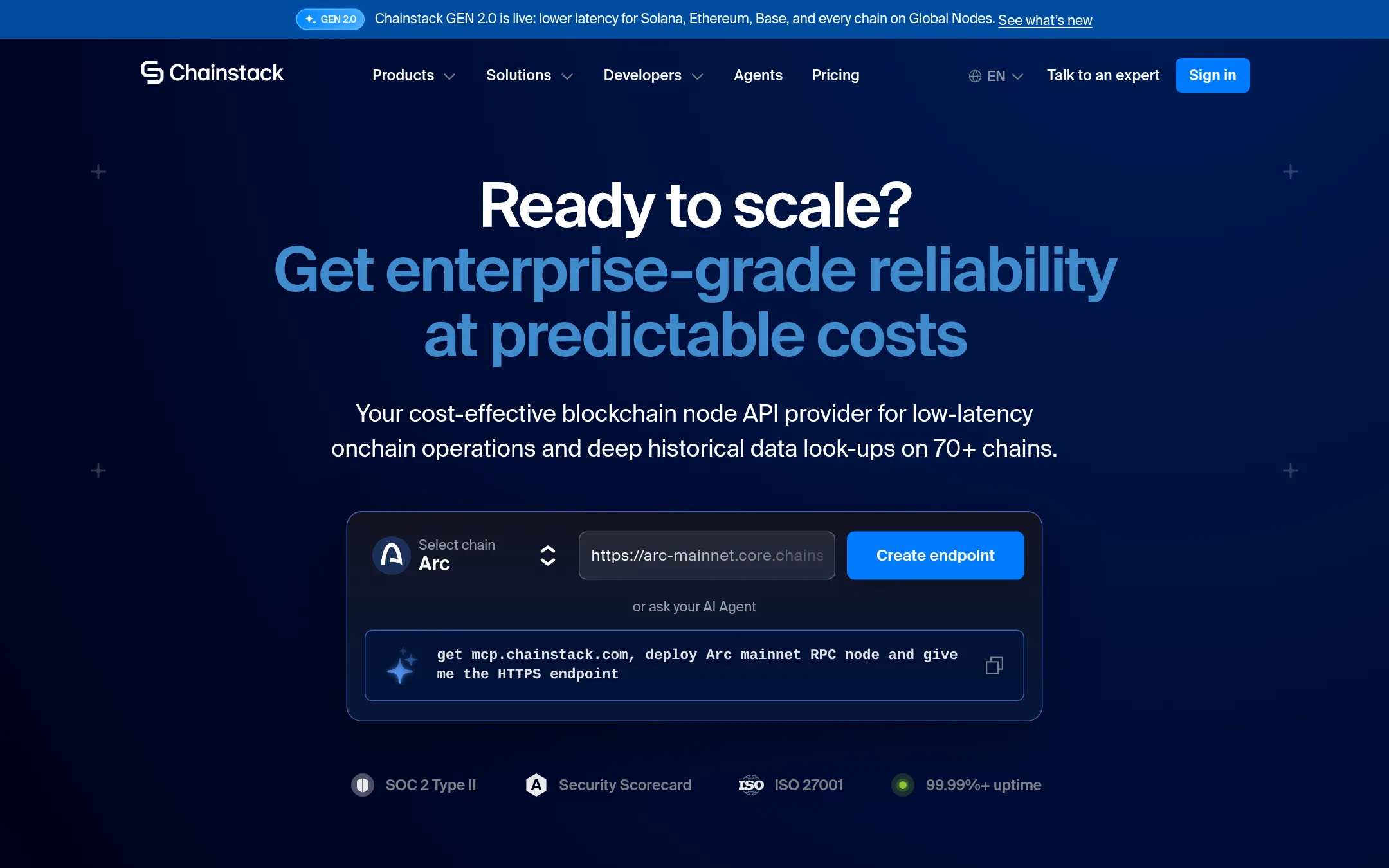
Chainstack is a blockchain node and RPC provider covering 70+ chains, with Global Nodes, managed Dedicated Nodes, and self-hosted nodes that run on your own infrastructure. Teams pick it over Quicknode when they want unlimited requests within an RPS tier for high-volume RPC, or when they want to run nodes on infrastructure they control.
Where it is strong
- Unlimited requests within each RPS tier, so monthly costs stay predictable at high volume
- Self-hosted nodes on any infrastructure, with automated deployment and failover
- Covers 70+ chains, including Hyperliquid, Sui and Robinhood, with Solana gRPC streaming and MEV-protected transaction submission
Where it falls short
- Quicknode offers SQL Explorer, Streams and Webhooks, which the Chainstack page does not describe
- Pricing is not published, so budgeting requires a sales conversation
- Pricing:
- Pricing is not published on the site.
- GFrom $39/mo
5.GetBlock
Best for: Wallets, exchanges and payment firms that need RPC plus AML screening and dedicated nodes under one contract
- Pricing
- From $39/mo
- Category
- Other
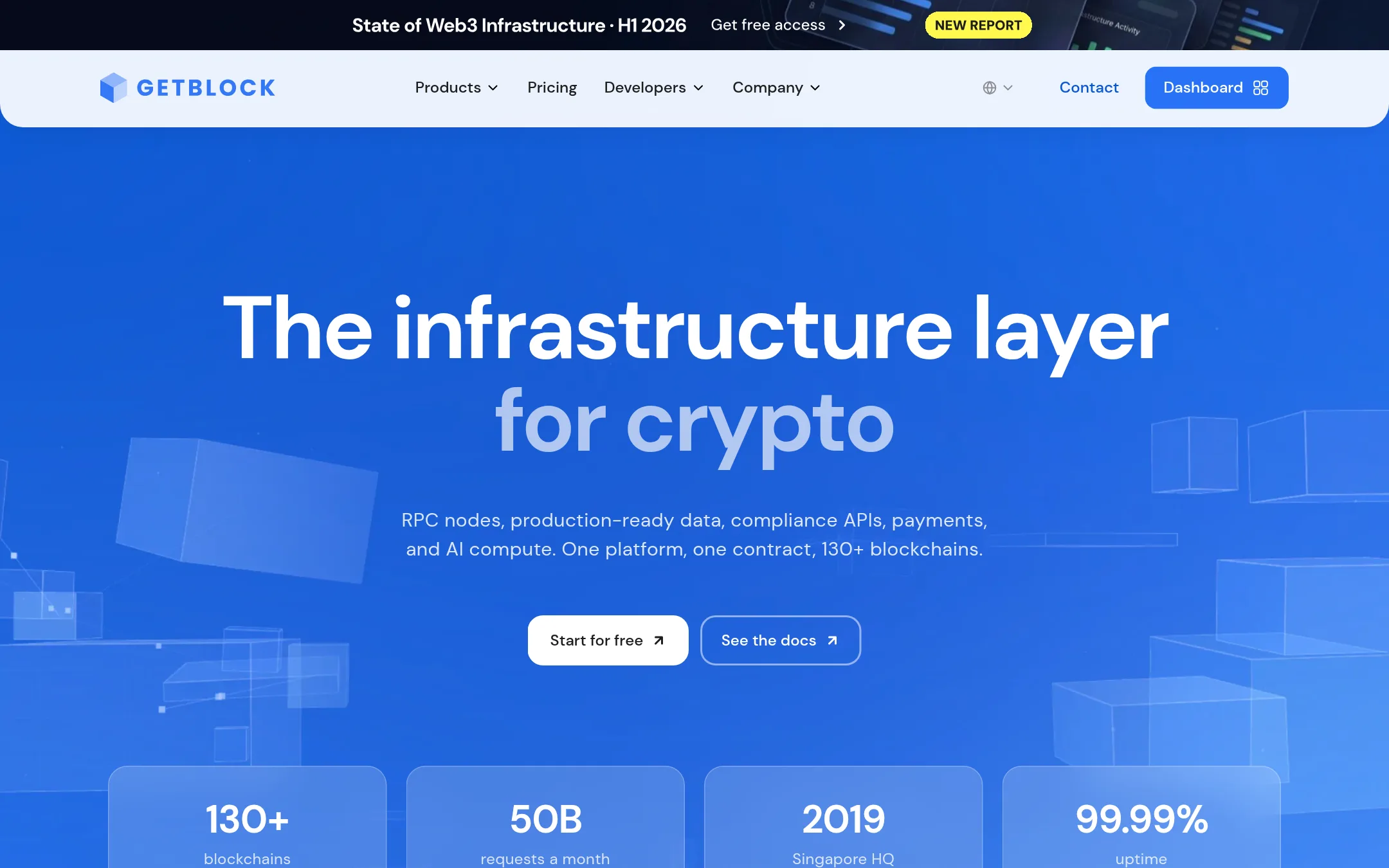
GetBlock runs RPC nodes, indexed data, streams and compliance APIs across 130+ blockchains from one platform. Teams pick it over Quicknode when they need compliance tooling like AML screening and wallet audits alongside their node access, or when they want dedicated single-tenant nodes for regulated workloads. It also fits teams that want node operation or validator services on the same contract.
Where it is strong
- Compliance APIs such as AML checks, wallet audits and rug pull scanning sit alongside RPC access
- Single-tenant dedicated nodes are offered for regulated workloads at scale
- Covers 130+ networks, with validator and staking services available on the same platform
Where it falls short
- Quicknode's published pricing table is far more detailed, while GetBlock's plan details are harder to compare line by line
- Shared plan costs depend on compute unit consumption, which makes monthly spend harder to forecast
- Pricing:
- Shared node plans start with a free tier, with paid plans billed by compute units, and Dedicated Nodes start from $39 a month according to the site, while the pricing page does not list specific tier prices.
- ANot published
6.Ankr
Best for: Web3 teams that need RPC plus liquid staking or custom rollup and sidechain launches
- Pricing
- Not published
- Category
- Other
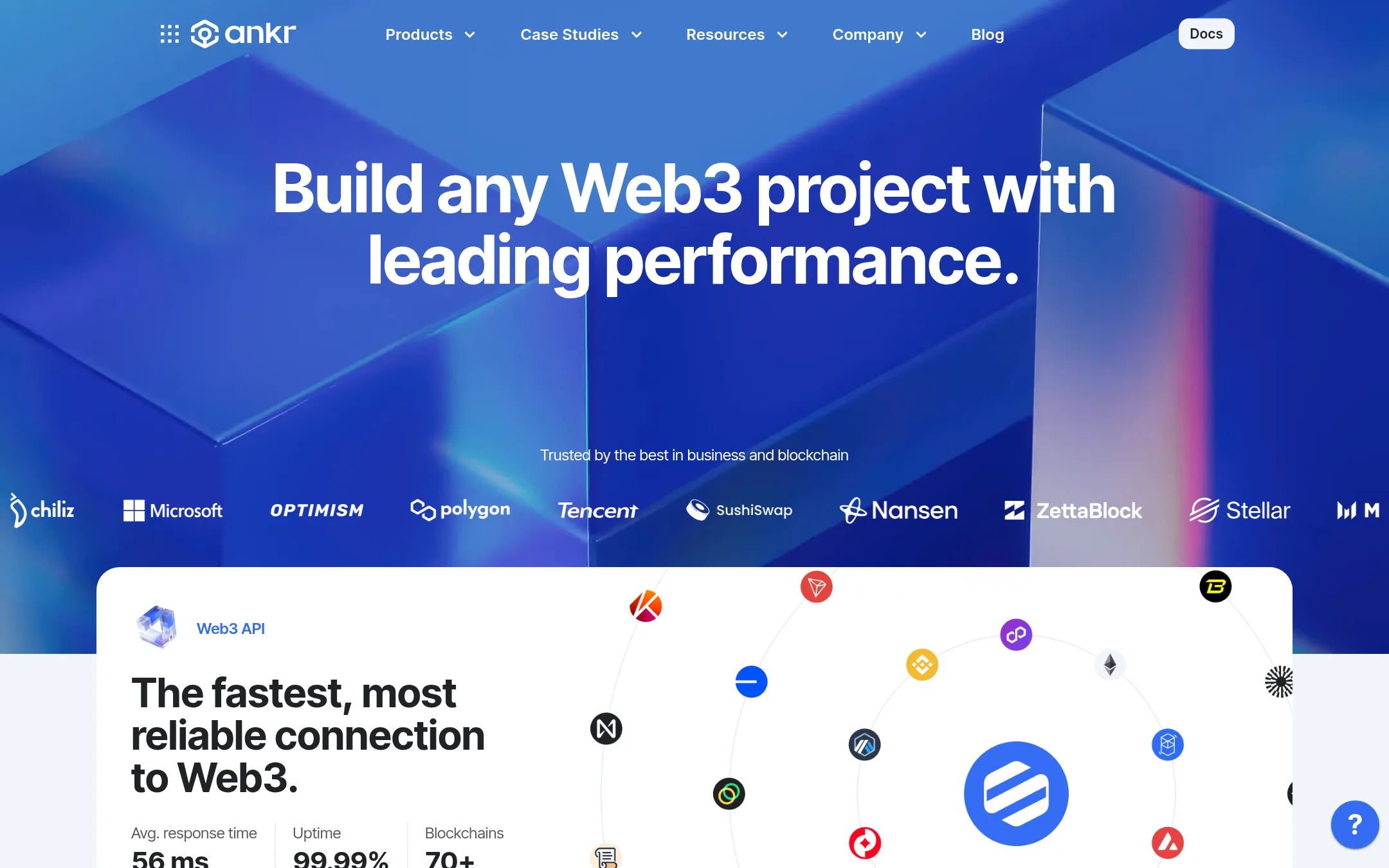
Ankr runs a distributed network of blockchain nodes and offers RPC access across 70+ chains, along with liquid staking and rollup or sidechain creation services. Teams pick it over Quicknode when they want staking built in or need help launching their own chain.
Where it is strong
- Liquid staking across 9+ tokens is built into the same platform
- Scaling services cover launching a rollup or sidechain end to end
- Nodes are spread across 30+ global regions with bare-metal hosting
Where it falls short
- Quicknode lists streams, indexed data and SQL querying, which the site does not mention for Ankr
- No public pricing makes budgeting harder before a sales conversation
- Pricing:
- Pricing is not published on the site.
- QCustom quote
7.QuickNode Streams alternative Goldsky
Best for: Fintechs and financial institutions that need stablecoin deposits, reserves or payments tied into their own ledgers
- Pricing
- Custom quote
- Category
- Other
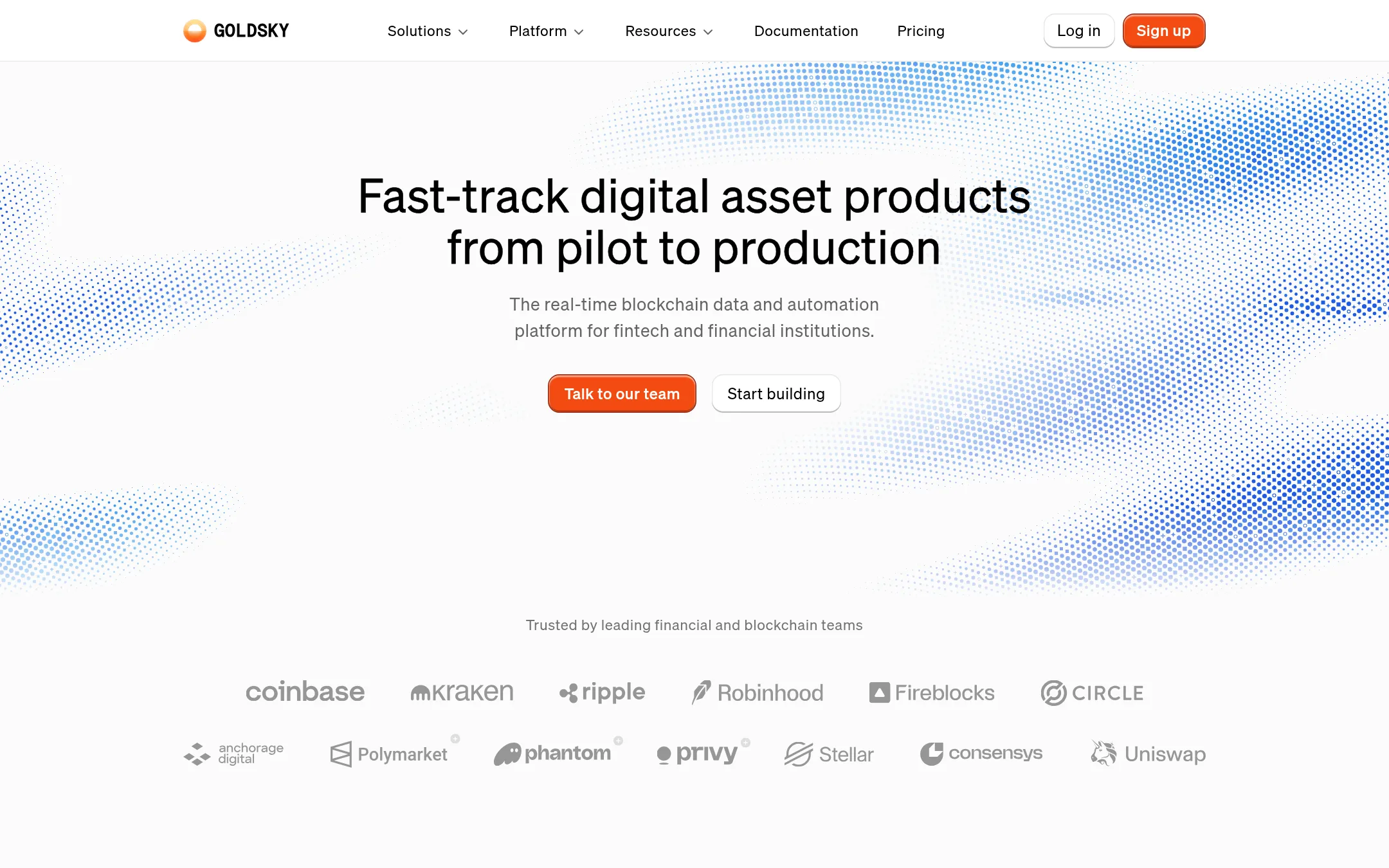
Goldsky is a real-time blockchain data and automation platform aimed at fintechs and financial institutions. It covers stablecoin reconciliation, deposit detection, reserve checks and payment matching, with data written into your own database. Someone would pick it over Quicknode when the goal is to tie onchain activity into banking or payments systems, not just to read or send chain data.
Where it is strong
- Writes onchain events into your own database, with webhooks.
- Handles chain reorgs by correcting credits automatically.
- Covers stablecoin, tokenized asset and prediction market use cases in one platform.
Where it falls short
- Built for financial product workflows, so it lacks Quicknode's general-purpose RPC breadth.
- Pricing is quote-based for full capability, with no published per-unit rate for Enterprise.
- Pricing:
- Goldsky offers a $100 free credit for subgraphs, Turbo pipelines and Feeds, then usage-based Scale pricing with custom Enterprise terms, and the page does not state a per-unit figure.
- Not published
8.ConsenSys
Best for: Banks, asset managers and market infrastructure operators building tokenized assets or settlement systems on Ethereum
- Pricing
- Not published
- Category
- Other
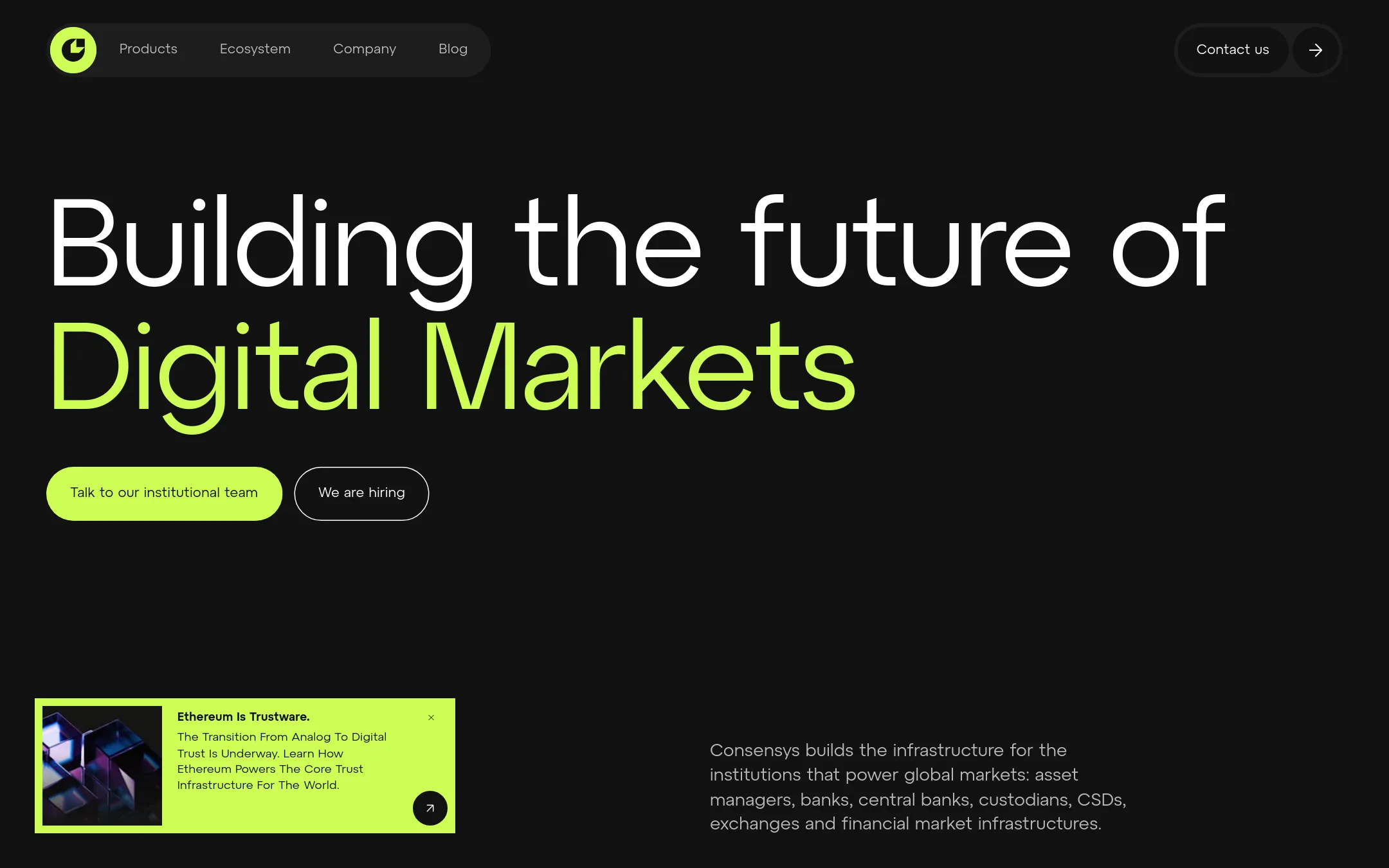
Consensys builds Ethereum infrastructure and tools, including the Besu and Teku clients and the Web3Signer key-management service, and works with banks, asset managers and central banks on digital market systems. A team would pick it over Quicknode when it needs institution-grade design, deployment and managed operations for Ethereum rather than a hosted RPC and data API.
Where it is strong
- Runs its own Ethereum clients, Besu and Teku, alongside its managed services
- Offers advisory and technical services for regulated institutions
- Founded in 2014 by Ethereum co-founder Joseph Lubin, with a long record in the ecosystem
Where it falls short
- The site describes an institutional focus, so it is less suited to a small team that wants a self-serve API key
- The listed offering does not mention multi-chain RPC or a streaming data product like Quicknode's
- Pricing:
- Pricing is not published on the site.
- From $49/mo
9.Helius
Best for: Solana traders, market makers and wallet teams that need low-latency reads and reliable transaction landing on one chain
- Pricing
- From $49/mo
- Category
- Developer Tools
Helius is a Solana-only infrastructure provider. It covers RPC, LaserStream gRPC and WebSocket streaming, Sender for transaction landing, and digital asset APIs. Choose it over Quicknode when your product lives on Solana and you need Solana-native features such as staked transaction sending, Solana gRPC streams and archival methods like getTransactionsForAddress.
Where it is strong
- Built for Solana specifically, with Solana-native RPC methods and staked transaction sending by default
- LaserStream gRPC and WebSockets stream blocks, transactions and account data, with regional endpoints in several cities
- Sender sends transactions through seven regional endpoints, and its tiers include it at no extra credit cost
Where it falls short
- It only supports Solana, so it cannot replace Quicknode for multi-chain products
- Several headline features, such as LaserStream data add-ons and dedicated nodes, are priced separately and can raise total cost quickly
- Pricing:
- Pricing is not published on the site in plain terms for every tier, but the listed plans run from a Free tier with 1M credits to a Business plan at $499 per month with 100M credits, with Enterprise on custom quotes.
- Switching from Quicknode:
- Moving from Quicknode means swapping RPC endpoints and API keys, then rebuilding any Quicknode-specific streams or webhooks on Helius equivalents.
- From $99/mo
10.Thirdweb
Best for: Consumer apps and games that need user wallets, token launches and in-app swaps across EVM chains and Solana
- Pricing
- From $99/mo
- Category
- Developer Tools
Thirdweb is a developer platform for building onchain apps, covering token creation, cross-chain bridging and swapping, wallets, and blockchain data access, with payments for HTTP APIs and AI agents. Someone would pick it over Quicknode when the main need is wallets, token tooling, and swap or bridge flows in one SDK, rather than raw RPC and streaming infrastructure.
Where it is strong
- Wallets, token creation and swaps sit in one platform, so fewer vendors to manage
- Covers EVM chains and Solana from the same toolkit
- Accepts HTTP and agentic payments in many tokens
Where it falls short
- Its RPC and blockchain data offering is narrower than Quicknode's, with no real-time streaming or SQL explorer listed
- Its pricing is built around wallets, gas and swaps, so raw request-based costs are harder to compare
- Pricing:
- Growth is $99 per month, Scale is $499 per month, and Pro starts at $1,499 per month, with user wallets from $0.015 per monthly active user on the first tier and gas sponsorship from $1 per thousand transactions.
See more comparisons in Developer Tools alternatives.
FAQ
Questions about Quicknode alternatives
Which alternative is best if I only build on Solana?
Helius is built specifically for Solana and offers Solana-native RPC methods, LaserStream gRPC and WebSocket streaming, and Sender for transaction landing. Its site notes that it only supports Solana, so it will not replace Quicknode for a multi-chain product.
Which alternative gives predictable costs at high request volume?
Chainstack says it offers unlimited requests within each RPS tier, which keeps monthly costs predictable for high-volume RPC work. Its pricing is not published, so budgeting requires a conversation with sales.
I want blockchain data loaded straight into my own database. Which should I look at?
Moralis offers Data Feeds that load decoded chain data into Postgres, ClickHouse, MySQL or Kafka, with a solutions engineer who helps with backfill. Its Data Feeds Starter plan is listed at $10 a month with 10 GB included, which is useful for comparing costs at a smaller scale.
Are any alternatives priced clearly enough to compare with Quicknode's table?
Infura lists a Free plan, a Developer plan at US$50 per month and a Team plan at US$225 per month, each with a daily credit allowance, so it is the easiest to compare. Several others, including Chainstack, Ankr and The Graph, do not publish pricing and need a direct quote.
Last updated November 6, 2026.