Quivr alternatives
5 products compared · Updated November 11, 2026
The short answer
The three strongest alternatives to Quivr are Notion, Glean and Obsidian. Notion suits startups and growing teams that want one workspace for docs, projects and internal support workflows. Glean suits large enterprises that need company-wide AI search and agents with permission controls across many internal systems. Obsidian suits individuals and small teams who want private, offline-friendly notes they can link and publish as a knowledge base. None of these three handles customer support auto-resolutions or reply suggestions the way Quivr does.
Your shortlist, at a glance
Read the comparisons ↓ NotionFree to Enterprise tieStartups and growing teams that want one workspace for docs, projects and internal support workflows instead of a dedicated support desk
- MMemNot publishedFounders and operators who want one place to keep notes, meeting records and project context, and to ask what matters now
 ObsidianFree. Sync from $4/useIndividual thinkers and small teams who want private, offline-friendly notes they can link and publish as a knowledge base
- RReflectNot publishedIndividuals and small teams who want a Markdown-based second brain with backlinks and local files
- GGleanNot publishedLarge enterprises in banking, healthcare, retail or engineering that need company-wide AI search and agents with permission controls
About Quivr and its alternatives
Quivr is an AI customer support tool, and its site describes AI-powered auto-resolutions and reply suggestions for customer support. The site could not be loaded when this page was prepared, so the description here is limited to what the site presents as its core offer.
When comparing alternatives in this category, weigh what each product is built to do. Some tools are general workspaces or note apps that only overlap with support work, while enterprise platforms focus on search across internal data. Check the pricing structure, since some products price per seat, per site or by usage credits, and some do not publish prices at all. Also check regional availability, which integrations matter for your existing stack, the level of support you can expect, and the contract terms that apply to your team's size.
Explore the alternatives
- Free to Enterprise tie
1.Notion
Best for: Startups and growing teams that want one workspace for docs, projects and internal support workflows instead of a dedicated support desk
- Pricing
- Free to Enterprise tie
- Category
- Productivity & Project Management
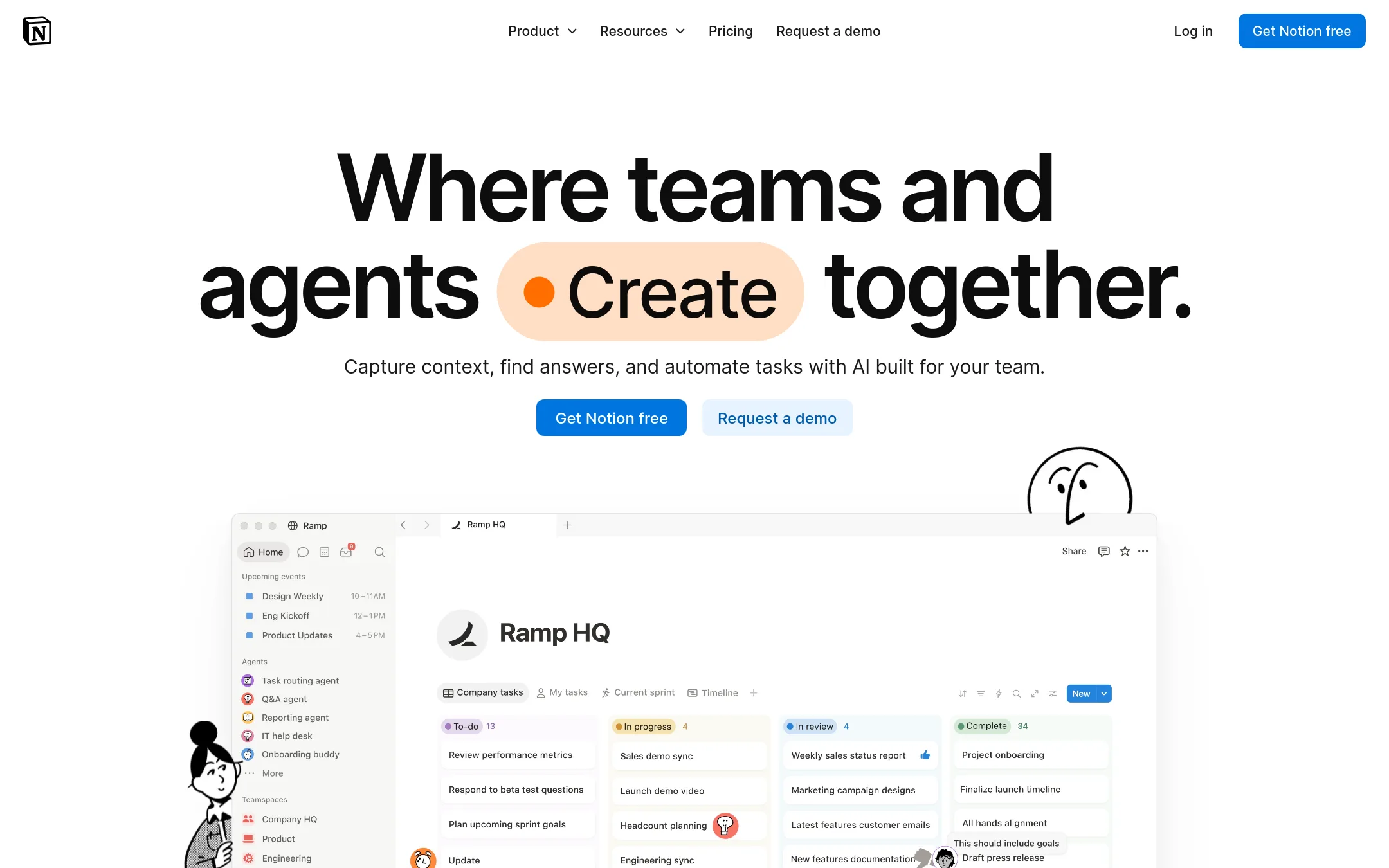
Notion is a general workspace for docs, databases, wikis and project tracking, with AI agents that can act across connected apps. Someone would pick it over Quivr when they need one place for internal knowledge, planning and light automation rather than a tool focused on resolving customer support tickets with AI replies.
Where it is strong
- Covers docs, databases, wikis and project tracking in one tool
- Free plan is available for individuals and personal projects
- Business plan adds AI meeting notes and enterprise search across connected apps like Slack and GitHub
Where it falls short
- It is a general workspace, so it does not offer the dedicated customer support reply and auto-resolution features that Quivr focuses on
- Several advanced features such as SAML SSO, audit logs and granular permissions sit in the higher tiers
- Pricing:
- In the United States, the site lists a Free plan, a Plus plan for small teams, a Business plan with AI Agent and enterprise search, an Enterprise plan, and Custom Agents at $10 per 1,000 monthly credits, but the page text does not give a per-seat price for eac
- MNot published
2.Mem
Best for: Founders and operators who want one place to keep notes, meeting records and project context, and to ask what matters now
- Pricing
- Not published
- Category
- Other
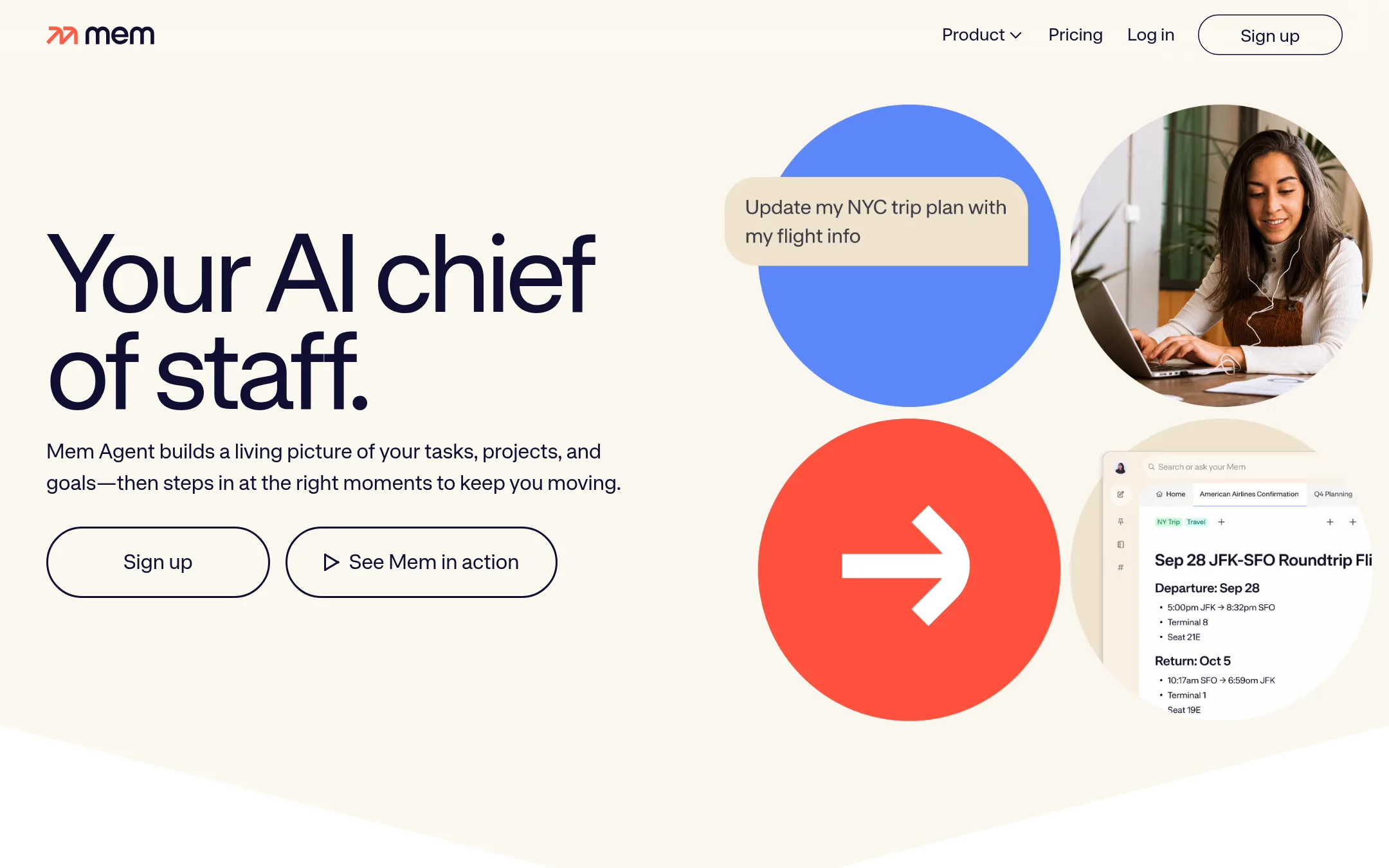
Mem is a notes and memory app. It collects notes, meetings, saved web pages and connected apps, then builds a running picture of your tasks, projects and goals. Its agent surfaces reminders and drafts when it judges they will help. Someone would choose Mem over Quivr if they want a personal knowledge base and planning assistant rather than help resolving customer support tickets.
Where it is strong
- Captures notes, meetings and saved pages without needing manual organization
- Agent keeps a visible, editable memory in ordinary notes
- Search works by meaning, so you can recall details you cannot quite name
Where it falls short
- It does not provide customer support features such as auto-resolutions or reply suggestions for tickets
- Pricing details were not available on the page reviewed
- Pricing:
- Pricing is not published on the site.
- Free. Sync from $4/use
3.Obsidian
Best for: Individual thinkers and small teams who want private, offline-friendly notes they can link and publish as a knowledge base
- Pricing
- Free. Sync from $4/use
- Category
- Productivity & Project Management
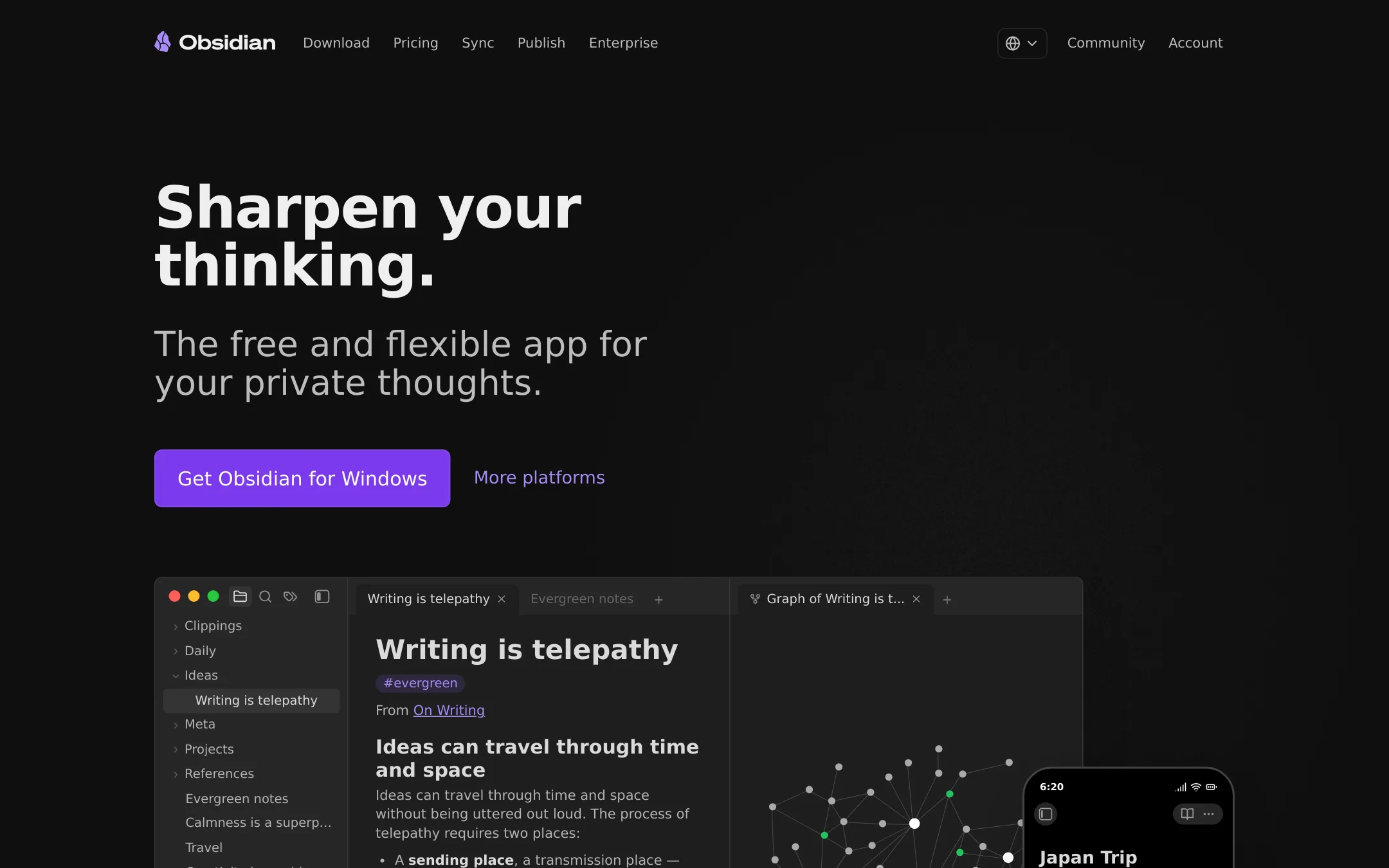
Obsidian is a note app that stores your notes as local files on your device, works offline, and links notes together in a graph. It fits people who want a personal knowledge base or project notes they fully own, rather than a customer support tool. Choose it instead of Quivr when the job is organizing your own thinking, not auto-resolving customer tickets.
Where it is strong
- Notes are stored locally on your device and remain accessible offline.
- Open file formats mean you are not locked in to the app.
- Thousands of community plugins and themes let you adjust the app to your workflow.
Where it falls short
- It has no customer support features such as auto-resolutions or reply suggestions, so it cannot replace Quivr's core function.
- Sync and Publish are paid add-ons, and Publish is priced per site.
- Pricing:
- The app is free without limits, Sync is $4 per user per month billed annually or $5 billed monthly, Publish is $8 per site per month billed annually or $10 billed monthly, and optional Catalyst and Commercial licenses are $25 one-time and $50 per user per year
- RNot published
4.Reflect
Best for: Individuals and small teams who want a Markdown-based second brain with backlinks and local files
- Pricing
- Not published
- Category
- Other
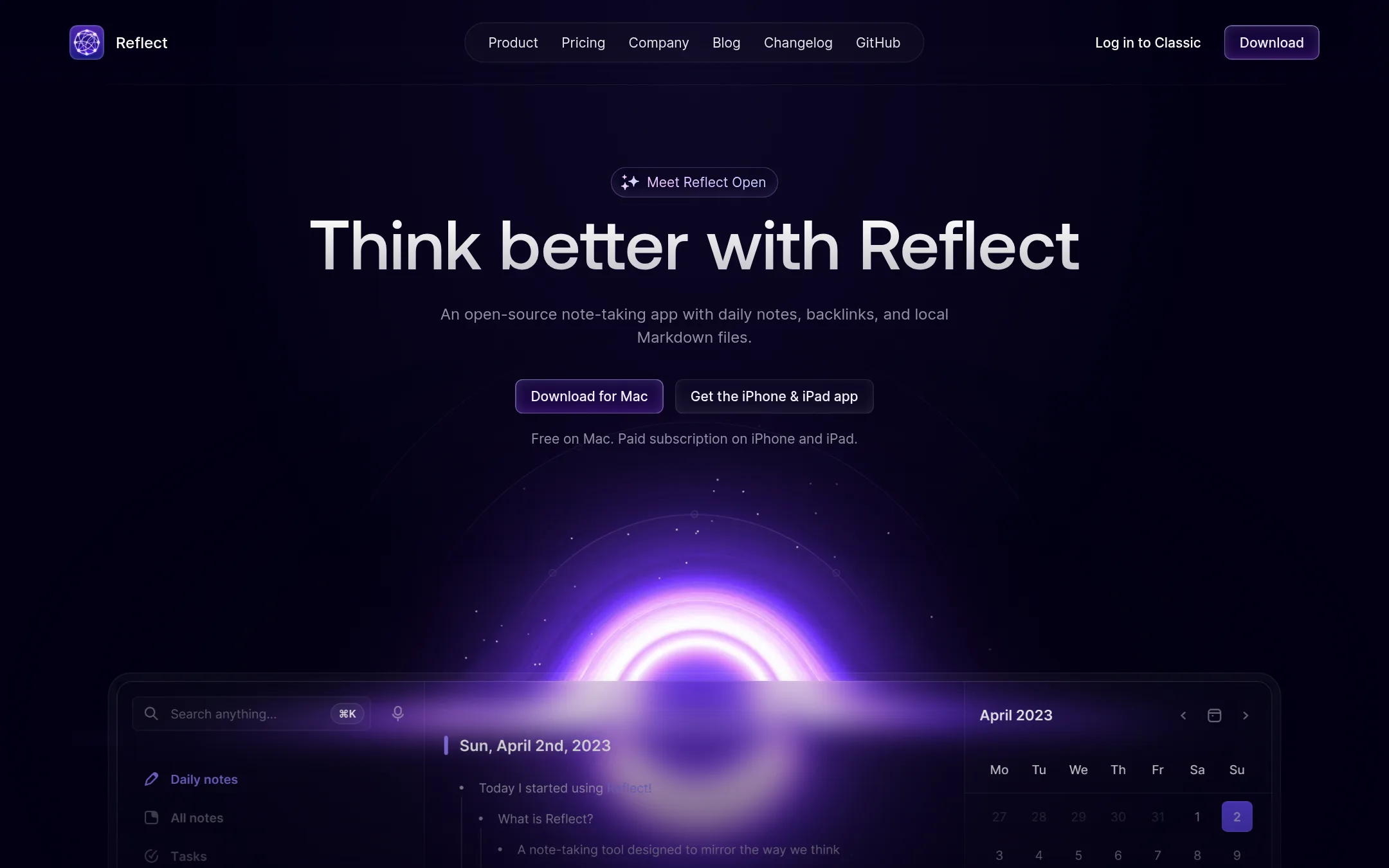
Reflect is a note-taking app built around daily notes, backlinks, and plain Markdown files stored in a folder you choose. It fits people who want a personal knowledge base rather than a support tool. Someone would pick it over Quivr if they need to organise their own notes and ideas, not resolve customer tickets.
Where it is strong
- Notes are stored as local Markdown files in a folder you choose
- Backlinks connect ideas across your notes
- Optional AI assistant works with your own API key, with provider charges billed separately
Where it falls short
- It is a note-taking app, so it does not handle customer support tickets or auto-resolutions
- Mac is the free desktop option, and iPhone and iPad need a paid subscription
- Pricing:
- Pricing is not published on the site.
- GNot published
5.Glean
Best for: Large enterprises in banking, healthcare, retail or engineering that need company-wide AI search and agents with permission controls
- Pricing
- Not published
- Category
- Other
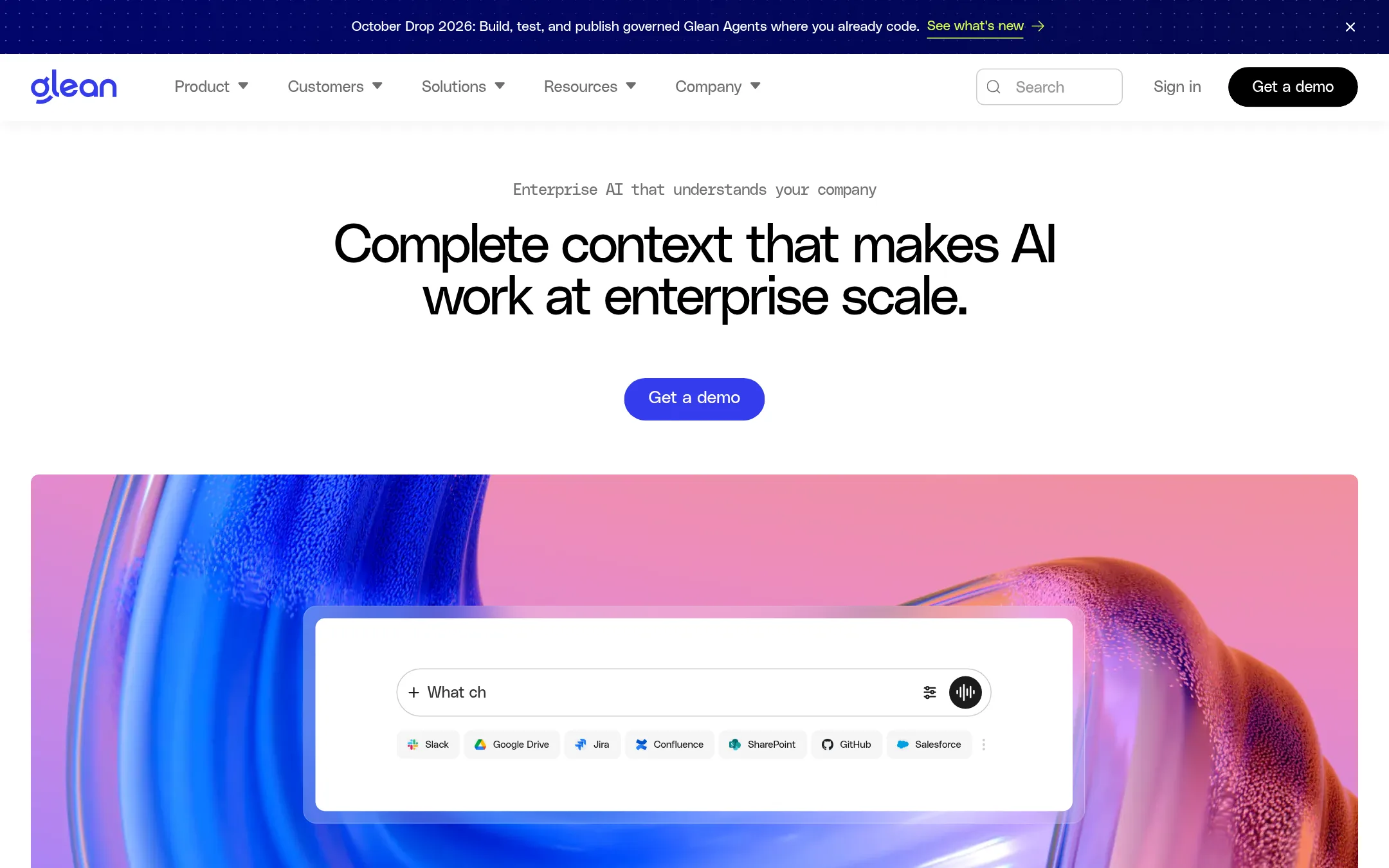
Glean is an enterprise AI platform that connects to company apps and data sources, then answers questions and runs agents over that knowledge with permission-aware access and cited answers. Someone would choose it over Quivr if they need search and AI across many internal systems like code, tickets, and documents, rather than AI reply suggestions for customer support tickets.
Where it is strong
- Connects to over 275 work apps and data sources, according to the site
- Permission-aware answers with citations, so people only see what they are allowed to see
- Works across 40+ LLMs, so teams are not locked to one model
Where it falls short
- Built for enterprise scale, so it is likely overkill for a small support team
- Its focus is internal knowledge and workflows, not customer-facing support auto-resolution like Quivr
- Pricing:
- Pricing is not published on the site.
See more comparisons in Customer Support alternatives.
FAQ
Questions about Quivr alternatives
Is Notion a good replacement for Quivr?
Notion is a general workspace for docs, databases, wikis and project tracking, with AI agents that act across connected apps. It can cover internal support workflows, but it does not offer the dedicated customer reply and auto-resolution features Quivr focuses on. It suits startups that want one workspace rather than a specialised support desk.
Which Quivr alternative is best for a large enterprise?
Glean is built for large enterprises in areas such as banking, healthcare, retail and engineering. It connects to over 275 work apps and data sources according to its site, and returns permission-aware answers with citations. It is likely more than a small support team needs, and its focus is internal knowledge rather than customer-facing auto-resolution.
Can Obsidian handle customer support tickets?
No. Obsidian is a note app that stores notes as local files, works offline and links notes together. It has no support features such as auto-resolutions or reply suggestions. It is a fit for individuals and small teams who want a private knowledge base they fully own.
How do the prices compare across these alternatives?
Pricing varies a lot. Obsidian lists its app as free, with Sync at $4 per user per month billed annually and Publish at $8 per site per month billed annually. Notion lists a Free plan and paid tiers, and Custom Agents at $10 per 1,000 monthly credits. Mem, Reflect and Glean do not publish pricing on their sites.
Are any of these alternatives private or work offline?
Obsidian stores notes locally on your device and keeps them accessible offline. Reflect also stores notes as local Markdown files in a folder you choose. Notion and Glean are cloud-based, and Mem's notes and meeting records are kept in its app rather than as local files.
Last updated November 11, 2026.