
Rancher alternatives
12 products compared · Updated November 1, 2026
The short answer
For teams that need a lightweight, local Kubernetes environment for development, Rancher Desktop is the strongest fit. For large enterprises standardized on Red Hat that need a supported platform with integrated developer services, OpenShift is the best choice. For platform teams that must deliver Kubernetes-as-a-Service internally at scale across multiple clouds, Gardener offers a community-governed, open-source approach.
Your shortlist, at a glance
Read the comparisons ↓ OpenShiftCustom quoteLarge enterprises standardized on Red Hat that need a supported Kubernetes platform with built-in developer services and hybrid cloud deployment options.
 KubernetesNot publishedTeams that want full control over their container orchestration and are comfortable managing clusters with native Kubernetes tooling.
- RRKE2Not publishedTeams in regulated industries or government that need a secure, compliant Kubernetes distribution with upstream alignment.
- KK3sNot publishedTeams running production workloads on edge devices, IoT appliances, or small ARM servers that need a minimal Kubernetes install.
 AirWatch (Workspace ONE)Not publishedIT teams in large enterprises that need unified endpoint management and security for laptops, phones, and tablets.
 Amazon BusinessNot publishedTeams that need to control and analyze business purchasing across an organization, with approval workflows and bulk discounts.
- RRecordBookNot publishedSmall business owners and teams that want a lightweight, mobile-first alternative to spreadsheets for tracking inventory, customers, or projects.
Microsoft Azure CycleCloudPay-as-you-goTeams running HPC workloads on Azure that need automated cluster provisioning and scheduling, not Kubernetes management.
- KKubesphereNot publishedTeams that want an open-source Kubernetes platform with integrated DevOps and multi-tenancy, especially those already using Jenkins or Fluentd.
- RRancher DesktopNot publishedIndividual developers and small teams who need a simple local Kubernetes setup for day-to-day container work.
- KKubermaticNot publishedLarge enterprises and service providers managing thousands of Kubernetes clusters across multi-cloud, on-prem, and edge environments.
- GGardenerNot publishedPlatform teams that need to deliver Kubernetes-as-a-Service internally at scale across multiple clouds and on-premises.
About Rancher and its alternatives
Rancher is an open-source, multi-cluster orchestration platform that lets operations teams deploy, manage, and secure enterprise Kubernetes. It is known for delivering Kubernetes-as-a-Service from datacenter to cloud to edge, with a large community and enterprise support from SUSE.
When comparing alternatives, weigh pricing structure (consumption-based vs. contact sales), deployment regions (cloud-specific vs. multi-cloud), built-in integrations (CI/CD, virtualization, or HPC), support options (community vs. commercial), and contract terms (self-serve vs. negotiated).
Explore the alternatives
- Custom quote
1.OpenShift
Best for: Large enterprises standardized on Red Hat that need a supported Kubernetes platform with built-in developer services and hybrid cloud deployment options.
- Pricing
- Custom quote
- Category
- Developer Tools
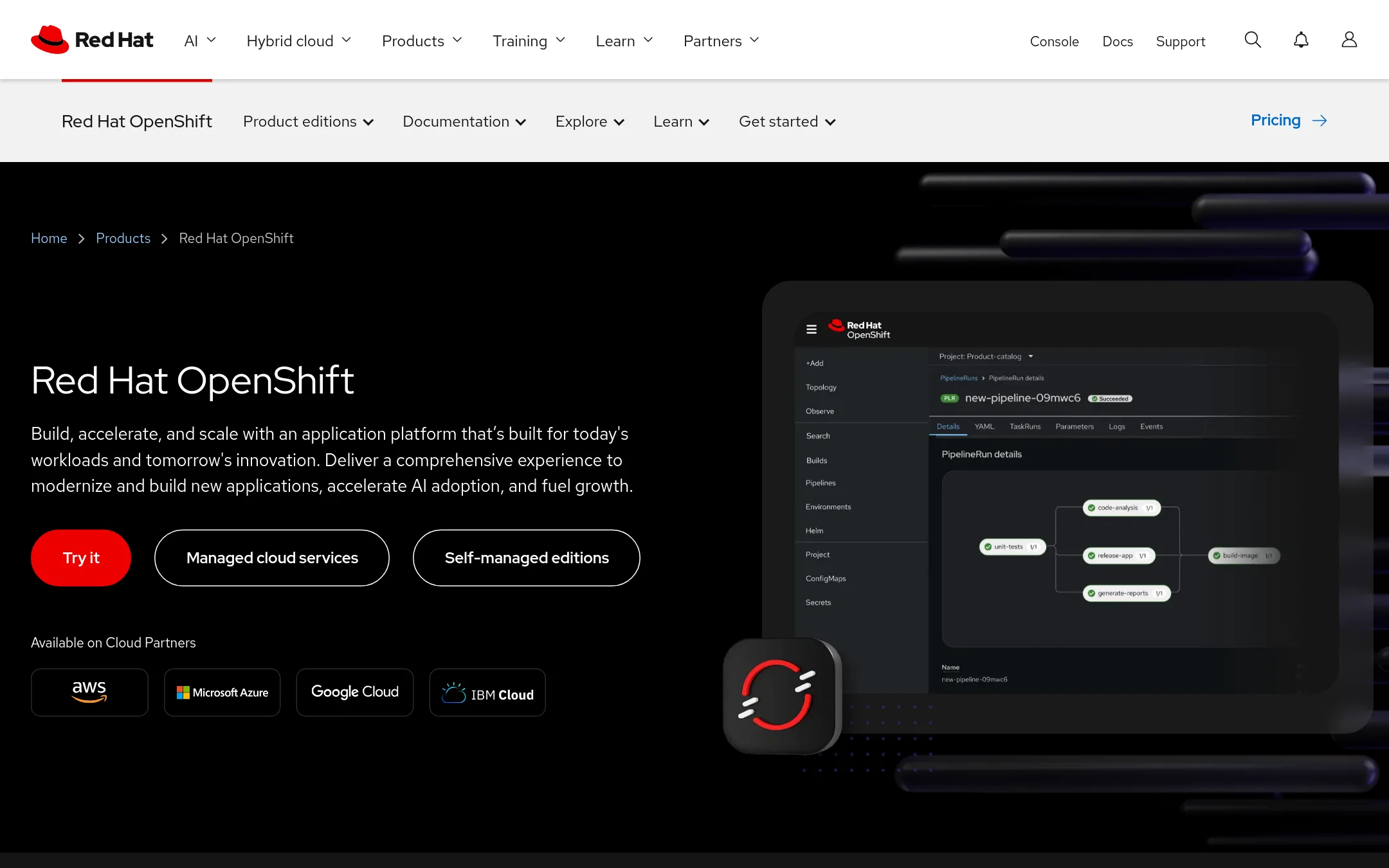
OpenShift is Red Hat's enterprise Kubernetes platform that bundles container orchestration with developer tooling, CI/CD, and security features. Choose it over Rancher if you're already in the Red Hat ecosystem or need a fully supported, self-managed platform with integrated virtualization and AI/ML capabilities.
Where it is strong
- Integrated developer experience with built-in CI/CD and serverless
- Strong support for hybrid cloud and edge deployments
- Includes virtualization and AI/ML add-ons
Where it falls short
- Pricing is opaque and requires sales engagement
- Heavier and more complex than Rancher for simple multi-cluster management
- Pricing:
- Pricing is not published on the site. You must contact Red Hat sales for a quote based on your chosen edition and support level.
- Switching from Rancher:
- Moving from Rancher to OpenShift means adopting Red Hat's operator-based management model and likely reconfiguring your cluster pipelines and authentication.
- Not published
2.Kubernetes
Best for: Teams that want full control over their container orchestration and are comfortable managing clusters with native Kubernetes tooling.
- Pricing
- Not published
- Category
- Developer Tools
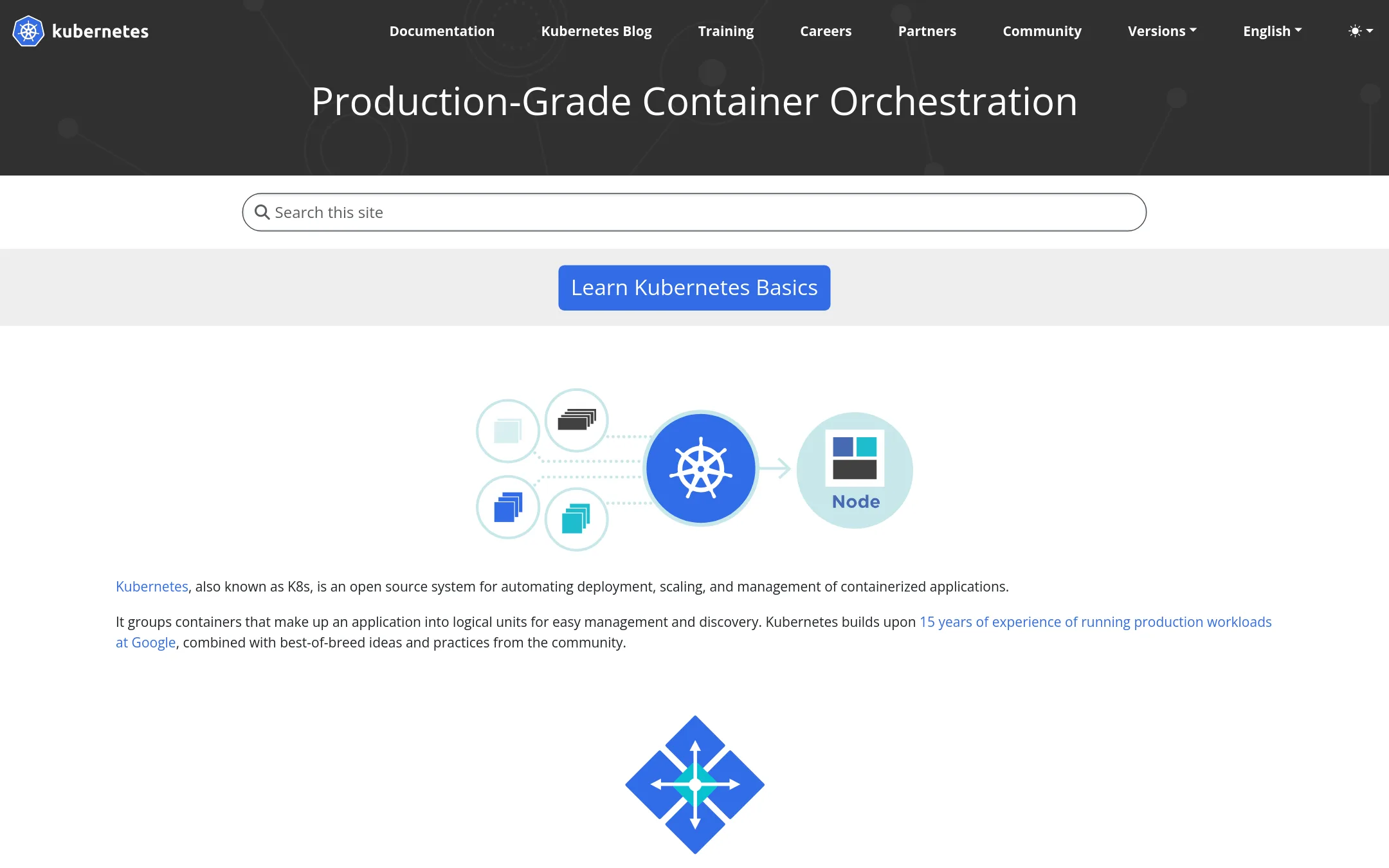
Kubernetes is the open-source container orchestration engine that Rancher itself manages. You would choose Kubernetes instead of Rancher if you want to run clusters directly without an extra management layer, or if you prefer to assemble your own tooling for multi-cluster operations.
Where it is strong
- Open source with a huge community and CNCF graduation.
- Built-in features for scaling, self-healing, and rollouts.
- Runs on any infrastructure: on-premises, hybrid, or public cloud.
Where it falls short
- No built-in multi-cluster management or centralized UI.
- Steeper learning curve compared to Rancher's managed experience.
- Pricing:
- Pricing is not published on the site.
- Switching from Rancher:
- Moving from Rancher to Kubernetes means removing the Rancher management plane and operating clusters directly with kubectl and native APIs.
- RNot published
3.RKE2
Best for: Teams in regulated industries or government that need a secure, compliant Kubernetes distribution with upstream alignment.
- Pricing
- Not published
- Category
- Other
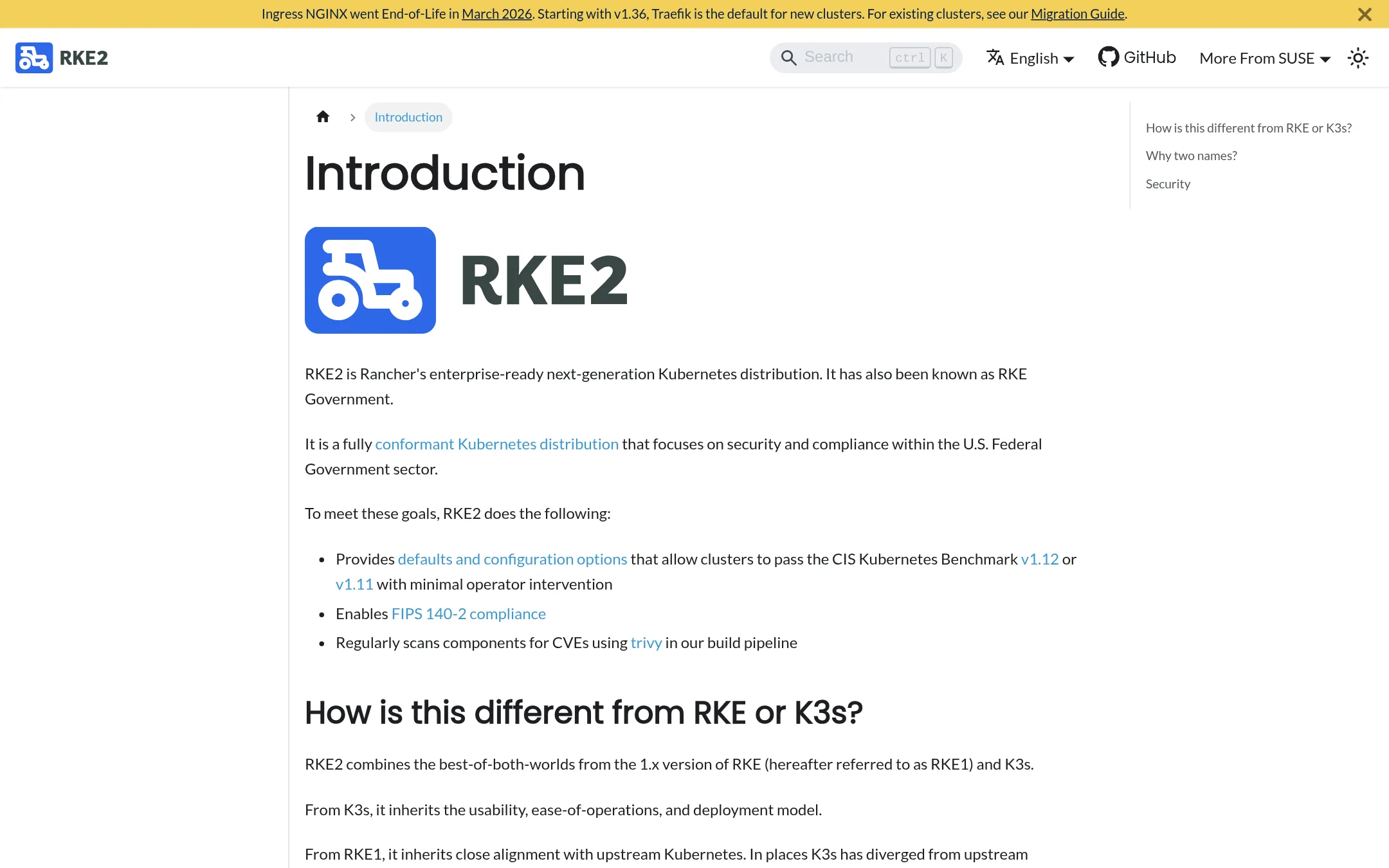
RKE2 is Rancher's own Kubernetes distribution, built for security and compliance in the U.S. Federal Government sector. Choose it instead of Rancher when you need a hardened, FIPS-compliant Kubernetes cluster that passes CIS benchmarks with minimal effort, rather than a multi-cluster management platform.
Where it is strong
- Passes CIS Kubernetes Benchmark v1.12 or v1.11 with minimal operator intervention
- Enables FIPS 140-2 compliance for federal workloads
- Uses containerd instead of Docker, with control plane as static pods
Where it falls short
- No multi-cluster management features. You need Rancher separately for that
- Designed for U.S. Federal Government sector, so less suited for general edge or datacenter use
- Pricing:
- Pricing is not published on the site.
- Switching from Rancher:
- Moving from Rancher to RKE2 means replacing the management layer with a single-cluster distribution, so you lose centralized multi-cluster control unless you keep Rancher alongside.
- KNot published
4.K3s
Best for: Teams running production workloads on edge devices, IoT appliances, or small ARM servers that need a minimal Kubernetes install.
- Pricing
- Not published
- Category
- Other
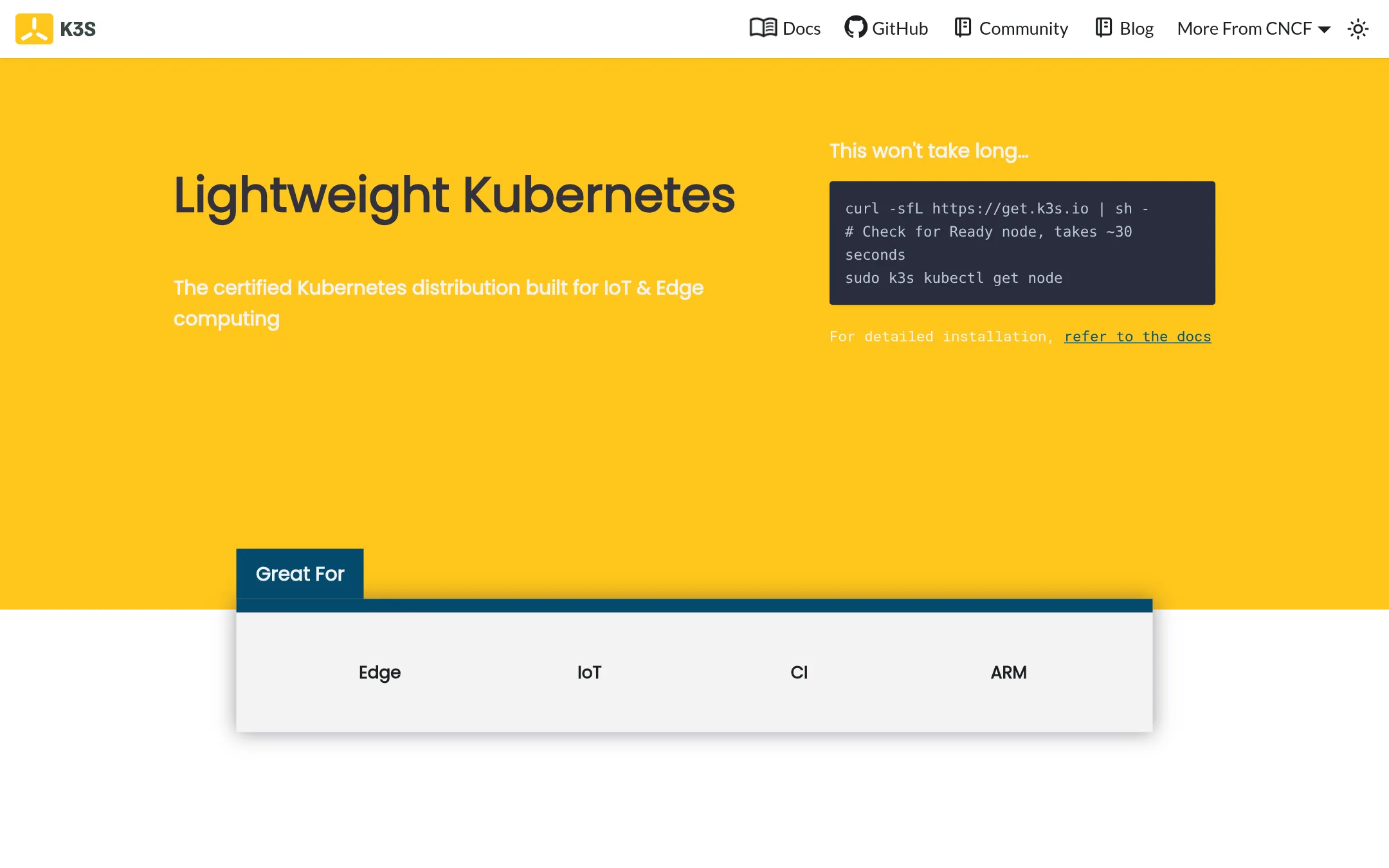
K3s is a lightweight Kubernetes distribution packaged as a single binary under 70MB, designed for edge, IoT, and resource-constrained environments. Choose it instead of Rancher when you need a simple, self-contained cluster on small hardware like a Raspberry Pi, not a multi-cluster management platform.
Where it is strong
- Single binary under 70MB simplifies installation and updates
- Works on ARM64 and ARMv7, including Raspberry Pi
- Certified Kubernetes distribution for production use
Where it falls short
- No multi-cluster management or centralized UI like Rancher
- Designed for single clusters, not large-scale fleet operations
- Pricing:
- Pricing is not published on the site.
- Not published
5.AirWatch (Workspace ONE)
Best for: IT teams in large enterprises that need unified endpoint management and security for laptops, phones, and tablets.
- Pricing
- Not published
- Category
- Security & Privacy
AirWatch (Workspace ONE) is an enterprise mobility and security platform, not a Kubernetes management tool. You would choose it over Rancher if your priority is managing devices, apps, and access policies across a mobile workforce, rather than orchestrating container clusters.
Where it is strong
- Strong device and app management across platforms
- Integrated identity and access controls
- Broad enterprise security and compliance features
Where it falls short
- Not designed for Kubernetes or container orchestration
- Pricing requires contacting sales, no public figures
- Pricing:
- Pricing is not published on the site.
- Not published
6.Amazon Business
Best for: Teams that need to control and analyze business purchasing across an organization, with approval workflows and bulk discounts.

- Pricing
- Not published
- Category
- E-commerce
Amazon Business is a procurement platform for buying supplies and equipment, not a Kubernetes management tool. You would choose it instead of Rancher only if you are managing purchasing and spend for your organization, not container infrastructure.
Where it is strong
- Approval flows and compliance guardrails for purchasing
- Spend analytics with pre-built and custom reports
- Quantity discounts and bulk buying options
Where it falls short
- Not a Kubernetes or container management tool
- Limited to Amazon's marketplace and procurement use cases
- Pricing:
- Pricing is not published on the site.
- RNot published
7.RecordBook
Best for: Small business owners and teams that want a lightweight, mobile-first alternative to spreadsheets for tracking inventory, customers, or projects.
- Pricing
- Not published
- Category
- Productivity & Project Management
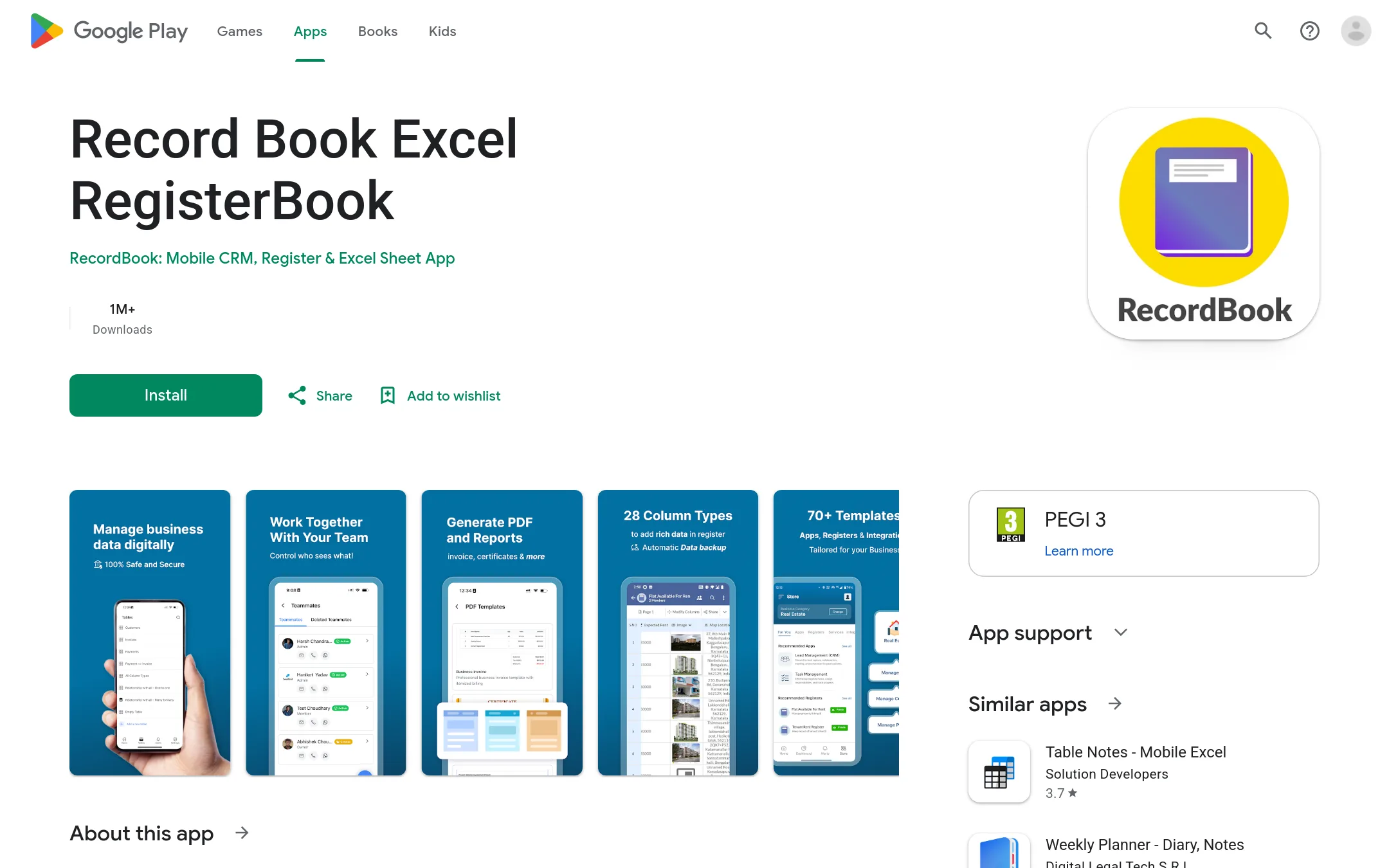
RecordBook is a mobile app that brings Airtable-style database and project management to small businesses. You would choose it over Rancher if you need a simple, no-code tool for organizing records and workflows, not Kubernetes cluster management.
Where it is strong
- Mobile-first design for on-the-go data entry
- No technical setup or infrastructure knowledge needed
- Aimed at the large SMB market with simple workflows
Where it falls short
- No multi-cluster or container orchestration features
- Limited to what a mobile app can do for complex data modeling
- Pricing:
- Pricing is not published on the site.
- Pay-as-you-go
8.Microsoft Azure CycleCloud
Best for: Teams running HPC workloads on Azure that need automated cluster provisioning and scheduling, not Kubernetes management.
- Pricing
- Pay-as-you-go
- Category
- Developer Tools
Azure CycleCloud is a cloud-native HPC orchestration tool for building, managing, and scaling clusters of VMs for high-performance computing workloads. Choose it over Rancher if your focus is on running tightly coupled HPC jobs (like simulations or rendering) on Azure, rather than managing Kubernetes clusters.
Where it is strong
- Native integration with Azure HPC services and VM types
- Automates cluster setup and scaling for compute-intensive jobs
- Supports common schedulers like Slurm and PBS
Where it falls short
- Limited to Azure. No multi-cloud or on-premises support
- Not designed for Kubernetes orchestration, so you'd manage containers separately
- Pricing:
- In the United States, Azure pricing is consumption-based. You pay only for the cloud resources you use, with no upfront cost, and can save with reservations or savings plans.
- Switching from Rancher:
- Moving from Rancher means rearchitecting your workload management from Kubernetes to HPC schedulers, and migrating your infrastructure to Azure.
- KNot published
9.Kubesphere
Best for: Teams that want an open-source Kubernetes platform with integrated DevOps and multi-tenancy, especially those already using Jenkins or Fluentd.
- Pricing
- Not published
- Category
- Other
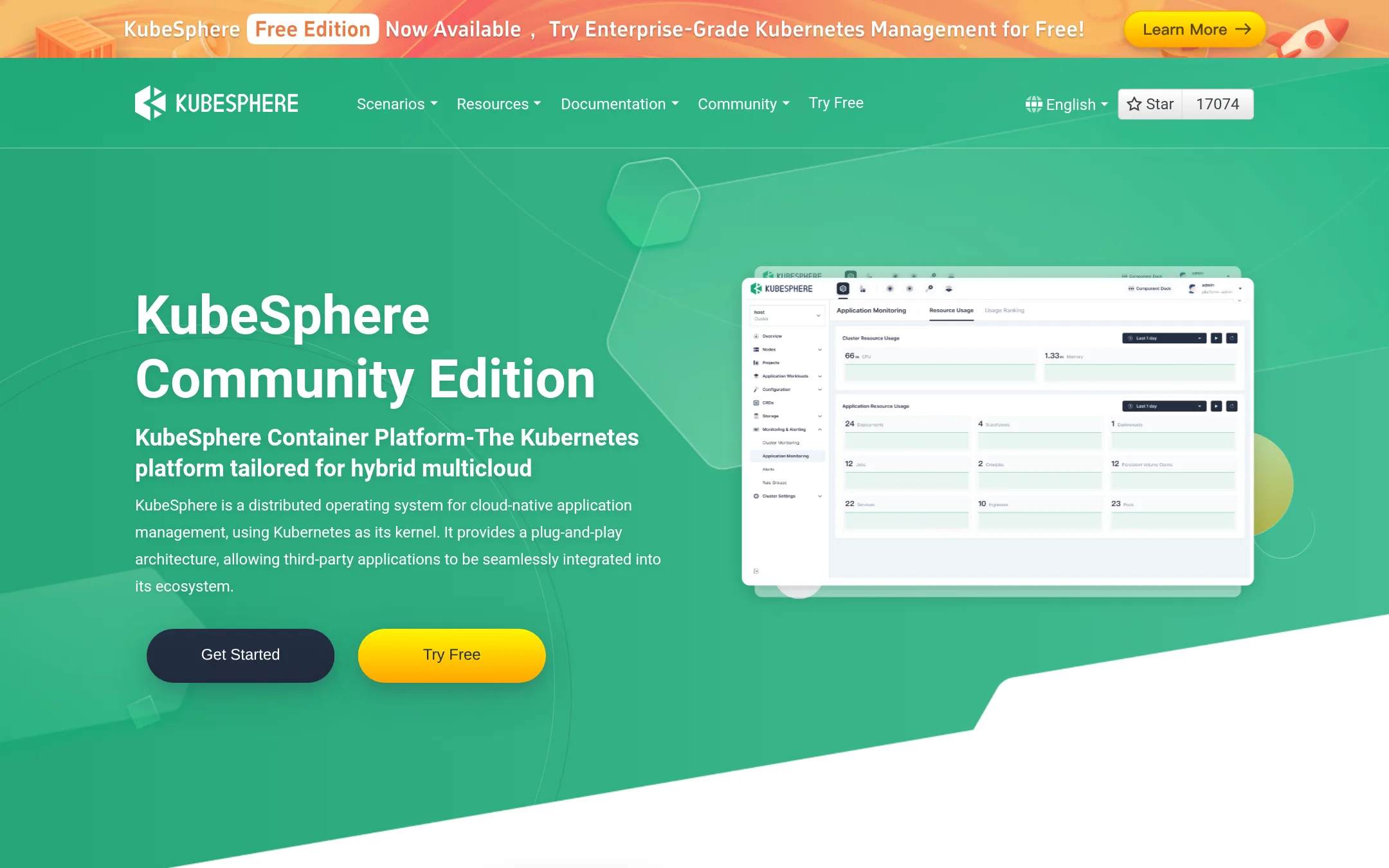
KubeSphere is an open-source Kubernetes platform with a web console for multi-cluster management, observability, and DevOps. Choose it over Rancher if you want a free, self-hosted platform with built-in CI/CD and a focus on developer-friendly workflows.
Where it is strong
- Free and open-source with no licensing costs.
- Built-in DevOps, observability, and multi-tenancy features.
- Supports offline installation and one-click upgrades.
Where it falls short
- Smaller community and ecosystem compared to Rancher.
- Some advanced features may require additional configuration or third-party tools.
- Pricing:
- Pricing is not published on the site.
- Switching from Rancher:
- Moving from Rancher involves reconfiguring your cluster import and access control settings, but the core Kubernetes management concepts carry over.
- RNot published
10.Rancher Desktop
Best for: Individual developers and small teams who need a simple local Kubernetes setup for day-to-day container work.
- Pricing
- Not published
- Category
- Other
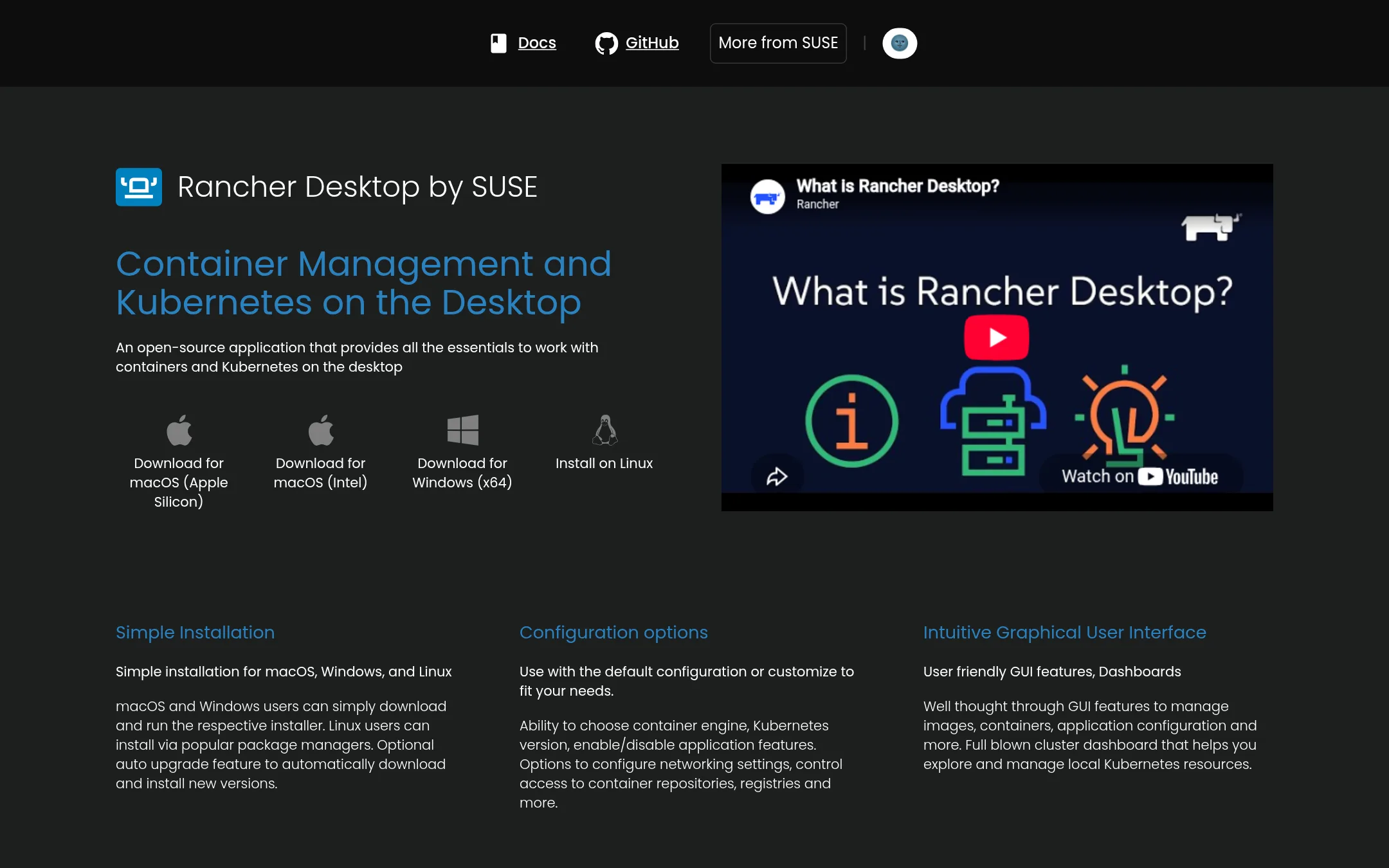
Rancher Desktop is a free, open-source desktop app for running Kubernetes and containers locally. Choose it instead of Rancher when you are a developer who needs a lightweight local environment for testing and development, not a multi-cluster enterprise platform.
Where it is strong
- Simple installation on macOS, Windows, and Linux
- Bundled CLI tools like docker, nerdctl, kubectl, and helm
- GUI for managing images, containers, and Kubernetes resources
Where it falls short
- Designed for single-machine local use, not multi-cluster management
- No enterprise support or centralized control compared to Rancher
- Pricing:
- Pricing is not published on the site.
- KNot published
11.Kubermatic
Best for: Large enterprises and service providers managing thousands of Kubernetes clusters across multi-cloud, on-prem, and edge environments.
- Pricing
- Not published
- Category
- Other
Kubermatic is a multi-cloud Kubernetes management platform that automates cluster operations across cloud, on-prem, and edge environments. Choose it over Rancher if you need to manage thousands of clusters at high density and want deep automation for Day 2 operations, especially in large or sovereign environments.
Where it is strong
- Scales to 6000+ user clusters from one master cluster
- Automates Day 2 operations, reducing management time by 85%
- Includes additional products for load balancing, virtualization, and secrets management
Where it falls short
- Pricing requires contacting sales, no self-serve tiers
- May be overkill for small teams with a handful of clusters
- Pricing:
- Pricing is not published on the site.
- Switching from Rancher:
- Moving from Rancher to Kubermatic involves migrating your existing cluster definitions and workflows, but the platform's automation can reduce ongoing management overhead.
- GNot published
12.Gardener
Best for: Platform teams that need to deliver Kubernetes-as-a-Service internally at scale across multiple clouds and on-premises.
- Pricing
- Not published
- Category
- Other
Gardener is an open-source project that lets you run your own managed Kubernetes service across many clouds and on-premises. Choose it over Rancher if you need to provision and operate thousands of clusters with identical configuration on any infrastructure, and want a community-governed platform rather than a vendor-led one.
Where it is strong
- Runs thousands of clusters with consistent day-1 and day-2 operations.
- Works on AWS, Azure, GCP, Alibaba, OpenStack, and bare metal.
- Fleet management with shared guardrails and version control.
Where it falls short
- No commercial support or enterprise pricing listed on the site.
- Requires significant setup and expertise to run your own Gardener installation.
- Pricing:
- Pricing is not published on the site.
- Switching from Rancher:
- Moving from Rancher means adopting Gardener's control plane model, where you manage cluster lifecycles via its own API and kubectl, rather than Rancher's UI and agent-based approach.
See more comparisons in Developer Tools alternatives.
FAQ
Questions about Rancher alternatives
What is the main difference between Rancher and Kubernetes?
Kubernetes is the open-source container orchestration engine itself. Rancher is a management platform that sits on top of Kubernetes to handle multiple clusters, provide a UI, and add security features. Choose Kubernetes if you want full control and are comfortable with native tooling. Choose Rancher if you need centralized multi-cluster management.
Is there a free option for local Kubernetes development?
Yes, Rancher Desktop is a free, open-source desktop app for running Kubernetes and containers locally. It is designed for individual developers and small teams, with simple installation on macOS, Windows, and Linux. It is not for multi-cluster management.
Which alternative is best for HPC workloads on Azure?
Azure CycleCloud is built for high-performance computing, automating cluster provisioning and scheduling for compute-intensive jobs. It integrates natively with Azure HPC services and supports schedulers like Slurm. It is limited to Azure and not for Kubernetes management.
What should I choose if I need a hardened Kubernetes for government or regulated industries?
RKE2 is Rancher's own Kubernetes distribution, designed for security and compliance in the U.S. Federal Government sector. It passes CIS benchmarks with minimal effort and enables FIPS 140-2 compliance. Note that it does not include multi-cluster management, so you would need Rancher separately for that.
Which alternative scales to thousands of clusters?
Kubermatic and Gardener both handle thousands of clusters. Kubermatic is a commercial platform with deep automation for Day 2 operations, while Gardener is an open-source project that lets you run your own managed Kubernetes service. Both require contacting sales or significant setup expertise.
Last updated November 1, 2026.