
Redis alternatives
12 products compared · Updated November 2, 2026
The short answer
For most teams, the strongest Redis alternatives are Dragonfly, Valkey, and Couchbase. Dragonfly suits teams needing higher throughput and lower memory usage for large caches or queues. Valkey suits teams wanting a fully open source, community-driven datastore with Redis compatibility. Couchbase suits enterprises needing a converged platform with active-active replication and built-in vector search.
Your shortlist, at a glance
Read the comparisons ↓- MMemcachedNot publishedTeams running high-traffic web apps that need a straightforward, memory-only cache to reduce database load.
 Amazon BusinessNot publishedProcurement teams and businesses that want Amazon's selection with purchasing controls and spend analytics.
Microsoft Azure CycleCloudConsumption-basedResearch teams and enterprises running HPC workloads on Azure that need to manage cluster infrastructure.
- RRecordBookNot publishedSmall business owners who want a mobile-friendly, Airtable-style database for managing records and projects.
- DDragonflyFrom $36/moTeams running large Redis or Valkey caches, feature stores, or job queues that need higher throughput and lower memory usage than Redis can provide.
- KKeyDBNot publishedTeams that want a drop-in Redis replacement with multithreaded performance and no licensing costs.
- VValkeyNot publishedTeams that want a fully open source, community-driven in-memory datastore with Redis compatibility and the freedom to deploy anywhere.
- AAerospikeNot publishedLarge-scale platforms in ad tech, ecommerce, or AI that need consistent sub-millisecond latency and lower infrastructure costs than Redis.
- HHazelcastNot publishedTeams running Java or JVM applications that need in-memory data grids with stream processing capabilities beyond simple caching.
- TTarantoolNot publishedTeams building high-write, low-latency services in retail, banking, or telecom that want to replace a separate database plus cache with one system.
 CouchbaseFrom $0.15/hr/nodeEnterprises running mission-critical applications that need a converged data platform with active-active replication, mobile sync, and built-in vector search.
- EEtcdNot publishedTeams running distributed systems that need a dependable source of truth for configuration, service discovery, and cluster coordination.
About Redis and its alternatives
Redis is a real-time data platform for caching, search, and AI agents. It is known for its speed, flexibility, and ability to handle a wide range of data structures, making it a popular choice for developers building fast applications.
When comparing alternatives, weigh pricing structure (per hour, per node, or consumption-based), deployment options (cloud, on-prem, hybrid), integrations with your existing stack, support and maintenance requirements, and contract terms like annual commitments or free tiers. Consider whether you need advanced features like vector search, active-active replication, or stream processing, or if a simple cache suffices.
Explore the alternatives
- MNot published
1.Memcached
Best for: Teams running high-traffic web apps that need a straightforward, memory-only cache to reduce database load.
- Pricing
- Not published
- Category
- Other
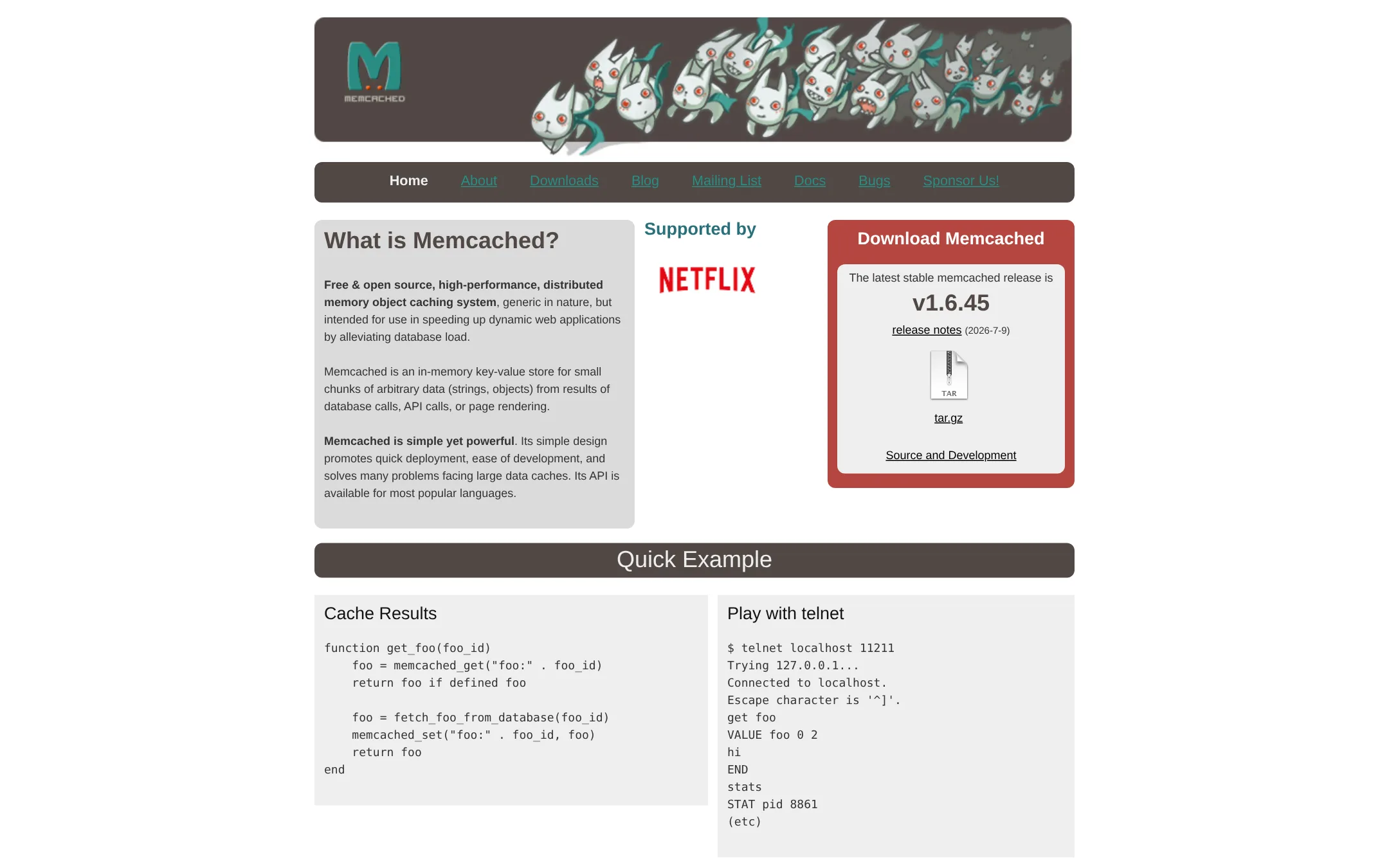
Memcached is a free, open-source, in-memory key-value store designed to speed up dynamic web applications by caching database calls, API calls, or page rendering. Choose it over Redis when you need a simple, lightweight cache for small chunks of data and don't require Redis's advanced features like persistence, data structures, or search.
Where it is strong
- Free and open source with no licensing costs
- Simple design makes it quick to deploy and easy to develop with
- APIs available for most popular programming languages
Where it falls short
- No persistence, so data is lost on restart
- Limited to key-value caching, lacking Redis's data structures and search features
- Pricing:
- Pricing is not published on the site.
- Switching from Redis:
- Moving from Redis to Memcached means rewriting cache logic to use only simple key-value operations and accepting that cached data will not survive restarts.
- Not published
2.Amazon Business
Best for: Procurement teams and businesses that want Amazon's selection with purchasing controls and spend analytics.

- Pricing
- Not published
- Category
- E-commerce
Amazon Business is a procurement platform for business purchasing, not a data store. It offers purchasing controls, analytics, and bulk discounts. Choose it over Redis if you need to manage company spending and buying workflows, not real-time data.
Where it is strong
- Wide product selection with business pricing and quantity discounts.
- Approval workflows and compliance guardrails for purchasing.
- Spend analytics with pre-built and custom reports.
Where it falls short
- Not a data platform, so it cannot replace Redis for caching or real-time data.
- Pricing details are not publicly listed. Requires account creation or sales contact.
- Pricing:
- Pricing is not published on the site.
- Consumption-based
3.Microsoft Azure CycleCloud
Best for: Research teams and enterprises running HPC workloads on Azure that need to manage cluster infrastructure.
- Pricing
- Consumption-based
- Category
- Developer Tools
Azure CycleCloud is a tool for orchestrating and managing high-performance computing (HPC) clusters on Azure. You would choose it over Redis when your need is running large-scale compute jobs, not caching or real-time data access, and you are already invested in the Azure ecosystem.
Where it is strong
- Orchestrates HPC clusters on Azure, simplifying complex infrastructure.
- Integrates with Azure services like storage and compute.
- Supports a range of HPC workloads and schedulers.
Where it falls short
- Not a data store. Does not provide caching or real-time data access.
- Tied to Azure, so it is not a multi-cloud or on-premises solution.
- Pricing:
- In the United States, pricing is consumption-based. You pay only for the cloud resources you use, with options for free trials and commitment-based savings plans.
- RNot published
4.RecordBook
Best for: Small business owners who want a mobile-friendly, Airtable-style database for managing records and projects.
- Pricing
- Not published
- Category
- Productivity & Project Management
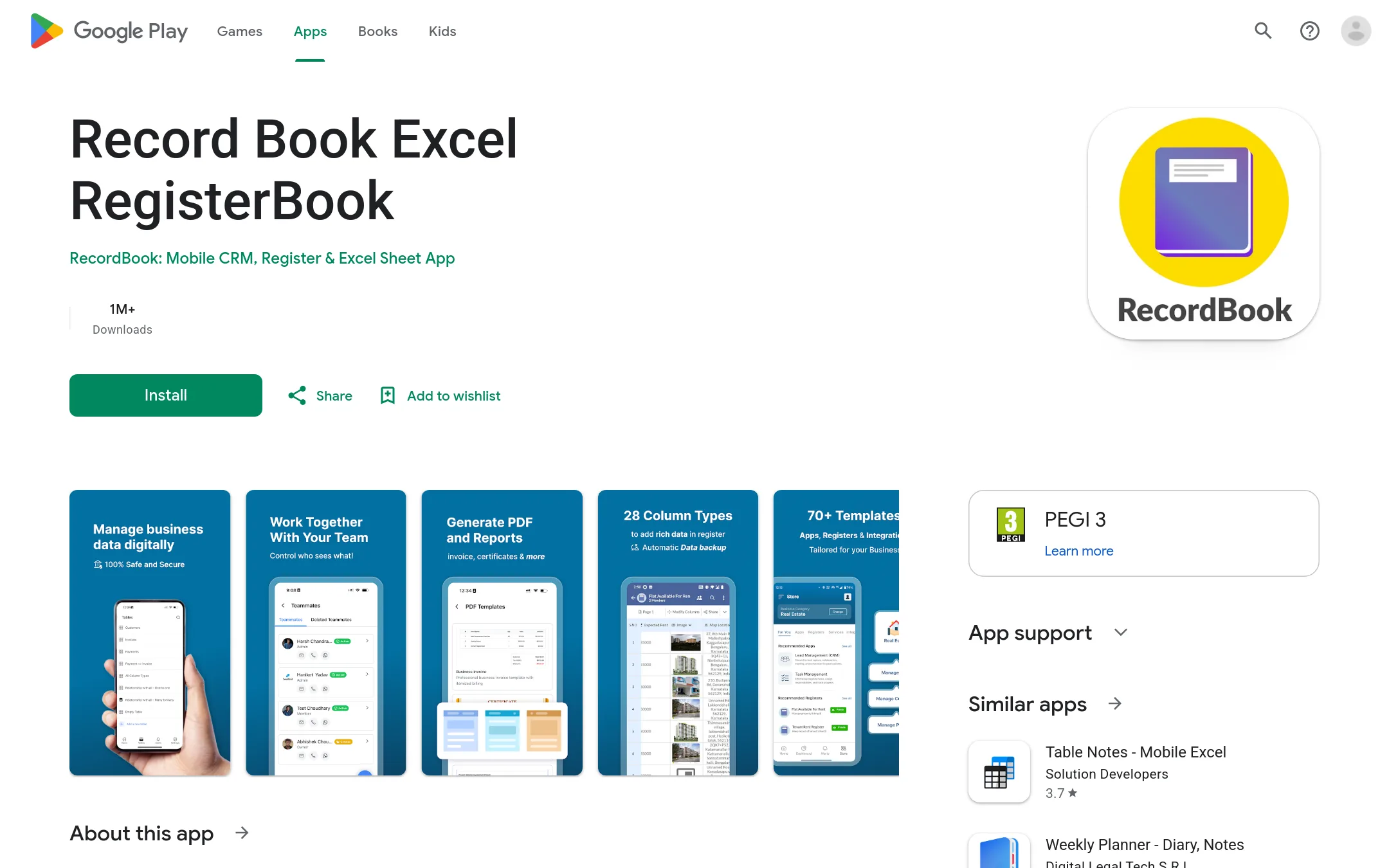
RecordBook is a mobile app that positions itself as an Airtable-like tool for small and medium businesses. It is a productivity and project management app, not a data infrastructure product, so it would not replace Redis for caching, search, or real-time data needs. Choose it only if you are looking for a simple, spreadsheet-style database for business records on a phone.
Where it is strong
- Mobile-first design for on-the-go record keeping
- Airtable-like flexibility for custom data structures
- Targets the large SMB market with a simple interface
Where it falls short
- No mention of real-time data, caching, or vector search capabilities
- Limited to Android via Google Play, no web or iOS version mentioned
- Pricing:
- Pricing is not published on the site.
- DFrom $36/mo
5.Dragonfly
Best for: Teams running large Redis or Valkey caches, feature stores, or job queues that need higher throughput and lower memory usage than Redis can provide.
- Pricing
- From $36/mo
- Category
- Other
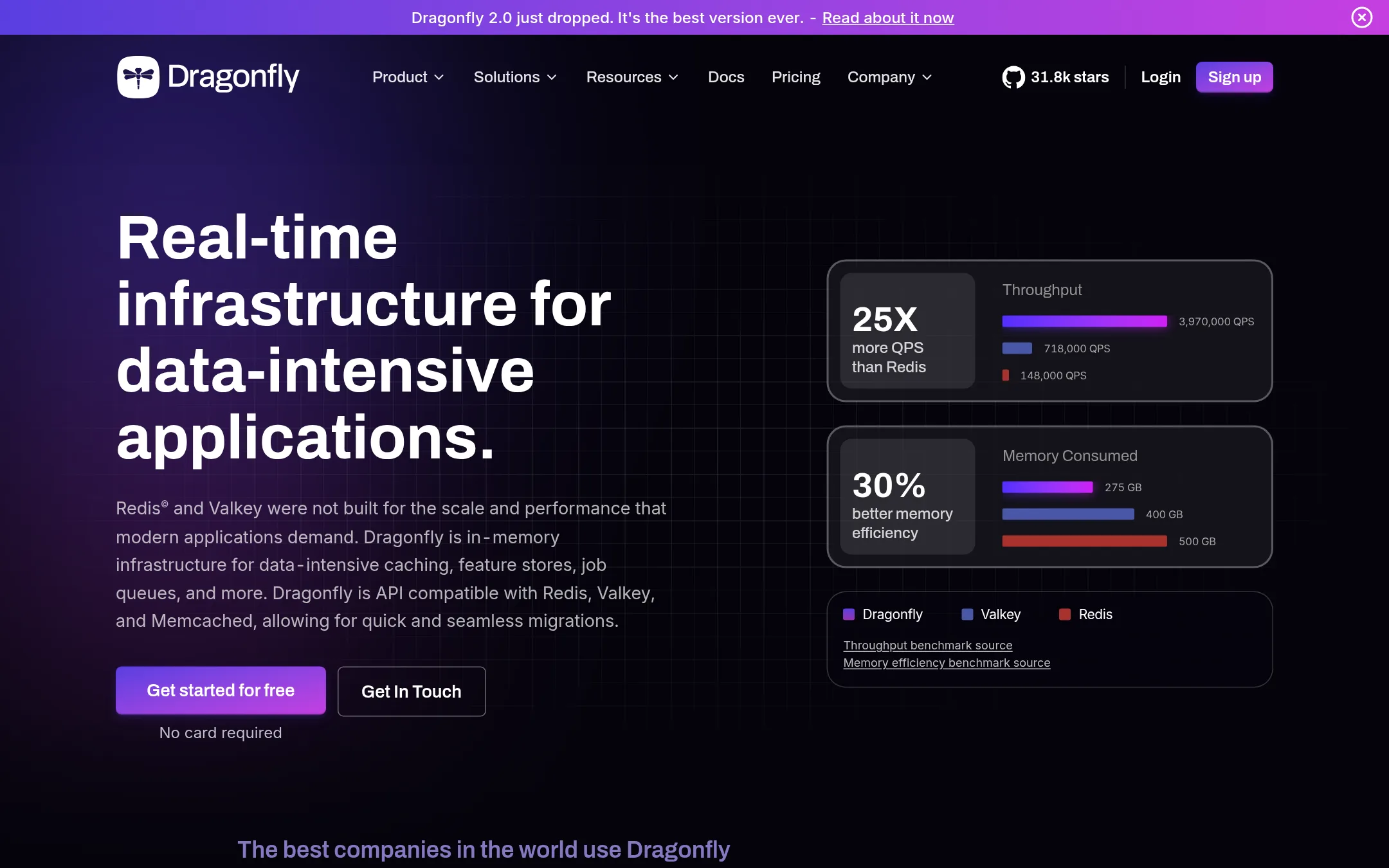
Dragonfly is an in-memory data store that is API compatible with Redis, Valkey, and Memcached. It uses a multi-threaded, thread-per-core architecture to deliver higher throughput and better memory efficiency than Redis, often on smaller hardware. Choose Dragonfly when you need to scale a Redis-like workload to very high QPS or reduce infrastructure costs.
Where it is strong
- Multi-threaded architecture delivers up to 25x more QPS than Redis.
- API compatible with Redis, Valkey, and Memcached for easy migration.
- Better memory efficiency can reduce memory consumption by 30% or more.
Where it falls short
- Advanced features like SSO and custom SLAs are only available on the more expensive Business plan.
- Community Edition lacks enterprise support unless you purchase a separate support plan.
- Pricing:
- Dragonfly Cloud starts at $36/month for the Flex plan and $2,000/month for the Business plan. Self-managed pricing is available on request.
- Switching from Redis:
- Because Dragonfly is API compatible with Redis, you can often switch by changing the connection endpoint and testing your existing commands.
- KNot published
6.KeyDB
Best for: Teams that want a drop-in Redis replacement with multithreaded performance and no licensing costs.
- Pricing
- Not published
- Category
- Other
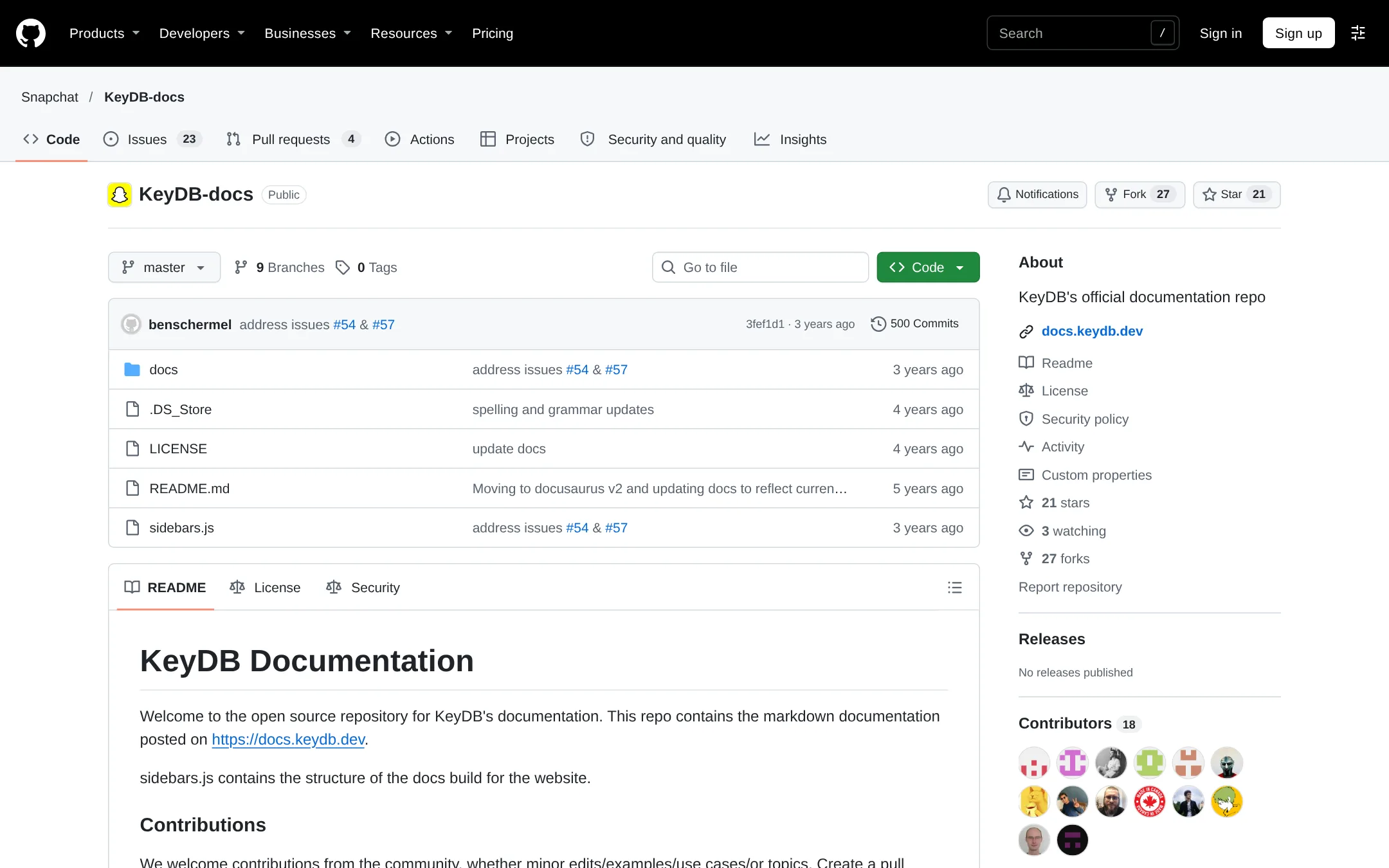
KeyDB is an open source fork of Redis that focuses on high performance and multithreading. Choose it when you want Redis compatibility but need better throughput on a single server without paying for enterprise features.
Where it is strong
- Multithreaded architecture improves throughput on multi-core machines
- Drop-in compatible with Redis protocols and commands
- Open source with an active community on GitHub
Where it falls short
- Documentation is sparse and the project appears less actively maintained than Redis
- No managed cloud offering, so you handle deployment and operations yourself
- Pricing:
- Pricing is not published on the site.
- Switching from Redis:
- Since KeyDB is API-compatible with Redis, you can point your existing clients at it with minimal code changes, but test for edge cases in commands you rely on.
- VNot published
7.Valkey
Best for: Teams that want a fully open source, community-driven in-memory datastore with Redis compatibility and the freedom to deploy anywhere.
- Pricing
- Not published
- Category
- Other
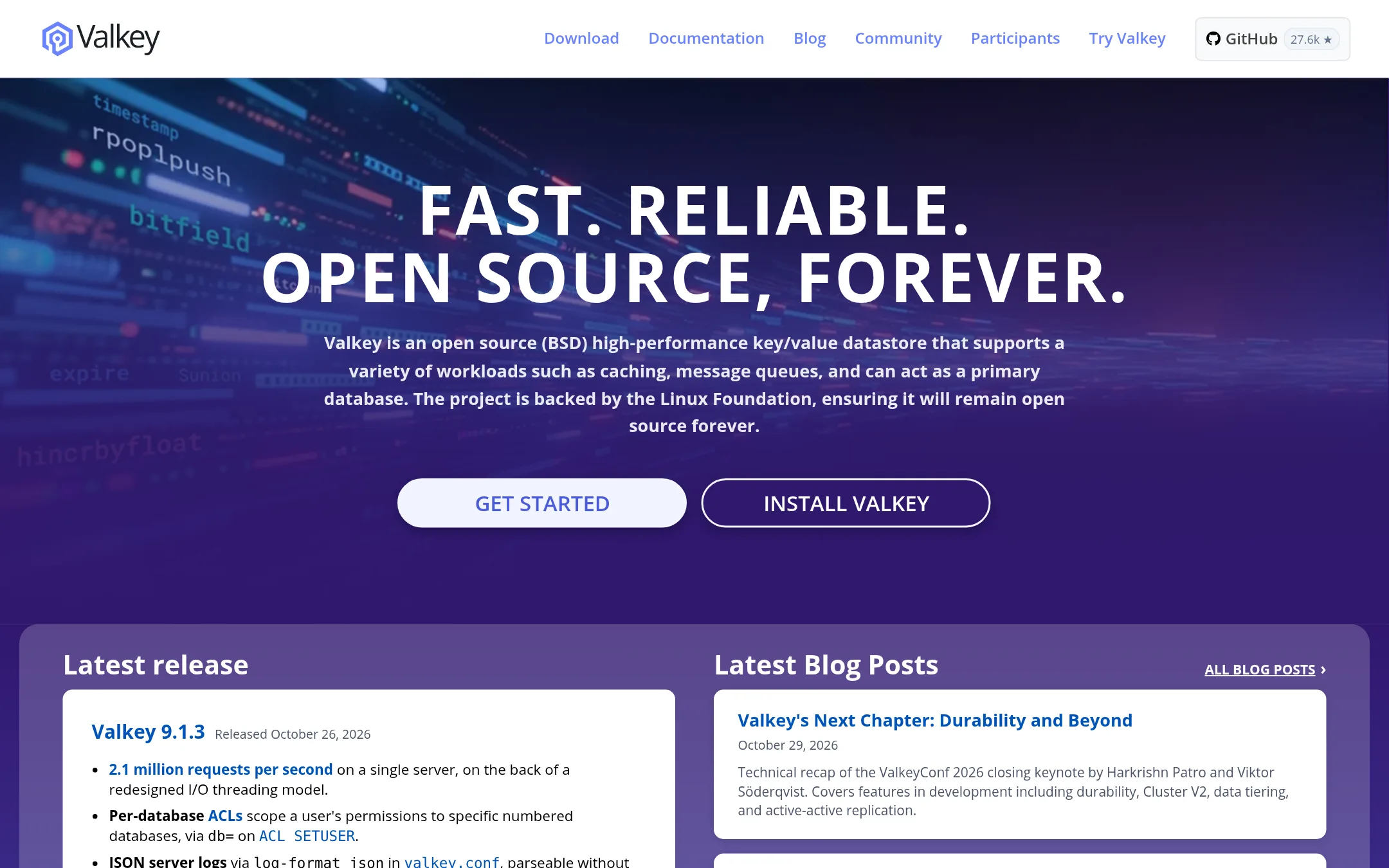
Valkey is an open source, BSD-licensed key/value datastore that handles caching, message queues, and primary database workloads. Choose it when you want Redis-like functionality without vendor lock-in, backed by the Linux Foundation and available for self-hosting or through managed services from AWS, Google Cloud, and others.
Where it is strong
- Open source under BSD license, guaranteed by the Linux Foundation
- High performance, with 2.1 million requests per second on a single server in the latest release
- Supports a wide range of data types and Lua scripting, with modules for extensibility
Where it falls short
- No official pricing or managed service offering directly from the project
- Lacks the enterprise features and support that Redis Enterprise provides, such as active-active replication and tiered RAM/flash storage
- Pricing:
- Pricing is not published on the site.
- Switching from Redis:
- Because Valkey is compatible with Redis OSS, you can often switch by pointing your existing Redis clients to a Valkey server, but you may need to adjust for any Redis Enterprise-specific features you rely on.
- ANot published
8.Aerospike
Best for: Large-scale platforms in ad tech, ecommerce, or AI that need consistent sub-millisecond latency and lower infrastructure costs than Redis.
- Pricing
- Not published
- Category
- Other
Aerospike is a real-time database built for high-throughput, low-latency workloads at massive scale. Its Hybrid Memory Architecture keeps data on SSDs while delivering memory-like performance, which can cut infrastructure costs significantly. Choose Aerospike when you need predictable sub-millisecond latency and cost efficiency beyond what Redis can offer, especially for AI, ad tech, or ecommerce use cases.
Where it is strong
- Patented Hybrid Memory Architecture delivers memory-like latency with SSD durability and cost.
- Up to 9.5x lower cost per transaction and 80% infrastructure savings compared to Redis.
- Multiple consistency modes, including strong consistency with ACID transactions.
Where it falls short
- No published pricing. You must contact sales for a quote.
- Requires more specialized expertise to operate than a managed Redis service.
- Pricing:
- Pricing is not published on the site.
- Switching from Redis:
- Moving from Redis involves re-architecting data models and queries, as Aerospike uses a different API and data model, but the performance and cost benefits can justify the effort.
- HNot published
9.Hazelcast
Best for: Teams running Java or JVM applications that need in-memory data grids with stream processing capabilities beyond simple caching.
- Pricing
- Not published
- Category
- Other
Hazelcast is a unified real-time data platform that combines in-memory computing, stream processing, and distributed data structures. Choose it over Redis when you need a single platform for both caching and real-time event processing, especially in Java-based environments.
Where it is strong
- Combines caching with stream processing in one platform
- Built for Java and JVM ecosystems
- Supports distributed data structures for high availability
Where it falls short
- Pricing not transparent, requires sales contact
- Less known for AI/vector search compared to Redis
- Pricing:
- Pricing is not published on the site.
- TNot published
10.Tarantool
Best for: Teams building high-write, low-latency services in retail, banking, or telecom that want to replace a separate database plus cache with one system.
- Pricing
- Not published
- Category
- Other
Tarantool is an in-memory database that also runs application logic next to the data, which cuts network overhead. Choose it over Redis when you need ACID transactions, SQL-like analytics, or a queue system built into the database itself.
Where it is strong
- ACID transactions and data encryption built in
- Runs Lua application code next to data, reducing network calls
- Includes column store, CDC, and queue modules for real-time analytics and messaging
Where it falls short
- No managed cloud offering mentioned on the site
- Documentation and community are smaller than Redis's
- Pricing:
- Pricing is not published on the site.
- From $0.15/hr/node
11.Couchbase
Best for: Enterprises running mission-critical applications that need a converged data platform with active-active replication, mobile sync, and built-in vector search.
Couchbase is a converged operational data platform that combines key-value storage, search, analytics, and AI data plane capabilities in one system. Choose it over Redis when you need a single database for transactions, search, and edge-to-cloud sync, especially for mission-critical applications requiring high availability and low TCO.
Where it is strong
- Converges storage, search, analytics, and AI into one platform, reducing system sprawl.
- Active-active replication and 99.999% availability for mission-critical uptime.
- Built-in mobile sync and edge support for offline-first applications.
Where it falls short
- Pricing is per node per hour, which can become complex for large deployments.
- May be overkill for simple caching use cases where Redis is lighter and more straightforward.
- Pricing:
- Pricing starts at $0.15/hr per node for Basic, $0.35/hr for Developer Pro, and $0.49/hr for Enterprise, with a free tier available.
- Switching from Redis:
- Moving from Redis to Couchbase involves re-architecting data models and queries, as Couchbase uses a document model with SQL++ instead of Redis's key-value commands.
- ENot published
12.Etcd
Best for: Teams running distributed systems that need a dependable source of truth for configuration, service discovery, and cluster coordination.
- Pricing
- Not published
- Category
- Other
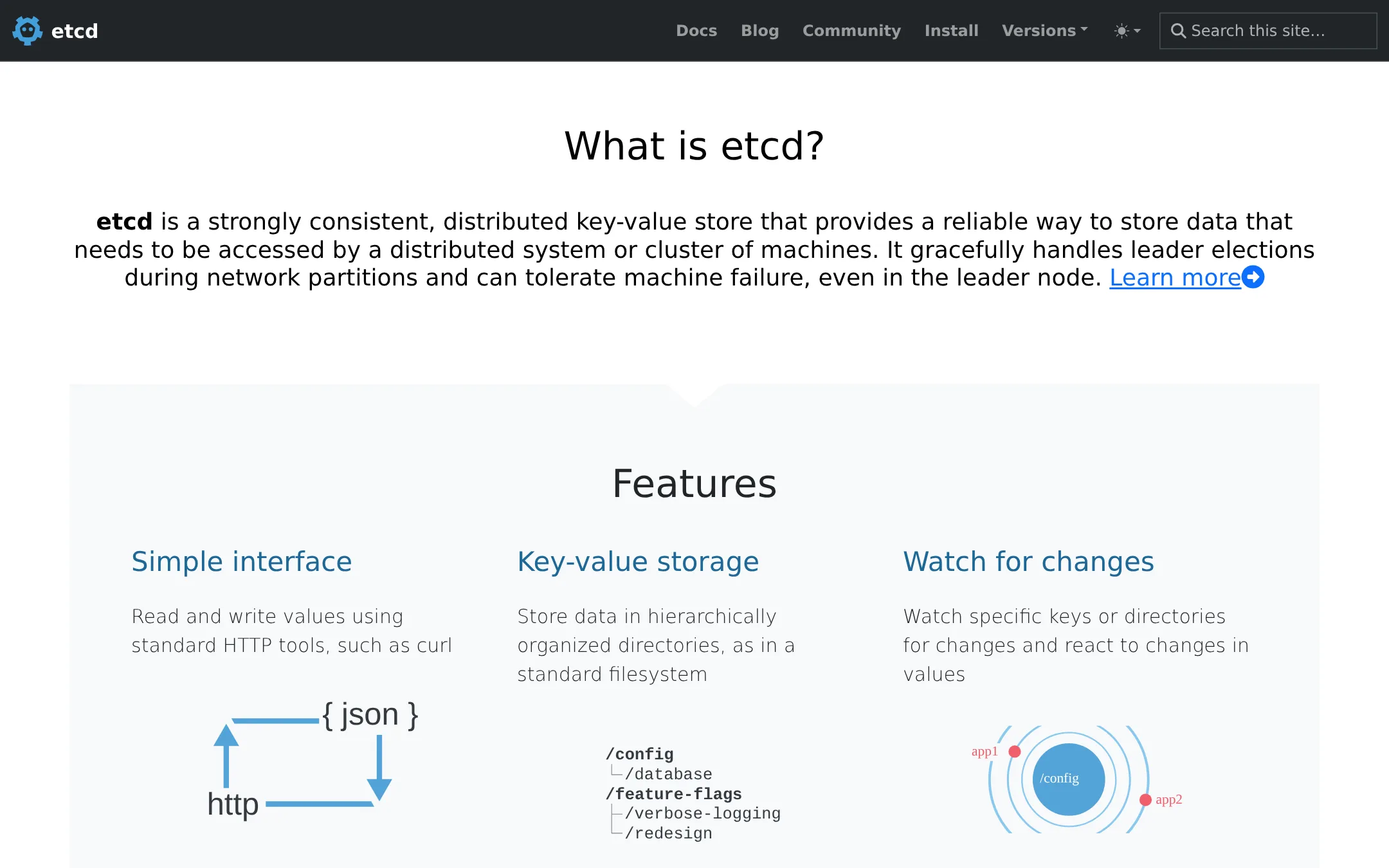
Etcd is a strongly consistent, distributed key-value store built for the most critical data in a distributed system. Choose it over Redis when you need Raft-based consensus, leader election, and reliable coordination for infrastructure like Kubernetes, not just caching or real-time data.
Where it is strong
- Strong consistency with Raft protocol for reliable leader elections
- Simple HTTP interface for reading and writing values
- Watch keys or directories for changes and react in real time
Where it falls short
- Not designed for high-throughput caching or real-time analytics like Redis
- Lacks built-in data structures like lists, sets, and sorted sets
- Pricing:
- Pricing is not published on the site.
See more comparisons in Developer Tools alternatives.
FAQ
Questions about Redis alternatives
What is the best free Redis alternative?
Valkey is a fully open source, BSD-licensed datastore with Redis compatibility, backed by the Linux Foundation. Memcached is also free and open source but lacks persistence and advanced data structures. KeyDB is another open source fork, but it appears less actively maintained.
Which alternative offers the lowest cost for large-scale workloads?
Aerospike claims up to 9.5x lower cost per transaction and 80% infrastructure savings compared to Redis, using SSD-based storage. Dragonfly can reduce memory consumption by 30% or more, lowering infrastructure costs. Couchbase offers a free tier and per-node pricing, which may be cost-effective for certain deployments.
Can I migrate from Redis without rewriting my application?
Dragonfly is API compatible with Redis, Valkey, and Memcached, so you can migrate with minimal changes. Valkey is also Redis-compatible, and KeyDB is a drop-in replacement. Couchbase and Hazelcast are not drop-in replacements and require more integration work.
Which alternative is best for high availability and disaster recovery?
Couchbase offers active-active replication and 99.999% availability, making it strong for mission-critical uptime. Redis itself provides multi-region replication with zero-downtime failover. Aerospike also supports strong consistency and multiple consistency modes, but you must manage it yourself.
Which alternative supports vector search for AI applications?
Couchbase includes built-in vector search, making it suitable for AI workloads. Redis itself offers vector search. Hazelcast is less known for AI/vector search, and Memcached and Valkey do not natively support vector search.
Last updated November 2, 2026.