
Relatient alternatives
8 products to explore · 2026
Your shortlist, at a glance.
Read the comparisons ↓
Check each product’s website for current pricing and features. A verified badge indicates a verified listing, not a ranking.
About Relatient and its alternatives
Users searching for Relatient alternatives are typically healthcare administrators or IT leaders evaluating patient access platforms that combine self-scheduling, call-center automation, and EHR integrations. Relatient stands out with its Dash Voice AI that autonomously handles routine appointment calls, rules-driven scheduling that reduces cancellations by 97%, and deep integrations with Epic, athenahealth, and Oracle Health. Organizations often compare it when seeking solutions that deflect 60% of inbound calls, increase physician utilization, or modernize patient registration without heavy staff overhead. Alternatives range from consumer-facing booking marketplaces to full-suite engagement vendors, each differing in AI depth, workflow customization, and enterprise scalability. Reviewing these options helps teams match their call volume, specialty mix, and compliance needs to the right technology stack.
Explore the alternatives

1.CareMessage
HealthcarePatient engagement for low-income populations

2.Athenahealth
HealthcareHealthcare technology for medical practices and providers.
3.Epic
HealthcareWith the patient at the heart
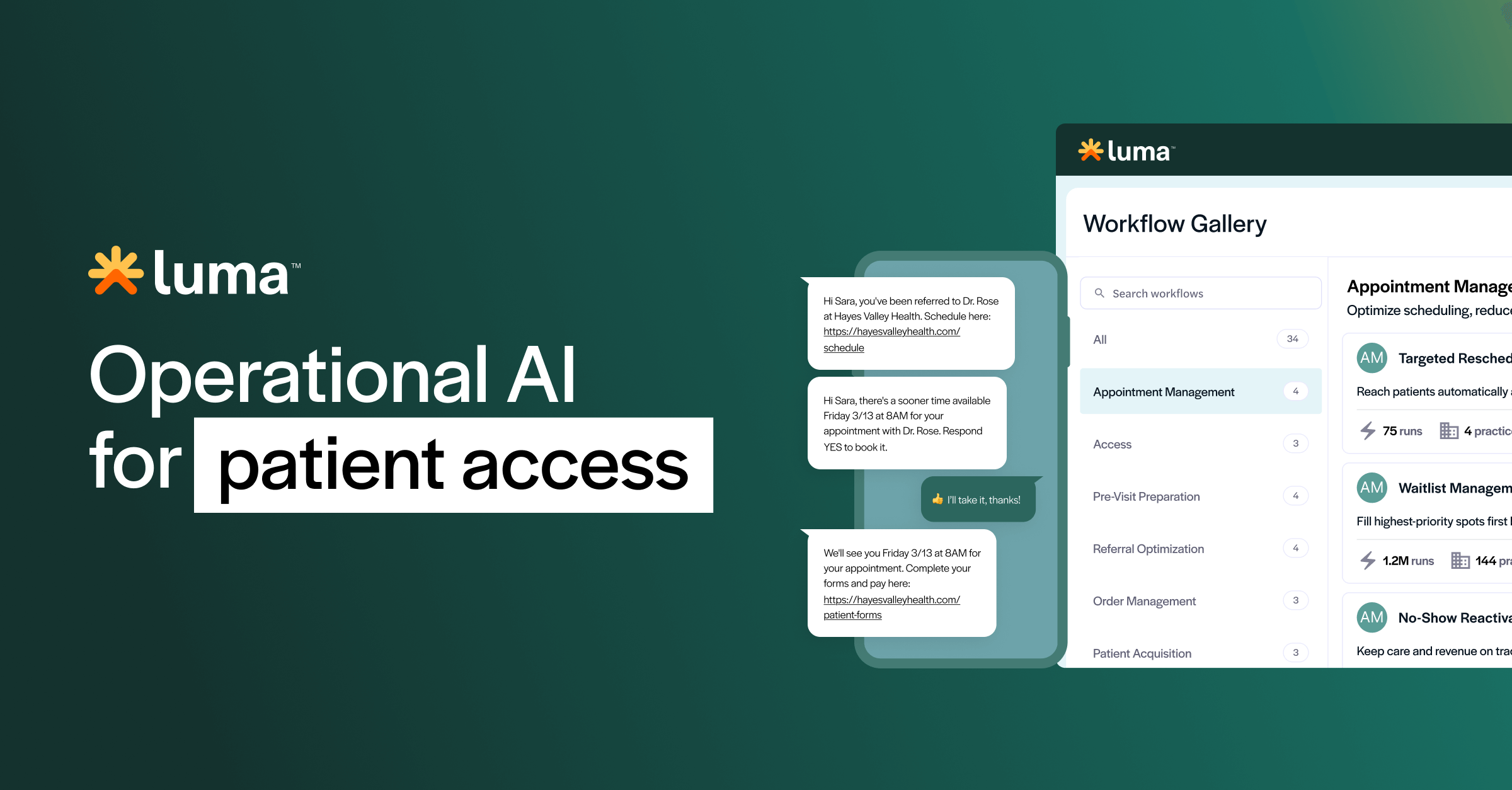
4.Luma Health
HealthcareOperational AI to automate patient access, engagement, intake, and payments for health systems
5.OhMD
HealthcareAI voice and HIPAA texting that cuts patient call volume for physician practices

6.Phreesia
HealthcarePatient intake software that automates registration, payments and engagement for healthcare providers

7.Solutionreach
HealthcareAll-in-One Patient Engagement Software for Healthcare Practices

8.TigerConnect
Healthcare#1 Healthcare Collaboration Platform for hospitals and care teams
See more comparisons in Healthcare alternatives.
Questions about Relatient alternatives
What are the main differences between Relatient Dash Voice AI and other healthcare scheduling platforms?
Relatient Dash Voice AI focuses on agentic automation that books complex appointments using built-in rules and EHR data, deflecting 60% of calls. Competing platforms may offer basic IVR or chatbots but often require more human escalation for specialty scheduling or insurance verification.
How does Relatient pricing compare to similar patient engagement tools?
Relatient uses a contact-based enterprise model suited for health systems. Many alternatives offer per-provider subscriptions or usage-based fees, making cost comparisons dependent on call volume, number of locations, and required EHR integrations.
Can Relatient alternatives handle the same level of EHR integrations?
Relatient integrates with Epic, athenahealth, ModMed, Oracle Health, and others. Top alternatives also support major EHRs but may vary in bidirectional scheduling depth and real-time availability syncing.
Which Relatient alternative is best for reducing patient no-shows?
Relatient claims 97% fewer cancellations via self-scheduling. Alternatives with strong reminder automation and waitlist management can achieve similar results depending on patient population and specialty.
Is Relatient Voice AI suitable for smaller medical practices?
Relatient primarily serves hospitals and larger groups. Smaller practices often choose lighter alternatives with simpler setup and lower minimum contract sizes while still offering online booking and basic communications.