renderlet alternatives
6 products compared · Updated November 18, 2026
The short answer
The strongest alternatives to renderlet depend on the job. For web and mobile product UI, React suits teams that need reusable components across web and native apps. For bespoke 2D charts and data graphics on the web, D3.js suits frontend developers who want full control over each element. For fast, free 2D and emerging 3D rendering in games and interactive content, PixiJS suits teams that want an open source renderer they can ship themselves.
Your shortlist, at a glance
Read the comparisons ↓- RReactNot publishedWeb and mobile product teams that need reusable user interface components across web and native apps
- VVue.jsNot publishedWeb development teams building interactive user interfaces in the browser who want a framework they can adopt gradually
- SSvelteNot publishedWeb development teams building interactive user interfaces who want a lightweight, open source framework
- DD3.jsNot publishedFrontend developers building bespoke charts and data visualizations for web pages
- TThree.jsSee websiteOther
- PPixiJSNot publishedWeb game and interactive content teams that need a fast, free 2D renderer with growing 3D support
About renderlet and its alternatives
Renderlet is a developer tool for building interactive applications that run anywhere. Its site says it generates intelligent, interactive 3D models for games, smart cities, digital twins and product visualization, using composable procedural building blocks, real-time generation at runtime, and AI that works from procedural grammar rather than raw geometry.
When comparing alternatives in this category, weigh what each tool is built to do. Check whether it targets 3D procedural content, 2D graphics, or web interface work, since these are different jobs. Also look at pricing structure, which is not published for most of the tools listed here, regional availability, integrations with your existing stack, the level of vendor or community support, and any contract terms that apply once you move past a free or open source option.
Explore the alternatives
- RNot published
1.React
Best for: Web and mobile product teams that need reusable user interface components across web and native apps
- Pricing
- Not published
- Category
- Other
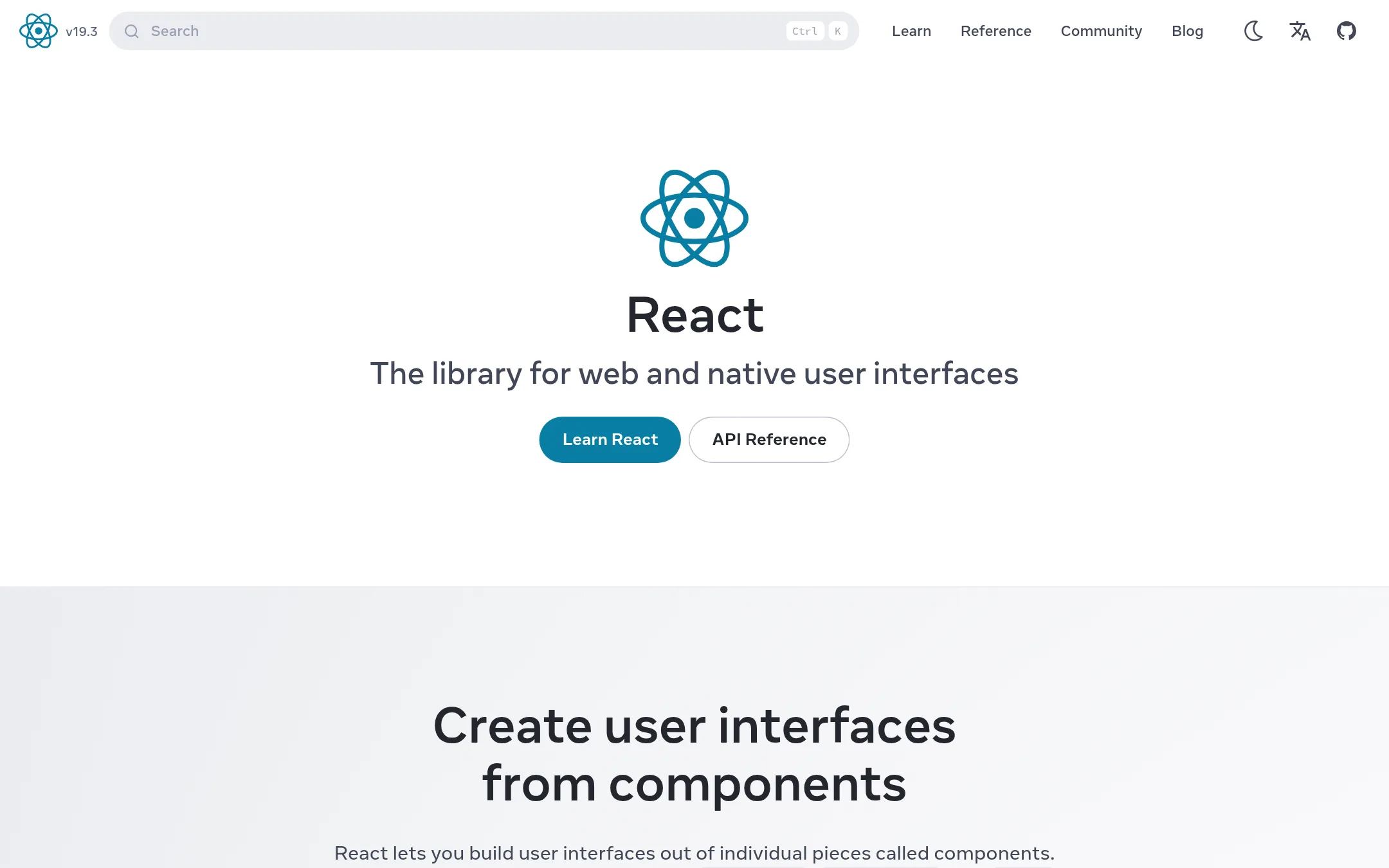
React is a JavaScript library for building web and native user interfaces out of reusable components. Teams pick it when they want to build the UI layer of an app in code and reuse components across projects and platforms, rather than build an interactive 3D procedural scene. Renderlet focuses on generating and rendering 3D content in real time, so React fits better for interface work around such a tool than for the 3D generation itself.
Where it is strong
- Components can be shared across web and native apps, with React Native and Expo covering Android and iOS
- Large community, and the docs say about two million developers visit each month
- Works alongside existing HTML pages, so teams can adopt it one component at a time
Where it falls short
- It is a library, not a full app framework, so routing and data fetching need a separate framework such as Next.js or React Router
- It does not provide 3D procedural generation or real-time 3D rendering tools like renderlet
- Pricing:
- Pricing is not published on the site.
- VNot published
2.Vue.js
Best for: Web development teams building interactive user interfaces in the browser who want a framework they can adopt gradually
- Pricing
- Not published
- Category
- Other
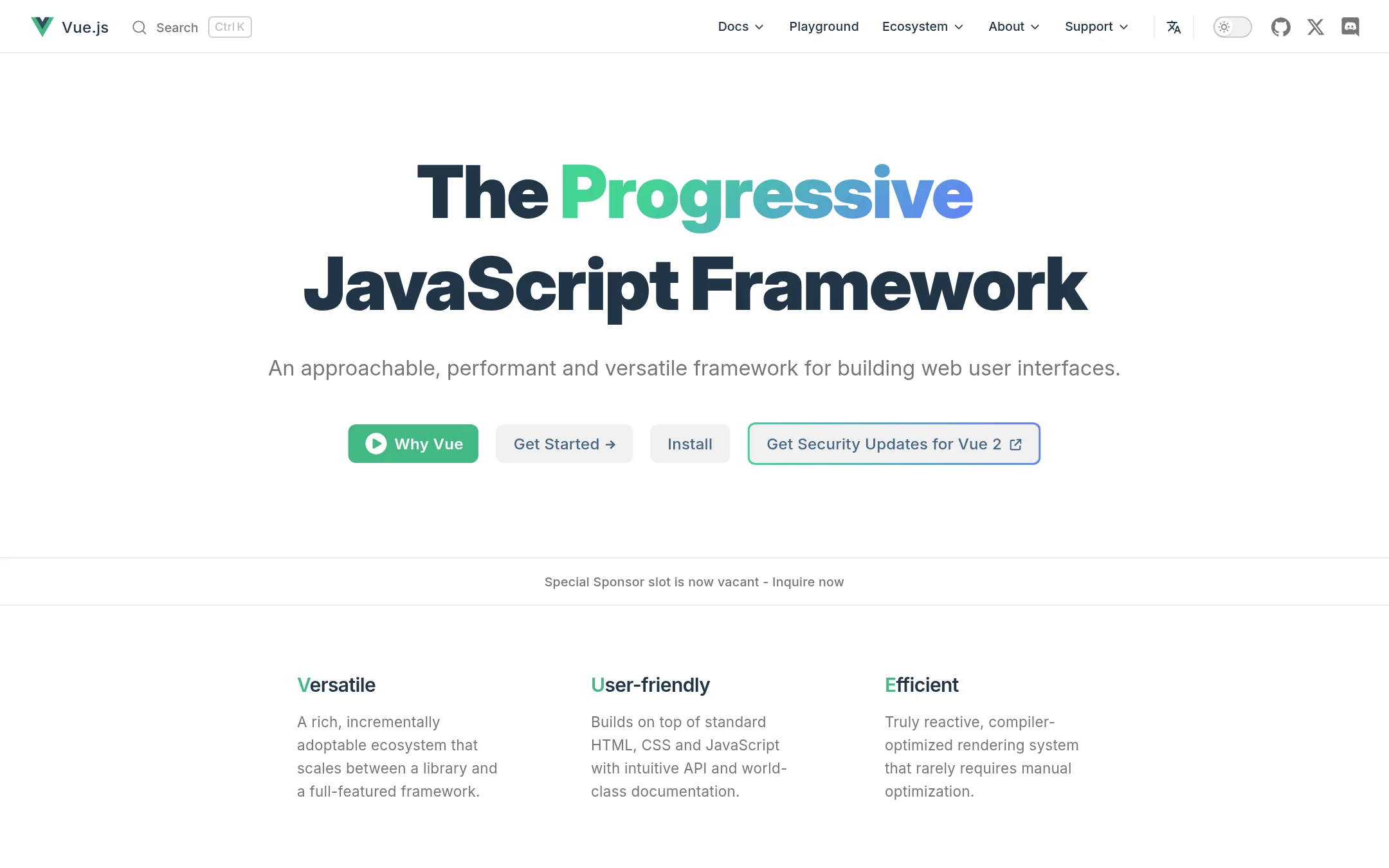
Vue.js is a JavaScript framework for building web user interfaces on top of standard HTML, CSS and JavaScript. Teams pick it when they want to add interactive front-end UI to a web app, and it can be adopted incrementally, from a library up to a full framework. Renderlet is aimed at procedural 3D content for games, digital twins and visualizations, so Vue fits a different job: a web interface, not 3D generation.
Where it is strong
- Builds on standard HTML, CSS and JavaScript, so existing skills carry over
- Can be adopted incrementally, from a single library to a full framework
- Documentation and an official tooling guide, with an MIT open-source license
Where it falls short
- Focused on web user interfaces, not on 3D or procedural content generation
- Vue 2 is only receiving security updates, so new projects should use the current version
- Pricing:
- Pricing is not published on the site.
- SNot published
3.Svelte
Best for: Web development teams building interactive user interfaces who want a lightweight, open source framework
- Pricing
- Not published
- Category
- Other
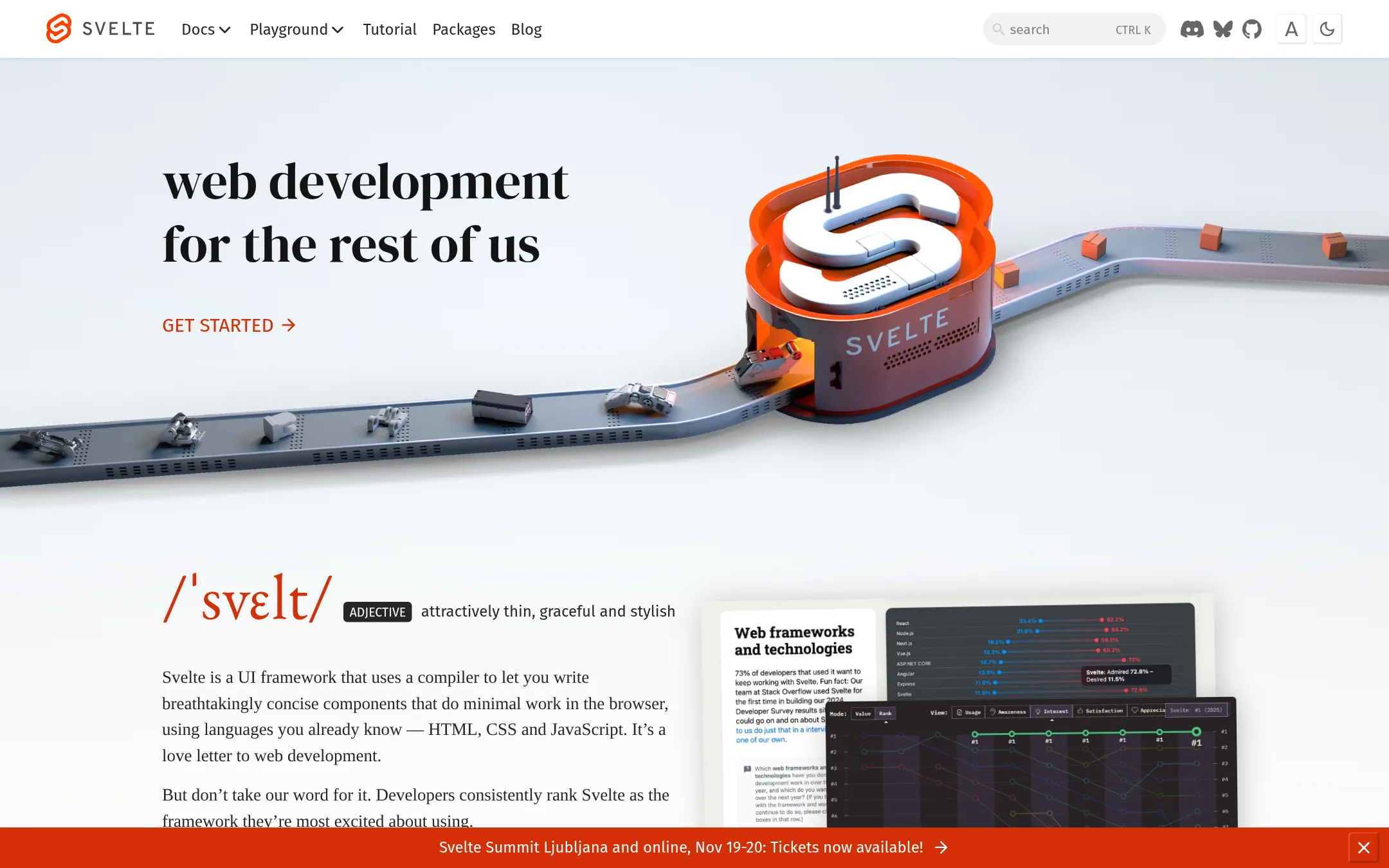
Svelte is an open source UI framework that compiles components into minimal browser code, written in HTML, CSS and JavaScript. Someone would pick it over renderlet when they need to build web interfaces rather than real-time 3D procedural content for games, digital twins or smart cities.
Where it is strong
- Free and open source under the MIT license
- Compiles components to minimal work in the browser
- Uses HTML, CSS and JavaScript that developers already know
Where it falls short
- Targets web UI rather than 3D procedural modeling
- Does not offer the procedural design tools renderlet provides
- Pricing:
- Pricing is not published on the site.
- DNot published
4.D3.js
Best for: Frontend developers building bespoke charts and data visualizations for web pages
- Pricing
- Not published
- Category
- Other
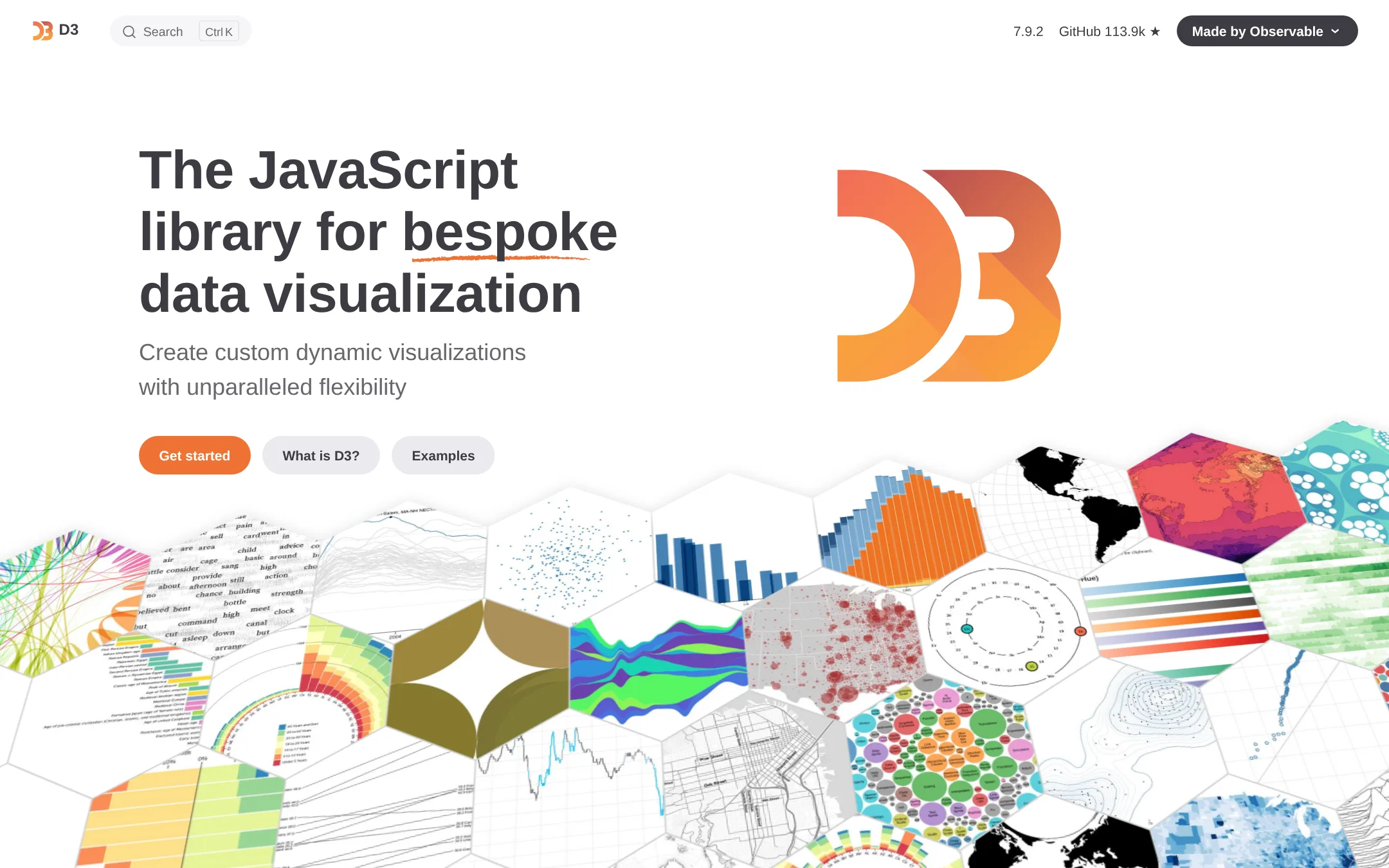
D3.js is a JavaScript library for building custom data visualizations in the browser. It binds data to DOM elements and provides scales, shapes, layouts and interactions you assemble yourself. Someone would choose it over renderlet when the goal is 2D charts and data graphics on the web rather than procedural 3D content for games or digital twins.
Where it is strong
- Full control over how each element is drawn
- Large library covering scales, shapes, layouts and maps
- Built and maintained by the Observable team
Where it falls short
- Focused on 2D data visualization, not 3D scenes
- Requires JavaScript coding to build anything
- Pricing:
- Pricing is not published on the site.
- TSee website
5.Three.js
Other
A 3D library for rendering scenes in the browser, relevant for advanced graphics.
- PNot published
6.PixiJS
Best for: Web game and interactive content teams that need a fast, free 2D renderer with growing 3D support
- Pricing
- Not published
- Category
- Other
PixiJS is an open source engine for 2D and 3D rendering in the browser, built on WebGPU or WebGL. It suits teams making games, ads, apps or interactive sites that need to run in any modern browser or be wrapped for app stores. Pick it over renderlet when you want a free, widely used renderer you can ship yourself rather than a procedural 3D design tool.
Where it is strong
- Open source, free, with a large community behind it
- Fast 2D renderer that batches sprites into single draw calls
- Runs on desktop, mobile and any modern browser from one codebase
Where it falls short
- Its 3D support is new (version 0.1.0) and narrower than dedicated 3D tools
- Has no procedural modeling or AI-assisted content creation like renderlet describes
- Pricing:
- Pricing is not published on the site.
See more comparisons in Developer Tools alternatives.
FAQ
Questions about renderlet alternatives
What is renderlet known for?
According to its site, renderlet builds intelligent, interactive 3D models for games, smart cities, digital twins and product visualization. It offers procedural design tools that combine functions and primitives with data, and it can generate content in real time at runtime.
Which alternative is best if I need a web user interface rather than 3D content?
React, Svelte and Vue.js all target web and app user interfaces rather than 3D generation. React is strongest for reusable components across web and native apps, Svelte for a lightweight open source framework, and Vue.js for a framework you can adopt gradually.
Which alternatives are free?
Svelte is free and open source under the MIT license, and Vue.js is also MIT-licensed open source. PixiJS is open source and free, and D3.js is a free JavaScript library. Pricing is not published for React on its site.
Can any of these replace renderlet for procedural 3D content?
None of the listed alternatives provides the procedural 3D design and AI-assisted content creation that renderlet describes. PixiJS offers 2D rendering with 3D support that is newer and narrower, so it is the closest option for real-time graphics, though it does not generate procedural models.
Is pricing available for these tools?
Pricing is not published on the site for any of the listed alternatives, so check each vendor directly before you commit. Renderlet's pricing is also not shown on the site it was reviewed from.
Last updated November 18, 2026.