
Roboflow alternatives
10 products compared · Updated October 16, 2026
The short answer
For teams already using YOLO models, Ultralytics offers the tightest integration with annotation, training, and deployment in one platform. For those needing expert annotation and data curation across multiple modalities, SuperAnnotate is the strongest choice. For engineering teams that want full control and no vendor lock-in, OpenCV provides a free, open-source library with over 2,500 algorithms.
Your shortlist, at a glance
Read the comparisons ↓ LabelboxNot publishedEngineering and research teams that want AI agents to autonomously handle recurring tasks like bug fixes, dependency upgrades, and experiment sweeps.
 RescaleCustom quoteEngineering and R&D teams in aerospace, automotive, energy, and life sciences that need elastic cloud HPC for simulation and AI physics.
 Google Cloud HPCNot publishedTeams with deep cloud engineering expertise that need to run custom AI workloads at scale on Google Cloud infrastructure.
 AWS ParallelClusterPay-as-you-goResearch teams and enterprises that need to run large-scale HPC or custom ML workloads on AWS infrastructure.
 ClarifaiSee websiteClarifai - The World's AI
 V7 LabsCustom quoteInvestment firms, insurers, and real estate teams that need to process large volumes of documents with audit trails and source-linked outputs.
- SSuperAnnotateNot publishedAI teams building frontier models that need expert annotation, data curation, and vendor management in one secure system.
 UltralyticsFrom $29/seat/moTeams already using YOLO models that want annotation, training, and deployment in a single platform with flexible cloud GPU options.
 Hugging FaceFrom $0.03/hr GPUML teams that want to host, share, and deploy open models across text, image, audio, and video, with flexible GPU options.
 OpenCVFree (Apache 2.0)Engineering teams that want a low-level, customizable computer vision library and are comfortable writing their own deployment and labeling infrastructure.
About Roboflow and its alternatives
Roboflow is a vision AI platform that turns images, videos, and streams into intelligence. It is known for its end-to-end pipeline: annotation, model training, deployment to edge devices, and workflows that connect to industrial systems. Over half the Fortune 100 and 80,000 organizations use it, and plans start at $0.
When comparing alternatives, weigh pricing structure first. Some products publish prices, others require a sales call. Check whether the tool covers your whole workflow or just one stage, like labeling or compute. Consider regions for deployment, integrations with your existing stack, support levels, and contract terms like annual commitments or volume pricing.
Explore the alternatives
- Not published
1.Labelbox
Best for: Engineering and research teams that want AI agents to autonomously handle recurring tasks like bug fixes, dependency upgrades, and experiment sweeps.
- Pricing
- Not published
- Category
- AI & Machine Learning
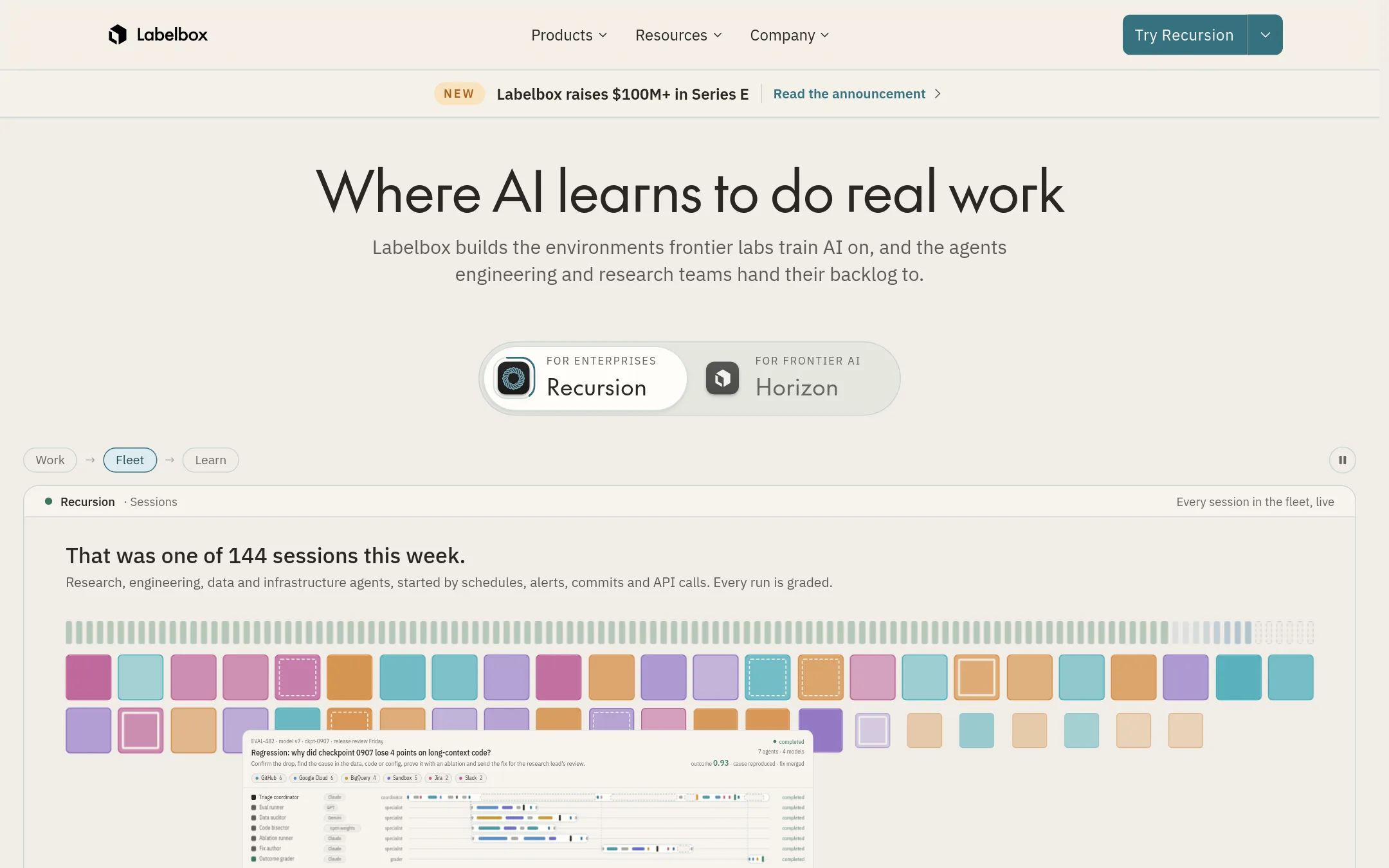
Labelbox is a platform for building and running AI agents that handle recurring engineering, research, and security work. Choose it over Roboflow when your priority is automating software workflows like bug fixing and dependency upgrades, rather than building computer vision models for images and video.
Where it is strong
- Agents automate recurring engineering and research tasks end-to-end
- Integrates with common tools like GitHub, Jira, and Slack
- Built for enterprise-scale deployments
Where it falls short
- No computer vision model training or deployment features
- Pricing requires contacting sales
- Pricing:
- Pricing is not published on the site.
- Custom quote
2.Rescale
Best for: Engineering and R&D teams in aerospace, automotive, energy, and life sciences that need elastic cloud HPC for simulation and AI physics.

- Pricing
- Custom quote
- Category
- Developer Tools
Rescale is a cloud HPC and simulation platform for engineering teams that need to run complex modeling, simulation, and AI workloads at scale. Choose it over Roboflow when your work is about physics-based simulation and digital engineering, not computer vision on images and video.
Where it is strong
- Access to 1,350+ pre-installed commercial and open-source engineering software packages.
- Runs on 180+ GPU and CPU architectures across multiple clouds.
- Includes agentic engineering workflows and AI physics surrogate modeling.
Where it falls short
- No computer vision features like image annotation or object detection.
- Pricing is quote-based, so no self-serve tier to start quickly.
- Pricing:
- Pricing is not published on the site. Rescale offers tailored quotes based on your digital engineering and R&D requirements.
- Not published
3.Google Cloud HPC
Best for: Teams with deep cloud engineering expertise that need to run custom AI workloads at scale on Google Cloud infrastructure.
- Pricing
- Not published
- Category
- Developer Tools
Google Cloud HPC provides raw compute infrastructure with GPUs and TPUs for teams that need to run large-scale AI training or inference workloads on their own infrastructure. You would choose it over Roboflow when you need full control over the hardware and environment, rather than a managed vision platform with built-in labeling and deployment tools.
Where it is strong
- Access to Google Cloud's GPU and TPU hardware for high-performance AI workloads.
- Full control over the compute environment, including custom configurations and scaling.
- Part of the broader Google Cloud ecosystem, with integrations to other GCP services.
Where it falls short
- No built-in vision-specific tools like labeling, model training, or deployment workflows.
- Requires significant infrastructure management and cloud expertise to operate effectively.
- Pricing:
- Pricing is not published on the site. The pricing page returns a 404 error.
- Pay-as-you-go
4.AWS ParallelCluster
Best for: Research teams and enterprises that need to run large-scale HPC or custom ML workloads on AWS infrastructure.
- Pricing
- Pay-as-you-go
- Category
- Developer Tools
AWS ParallelCluster is a cluster management tool for running high-performance computing workloads on AWS. It is not a vision AI platform, so you would choose it instead of Roboflow when you need to manage your own HPC infrastructure and run custom machine learning or simulation workloads at scale, rather than using a managed vision pipeline.
Where it is strong
- Full control over cluster configuration and scaling.
- Integrates with the broad AWS service catalog.
- Pay only for what you use, with no upfront commitment.
Where it falls short
- No built-in vision AI labeling, training, or deployment tools.
- Requires significant AWS and infrastructure expertise to operate.
- Pricing:
- AWS pricing is pay-as-you-go. You pay only for the services you use, with no long-term contracts. Savings Plans offer lower prices in exchange for a 1- or 3-year commitment. Specific prices are not published on the site.
- See website
5.Clarifai
AI & Machine Learning
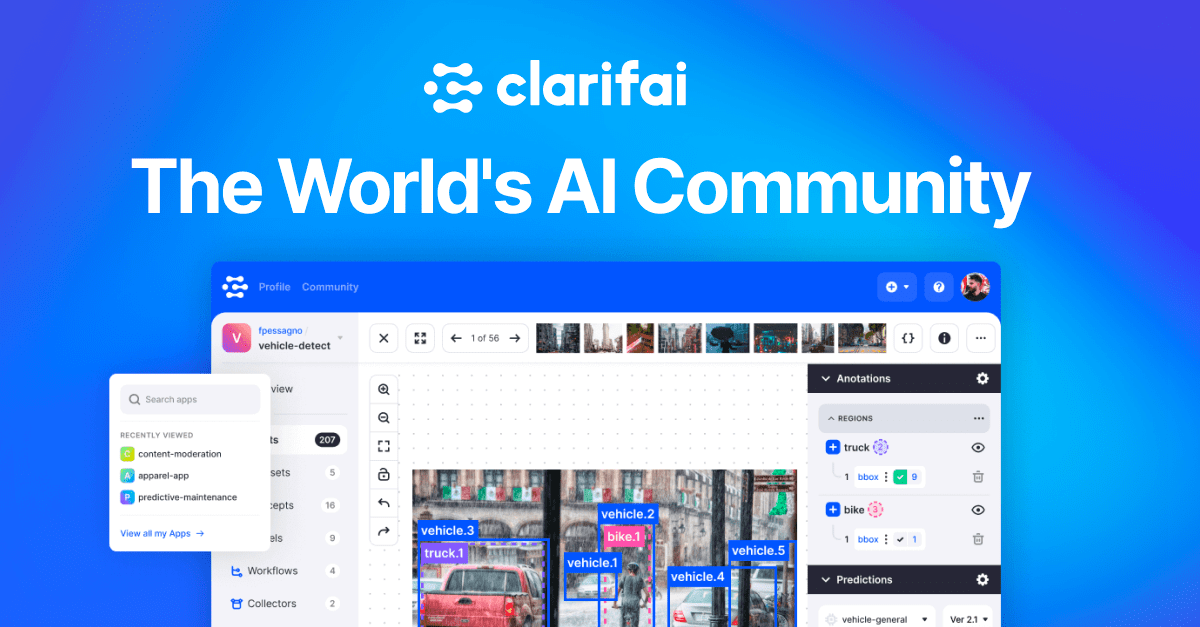
Clarifai supplies a platform for visual search, custom model training, and workflow orchestration with both cloud and on-prem options. It targets enterprise use cases similar to Roboflow but places heavier emphasis on its own model zoo rather than broad open-source export and community notebooks.
- Custom quote
6.V7 Labs
Best for: Investment firms, insurers, and real estate teams that need to process large volumes of documents with audit trails and source-linked outputs.
- Pricing
- Custom quote
- Category
- AI & Machine Learning
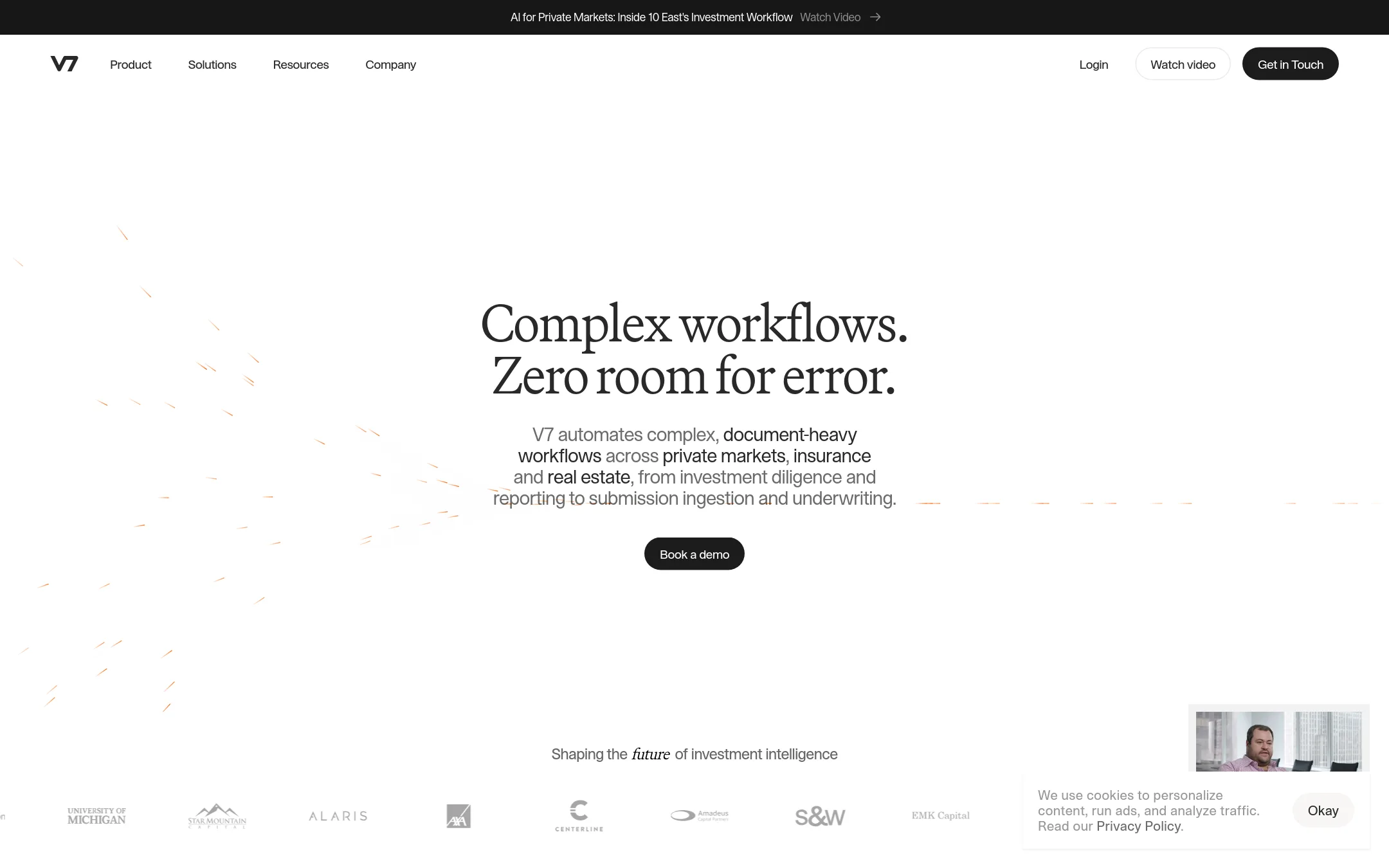
V7 Labs automates document-heavy workflows in private markets, insurance, and real estate, using AI agents to process deal documents, underwriting, and claims. Choose it over Roboflow when your work is about extracting and acting on information from pages of text, not analyzing images or video.
Where it is strong
- Pre-built agents for contract audit, due diligence, and underwriting
- Volume-based pricing on pages processed, not seats
- Integrations with data rooms, OneDrive, and CRM included
Where it falls short
- No public pricing, so budgeting requires a sales call
- Focused on documents, not image or video analysis like Roboflow
- Pricing:
- Pricing is not published on the site. Custom quotes are scoped in a single call and fixed for the year.
- SNot published
7.SuperAnnotate
Best for: AI teams building frontier models that need expert annotation, data curation, and vendor management in one secure system.
- Pricing
- Not published
- Category
- AI & Machine Learning
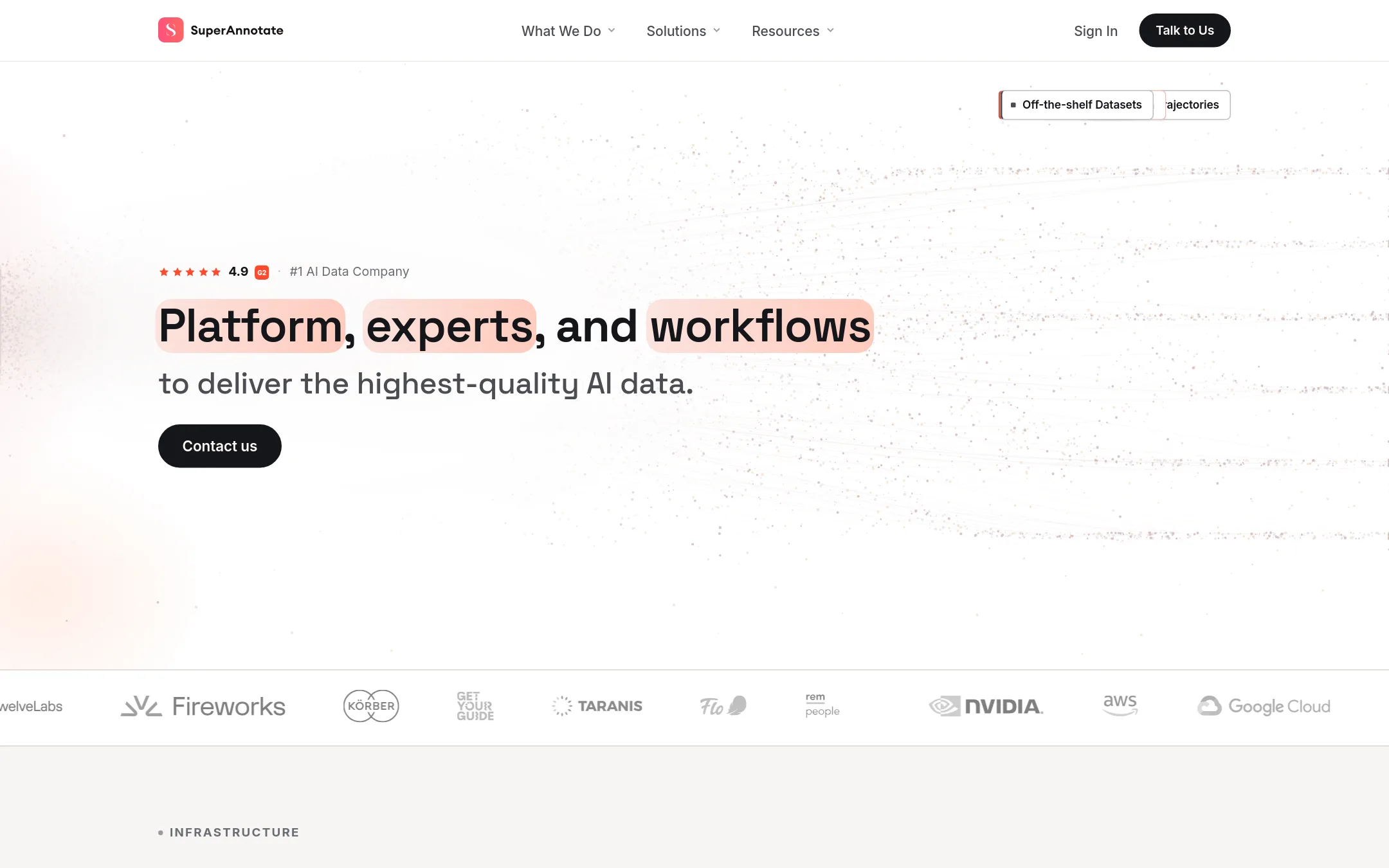
SuperAnnotate is a data platform for teams that need high-quality labeled data across text, image, video, and audio, plus expert annotation services. Choose it over Roboflow when your bottleneck is data quality and scale, not model deployment, especially for multimodal or agentic AI projects.
Where it is strong
- Handles text, image, video, and audio in one platform
- Includes expert annotation services and off-the-shelf datasets
- SOC 2 Type II and ISO 27001 certified with full data lineage
Where it falls short
- No published pricing, so budgeting is unclear
- No mention of model training or deployment, unlike Roboflow
- Pricing:
- Pricing is not published on the site.
- From $29/seat/mo
8.Ultralytics
Best for: Teams already using YOLO models that want annotation, training, and deployment in a single platform with flexible cloud GPU options.
- Pricing
- From $29/seat/mo
- Category
- AI & Machine Learning
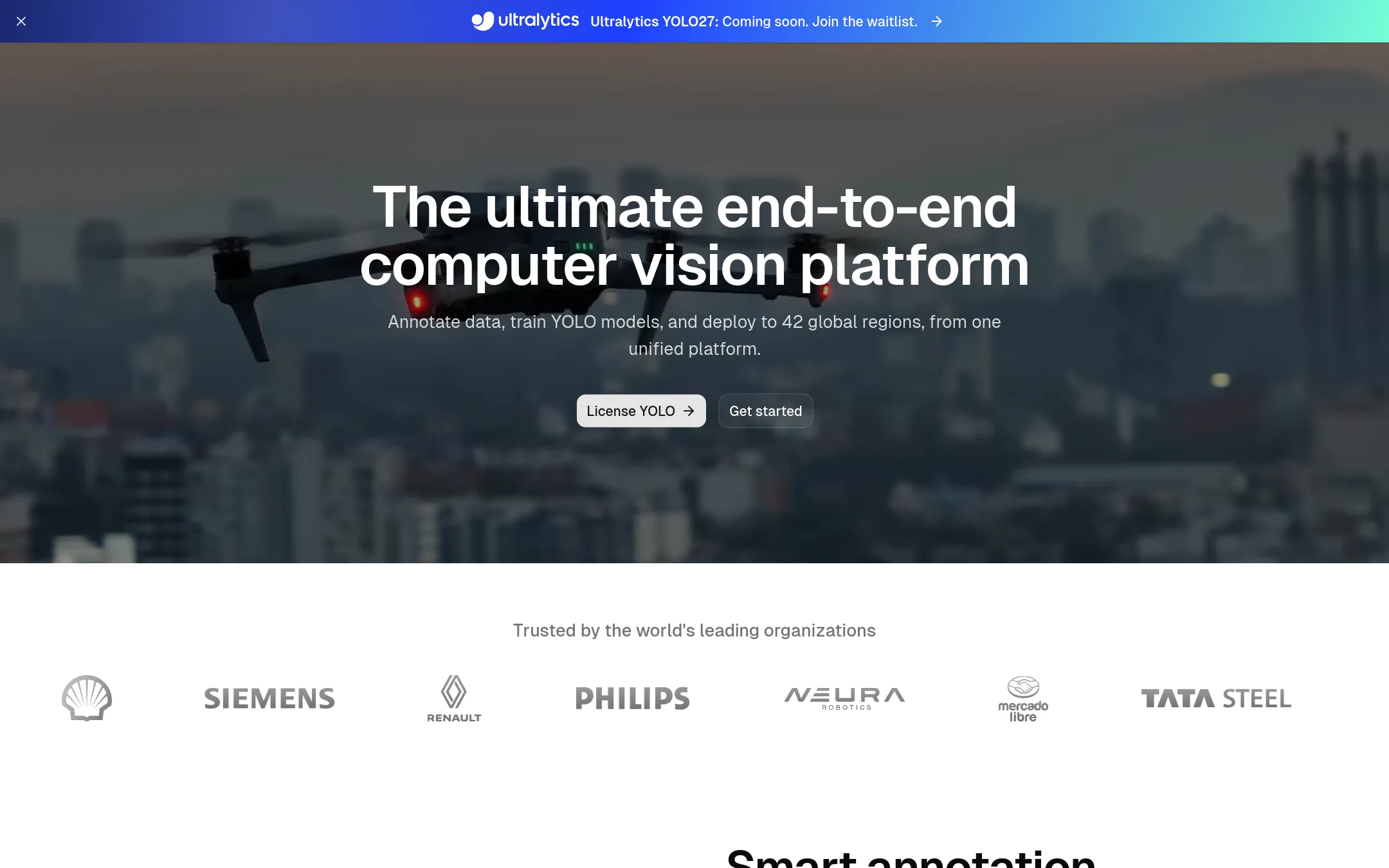
Ultralytics is an end-to-end computer vision platform built around the YOLO model family, which it created. You would choose it over Roboflow if you want tight integration with YOLO models, cloud training on a wide range of GPUs, and deployment to many global regions from one workspace.
Where it is strong
- Native support for YOLOv5, YOLOv8, YOLO11, and YOLO26, with 26 cloud GPU options starting at $0.24/hr.
- Deploy to 42 global regions with dedicated endpoints, or export to 22 formats for edge devices.
- Free plan includes annotation, training, and deployment capabilities, not just a trial.
Where it falls short
- Pro plan limits team collaboration to 5 members, which may be tight for larger teams.
- Enterprise features like SSO/SAML and on-premise deployment are only available on custom plans.
- Pricing:
- Free plan includes 100 GB storage, 100 models, 3 concurrent cloud training jobs, and 3 cloud deployments. Pro is $29 per seat per month with 500 GB storage, 500 models, 10 concurrent trainings, and 10 deployments. Enterprise is custom.
- Switching from Roboflow:
- Moving from Roboflow involves re-annotating or importing datasets into Ultralytics' format, then retraining models with YOLO architectures, since Ultralytics does not support Roboflow's proprietary model families.
- From $0.03/hr GPU
9.Hugging Face
Best for: ML teams that want to host, share, and deploy open models across text, image, audio, and video, with flexible GPU options.
- Pricing
- From $0.03/hr GPU
- Category
- AI & Machine Learning
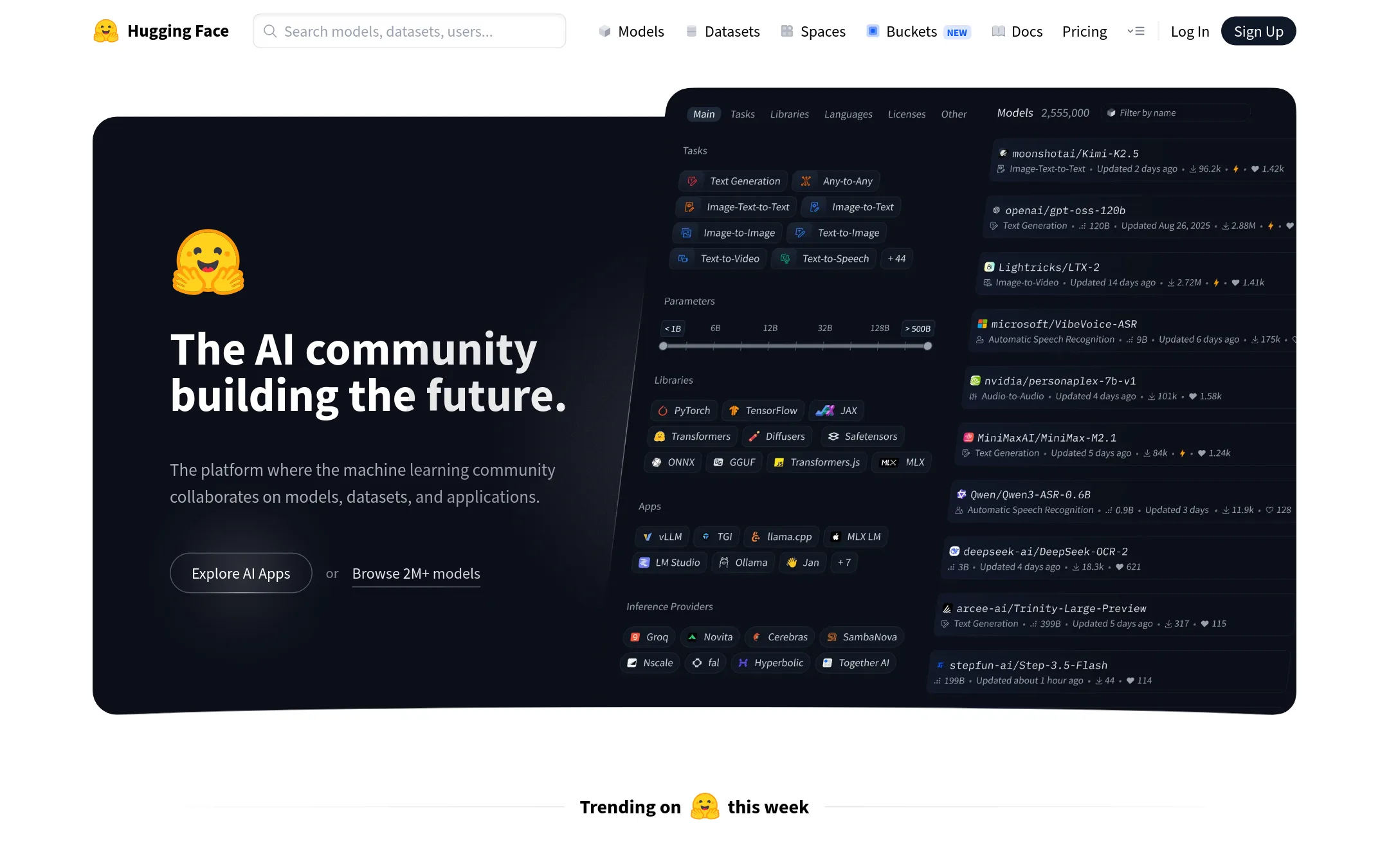
Hugging Face is a broad AI community platform for hosting models, datasets, and apps, with GPU compute and inference endpoints. Choose it over Roboflow when you want to work across many modalities and open-source models, not just vision, and when you prefer a general ML hub over a dedicated vision pipeline.
Where it is strong
- Host unlimited public models, datasets, and Spaces for free.
- Pay-as-you-go GPU and inference options with no cold starts.
- Access to 45,000+ models via a unified API.
Where it falls short
- No built-in annotation or training pipeline for custom vision models.
- Vision-specific features like active learning and edge deployment are absent.
- Pricing:
- Pricing starts at $0 for CPU Basic Spaces. GPU Spaces from $0.03/hour. Dedicated inference from $0.033/hour. PRO is $9/month. Team starts at $20/user/month.
- Switching from Roboflow:
- Moving from Roboflow means you'll need to handle data labeling, training, and deployment yourself, using Hugging Face for hosting and inference.
- Free (Apache 2.0)
10.OpenCV
Best for: Engineering teams that want a low-level, customizable computer vision library and are comfortable writing their own deployment and labeling infrastructure.
- Pricing
- Free (Apache 2.0)
- Category
- AI & Machine Learning
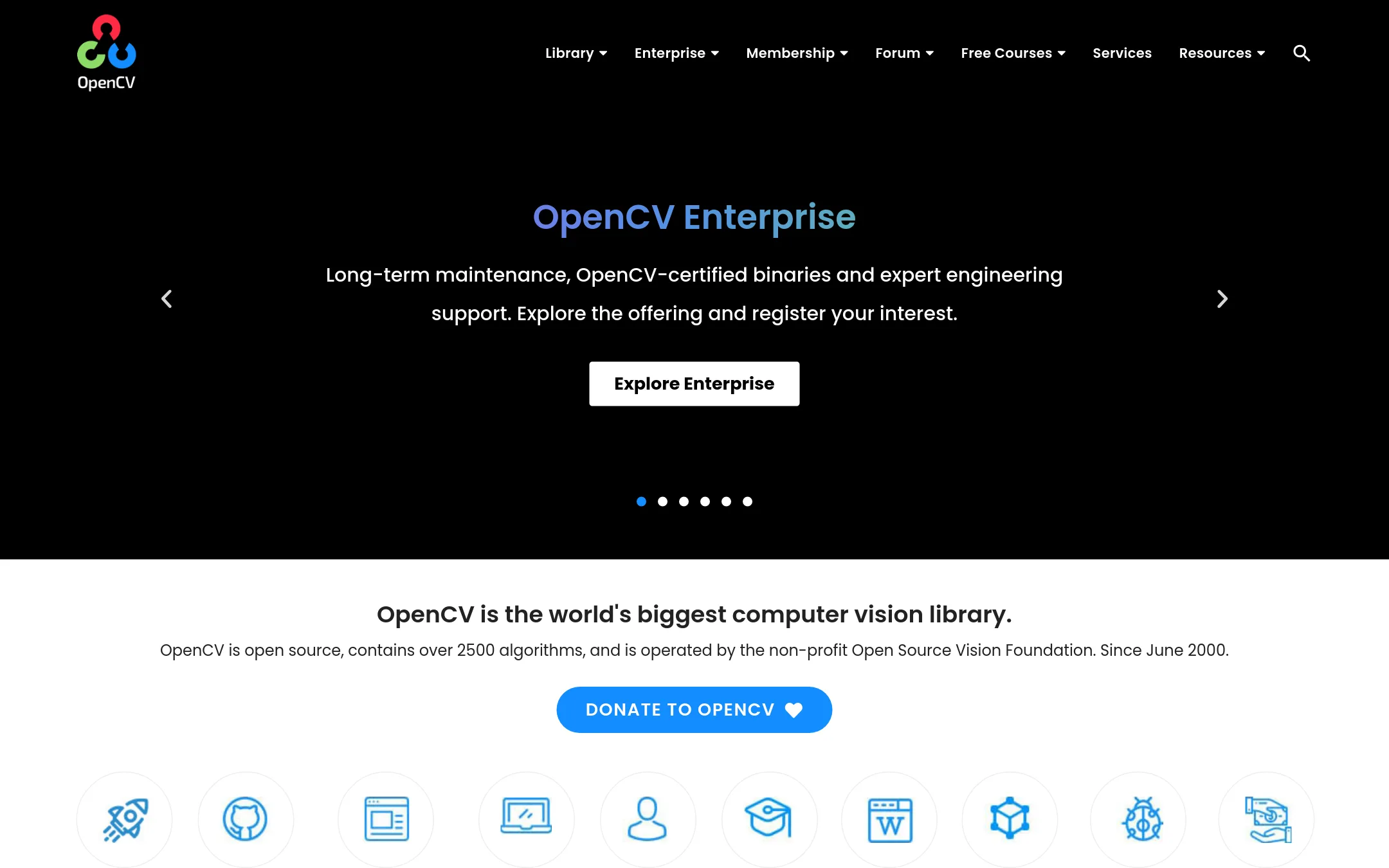
OpenCV is an open-source library with over 2,500 computer vision algorithms, not a managed platform. You would choose it instead of Roboflow when you need full control over your vision code, want to avoid vendor lock-in, and have the engineering capacity to build and maintain your own pipeline. It is free for commercial use under the Apache 2 license.
Where it is strong
- Open source and free for commercial use under Apache 2.0.
- Over 2,500 algorithms covering a wide range of vision tasks.
- Cross-platform with C++, Python, and Java interfaces for Linux, MacOS, Windows, iOS, and Android.
Where it falls short
- No built-in data labeling, model training, or deployment orchestration like Roboflow offers.
- Requires significant in-house engineering effort to build and maintain a production vision pipeline.
- Pricing:
- Pricing is not published on the site.
See more comparisons in AI & Machine Learning alternatives.
FAQ
Questions about Roboflow alternatives
Which alternative is best if I already use YOLO models?
Ultralytics is the strongest choice because it was built around the YOLO family and offers native support for YOLOv5, YOLOv8, YOLO11, and YOLO26. It includes annotation, training, and deployment in one platform, with 26 cloud GPU options and deployment to 42 global regions. The free plan includes these capabilities, not just a trial.
What if I need expert annotation services for large datasets?
SuperAnnotate is the best fit. It handles text, image, video, and audio in one platform, and includes expert annotation services and off-the-shelf datasets. It is SOC 2 Type II and ISO 27001 certified, which matters for security-sensitive projects.
Are there any free or open-source alternatives to Roboflow?
OpenCV is a free, open-source library with over 2,500 computer vision algorithms, licensed under Apache 2.0 for commercial use. It gives you full control but requires you to build your own labeling, training, and deployment infrastructure. Ultralytics also offers a free plan that includes annotation, training, and deployment.
Which alternative is best for running large-scale AI training on my own infrastructure?
AWS ParallelCluster and Google Cloud HPC are both strong options. AWS ParallelCluster lets you manage your own HPC clusters on AWS with pay-as-you-go pricing. Google Cloud HPC provides access to GPUs and TPUs with full control over the compute environment. Both require significant cloud engineering expertise.
Do any alternatives offer transparent pricing without a sales call?
Yes. Ultralytics publishes its pricing: a free plan with 100 GB storage and 3 concurrent trainings, and a Pro plan at $29 per seat per month. Hugging Face also publishes prices, starting at $0 for CPU Basic Spaces, with GPU Spaces from $0.03/hour and PRO at $9/month. Others like Rescale, Labelbox, and V7 Labs require contacting sales.
Last updated October 16, 2026.