
Rulebricks alternatives
10 products compared · Updated November 3, 2026
The short answer
For most teams, DecisionRules is the strongest alternative to Rulebricks because it offers AI-assisted rule authoring, on-premise deployment, and SOC 2 certification, making it ideal for build-first teams in finance, insurance, or logistics. If you need to orchestrate complex workflows across systems like SAP or Salesforce, Camunda is the best fit, especially for enterprises that require BPMN-standard process logic. For large enterprises in regulated industries needing on-premise options and enterprise support, Progress Corticon is the strongest choice, though it requires a sales conversation
Your shortlist, at a glance
Read the comparisons ↓- DDroolsSee websiteOther
- CCamundaFree dev, custom prodEnterprises that need to orchestrate AI agents and human tasks across existing systems like SAP or Salesforce.
 IBM watsonxNot publishedLarge enterprises that need governed AI agent orchestration across hybrid cloud and existing systems.
- TTIBCO SpotfireSee websiteOther
- PProgress CorticonNot publishedLarge enterprises in regulated industries like finance, insurance, and government that need a rule engine with on-premise options and enterprise-grade support.
- FFICO Falcon Fraud ManagerSee websiteOther
- AAgileLabSee websiteOther
- DDecisionRulesNot publishedBuild-first teams in finance, insurance, or logistics that want a rules engine they can own and extend, with AI-assisted rule creation and on-premise options.
- NNectedFree tier. Paid from $Teams in financial services, insurance, healthcare, e-commerce, logistics, lending, or aviation that want a business-friendly rule engine with AI copilot and self-hosting options.
- KKieServerNot publishedTeams that need a free, self-hosted rules engine and are comfortable assembling and maintaining a Java-based stack.
About Rulebricks and its alternatives
Rulebricks is a decision management platform that lets teams model critical decisions and publish them as API endpoints using a no-code interface. It is known for microsecond-tier execution speeds, built-in impact analysis, and native integrations with Salesforce, Excel, Zapier, and PostgreSQL. Its pricing is annual, with plans starting at a free Design tier and scaling to an Embedded tier with private deployment options.
When comparing alternatives in this category, weigh pricing structure carefully. Some products, like Nected, offer transparent self-serve pricing, while others like IBM watsonx and Progress Corticon require a sales conversation. Consider deployment options: on-premise or self-hosted may be critical for regulated industries. Also evaluate integration depth with your existing systems, support levels, and contract terms, especially whether production use requires an enterprise license.
Explore the alternatives
- DSee website
1.Drools
Other
Open-source business rule management system with a strong Java-based engine for complex decision logic.
- CFree dev, custom prod
2.Camunda
Best for: Enterprises that need to orchestrate AI agents and human tasks across existing systems like SAP or Salesforce.
- Pricing
- Free dev, custom prod
- Category
- Other
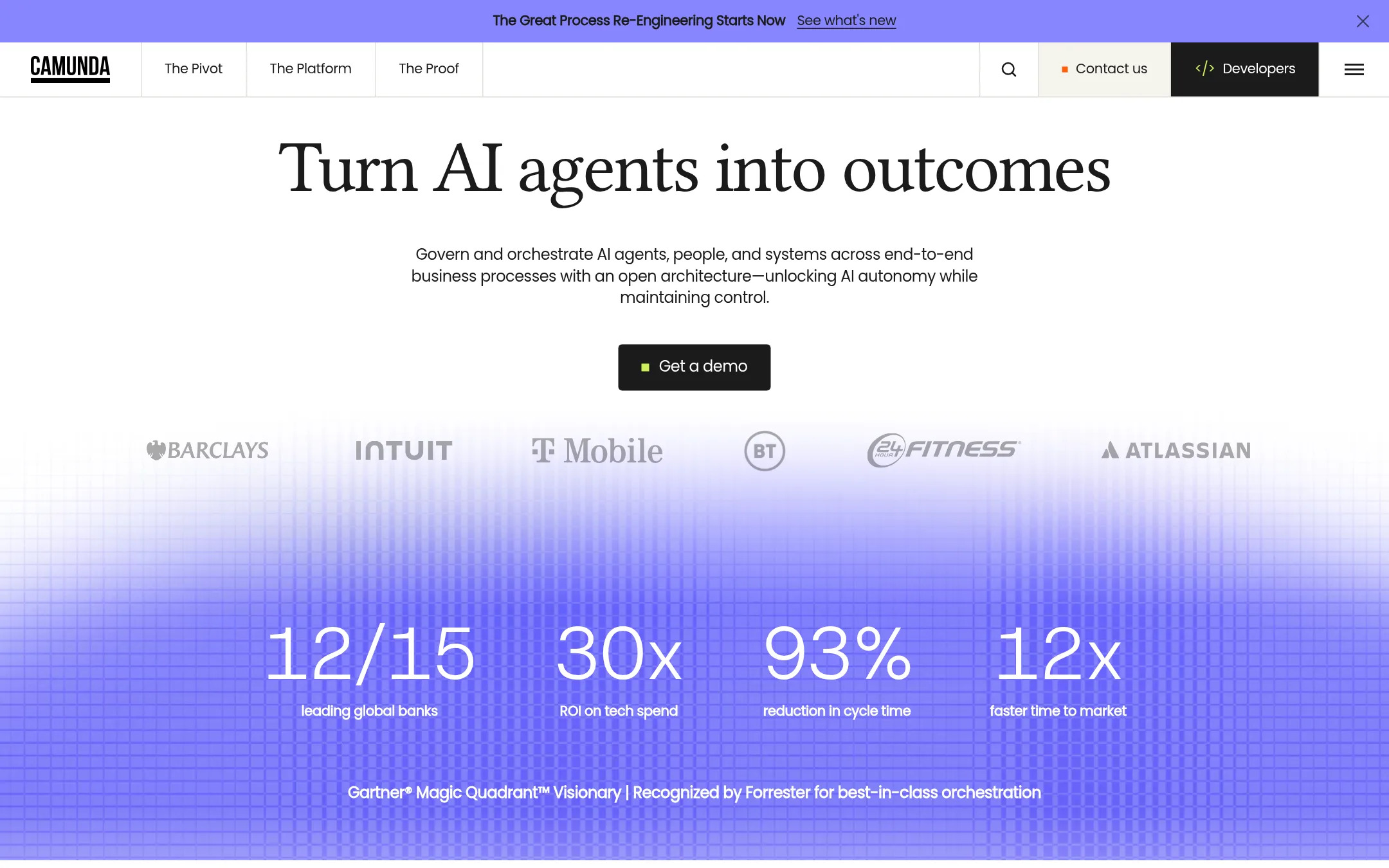
Camunda is an orchestration platform that coordinates AI agents, people, and systems across end-to-end processes. Choose it over Rulebricks when you need to manage complex workflows that span multiple systems and require BPMN-standard process logic, not just decision rules.
Where it is strong
- Uses open BPMN standard, so process logic stays portable across vendors.
- Coordinates AI agents, people, and systems in one place with governance.
- Free local development tier for building and testing.
Where it falls short
- Production use requires an Enterprise license, so pricing is not self-serve.
- Heavier setup than Rulebricks for simple decision-only use cases.
- Pricing:
- Development is free for local use. Production requires an Enterprise license (self-managed or SaaS) with pricing via sales.
- Switching from Rulebricks:
- Moving from Rulebricks means shifting from a decision-rule focus to a full process orchestration model, which may require re-architecting workflows.
- Not published
3.IBM watsonx
Best for: Large enterprises that need governed AI agent orchestration across hybrid cloud and existing systems.
- Pricing
- Not published
- Category
- AI & Machine Learning
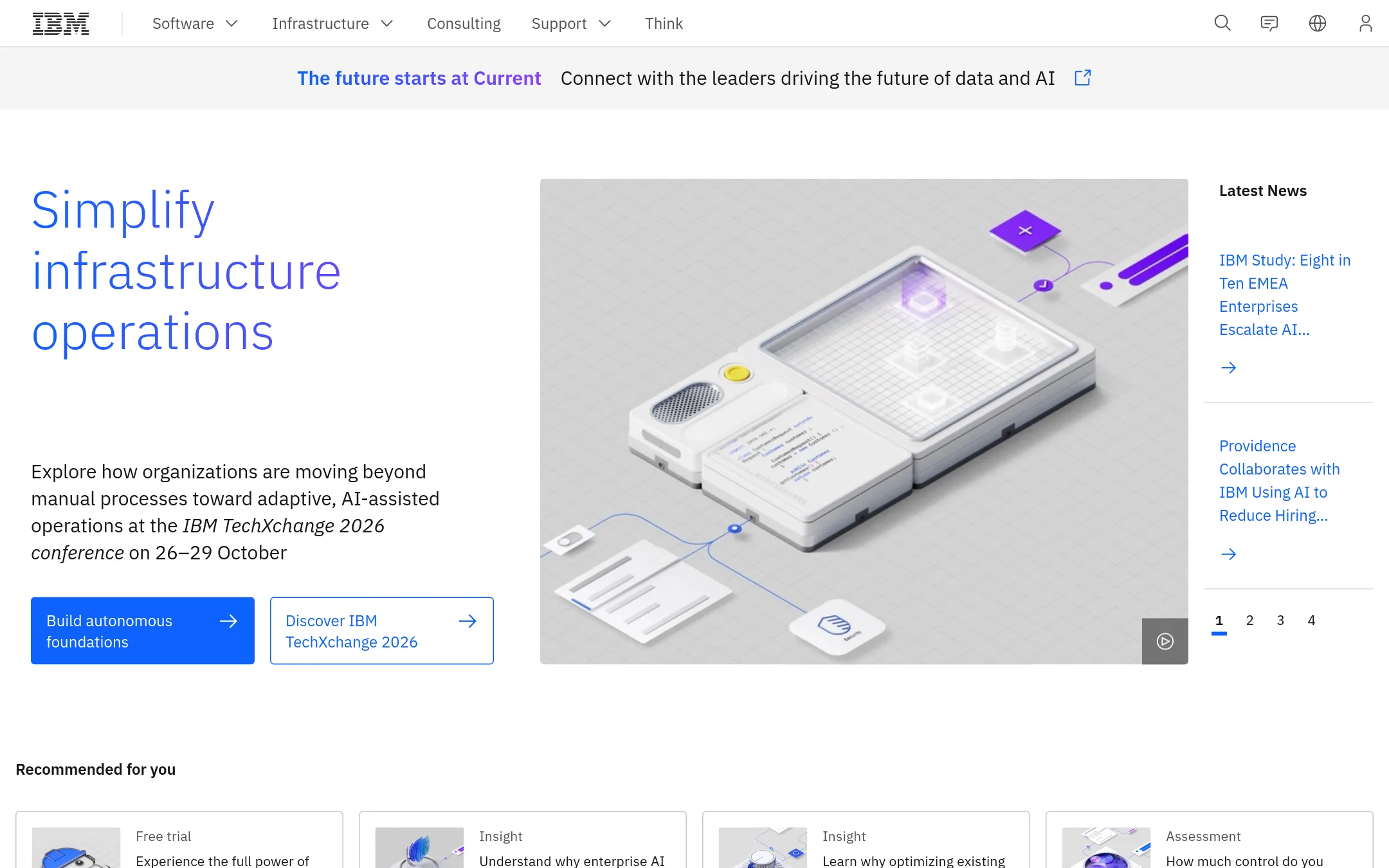
IBM watsonx is a broad enterprise AI platform for building, running, and governing AI agents and workloads across hybrid cloud environments. Choose it over Rulebricks when you need deep integration with your existing data, applications, and governance stack, not just a standalone decision engine.
Where it is strong
- Governs AI agents across their full lifecycle, wherever they are built or run
- Connects AI to existing data architecture and workloads for real-time decisions
- Backed by IBM's enterprise support and hybrid cloud expertise
Where it falls short
- Pricing is not published, so budgeting requires a sales conversation
- Broader platform scope means more setup and configuration than a focused rules engine
- Pricing:
- Pricing is not published on the site.
- TSee website
4.TIBCO Spotfire
Other
Rule management and decision automation solution integrated with TIBCO's integration suite.
- PNot published
5.Progress Corticon
Best for: Large enterprises in regulated industries like finance, insurance, and government that need a rule engine with on-premise options and enterprise-grade support.
- Pricing
- Not published
- Category
- Other
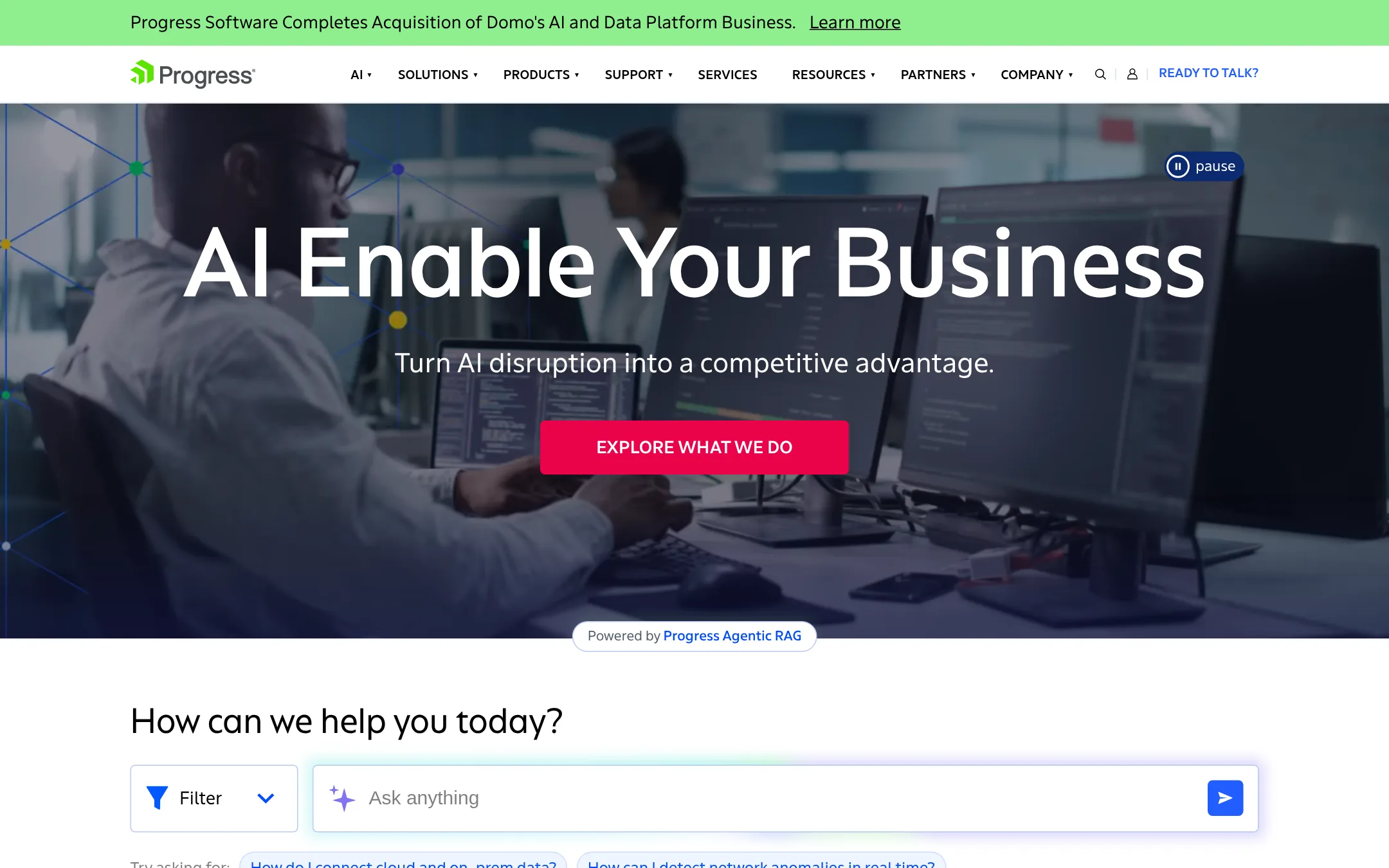
Progress Corticon is a business rules engine aimed at large enterprises with strict regulatory and compliance needs. Choose it over Rulebricks when you need on-premise deployment, deep integration with legacy systems, and a vendor that provides professional services and support.
Where it is strong
- Designed for rigorous business and regulatory requirements.
- Can be deployed on-premise or in the cloud.
- Part of a broader Progress software suite, so it integrates with other Progress products.
Where it falls short
- No self-service signup or transparent pricing. You must contact sales.
- Heavier and more complex than Rulebricks, which may be overkill for smaller teams or simpler use cases.
- Pricing:
- Pricing is not published on the site.
- FSee website
6.FICO Falcon Fraud Manager
Other
Platform for building and managing decision models with predictive analytics and rules.
- ASee website
7.AgileLab
Other
Business rules management system with a visual interface for non-technical users.
- DNot published
8.DecisionRules
Best for: Build-first teams in finance, insurance, or logistics that want a rules engine they can own and extend, with AI-assisted rule creation and on-premise options.
- Pricing
- Not published
- Category
- Other
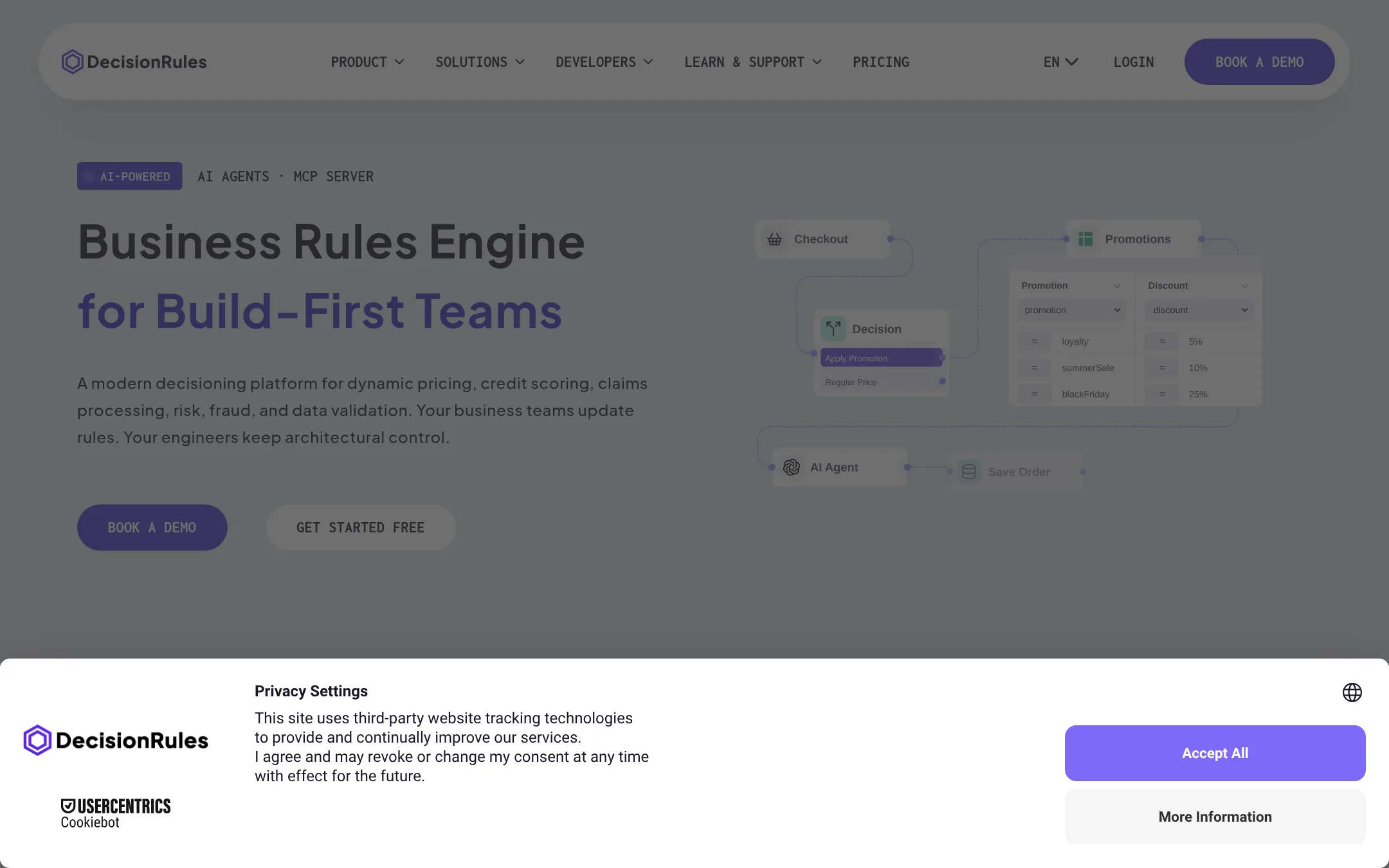
DecisionRules is a business rules engine that lets non-technical teams build and update decision logic while engineers keep control through APIs and CI/CD. Choose it over Rulebricks if you need AI-assisted rule authoring, on-premise deployment, or deep integration with your existing stack.
Where it is strong
- AI Assistant speeds up rule authoring by about 60%
- SOC 2 Type II and ISO 27001 certified for production use
- Supports on-premise deployment and Docker/Kubernetes
Where it falls short
- Pricing is not transparent, likely requires a sales call
- No built-in impact analysis or what-if backtesting like Rulebricks
- Pricing:
- Pricing is not published on the site.
- Switching from Rulebricks:
- Moving from Rulebricks means rebuilding your decision logic in DecisionRules' format, but their professional services team can help with migration.
- NFree tier. Paid from $
9.Nected
Best for: Teams in financial services, insurance, healthcare, e-commerce, logistics, lending, or aviation that want a business-friendly rule engine with AI copilot and self-hosting options.
- Pricing
- Free tier. Paid from $
- Category
- Other
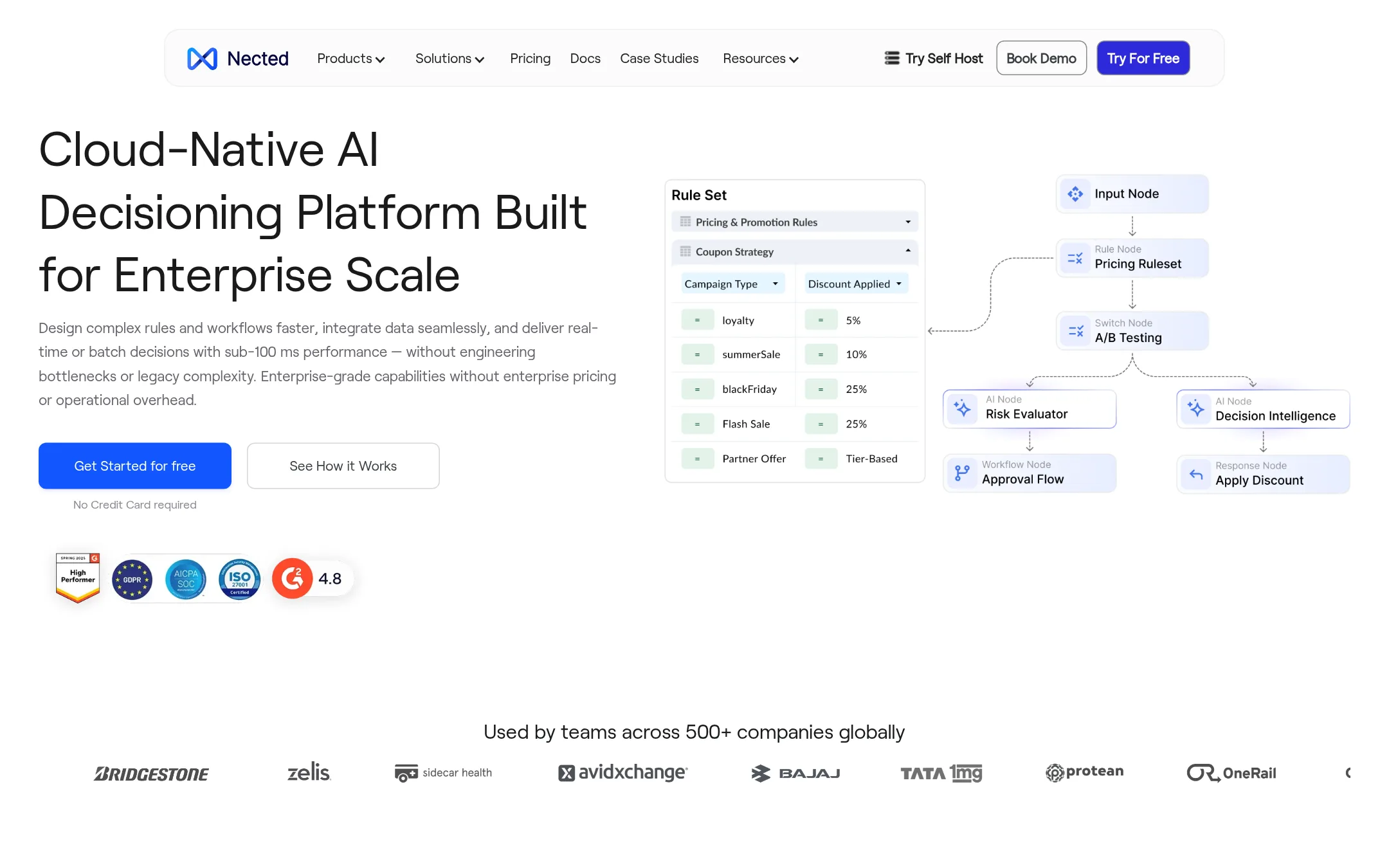
Nected is a cloud-native rule engine with a no-code UI and an AI copilot for building decision logic. It also includes workflow automation, AI agents, and document intelligence, so it suits teams that want to combine rules with broader automation in one platform. Choose it over Rulebricks if you need AI-assisted rule building or self-hosted deployment options.
Where it is strong
- AI copilot builds rules from plain English or PRD uploads
- Self-hosted or air-gapped deployment for regulated industries
- Includes AI agents and document intelligence in the same platform
Where it falls short
- Pricing details for Enterprise and Self-Hosted are not published
- Growth tier SLA is 99.5%, lower than Rulebricks' enterprise options
- Pricing:
- In the United States, the Free tier includes 5 rules, 2 workflows, and 5,000 monthly invocations. Start-Ups costs $8 per additional editor with 20 rules and 100,000 monthly invocations. Growth includes 50 rules, 15 workflows, and 1 million monthly invocations.
- Switching from Rulebricks:
- Moving from Rulebricks involves re-authoring your rules in Nected's editor, but Nected offers migration assistance on Enterprise and Self-Hosted plans, including parallel running before cutover.
- KNot published
10.KieServer
Best for: Teams that need a free, self-hosted rules engine and are comfortable assembling and maintaining a Java-based stack.
- Pricing
- Not published
- Category
- Other
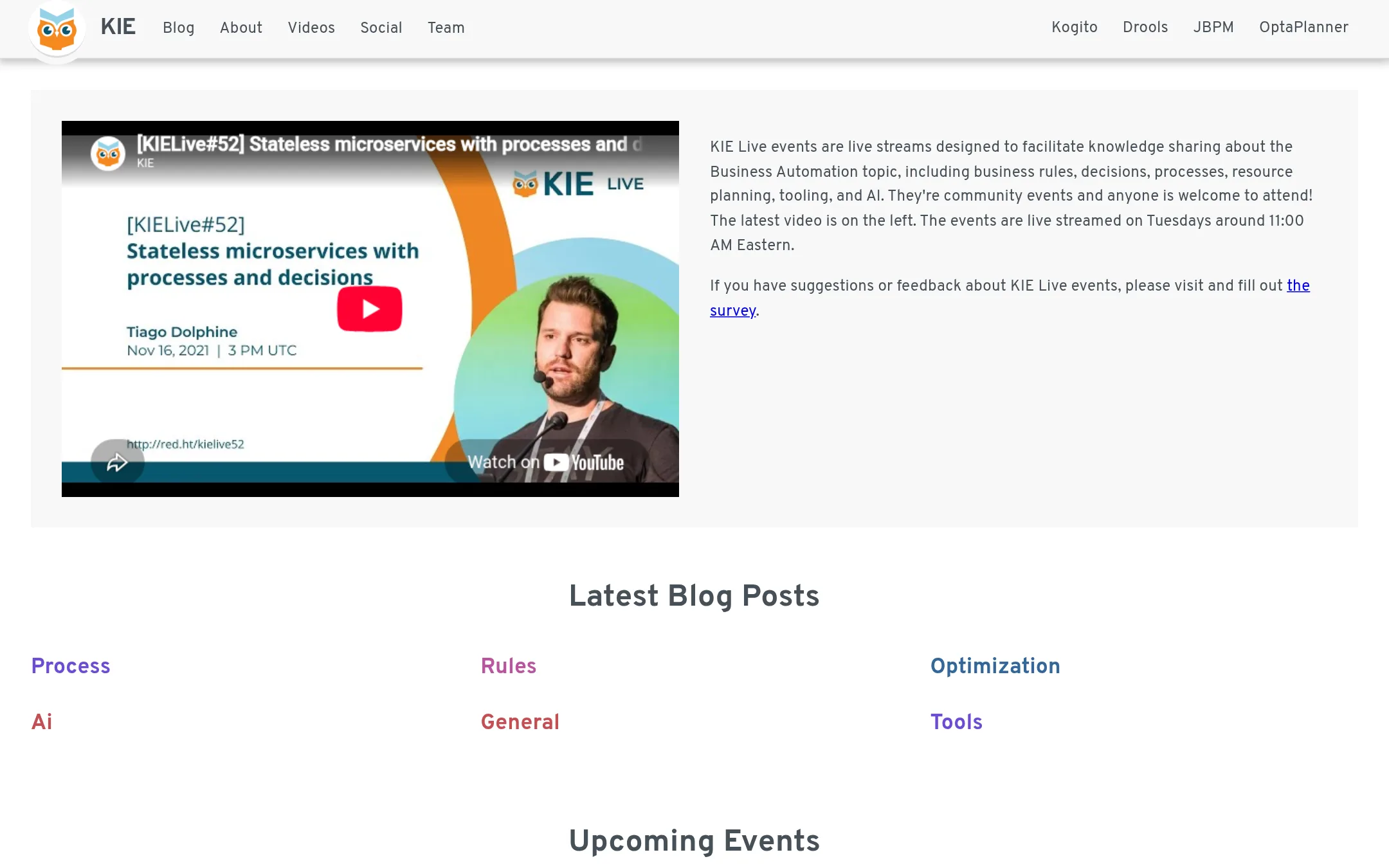
KieServer is the runtime for the KIE community's open-source projects, including Drools, jBPM, and OptaPlanner. You would choose it instead of Rulebricks if you want a self-hosted, open-source stack for business rules, processes, and planning, and you have the engineering capacity to manage and integrate the components yourself.
Where it is strong
- Open source and free to self-host.
- Covers rules, processes, and planning in one community.
- No per-execution or per-seat fees.
Where it falls short
- Requires significant setup and maintenance effort.
- No managed cloud or hosted option offered by the community.
- Pricing:
- Pricing is not published on the site.
- Switching from Rulebricks:
- Moving from Rulebricks means replacing a hosted, no-code API with a self-managed Java runtime, so you will need to rebuild your decision logic and handle deployment yourself.
See more comparisons in Productivity & Project Management alternatives.
FAQ
Questions about Rulebricks alternatives
Which alternative is best if I need transparent pricing?
Nected is the only alternative with published pricing, offering a free tier and a Start-Ups plan at $8 per additional editor. Other products like IBM watsonx, Progress Corticon, and DecisionRules require contacting sales for pricing.
Can I deploy any of these alternatives on-premise?
Yes. Progress Corticon and DecisionRules support on-premise deployment, and Nected offers self-hosted or air-gapped deployment. KieServer is open source and self-hosted by default. Camunda offers self-managed options, but production requires an enterprise license.
Which alternative is best for regulated industries like finance or insurance?
Progress Corticon is designed for rigorous regulatory and compliance needs and offers on-premise deployment. DecisionRules is SOC 2 Type II and ISO 27001 certified, making it suitable for production use. Nected also supports self-hosted deployment for regulated industries.
Do any of these alternatives offer AI-assisted rule building?
Yes. DecisionRules has an AI Assistant that speeds up rule authoring by about 60%, and Nected has an AI copilot that builds rules from plain English or PRD uploads. Rulebricks itself includes rich AI features for modeling decisions.
Which alternative is best if I need to orchestrate complex workflows, not just decisions?
Camunda is the strongest choice for orchestrating AI agents, people, and systems across end-to-end processes using BPMN-standard logic. It is heavier than Rulebricks but suits enterprises with workflows spanning multiple systems like SAP or Salesforce.
Last updated November 3, 2026.