
Sanity alternatives
12 products compared · Updated October 31, 2026
The short answer
For teams weighing Sanity alternatives, the strongest options are Strapi for self-hosted, code-first control with published cloud pricing. Directus for connecting to an existing SQL database with a no-code admin. And Contentstack for enterprises needing a CMS, CDP, and AI agents in one platform. Each suits a different priority: Strapi for developer ownership, Directus for database reuse, and Contentstack for enterprise personalization.
Your shortlist, at a glance
Read the comparisons ↓ ContentfulSee websiteContent that scales. Experiences that convert.
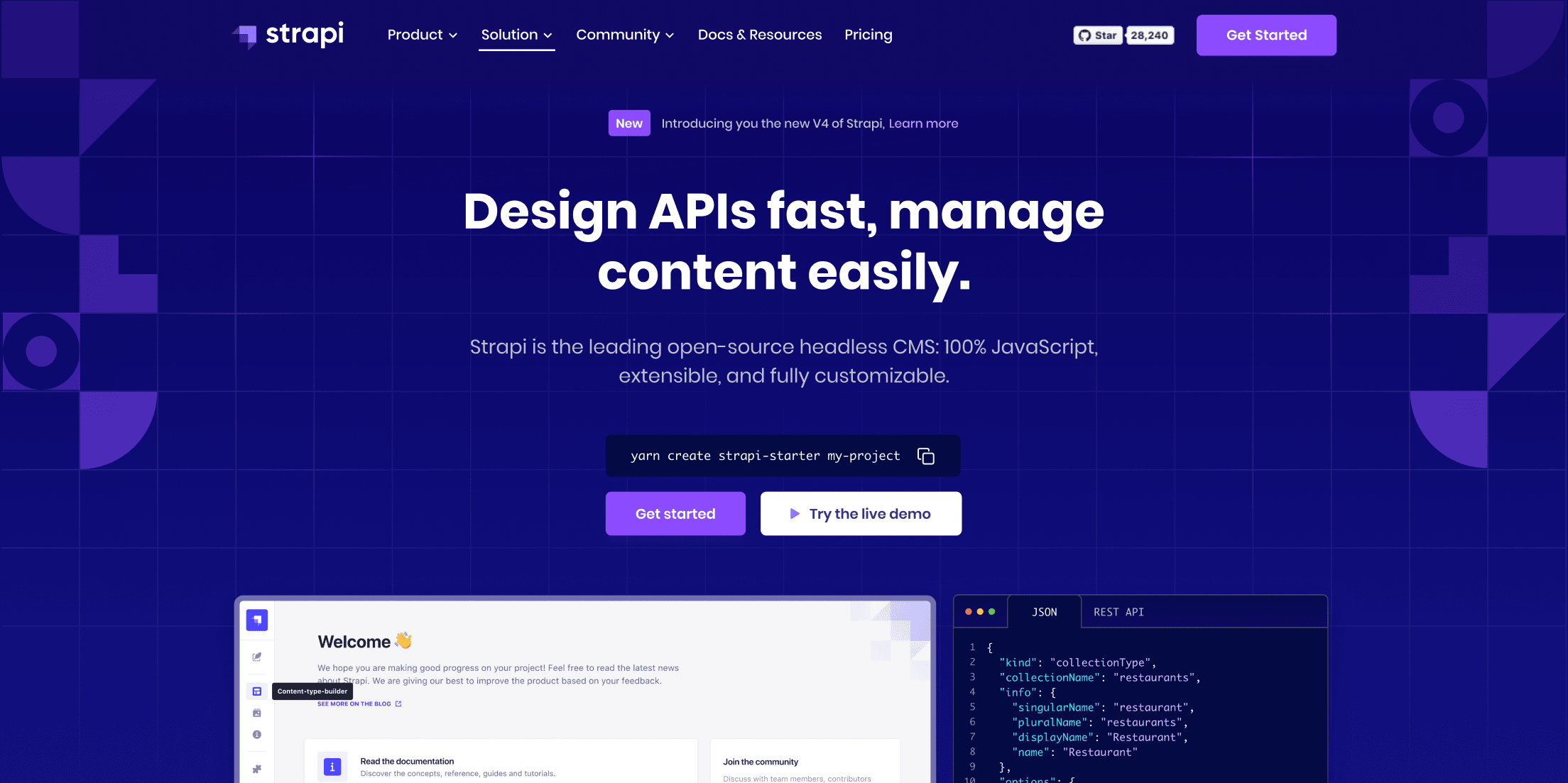 StrapiFrom $35/mo per projecTeams that want an MIT-licensed CMS they can run on their own servers and extend with custom controllers, services, and middleware.
- BButterCMSFree plan. Paid customTeams that want a quick-to-integrate headless CMS with a friendly interface for marketers and a clear upgrade path from free to enterprise.
- HHygraphFrom $199/moMulti-brand enterprises that need shared content models and distributed governance across markets and teams.
- CContentstackFrom $25/user/moEnterprises that want a CMS, CDP, and AI agent platform in one package for hyper-personalized digital experiences.
- DDatoCMSFrom €149/moTeams that want a user-friendly headless CMS with predictable per-project pricing and GraphQL APIs.
 CockpitNot publishedTeams in the public sector, non-profits, or enterprises that need a lightweight, self-hosted content backend with full data control.
CosmicSee websiteCosmic is a headless CMS and API toolkit
 KeystoneNot publishedNode.js teams that want a self-hosted, schema-driven CMS with a GraphQL API and full control over deployment.
 NarrativeSee websiteAI-powered QA testing platform
 Payload CMSNot publishedNext.js developers and teams who want an open-source CMS that is fully customizable and self-hosted.
WebinyNot publishedTeams that need a self-hosted, multi-tenant CMS with code-defined content models and AI-programmable workflows, especially those with strict data residency or compliance requirements.
About Sanity and its alternatives
Sanity is a content operating system for the AI era. It is a hosted, real-time content database with a customizable Studio, content agents, and automation. It is known for content-as-data, schema-as-code, and powering web, mobile, and agentic applications.
When comparing alternatives, weigh pricing structure (per seat vs per project vs usage-based), data residency and self-hosting options, integrations with your stack, support and contract terms, and whether you need AI or agent features. Check if the product is open source, has a free tier, and what limits apply to users, API calls, or locales.
Explore the alternatives
- See website
1.Contentful
E-commerce
A leading headless CMS with a similar API-first approach for content management and delivery.
- From $35/mo per projec
2.Strapi
Best for: Teams that want an MIT-licensed CMS they can run on their own servers and extend with custom controllers, services, and middleware.
- Pricing
- From $35/mo per projec
- Category
- Developer Tools
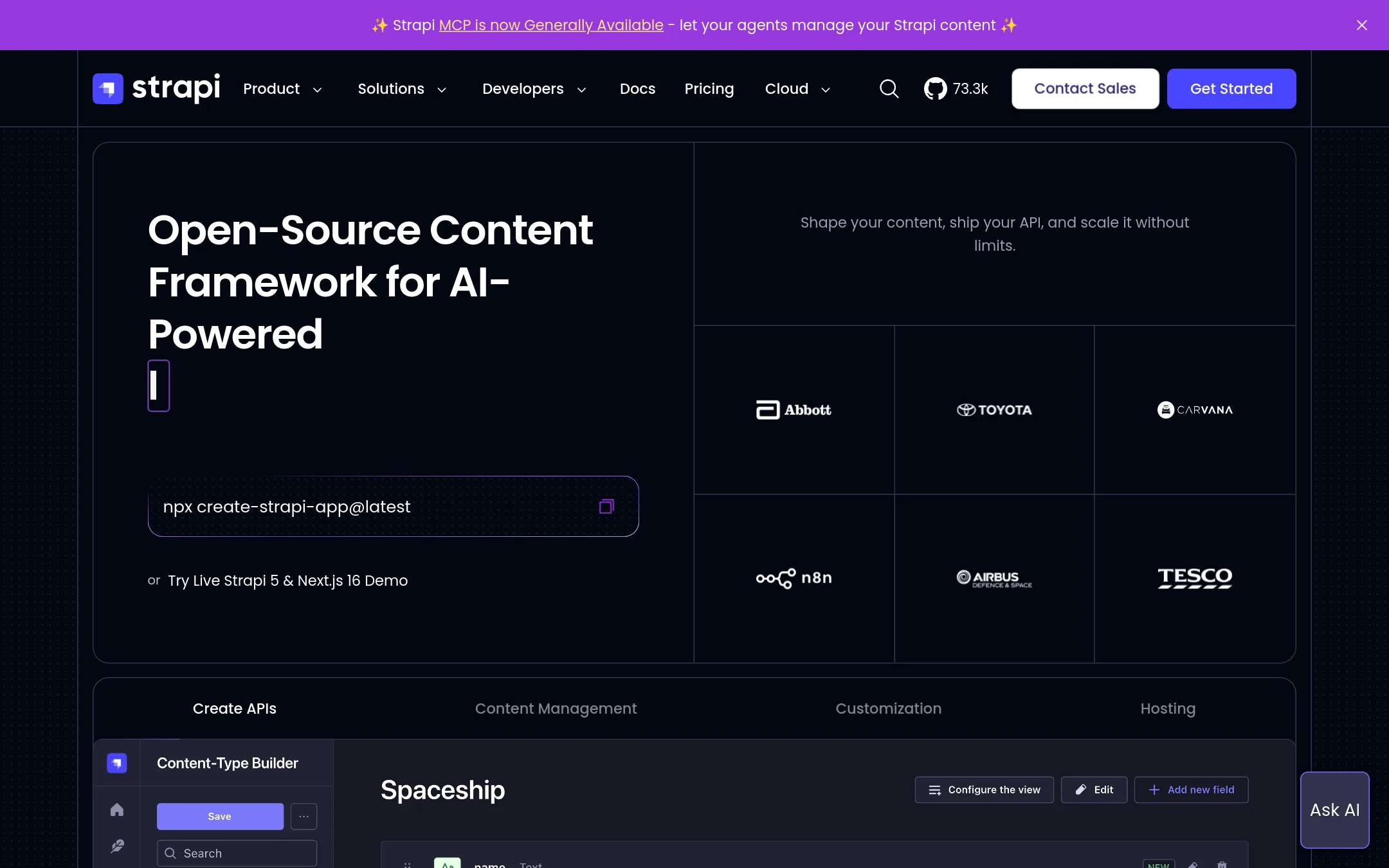
Strapi is an open-source headless CMS that gives you full control over the code, data, and hosting. Choose it over Sanity if you want to self-host, customize the backend with Node.js, and avoid vendor lock-in.
Where it is strong
- Open-source (MIT) so you own the code and can self-host anywhere
- Content Type Builder creates REST and GraphQL APIs instantly
- Custom backend logic via controllers, services, and middleware
Where it falls short
- Cloud plans have usage limits (e.g., 100k API requests/month on Starter)
- No built-in AI content agent or agentic workflows like Sanity
- Pricing:
- Cloud plans start at $35 per project per month (Starter), $90 (Pro), and $450 (Business). Self-hosting is free but you pay for your own infrastructure.
- Switching from Sanity:
- Moving from Sanity means rebuilding your content model in Strapi's Content Type Builder and reimplementing any custom automation or AI workflows.
- BFree plan. Paid custom
3.ButterCMS
Best for: Teams that want a quick-to-integrate headless CMS with a friendly interface for marketers and a clear upgrade path from free to enterprise.
- Pricing
- Free plan. Paid custom
- Category
- Other
ButterCMS is a headless CMS focused on fast integration and marketer-friendly workflows. Choose it over Sanity if you want a simpler, more traditional CMS with straightforward page and blog modeling, and you don't need Sanity's content-as-data approach or AI agent capabilities.
Where it is strong
- Unlimited users and components on every plan
- 14-day free trial on all plans
- AI Assistant included even on the Free plan
Where it falls short
- No pricing figures for paid tiers, only feature limits
- Usage limits on API calls and bandwidth may require upgrades for high-traffic sites
- Pricing:
- Free plan includes 50K API calls/month, 100GB bandwidth, 5 pages, 50 blog posts, 50 collections, and 500 assets. Paid plans start at Basic with 100K API calls/month and 250GB bandwidth, but prices are not listed on the site.
- Switching from Sanity:
- Moving from Sanity means re-modeling your content structure into ButterCMS's pages, blog posts, and collections, and adapting to its API-based delivery instead of Sanity's GROQ queries.
- HFrom $199/mo
4.Hygraph
Best for: Multi-brand enterprises that need shared content models and distributed governance across markets and teams.
- Pricing
- From $199/mo
- Category
- Other
Hygraph is a headless CMS built for multi-brand organizations, with native brand spaces, schema inheritance, and role-scoped governance. Choose it over Sanity when you need to run many brands or regions from one project without custom architecture.
Where it is strong
- Native brand spaces and schema inheritance for multi-brand setups
- GraphQL-native API with up to 80 locales
- Role-based content delivery built into the content model
Where it falls short
- Growth plan limited to 3 locales and 10 seats
- No free tier for teams needing more than 3 seats or locales
- Pricing:
- Pricing starts at $0 for the Hobby plan, $199 per month for Growth, and custom for Enterprise.
- Switching from Sanity:
- Moving from Sanity involves redefining your content schemas in Hygraph's GraphQL model and migrating your datasets, since the two platforms use different query languages and content structures.
- CFrom $25/user/mo
5.Contentstack
Best for: Enterprises that want a CMS, CDP, and AI agent platform in one package for hyper-personalized digital experiences.
- Pricing
- From $25/user/mo
- Category
- Other
Contentstack is a headless CMS with built-in personalization, customer data, and AI agents. Choose it over Sanity if you need an enterprise platform that combines content management with real-time customer context and journey orchestration.
Where it is strong
- Includes Agent OS for AI workflows and automation
- Data Cloud with CDP and personalization built in
- Choice of AWS, Azure, or GCP for enterprise data residency
Where it falls short
- Free tier limits to 10 content types and 1K entries
- Advanced features like Lytics CDP and journey orchestration only on Enterprise
- Pricing:
- Free tier includes 3 users, 100K API calls/month, and 100 GB bandwidth. Growth plan starts at $25/user/mo with 1M API calls and 1 TB bandwidth. Enterprise pricing is custom.
- Switching from Sanity:
- Moving from Sanity involves migrating content models and API calls, and reconfiguring workflows, since Contentstack uses a different content architecture and tooling.
- DFrom €149/mo
6.DatoCMS
Best for: Teams that want a user-friendly headless CMS with predictable per-project pricing and GraphQL APIs.
- Pricing
- From €149/mo
- Category
- Other
DatoCMS is a headless CMS that centralizes content for websites and apps. Choose it over Sanity if you want a GraphQL-first platform with straightforward per-project pricing and a simpler content modeling approach.
Where it is strong
- GraphQL API with built-in CDN for fast content delivery
- Generous free plan with 10 collaborators and 100k records
- Per-project pricing with clear overage costs
Where it falls short
- No built-in content agent or AI automation features
- Limited to 10 locales on Professional. More cost extra
- Pricing:
- Free plan includes 10 collaborators, 5 locales, 100k records, and 1TB bandwidth. Professional starts at €149/month, with overages like €9/mo per extra collaborator and €19/mo per extra locale.
- Switching from Sanity:
- Moving from Sanity means redefining your content schema in DatoCMS and migrating your data, since the two platforms use different content models and APIs.
- Not published
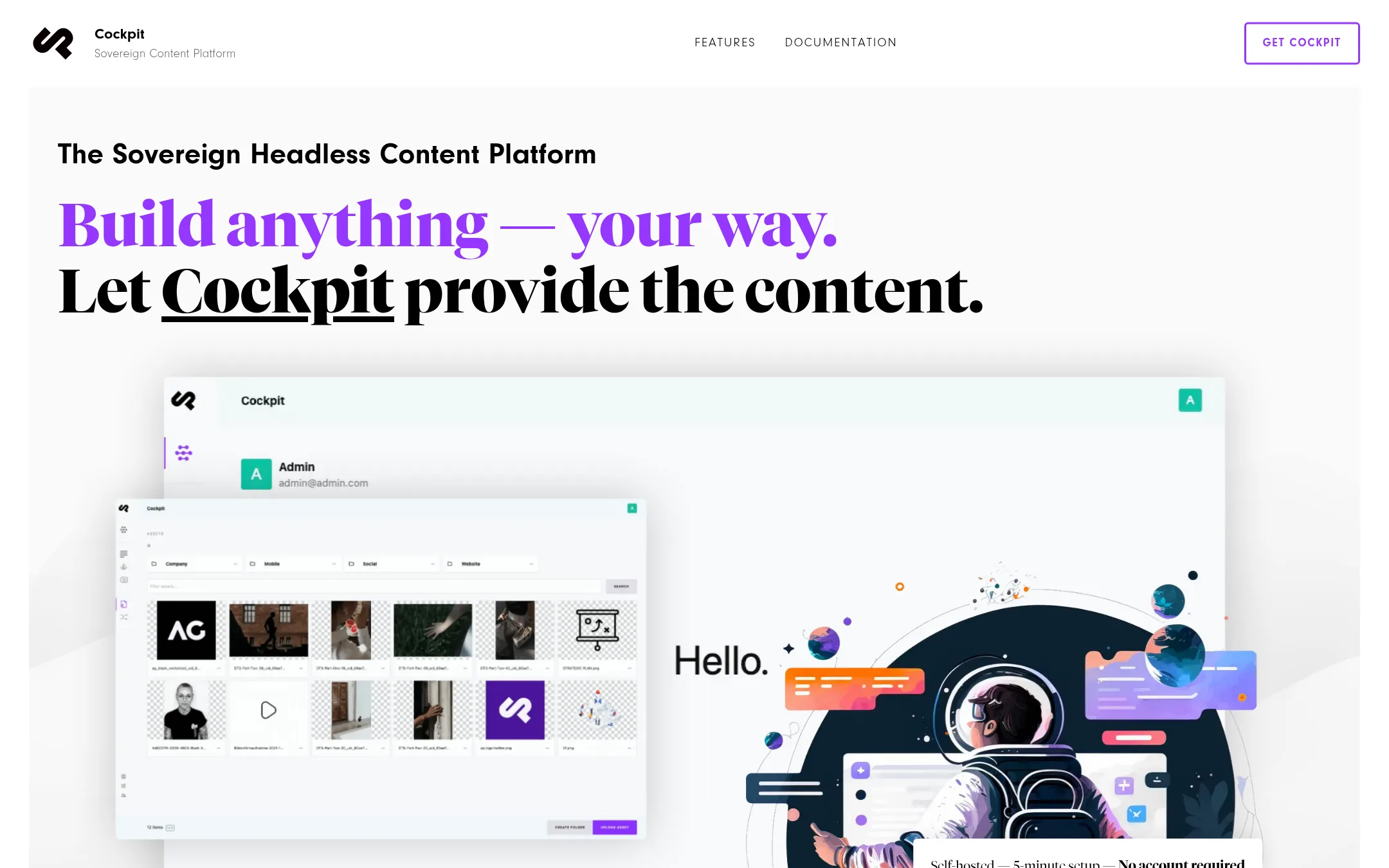
7.Cockpit
Best for: Teams in the public sector, non-profits, or enterprises that need a lightweight, self-hosted content backend with full data control.
- Pricing
- Not published
- Category
- Developer Tools
Cockpit is a self-hosted, open-source content platform that gives you full control over your data and infrastructure. Choose it instead of Sanity when you need data sovereignty, GDPR compliance without US data access, or want to avoid vendor lock-in and per-seat costs.
Where it is strong
- Self-hosted for complete data sovereignty and privacy compliance.
- MIT-licensed core, free to use, inspect, and modify.
- API-first design works with any tech stack for websites, mobile apps, or SPAs.
Where it falls short
- No hosted service, so you must manage your own infrastructure.
- Lacks built-in AI features like content agents or semantic search that Sanity offers.
- Pricing:
- Pricing is not published on the site.
- See website
8.Cosmic
Developer Tools
Cosmic is a headless CMS and API toolkit
- Not published
9.Keystone
Best for: Node.js teams that want a self-hosted, schema-driven CMS with a GraphQL API and full control over deployment.
- Pricing
- Not published
- Category
- Developer Tools
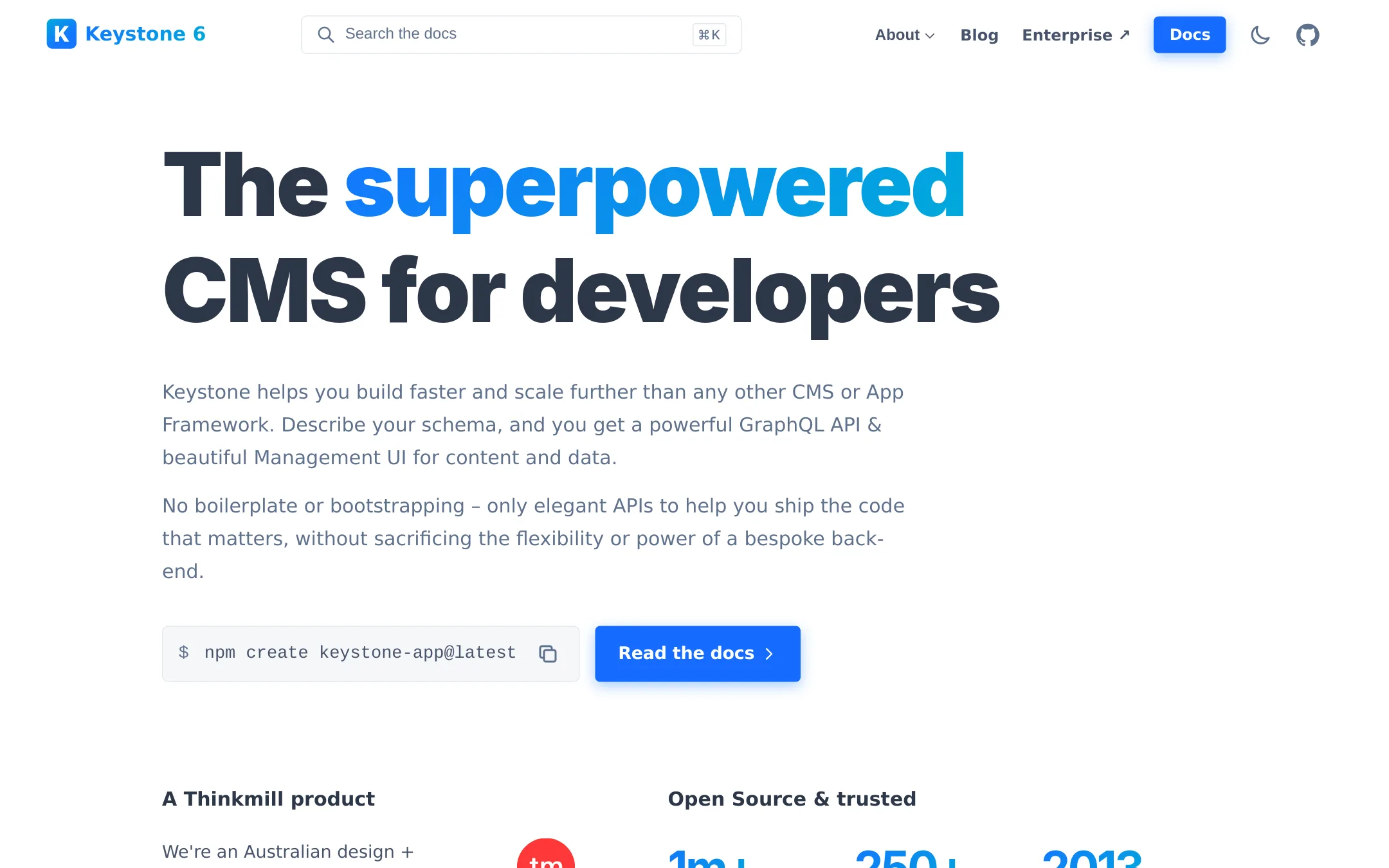
Keystone is an open-source Node.js headless CMS that generates a GraphQL API and admin UI from your schema. Choose it over Sanity if you want a self-hosted, code-first backend that fits into your git workflow and you don't need Sanity's hosted content platform or AI features.
Where it is strong
- Open source with no lock-in. Deploy anywhere
- GraphQL API and admin UI generated from your schema
- TypeScript support and automatic migrations with Prisma
Where it falls short
- No hosted service. You manage infrastructure
- No built-in AI content features or agent workflows
- Pricing:
- Pricing is not published on the site.
- See website
10.Narrative
Developer Tools
AI-powered QA testing platform
- Not published
11.Payload CMS
Best for: Next.js developers and teams who want an open-source CMS that is fully customizable and self-hosted.
- Pricing
- Not published
- Category
- Developer Tools
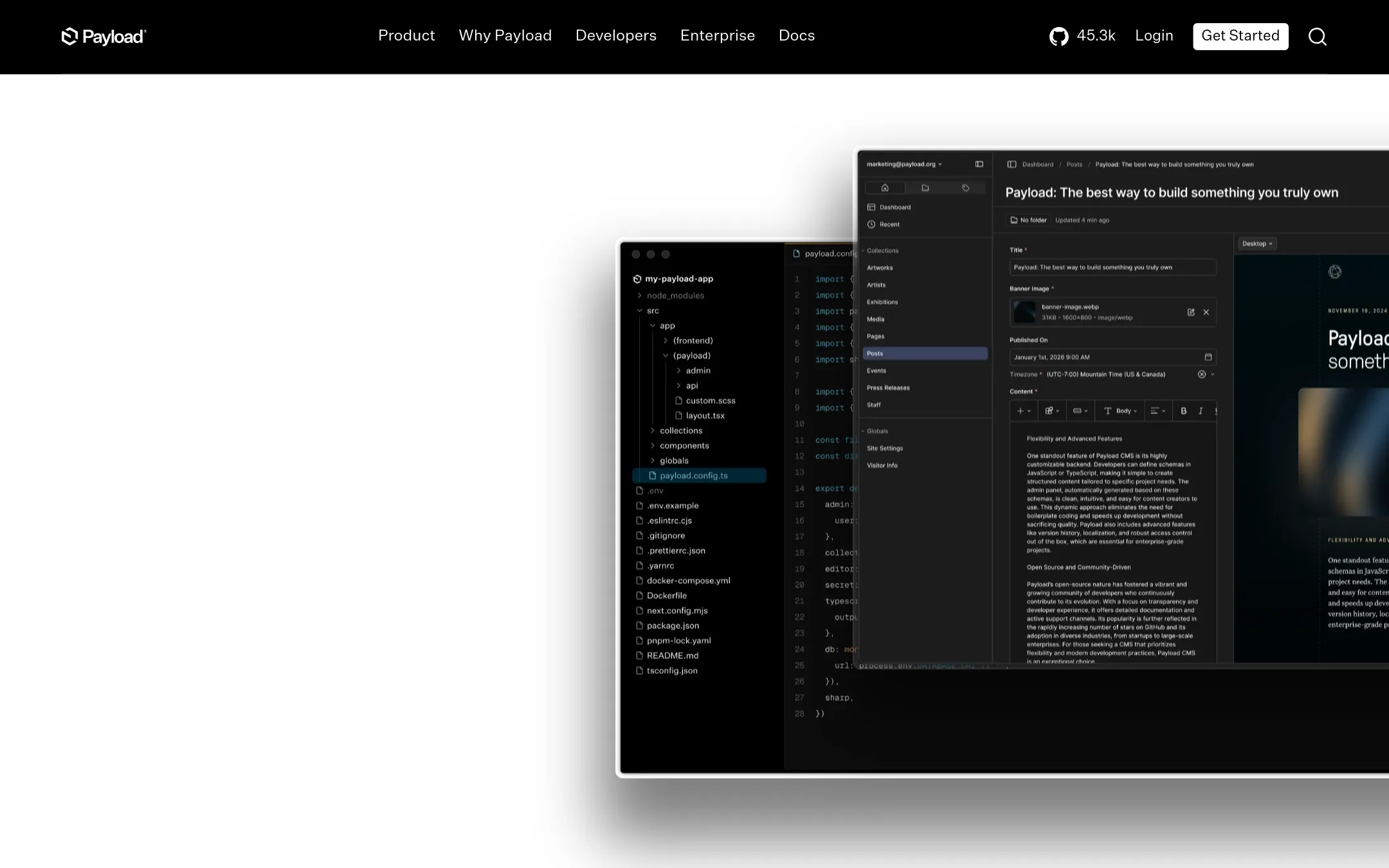
Payload CMS is an open-source, code-first headless CMS built on Next.js and TypeScript. Choose it over Sanity when you want a backend and admin panel that live inside your Next.js app, with full control over the codebase and no vendor lock-in.
Where it is strong
- Open source and self-hosted, giving you full ownership and control.
- Code-first schema definition with a full backend generated automatically.
- Built specifically for Next.js, integrating directly into your app.
Where it falls short
- No published pricing, so cost planning is unclear.
- Requires more developer involvement for setup and maintenance compared to Sanity's hosted service.
- Pricing:
- Pricing is not published on the site.
- Not published
12.Webiny
Best for: Teams that need a self-hosted, multi-tenant CMS with code-defined content models and AI-programmable workflows, especially those with strict data residency or compliance requirements.
- Pricing
- Not published
- Category
- Developer Tools
Webiny is an open-source, self-hosted headless CMS framework for building serverless applications. Choose it over Sanity when you need full control over your infrastructure, want to avoid vendor lock-in, or require multi-tenancy and governance features that are only available on Sanity's enterprise plan.
Where it is strong
- Open source with MIT license, so you can self-host and customize everything
- Multi-tenant by design, letting you run many brands or customers from one instance
- Includes ready-made apps like Website Builder and File Manager, not just a CMS
Where it falls short
- Pricing details are not public, so you must contact sales for Business and Enterprise plans
- Community plan lacks role-based access control, multi-tenancy, and publishing workflows
- Pricing:
- Pricing is not published on the site. Only plan names (Community, Business, Enterprise) are listed without specific figures.
- Switching from Sanity:
- Moving from Sanity means rebuilding your content models and workflows in Webiny's code-defined structure, and migrating your data to your own infrastructure.
See more comparisons in Developer Tools alternatives.
FAQ
Questions about Sanity alternatives
Which alternative is best for self-hosting and avoiding vendor lock-in?
Strapi and Directus are both open source and self-hostable. Strapi gives you full code control with Node.js, while Directus connects to your existing SQL database. Payload CMS is also open source and self-hosted, but it is built specifically for Next.js.
Which alternative has the most transparent pricing?
Strapi publishes cloud prices starting at $35 per project per month. Directus lists Core at $89 per month and Team at $588 per month. DatoCMS starts at €149 per month. Others like Webiny, Payload, and Keystone do not publish pricing.
Which alternative is best for enterprises needing AI and personalization?
Contentstack includes Agent OS for AI workflows, a CDP, and personalization. It offers data residency on AWS, Azure, or GCP. Sanity itself has content agents and AI automation, but Contentstack bundles these with customer data features.
Can I keep my existing database with any of these alternatives?
Directus is designed to connect to your existing SQL database without changing your schema. It generates REST and GraphQL APIs automatically. Other alternatives like Strapi or Keystone require you to define a new schema.
Which alternative is easiest for marketers to use?
ButterCMS focuses on marketer-friendly workflows with a simple interface and AI Assistant. Apostrophe offers in-context editing on the live page. Directus provides a no-code admin interface over your database, which can be easy for non-developers.
Last updated October 31, 2026.