
Scale AI alternatives
12 products compared · Updated November 14, 2026
The short answer
The three strongest alternatives to Scale AI depend on the job. Labelbox suits engineering and ML research teams that want background agents to handle recurring work like eval reruns and dependency upgrades. Snorkel AI suits AI labs and product teams that need expert-labeled training data and agent benchmarks in specialized professional domains. Datasaur suits regulated enterprises in healthcare, legal and finance that need private AI running on their own servers.
Your shortlist, at a glance
Read the comparisons ↓ LabelboxNot publishedEngineering and ML research teams that want agents to handle recurring work such as bug fixes, dependency upgrades and eval reruns.
- AAppenNot publishedAI teams that need expert-validated human training data for model development and do not need application building or deployment support
- SSurge AINot publishedAI model builders who want human-generated data and evaluations for training or tuning, without needing Scale's deployment services
- SSnorkel AINot publishedAI labs and product teams that need expert-labeled training data and agent benchmarks in specialized professional domains
 V7 LabsCustom quoteFinance, insurance and real estate teams that need to automate document-heavy diligence, underwriting and claims workflows
 EncordNot publishedAI teams working on physical AI, robotics or autonomy that need to curate and annotate large volumes of video and sensor data
- DDataloopNot publishedData engineering and ML teams that want to build and run their own multimodal data pipelines and human review loops
 HiveNot publishedEvent venues, promoters, and festivals that sell tickets and want email and SMS campaigns tied to ticket purchases
 DatasaurNot publishedRegulated enterprises in healthcare, legal, and finance that need private AI running on their own servers
 LightlyNot publishedComputer vision and Physical AI teams that want to curate and label their own image, video and sensor data in one place
 MD.aiNot publishedRadiology teams and medical imaging developers who need DICOM-native annotation and AI-assisted reporting
- OOsmosisNot publishedEngineering teams that want a specialized model for one task, such as document extraction or tool-using agents, and need it retrained as new data comes in.
About Scale AI and its alternatives
Scale AI provides data infrastructure for AI development. According to its site, it sources training data from contributors, runs evaluations and private benchmarks for AI labs, and builds and operates AI applications for enterprises, governments and other organizations. Its homepage says 90% of the world's leading generative AI model builders are powered by Scale.
When comparing alternatives in this category, weigh what kind of work you need done. Some vendors offer a managed data and evaluation service, while others give you a platform to run yourself. Check the pricing structure, since most vendors in this list do not publish prices and require a sales conversation. Look at which regions and industries a vendor serves, which integrations it supports with your existing tools, what level of support you get, and what the contract terms commit you to.
Explore the alternatives
- Not published
1.Labelbox
Best for: Engineering and ML research teams that want agents to handle recurring work such as bug fixes, dependency upgrades and eval reruns.
- Pricing
- Not published
- Category
- AI & Machine Learning
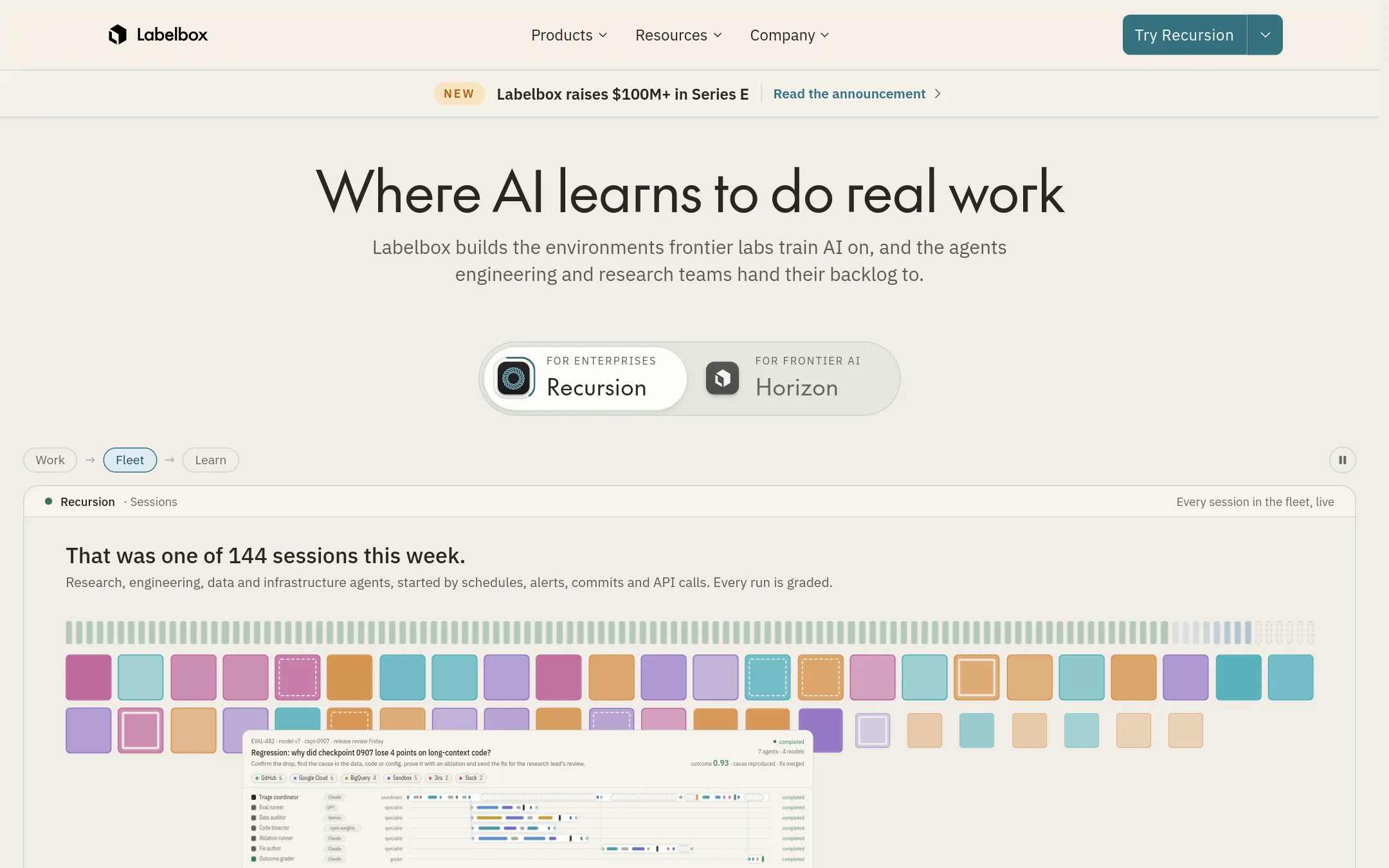
Labelbox builds the environments that frontier labs train AI on, and it also offers Recursion, a set of background agents that take recurring engineering, research and security work off a team's backlog. Someone would pick it over Scale AI if the goal is a platform that runs agents on jobs like flaky tests, dependency upgrades, incident postmortems or eval regressions, rather than a managed data and evaluation service.
Where it is strong
- Agents start on triggers like a red build, a new alert, a checkpoint or a schedule, then work in the background until the job is done.
- The homepage lists concrete integrations, including GitHub, Jira, Slack, Datadog, PagerDuty and Databricks.
- It covers engineering, reliability, security, ML research, evals, R&D and product work from one site.
Where it falls short
- The homepage does not describe the data contributor sourcing or the expert evaluation work that Scale AI is known for, so it is a different
- Recursion is aimed at enterprise teams and the site does not publish pricing or a self-serve tier.
- Pricing:
- Pricing is not published on the site.
- ANot published
2.Appen
Best for: AI teams that need expert-validated human training data for model development and do not need application building or deployment support

- Pricing
- Not published
- Category
- Other
Appen supplies human-labeled and expert-validated training data for AI models, with about 30 years in the business. A team would pick it over Scale AI when the main need is sourcing training data at volume and the work does not extend into building or running the AI systems themselves.
Where it is strong
- Around 30 years of experience supplying training data
- Positioned around expert-validated data for frontier models
- Lists trusted AI company customers on its site
Where it falls short
- The site does not describe application building or outcome ownership the way Scale AI does
- The site gives no detail on evaluation tooling or private benchmarks
- Pricing:
- Pricing is not published on the site.
- SNot published
3.Surge AI
Best for: AI model builders who want human-generated data and evaluations for training or tuning, without needing Scale's deployment services
- Pricing
- Not published
- Category
- Other
Surge AI supplies human-generated training data and evaluations for AI models. It is an option for teams building or tuning models who want human intelligence applied to data work. The site describes its focus as raising AI with human-level judgment, and it is a different kind of vendor from Scale AI's mix of data, evaluations and deployed applications.
Where it is strong
- Focuses on human-generated data and evaluations for AI training
- Runs benchmarks such as its DAYJOB tax agent benchmark
- Narrower scope if you only need data and evals, not applications
Where it falls short
- The site does not list enterprise deployment services comparable to Scale's
- Public details on customers, regions and integrations are limited
- Pricing:
- Pricing is not published on the site.
- SNot published
4.Snorkel AI
Best for: AI labs and product teams that need expert-labeled training data and agent benchmarks in specialized professional domains
- Pricing
- Not published
- Category
- Other
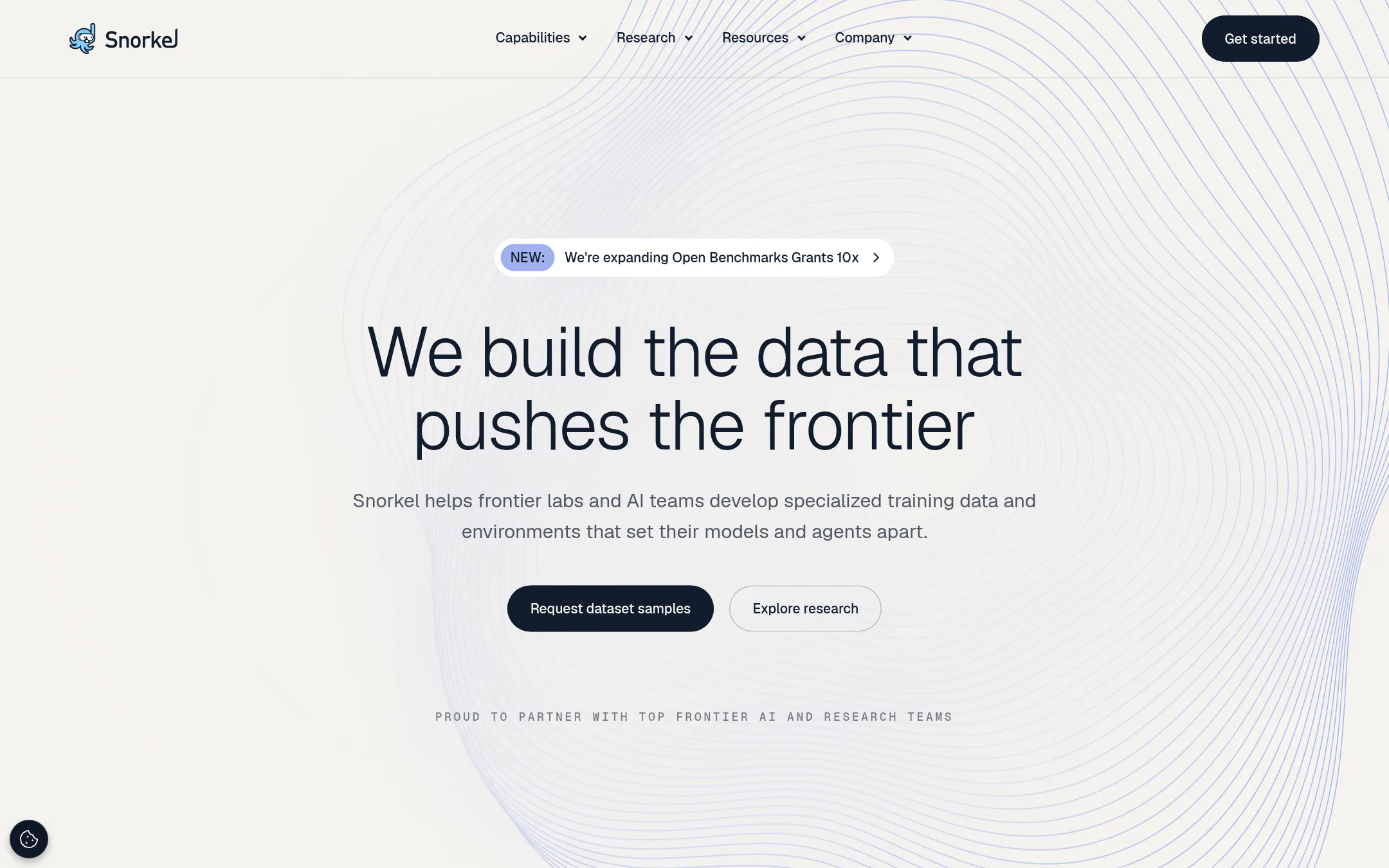
Snorkel AI builds specialized training data, benchmarks, and evaluation environments for frontier labs and AI teams. It is a fit when your main need is research-grade datasets with expert labels, rubrics and verifiable outcomes, especially for agent evaluation in areas like coding, finance, legal and operations. Scale AI covers a wider stack, including deployment of AI applications, so Snorkel suits teams that already have their systems and want data and evaluation work.
Where it is strong
- Builds custom datasets with expert demonstrations, preference labels and verifiable rubrics
- Publishes a range of public agent benchmarks, including Terminal-Bench and OSWorld 2.0
- Grew out of Stanford AI Lab research and co-develops work with academic teams and frontier labs
Where it falls short
- The site focuses on data and evaluation, not on deploying AI systems into your operations
- Pricing and engagement terms are not published, so you need to request a quote
- Pricing:
- Pricing is not published on the site.
- Custom quote
5.V7 Labs
Best for: Finance, insurance and real estate teams that need to automate document-heavy diligence, underwriting and claims workflows
- Pricing
- Custom quote
- Category
- AI & Machine Learning
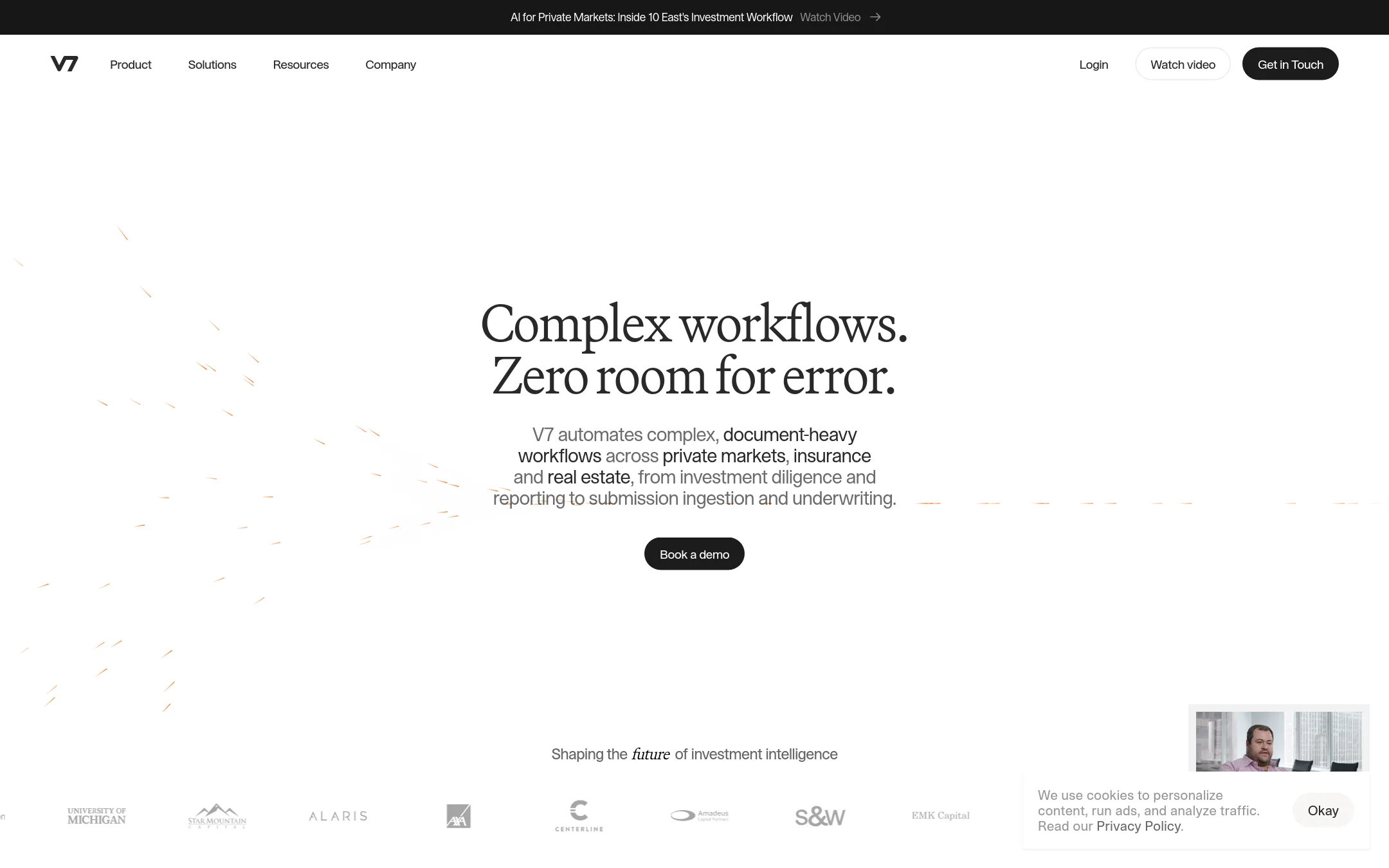
V7 Labs builds AI workflow apps that turn a firm's standard operating procedures and document-heavy processes into software that runs the work. It is aimed at finance, insurance and real estate teams handling due diligence, underwriting, claims and lease work. Someone would pick it over Scale AI if the goal is running repeatable operations on their own documents rather than building or evaluating AI models.
Where it is strong
- Turns SOPs and instructions into workflow apps that run the work repeatedly
- Every answer includes citations back to the source document
- Holds SOC 2 Type II and ISO 27001 certifications and does not train models on customer data
Where it falls short
- Built around specific verticals like finance, insurance and real estate, so it is less general-purpose than Scale AI
- Does not offer the data labeling and model evaluation work that Scale AI is known for
- Pricing:
- Pricing is not published on the site. Annual agreements are scoped in a single call based on workflows, seats and pages processed.
- Not published
6.Encord
Best for: AI teams working on physical AI, robotics or autonomy that need to curate and annotate large volumes of video and sensor data
- Pricing
- Not published
- Category
- AI & Machine Learning
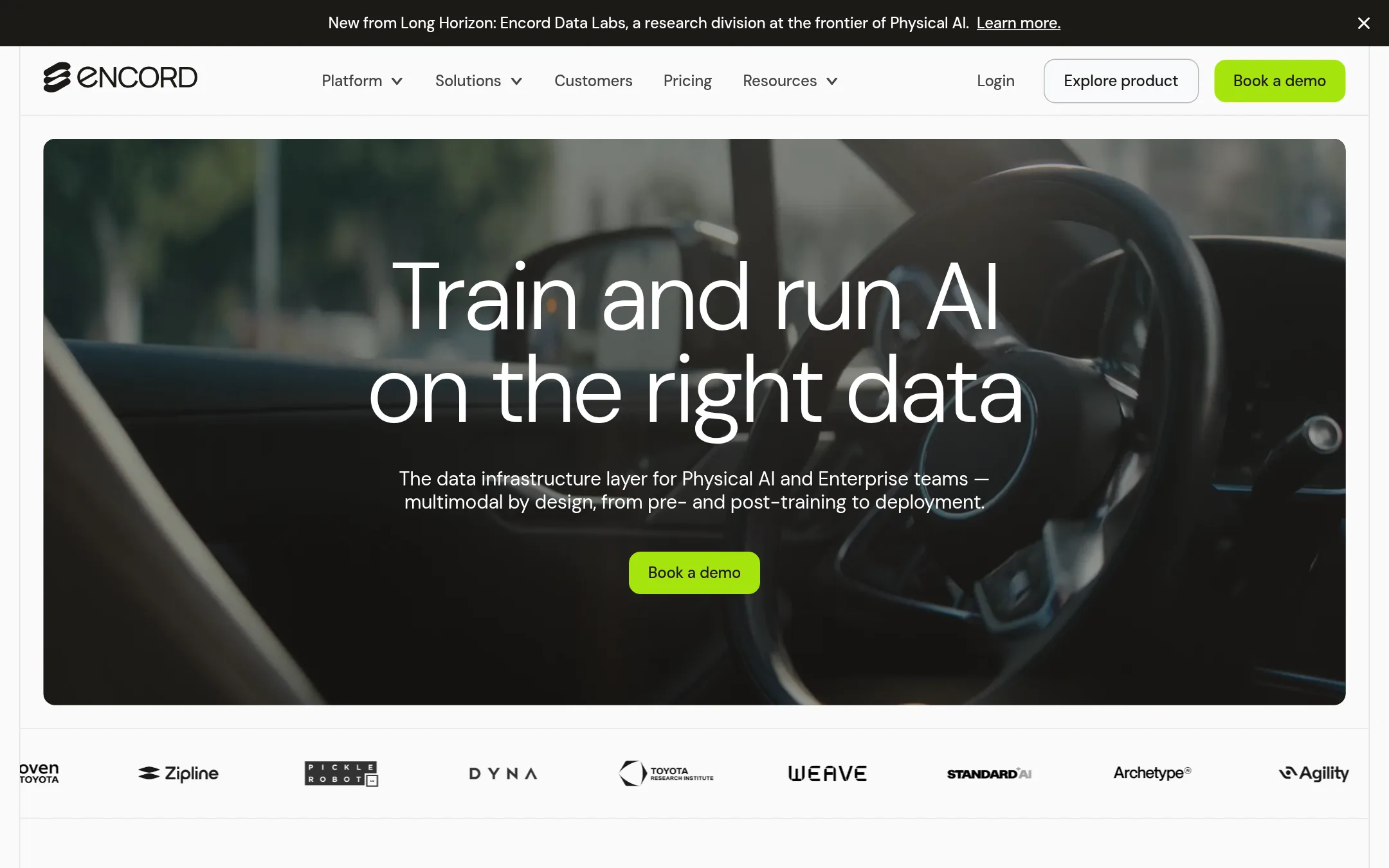
Encord is a data layer for physical AI. It handles sensor streams, video and text, covering management, curation, annotation and alignment of large datasets. Teams pick it over Scale AI when their data is mostly sensor or video from robotics or autonomy work and they want to run the labeling and curation tools themselves rather than hand the work to a managed service.
Where it is strong
- Covers sensor streams, video and text in one data layer
- Lists 300+ AI teams as customers, including Woven by Toyota, AXA, UiPath and Zipline
- Built for curating and aligning large datasets, not only labeling them
Where it falls short
- The homepage text supplied does not describe a managed workforce the way Scale AI's data services do
- Pricing requires contacting sales, so budget comparison is harder
- Pricing:
- Pricing is not published on the site.
- DNot published
7.Dataloop
Best for: Data engineering and ML teams that want to build and run their own multimodal data pipelines and human review loops

- Pricing
- Not published
- Category
- Other
Dataloop is a data infrastructure platform for AI teams. It covers unstructured data management, visual pipelines, model training and deployment, and human review loops in one place. A team would pick it over Scale AI when they want to own and run their own data and model pipelines rather than outsource data labeling and evaluation to a managed service.
Where it is strong
- Visual pipeline builder with pre-built nodes for connecting data, models, and human feedback
- Covers the full data lifecycle from ingestion to deployment in one platform
- Supports deploying models in any cloud, with an SDK for developers
Where it falls short
- It is a platform you operate, so it demands in-house data and engineering skill that Scale AI's managed service does not
- The site does not show a managed evaluation or outcomes service comparable to Scale's deployment work for enterprises and governments
- Pricing:
- Pricing is not published on the site.
- Not published
8.Hive
Best for: Event venues, promoters, and festivals that sell tickets and want email and SMS campaigns tied to ticket purchases
- Pricing
- Not published
- Category
- Marketing & Sales
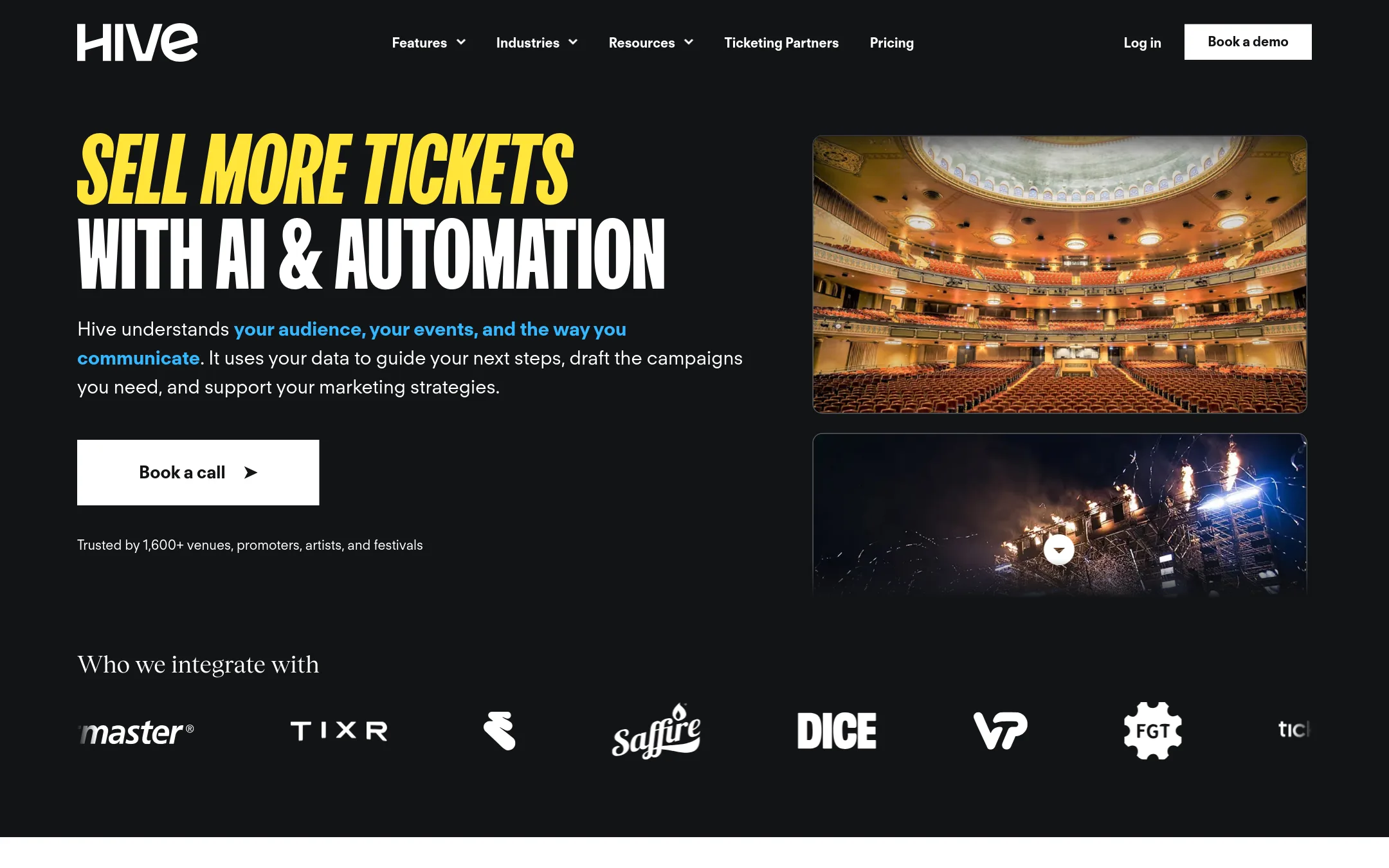
Hive is marketing automation for live events. It connects to ticketing platforms and uses ticket buyer data to build fan profiles, segment audiences, and send email and SMS campaigns. Someone would choose it over Scale AI if they run venues, promoters, or festivals and want to tie messages directly to ticket sales. Scale AI works on AI data infrastructure and evaluations, which is a different job.
Where it is strong
- Integrates with ticketing platforms so buyer data feeds campaigns directly
- Segments fans by purchase behavior for targeted email and SMS
- Reports link campaigns to ticket sales
Where it falls short
- Built for event marketing, so it does not cover AI model development or evaluations the way Scale AI does
- Pricing depends on subscriber count, SMS usage, and contract length, and is not published
- Pricing:
- Pricing is not published on the site.
- Not published
9.Datasaur
Best for: Regulated enterprises in healthcare, legal, and finance that need private AI running on their own servers
- Pricing
- Not published
- Category
- AI & Machine Learning
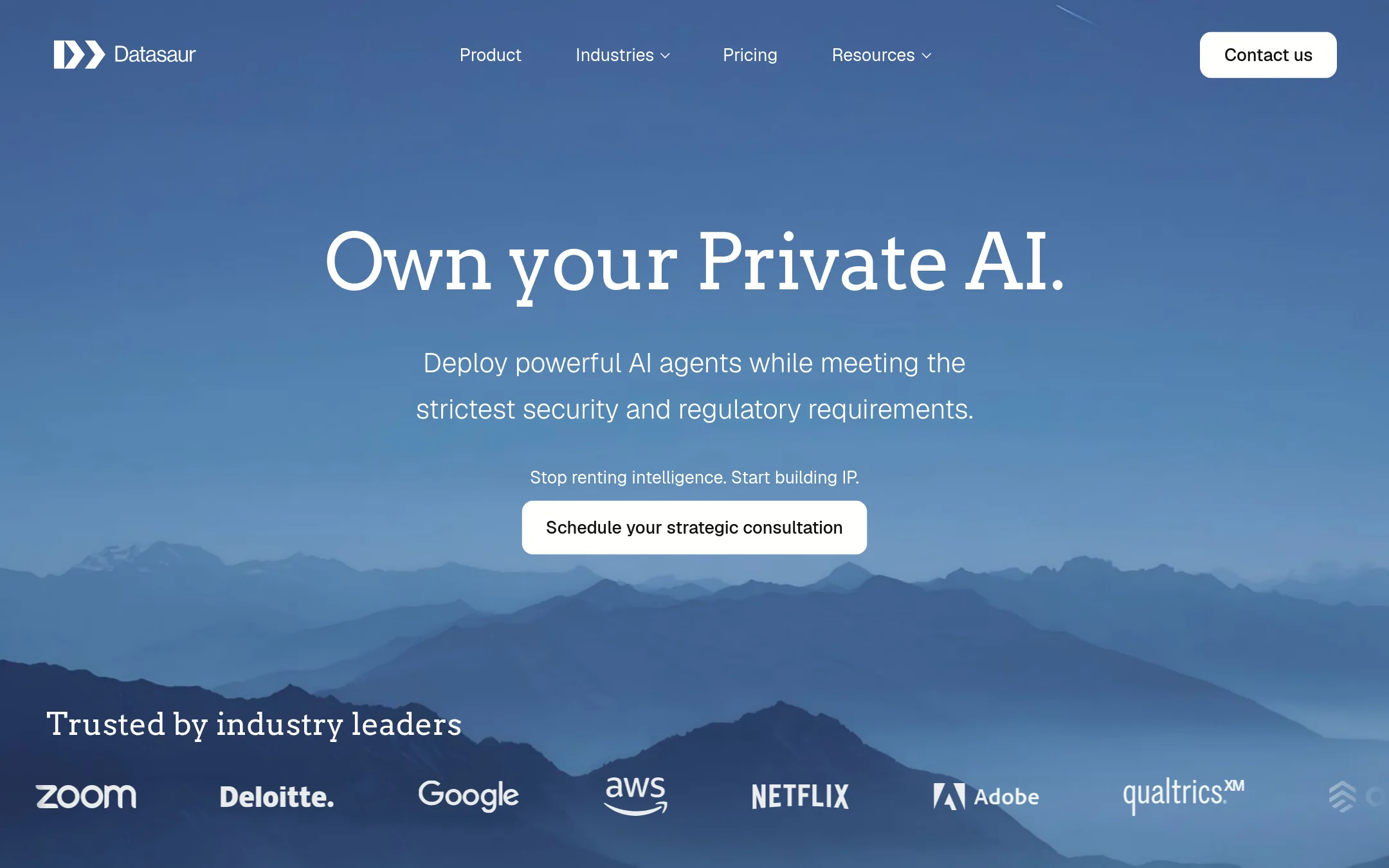
Datasaur deploys open-weights models and agent harnesses inside your own infrastructure, so your data and models stay behind your firewall. Teams choose it over Scale AI when the priority is owning the model and keeping sensitive data on-premise, especially in healthcare, legal, finance, or the public sector.
Where it is strong
- Models and data run on your own servers, including air-gapped deployments
- Vertical products for healthcare, legal, and finance with PHI and PII stripping
- You own the model, so providers cannot reprice or deprecate it under a live workflow
Where it falls short
- Scale AI covers data sourcing and evaluations for frontier labs, which Datasaur does not describe offering
- Its pitch leans on private deployment and vertical products, so teams wanting a broad data-labeling workforce may find less here
- Pricing:
- Pricing is not published on the site.
- Not published
10.Lightly
Best for: Computer vision and Physical AI teams that want to curate and label their own image, video and sensor data in one place
- Pricing
- Not published
- Category
- AI & Machine Learning
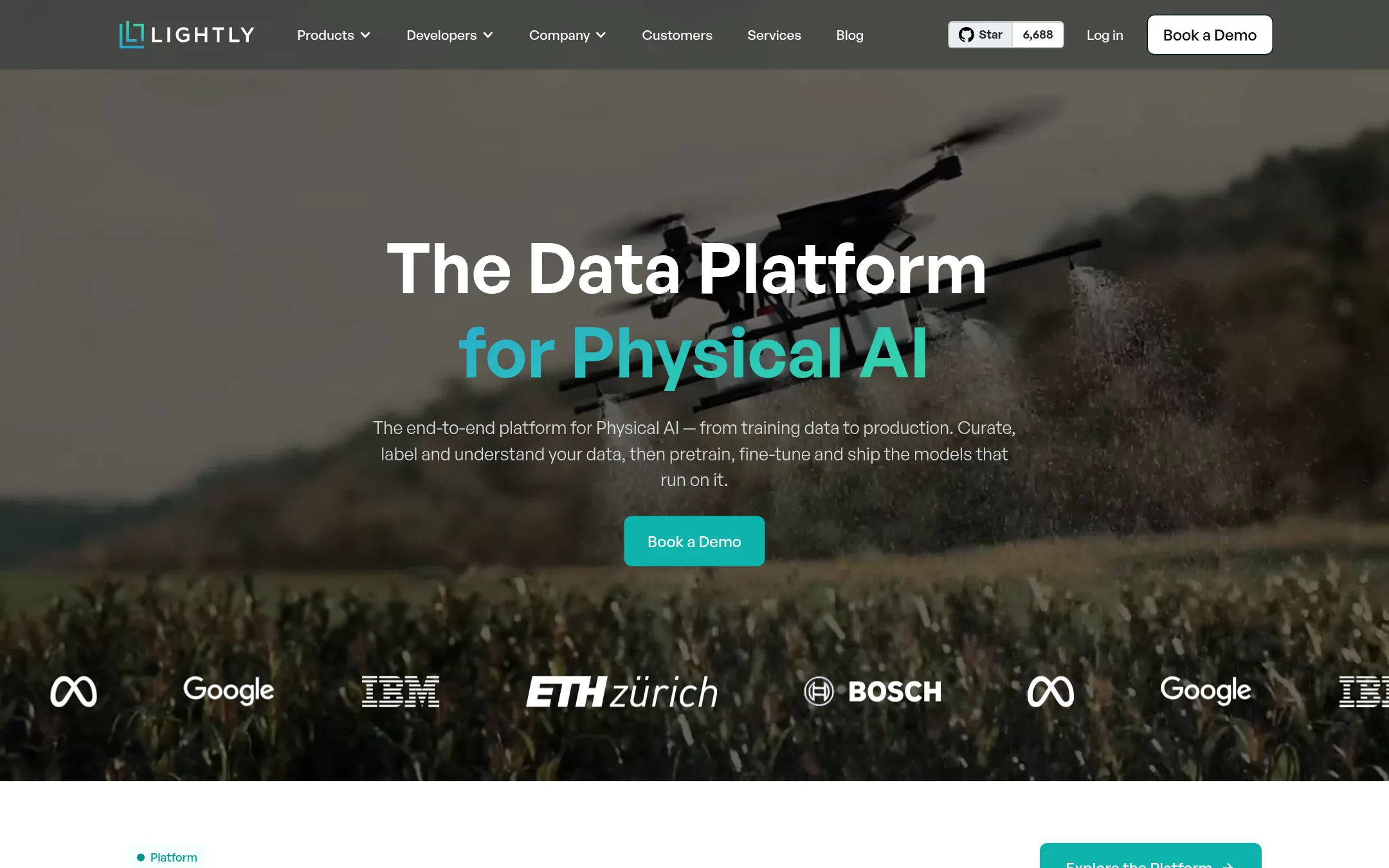
Lightly is a computer vision data platform. LightlyStudio handles curation, labeling, QA and model evaluation on image and video data, and LightlyTrain handles self-supervised pretraining. Teams would pick it over Scale AI when they want to work on their own vision datasets in one tool, rather than outsourcing data and evaluation work to a managed service.
Where it is strong
- Selects which samples to label using sampling strategies like deduplication and outlier detection
- Shows per-sample metrics and a confusion matrix, so you can find where your model fails
- Role-based access lets viewers, labelers and admins each work at their own level
Where it falls short
- Built around computer vision, so it does not cover the wider range of AI work Scale AI handles, such as government or enterprise deployments
- Its managed data services are described in general terms, with no published scope or turnaround
- Pricing:
- Pricing is not published on the site.
- Not published
11.MD.ai
Best for: Radiology teams and medical imaging developers who need DICOM-native annotation and AI-assisted reporting
- Pricing
- Not published
- Category
- Healthcare
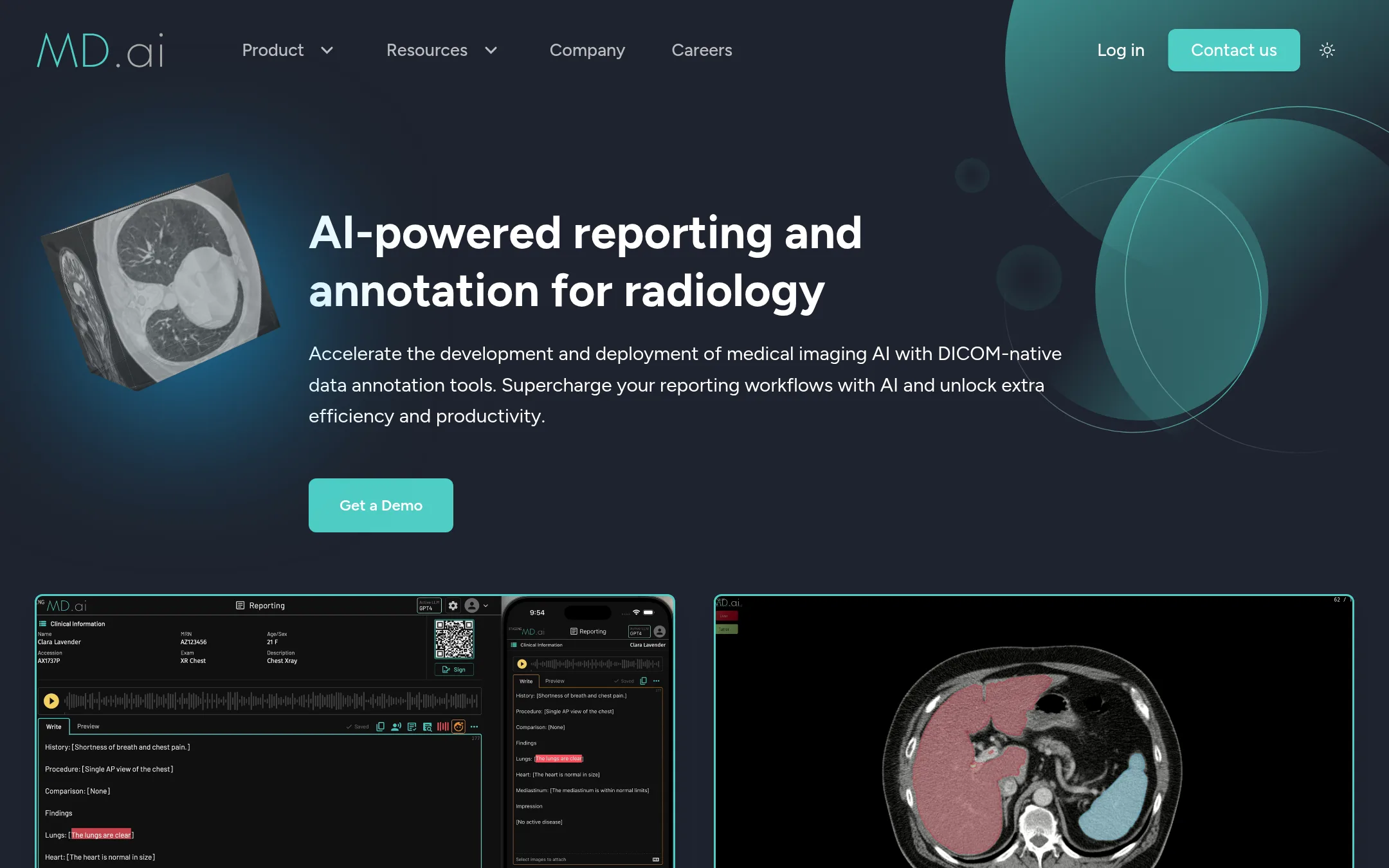
MD.ai is a medical imaging platform for radiology teams. It offers DICOM-native annotation for building labeled datasets, plus LLM-assisted reporting that covers template selection, impression generation and patient-friendly summaries. A radiology group or medical AI developer would pick it over Scale AI when the work is confined to imaging and clinical reporting rather than general data or evaluation across industries.
Where it is strong
- Native DICOM support with an FDA 510(k)-cleared viewer
- LLM reporting tools that cover impressions, template selection and billing codes
- Developer APIs and HL7/DICOM integration with EHR, HIS and RIS systems
Where it falls short
- Focused on medical imaging, so it does not cover the broad data and evaluation work Scale AI does across industries
- Pricing is not published, so cost comparison requires contacting the vendor
- Pricing:
- Pricing is not published on the site.
- ONot published
12.Osmosis
Best for: Engineering teams that want a specialized model for one task, such as document extraction or tool-using agents, and need it retrained as new data comes in.
- Pricing
- Not published
- Category
- AI & Machine Learning
Osmosis is a post-training platform that builds task-specific models with reinforcement fine-tuning, aiming to beat foundation models at lower cost. Its team works hands-on with customers through feature engineering and reward function design, and it can retrain models as often as hourly as new data arrives. A team would pick it over Scale AI when the goal is a specialized model for one job, such as document extraction, tool-using agents, or domain-specific code generation, rather than broad data labeling or evaluation work.
Where it is strong
- Reinforcement fine-tuning with methods like GRPO and DAPO, without managing the training infrastructure
- Hands-on deployment support covering feature engineering and reward function creation
- Automatic retraining that can ingest new data as often as hourly
Where it falls short
- The site focuses on post-training specialized models, so it does not show the broad data sourcing and labeling work Scale AI is known for
- Pricing and enterprise terms are not published, so cost comparison requires talking to sales
- Pricing:
- Pricing is not published on the site.
See more comparisons in AI & Machine Learning alternatives.
FAQ
Questions about Scale AI alternatives
What is Scale AI best known for?
According to its site, Scale AI is known for supplying training data and evaluations to frontier AI labs, along with building and owning AI applications for enterprises and governments. Its homepage cites private benchmarks for AI companies and a claim that 90% of leading generative AI model builders are powered by Scale.
Which alternative should I choose if I need a managed data labeling workforce?
Appen and Surge AI both focus on supplying human-generated or expert-validated training data. Appen cites about 30 years of experience in this work. Surge AI positions its offering around human-level judgment for data and evaluations.
Which alternative fits a team that wants to run AI privately on its own servers?
Datasaur deploys open-weights models and agent harnesses inside your own infrastructure, including air-gapped deployments. It is aimed at healthcare, legal, finance and public sector teams handling sensitive data, and it lets you own the model so providers cannot reprice or deprecate it under a live workflow.
Can I get pricing for these tools from their websites?
In most cases, no. Hive, Datasaur, Encord, Lightly, Osmosis, MD.ai, Labelbox, Appen, Dataloop, Snorkel AI and Surge AI do not publish pricing on their sites. V7 Labs says annual agreements are scoped in a single call based on workflows, seats and pages processed. You will need to contact each vendor for a quote.
How do I choose between a platform I run myself and a managed service?
A platform like Dataloop or Lightly needs in-house data and engineering skill, but gives you control over your pipelines. A managed service like Snorkel AI or Appen handles the data and evaluation work for you. Choose based on whether your team has the capacity to operate the tooling and how much of the work you want to hand off.
Last updated November 14, 2026.