
Selenium alternatives
12 products compared · Updated November 1, 2026
The short answer
For teams that want a batteries-included testing platform with AI features, Cypress is the strongest alternative. Playwright suits teams building end-to-end tests for modern web apps who want auto-waiting and tracing. BrowserStack is best for teams that need to test across many real browsers and devices without maintaining their own infrastructure.
Your shortlist, at a glance
Read the comparisons ↓- PPlaywrightNot publishedTeams building end-to-end tests for modern web apps who want auto-waiting and tracing without assembling separate tools.
- PPuppeteerNot publishedJavaScript teams that need fast, headless browser automation for testing or scraping in Chrome or Firefox.
 CypressFree, from $67/moTeams that want a batteries-included testing platform with real-time debugging, AI-generated tests, and cloud orchestration for CI.
- WWebdriverIONot publishedTeams that need one test framework for web, mobile, and desktop apps and want built-in component testing and AI-assisted authoring.
- AAppiumNot publishedTeams that need to automate tests on mobile, desktop, or TV apps in addition to browsers, especially those already using WebDriver concepts.
- NNightwatch.jsNot publishedNode.js teams that want one framework for web and native mobile testing with built-in debugging and cloud grid support.
Axiom.aiSee websiteNo-code Browser RPA
 FumeSee websiteWe are building the AI Software Developer
 Katalon StudioNot publishedQA teams that want a managed platform with AI help, no-code authoring, and built-in test management across web, mobile, API, and desktop.
 LarkSee websiteBilling for modern pricing models
- MMeticulousSee websiteAutomated e2e screenshot testing without writing or maintaining tests
 RainforestNot publishedStartups and growth-stage SaaS companies that want AI-assisted, no-code test automation integrated with their CI/CD pipeline.
About Selenium and its alternatives
Selenium is a browser automation tool that gives you full control over Chrome, Firefox, Edge and Safari. You write scripts in Java, Python, C#, Ruby, JavaScript or Kotlin using the official W3C WebDriver standard. It is known for being the foundation of browser automation, with a large community and support for multiple languages.
When comparing alternatives, weigh the pricing structure. Some tools publish transparent pricing, while others require a sales conversation. Consider the regions and browsers supported, the integrations with your CI/CD pipeline, the level of support offered, and the contract terms. Some tools are open source, while others are managed platforms with credit-based pricing.
Explore the alternatives
- PNot published
1.Playwright
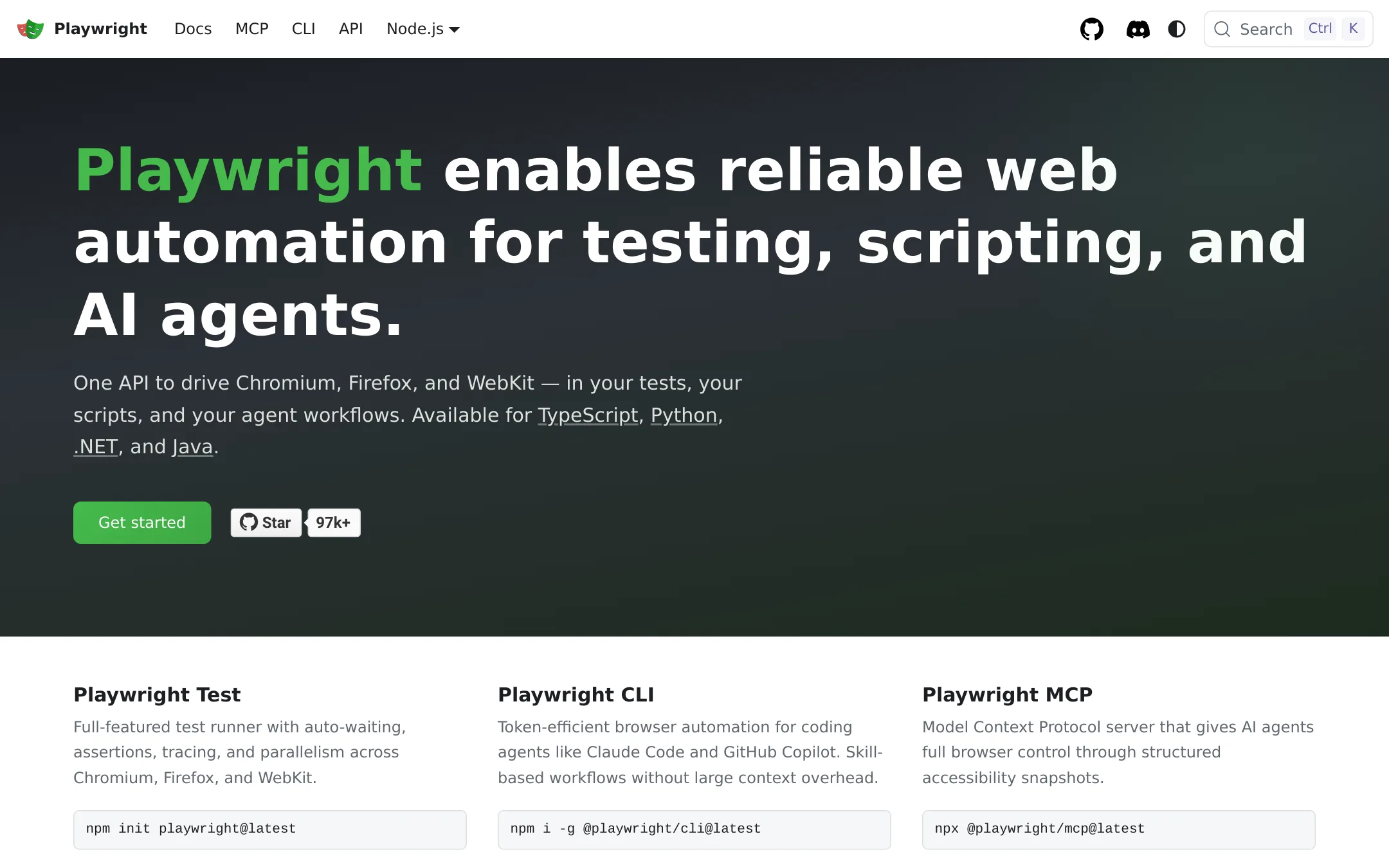
Best for: Teams building end-to-end tests for modern web apps who want auto-waiting and tracing without assembling separate tools.
- Pricing
- Not published
- Category
- Developer Tools
Playwright is a browser automation tool with a built-in test runner, auto-waiting, and tracing. Choose it over Selenium when you want a more integrated testing experience with parallel execution and better debugging out of the box.
Where it is strong
- Auto-waiting reduces flaky tests by waiting for elements to be ready.
- Built-in test runner with parallel execution across browsers.
- Tracing and debugging tools help you see what happened during a test.
Where it falls short
- No official support for Safari, only WebKit.
- Smaller community and fewer language bindings than Selenium.
- Pricing:
- Pricing is not published on the site.
- PNot published
2.Puppeteer
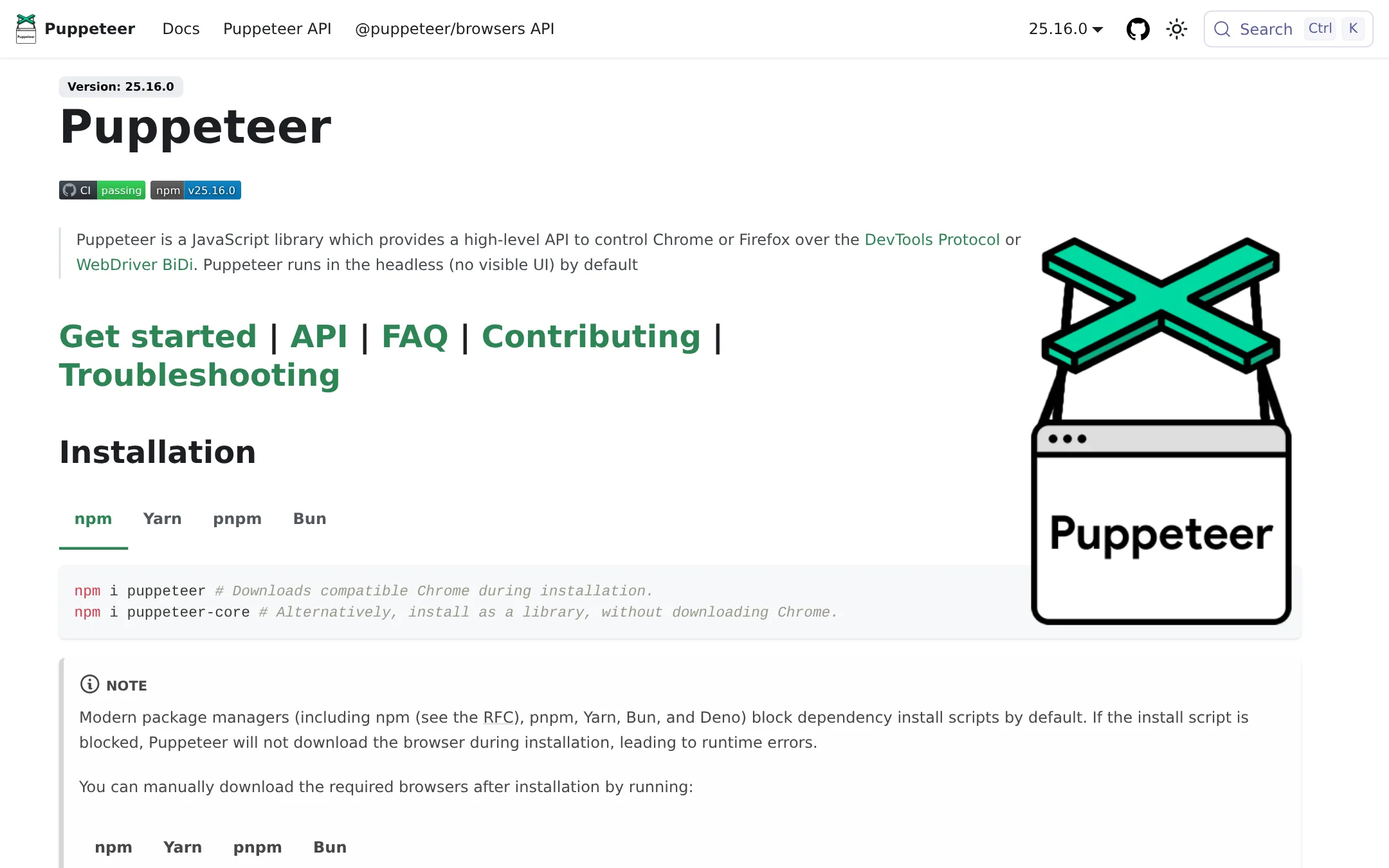
Best for: JavaScript teams that need fast, headless browser automation for testing or scraping in Chrome or Firefox.
- Pricing
- Not published
- Category
- Other
Puppeteer is a JavaScript library for controlling Chrome or Firefox via the DevTools Protocol or WebDriver BiDi, running headless by default. Choose it over Selenium when you're a JavaScript developer who wants a simpler, more modern API for browser automation without the overhead of Selenium's multi-language bindings.
Where it is strong
- High-level API that's easier to learn than Selenium's WebDriver
- Runs headless by default, so no browser UI needed
- Direct control over Chrome and Firefox via DevTools Protocol
Where it falls short
- Limited to JavaScript, unlike Selenium's multi-language support
- Browser support is mainly Chrome and Firefox, not all browsers Selenium covers
- Pricing:
- Pricing is not published on the site.
- Free, from $67/mo
3.Cypress
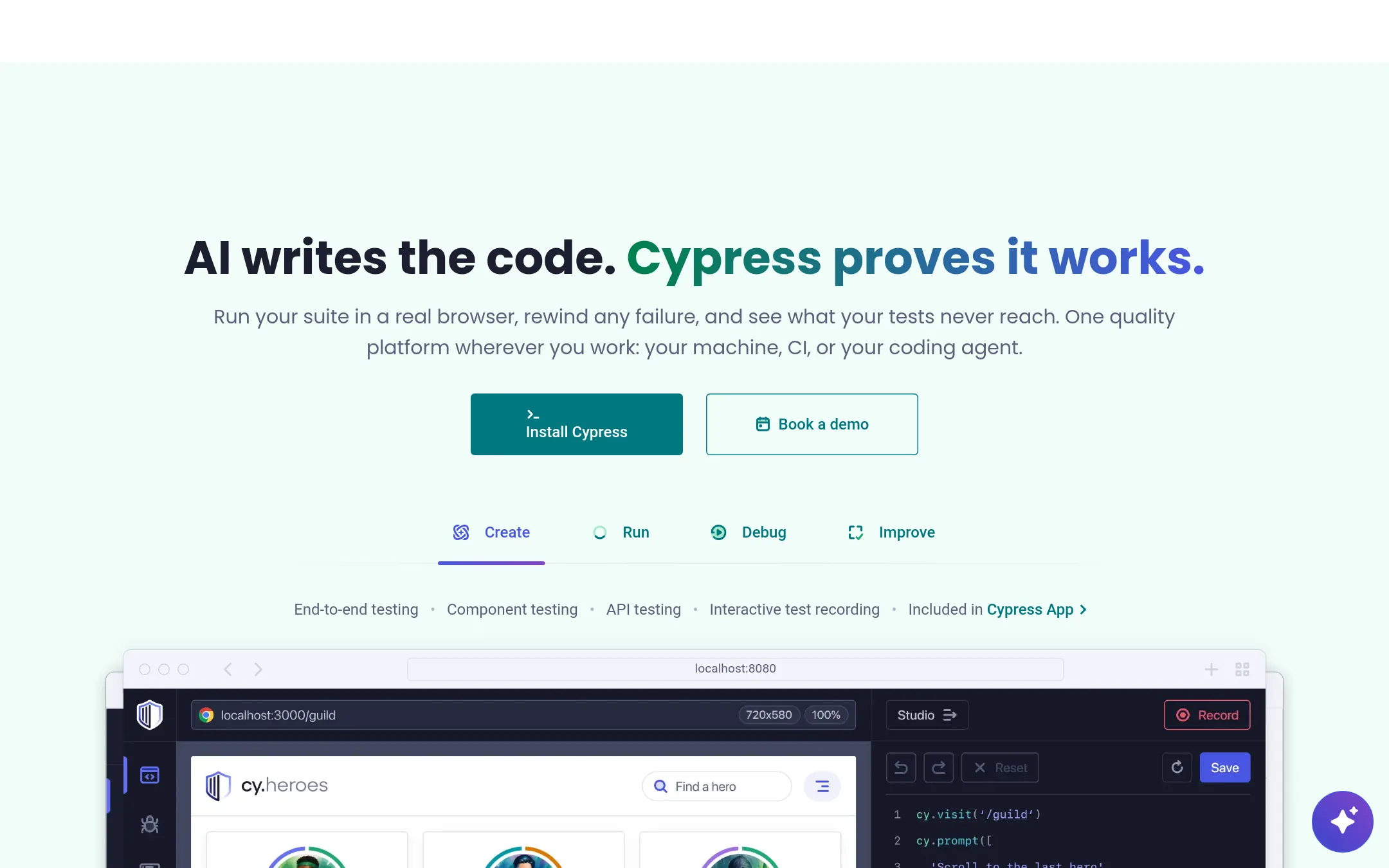
Best for: Teams that want a batteries-included testing platform with real-time debugging, AI-generated tests, and cloud orchestration for CI.
- Pricing
- Free, from $67/mo
- Category
- Developer Tools
Cypress is a browser testing tool that runs end-to-end and component tests in a real browser, with built-in time travel debugging and AI-assisted test generation. Choose it over Selenium when you want a more integrated testing experience with automatic waiting, flake detection, and cloud features for CI, rather than assembling your own framework from Selenium's building blocks.
Where it is strong
- Automatic waiting and no flaky timers
- Time Travel debugging and Test Replay in CI
- AI features: cy.prompt, Studio AI, and Cloud MCP for agents
Where it falls short
- Only supports JavaScript/TypeScript, unlike Selenium's multi-language bindings
- Cloud features require a paid plan. Free tier has limited test results
- Pricing:
- Starter is free for up to 10 users, 500 test results/month, and 100 prompt execs/month. Team starts at $67/month billed annually. Business at $267/month billed annually. Enterprise is custom.
- Switching from Selenium:
- Moving from Selenium means rewriting tests in JavaScript/TypeScript and adopting Cypress's command and assertion model, which differs from WebDriver's imperative style.
- WNot published
4.WebdriverIO
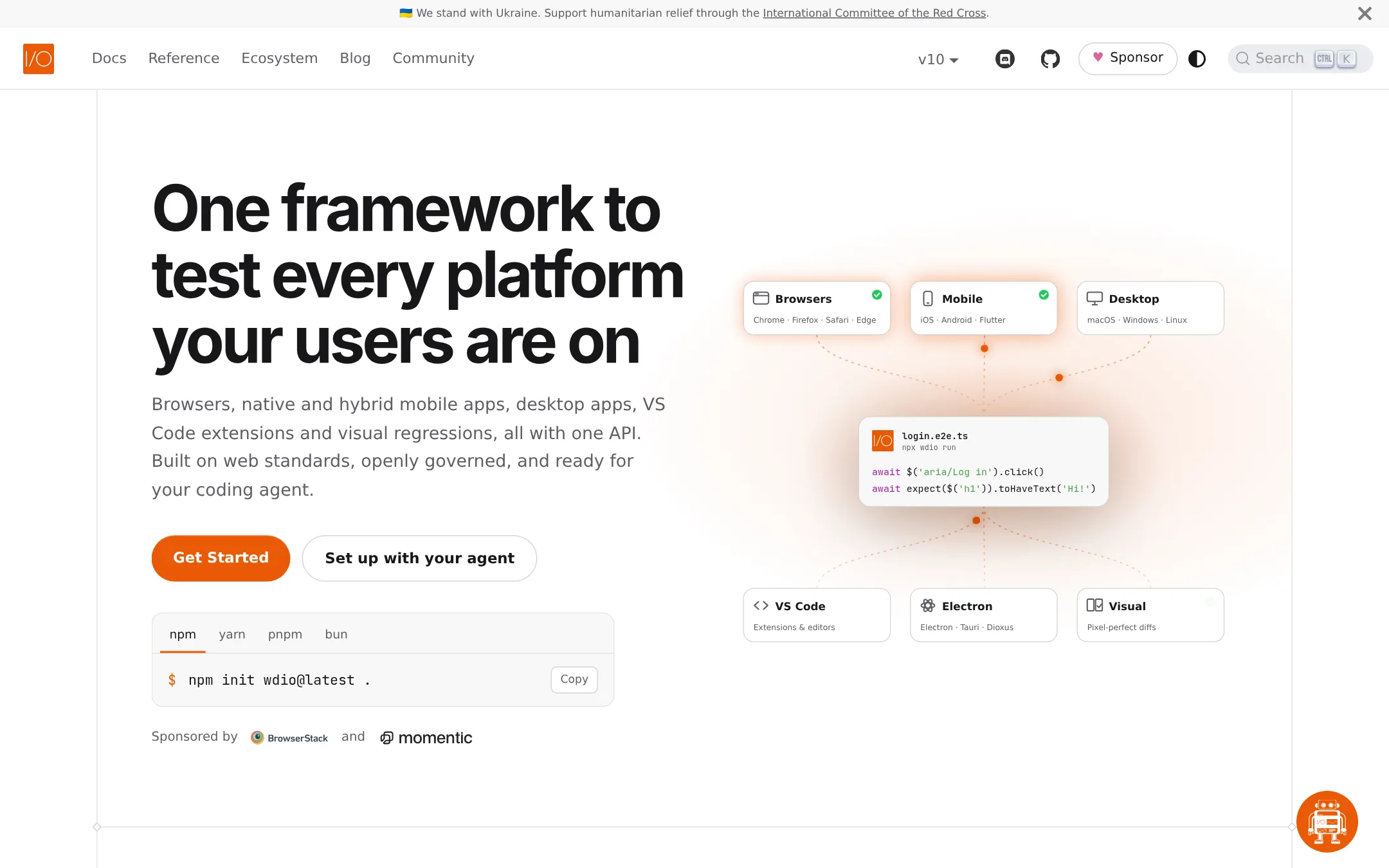
Best for: Teams that need one test framework for web, mobile, and desktop apps and want built-in component testing and AI-assisted authoring.
- Pricing
- Not published
- Category
- Other
WebdriverIO is a test runner that sits on top of WebDriver and WebDriver BiDi, so it can drive browsers, mobile devices, and desktop apps from the same test code. Choose it over Selenium when you want a full test framework with built-in assertions, reporters, and debugging tools, plus support for component testing and AI-assisted test generation.
Where it is strong
- Same test code runs on web, mobile, and desktop via WebDriver and WebDriver BiDi.
- Built-in component testing for React, Vue, Svelte, and other frameworks.
- AI service records plain-language steps and replays them without model calls when green.
Where it falls short
- Requires a WebDriver server or browser driver setup, similar to Selenium.
- AI features depend on external model providers like Anthropic or OpenAI.
- Pricing:
- Pricing is not published on the site.
- Switching from Selenium:
- Moving from Selenium means rewriting test specs to use WebdriverIO's runner and assertion syntax, though it can reuse the same WebDriver protocol.
- ANot published
5.Appium
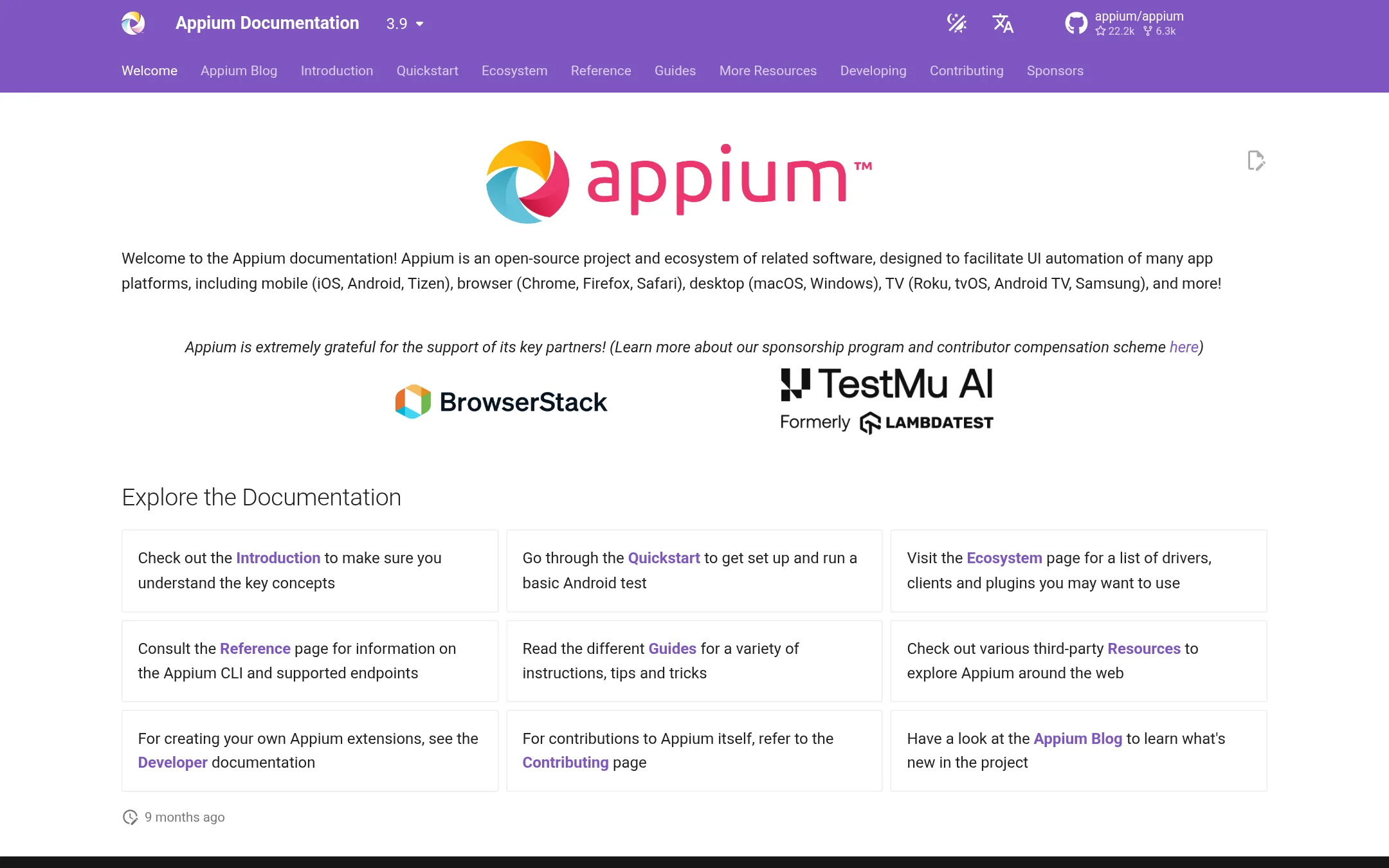
Best for: Teams that need to automate tests on mobile, desktop, or TV apps in addition to browsers, especially those already using WebDriver concepts.
- Pricing
- Not published
- Category
- Other
Appium is an open-source tool for automating UI tests across mobile, desktop, TV, and browser platforms. Choose it instead of Selenium when you need to test native or hybrid mobile apps on iOS and Android, or when your test matrix includes non-browser platforms.
Where it is strong
- Supports iOS, Android, Windows, macOS, and TV platforms.
- Uses WebDriver protocol, so Selenium users can adapt quickly.
- Open source with an active ecosystem of drivers and plugins.
Where it falls short
- Setup is more complex than Selenium for browser-only testing.
- Performance on mobile simulators can be slower than native tools.
- Pricing:
- Pricing is not published on the site.
- Switching from Selenium:
- Moving from Selenium to Appium is straightforward if you already use WebDriver, but you'll need to install platform-specific drivers and configure device capabilities.
- NNot published
6.Nightwatch.js
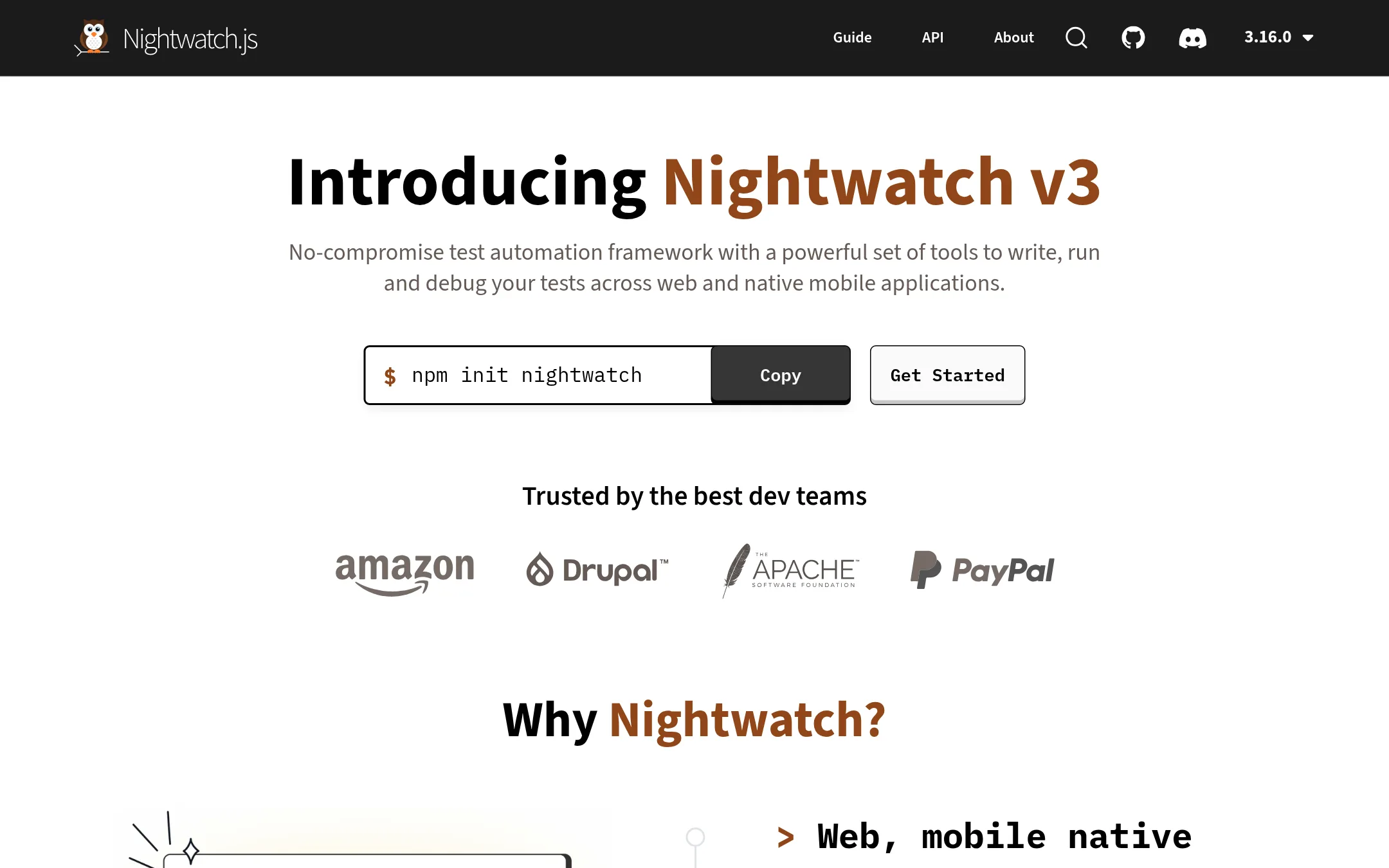
Best for: Node.js teams that want one framework for web and native mobile testing with built-in debugging and cloud grid support.
- Pricing
- Not published
- Category
- Other
Nightwatch.js is a Node.js end-to-end testing framework that runs against W3C WebDriver, so it works with real browsers and follows the same standard as Selenium. Choose it if you want a framework that also covers native mobile apps, component testing, and visual regression without leaving the Node.js ecosystem.
Where it is strong
- Supports native iOS and Android testing in addition to web
- Built-in HTML reporter with DOM history for debugging
- Default parallelization across browsers for faster runs
Where it falls short
- Node.js only, so no Java, Python, or C# bindings
- No pricing info. Cloud grid support may require paid services
- Pricing:
- Pricing is not published on the site.
- See website
7.Axiom.ai
AI & Machine Learning
No-code Browser RPA
- See website
8.Fume
AI & Machine Learning
We are building the AI Software Developer
- Not published
9.Katalon Studio
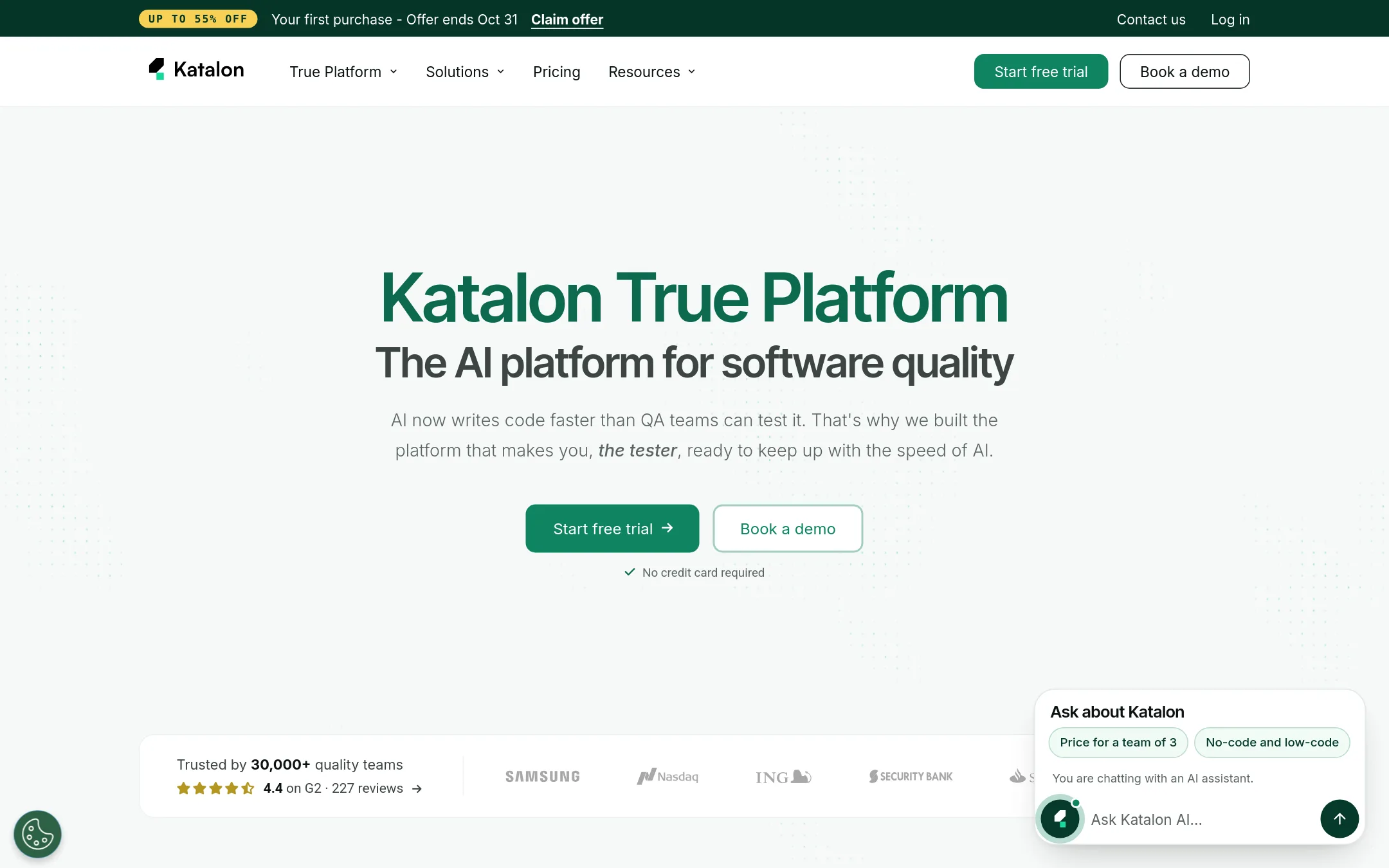
Best for: QA teams that want a managed platform with AI help, no-code authoring, and built-in test management across web, mobile, API, and desktop.
- Pricing
- Not published
- Category
- Developer Tools
Katalon Studio is a full testing platform that covers web, mobile, API, and desktop, with AI-assisted authoring and test management built in. You would choose it over Selenium when your team wants a single tool with no-code options, parallel cloud execution, and built-in reporting instead of assembling those pieces yourself.
Where it is strong
- Built on Selenium and Appium, so existing scripts keep working
- AI generates test cases from requirements and heals locators
- Includes test management, execution, and reporting in one platform
Where it falls short
- Pricing is not published. You must contact sales for quotes
- Heavier platform than Selenium's lightweight library approach
- Pricing:
- Pricing is not published on the site.
- Switching from Selenium:
- Moving from Selenium is straightforward because Katalon Studio is built on Selenium and Appium, so your existing scripts keep working.
- See website
10.Lark
Finance & Accounting
Billing for modern pricing models
- MSee website
11.Meticulous
Developer Tools
Automated e2e screenshot testing without writing or maintaining tests
- Not published
12.Rainforest
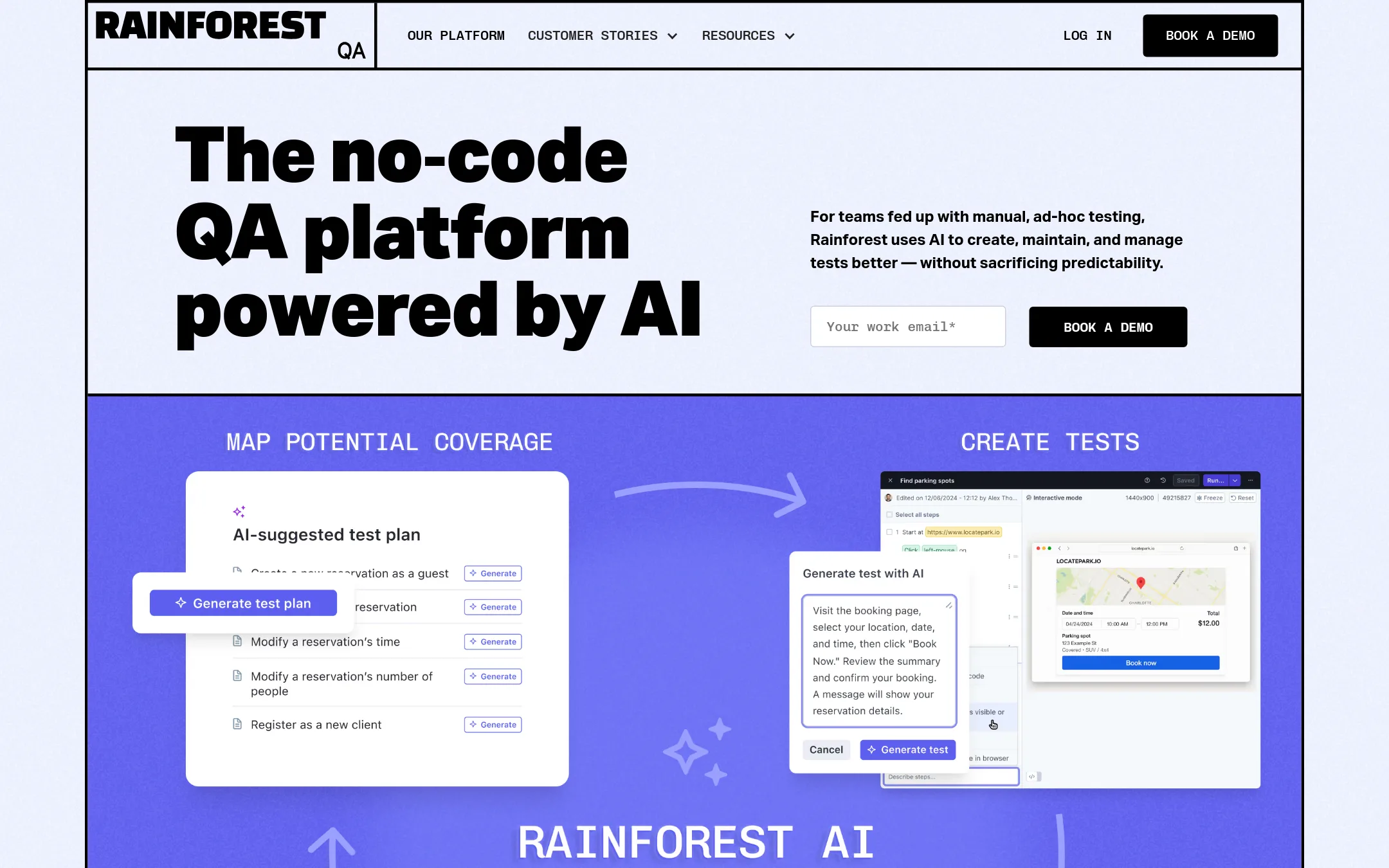
Best for: Startups and growth-stage SaaS companies that want AI-assisted, no-code test automation integrated with their CI/CD pipeline.
- Pricing
- Not published
- Category
- Developer Tools
Rainforest is a no-code QA platform that uses AI to create and run end-to-end tests, so non-engineers can maintain the suite. Choose it over Selenium when you want to avoid writing and maintaining WebDriver scripts in code.
Where it is strong
- No-code test creation and maintenance, accessible to non-developers
- AI-powered test execution and maintenance
- Integrates with any CI/CD pipeline
Where it falls short
- Pricing is not public, so you must contact sales for a quote
- Less direct control over browser behavior compared to Selenium's WebDriver
- Pricing:
- Pricing is not published on the site.
See more comparisons in Developer Tools alternatives.
FAQ
Questions about Selenium alternatives
Which alternative is best for a small team that wants to avoid writing code?
Rainforest is a no-code QA platform that uses AI to create and run end-to-end tests. It is best for startups and growth-stage SaaS companies that want AI-assisted, no-code test automation. Pricing is not public, so you must contact sales.
Which alternative has the most transparent pricing?
Cypress publishes its pricing: Starter is free for up to 10 users, Team starts at $67 per month billed annually, and Business at $267 per month billed annually. LambdaTest also lists some prices, like KaneAI at $17 per agent and Test Manager Premium at $49 per seat per month. Most other tools require contacting sales.
Which alternative supports multiple programming languages like Selenium?
Selenium supports Java, Python, C#, Ruby, JavaScript, and Kotlin. Among the alternatives, WebdriverIO and Nightwatch.js are JavaScript-only. Cypress is also JavaScript/TypeScript only. Playwright supports JavaScript, but also has bindings for Python, Java, and .NET, though the site does not list them.
Which alternative is best for testing on real mobile devices?
BrowserStack gives instant access to 35,000+ real devices and 3,500+ browser combinations. LambdaTest offers 50,000+ real devices and 200+ browser/OS combinations. Appium supports iOS, Android, Windows, macOS, and TV platforms, but setup is more complex.
Which alternative has the best AI features for test creation?
Cypress has AI features like cy.prompt, Studio AI, and Cloud MCP for agents. LambdaTest uses AI agents to generate test cases from plain English. Katalon Studio uses AI to generate test cases from requirements and heal locators. Rainforest uses AI for test creation and maintenance.
Last updated November 1, 2026.