
Sellfy alternatives
12 products compared · 1 verified · Updated October 30, 2026
The short answer
For growing product businesses needing physical retail and advanced inventory, Shopify is the strongest Sellfy alternative. Indian D2C sellers should consider Instamojo for its integrated local payments and shipping. Creators selling digital products and courses who need VAT compliance and embeddable checkout should choose Payhip.
Your shortlist, at a glance
Read the comparisons ↓Gumroad10% + $0.50 per saleCreators and side-project sellers who want to test ideas with minimal commitment and no monthly subscription.
PayhipNot publishedCreators selling digital products and courses who need VAT compliance and embeddable checkout.
 ShopifyFrom $29/mo + 2.9%Growing product businesses that sell physical goods across online and physical stores and need advanced inventory and checkout options.
 Big CartelFrom $0/moArtists, bands, and small product-based businesses that want a minimal, affordable online store with no transaction fees.
- PPodiaFrom $42/mo + 5% feeCreators who want to sell courses and run a community from one platform
Stan StoreNot publishedCreators and coaches who sell digital products and bookings primarily through Instagram, TikTok, or YouTube bios.
 KojiNot publishedDiners in the Pacific Northwest who want authentic Japanese cuisine from a restaurant that has been open since 1982.
 BikrySee websiteBikry: Helping SMB's in India go online
 InstamojoFrom ₹0/yr + 5% + ₹3Indian D2C businesses selling physical products, services, or event tickets who need integrated local payments and shipping.
 WhopPaidPayments infrastructure for checkout, subscription billing, embedded payments and global payouts.
 BigCommerceNot publishedGrowing product businesses and B2B sellers that need multi-channel commerce and advanced catalog management
 EcwidFrom $29/moBusinesses that want to add a store to an existing WordPress, Wix, or Squarespace site and sell across multiple channels.
About Sellfy and its alternatives
Sellfy is an online store builder for creators. It lets you sell digital products, subscriptions, and print-on-demand merch with zero transaction fees. You can launch a store in minutes without coding. Sellfy is known for its simple drag-and-drop builder, 24/7 support, and plans that scale with your revenue.
When comparing alternatives, weigh the pricing structure. Some charge a monthly fee, others take a per-transaction cut. Check which regions and payment gateways are supported. Consider the integrations available for email, analytics, and shipping. Look at the level of support and whether contracts are monthly or annual. Also note any product limits or sales caps on lower plans.
Explore the alternatives
- 10% + $0.50 per sale
1.Gumroad
Best for: Creators and side-project sellers who want to test ideas with minimal commitment and no monthly subscription.
- Pricing
- 10% + $0.50 per sale
- Category
- E-commerce
Gumroad is a simple platform for selling digital products, courses, and memberships with no monthly fee. You pay a per-transaction fee instead, and Gumroad handles global tax compliance as a merchant of record. Choose it if you want to start selling quickly without upfront costs and prefer a pay-as-you-go model.
Where it is strong
- No monthly fee, only pay when you sell
- Gumroad handles global tax compliance as merchant of record
- Simple setup for digital products and memberships
Where it falls short
- Higher transaction fee than Sellfy's flat monthly plans
- No built-in print-on-demand or physical product support
- Pricing:
- Gumroad charges 10% + $0.50 per transaction for sales through your profile or direct links, and 30% per transaction for sales through their discover marketplace.
- Switching from Sellfy:
- Moving from Sellfy to Gumroad means recreating your products and storefront, and your customers will pay through Gumroad's checkout instead of your own.
- Not published
2.Payhip
Best for: Creators selling digital products and courses who need VAT compliance and embeddable checkout.

- Pricing
- Not published
- Category
- E-commerce
Payhip is a store builder for selling digital downloads, courses, coaching, memberships, and physical products. Choose it over Sellfy if you need built-in VAT handling or want to embed a checkout on an existing website.
Where it is strong
- Handles VAT and taxes for digital goods
- Supports courses, coaching, and memberships
- Free custom domain and embed features
Where it falls short
- Pricing details are not public
- No mention of print-on-demand or physical fulfillment
- Pricing:
- Pricing is not published on the site.
- From $29/mo + 2.9%
3.Shopify
Best for: Growing product businesses that sell physical goods across online and physical stores and need advanced inventory and checkout options.

- Pricing
- From $29/mo + 2.9%
- Category
- E-commerce
Shopify is a full commerce platform for selling physical products, online and in person, with AI tools and a huge app ecosystem. Choose it over Sellfy if you need retail POS, B2B catalogs, or deep customization beyond digital downloads.
Where it is strong
- Sell in person with POS and on social and AI channels
- 21,000+ apps for specialized features
- Built-in AI assistant and checkout that converts well
Where it falls short
- Transaction fees apply on every card payment
- Advanced features like custom checkout only on Plus plan
- Pricing:
- Basic is $29/mo with card rates from 2.9% + 30¢. Grow is $79/mo. Advanced is $299/mo. Plus starts at $2,300/mo.
- Switching from Sellfy:
- Moving from Sellfy means rebuilding your store and product pages, and you'll pay per-transaction fees instead of a flat subscription.
- From $0/mo
4.Big Cartel
Best for: Artists, bands, and small product-based businesses that want a minimal, affordable online store with no transaction fees.

- Pricing
- From $0/mo
- Category
- Other
Big Cartel is a simple store builder aimed at artists, bands, and small makers who want to sell physical or digital products without the complexity of a full e-commerce platform. It offers a free plan and straightforward monthly pricing, making it a low-cost alternative to Sellfy for creators who don't need advanced marketing or subscription features.
Where it is strong
- Free plan available with basic features
- No transaction fees on any plan
- Import products from Etsy, Shopify, or Squarespace
Where it falls short
- No built-in email marketing or affiliate tools
- Limited to 100 products on the Platinum plan
- Pricing:
- Plans start at $0 for the Gold plan, with Platinum at $15/mo and Diamond at $25/mo, both after a 7-day free trial.
- Switching from Sellfy:
- Moving from Sellfy to Big Cartel involves manually recreating your store and products, as there is no direct migration tool mentioned.
- PFrom $42/mo + 5% fee
5.Podia
Best for: Creators who want to sell courses and run a community from one platform

- Pricing
- From $42/mo + 5% fee
- Category
- Other
Podia combines courses, community, coaching, events, email, and a website in one tool. Choose it over Sellfy if you run a creator business that needs more than just selling digital products, like building a community or hosting live sessions.
Where it is strong
- Includes email marketing and community features
- No transaction fees on Shaker and Earthquaker plans
- Migration help for up to 150 products
Where it falls short
- Transaction fee on the lowest plan
- Email subscriber limits per plan
- Pricing:
- Plans start at $42/mo billed annually ($504/year), with a 5% transaction fee on the Mover plan and no Podia fees on higher tiers.
- Switching from Sellfy:
- Podia offers migration help for up to 150 products, so moving from Sellfy is possible but may require manual work for larger catalogs.
- Not published
6.Stan Store
Best for: Creators and coaches who sell digital products and bookings primarily through Instagram, TikTok, or YouTube bios.
- Pricing
- Not published
- Category
- Other
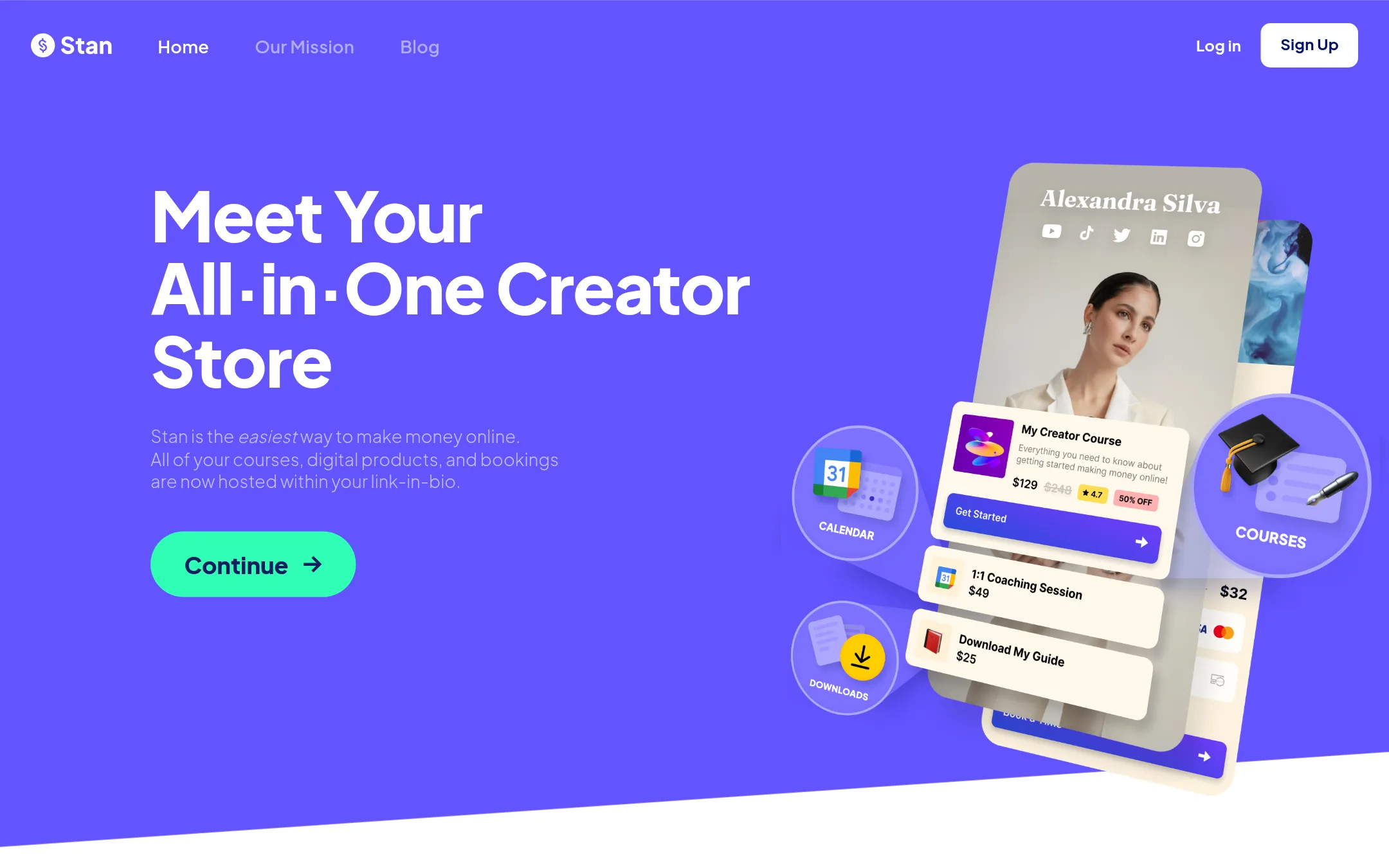
Stan Store is a link-in-bio storefront for creators to sell courses, digital products, and bookings. It is a simpler, more focused alternative to Sellfy if your primary sales channel is social media and you want a quick setup without a full e-commerce site.
Where it is strong
- 1-tap checkout reduces friction for buyers
- No coding required, store built in minutes
- Integrates with third-party tools you already use
Where it falls short
- Pricing not transparent, requires trial or contact
- Limited to link-in-bio format, not a full storefront
- Pricing:
- Pricing is not published on the site.
- Not published
7.Koji
Best for: Diners in the Pacific Northwest who want authentic Japanese cuisine from a restaurant that has been open since 1982.

- Pricing
- Not published
- Category
- Other
Koji is a restaurant in the Pacific Northwest, not an e-commerce platform. If you are looking for a place to eat Japanese food, Koji is an option. It cannot replace Sellfy for selling digital products or running an online store.
Where it is strong
- Authentic Japanese cuisine from Osaka.
- Serving the Northwest since 1982.
- Gift cards are available.
Where it falls short
- Not an e-commerce platform, so it cannot sell digital products or manage an online store.
- Only useful if you are near the restaurant's physical location.
- Pricing:
- Pricing is not published on the site.
- See website
8.Bikry
E-commerce
Bikry: Helping SMB's in India go online
- From ₹0/yr + 5% + ₹3
9.Instamojo
Best for: Indian D2C businesses selling physical products, services, or event tickets who need integrated local payments and shipping.
- Pricing
- From ₹0/yr + 5% + ₹3
- Category
- E-commerce
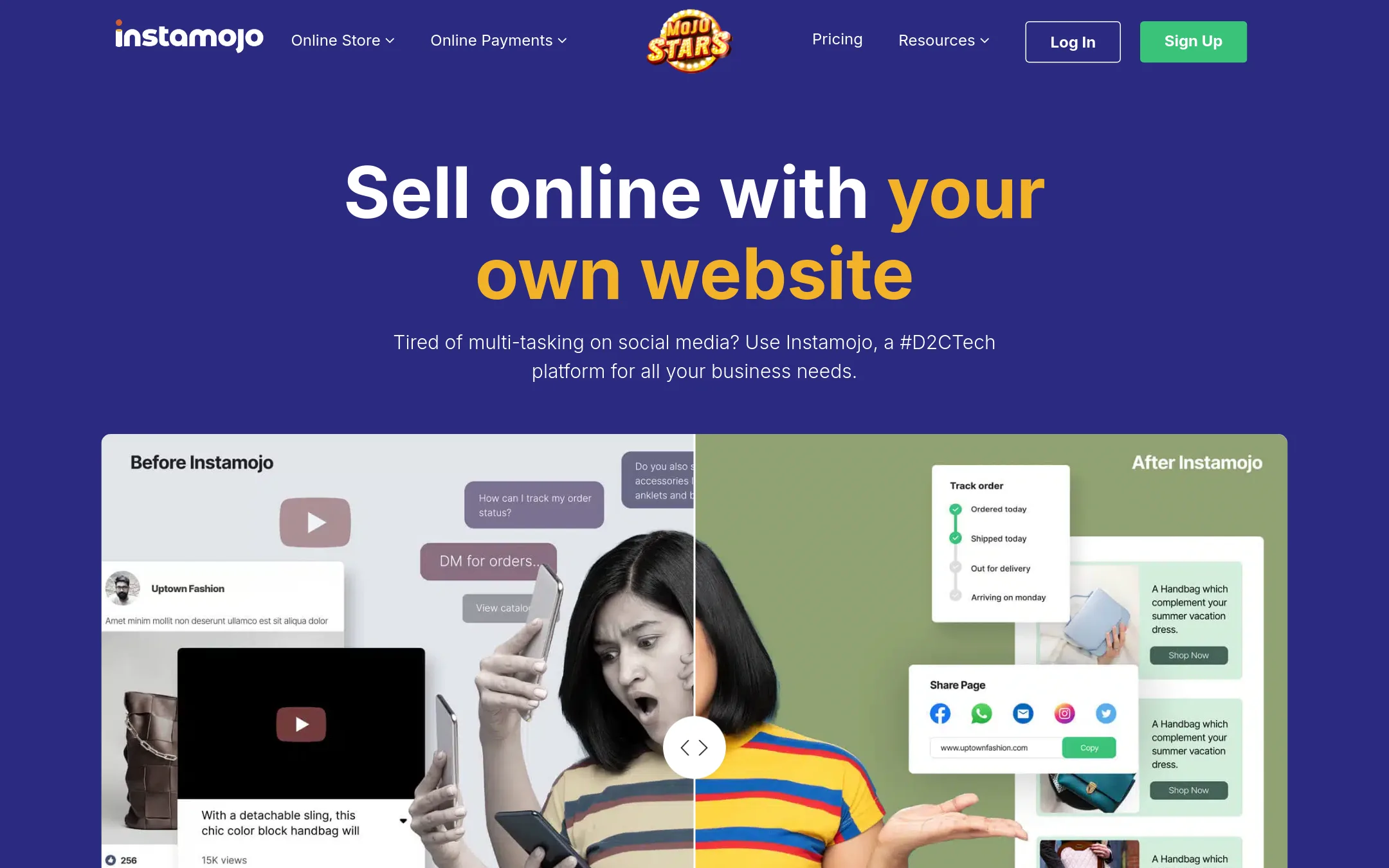
Instamojo is an e-commerce platform built for Indian D2C businesses, with integrated payments, shipping, and store-building tools. Choose it over Sellfy if you sell physical products or services to customers in India and want a payment gateway, COD, and local shipping partners built in.
Where it is strong
- Integrated payment gateway with 100+ payment modes, including COD and EMI options
- Shipping integrations with doorstep pickup across India
- Do-It-For-Me plans where Instamojo builds your store for you
Where it falls short
- Transaction fees apply on every sale, unlike Sellfy's zero-fee model
- Pricing and features are India-focused, so international sellers may find limits
- Pricing:
- Plans start at ₹0/year with a 5% + ₹3 transaction fee. Paid plans range from ₹3,999/year to ₹14,999/year, with transaction fees dropping to 2% + ₹3 on the Growth plan.
- Switching from Sellfy:
- Moving from Sellfy means rebuilding your store on Instamojo's platform, and you'll need to set up new payment and shipping integrations.
- Paid
10.WhopVerified
Finance & Accounting
Payments infrastructure for checkout, subscription billing, embedded payments and global payouts.
- Not published
11.BigCommerce
Best for: Growing product businesses and B2B sellers that need multi-channel commerce and advanced catalog management
- Pricing
- Not published
- Category
- E-commerce
BigCommerce is a full e-commerce platform for growing brands and retailers that need B2B, multi-channel, and AI tools. Choose it over Sellfy when you need a scalable store with advanced commerce features, not just a simple creator storefront.
Where it is strong
- Built-in B2B features for wholesale and bulk pricing
- Sell across multiple channels like social and marketplaces
- AI tools to personalize buying experiences
Where it falls short
- Pricing not transparent, requires contacting sales
- More complex to set up than Sellfy's drag-and-drop builder
- Pricing:
- Pricing is not published on the site.
- From $29/mo
12.Ecwid
Best for: Businesses that want to add a store to an existing WordPress, Wix, or Squarespace site and sell across multiple channels.
- Pricing
- From $29/mo
- Category
- E-commerce
Ecwid is a hosted e-commerce platform that lets you add a store to an existing website or build a new one. It handles products, orders, payments, and shipping from one dashboard. Choose it over Sellfy if you already have a website and want to add a store to it, or if you need to sell across multiple channels like social media and marketplaces.
Where it is strong
- Add a store to any existing website or build a new one with templates.
- Sell on social media, marketplaces, and in person with POS integration.
- No transaction fees on any plan.
Where it falls short
- Product limits on lower plans (10 on Starter, 100 on Venture).
- Marketplace selling requires third-party apps with additional fees.
- Pricing:
- Starter is $35/month (paid annually) or $29/month (paid monthly) for up to 10 products. Venture is $65/month (annual) or $49/month (monthly) for up to 100 products. Business is $149/month (annual) or $119/month (monthly) for up to 2,500 products. Unlimited is
See more comparisons in E-commerce alternatives.
FAQ
Questions about Sellfy alternatives
What is the cheapest way to start selling digital products?
Gumroad has no monthly fee and charges 10% plus $0.50 per transaction. Big Cartel offers a free plan with no transaction fees. Sellfy starts at $22 per month with no transaction fees, but you pay a flat monthly cost.
Which alternative has no transaction fees?
Sellfy, Ecwid, and Big Cartel all advertise no transaction fees. Podia has no transaction fees on its Shaker and Earthquaker plans, but the lowest plan charges 5%. Instamojo and Gumroad charge transaction fees on every sale.
Can I sell physical products with these alternatives?
Yes. Shopify, BigCommerce, Ecwid, and Big Cartel all support physical products. Instamojo is built for physical goods with shipping integrations in India. Sellfy also supports physical products and print-on-demand. Payhip and Gumroad focus more on digital, though Payhip does mention physical products.
Which alternative is best for selling on social media?
Stan Store is designed for link-in-bio sales on Instagram, TikTok, and YouTube. Sellfy lets you embed buy buttons and share your store on social channels. Shopify and Ecwid also allow selling on social and marketplace channels, though some require third-party apps.
Do any alternatives handle VAT and taxes automatically?
Payhip handles VAT and taxes for digital goods. Gumroad acts as a merchant of record and manages global tax compliance. Sellfy does not mention built-in tax handling, so you would need to manage that separately.
Last updated October 30, 2026.