
Shadeform alternatives
6 products compared · Updated November 10, 2026
The short answer
The strongest Shadeform alternatives are CoreWeave, RunPod and Together AI. CoreWeave suits AI labs training large models on dedicated multi-rack GPU clusters. RunPod suits developers and small AI teams who want to train, fine-tune and serve models on one platform. Together AI suits product teams running open-source models in production who want inference, fine-tuning and GPU capacity under one provider.
Your shortlist, at a glance
Read the comparisons ↓ CoreWeaveCustom quoteAI labs and model builders training large models on dedicated multi-rack GPU clusters
- LLambda GPU CloudFrom $0.69/GPU/hrAI labs and teams training foundation models that need dedicated, single-tenant NVIDIA clusters with managed support
 RunPodNot publishedDevelopers and small AI teams that want to train, fine-tune and serve models on one GPU platform without managing hardware
 Vast.aiNot publishedCost-conscious AI teams and developers who want programmatic, per-second GPU rentals and can handle interruptible capacity for training
- PPaperspaceFrom $0.45/hr (GPU)Small ML teams that want notebooks, training and deployment under one provider with per-hour billing
- TTogether AIPer 1M tokens, variesProduct teams running open-source models in production who want inference, fine-tuning and GPU capacity under one provider
About Shadeform and its alternatives
Shadeform is a GPU cloud marketplace. According to its site, it lets teams provision GPU instances across more than 30 top clouds from one console, with centralized billing and support and coverage of over 100 regions across North America, Europe, Asia and Australia.
When comparing alternatives in this category, weigh the pricing structure first, since some providers publish hourly rates while others use live market prices or require a sales conversation. Then check regional coverage, the integrations and tooling a team will rely on, the level of support offered, and the contract terms such as minimum commitments and interruptible capacity.
Explore the alternatives
- Custom quote
1.CoreWeave
Best for: AI labs and model builders training large models on dedicated multi-rack GPU clusters
- Pricing
- Custom quote
- Category
- AI & Machine Learning
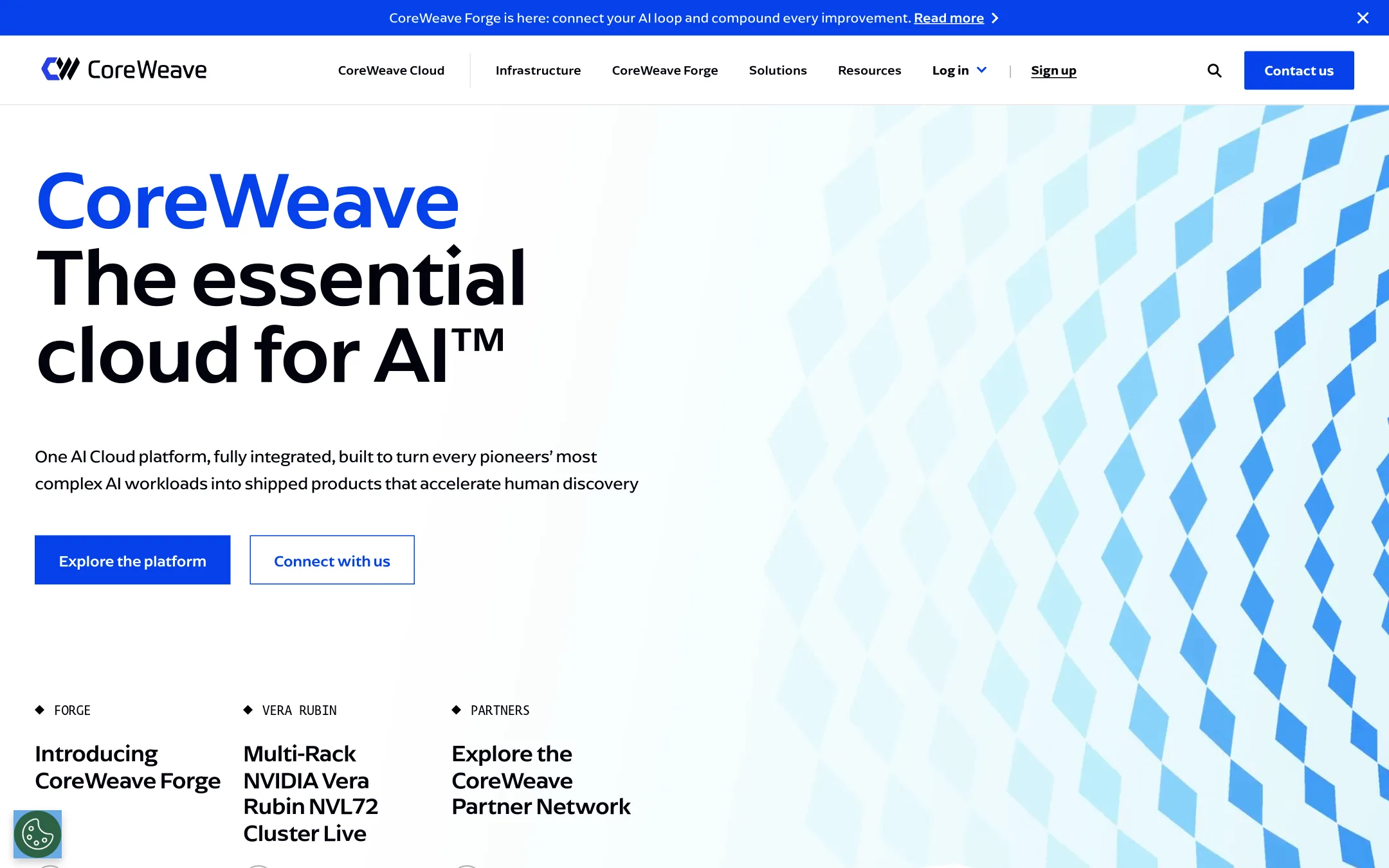
CoreWeave runs its own GPU cloud built for AI training and inference, with a wide range of NVIDIA hardware from A100 up to GB300 NVL72 racks. Teams pick it over Shadeform when they want a single provider running dedicated, large-scale clusters rather than sourcing capacity across many third-party clouds. It also offers managed tooling such as Forge and Mission Control for keeping long training runs stable.
Where it is strong
- Dedicated GPU clusters from A100 to GB300 NVL72
- Recognized as an NVIDIA Exemplar Cloud for GB200 NVL72 training
- Reserved capacity discounts of up to 60% for committed usage
Where it falls short
- Serves a single provider's infrastructure rather than a marketplace of many clouds
- Pricing for the largest GPU configurations depends on contacting sales
- Pricing:
- Pricing is listed per GPU model and per CPU type, with reserved commitments offering up to 60% off on-demand rates, but the site does not give a single starting figure in the supplied text.
- LFrom $0.69/GPU/hr
2.Lambda GPU Cloud
Best for: AI labs and teams training foundation models that need dedicated, single-tenant NVIDIA clusters with managed support
- Pricing
- From $0.69/GPU/hr
- Category
- Other
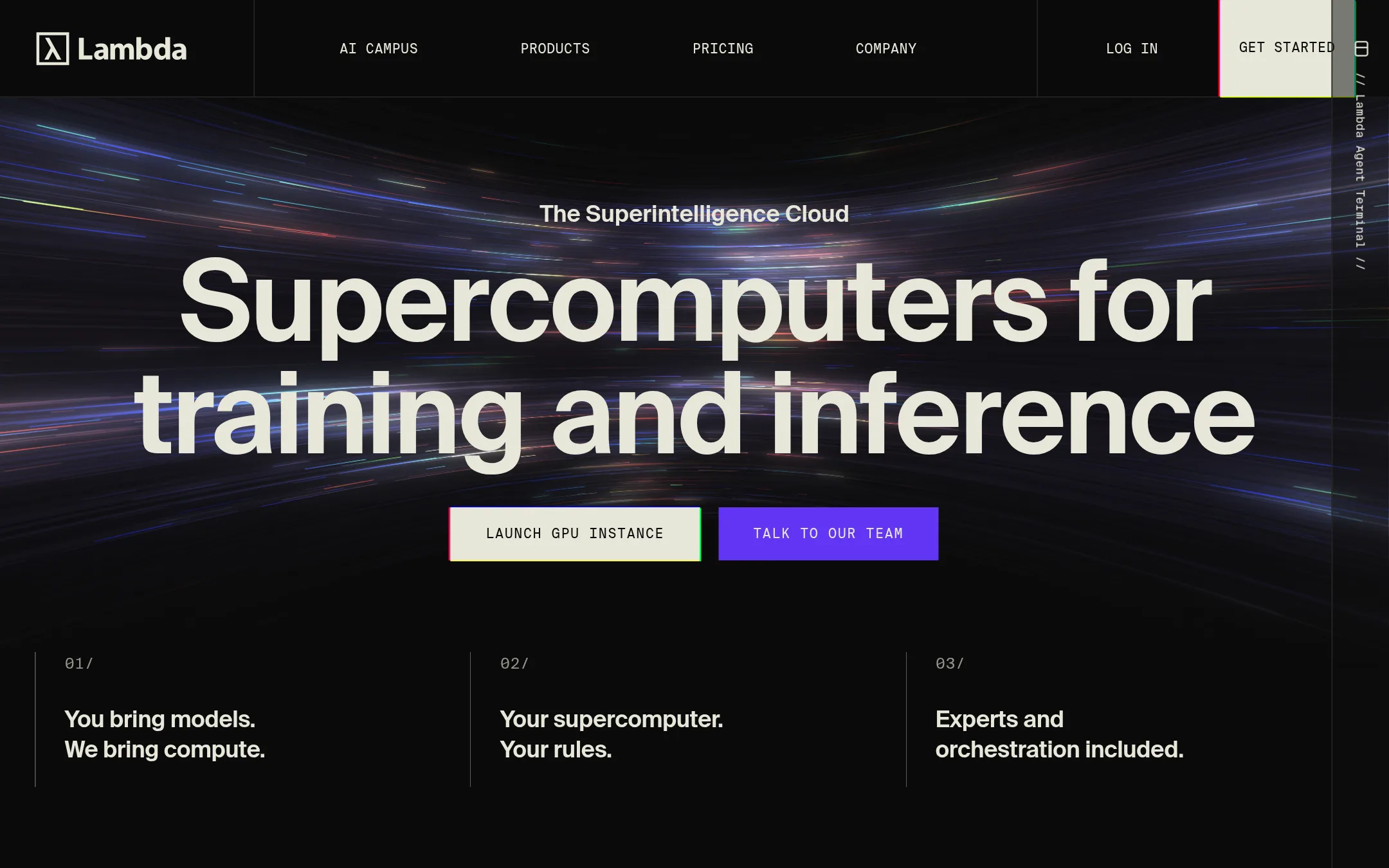
Lambda runs its own GPU infrastructure and sells dedicated access to NVIDIA hardware, from single instances to large clusters. Teams pick it over Shadeform when they want single-tenant, caged clusters and managed orchestration from one provider rather than sourcing capacity across a marketplace of clouds.
Where it is strong
- Single-tenant clusters with hardware-level isolation, including caged clusters
- Managed clusters with expert engineering support included
- SOC 2 Type II certified
Where it falls short
- Capacity comes from one provider, so there is no multi-cloud marketplace to pull from as with Shadeform
- Reserved cluster pricing requires talking to the sales team
- Pricing:
- Pricing is published for instances and 1-Click Clusters, with NVIDIA B200 instances at $7.79 per GPU per hour and H100 1-Click Clusters from $5.54 per GPU per hour on longer terms, plus applicable sales tax, VAT or GST.
- Switching from Shadeform:
- Moving from Shadeform means provisioning new instances or clusters with Lambda and migrating workloads and data to its environment.
- Not published
3.RunPod
Best for: Developers and small AI teams that want to train, fine-tune and serve models on one GPU platform without managing hardware
- Pricing
- Not published
- Category
- AI & Machine Learning
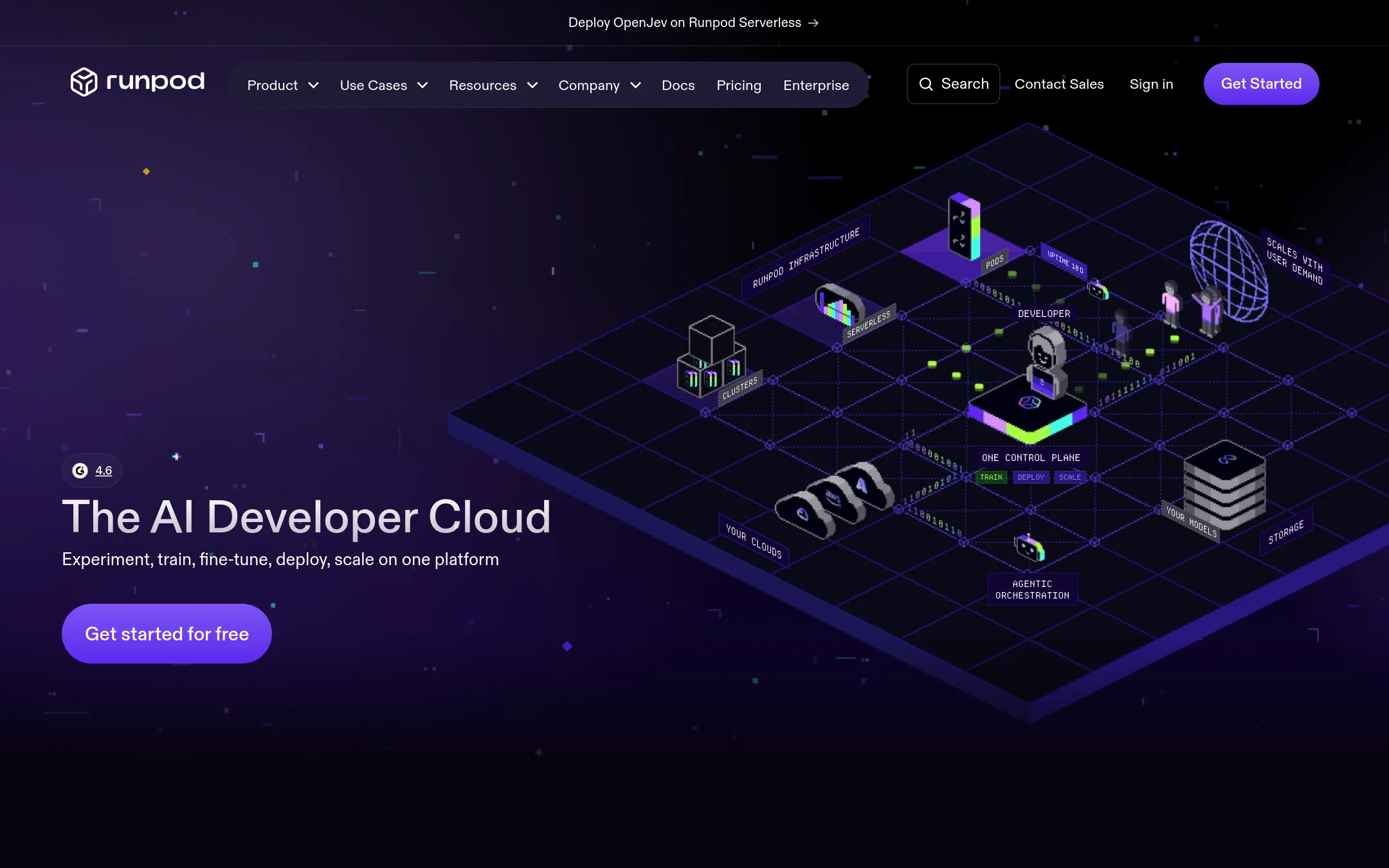
RunPod is a GPU cloud for developers who want to run their own workloads directly. It offers Pods for dedicated GPU instances, Serverless endpoints that scale to zero when idle, and multi-GPU Clusters, all in one account. Pick it over Shadeform when you want a single platform for the full lifecycle from experiments to inference rather than a marketplace that routes you to third-party providers.
Where it is strong
- Pods, Serverless and Clusters share one account, so moving from experiment to production needs no replatforming
- Serverless endpoints scale from zero and bill only while running, which suits spiky inference traffic
- Over 30 GPU models across 31 regions, including H100, A100 and B200
Where it falls short
- Pricing differs by workload type and reserved capacity needs an enterprise sales conversation, so costs are harder to compare up front
- It is a single provider's network, not the multi-cloud marketplace Shadeform offers
- Pricing:
- Pricing is not published on the site.
- Not published
4.Vast.ai
Best for: Cost-conscious AI teams and developers who want programmatic, per-second GPU rentals and can handle interruptible capacity for training
- Pricing
- Not published
- Category
- AI & Machine Learning
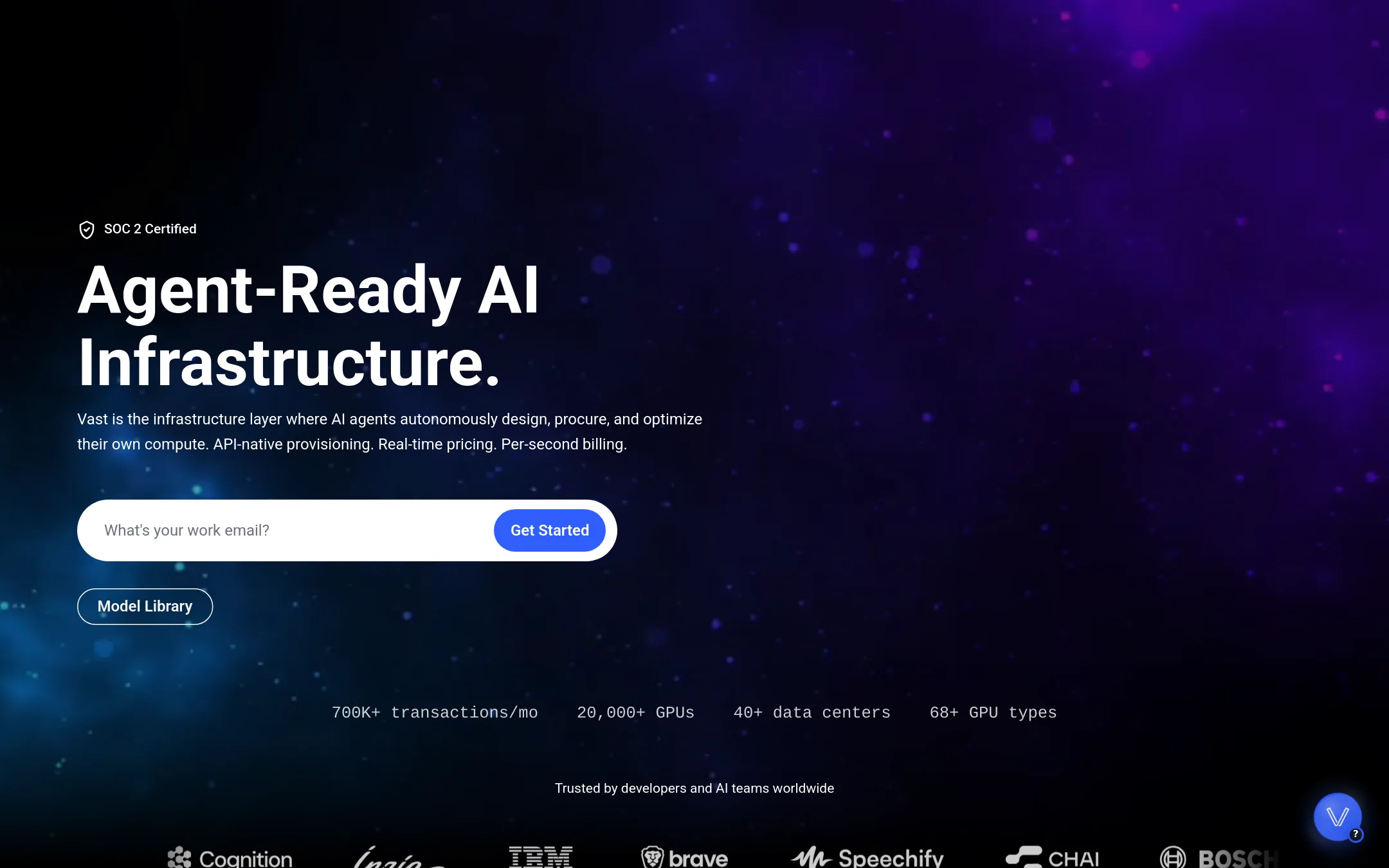
Vast.ai is a GPU marketplace where prices move with supply and demand across more than 20,000 GPUs in about 40 data centers. It is API-first, so you can search, filter and launch instances from a terminal, a Python SDK or code. Teams pick it over Shadeform when cost matters most and they are comfortable with the spot-style market, including interruptible instances that can be reclaimed.
Where it is strong
- Live, programmatically queryable GPU prices across 20,000+ GPUs
- Per-second billing with no minimum hours and no long-term contracts
- Deploy via CLI, Python SDK or API, plus serverless and cluster options
Where it falls short
- Interruptible instances can be reclaimed, so they suit fault-tolerant jobs only
- Prices fluctuate with the market rather than being fixed
- Pricing:
- Pricing is not published as fixed rates. The site lists live supply-and-demand prices across 68+ GPU types, with on-demand, interruptible and reserved tiers, and reserved terms of 1, 3 or 6 months.
- Switching from Shadeform:
- Moving from Shadeform would mean setting up a Vast.ai account, adding credit and provisioning instances through its CLI or API, since the two platforms use different interfaces.
- PFrom $0.45/hr (GPU)
5.Paperspace
Best for: Small ML teams that want notebooks, training and deployment under one provider with per-hour billing
- Pricing
- From $0.45/hr (GPU)
- Category
- Other
Paperspace is a cloud GPU platform for developing, training, and deploying ML models, with notebooks, managed training jobs, and API deployment in one place. It is now part of DigitalOcean. A team would pick it over Shadeform if it wants a single provider with a developer-focused workflow instead of sourcing GPUs across many clouds.
Where it is strong
- Notebooks, training and API deployment are built into one platform.
- Per-hour billing with no runtime limits on GPU training.
- Wide range of GPU types, from older cards to H100s.
Where it falls short
- Access is a single provider's inventory, not a marketplace across many clouds.
- The H100 $2.24/hour rate requires a 3-year commitment, and the lower A100 rate also requires a 3-year commitment.
- Pricing:
- Pricing is published: notebooks have a free tier with 10GB persistent storage and one running notebook, and paid GPU instances bill per hour, for example an H100 at $5.95/hour on-demand under a promo, or $2.24/hour on a 3-year commitment.
- TPer 1M tokens, varies
6.Together AI
Best for: Product teams running open-source models in production who want inference, fine-tuning and GPU capacity under one provider
- Pricing
- Per 1M tokens, varies
- Category
- Other
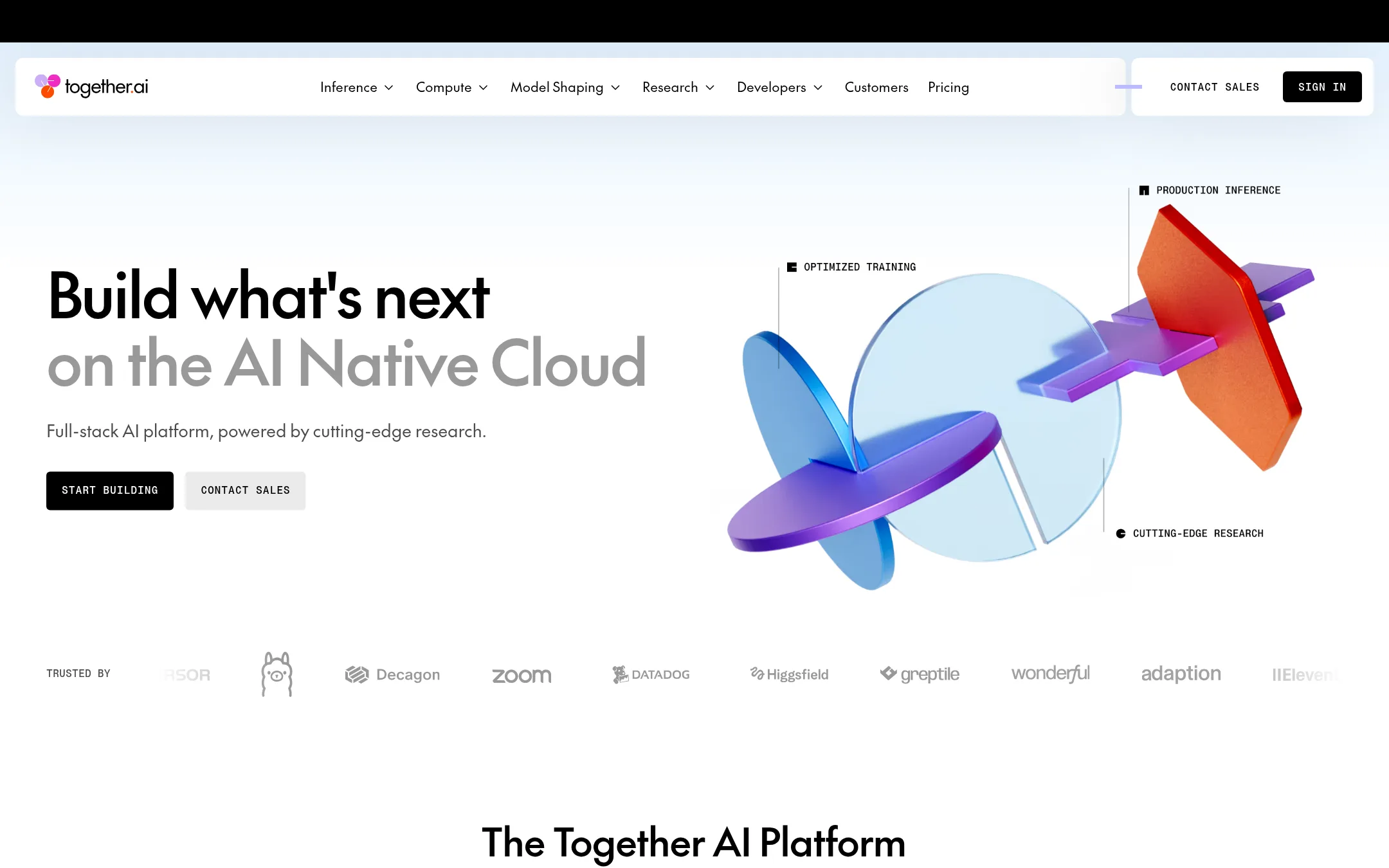
Together AI runs open-source models through serverless APIs, dedicated endpoints and GPU clusters, with fine-tuning and post-training on the same platform. Teams pick it over Shadeform when the bottleneck is model serving and inference rather than raw GPU rental, because it covers the layer above the hardware.
Where it is strong
- Serverless access to a wide range of open models for text, image, video, audio and code
- Provisioned throughput with reserved capacity and a 99% uptime SLA for production workloads
- Fine-tuning and post-training offered alongside inference, so models can be improved on the same platform
Where it falls short
- It is focused on running models, so it does not offer the broad multi-cloud GPU marketplace that Shadeform provides
- Pricing varies widely by model and token type, which makes budgeting harder without a clear forecast
- Pricing:
- Serverless inference is priced per 1M tokens, for example Kimi K3 at $3.00 input and $15.00 output, GLM-5.3-Flash at $0.15 input and $0.50 output, and Tev1 4B Experimental at $0.04 with no output charge listed as free, while dedicated inference is billed per G
- Switching from Shadeform:
- Moving from Shadeform means shifting from renting raw GPU instances to calling Together's hosted endpoints or provisioning its clusters, so the workload needs to fit the platform's model and API options.
See more comparisons in AI & Machine Learning alternatives.
FAQ
Questions about Shadeform alternatives
What is the main difference between Shadeform and CoreWeave?
Shadeform is a marketplace that routes you to capacity across many third-party clouds. CoreWeave runs its own GPU cloud and is built around dedicated, large-scale clusters from a single provider, which suits teams training large models.
Which alternative is cheapest for interruptible GPU work?
Vast.ai is the most cost-focused option, with live supply-and-demand prices, per-second billing and no long-term contracts. Its interruptible instances can be reclaimed, so they suit fault-tolerant training jobs rather than production serving.
Which option is best if I mainly need to serve open-source models?
Together AI covers serverless APIs, dedicated endpoints, fine-tuning and GPU clusters for open models. It is aimed at running models in production rather than renting raw hardware, so it works above the infrastructure layer.
Is there an alternative for small teams that want notebooks and deployment in one place?
Paperspace combines notebooks, managed training and API deployment on one platform, with per-hour billing and a free notebook tier. It is a single provider's inventory rather than a multi-cloud marketplace.
Do these alternatives offer the same multi-cloud access as Shadeform?
Most of them do not. RunPod, CoreWeave, Lambda and Paperspace each rely on their own infrastructure, and only Vast.ai draws on a broad market of GPUs, so teams that want to shop across many clouds should compare that trade-off carefully.
Last updated November 10, 2026.