
Signadot alternatives
6 products compared · Updated November 15, 2026
The short answer
The three strongest alternatives to Signadot are Release, Okteto and Bunnyshell. Release suits teams that need full-stack per-pull-request environments with databases and queues running in their own AWS, GCP or Azure account. Okteto suits platform teams that want reproducible preview environments and agent sandboxes on their own Kubernetes cluster, including air-gapped setups. Bunnyshell suits engineering teams that want an environment for each pull request created from Git and destroyed on merge, billed per minute while active.
Your shortlist, at a glance
Read the comparisons ↓ OktetoNot publishedPlatform teams that want reproducible per-PR preview environments and agent sandboxes on their own Kubernetes cluster, including air-gapped ones
- GGardenNot publishedPlatform teams running Kubernetes that want one shared configuration for dev, test and CI
- BBunnyshell$0.007/min per envEngineering teams that want a full environment per pull request, created from Git and destroyed on merge, without filing DevOps tickets
 ReleaseNot publishedEngineering teams that run full-stack apps with databases in their own AWS, GCP or Azure accounts and need a complete environment for every pull request
- QQoveryFrom $299/yr (Starter)Startups and growing teams that want to deploy and govern services on their own AWS, GCP, Azure or Kubernetes clusters without hiring a platform team
- UUffizziNot publishedTeams that want per-pull-request preview environments and are comparing options that copy full environments rather than sharing a cluster
About Signadot and its alternatives
Signadot is a verification platform for cloud native apps. According to its site, it gives each change from a coding agent, developer or pull request an ephemeral environment that shares a cluster and runs real services, data and queues, using routing keys to send requests and messages to the right copy. Its site says it is known for starting environments in seconds at a fraction of the cost of full copies, and for running test suites in parallel against them.
When comparing alternatives in this category, weigh how each product prices its plans, including whether billing is per seat, per environment, per minute or by quote. Check which regions and clouds the product runs on, which integrations it supports with your service mesh, CI and message brokers, what support is included at each tier, and what the contract terms are, such as monthly versus annual commitments and whether Enterprise pricing is published.
Explore the alternatives
- Not published
1.Okteto
Best for: Platform teams that want reproducible per-PR preview environments and agent sandboxes on their own Kubernetes cluster, including air-gapped ones
- Pricing
- Not published
- Category
- Developer Tools
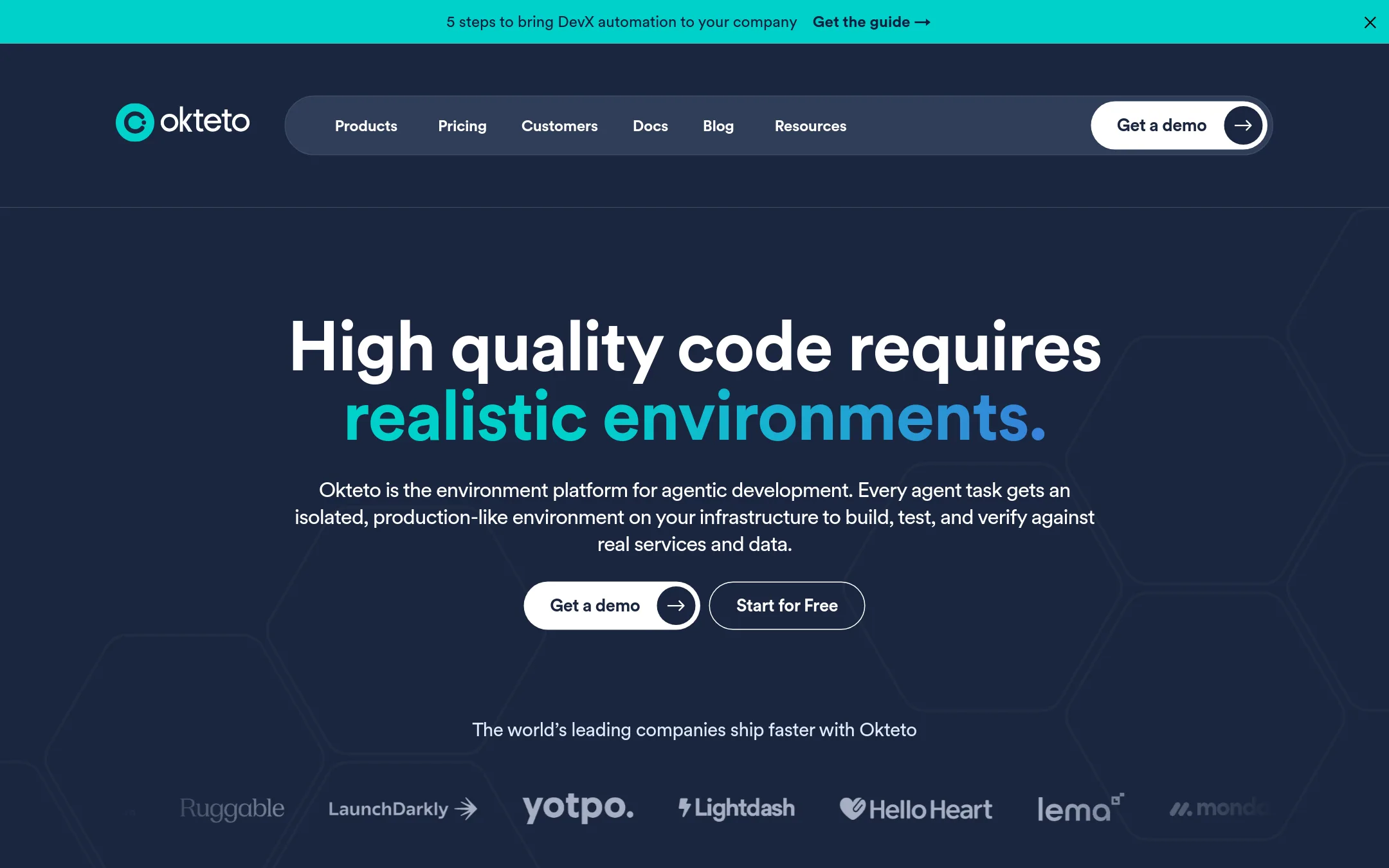
Okteto gives each developer, coding agent and pull request a Kubernetes environment built from one manifest, with a preview URL per change. It runs the full application rather than a mock, and it can run agents inside your own cluster. Choose it over Signadot when you want full application environments on your own Kubernetes, with agents and preview URLs as the main workflow.
Where it is strong
- One manifest drives development, tests and agents, so environments stay reproducible
- Preview URLs let product and QA review a change without local setup
- Runs self-hosted on your own cluster, with air-gapped support on Enterprise
Where it falls short
- Okteto has no published per-tier pricing on the site, so cost needs a sales conversation
- Enterprise-only items such as air-gapped support and GitOps control sit behind a sales process
- Pricing:
- Pricing is not published on the site.
- GNot published
2.Garden
Best for: Platform teams running Kubernetes that want one shared configuration for dev, test and CI

- Pricing
- Not published
- Category
- Other
Garden is a DevOps automation tool for building, deploying and testing Kubernetes apps. It is aimed at teams that want the same configuration and workflows across development, testing and CI, with smart caching to speed up builds and test runs. Someone would choose Garden over Signadot if they want one configuration-driven workflow for the full delivery pipeline, rather than per-change environments that share a cluster.
Where it is strong
- Same configuration and workflows across development, testing and CI
- Smart caching to speed up builds and test runs
- Documented tutorials and guides for Kubernetes, Terraform and Pulumi
Where it falls short
- Its documentation does not describe per-change ephemeral environments that share one cluster, which is Signadot's core approach
- Its docs reference an older Bonsai version alongside current guides, so setup may take more checking
- Pricing:
- Pricing is not published on the site.
- B$0.007/min per env
3.Bunnyshell
Best for: Engineering teams that want a full environment per pull request, created from Git and destroyed on merge, without filing DevOps tickets
- Pricing
- $0.007/min per env
- Category
- Other
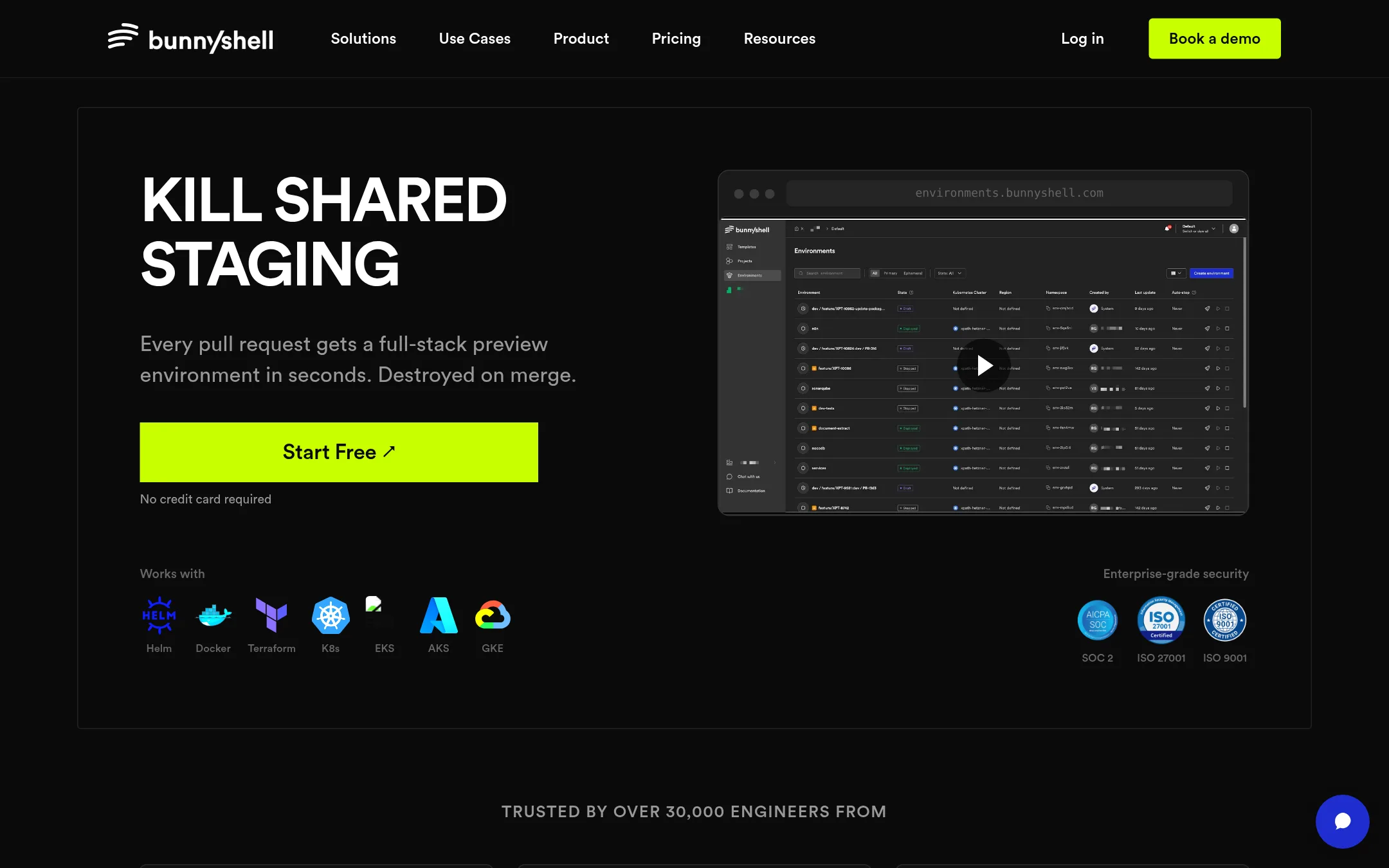
Bunnyshell builds a full-stack preview environment for each pull request and tears it down on merge, and it can also run staging and sandboxes for AI agents and scripts. Teams pick it over Signadot when they want self-serve environments defined as code and run on their own Kubernetes cluster, with pay-per-minute billing for each active environment.
Where it is strong
- Full-stack environment for every pull request, created on push and destroyed on merge
- Environments defined in one bunnyshell.yaml and managed from PR comments
- Auto-pause when idle, so you do not pay for unused uptime
Where it falls short
- Scaleup and Enterprise pricing is not published and requires contacting sales
- Routing-key based sharing of a baseline cluster is not described as its approach, so each environment is a fuller copy than Signadot's
- Pricing:
- Pricing is charged at $0.007 per minute for each active environment, with a 14-day full-feature trial, and the Startup, Scaleup and Enterprise tiers are priced by contact for Scaleup and Enterprise.
- Not published
4.Release
Best for: Engineering teams that run full-stack apps with databases in their own AWS, GCP or Azure accounts and need a complete environment for every pull request
- Pricing
- Not published
- Category
- Developer Tools
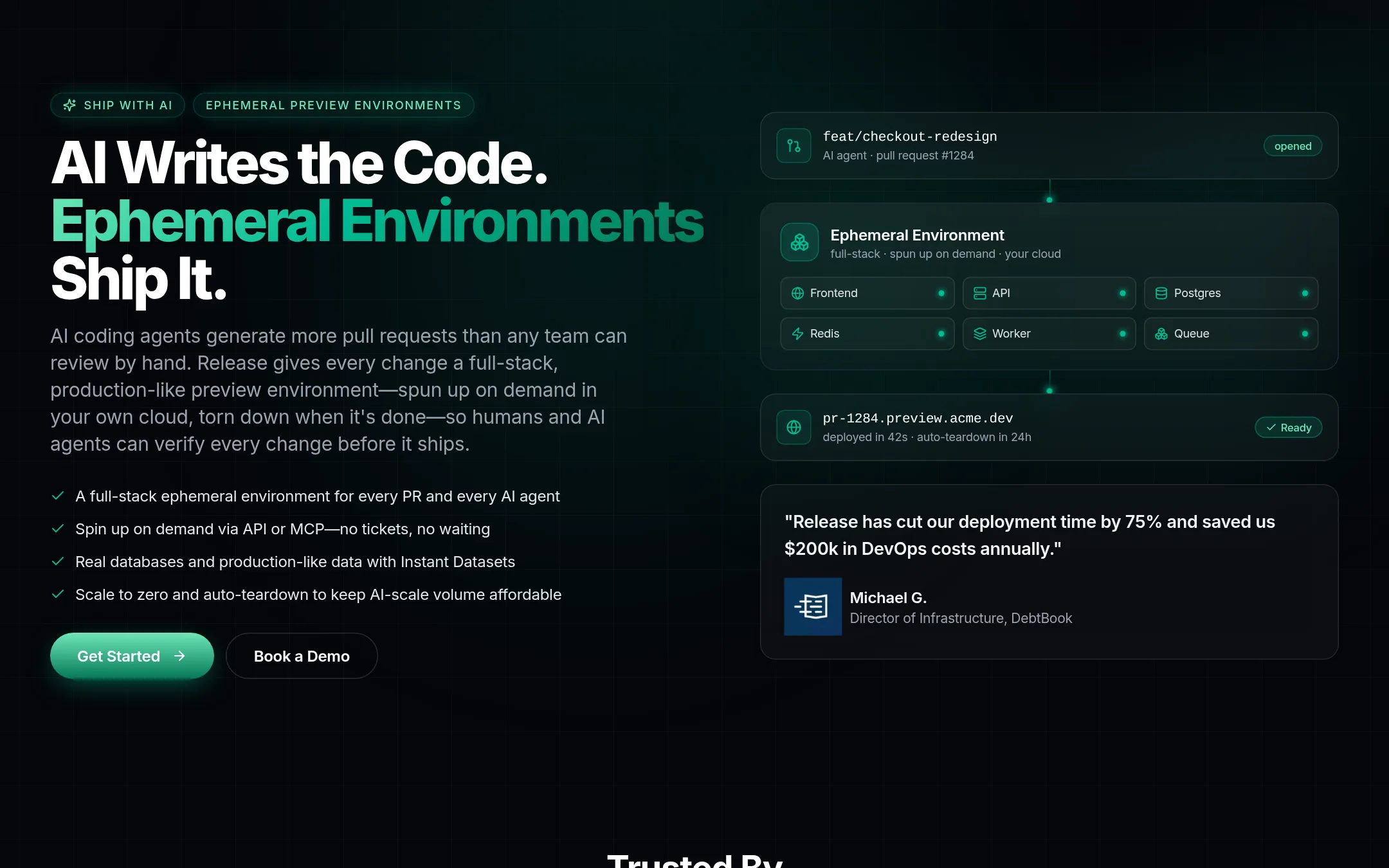
Release gives every pull request and every AI agent a full-stack, production-like preview environment, including databases, queues and microservices, running in your own AWS, GCP or Azure account. Pick it over Signadot when you want the whole application running per change, with data on demand, and your cloud is where the workloads must stay.
Where it is strong
- Full-stack environments with PostgreSQL, Redis, job queues and WebSockets, not just frontend previews
- Runs in your own AWS, GCP or Azure account, so code and data stay in your cloud
- Environments scale to zero and tear down automatically to limit cost
Where it falls short
- Published pricing is limited to an Enterprise tier with variable pricing
- The site does not describe a Signadot-style routing approach that shares one cluster across many lightweight environments
- Pricing:
- Pricing is not published on the site, and Release describes its Enterprise tier as runs in your cloud with pricing that varies.
- QFrom $299/yr (Starter)
5.Qovery
Best for: Startups and growing teams that want to deploy and govern services on their own AWS, GCP, Azure or Kubernetes clusters without hiring a platform team
- Pricing
- From $299/yr (Starter)
- Category
- Other
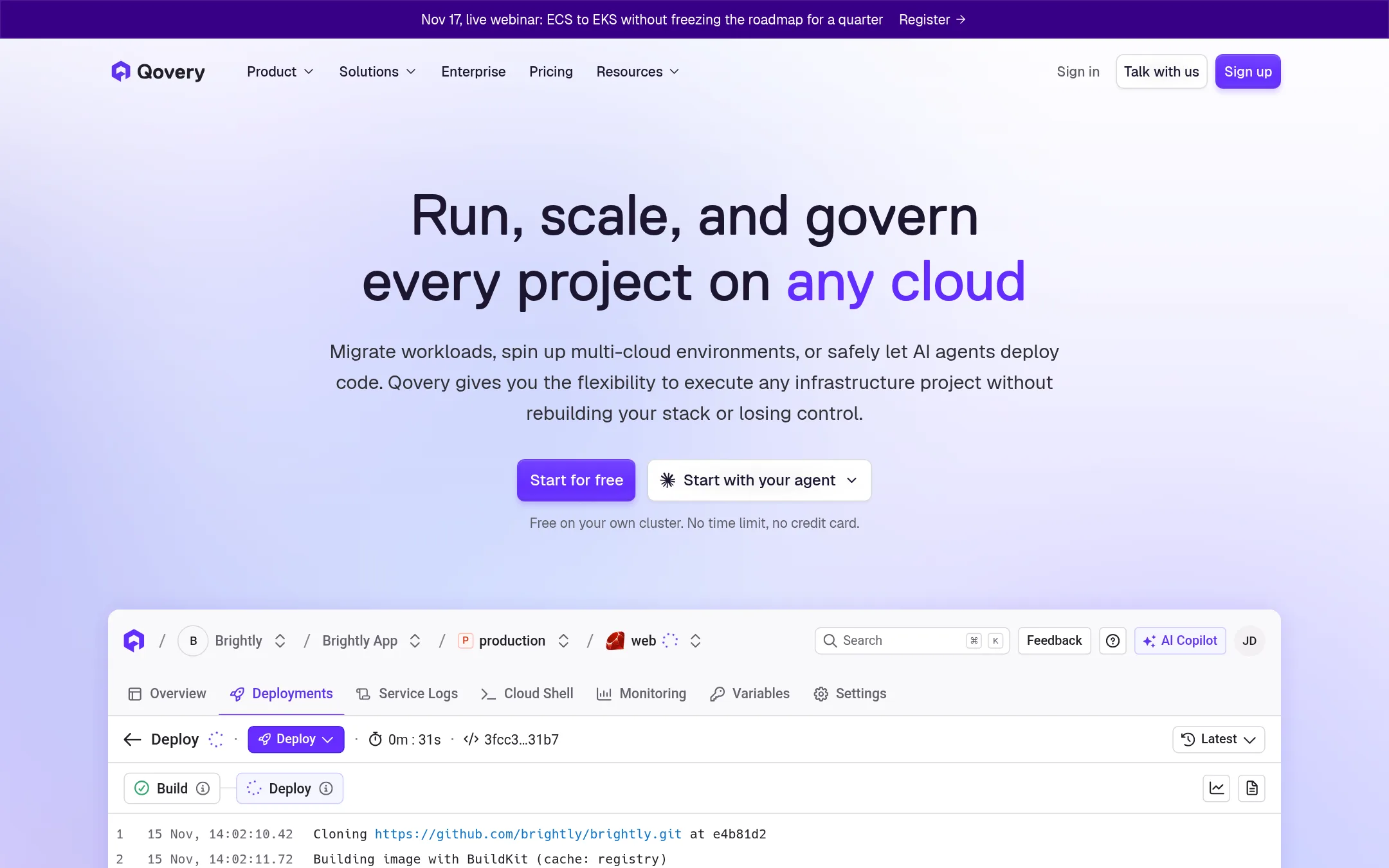
Qovery is a control plane that provisions clusters, deploys services and gives both engineers and AI agents policy-checked, logged access to infrastructure on your own cloud. Pick it over Signadot when the main problem is getting services shipped and governed on your own clusters, not testing each change in a lightweight shared environment.
Where it is strong
- Deploys services from git or container registries without writing per-service Kubernetes manifests or pipelines
- Gives AI agents scoped access through policy API tokens, with every action attributed and logged
- Runs on AWS, GCP, Azure, Scaleway or your own Kubernetes cluster, with upgrades and patches handled for you
Where it falls short
- Its focus is deploying and operating infrastructure, so it does not offer Signadot's per-change routing of requests and messages through a s
- Compliance packages such as HIPAA and DORA sit in higher tiers or add-ons, and the Enterprise plan needs a custom quote
- Pricing:
- Pricing is published by plan: Free for one cluster and 1,000 deployment minutes a month, Starter at $299 billed yearly, Growth at $899, and Scale at $2,999 with custom Enterprise pricing above that.
- Switching from Signadot:
- Moving from Signadot is not described in the supplied facts, so no migration steps are stated here.
- UNot published
6.Uffizzi
Best for: Teams that want per-pull-request preview environments and are comparing options that copy full environments rather than sharing a cluster

- Pricing
- Not published
- Category
- Other
Uffizzi is a platform for spinning up preview environments for pull requests. The site could not be reached when this entry was prepared, so its full feature set is unconfirmed. A team might pick it over Signadot if it wants a per-pull-request preview tool and does not need the routing-key approach that shares a cluster across many environments.
Where it is strong
- Built around preview environments for pull requests
- Offers a direct alternative if full environment copies suit your workload
- Simpler scope if you only need PR previews
Where it falls short
- The site could not be reached, so current features are unverified
- No published pricing to compare against Signadot's plans
- Pricing:
- Pricing is not published on the site.
See more comparisons in Developer Tools alternatives.
FAQ
Questions about Signadot alternatives
What is the main difference between Signadot and Okteto?
Signadot shares one cluster across many lightweight environments by routing requests and messages with a routing key. Okteto builds full application environments from one manifest, each with a preview URL, and can run agents inside your own cluster. Okteto suits teams that want full environments on their own Kubernetes, while Signadot suits teams that want to create many environments quickly and cheaply.
Which alternative is best if my application uses databases and queues that must stay in my own cloud?
Release is the strongest fit for this case. It runs full-stack environments with PostgreSQL, Redis, job queues and WebSockets in your own AWS, GCP or Azure account, so code and data stay in your cloud. Its published pricing is limited to an Enterprise tier with variable cost, so you will need to ask for a quote.
How does Bunnyshell's pricing compare to Signadot's?
Bunnyshell charges $0.007 per minute for each active environment and offers a 14-day full-feature trial, with environments auto-pausing when idle. Signadot's Business plan is a fixed monthly base of $250 with included Sandboxes, devboxes and Test Invocations, plus add-ons. Bunnyshell's cost depends on how long environments run, while Signadot's depends on how many resources a team uses each month.
Is any alternative a good fit if I mainly need to deploy and govern services rather than test each change?
Qovery is designed for that need. It provisions clusters, deploys services and gives engineers and AI agents policy-checked, logged access on your own cloud. It offers published pricing across Free, Starter, Growth and Scale plans, with custom Enterprise pricing above that. It does not describe Signadot's per-change routing of requests and messages through a shared environment.
Can I rely on Uffizzi's details for a decision?
Not fully. The site could not be reached when this entry was prepared, so its current features are unverified and it publishes no pricing to compare against Signadot's plans. It may still be worth a look if you only need per-pull-request previews, but you should confirm its features and cost directly with the vendor before deciding.
Last updated November 15, 2026.