
Sim alternatives
8 products compared · Updated November 23, 2026
The short answer
The strongest alternatives to Sim are Make, n8n and Dify. Make suits business teams that need to connect many SaaS apps through visual automations without code. n8n suits technical teams that want visible, reviewable agent steps with code and human approval. Dify suits business teams that want to build and publish AI agents with a no-code visual builder.
Your shortlist, at a glance
Read the comparisons ↓ n8nNot publishedTechnical teams that want visual workflows with code steps and human approval on AI actions
 FlowiseNot publishedDevelopers and small teams that want a visual builder for chatbots and agents, with APIs and an embeddable widget
- LLangflowNot publishedDeveloper teams building RAG and agent flows in Python that need to ship them as APIs
- DDifyTiered plans, cut offBusiness teams that want to build their own AI agents with a visual, no-code builder and publish them as apps, APIs, or embeds
 ZapierFree tier. Paid plansOps and support teams that need to connect many SaaS apps with fixed, repeatable workflows and no code
 MakeCredit-based, see planBusiness teams that need to connect many SaaS apps through visual automations without writing code
 CrewAICustom quoteEnterprise teams that need governed multi-agent workflows with audit trails, RBAC and human approval gates
- RRelevance AICustom quoteRevenue teams that want AI agents running prospecting, lead routing and renewals with pipeline tracked as the output
About Sim and its alternatives
Sim is an open-source AI workspace where teams build, deploy, and manage AI agents. According to its site, it is known for 280+ integrations, support for every major LLM, permission groups, spend limits, data retention settings, and self-hosting with Docker or Kubernetes.
When comparing alternatives in this category, weigh the pricing structure first, since some tools bill per task, per credit, or per seat, and some do not publish prices at all. Then check regional availability, the integrations that matter to your stack, the support you get on your plan, and the contract terms, especially for governance features such as SSO, audit logs and self-hosting, which are often limited to enterprise tiers.
Explore the alternatives
- Not published
1.n8n
Best for: Technical teams that want visual workflows with code steps and human approval on AI actions
- Pricing
- Not published
- Category
- AI & Machine Learning
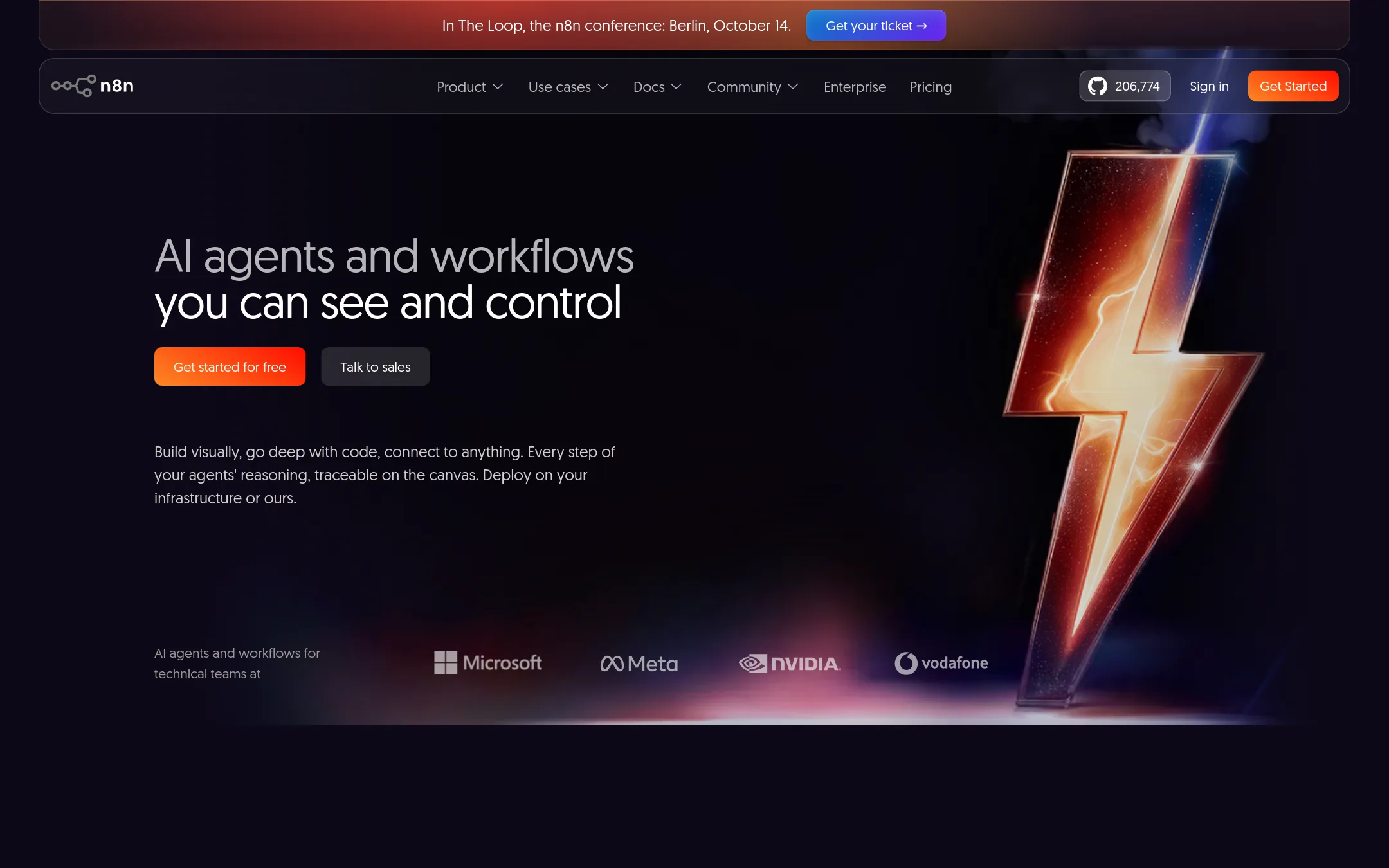
n8n is a workflow automation platform that adds AI agents and AI steps to a visual builder that also accepts code. It suits teams that want each step of an agent's logic visible and reviewable, with human approval on sensitive actions. Someone would pick it over Sim when they already run n8n, want the code-friendly builder with a large community, or need self-hosting with strong audit and log streaming.
Where it is strong
- Visual builder with code steps in JavaScript and Python when visual nodes fall short
- Human-in-the-loop approvals and evaluations for AI actions
- Self-hosted option with SSO, LDAP, audit logs and log streaming to external services
Where it falls short
- Pricing tiers are published on the site but the page we read does not give concrete figures, so cost is hard to compare
- Several AI features such as the Assistant and some agent capabilities are marked as preview
- Pricing:
- Pricing is not published on the site.
- Not published
2.Flowise
Best for: Developers and small teams that want a visual builder for chatbots and agents, with APIs and an embeddable widget
- Pricing
- Not published
- Category
- AI & Machine Learning
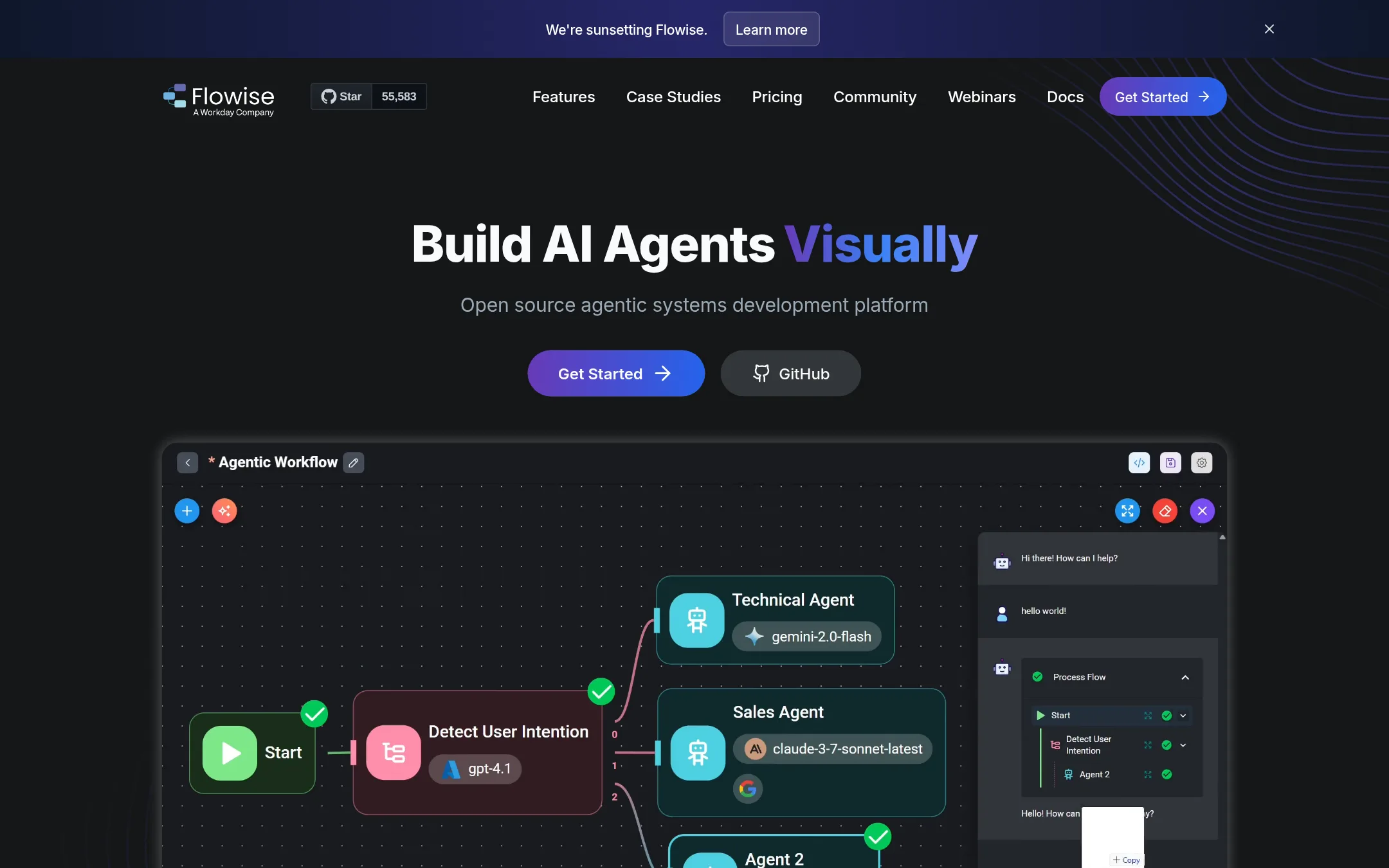
Flowise is an open source platform for building AI agents and chatbots with a visual drag and drop editor. It covers multi-agent workflows, retrieval over your own documents, human review steps and execution traces. Teams pick it over Sim when they want a visual agent builder they can run themselves and extend through APIs, an SDK and an embeddable chat widget.
Where it is strong
- Visual drag and drop builder for chatbots, multi-agent workflows and retrieval apps
- Developer access through APIs, a TypeScript and Python SDK and an embeddable chat widget
- Execution traces with Prometheus and OpenTelemetry support for observability
Where it falls short
- Its governance features, such as roles and permissions, are listed only under the Pro tier, while Sim covers permission groups and spend lim
- Pricing details are not published on the site, so costs are hard to compare with Sim's credit model
- Pricing:
- Pricing is not published on the site.
- LNot published
3.Langflow
Best for: Developer teams building RAG and agent flows in Python that need to ship them as APIs
- Pricing
- Not published
- Category
- Other
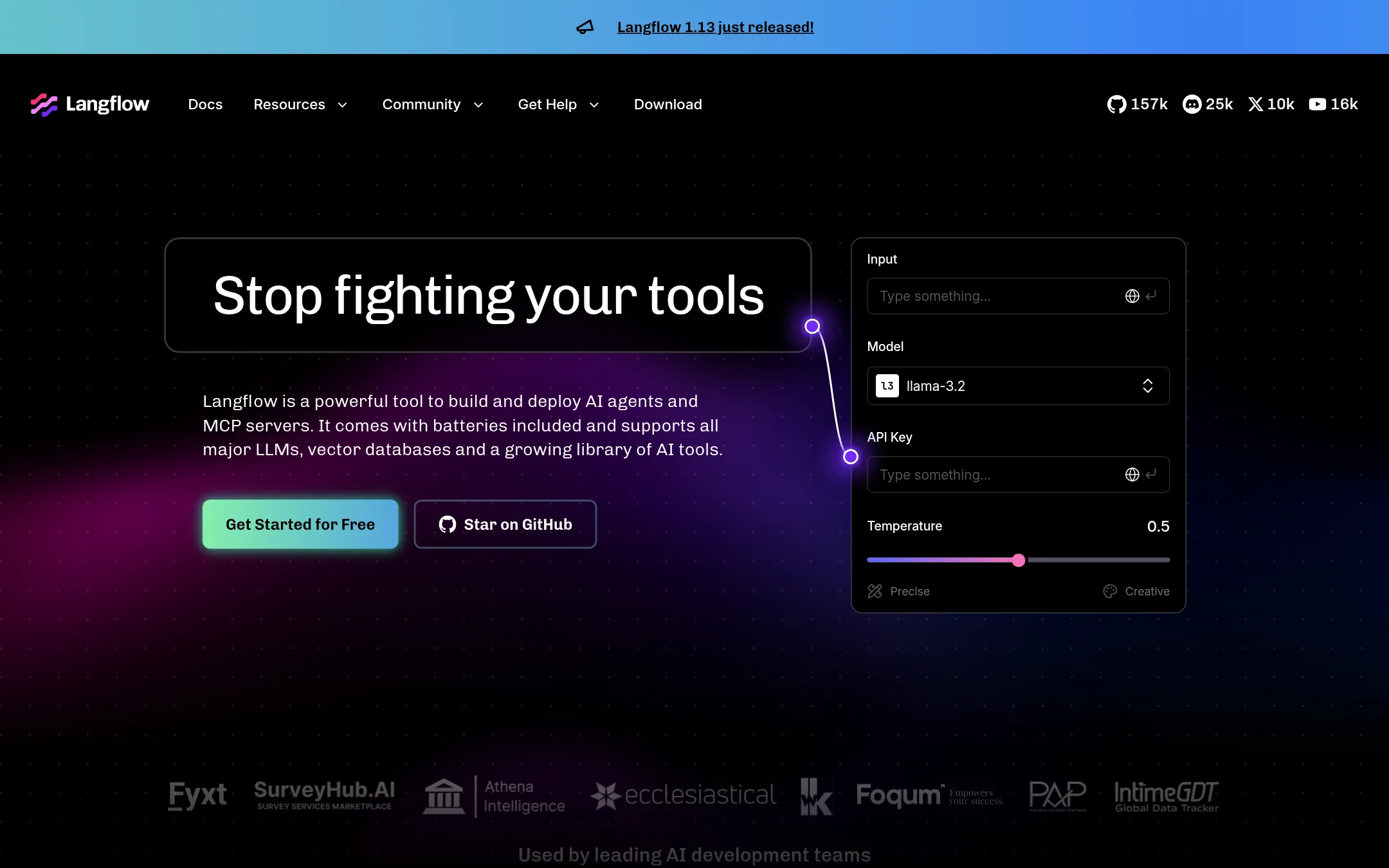
Langflow is a low-code visual builder for AI agents, RAG applications and MCP servers. It lets you drag components onto a canvas, drop into Python when you need custom logic, and deploy a flow as an API, with a hosted cloud option or self-hosting. Choose it over Sim when your team mainly wants to build RAG pipelines or agent flows in Python and expose them as APIs, rather than run a governed workspace with permissions, spend controls and integrations for the whole company.
Where it is strong
- Python code can be used to customize any component
- Flows can be deployed as an API on a hosted cloud or self-hosted
- Same product in open source and cloud, so the open-source version can be run and then moved to the cloud
Where it falls short
- The site does not describe enterprise governage features such as permission groups or spend limits
- The site does not describe a built-in run log or audit trail like Sim's
- Pricing:
- Pricing is not published on the site.
- DTiered plans, cut off
4.Dify
Best for: Business teams that want to build their own AI agents with a visual, no-code builder and publish them as apps, APIs, or embeds
- Pricing
- Tiered plans, cut off
- Category
- Other
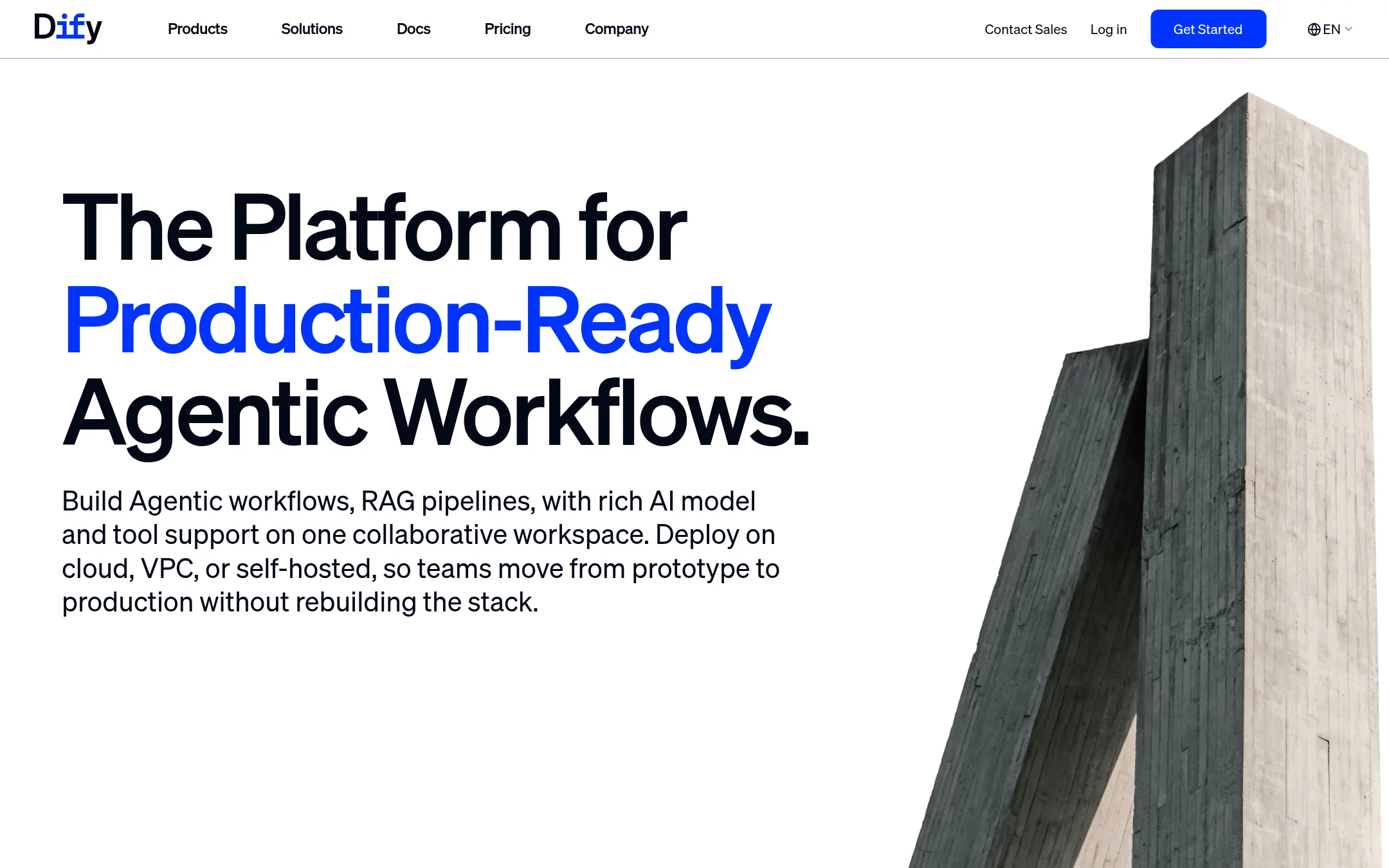
Dify is an AI agent management platform with a visual workflow builder, a knowledge pipeline for preparing searchable knowledge bases, and a marketplace of models and tools. Teams pick it over Sim when they want a managed agent platform with a strong no-code builder, or when they want an open-source Community Edition with a large community and the option to run Enterprise in their own VPC.
Where it is strong
- Visual workflow builder that keeps agent logic visible, so teams can test and debug it
- Open-source Community Edition that runs with a single Docker command
- Marketplace of models, tools, and MCP integrations that teams can reuse across apps
Where it falls short
- Enterprise features such as SSO, RBAC, and audit logs sit behind the Enterprise plan
- The Community Edition does not include the Enterprise governance features
- Pricing:
- Dify Cloud has a Professional tier with 5,000 message credits a month and a Team tier with 10,000 message credits a month, and Enterprise is priced separately, but the page text supplied is cut off before the full pricing details.
- Free tier. Paid plans
5.Zapier
Best for: Ops and support teams that need to connect many SaaS apps with fixed, repeatable workflows and no code
- Pricing
- Free tier. Paid plans
- Category
- Productivity & Project Management
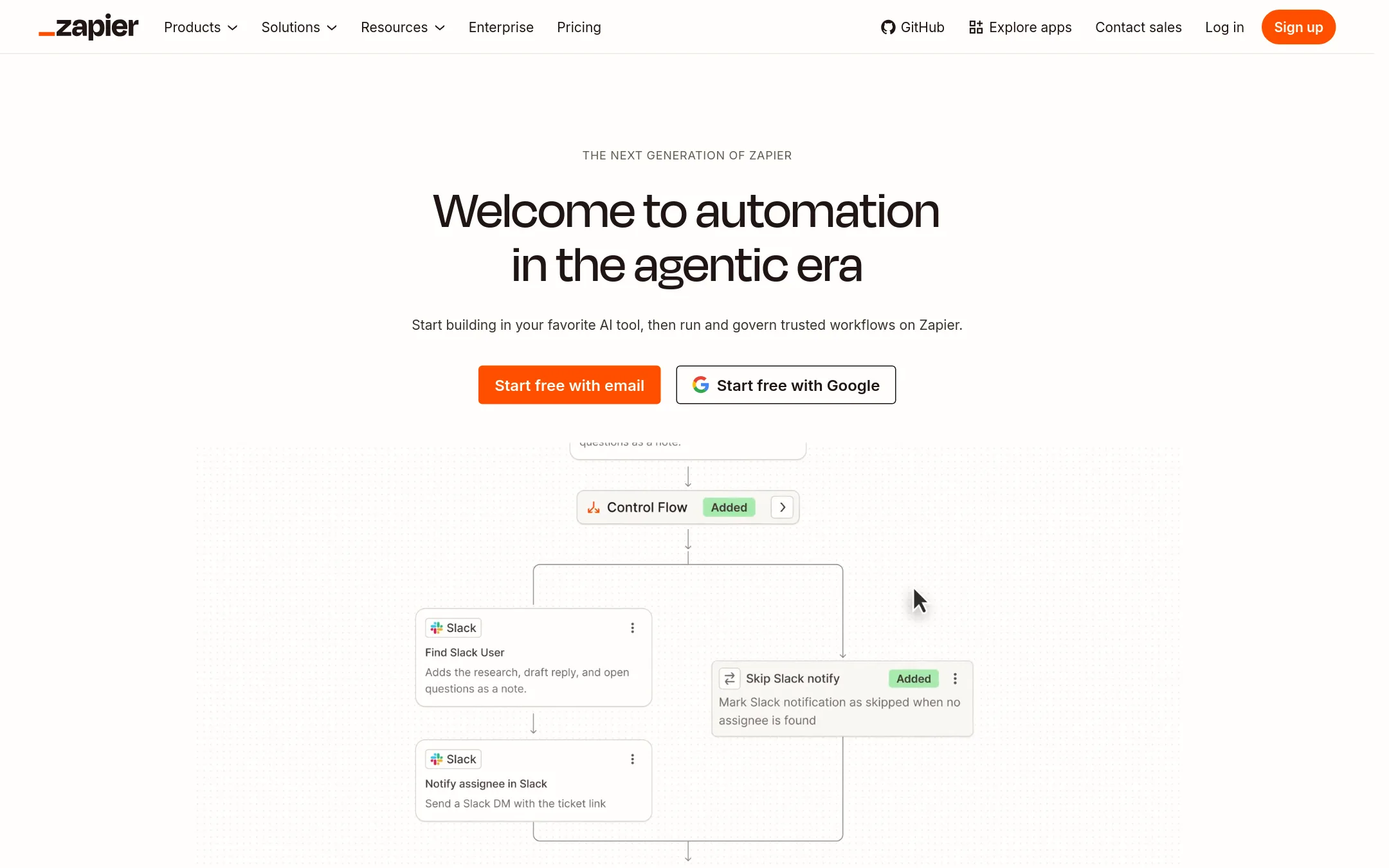
Zapier connects over 9,000 apps and lets teams run workflows with fixed steps, AI steps, or embedded agents. Teams usually pick it over Sim when they need broad app coverage for routine automation and want non-technical staff to build workflows without touching a visual agent canvas or code.
Where it is strong
- Connects to over 9,000 apps according to its site description
- Mixes fixed steps, AI steps and embedded agents in one workflow builder
- Offers SOC 2 Type II, GDPR and SAML SSO with user provisioning on paid tiers
Where it falls short
- Its plans are priced per task, and the supplied text does not give the per-task figures
- The supplied text does not describe self-hosting, so Sim's open-source self-hosting is not matched here
- Pricing:
- Zapier has a Free plan with 100 tasks per month, Professional, Team with 25 users, and custom Enterprise, but the exact plan prices are not shown in the supplied text.
- Switching from Sim:
- Moving from Sim would mean rebuilding each agent workflow as a Zap, since the two platforms use different workflow models.
- Credit-based, see plan
6.Make
Best for: Business teams that need to connect many SaaS apps through visual automations without writing code
- Pricing
- Credit-based, see plan
- Category
- Productivity & Project Management
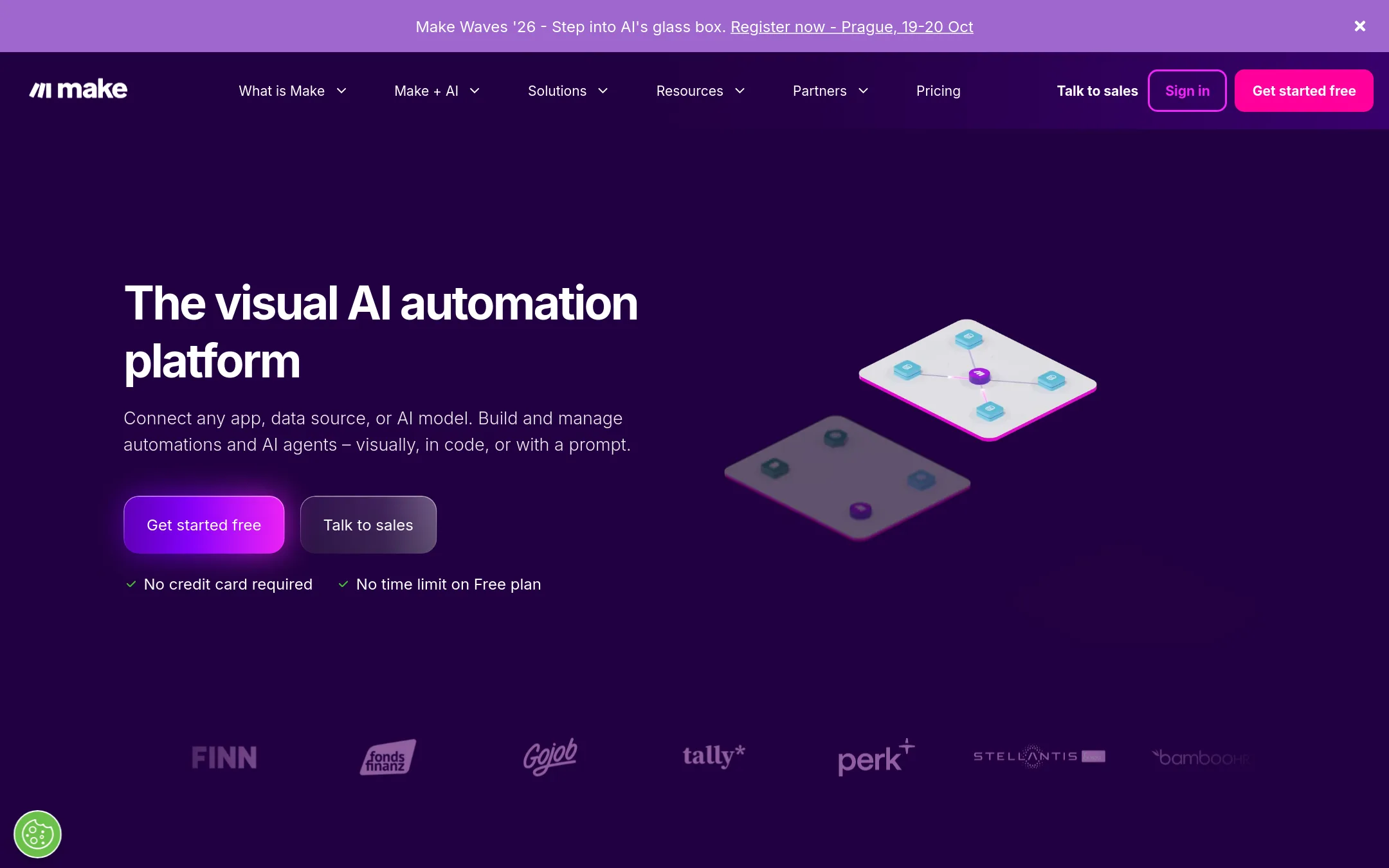
Make is a visual automation platform that connects 3,500+ apps and AI models, letting teams build workflows by prompt, drag-and-drop, or from an AI chat. Someone would choose Make over Sim when the main need is wiring many business apps together in a visual workflow tool, rather than building and governing AI agents with spend limits and self-hosting.
Where it is strong
- Connects 3,500+ apps out of the box, with custom integrations possible for anything with an API
- Free plan with no card required and no time limit
- Offers GDPR, SOC 2 Type II and SOC 3 compliance, plus SSO and audit logs
Where it falls short
- Usage is metered in credits per action, so costs grow with workflow complexity
- Self-hosting is not mentioned, unlike Sim's open-source option
- Pricing:
- Pricing is billed in credits, with each action consuming one credit in most cases, and the page lists plans and Start-up discounts but the exact per-plan figures were not included in the supplied text.
- Switching from Sim:
- Moving from Sim would mean rebuilding agent workflows as Make scenarios, since the supplied facts do not describe an import path.
- Custom quote
7.CrewAI
Best for: Enterprise teams that need governed multi-agent workflows with audit trails, RBAC and human approval gates
- Pricing
- Custom quote
- Category
- AI & Machine Learning
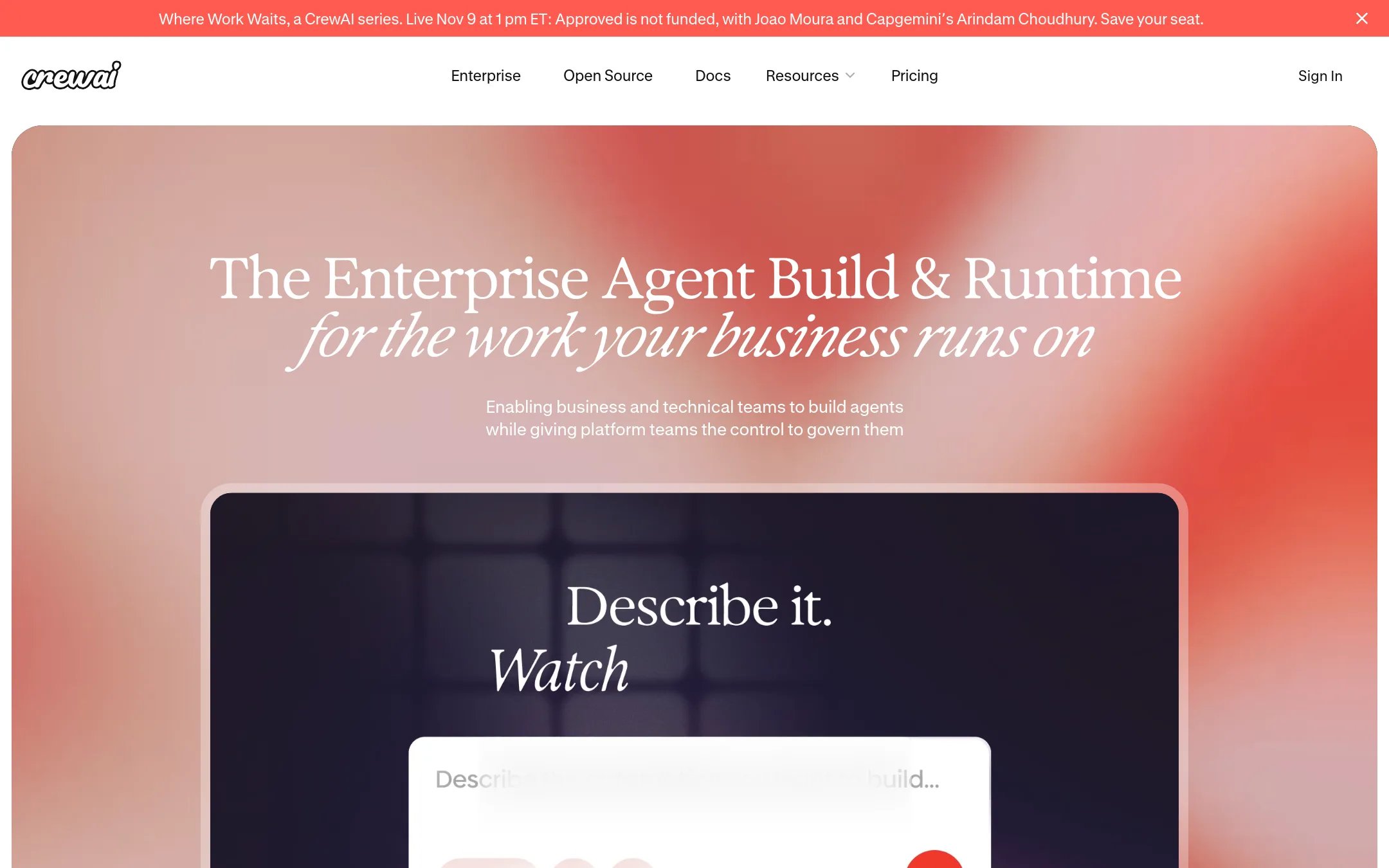
CrewAI is an enterprise platform for building and running multi-agent workflows, with a visual editor that exports to Python, a code-first API, and a Control Plane for tracing, RBAC, audit trails and human approval gates. A team would pick it over Sim when its main need is governed agent runtime for business and engineering teams together, with deployment options like its own VPC or infrastructure, rather than a broad open-source workspace with 280+ integrations.
Where it is strong
- A visual editor exports workflows to Python, so business users and engineers can work from the same agent design.
- The Control Plane traces every LLM call, tool call and memory read, with full cost accounting.
- Enterprise plans can run on CrewAI cloud, your own VPC, or your own infrastructure.
Where it falls short
- Free access is capped at 50 workflow executions a month.
- Enterprise governance features such as SSO and RBAC sit behind the custom Enterprise plan, and the site does not publish a self-hosting lice
- Pricing:
- The Free plan includes 50 workflow executions a month, and Enterprise pricing is custom, with no per-seat or per-credit figures published.
- RCustom quote
8.Relevance AI
Best for: Revenue teams that want AI agents running prospecting, lead routing and renewals with pipeline tracked as the output
- Pricing
- Custom quote
- Category
- Other
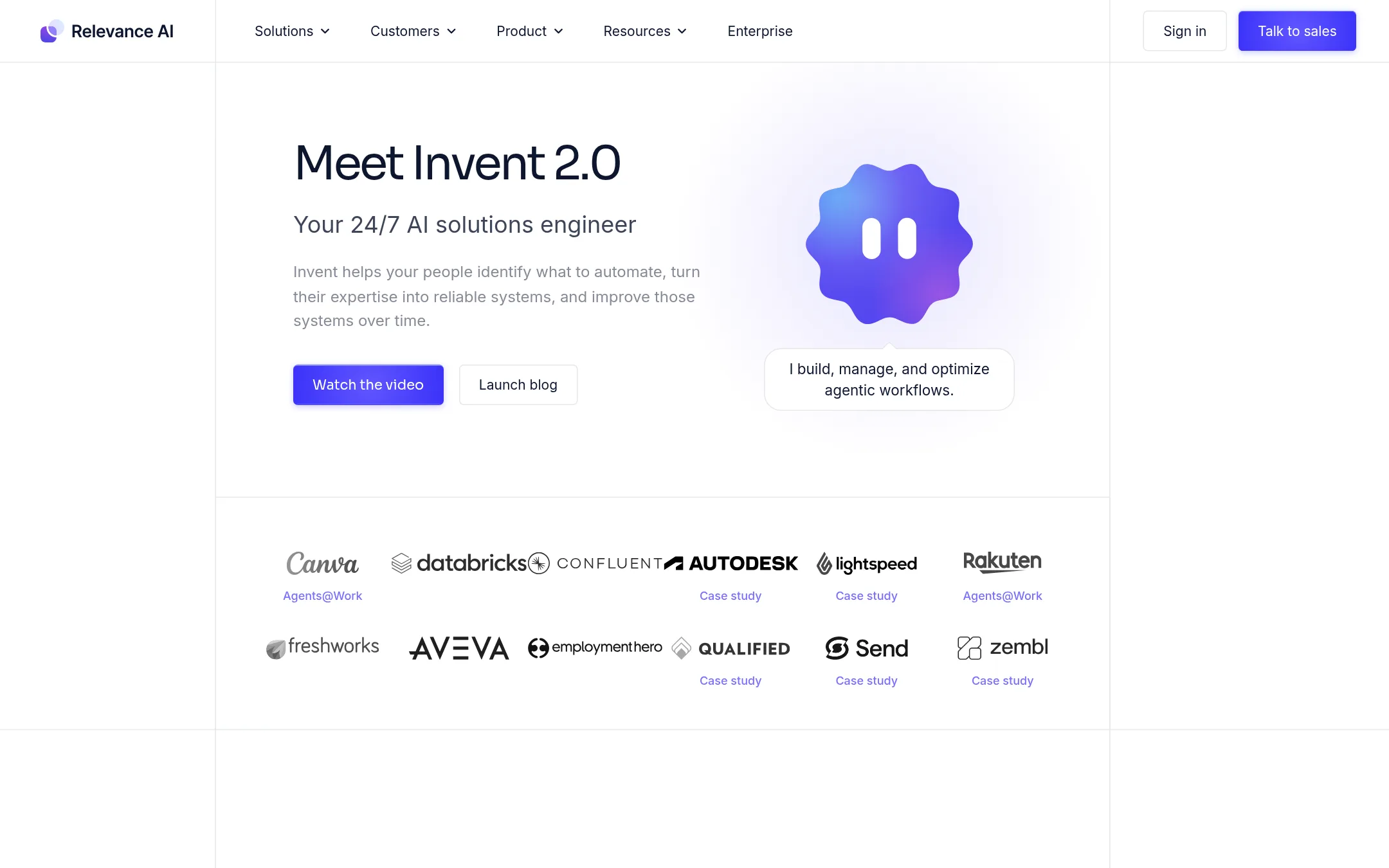
Relevance AI builds what it calls AI Factories for revenue teams, meaning repeatable go-to-market work such as inbound lead research, outbound prospecting, re-engagement and renewals. It tracks outcomes like pipeline and bookings, and adds approvals and audit logs. A team would pick it over Sim when the goal is running sales and marketing processes measured against revenue KPIs, rather than building a general-purpose agent workspace across the whole company.
Where it is strong
- Built around GTM use cases like inbound, outbound, re-engagement and renewals
- Reports results in outcomes such as pipeline and bookings rather than task counts
- Includes SSO, role-based access, audit logs and an option for EU hosting
Where it falls short
- Only an Enterprise plan is shown, with no self-serve tier listed
- Does not mention self-hosting, unlike Sim's open-source option
- Pricing:
- Pricing is not published on the site. The only plan shown is Enterprise, which is custom quoted.
See more comparisons in AI & Machine Learning alternatives.
FAQ
Questions about Sim alternatives
Which alternative is best if I want to connect many business apps without code?
Make is the strongest fit for that need. It connects 3,500+ apps and AI models through a visual builder, with a free plan that requires no card. Costs rise with workflow complexity because usage is metered in credits per action.
Which alternative should a technical team consider if it wants visible, reviewable agent logic?
n8n suits technical teams that want each agent step visible and reviewable. Its visual builder accepts JavaScript and Python code steps, and it offers human approval on AI actions. Its pricing is not published on the site, so costs are harder to compare.
Which alternative is good for teams that want to build and publish their own agents with a no-code builder?
Dify is built for that. It has a visual workflow builder, a knowledge pipeline and a marketplace of models and tools, and it can publish agents as apps, APIs or embeds. Its Community Edition is open source, while SSO, RBAC and audit logs sit behind the Enterprise plan.
Does any alternative focus on revenue teams rather than a general agent workspace?
Relevance AI focuses on go-to-market work such as lead research, outbound prospecting, re-engagement and renewals. It reports outcomes like pipeline and bookings, and it lists only an Enterprise plan with custom pricing and no self-hosting.
How do the alternatives compare with Sim on self-hosting and cost transparency?
Sim is open source under Apache 2.0 and can be self-hosted for free, with Enterprise features requiring a license. Several alternatives, including Make, Zapier and CrewAI, do not describe self-hosting on the pages reviewed, and many do not publish full pricing, so compare their plan details directly before deciding.
Last updated November 23, 2026.