Spacelift alternatives
12 products compared · Updated November 2, 2026
The short answer
For teams standardized on Terraform, Terraform Cloud offers a managed collaboration layer with remote state and policy as code. If you want to cut costs on Terraform Cloud, Scalr bills per run and is a drop-in replacement. For multi-IaC orchestration with drift detection and policy enforcement, Env0 is a strong alternative to Spacelift.
Your shortlist, at a glance
Read the comparisons ↓- TTerraform CloudNot publishedTeams that use Terraform exclusively and want a managed collaboration layer with remote state and policy as code.
- AAtlantisNot publishedTeams already using Terraform and GitHub, GitLab, Bitbucket, or Azure DevOps that want simple PR-based plan/apply automation without a paid platform.
- EEnv0Custom quotePlatform teams that need continuous drift detection and policy enforcement across multiple clouds, alongside standard IaC deployment workflows.
- TTerragruntNot publishedTeams that want a code-first IaC orchestration layer on Terraform/OpenTofu and are comfortable managing their own CI/CD and state.
- SScalrFree up to 50 runs/moTeams on Terraform Cloud that want to cut costs by switching to a per-run pricing model.
- FFireflyNot publishedEnterprise cloud teams that need disaster recovery, drift remediation, and compliance evidence alongside IaC automation.
- TTerrateamFree / $1,000/moPlatform teams that already live in GitHub or GitLab and want Terraform plans, policy checks, and approvals to happen inside pull requests.
- HHashiCorp VaultSee websiteManage secrets and encrypt data with identity-based access controls.
- PPulumi CloudFrom $0.365/mo per resEngineering teams that want to manage infrastructure with familiar programming languages and need strong AI-assisted workflows.
- DDiggerNot publishedTeams that want Terraform CI/CD and drift detection without leaving their existing CI environment, and prefer open-source tooling.
- TTerramateFree / $449/moPlatform teams that want to productize existing Terraform or Terragrunt code into self-service bundles for developers.
- KKionFrom $40,000/yrEnterprises and public sector teams that need self-hosted FinOps with automated cost guardrails and compliance reporting
About Spacelift and its alternatives
Spacelift is an IaC orchestration platform that manages Terraform, OpenTofu, CloudFormation, Pulumi, Kubernetes, and Ansible in one place. It is known for combining governed deployment with Day-2 operations like drift detection and automation, and for offering SaaS, self-hosted, and FedRAMP-authorized options.
When comparing alternatives, weigh pricing structure (per user, per run, or per resource), supported IaC tools, cloud regions, integrations with your VCS and CI, support levels, and contract terms. Some tools are open source and free, while others require custom quotes or annual minimums.
Explore the alternatives
- TNot published
1.Terraform Cloud
Best for: Teams that use Terraform exclusively and want a managed collaboration layer with remote state and policy as code.
- Pricing
- Not published
- Category
- Other
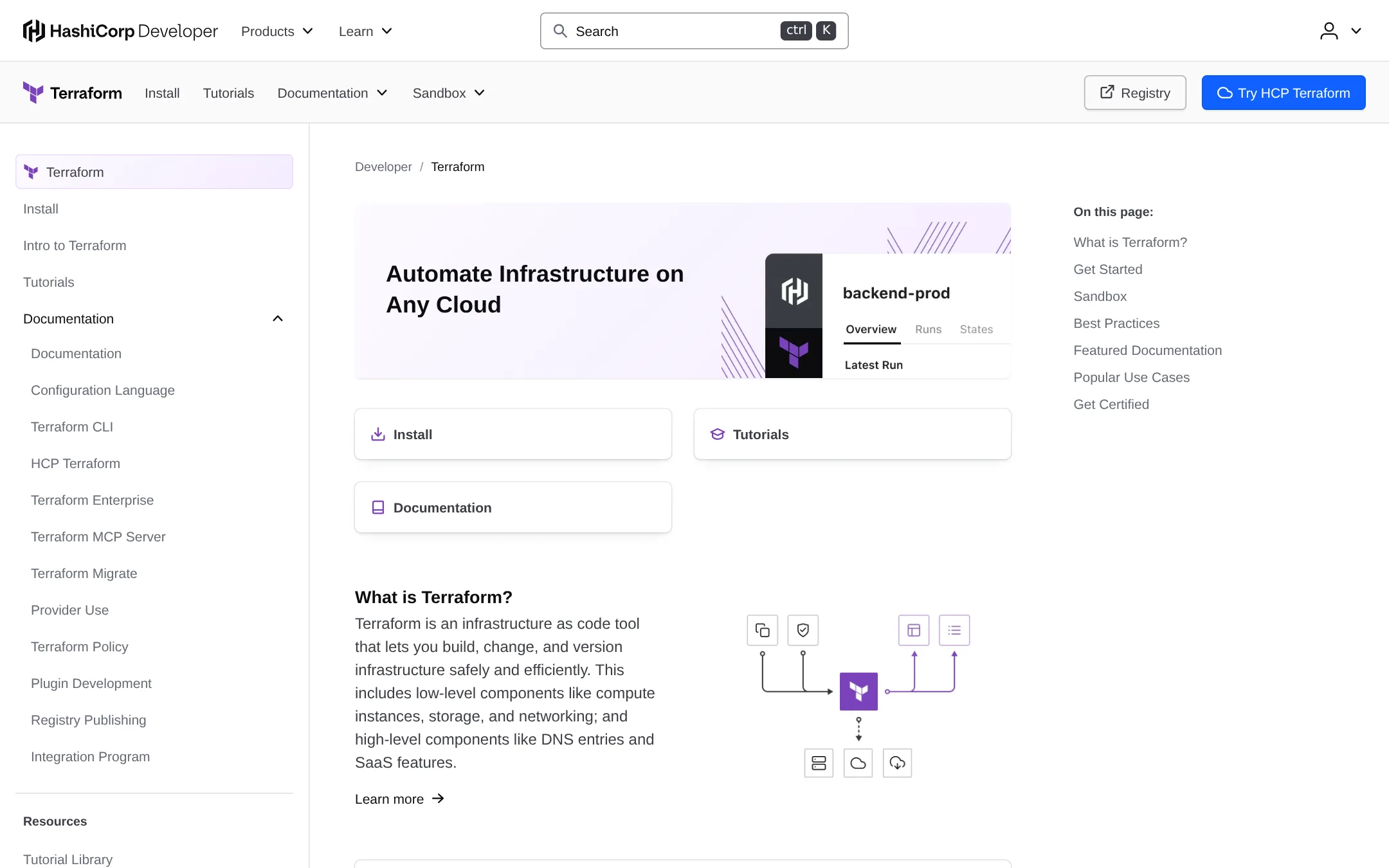
Terraform Cloud is HashiCorp's managed service for Terraform, offering remote state, collaboration, and policy controls. Choose it when your team is already standardized on Terraform and wants a straightforward, HashiCorp-managed workflow without adopting a multi-IaC orchestration platform.
Where it is strong
- Native integration with Terraform CLI and configuration
- Remote state management and locking built in
- Policy as code with Sentinel or OPA
Where it falls short
- Limited to Terraform, no support for Ansible or Pulumi
- Day-2 operations like drift detection require higher-tier plans
- Pricing:
- Pricing is not published on the site.
- ANot published
2.Atlantis
Best for: Teams already using Terraform and GitHub, GitLab, Bitbucket, or Azure DevOps that want simple PR-based plan/apply automation without a paid platform.
- Pricing
- Not published
- Category
- Other
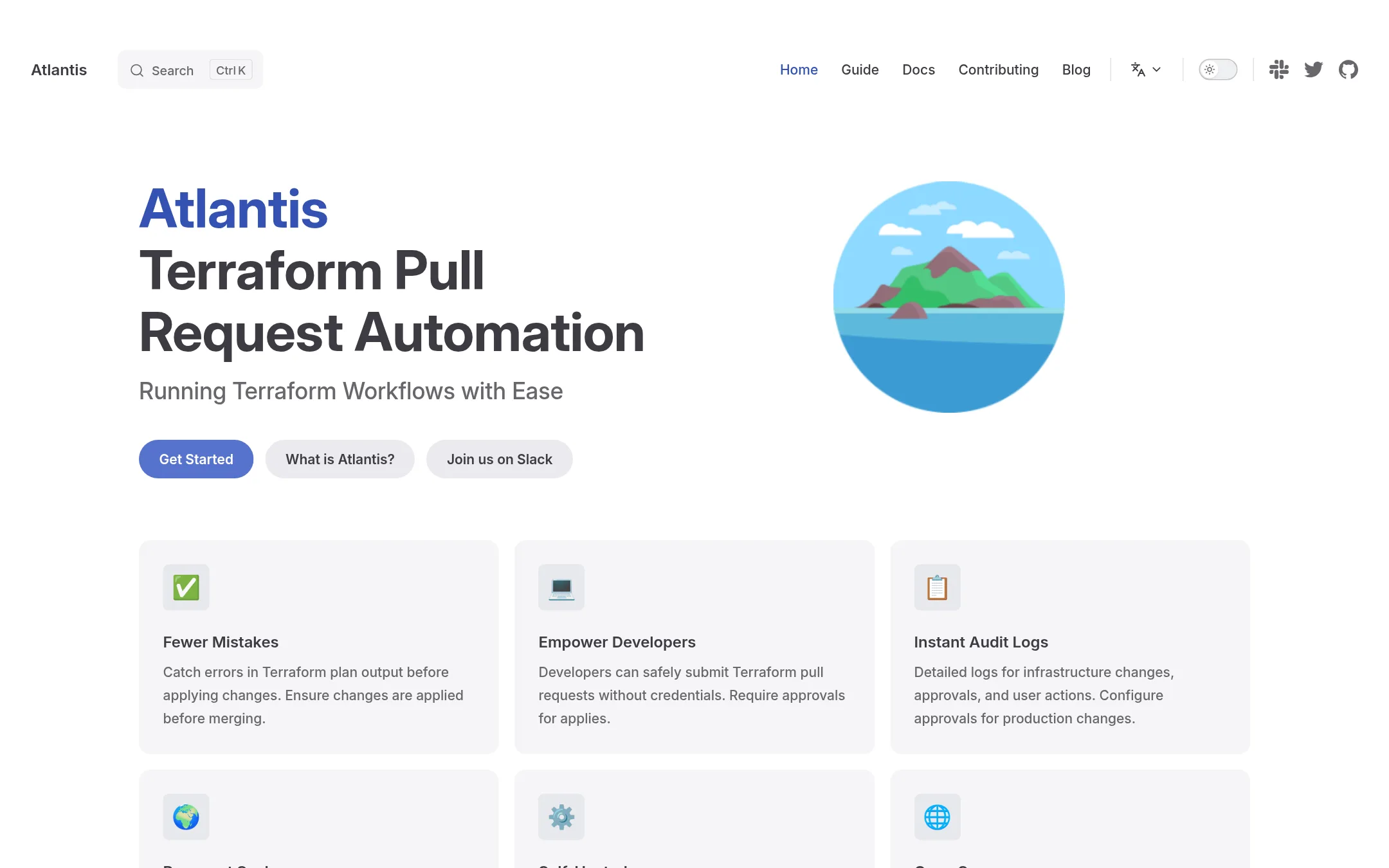
Atlantis is an open-source tool that automates Terraform workflows directly in pull requests. It runs plan and apply commands when developers open or update PRs, with approvals enforced before applies. Choose it when you want a lightweight, self-hosted Terraform-only PR automation without a separate orchestration platform.
Where it is strong
- Open source and free to self-host
- Runs Terraform plan/apply directly in pull requests
- Supports GitHub, GitLab, Bitbucket, and Azure DevOps
Where it falls short
- Terraform only, no multi-IaC support
- No built-in policy engine or drift detection
- Pricing:
- Pricing is not published on the site.
- Switching from Spacelift:
- Moving from Spacelift means replacing its orchestration, policies, and Day-2 automation with Atlantis's PR-based workflow and your own CI/CD glue.
- ECustom quote
3.Env0
Best for: Platform teams that need continuous drift detection and policy enforcement across multiple clouds, alongside standard IaC deployment workflows.
- Pricing
- Custom quote
- Category
- Other
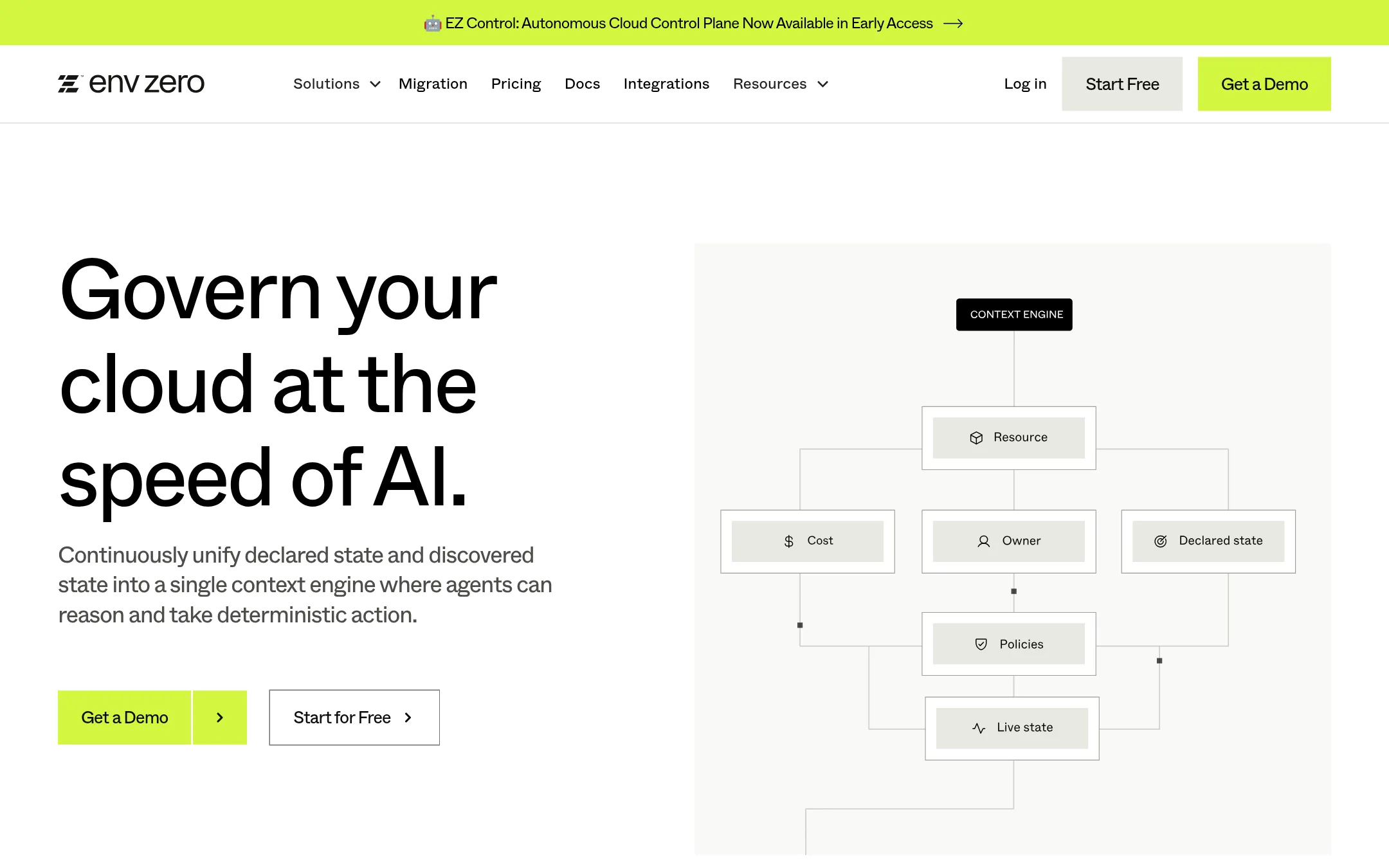
Env0 is a cloud control plane that combines IaC orchestration with continuous drift detection, policy enforcement, and cloud asset discovery. It's a good fit if you want a single tool that not only runs Terraform or Pulumi but also continuously reconciles declared state with what's actually running in your clouds. Choose it over Spacelift if your main pain is drift and shadow infrastructure, and you want AI-assisted remediation at the source.
Where it is strong
- Continuous drift detection and remediation at the IaC source
- Unifies declared and discovered state into a queryable graph
- Supports Terraform, OpenTofu, Terragrunt, Pulumi, CloudFormation, Kubernetes, Helm, and Ansible
Where it falls short
- Paid pricing is not transparent. Requires a custom quote
- Free tier caps at 250 runs per month, after which scheduled runs are skipped
- Pricing:
- Pricing is not published on the site. The free tier includes up to 250 runs per month, and paid plans require a custom quote.
- TNot published
4.Terragrunt
Best for: Teams that want a code-first IaC orchestration layer on Terraform/OpenTofu and are comfortable managing their own CI/CD and state.
- Pricing
- Not published
- Category
- Other
Terragrunt is an open-source wrapper that adds orchestration, dependency management, and DRY configuration on top of Terraform and OpenTofu. Choose it over Spacelift if you want to stay fully in code and avoid a separate control plane, or if you're already using Gruntwork's landing zones and want a consistent workflow.
Where it is strong
- Open source and free to use
- Reduces duplication with DRY configurations and dependency management
- Works with existing Terraform/OpenTofu workflows and CI/CD
Where it falls short
- No built-in policy engine, drift detection, or audit trail (you'd need to add those yourself)
- No managed UI or orchestration platform. You handle state, locking, and approvals
- Pricing:
- Pricing is not published on the site.
- SFree up to 50 runs/mo
5.Scalr
Best for: Teams on Terraform Cloud that want to cut costs by switching to a per-run pricing model.
- Pricing
- Free up to 50 runs/mo
- Category
- Other
Scalr is a drop-in replacement for Terraform Cloud that bills per run instead of per managed resource. It's a good fit if you're already on Terraform Cloud and want to cut costs without changing your workflow. Choose it over Spacelift if you only use Terraform and want a simpler, cheaper option.
Where it is strong
- Bills per run, not per resource, so costs scale with actual usage.
- Free tier covers up to 50 runs per month.
- Migration from Terraform Cloud is straightforward, with a script to estimate run counts.
Where it falls short
- Only supports Terraform, not other IaC tools like Spacelift does.
- Enterprise plan requires a quote and a minimum of 20,000 runs per year.
- Pricing:
- Business plan is free up to 50 runs per month, then $0.99 per run after prepaid plans. Enterprise starts at 20,000 runs per year and requires a quote.
- Switching from Spacelift:
- Moving from Spacelift means re-pointing your Terraform code to Scalr and adjusting to a per-run billing model, but the workflow is similar to Terraform Cloud.
- FNot published
6.Firefly
Best for: Enterprise cloud teams that need disaster recovery, drift remediation, and compliance evidence alongside IaC automation.
- Pricing
- Not published
- Category
- Other
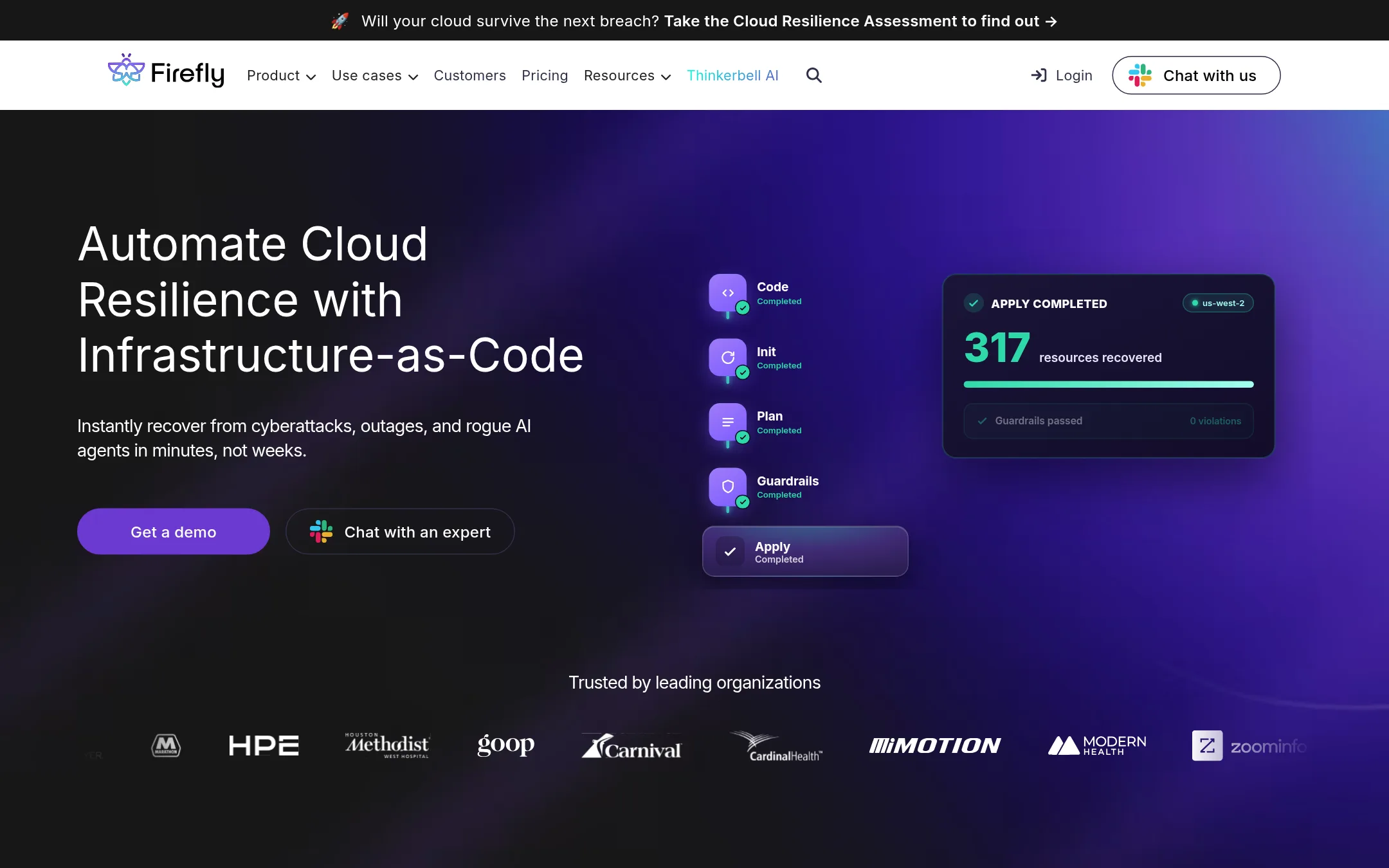
Firefly scans your cloud into a System of Record, turns every resource into deployable IaC, and auto-remediates drift. It also rebuilds full environments after outages with RTO under an hour, which Spacelift does not focus on. Choose Firefly when your priority is cloud resilience, recovery readiness, and continuous compliance rather than day-to-day IaC orchestration.
Where it is strong
- Scans all cloud resources into deployable IaC, including AWS, Azure, GCP, and Kubernetes.
- Auto-remediates drift and policy violations with AI agents.
- Rebuilds full environments from immutable IaC snapshots, with rollback to last-known-good state.
Where it falls short
- Pricing is not public, so you must contact sales for a quote.
- Recovery features are aimed at enterprise DR scenarios, which may be overkill for small teams.
- Pricing:
- Pricing is not published on the site.
- Switching from Spacelift:
- Moving from Spacelift means adopting Firefly's recovery-first workflows, so you would re-point your IaC pipelines and likely rework policies to fit Firefly's governance model.
- TFree / $1,000/mo
7.Terrateam
Best for: Platform teams that already live in GitHub or GitLab and want Terraform plans, policy checks, and approvals to happen inside pull requests.
- Pricing
- Free / $1,000/mo
- Category
- Other
Terrateam is a GitOps orchestration tool that runs Terraform, OpenTofu, Terragrunt, CDKTF, and Pulumi directly in pull requests. It plans every PR, enforces policy before merge, and runs applies in dependency order. Choose it if you want infrastructure changes to live entirely in your existing GitHub or GitLab workflow, with no separate control plane to manage.
Where it is strong
- Plans and applies run on your own CI runners, so cloud credentials stay in your account
- Dependency-aware runs execute layers in parallel where possible
- Open source core with a free hosted plan for small teams
Where it falls short
- Free plan caps at 3 users and 50 runs per month, which small teams may outgrow quickly
- No built-in resource view or drift remediation UI like Spacelift's. Drift runs open issues or reconcile on request
- Pricing:
- Free plan includes 3 users, 50 runs per month, and 1 concurrent worker. Orchestration Pro is $1,000 a month billed annually, with unlimited users, runs, and concurrent workers. Infrastructure as a Database starts at an annual contract price, and self-hosted Op
- Switching from Spacelift:
- Moving from Spacelift means adopting a pull-request-driven workflow: you configure .stategraph/config.yml in each repo, and plans and applies happen as PR comments rather than through a separate orchestration dashboard.
- HSee website
8.HashiCorp Vault
Security & Privacy
Self-hosted version of Terraform Cloud for large organizations, a direct enterprise alternative.
- PFrom $0.365/mo per res
9.Pulumi Cloud
Best for: Engineering teams that want to manage infrastructure with familiar programming languages and need strong AI-assisted workflows.
- Pricing
- From $0.365/mo per res
- Category
- Other
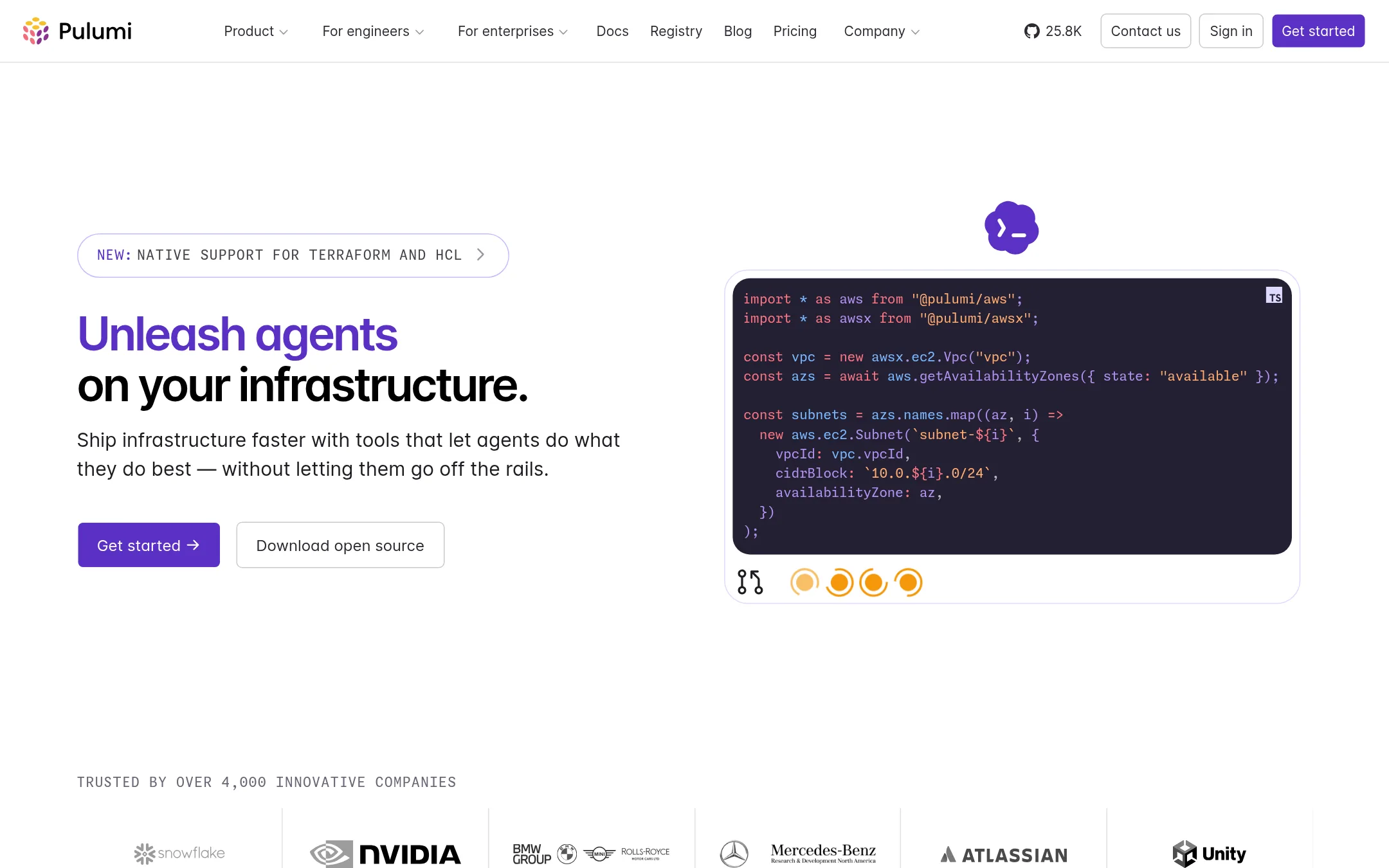
Pulumi Cloud is an infrastructure as code platform that uses general-purpose programming languages like Python, TypeScript, and Go instead of a domain-specific language. Teams that prefer writing infrastructure in real code and want agent-driven workflows with AI assistance would choose it over Spacelift.
Where it is strong
- Uses real programming languages (Python, TypeScript, Go) instead of HCL
- Free tier for individuals and open source
- Built-in AI assistant (Neo) for code reviews and scheduled tasks
Where it falls short
- Pricing is per resource, which can get expensive at scale
- No native support for Ansible or CloudFormation workflows like Spacelift
- Pricing:
- Pulumi Cloud has a free tier for individuals, and paid plans start at $0.0005/hour per managed resource (about $0.365/month) for Essentials, with Pro and Enterprise tiers priced higher.
- Switching from Spacelift:
- Moving from Spacelift means rewriting your infrastructure code from HCL or other IaC formats into a Pulumi-supported language, and reconfiguring your CI/CD pipelines.
- DNot published
10.Digger
Best for: Teams that want Terraform CI/CD and drift detection without leaving their existing CI environment, and prefer open-source tooling.
- Pricing
- Not published
- Category
- Other
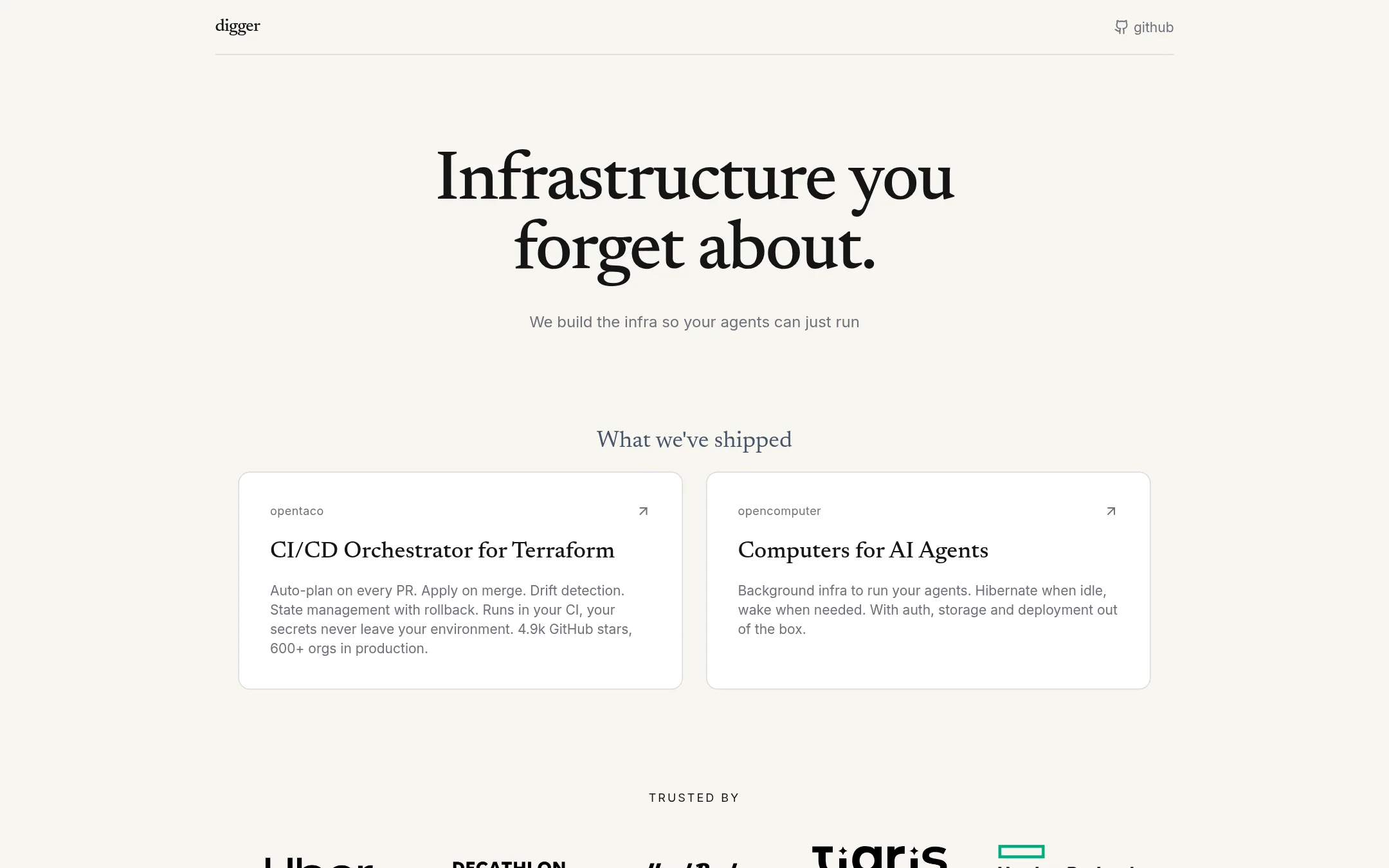
Digger is an open-source Terraform CI/CD orchestrator that runs inside your own CI, so your secrets stay in your environment. It handles auto-plan on PRs, apply on merge, drift detection, and state management with rollback. Choose Digger if you want a self-hostable, lightweight alternative to Spacelift that doesn't require a separate control plane.
Where it is strong
- Runs in your CI, so secrets never leave your environment
- Open source with 4.9k GitHub stars and 600+ orgs in production
- Includes drift detection, state management, and rollback
Where it falls short
- No pricing page, so cost is unclear
- Focused on Terraform only, unlike Spacelift's multi-IaC support
- Pricing:
- Pricing is not published on the site.
- Switching from Spacelift:
- Moving from Spacelift means reconfiguring your Terraform workflows to run inside your CI, and you'll lose Spacelift's multi-IaC orchestration and policy-as-code engine.
- TFree / $449/mo
11.Terramate
Best for: Platform teams that want to productize existing Terraform or Terragrunt code into self-service bundles for developers.
- Pricing
- Free / $449/mo
- Category
- Other
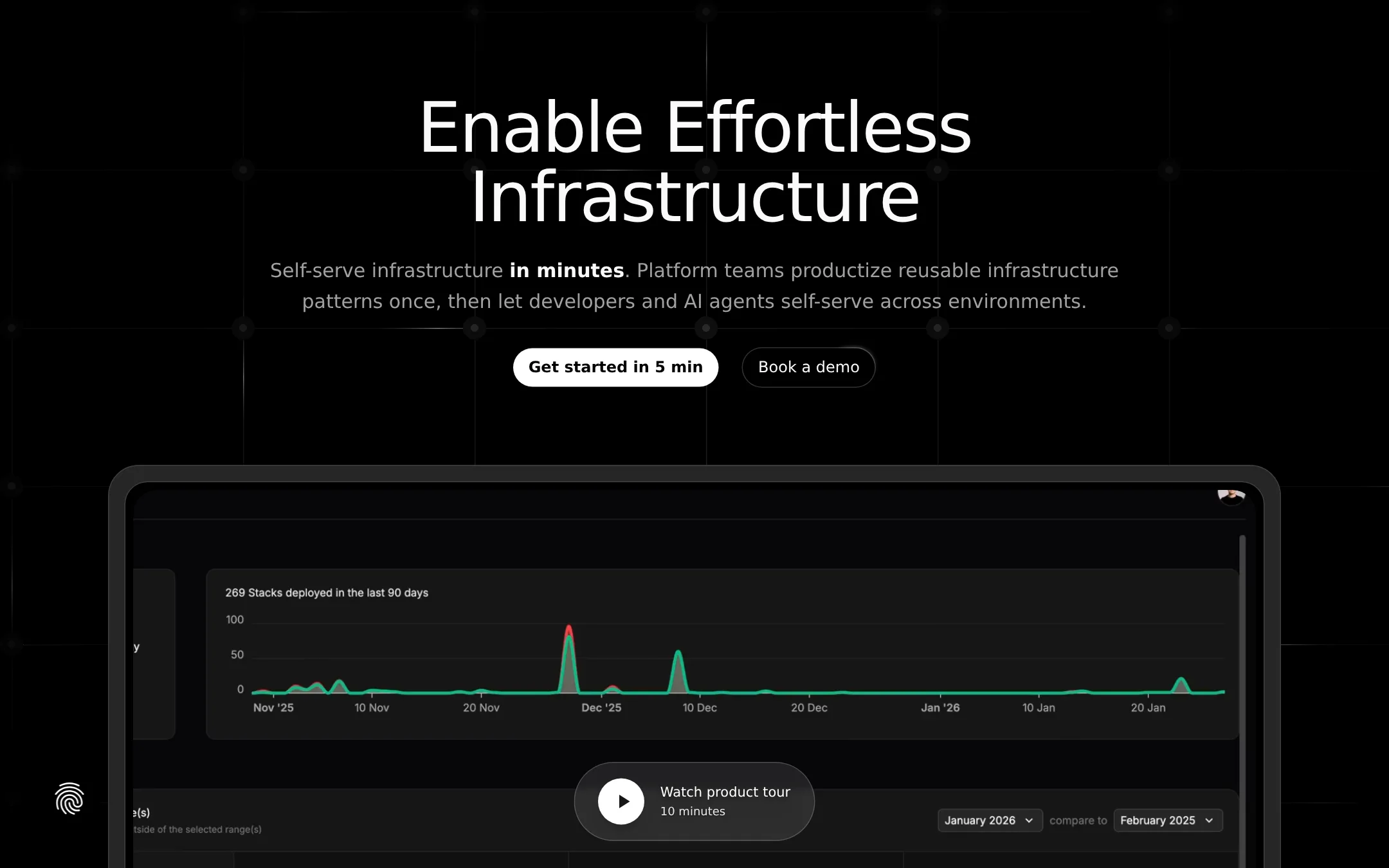
Terramate turns Terraform, OpenTofu, and Terragrunt code into reusable bundles that developers can self-serve without deep cloud expertise. Choose it when you want to keep your existing IaC and CI/CD but add governance, drift detection, and faster runs without moving to a full orchestration platform.
Where it is strong
- Onboard existing projects with a single command, zero migration
- Split state into smaller stacks for faster CI/CD and smaller blast radius
- Works with Terraform, OpenTofu, and Terragrunt, plus CI/CD like GitHub Actions
Where it falls short
- No native support for Pulumi, Kubernetes, or Ansible yet
- Community plan caps at 2 users and 1000 resources
- Pricing:
- Community is free for up to 2 users and 1000 resources. Teams is $449/month for unlimited users and up to 5000 resources. Enterprise is custom.
- Switching from Spacelift:
- Moving from Spacelift means keeping your Terraform or Terragrunt code and CI/CD, then adding Terramate Cloud for orchestration and governance, so the switch is mostly about adopting new workflows rather than rewriting infrastructure.
- KFrom $40,000/yr
12.Kion
Best for: Enterprises and public sector teams that need self-hosted FinOps with automated cost guardrails and compliance reporting
- Pricing
- From $40,000/yr
- Category
- Other
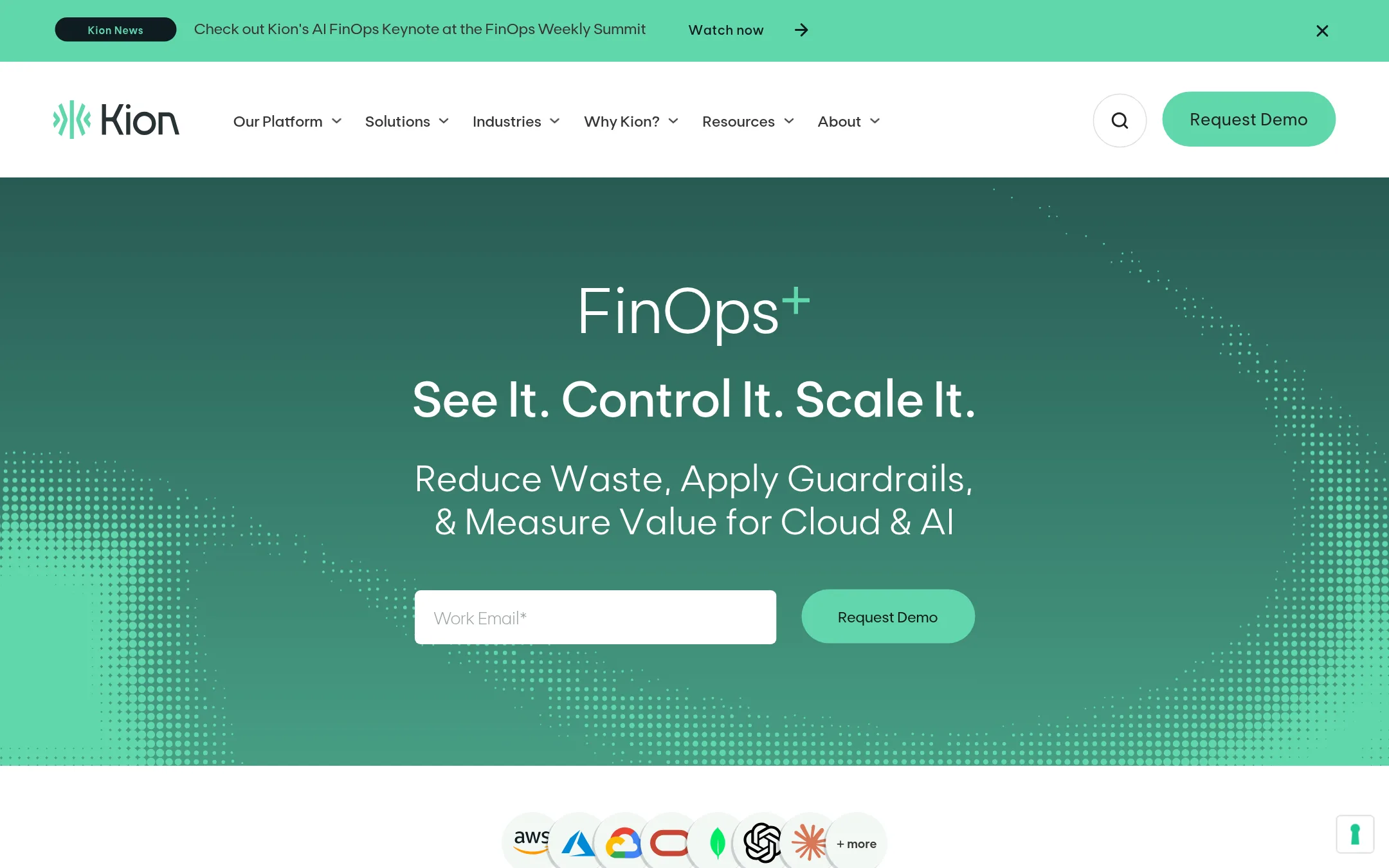
Kion is a FinOps and governance platform for cloud cost visibility, budgeting, and automated enforcement. Choose it over Spacelift if your main need is controlling cloud spend and compliance across AWS, Azure, GCP, and OCI, rather than orchestrating IaC deployments.
Where it is strong
- Unlimited users and cloud accounts at a flat annual cost
- Self-hosted deployment for data control and compliance
- AI-driven spend anomaly detection and natural language queries
Where it falls short
- High entry price, not for small teams
- Focuses on FinOps and governance, not IaC orchestration or deployment
- Pricing:
- Pricing starts at $40,000 per year, based on your cloud footprint, with unlimited users and cloud accounts.
See more comparisons in Developer Tools alternatives.
FAQ
Questions about Spacelift alternatives
What are the main differences between Spacelift and Terraform Cloud?
Spacelift supports multiple IaC tools including Terraform, OpenTofu, CloudFormation, Pulumi, Kubernetes, and Ansible, while Terraform Cloud is limited to Terraform. Spacelift also includes Day-2 operations like drift detection and automation in its platform, whereas Terraform Cloud requires higher-tier plans for such features.
Which alternative is best for a team that only uses Terraform and wants to reduce costs?
Scalr is a drop-in replacement for Terraform Cloud that bills per run instead of per resource. Its Business plan is free up to 50 runs per month, then $0.99 per run, which can be cheaper for teams with predictable usage.
Are there open-source alternatives to Spacelift?
Yes, Atlantis, Terragrunt, and Digger are open-source options. Atlantis automates Terraform plan/apply in pull requests, Terragrunt adds orchestration and DRY configs on top of Terraform/OpenTofu, and Digger runs Terraform CI/CD inside your own CI environment.
Which alternative is best for teams that want to manage infrastructure with programming languages like Python or TypeScript?
Pulumi Cloud lets you write infrastructure in general-purpose languages such as Python, TypeScript, and Go. It includes a free tier for individuals and an AI assistant, but pricing is per managed resource, which can get expensive at scale.
What should we consider if we need disaster recovery and compliance alongside IaC?
Firefly scans your cloud into deployable IaC, auto-remediates drift, and can rebuild full environments with rollback to last-known-good state. It is aimed at enterprise DR scenarios and compliance evidence, but pricing is not public and may be overkill for small teams.
Last updated November 2, 2026.