SST alternatives
11 products compared · Updated November 3, 2026
The short answer
For teams that want to deploy existing Docker-based apps or AI agents close to users, Fly.io is the strongest alternative with per-second billing. For teams building Postgres-backed apps that need auth, storage, and realtime out of the box, Supabase is the best fit. For teams that prefer a managed platform without writing infrastructure code, Railway offers quick deployments from GitHub with per-second metering.
Your shortlist, at a glance
Read the comparisons ↓ Amazon BusinessNot publishedCompanies that want Amazon's catalog with procurement controls like approval flows and spend analytics.
- SServerless FrameworkFree / $4 per creditTeams that want a proven, YAML-driven way to deploy AWS Lambda functions and are comfortable managing infrastructure directly.
- TTerraform CloudNot publishedTeams that already use Terraform or need to manage infrastructure across multiple cloud providers with a collaborative workflow.
- PPulumi CloudNot publishedTeams that need multi-cloud infrastructure as code with strong governance and enterprise controls.
 Vercel Image OptimizationFrom $0.05/1K transforTeams that want a hosted image optimization pipeline without running their own servers or CDN configuration.
 Netlify FormsFree tier. From $9/moStatic site owners on Netlify who want instant form handling without managing infrastructure.
 SupabaseFree / from $25/moTeams building Postgres-backed apps that want auth, storage, and realtime out of the box without managing servers.
- RRecordBookNot publishedSmall and medium businesses that need a simple, mobile-friendly way to manage records and workflows without coding.
 RailwayFrom $1/mo + usageTeams that want to deploy apps and databases quickly without managing infrastructure configs, especially those using GitHub repos.
- RRenderNot publishedTeams that want a zero-ops PaaS with built-in Postgres, Redis, and cron jobs, and prefer clicking through a dashboard over writing IaC.
 Fly.ioFrom $0.0030/hrTeams that want to deploy existing Docker-based apps or AI agents close to users across many regions, with per-second billing.
About SST and its alternatives
SST is an infrastructure-as-code tool that lets you deploy everything your app needs with a single config file. It is known for its TypeScript-based setup and support for AWS services like Next.js, email, and databases.
When comparing alternatives, weigh pricing structure (per-second vs monthly), supported regions, integrations with your existing stack, support options, and contract terms. Some tools are free or open-source, while others require contacting sales for pricing.
Explore the alternatives
- Not published
1.Amazon Business
Best for: Companies that want Amazon's catalog with procurement controls like approval flows and spend analytics.

- Pricing
- Not published
- Category
- E-commerce
Amazon Business is a procurement platform for buying supplies and managing B2B purchasing, not a deployment tool. Choose it instead of SST when your need is purchasing and spend management, not building and deploying applications.
Where it is strong
- Wide product selection with quantity discounts.
- Approval workflows and spend reporting built in.
- Free account option and 30-day Prime Business trial.
Where it falls short
- No application deployment or infrastructure features.
- Pricing details require contacting sales.
- Pricing:
- Pricing is not published on the site.
- SFree / $4 per credit
2.Serverless Framework
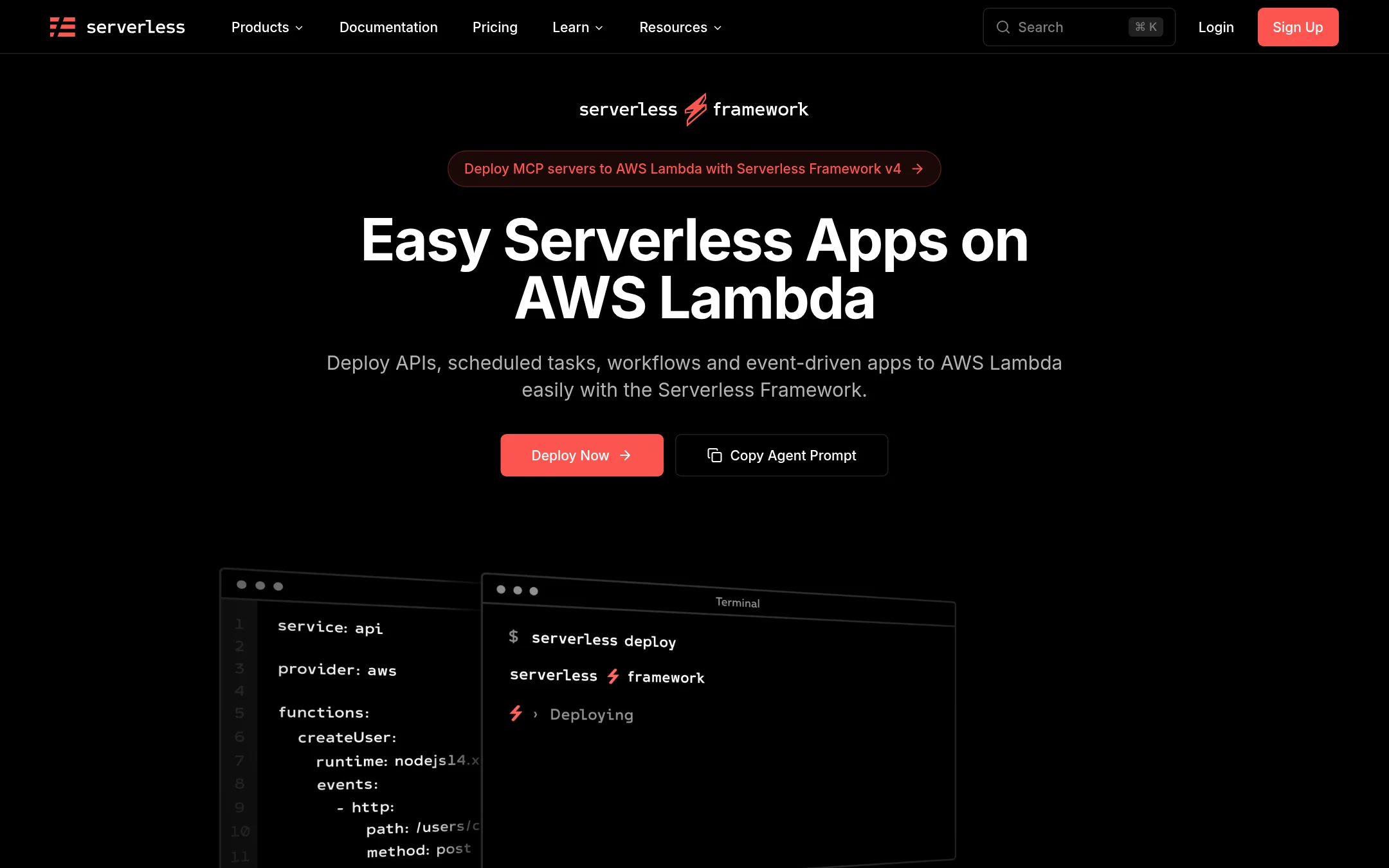
Best for: Teams that want a proven, YAML-driven way to deploy AWS Lambda functions and are comfortable managing infrastructure directly.
- Pricing
- Free / $4 per credit
- Category
- Other
Serverless Framework is a mature, open-source tool for defining AWS Lambda functions and their triggers in YAML. Choose it over SST if you want a battle-tested, plugin-based approach to serverless on AWS and don't need SST's higher-level abstractions for full-stack apps.
Where it is strong
- Free for individuals and small teams under $2M ARR.
- Thousands of plugins to extend workflows and integrate with other tools.
- SOC 2 Type II certified with enterprise security features.
Where it falls short
- Pricing for larger organizations is credit-based, which can be complex to estimate.
- Focused on AWS Lambda. Less suited for full-stack apps with frontend and database needs compared to SST.
- Pricing:
- The CLI is free for individuals and organizations under $2M in annual revenue. Larger organizations pay $4 per credit, with discounts bringing it as low as $1 per credit.
- Switching from SST:
- Moving from SST means rewriting your infrastructure definitions from TypeScript constructs to YAML serverless.yml files, and reworking how you link resources.
- TNot published
3.Terraform Cloud
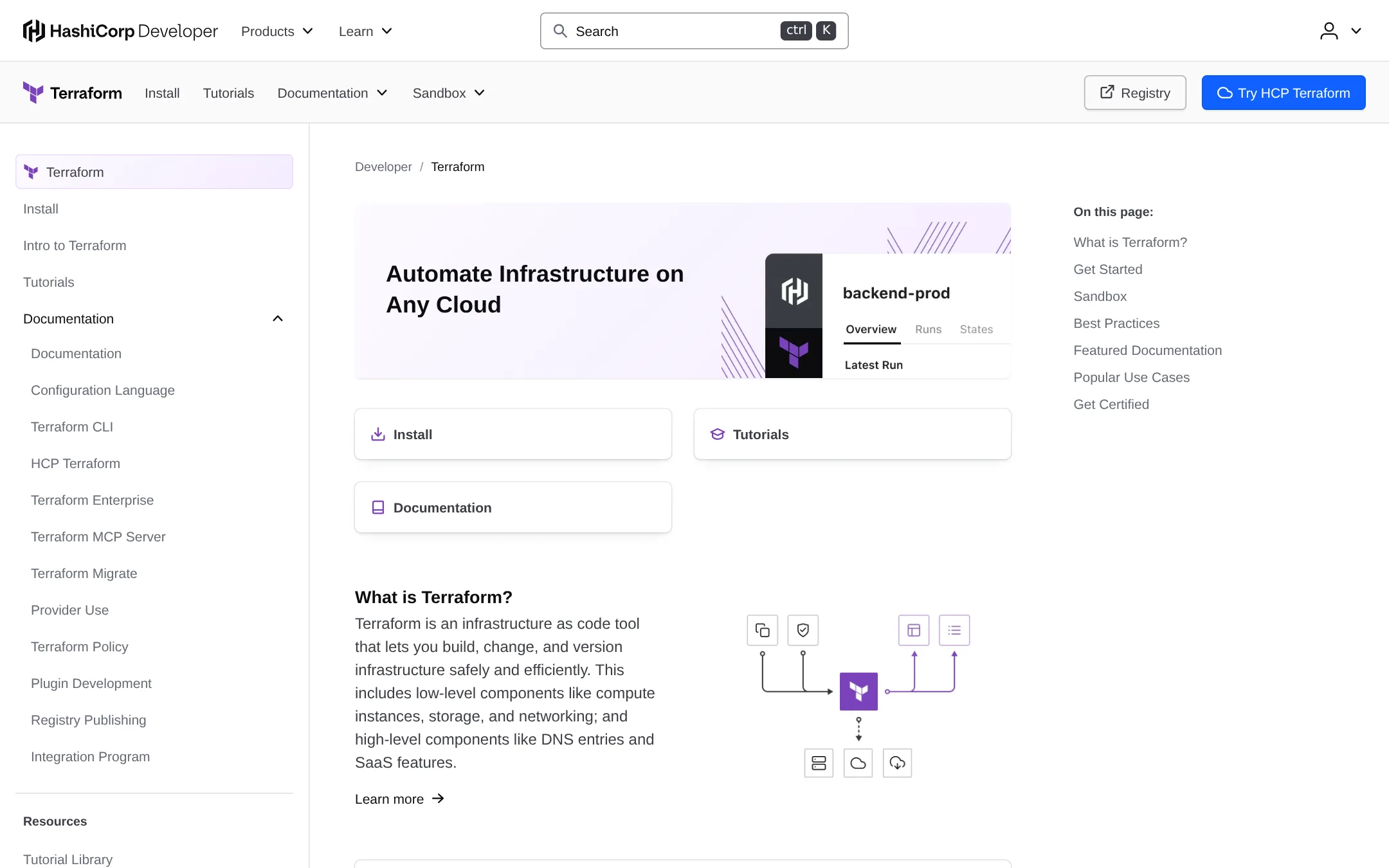
Best for: Teams that already use Terraform or need to manage infrastructure across multiple cloud providers with a collaborative workflow.
- Pricing
- Not published
- Category
- Other
Terraform Cloud is a managed service for Terraform, the infrastructure-as-code tool that works with many providers like AWS, Azure, and GCP. You would choose it over SST if you need to manage infrastructure across multiple clouds or prefer a provider-agnostic workflow with a large ecosystem of modules and community support.
Where it is strong
- Works with AWS, Azure, GCP, Oracle, and Docker, not locked to one cloud.
- Strong collaboration features for teams, including state management and policy controls.
- Large ecosystem of modules and extensive documentation for many use cases.
Where it falls short
- Requires learning Terraform's configuration language, which is more complex than SST's TypeScript-based setup.
- No built-in support for application-level constructs like Next.js or email, so you must define those manually.
- Pricing:
- Pricing is not published on the site.
- PNot published
4.Pulumi Cloud
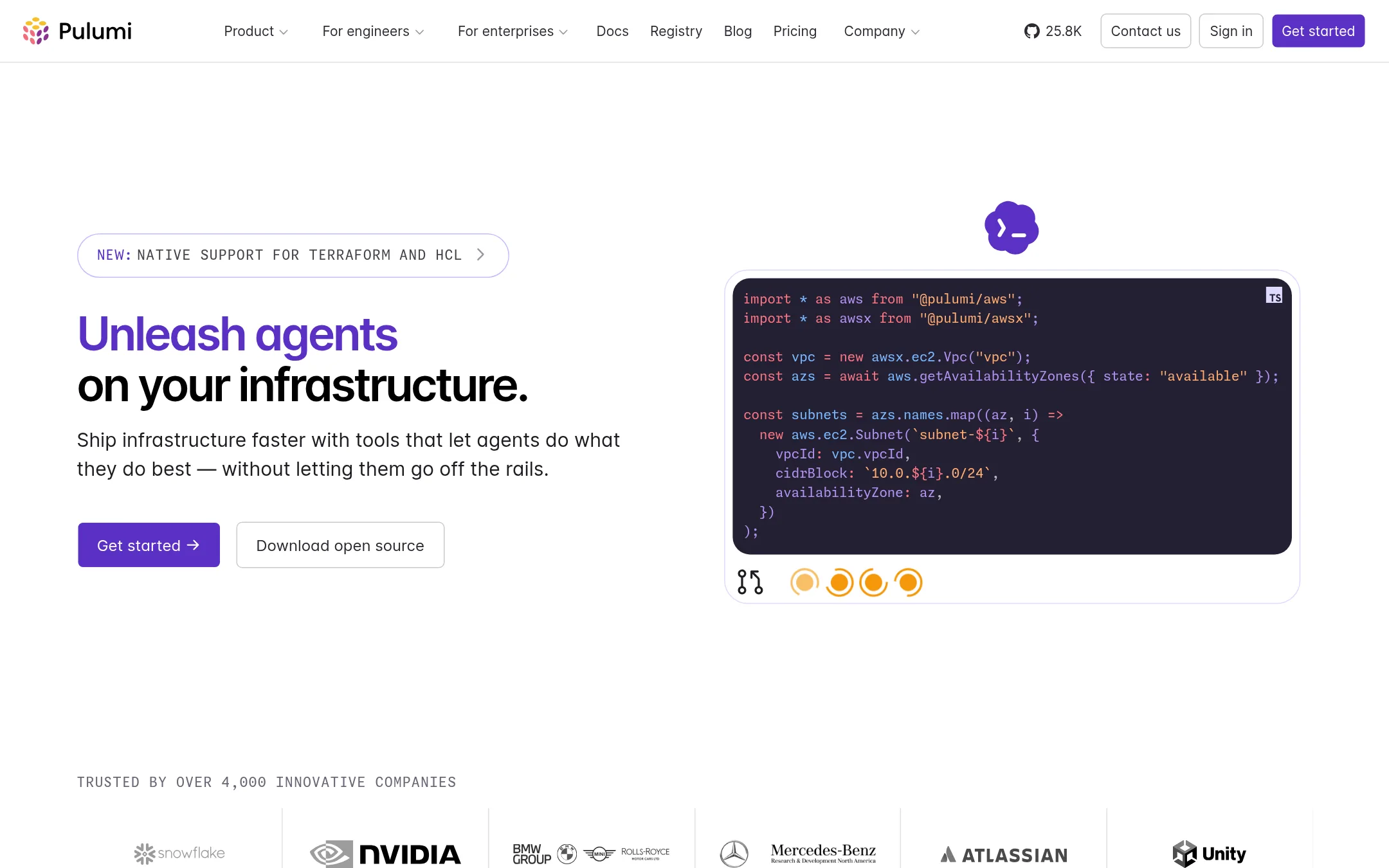
Best for: Teams that need multi-cloud infrastructure as code with strong governance and enterprise controls.
- Pricing
- Not published
- Category
- Other
Pulumi Cloud is a general-purpose infrastructure as code platform that uses real programming languages like TypeScript and Python. You would choose it over SST when you need to manage infrastructure across multiple clouds or when you want a platform with governance, policy enforcement, and enterprise features.
Where it is strong
- Use real programming languages instead of a DSL
- Supports multiple clouds and providers
- Built-in policy and governance features
Where it falls short
- Pricing is not transparent on the site
- More complex than SST for simple single-cloud apps
- Pricing:
- Pricing is not published on the site.
- From $0.05/1K transfor
5.Vercel Image Optimization
Best for: Teams that want a hosted image optimization pipeline without running their own servers or CDN configuration.
- Pricing
- From $0.05/1K transfor
- Category
- Media & Entertainment
Vercel Image Optimization is a managed service for resizing, compressing, and serving images through a global CDN. Choose it when you only need image delivery and don't want to manage the infrastructure SST would deploy for a full application.
Where it is strong
- Global CDN with automatic caching and compression.
- No server management. Scales automatically.
- Pay only for actual usage, with free monthly allowances.
Where it falls short
- Only handles images, not full application deployment like SST.
- Pricing can get complex with separate charges for transformations, cache reads, and writes.
- Pricing:
- Pricing is usage-based: Image Optimization Transformation starts at $0.05 per 1K, with 5K transformations and 300K cache reads included per month. Other services like Fluid Compute and Blob Storage are billed separately.
- Free tier. From $9/mo
6.Netlify Forms
Best for: Static site owners on Netlify who want instant form handling without managing infrastructure.
- Pricing
- Free tier. From $9/mo
- Category
- Developer Tools
Netlify Forms is a zero-config form handler for Netlify sites. You would choose it instead of SST when you just need to collect form submissions on a static site without setting up a backend or writing server code.
Where it is strong
- Zero-config form handling with spam filtering and file uploads.
- Instant lead capture with email notifications and dashboard submissions.
- Works with any Netlify site, no server code needed.
Where it falls short
- Only works on Netlify, not a general-purpose deployment tool.
- Limited to form handling, not a full app infrastructure solution.
- Pricing:
- Free tier includes 300 credits/month. Personal starts at $9/month. Pro at $20/month. Enterprise is custom.
- Free / from $25/mo
7.Supabase
Best for: Teams building Postgres-backed apps that want auth, storage, and realtime out of the box without managing servers.
- Pricing
- Free / from $25/mo
- Category
- Developer Tools
Supabase is a managed Postgres platform with built-in auth, storage, realtime, and edge functions. You would choose it over SST when you want a hosted backend with a database and APIs, rather than deploying your own infrastructure with SST's IaC approach.
Where it is strong
- Managed Postgres with built-in auth, storage, and realtime
- Generous free tier for small projects
- Scales compute and storage independently
Where it falls short
- Not an IaC tool. You don't define infrastructure as code like SST
- Vendor lock-in to Supabase's platform for some features
- Pricing:
- Free tier includes 500 MB database, 50,000 MAU, and 5 GB egress. Pro starts at $25/month with 100,000 MAU and 8 GB disk. Team is $599/month.
- RNot published
8.RecordBook
Best for: Small and medium businesses that need a simple, mobile-friendly way to manage records and workflows without coding.
- Pricing
- Not published
- Category
- Productivity & Project Management
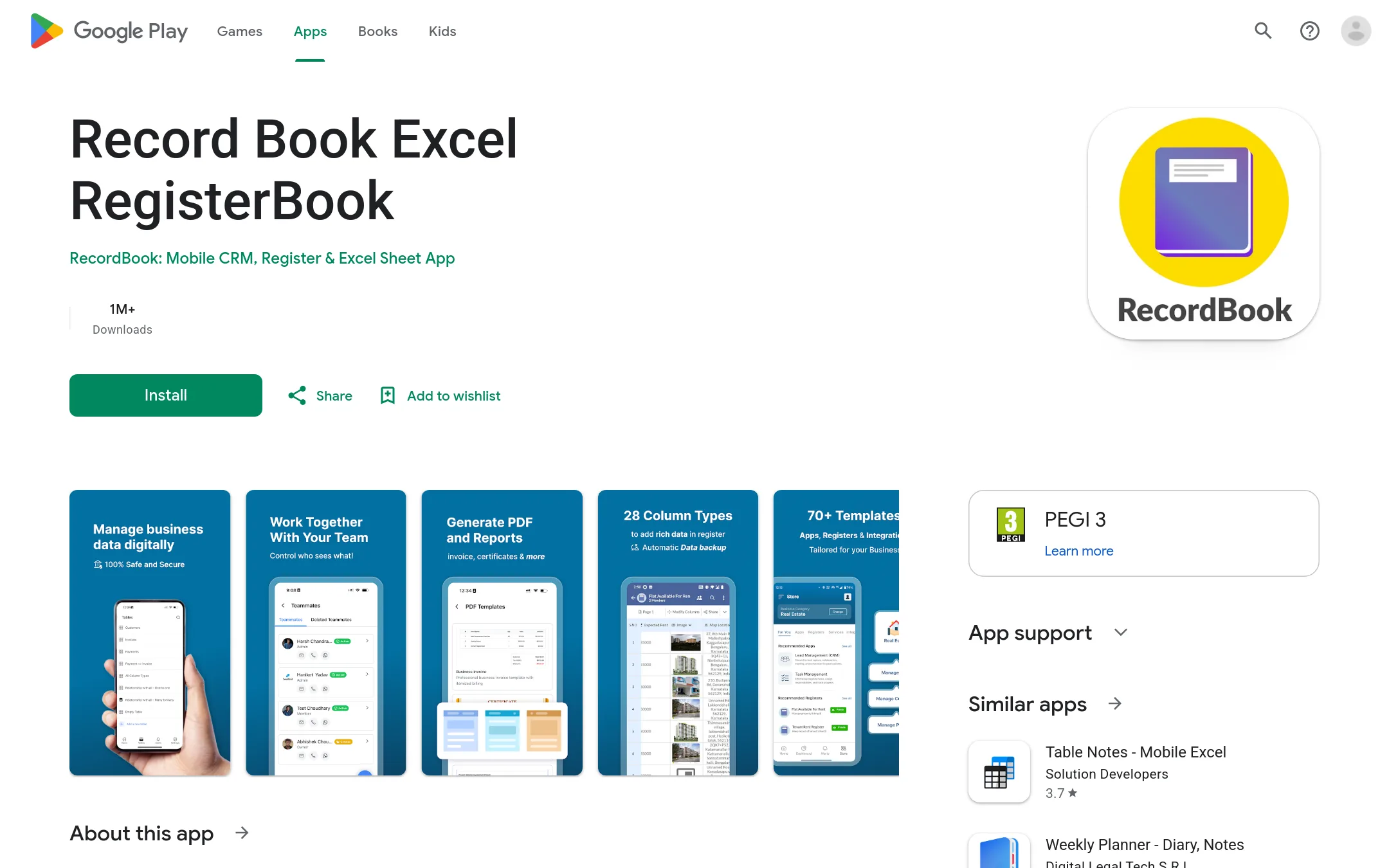
RecordBook is a mobile-first database app for small businesses that need to organize records without building infrastructure. Choose it instead of SST when you want a ready-made Airtable-like tool rather than deploying your own cloud stack.
Where it is strong
- Mobile-first design works on phones and tablets.
- Airtable-like flexibility for custom records and views.
- No infrastructure or deployment needed.
Where it falls short
- Limited to mobile app, no desktop or web version mentioned.
- No integration with AWS or other cloud services.
- Pricing:
- Pricing is not published on the site.
- From $1/mo + usage
9.Railway
Best for: Teams that want to deploy apps and databases quickly without managing infrastructure configs, especially those using GitHub repos.
- Pricing
- From $1/mo + usage
- Category
- Developer Tools
Railway is a full-stack cloud platform that deploys web apps, servers, and databases from a connected repo with automatic scaling and monitoring. Choose it over SST if you want a managed platform that handles infrastructure behind the scenes, rather than writing infrastructure-as-code configs.
Where it is strong
- Pay only for what you use, metered per second.
- Automatic previews for every PR and one-click rollbacks.
- Built-in logs, metrics, and traces from deployment.
Where it falls short
- Hobby plan limits to 1 vCPU and 0.5 GB RAM per service.
- No infrastructure-as-code. Less control than SST's config-based approach.
- Pricing:
- Start with a 30-day free trial with $5 credits, then $1 per month for Hobby (includes $5 monthly usage credits). Pro is $20 per month with $20 credits. Usage is metered per second: memory $0.00000386 per GB/sec, CPU $0.00000772 per vCPU/sec, egress $0.05 per G
- Switching from SST:
- Moving from SST means replacing your sst.config.ts with Railway's repo-connected deployment, so you'll need to re-create your resources in Railway's UI or CLI.
- RNot published
10.Render
Best for: Teams that want a zero-ops PaaS with built-in Postgres, Redis, and cron jobs, and prefer clicking through a dashboard over writing IaC.
- Pricing
- Not published
- Category
- Other
Render is a managed cloud platform where you connect a repo and it runs web services, databases, cron jobs, and background workers. Choose it over SST if you want a hosted platform that handles deployment, scaling, and monitoring without writing infrastructure code or managing your own AWS account.
Where it is strong
- Deploy web services, databases, cron jobs, and workers from one repo.
- Autoscaling handles traffic bursts without manual setup.
- Full-stack previews for every pull request.
Where it falls short
- Pricing is not published on the site. You must contact sales.
- Less control over underlying infrastructure compared to SST's AWS-native approach.
- Pricing:
- Pricing is not published on the site.
- From $0.0030/hr
11.Fly.io
Best for: Teams that want to deploy existing Docker-based apps or AI agents close to users across many regions, with per-second billing.
- Pricing
- From $0.0030/hr
- Category
- Developer Tools
Fly.io runs full-stack apps and agents on hardware-isolated VMs that boot in under a second and bill by the second. Choose it over SST when you want to deploy Docker containers or frameworks like Rails, Django, or Next.js directly to 18+ regions without managing infrastructure code.
Where it is strong
- Per-second billing for Machines, so you only pay while they run.
- Managed Postgres with backups, failover, and connection pooling included.
- Built-in support for AI agents via Sprites and MCP servers.
Where it falls short
- No infrastructure-as-code config like SST's single config file. You manage VMs and networking manually.
- Egress costs vary by region, with Africa and India at $0.12/GB.
- Pricing:
- Machines start at $0.0030/hour for shared-cpu-1x with 256MB RAM, and managed Postgres starts at $38/month.
- Switching from SST:
- Moving from SST means replacing your sst.config.ts with Fly.io's CLI and Docker-based deployment, and reworking any SST-specific resources like the Nextjs component.
See more comparisons in Developer Tools alternatives.
FAQ
Questions about SST alternatives
What is the main difference between SST and these alternatives?
SST is an infrastructure-as-code tool that deploys full-stack apps using a single config file. Alternatives like Fly.io and Railway are managed platforms that handle infrastructure behind the scenes, while Supabase provides a hosted backend with database and auth.
Which alternative is best for deploying Docker containers?
Fly.io is the best choice for deploying Docker containers or frameworks like Rails, Django, or Next.js directly to 18+ regions. It boots VMs in under a second and bills by the second, so you only pay while they run.
Are there any free tiers available?
Yes, Supabase offers a generous free tier with 500 MB database and 50,000 MAU. Netlify Forms has a free tier with 300 credits per month. Serverless Framework is free for individuals and organizations under $2M in annual revenue.
Which alternative has the most transparent pricing?
Fly.io, Supabase, Railway, and Netlify Forms publish clear pricing on their sites. Others like Render, Terraform Cloud, and Pulumi Cloud do not publish pricing and require contacting sales.
Can I use these alternatives with AWS?
Terraform Cloud and Pulumi Cloud support AWS and other clouds. Serverless Framework is AWS-focused. Fly.io and Railway are not tied to AWS and deploy to their own infrastructure.
Last updated November 3, 2026.