
Stacker alternatives
10 products compared · Updated October 16, 2026
The short answer
For enterprises needing governed, production-ready internal tools, Retool is the strongest choice. Glide suits operations teams that want mobile apps from spreadsheets without code. Noloco is best for professional services teams needing client portals with granular permissions.
Your shortlist, at a glance
Read the comparisons ↓ RetoolFrom $10/user/moEnterprises and engineering teams that need governed, production-ready internal tools with granular access controls and audit logging.
 BubbleFrom $29/moFounders and small teams who want to build and launch a web or mobile app without writing code, especially when they need custom UI and workflows.
 Airtable AutomationsNot publishedTeams that want to build custom internal tools and automated workflows on a structured database, with deep control over records and processes.
SoftrNot publishedTeams that need secure external-facing portals or internal tools with fine-grained permissions, built on existing data sources like Airtable or Google Sheets.
 AppsmithFrom $15/user/moDeveloper teams that want to build custom internal apps with JavaScript and Git workflows, especially those needing self-hosted or air-gapped deployment.
 BudibaseFrom $19/moTeams that want an open-source, self-hostable platform to build internal tools and AI agents with their own LLMs and data sources.
TooljetFrom $199/moEngineering teams that need self-hosted internal tools with enterprise governance and the option to build via coding agents like Claude Code or Cursor.
GlideFree, then paid tiersOperations teams in retail, logistics, or field services that need mobile apps and portals built from spreadsheets without writing code.
 NolocoFrom $79/moProfessional services and operations teams that need client portals with granular permissions and no-code workflows.
- IInternalNot publishedTeams that already know Internal from prior experience or documentation and need a tool for internal tooling, since the website is down and cannot be evaluated.
About Stacker and its alternatives
Stacker is an AI-native application platform for building internal tools, CRMs, and dashboards. It turns spreadsheets into apps and portals, and its agents can act on your data across tools like Slack, email, and web.
When comparing alternatives, weigh pricing structure (per-seat vs. usage-based credits), region availability, integrations with your data sources, support options, and contract terms. Some tools are open-source and self-hostable, others are cloud-only. Check whether free tiers or trials fit your needs.
Explore the alternatives
- From $10/user/mo
1.Retool
Best for: Enterprises and engineering teams that need governed, production-ready internal tools with granular access controls and audit logging.
- Pricing
- From $10/user/mo
- Category
- Productivity & Project Management
Retool is a platform for building internal tools that connect directly to your production data sources, with enterprise-grade security and governance built in. Choose it over Stacker when you need to build custom apps for large teams or regulated industries, or when you want to deploy apps built elsewhere using their CLI or MCP server.
Where it is strong
- Connects directly to production data with existing permissions
- Enterprise security features like SSO, audit logs, and granular roles
- Can deploy apps built with Lovable, Replit, or via CLI
Where it falls short
- External users and embedded apps only on Business plan and above
- Free plan limited to 5 users and no audit logs
- Pricing:
- Free plan for up to 5 users with 250 AI credits per month. Team plan starts at $10 per user per month with 1,000 AI credits. Business plan starts at $50 per user per month with 3,000 AI credits. Enterprise is custom-priced with 10,000 AI credits per month.
- From $29/mo
2.Bubble
Best for: Founders and small teams who want to build and launch a web or mobile app without writing code, especially when they need custom UI and workflows.
- Pricing
- From $29/mo
- Category
- AI & Machine Learning
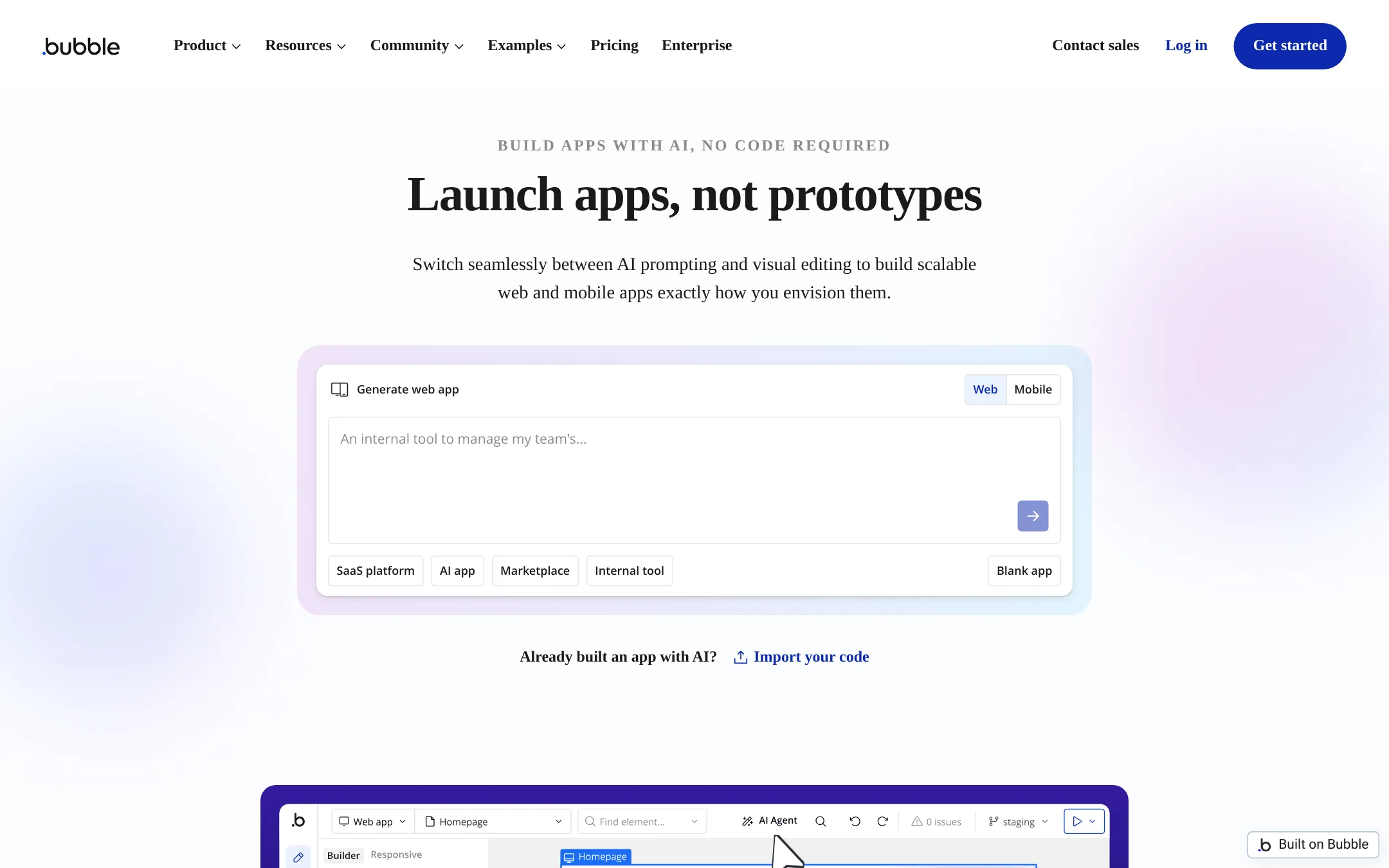
Bubble is a no-code platform for building full web and mobile apps with a visual editor, database, and logic. Choose it over Stacker when you need to ship a customer-facing product or a complex app rather than an internal tool on top of spreadsheets.
Where it is strong
- Build web, iOS, and Android apps from one codebase
- Visual editor for design, database, and logic
- Free plan to start building without a credit card
Where it falls short
- Pricing is usage-based with workload units, which can get complex
- Steeper learning curve than Stacker for simple spreadsheet-driven tools
- Pricing:
- Free plan includes 500 AI credits and 50K workload units per month. Paid plans start at $29/month billed annually for Starter, $119/month for Growth, and $349/month for Team. Enterprise pricing is custom.
- Not published
3.Airtable Automations
Best for: Teams that want to build custom internal tools and automated workflows on a structured database, with deep control over records and processes.
- Pricing
- Not published
- Category
- Productivity & Project Management
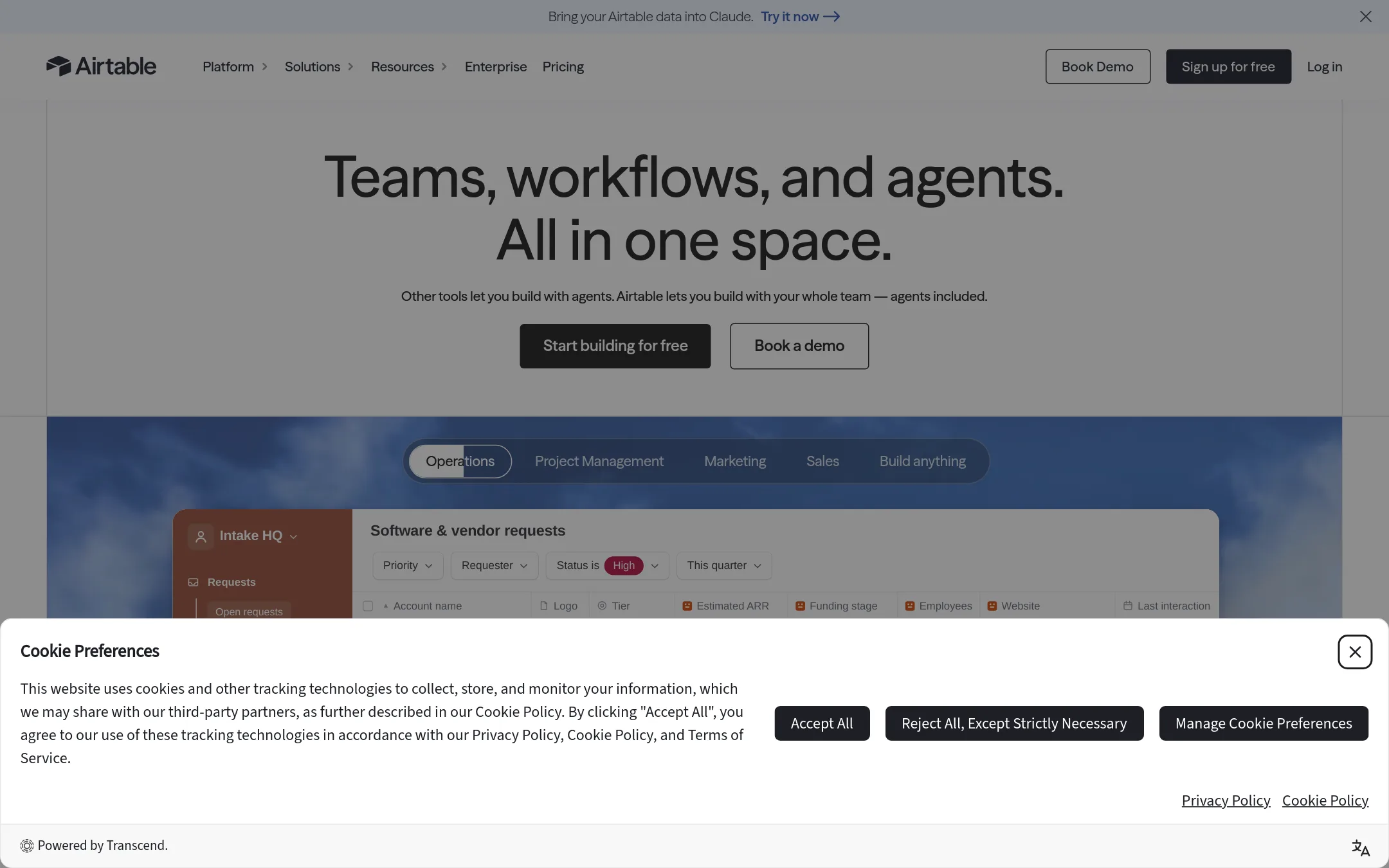
Airtable Automations is a no-code platform for building custom apps and automating workflows on top of a flexible database. Choose it over Stacker if you need a full-featured database with granular record-level control and a mature ecosystem of templates and integrations, rather than an AI-agent-first tool.
Where it is strong
- Flexible database with views, fields, and relations
- Large template gallery and integration marketplace
- Granular permissions and audit logs on paid plans
Where it falls short
- Steeper learning curve for complex automations
- AI features are newer and less central than Stacker's
- Pricing:
- Pricing is not published on the site.
- Not published
4.Softr
Best for: Teams that need secure external-facing portals or internal tools with fine-grained permissions, built on existing data sources like Airtable or Google Sheets.
- Pricing
- Not published
- Category
- AI & Machine Learning
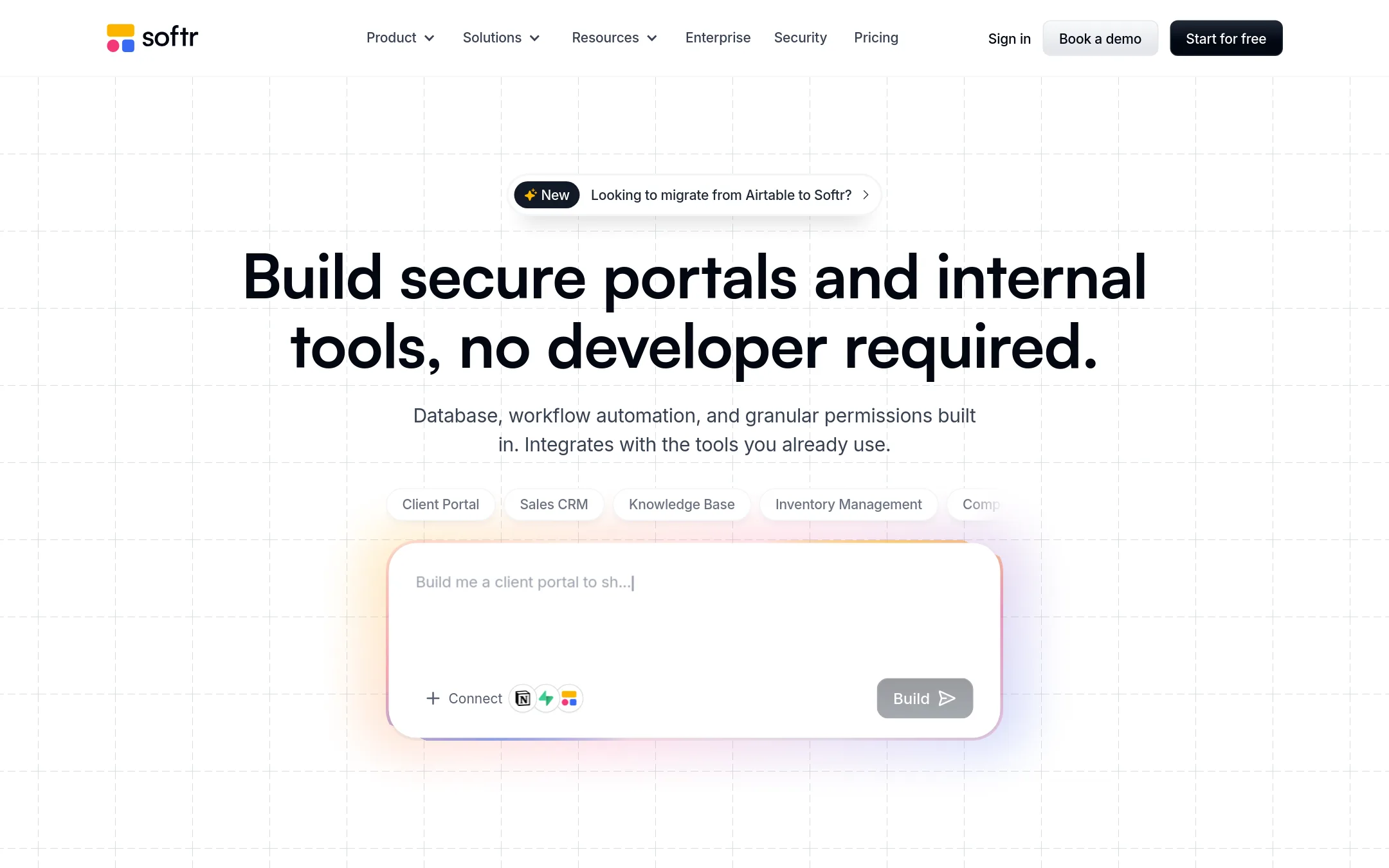
Softr is a no-code platform for building client portals, internal tools, and CRMs on top of data sources like Airtable, Google Sheets, and SQL databases. Choose it over Stacker when you want a visual builder with granular roles and permissions, and you prefer to iterate with AI assistance or manually rather than rely on AI agents that act autonomously.
Where it is strong
- Connects to 21+ data sources including Airtable, Notion, Google Sheets, and SQL databases.
- Granular roles and permissions for controlling what each user sees.
- AI-assisted building lets you describe an app and get a starting point, then refine visually.
Where it falls short
- Pricing is not transparent. You need to book a demo to get costs.
- Advanced data sources like Salesforce and Snowflake are only available on the Enterprise plan.
- Pricing:
- Pricing is not published on the site. The pricing page only shows a free tier and a 'Book a demo' call to action.
- From $15/user/mo
5.Appsmith
Best for: Developer teams that want to build custom internal apps with JavaScript and Git workflows, especially those needing self-hosted or air-gapped deployment.
- Pricing
- From $15/user/mo
- Category
- Developer Tools
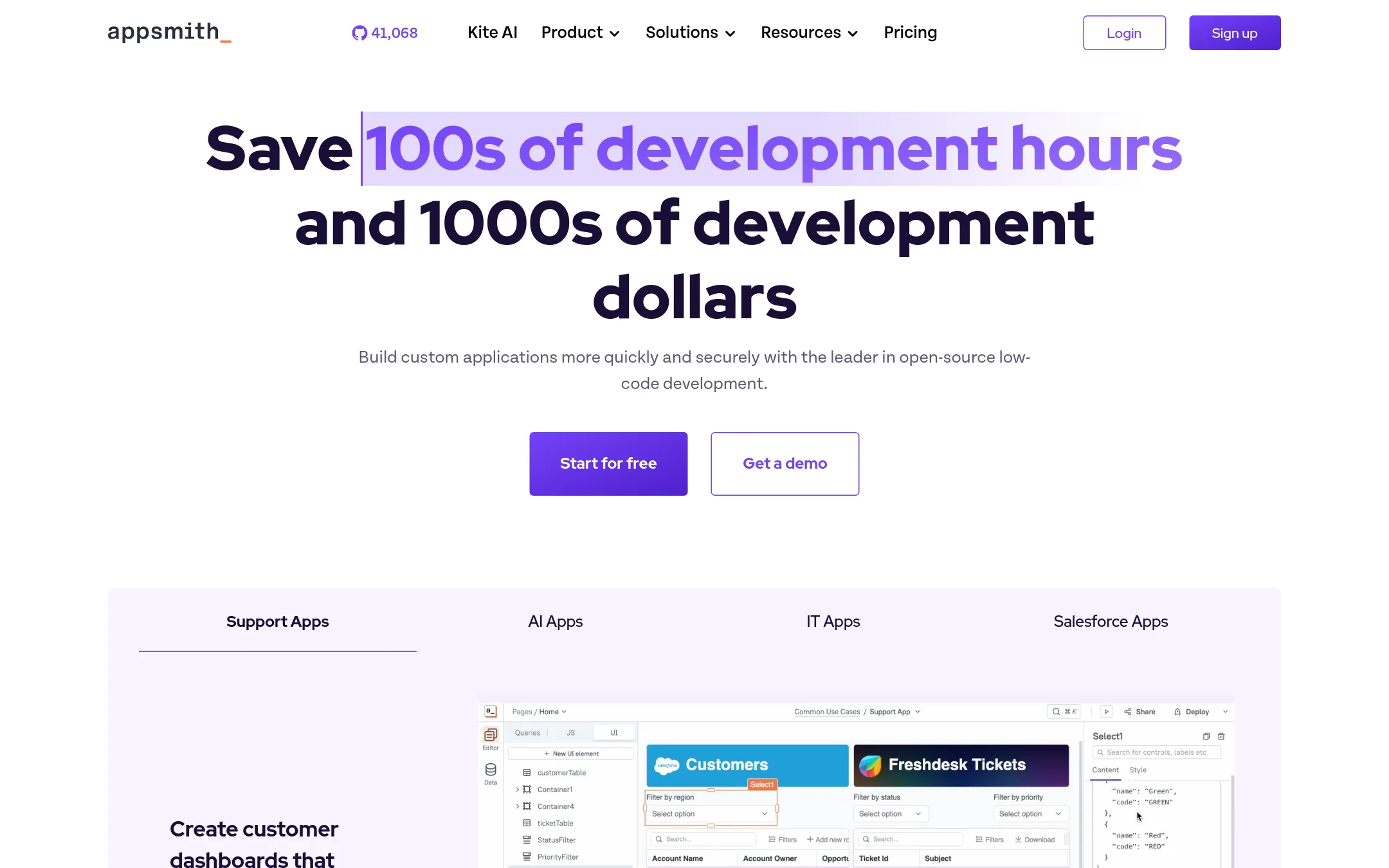
Appsmith is an open-source low-code platform for building custom internal tools with full JavaScript control and Git-based version control. Choose it over Stacker when your team needs code-level customization, self-hosting, or air-gapped deployment.
Where it is strong
- Full JavaScript control and custom widgets
- Git-based version control and CI/CD integration
- Self-hosting and air-gapped deployment options
Where it falls short
- Requires more technical skill than Stacker's spreadsheet-based approach
- Free tier limited to 5 users and 3 Git repos
- Pricing:
- Free for up to 5 users. Business is $15 per user per month. Enterprise is $2,500 per month for 100 users.
- Switching from Stacker:
- Moving from Stacker means rebuilding your apps in Appsmith's IDE, since it doesn't use spreadsheets as a data source.
- From $19/mo
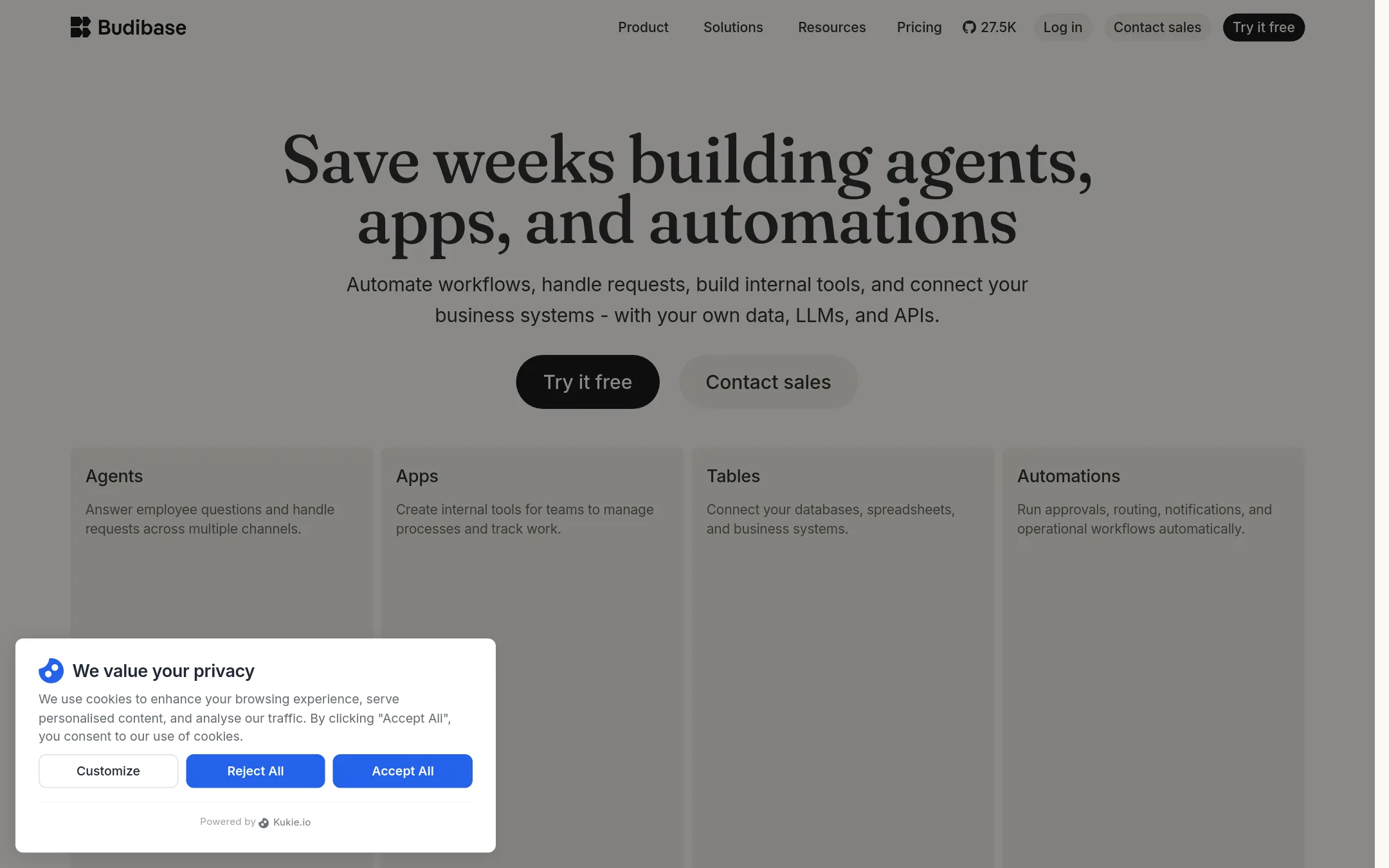
6.Budibase
Best for: Teams that want an open-source, self-hostable platform to build internal tools and AI agents with their own LLMs and data sources.
- Pricing
- From $19/mo
- Category
- AI & Machine Learning
Budibase is an open-source platform for building AI agents, internal tools, and automations on your own data and APIs. Choose it over Stacker if you want to self-host, need granular control over RBAC and SSO, or prefer a builder that emphasizes custom app creation alongside agent workflows.
Where it is strong
- Open-source with self-hosting option
- Bring your own AI key for agents
- Built-in app builder for custom UIs
Where it falls short
- AI credits are limited on lower plans
- Advanced features like SSO require Premium or above
- Pricing:
- Cloud plans start at $19/month for Pro (1 creator, 2K AI credits), $49/month for Premium, $299/month for Business, and custom for Enterprise. Self-hosting is free with community support.
- Switching from Stacker:
- Moving from Stacker means rebuilding your apps and automations in Budibase, as there is no migration path mentioned.
- From $199/mo
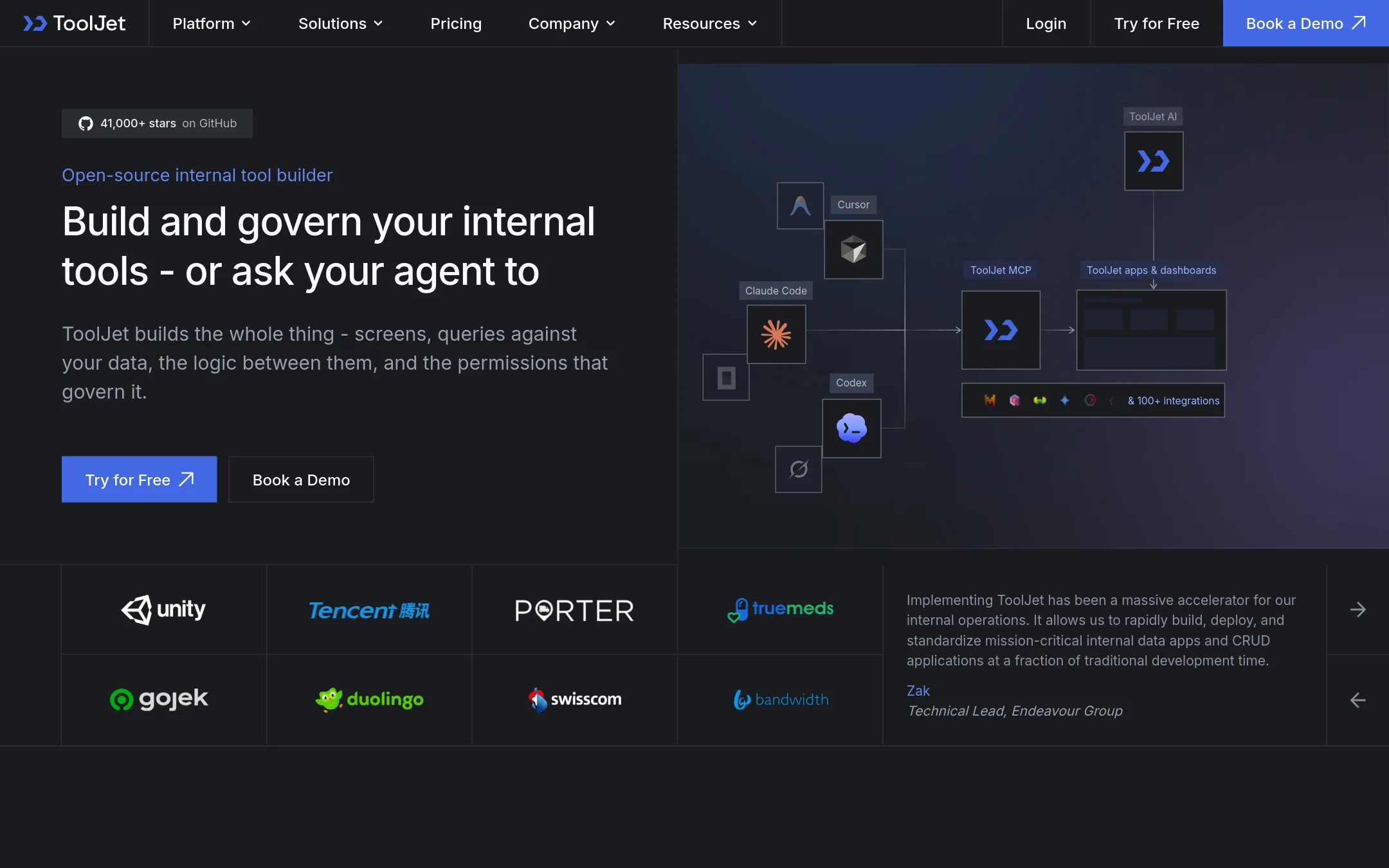
7.Tooljet
Best for: Engineering teams that need self-hosted internal tools with enterprise governance and the option to build via coding agents like Claude Code or Cursor.
- Pricing
- From $199/mo
- Category
- AI & Machine Learning
ToolJet is an open-source low-code platform for building internal tools, dashboards, and admin panels. Choose it over Stacker if you want to self-host, need granular RBAC and audit logs, or prefer a visual builder with AI assistance rather than a spreadsheet-driven app platform.
Where it is strong
- Open-source and self-hostable, including a free Community Edition
- Granular RBAC down to component and query level, plus audit logs
- Build via AI description or coding agents without consuming ToolJet AI credits
Where it falls short
- Workflow automation and agent builder are only on Self-hosted plans
- AI credits reset monthly and are limited on the Free plan
- Pricing:
- Free plan available. Business plan is $199/month billed yearly or $249/month monthly. Enterprise pricing is custom. AI credits are pay-as-you-go.
- Switching from Stacker:
- Moving from Stacker means rebuilding apps in ToolJet's visual builder, but your data connections and logic can be recreated using its 100+ connectors.
- Free, then paid tiers
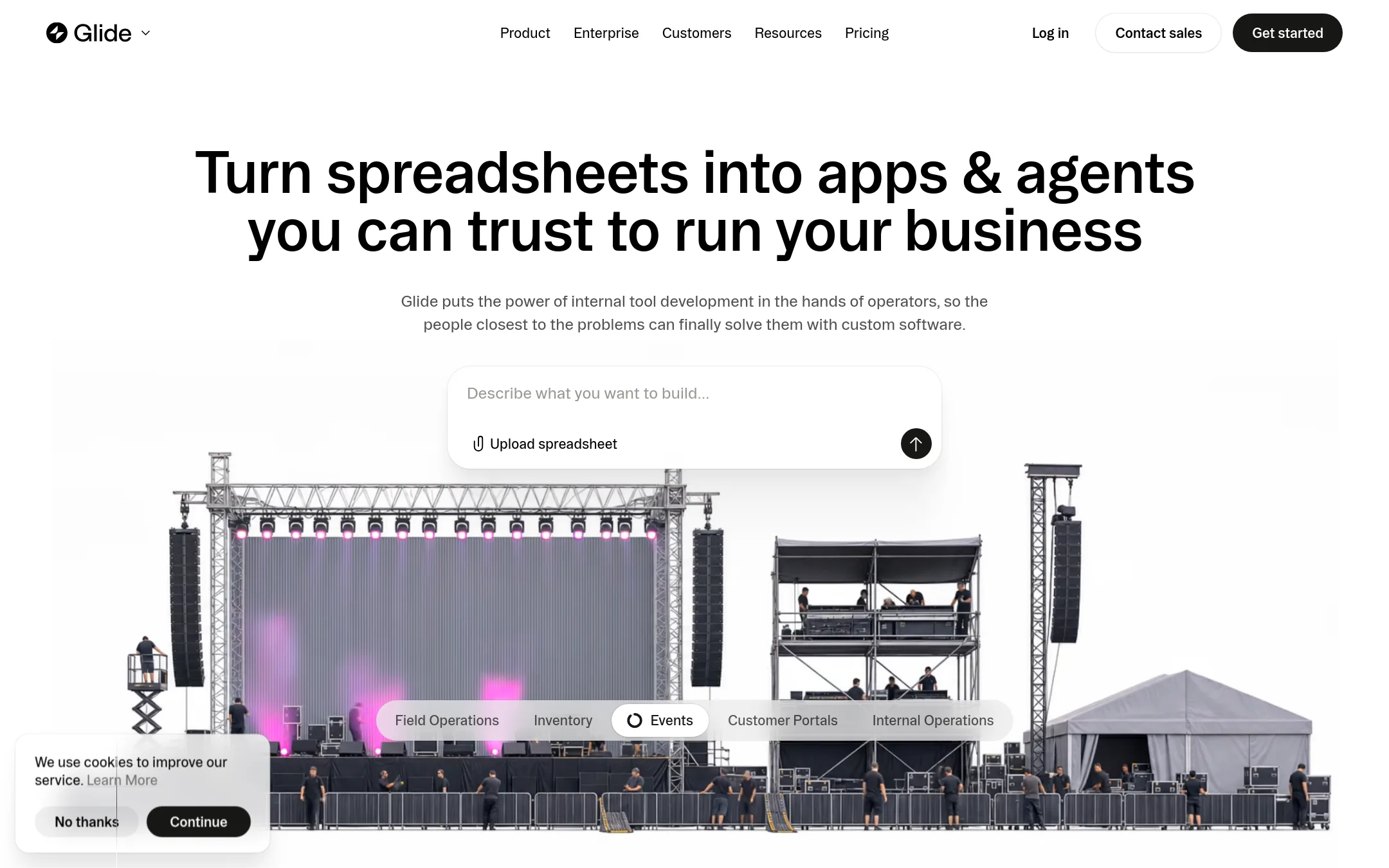
8.Glide
Best for: Operations teams in retail, logistics, or field services that need mobile apps and portals built from spreadsheets without writing code.
- Pricing
- Free, then paid tiers
- Category
- Productivity & Project Management
Glide turns spreadsheets into mobile-friendly apps and dashboards, with AI features for building and querying. Choose it over Stacker if you need polished apps for field teams, customers, or partners and want a visual builder that starts from a spreadsheet or a prompt.
Where it is strong
- Turns spreadsheets into mobile and desktop apps quickly
- AI builder can generate apps from a prompt or spreadsheet
- Apps stay connected to live data across multiple views
Where it falls short
- Free plan limits to 2 team members and 10 projects
- GlideOS is separate from Glide Classic, so existing users need a new subscription
- Pricing:
- Free plan for 2 team members and 10 projects. Paid plans start at Basic, with Plus and Pro tiers adding more users, apps, and workflows. Enterprise has custom pricing.
- Switching from Stacker:
- Moving from Stacker means rebuilding apps in Glide's builder, but you can upload the same spreadsheet or connect the same data sources to start.
- From $79/mo
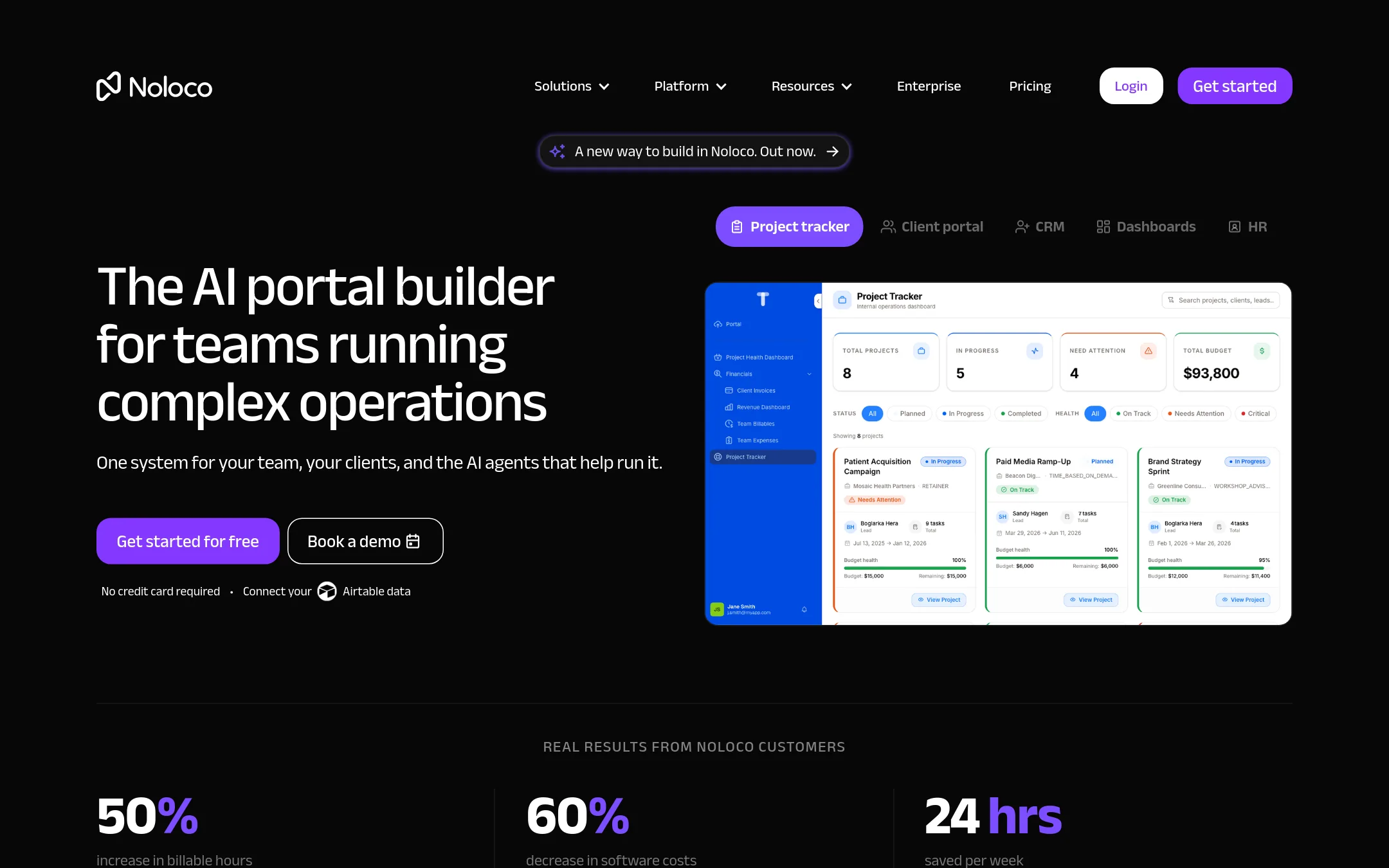
9.Noloco
Best for: Professional services and operations teams that need client portals with granular permissions and no-code workflows.
- Pricing
- From $79/mo
- Category
- Productivity & Project Management
Noloco is a no-code portal builder for teams running complex operations, like professional services, finance, and field operations. Choose it over Stacker if you need granular client-facing permissions, white-label portals, and a system that adapts as your business grows without requiring developers.
Where it is strong
- Granular permissions at table, page, record, and field level
- 14-day free trial with no credit card required
- 50% discount for non-profit organizations
Where it falls short
- Free plan limited to 2,000 records and 50 clients
- AI builder credits are separate from usage and reset monthly
- Pricing:
- Free plan includes 50 active clients and 2,000 records. Build plan starts at $79/month for 10 team seats, 1,000 active clients, and 25,000 records, with extra seats at $6 each and extra records at $25 per 25,000. Custom plan has custom pricing.
- Switching from Stacker:
- Moving from Stacker involves rebuilding your app in Noloco, but you can keep live projects running while you upgrade workflows.
- INot published
10.Internal
Best for: Teams that already know Internal from prior experience or documentation and need a tool for internal tooling, since the website is down and cannot be evaluated.

- Pricing
- Not published
- Category
- Security & Privacy
Internal is a platform for building internal tools, but its website is currently unreachable, so details about its features and capabilities are not available. Choose Internal only if you already have experience with it or have obtained information from other sources, as the site provides no usable details for evaluation.
Where it is strong
- Website is unreachable, so no claims can be made about features.
- No pricing information is available, so no cost commitment is implied.
- The product name suggests a focus on internal tools, which may align with your needs.
Where it falls short
- The website is currently down, so you cannot access documentation or demos.
- No pricing or feature details are available, making comparison difficult.
- Pricing:
- Pricing is not published on the site.
See more comparisons in Developer Tools alternatives.
FAQ
Questions about Stacker alternatives
What is the best Stacker alternative for enterprises?
Retool is the strongest for enterprises. It offers granular access controls, audit logging, and SSO. It connects directly to production data and supports deployment via CLI or MCP server.
Which alternative is easiest for non-technical teams?
Glide is easiest for non-technical teams. It turns spreadsheets into mobile apps with a visual builder and AI assistance. You can start from a spreadsheet or a prompt without writing code.
Are there open-source alternatives to Stacker?
Yes. Appsmith, Budibase, and Tooljet are open-source and self-hostable. They offer code-level control and are good for developer teams that need air-gapped deployment or custom JavaScript.
How do pricing models compare?
Stacker uses a credit-based model with no per-seat charges. Retool and Appsmith charge per user per month. Glide and Noloco have tiered plans. Some tools like Softr do not publish pricing and require a demo.
Can I build client portals with these alternatives?
Yes. Noloco and Softr are designed for client portals with granular permissions. Glide also supports external users on higher plans. Retool requires the Business plan for external users.
Last updated October 16, 2026.