Strapi alternatives
12 products compared · Updated October 31, 2026
The short answer
For teams that need a self-hosted, multi-tenant CMS with governance and code-level customization, Webiny is the strongest alternative. Ghost suits independent publishers and newsletter creators who want built-in monetization. Sanity is best for teams building content-heavy applications or AI workflows that need structured content and real-time collaboration.
Your shortlist, at a glance
Read the comparisons ↓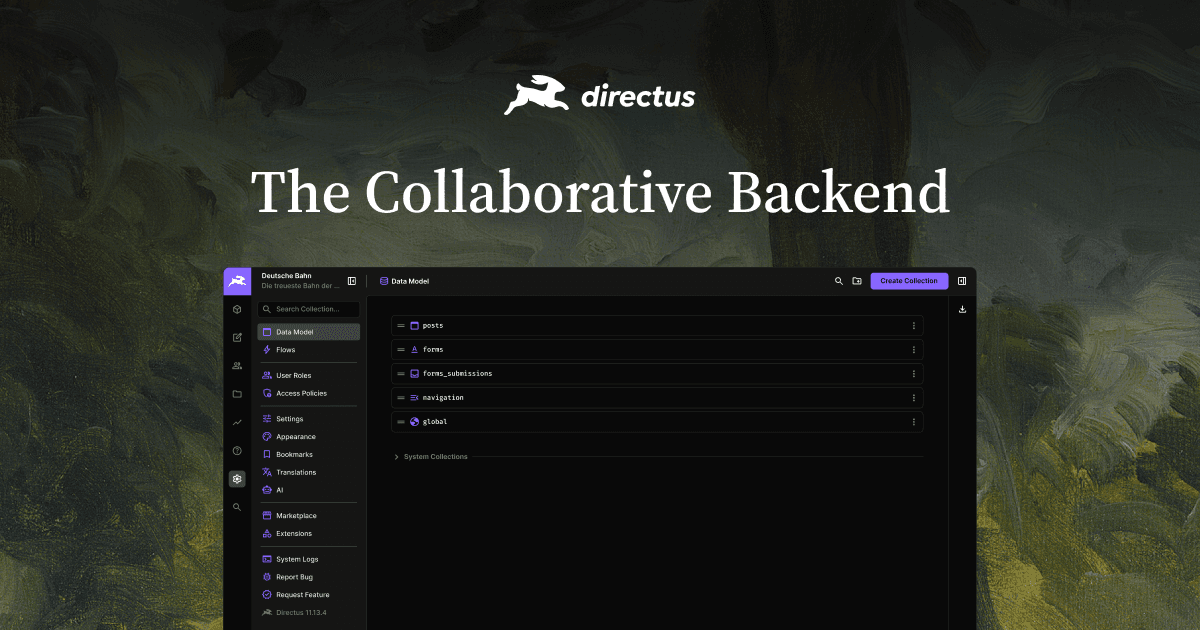 DirectusFrom $89/moTeams that want a collaborative backend over their existing database with a no-code interface and AI assistant access.
 Payload CMSNot publishedNext.js teams that want a code-defined content model and a built-in backend without managing a separate CMS instance.
 SanityFrom $15/seat/moTeams building content-heavy applications or AI workflows that need structured content and real-time collaboration.
 ContentfulSee websiteContent that scales. Experiences that convert.
 GhostFrom $9/mo (yearly)Independent publishers, newsletter creators, and media businesses that want to own their audience and revenue.
 KeystoneNot publishedReact and TypeScript developers who want a programmable, self-hosted CMS with a GraphQL API and custom access control.
 CockpitNot publishedDevelopers and agencies that want a minimal, self-hosted content backend with full data control and no vendor lock-in.
CosmicSee websiteCosmic is a headless CMS and API toolkit
WebinyNot publishedEnterprise teams that need a self-hosted, multi-tenant CMS with governance features like audit logs and SSO, and that expect to customize the platform in code.
 refineSee websiteOpen-source Retool for enterprise
 ApostropheFree, Pro per userJavaScript teams building Astro-powered websites who want true in-context editing for non-technical editors.
 AppsmithSee websiteOpen-source low-code platform to build custom apps 10X faster with JS control and Git workflows.
About Strapi and its alternatives
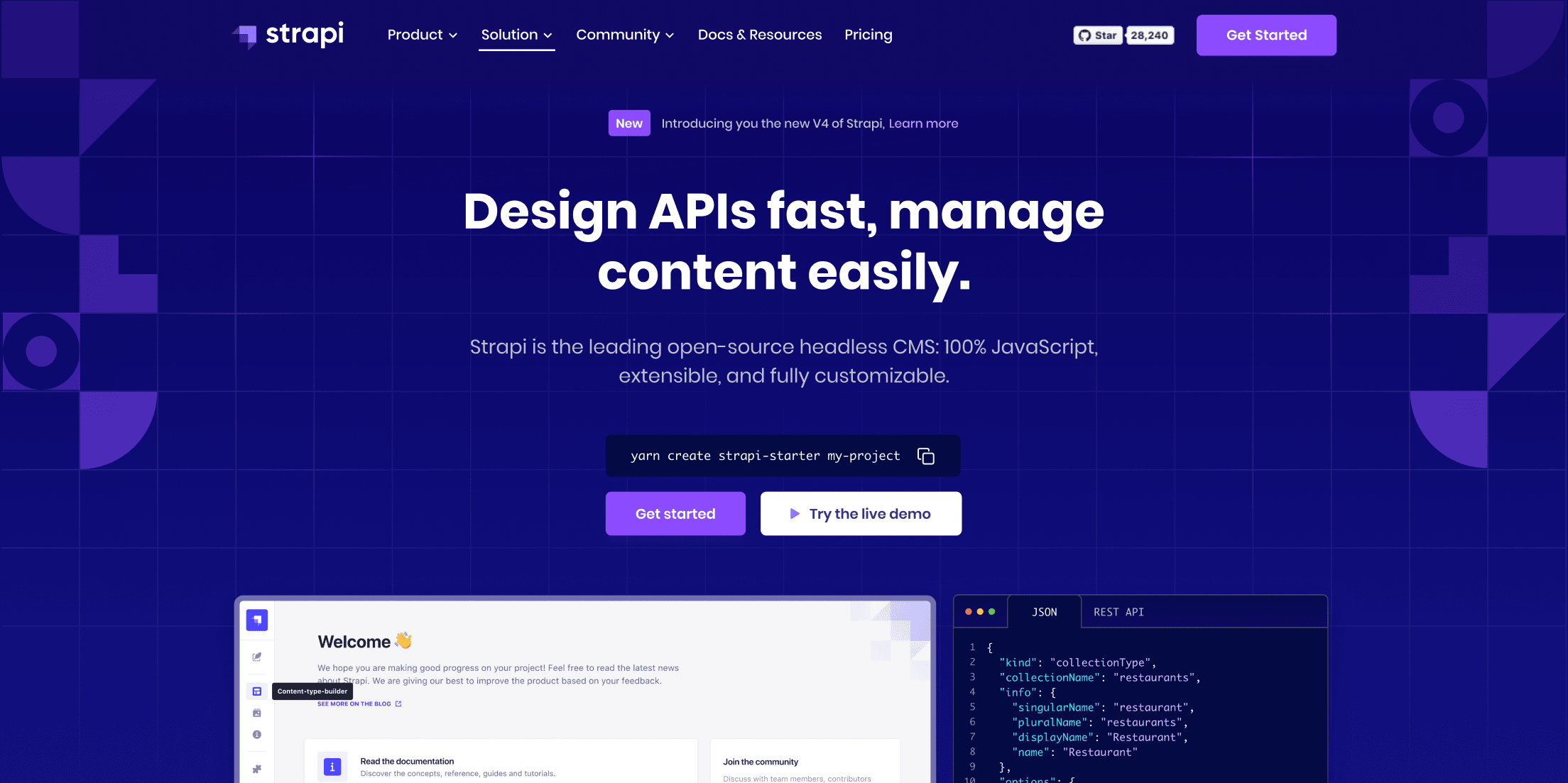
Strapi is an open-source TypeScript headless CMS that lets you design content types in a no-code builder and get REST and GraphQL APIs instantly. It is known for being MIT-licensed, self-hostable, and customizable at the framework level, with a managed cloud option and enterprise features like SSO and audit logs.
When comparing alternatives, weigh pricing structure (per seat, per project, or usage-based), whether the product is self-hosted or managed, the regions and integrations it supports, the level of support and contract terms, and how much customization you need in code versus a no-code interface.
Explore the alternatives
- From $89/mo
1.Directus
Best for: Teams that want a collaborative backend over their existing database with a no-code interface and AI assistant access.
- Pricing
- From $89/mo
- Category
- Developer Tools
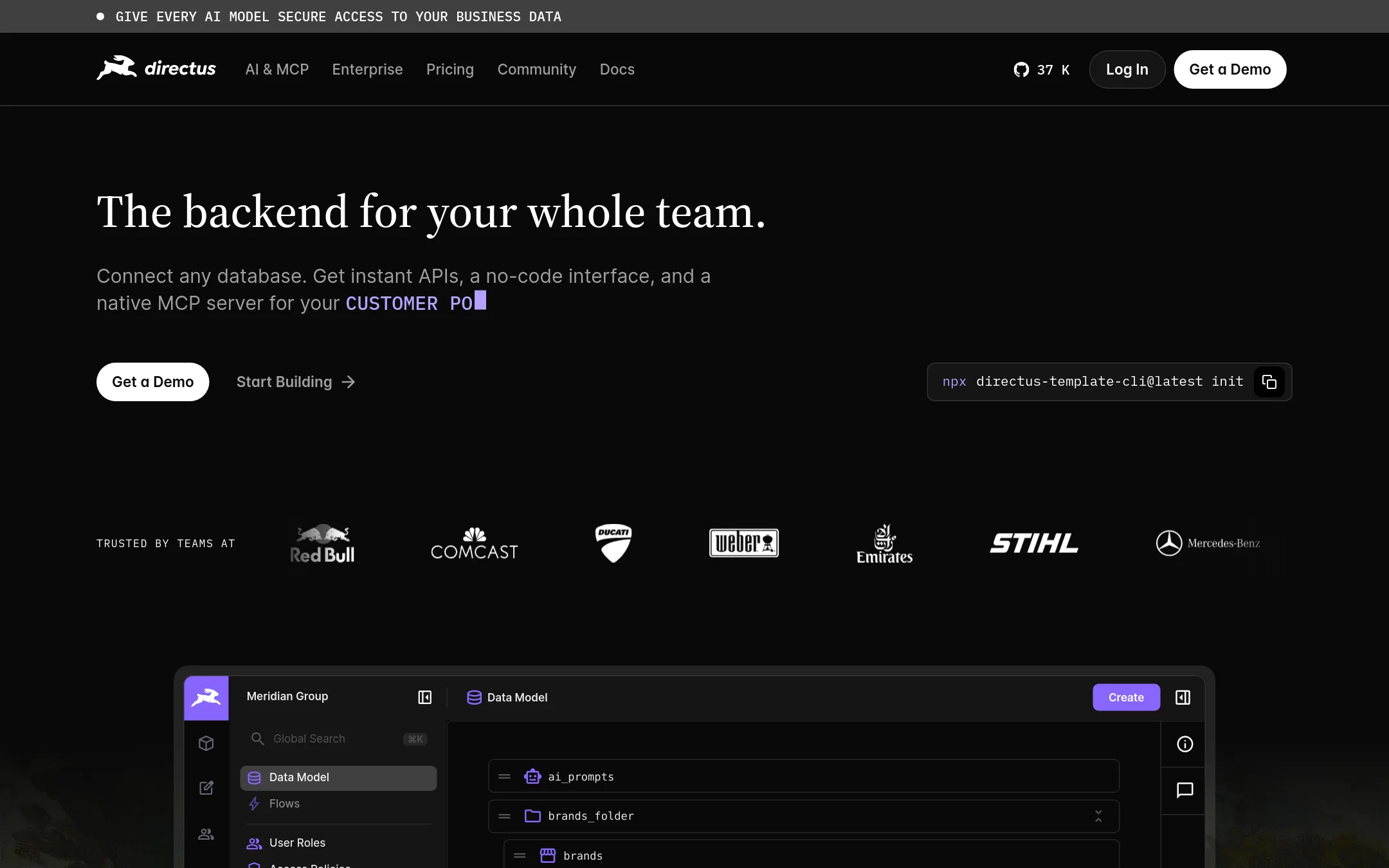
Directus is a self-hostable headless CMS that connects directly to your existing SQL database and generates REST and GraphQL APIs from it. You would choose it over Strapi when you already have a database schema you want to keep, or when you need a no-code admin interface for your whole team, not just content editors.
Where it is strong
- Connects to any existing SQL database without changing your schema
- Includes a native MCP server for AI model access to your data
- Free self-hosting on all plans, with an Open Innovation Grant for small teams
Where it falls short
- SSO is only available on Team and higher, not on Core
- Core plan has a hard limit of 3 user seats
- Pricing:
- Core is $89 per month billed yearly or $99 monthly, Team is $588 per year or $698 monthly, and Enterprise is custom. Self-hosting is free on all tiers.
- Switching from Strapi:
- Moving from Strapi to Directus means pointing Directus at your existing database and re-creating your content types as collections, which is straightforward if your schema is already defined.
- Not published
2.Payload CMS
Best for: Next.js teams that want a code-defined content model and a built-in backend without managing a separate CMS instance.
- Pricing
- Not published
- Category
- Developer Tools
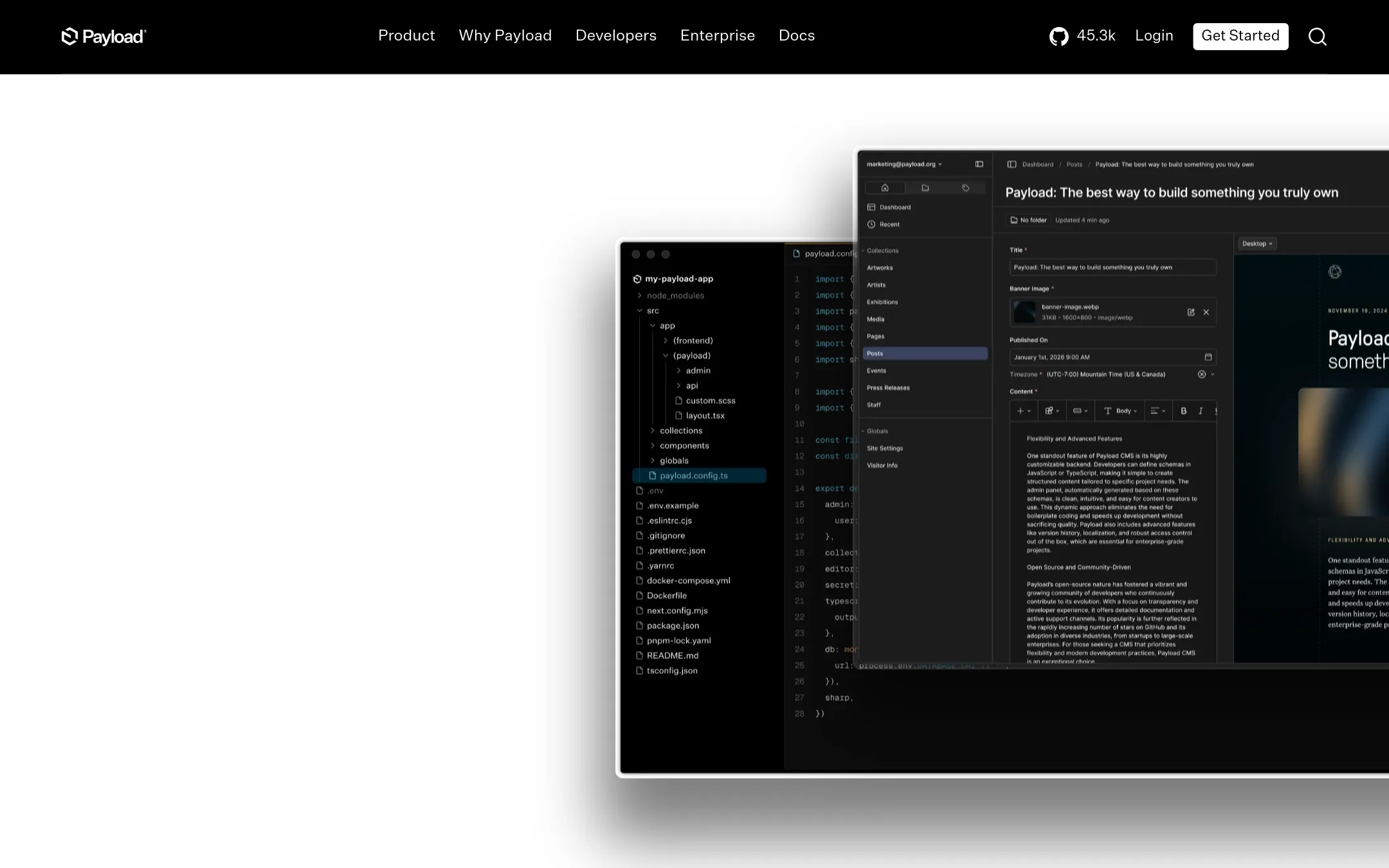
Payload CMS is a code-first headless CMS that runs inside Next.js, giving developers full control over the schema and backend while providing an admin panel for editors. Choose it over Strapi when you want a tightly integrated Next.js app framework rather than a separate CMS with its own Node.js runtime.
Where it is strong
- Schema defined in TypeScript, so content types are versioned and type-safe.
- Runs inside your Next.js app, reducing infrastructure complexity.
- Admin panel is generated automatically and is fully customizable with React.
Where it falls short
- Requires Next.js, so it's not a standalone CMS like Strapi.
- No hosted cloud offering listed, so you handle deployment and scaling yourself.
- Pricing:
- Pricing is not published on the site.
- Switching from Strapi:
- Moving from Strapi means rewriting your content model in code and embedding Payload into a Next.js project, which is a significant architectural change.
- From $15/seat/mo
3.Sanity
Best for: Teams building content-heavy applications or AI workflows that need structured content and real-time collaboration.
- Pricing
- From $15/seat/mo
- Category
- Developer Tools
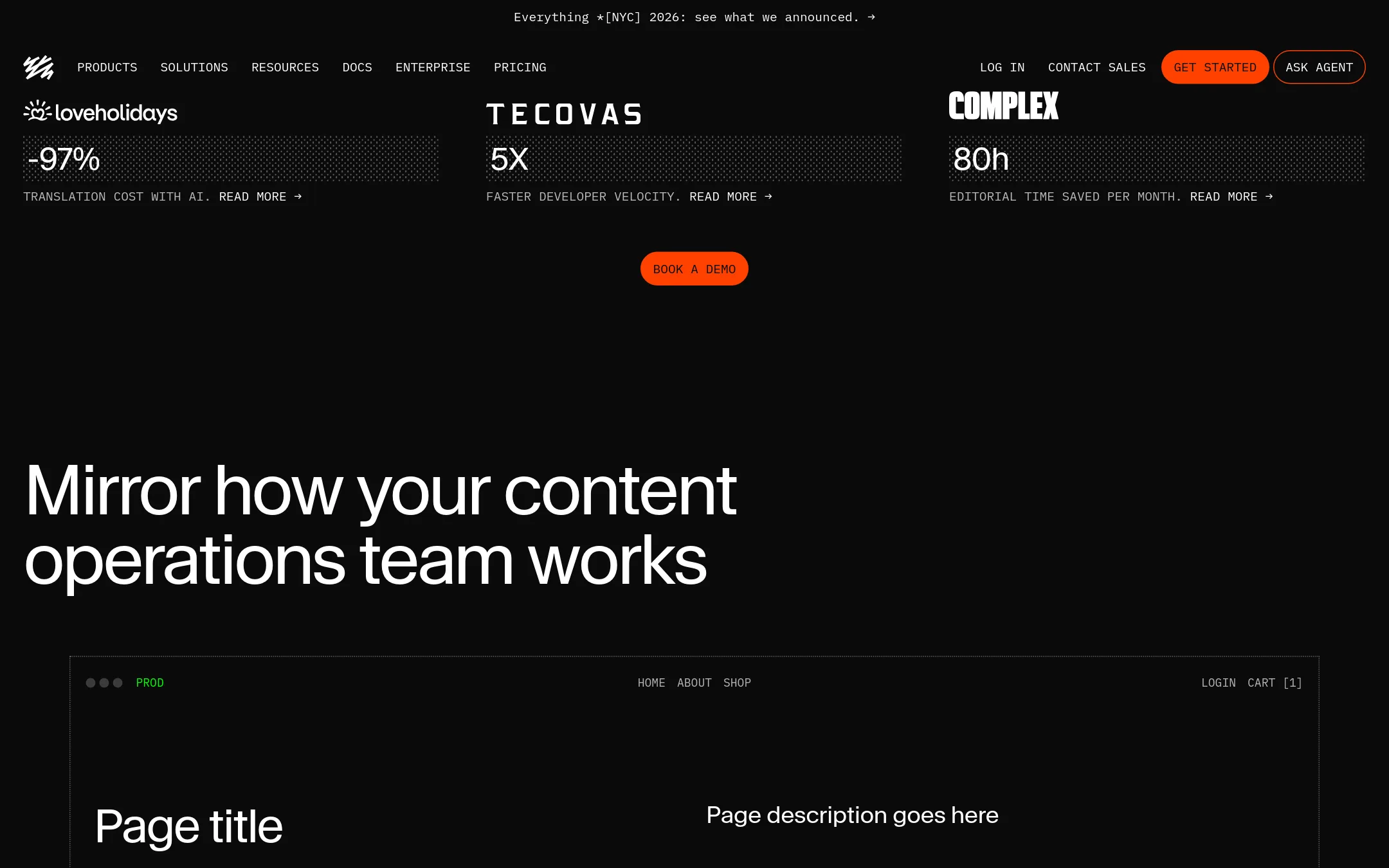
Sanity is a content operating system that treats content as structured data, with a real-time database and an AI agent for content operations. Choose it over Strapi when you need a hosted, API-first platform with built-in AI automation and a flexible schema-as-code approach.
Where it is strong
- Real-time database with schema-as-code for flexible content modeling.
- Built-in AI agent for content operations and automation.
- Generous free plan with up to 20 seats and unlimited content types.
Where it falls short
- Growth plan limits datasets to 2, which may be restrictive for multi-environment needs.
- Advanced features like SSO and custom roles are only on Enterprise.
- Pricing:
- Free plan for individuals. Growth plan at $15 per seat per month. Enterprise custom pricing. Add-ons like dedicated support cost $799 per month.
- Switching from Strapi:
- Moving from Strapi involves redefining content types in Sanity's schema and migrating data via their APIs, which may require custom scripts.
- See website
4.Contentful
E-commerce
Popular headless CMS with a strong API and developer-friendly tooling, but proprietary.
- From $9/mo (yearly)
5.Ghost
Best for: Independent publishers, newsletter creators, and media businesses that want to own their audience and revenue.
- Pricing
- From $9/mo (yearly)
- Category
- Media & Entertainment
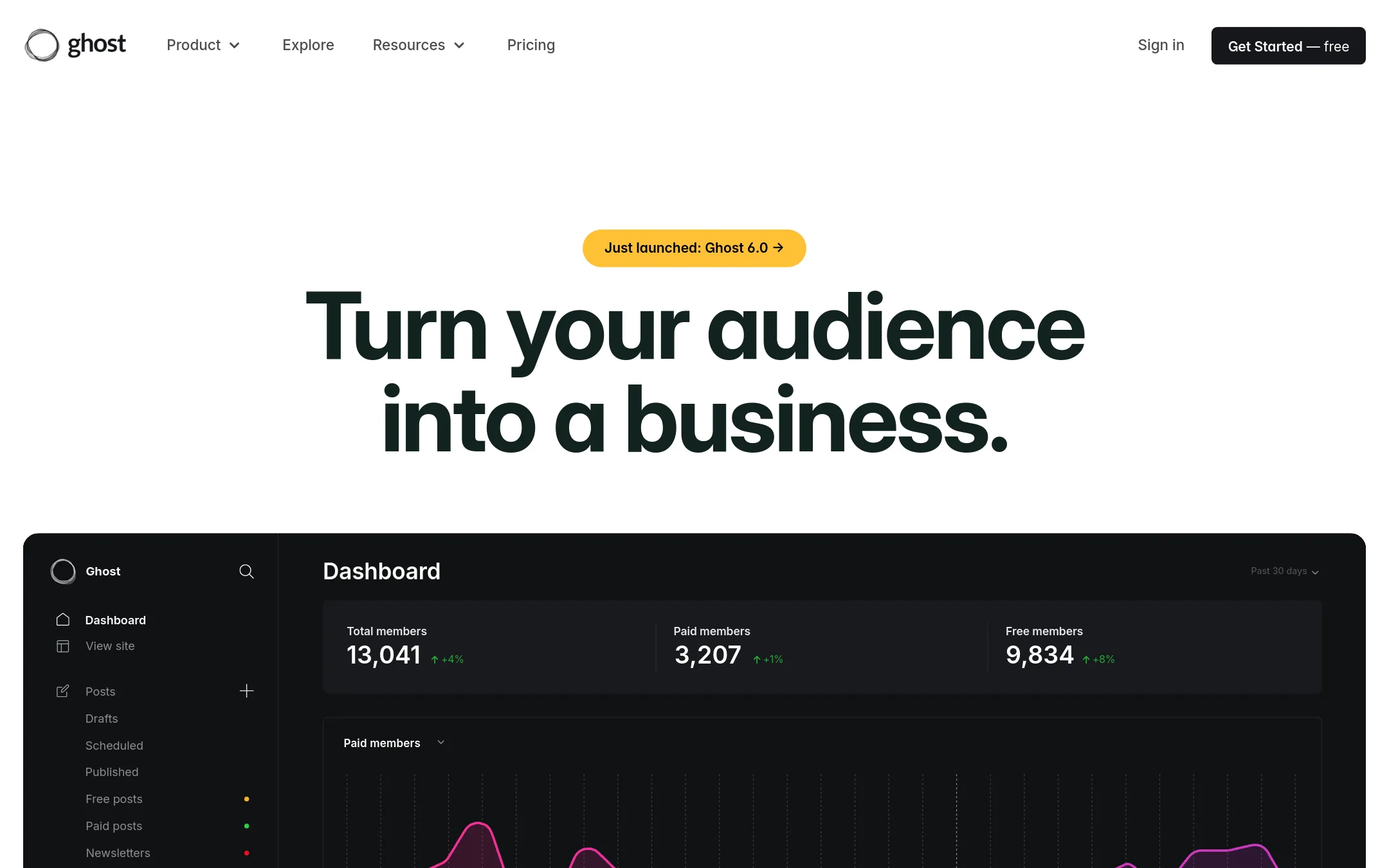
Ghost is a focused publishing platform with built-in newsletters and paid memberships, not a general-purpose headless CMS. Choose it when your main goal is to build an audience and monetize content, rather than managing complex content models for an app.
Where it is strong
- Built-in email newsletters and paid subscriptions with no transaction fees.
- Native analytics and member management to understand your audience.
- Open source and self-hostable, with a simple, focused editor.
Where it falls short
- Not a general-purpose CMS. Limited for complex content types and custom APIs.
- Starter plan lacks custom themes and has a 1,000 member cap.
- Pricing:
- Starter is $9/month billed yearly, Publisher is $25/month billed yearly, Business is $199/month billed yearly, and Custom plans are quoted individually.
- Switching from Strapi:
- Moving from Strapi means rebuilding your content model and API structure, as Ghost is tailored for publishing rather than headless content delivery.
- Not published
6.Keystone
Best for: React and TypeScript developers who want a programmable, self-hosted CMS with a GraphQL API and custom access control.
- Pricing
- Not published
- Category
- Developer Tools
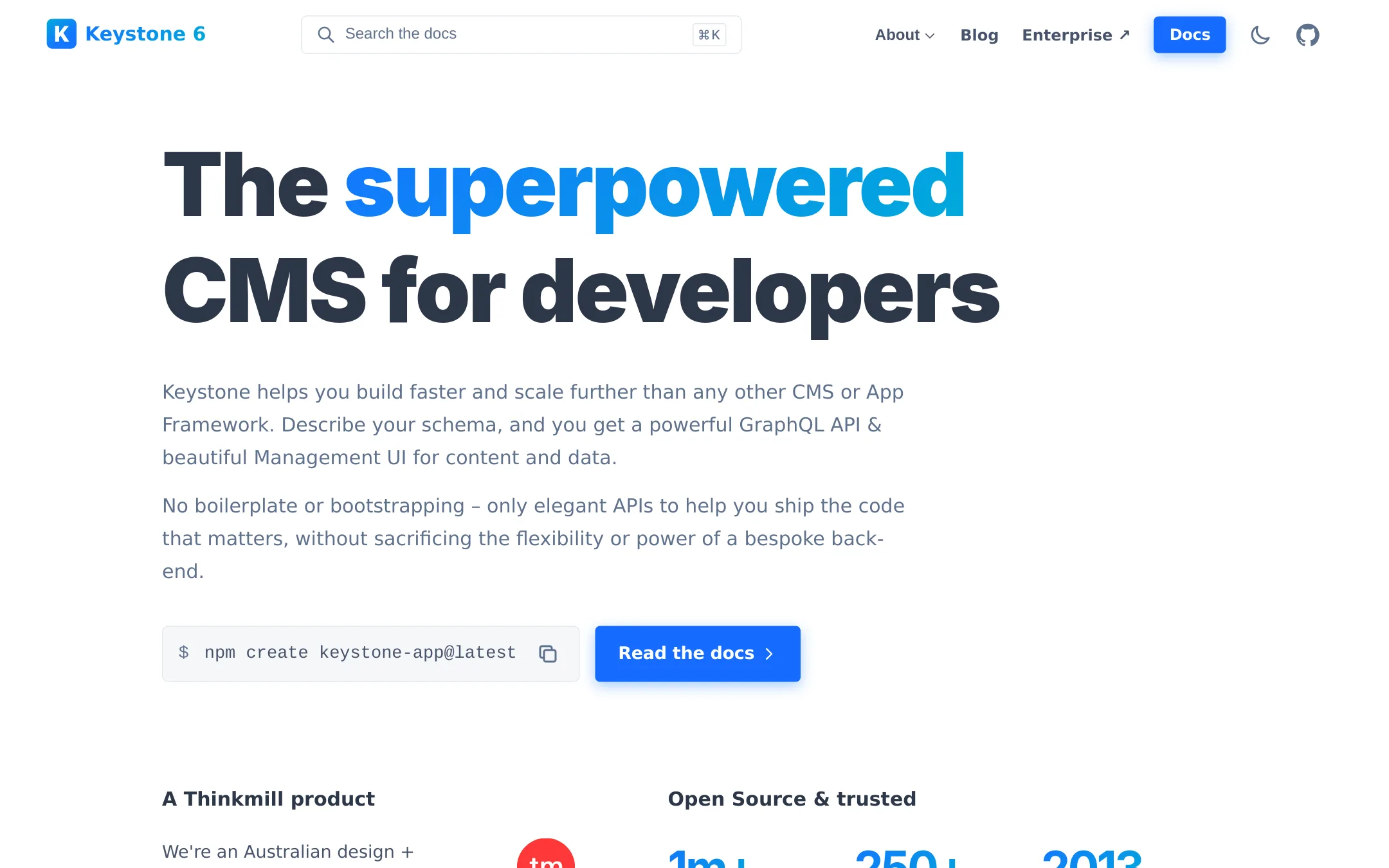
Keystone is a developer-first Node.js headless CMS that generates a GraphQL API and admin UI from a TypeScript schema. Choose it over Strapi when you want a code-first content backend with fine-grained access control and no cloud lock-in, especially if you're building with React or need custom server-side logic.
Where it is strong
- 100% TypeScript schema definition with automatic Prisma migrations
- Fine-grained access control and session management built in
- Deploy anywhere, open source, no vendor lock-in
Where it falls short
- No managed cloud hosting or built-in CDN
- Admin UI is less polished than Strapi's for non-technical editors
- Pricing:
- Pricing is not published on the site.
- Switching from Strapi:
- Moving from Strapi means rewriting your content model as a Keystone schema and migrating data via Prisma, but you keep your frontend and GraphQL queries.
- Not published
7.Cockpit
Best for: Developers and agencies that want a minimal, self-hosted content backend with full data control and no vendor lock-in.
- Pricing
- Not published
- Category
- Developer Tools
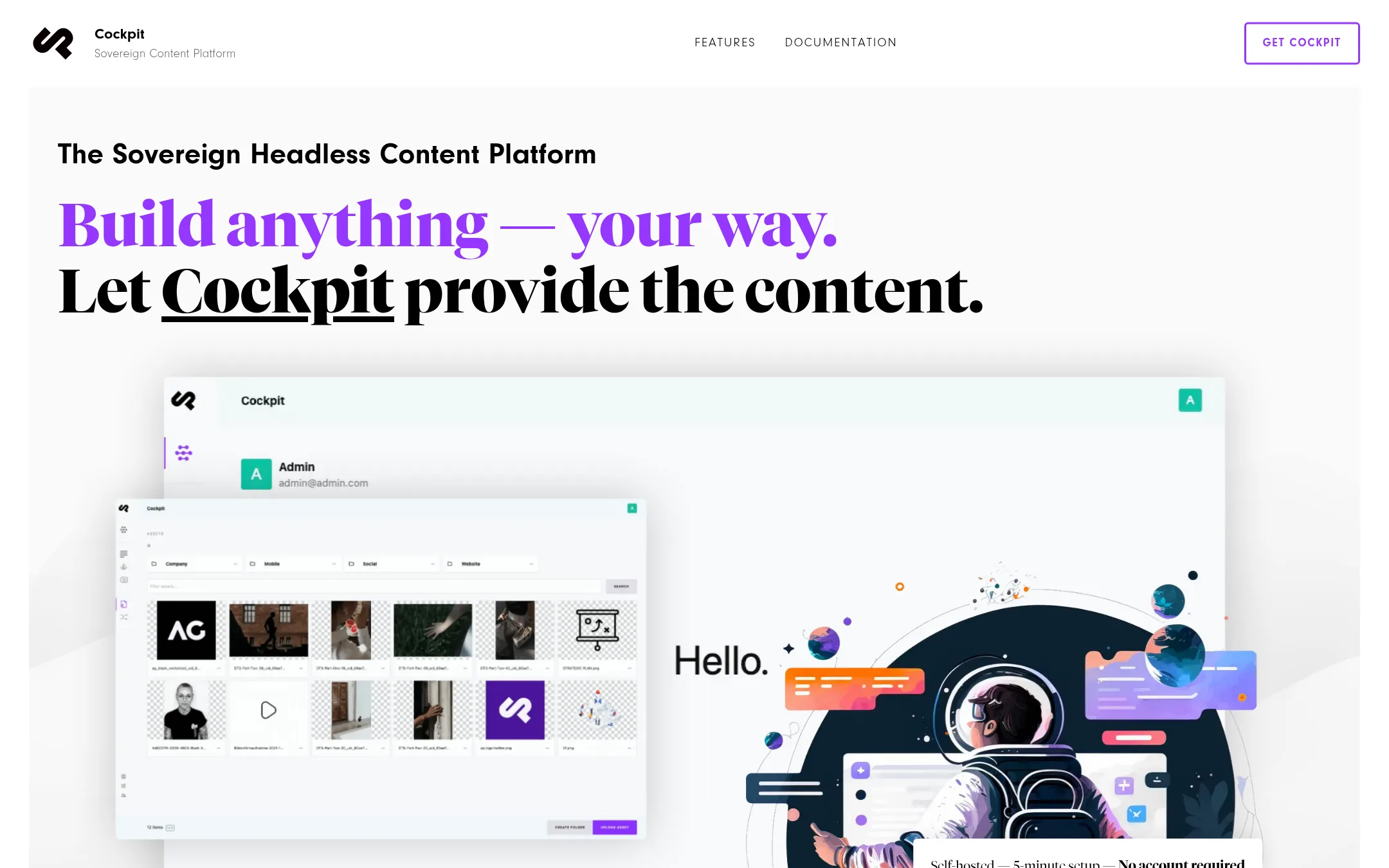
Cockpit is a self-hosted, open-source content platform that gives you a simple API and flexible content structures without the overhead of a full CMS. Choose it over Strapi when you want a lightweight backend for a website, mobile app, or SPA and you're comfortable managing your own hosting.
Where it is strong
- MIT-licensed core, so you can inspect and modify the code
- Self-hosted for complete data sovereignty and GDPR compliance
- API-first design works with any frontend stack
Where it falls short
- No managed cloud option, so you handle hosting and scaling yourself
- Lacks built-in workflows and audit logs that Strapi offers on paid plans
- Pricing:
- Pricing is not published on the site.
- See website
8.Cosmic
Developer Tools
Cosmic is a headless CMS and API toolkit
- Not published
9.Webiny
Best for: Enterprise teams that need a self-hosted, multi-tenant CMS with governance features like audit logs and SSO, and that expect to customize the platform in code.
- Pricing
- Not published
- Category
- Developer Tools
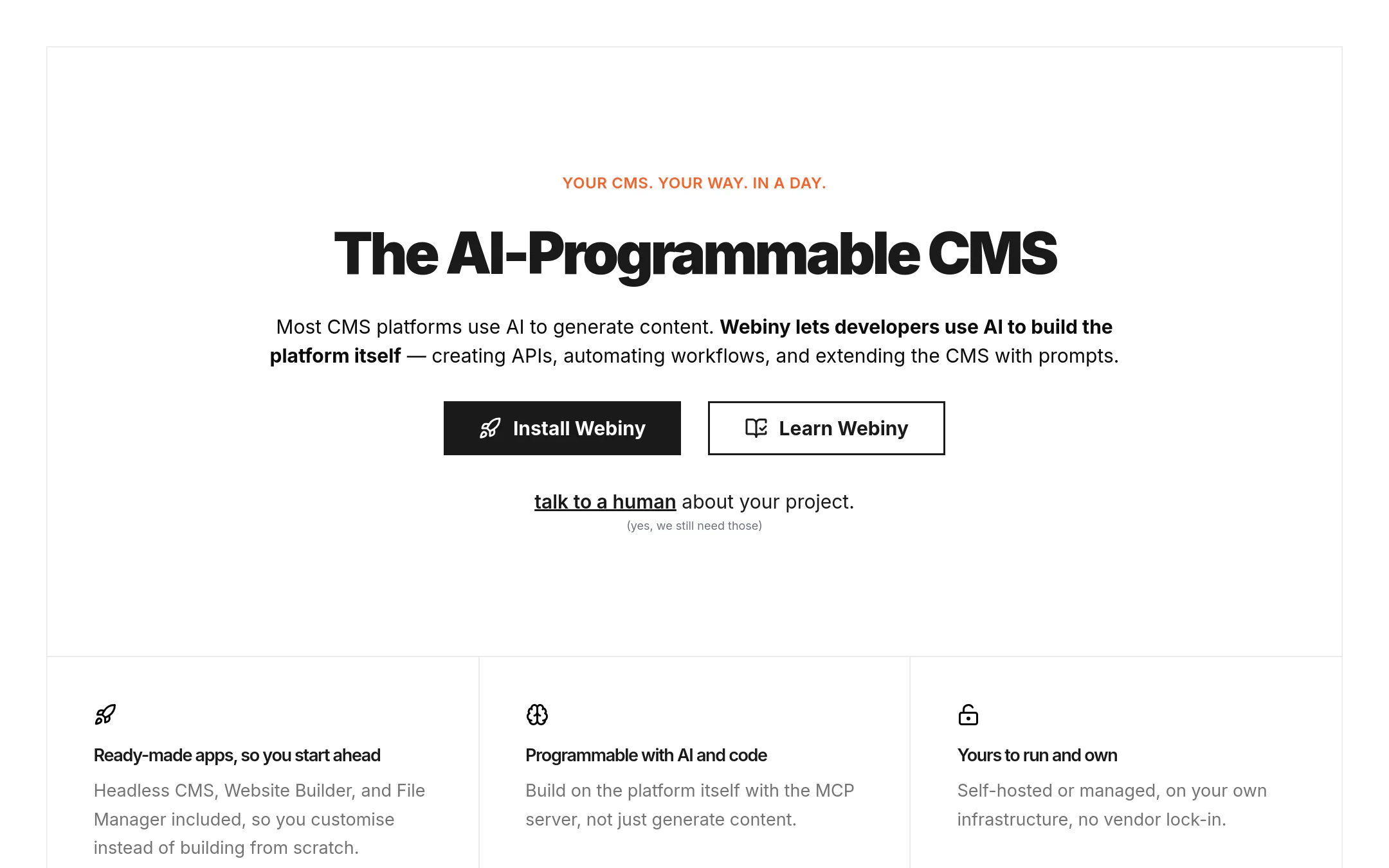
Webiny is an open-source framework for building serverless applications, with ready-made apps like a headless CMS, website builder, and file manager. Choose it over Strapi when you need a multi-tenant, code-defined content platform that can scale to high traffic without managing servers, and where you want to extend the platform itself with AI prompts.
Where it is strong
- Multi-tenant by design, so you can run many brands or markets from one instance.
- Governance built in: versioning, audit logs, permissions, workflows, and rollback.
- Open source with an MIT license, so you can self-host and avoid vendor lock-in.
Where it falls short
- Pricing is not published, so you must contact sales for Business or Enterprise plans.
- Community plan lacks role-based access control, multi-tenancy, and publishing workflows.
- Pricing:
- Pricing is not published on the site.
- Switching from Strapi:
- Moving from Strapi involves redefining your content models and APIs in Webiny's code-first approach, which may require significant rework.
- See website
10.refine
Developer Tools
Open-source Retool for enterprise
- Free, Pro per user
11.Apostrophe
Best for: JavaScript teams building Astro-powered websites who want true in-context editing for non-technical editors.
- Pricing
- Free, Pro per user
- Category
- Developer Tools
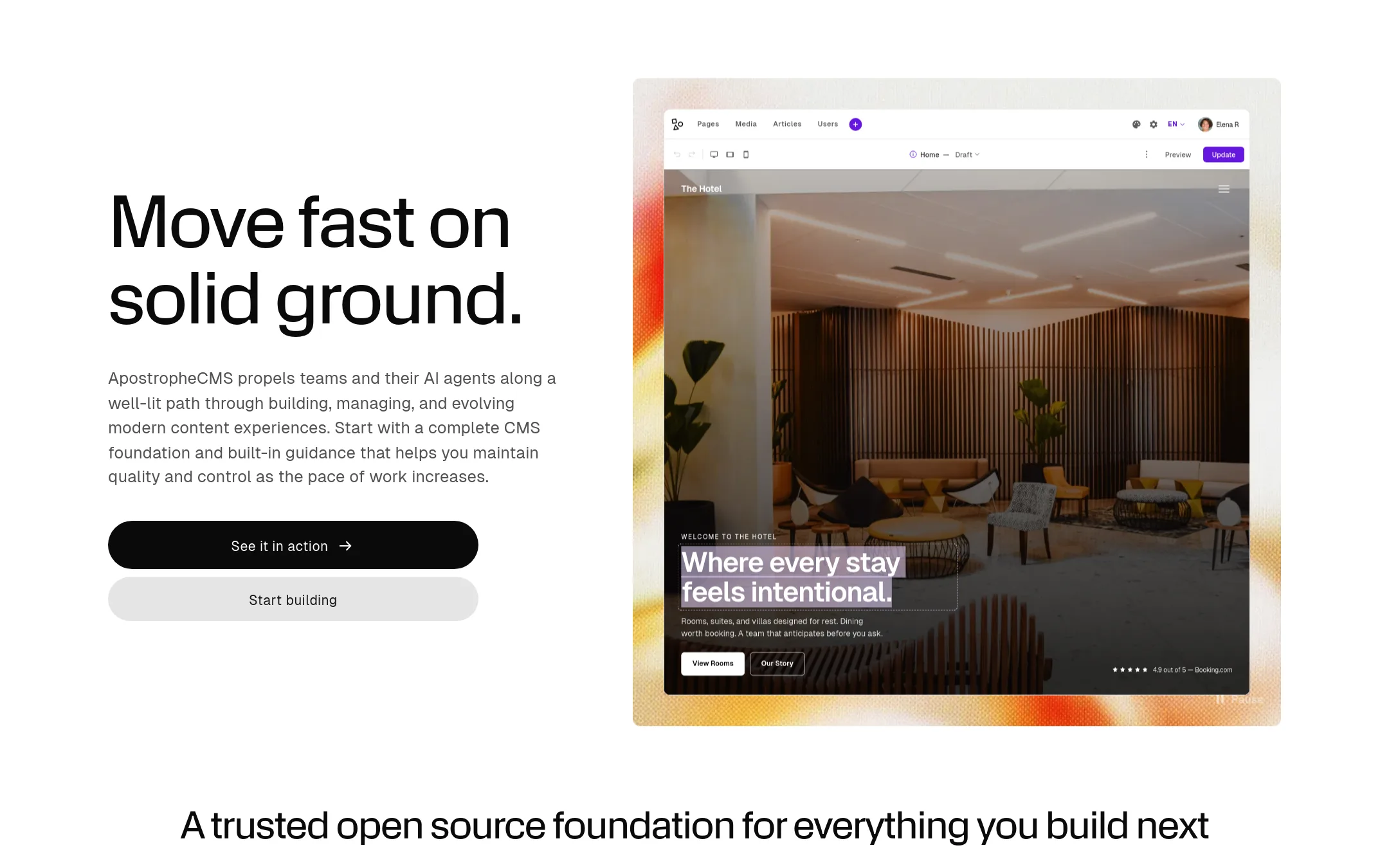
ApostropheCMS is an open source headless CMS for JavaScript teams that pairs a code-first architecture with in-context visual editing. Choose it over Strapi when your editors need to work directly on the live page and you want a strong Astro integration, which Strapi does not offer.
Where it is strong
- True in-context visual editing on the live page
- Official Astro integration maintained by the project
- Localization is free on the open source tier
Where it falls short
- Pro features like SSO and advanced permissions require paid tier
- Assembly multitenant architecture is only for agencies delivering sites to clients
- Pricing:
- Community is free and open source. Pro adds a per-user fee after 5 users. Assembly starts at $99/mo per additional site beyond the five included in the license price.
- Switching from Strapi:
- Moving from Strapi means rebuilding your content model and API routes, since ApostropheCMS uses its own schema and REST API rather than Strapi's content-type builder.
- See website
12.Appsmith
Developer Tools
Open-source low-code platform to build custom apps 10X faster with JS control and Git workflows.
See more comparisons in Developer Tools alternatives.
FAQ
Questions about Strapi alternatives
Which alternative is best for a team that wants to self-host and avoid vendor lock-in?
Webiny and Cockpit are both open-source and self-hostable, with MIT licenses. Webiny offers multi-tenancy and governance features, while Cockpit is a minimal backend for simple projects. Payload CMS is also open-source but requires Next.js.
What is the cheapest option for a small publisher or newsletter?
Ghost has a Starter plan at $9 per month billed yearly, which includes built-in newsletters and paid memberships. Sanity offers a free plan for individuals with up to 20 seats, but it lacks some advanced features.
Which alternative has the best built-in AI features?
Sanity includes a built-in AI agent for content operations and automation. Directus provides a native MCP server for AI model access to your data, and Strapi has an MCP for agent content management.
Can I use these alternatives with my existing database?
Directus connects directly to any existing SQL database without changing your schema. Keystone uses Prisma migrations from a TypeScript schema, which can work with your database but requires code changes. Other alternatives like Ghost and Sanity have their own data stores.
Which alternative is best for Next.js developers?
Payload CMS runs inside Next.js, giving you a code-defined content model and a built-in backend without a separate CMS instance. Strapi also integrates well with Next.js, but it runs as a separate Node.js application. Apostrophe offers an official Astro integration, not Next.js.
Last updated October 31, 2026.