
Swiftype alternatives
12 products compared · Updated October 15, 2026
The short answer
Algolia is the strongest alternative for teams building custom, AI-powered search experiences in web or mobile apps. Elasticsearch suits engineering teams that want full control over search infrastructure and are comfortable running their own stack. Coveo is the best fit for large enterprises needing AI-driven relevance and generative answers across complex content.
Your shortlist, at a glance
Read the comparisons ↓ AlgoliaFree + usage-basedTeams building custom search experiences in web or mobile apps that need AI-powered relevance and high performance at scale.
 ElasticsearchCustom quoteEngineering teams that already run their own infrastructure and need a scalable search engine with deep customization.
 Amazon BusinessNot publishedOrganizations that want to buy business supplies in bulk with approval workflows and spend analytics, not for search experiences.
Microsoft Azure CycleCloudPay for resourcesResearch teams and enterprises that need to orchestrate and scale high-performance computing clusters on Azure.
 TypesenseCustom quoteTeams that want an open-source, self-hosted search engine with vector search and flexible pricing based on memory usage.
 MeilisearchFrom free trialDeveloper teams that want a fast, self-hosted search engine with semantic and hybrid search capabilities.
- SSearchlyNot publishedDevelopers who want a managed Elasticsearch cluster with API-level control and are comfortable handling their own search relevance tuning.
- SSajariNot publishedTeams that already use Sajari and don't need to verify current documentation or pricing.
 ConstructorNot publishedEcommerce retailers that want search, recommendations, and AI shopping agents tied directly to sales KPIs.
 Yext Site SearchCustom quoteMulti-location businesses and franchises that need to control local listings and want search integrated with their location data.
 LucidworksSee websiteAI-Powered Enterprise Search Insights Platform
 CoveoCustom quoteLarge enterprises with complex search needs across service, website, workplace, or commerce that require AI-driven relevance and generative answers.
About Swiftype and its alternatives
Swiftype is a cloud-based search platform that provides tools for website, application, and enterprise search. It is known for its ease of use, with a free 14-day trial, SOC 2 compliance, and a focus on delivering relevant results without a steep learning curve.
When comparing alternatives, weigh pricing structure (usage-based vs. flat), deployment options (managed vs. self-hosted), and the level of developer effort required. Consider whether you need built-in crawlers, AI features like semantic search, and compliance certifications. Also check if pricing is transparent or requires contacting sales, and whether the product fits your specific use case like ecommerce or HPC.
Explore the alternatives
- Free + usage-based
1.Algolia
Best for: Teams building custom search experiences in web or mobile apps that need AI-powered relevance and high performance at scale.
- Pricing
- Free + usage-based
- Category
- AI & Machine Learning
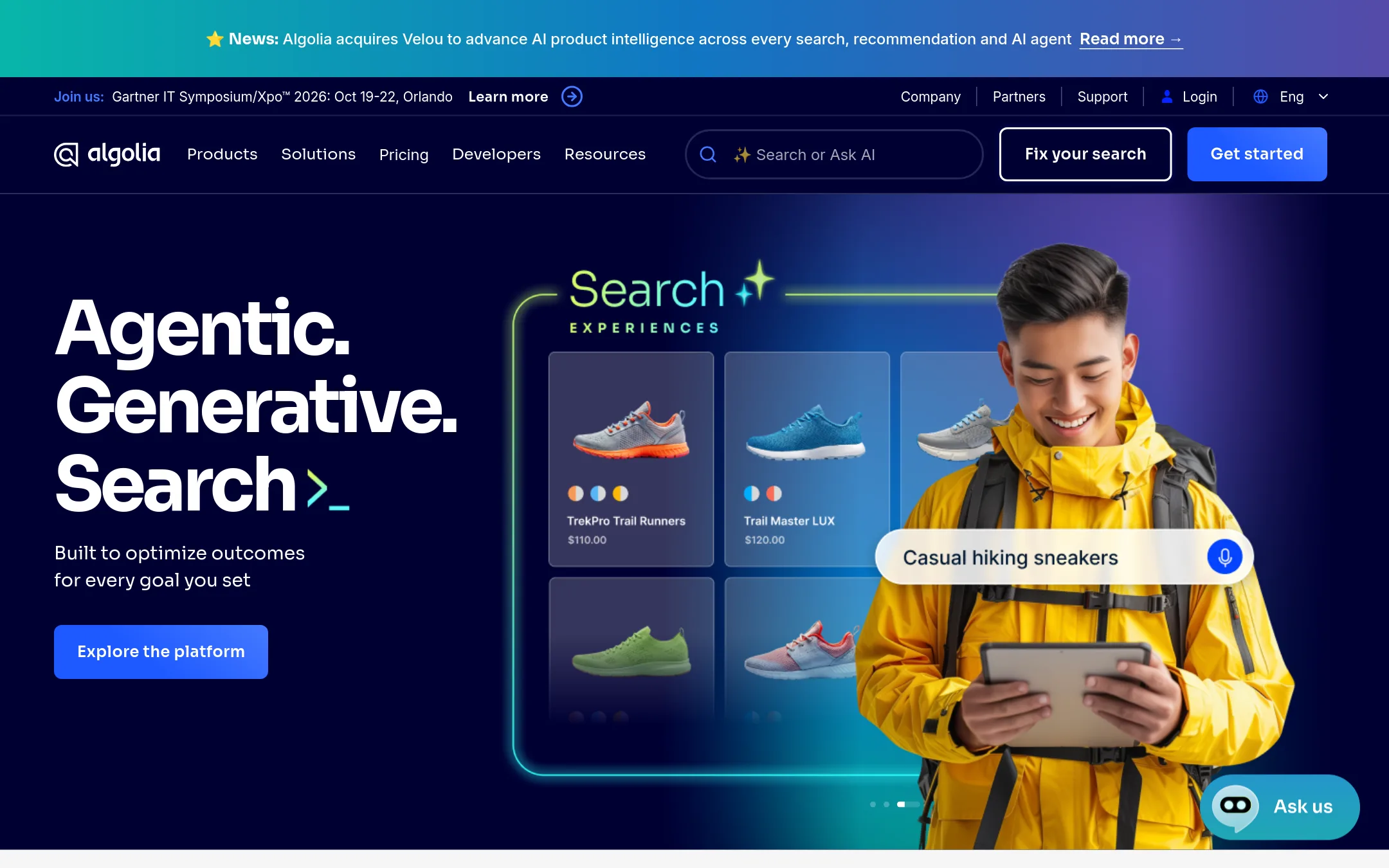
Algolia is a developer-friendly search API that combines keyword and AI-powered semantic search, with features like neural search, AI synonyms, and real-time personalization. You would choose it over Swiftype if you need a highly customizable, API-first search experience that scales to enterprise traffic and supports agentic or generative AI use cases.
Where it is strong
- Fast, API-first search with millisecond response times.
- AI features like neural search and dynamic reranking built in.
- Generous free tier with no credit card required.
Where it falls short
- Pricing scales with usage, which can get expensive at high volumes.
- Requires more developer effort to set up compared to Swiftype's simpler site search.
- Pricing:
- Pricing is usage-based: free plan includes 10K search requests/month and 50K records. Paid plans start at $0.50 per additional 1K search requests and $0.40 per additional 1K records, with enterprise plans custom quoted.
- Switching from Swiftype:
- Moving from Swiftype means reindexing your content and rebuilding your search UI, since Algolia uses a different data model and API.
- Custom quote
2.Elasticsearch
Best for: Engineering teams that already run their own infrastructure and need a scalable search engine with deep customization.
- Pricing
- Custom quote
- Category
- Analytics & Data
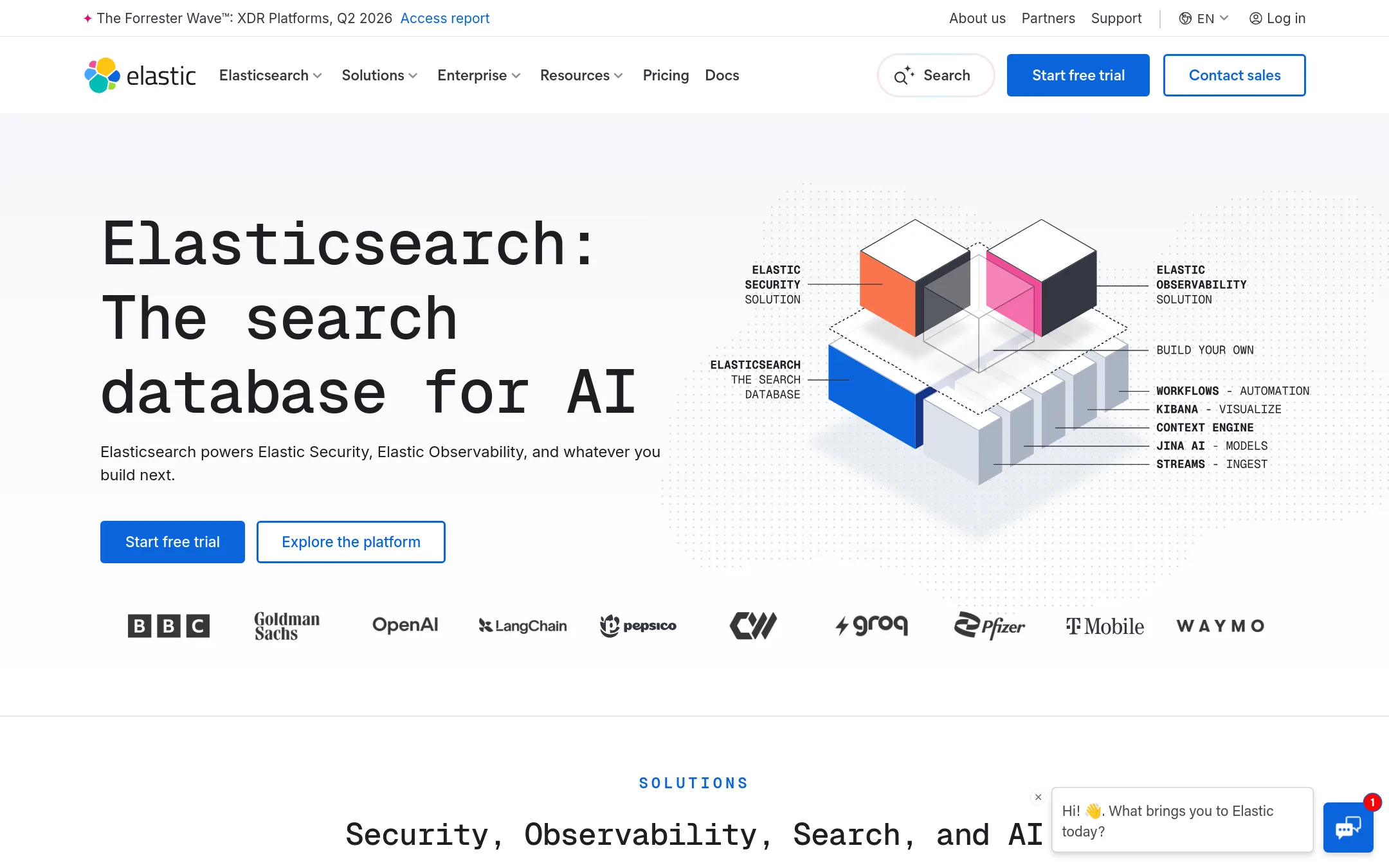
Elasticsearch is a general-purpose search database that you host and operate yourself, or run in Elastic Cloud. Choose it over Swiftype when you need full control over search infrastructure, custom relevance tuning, or want to use the same engine for logs, metrics, and security analytics.
Where it is strong
- Full control over indexing, scoring, and query logic
- Runs on your own hardware or any cloud, including serverless
- One engine for search, observability, and security use cases
Where it falls short
- Requires significant setup and ongoing operations expertise
- No managed crawler or site search UI out of the box
- Pricing:
- Pricing is not published on the site. You must contact sales or start a trial.
- Switching from Swiftype:
- Moving from Swiftype means rebuilding your search index and query layer, since Elasticsearch is a raw engine rather than a managed site search product.
- Not published
3.Amazon Business
Best for: Organizations that want to buy business supplies in bulk with approval workflows and spend analytics, not for search experiences.

- Pricing
- Not published
- Category
- E-commerce
Amazon Business is a procurement and wholesale buying platform, not a search tool. You would choose it instead of Swiftype only if your actual need is purchasing supplies and managing spend, not building search into your site or app. It has no search API or relevance tuning, so it cannot replace Swiftype for search functionality.
Where it is strong
- Wide product selection with quantity discounts and case packs.
- Approval flows and centralized purchasing controls for compliance.
- Pre-built and custom spend reports for analyzing purchasing.
Where it falls short
- No search API or relevance tuning. It's a procurement platform, not a search engine.
- Requires an Amazon Business account and is tied to Amazon's ecosystem.
- Pricing:
- Pricing is not published on the site.
- Pay for resources
4.Microsoft Azure CycleCloud
Best for: Research teams and enterprises that need to orchestrate and scale high-performance computing clusters on Azure.

- Pricing
- Pay for resources
- Category
- Developer Tools
Azure CycleCloud is an HPC orchestration tool for managing and scaling compute clusters, not a search platform. You would choose it over Swiftype if your problem is running large-scale simulations or batch workloads on Azure, not building site or application search.
Where it is strong
- Orchestrates HPC clusters across Azure regions
- Integrates with Azure services like VMs and storage
- Supports common schedulers like Slurm and PBS
Where it falls short
- Not a search product. No relevance or query features
- Requires Azure expertise and manual cluster setup
- Pricing:
- In the United States, Azure pricing is consumption-based. CycleCloud itself is free, but you pay for the underlying compute, storage, and network resources.
- Switching from Swiftype:
- Moving from Swiftype to CycleCloud means abandoning search functionality entirely. There is no migration path because they solve different problems.
- Custom quote
5.Typesense
Best for: Teams that want an open-source, self-hosted search engine with vector search and flexible pricing based on memory usage.
- Pricing
- Custom quote
- Category
- AI & Machine Learning
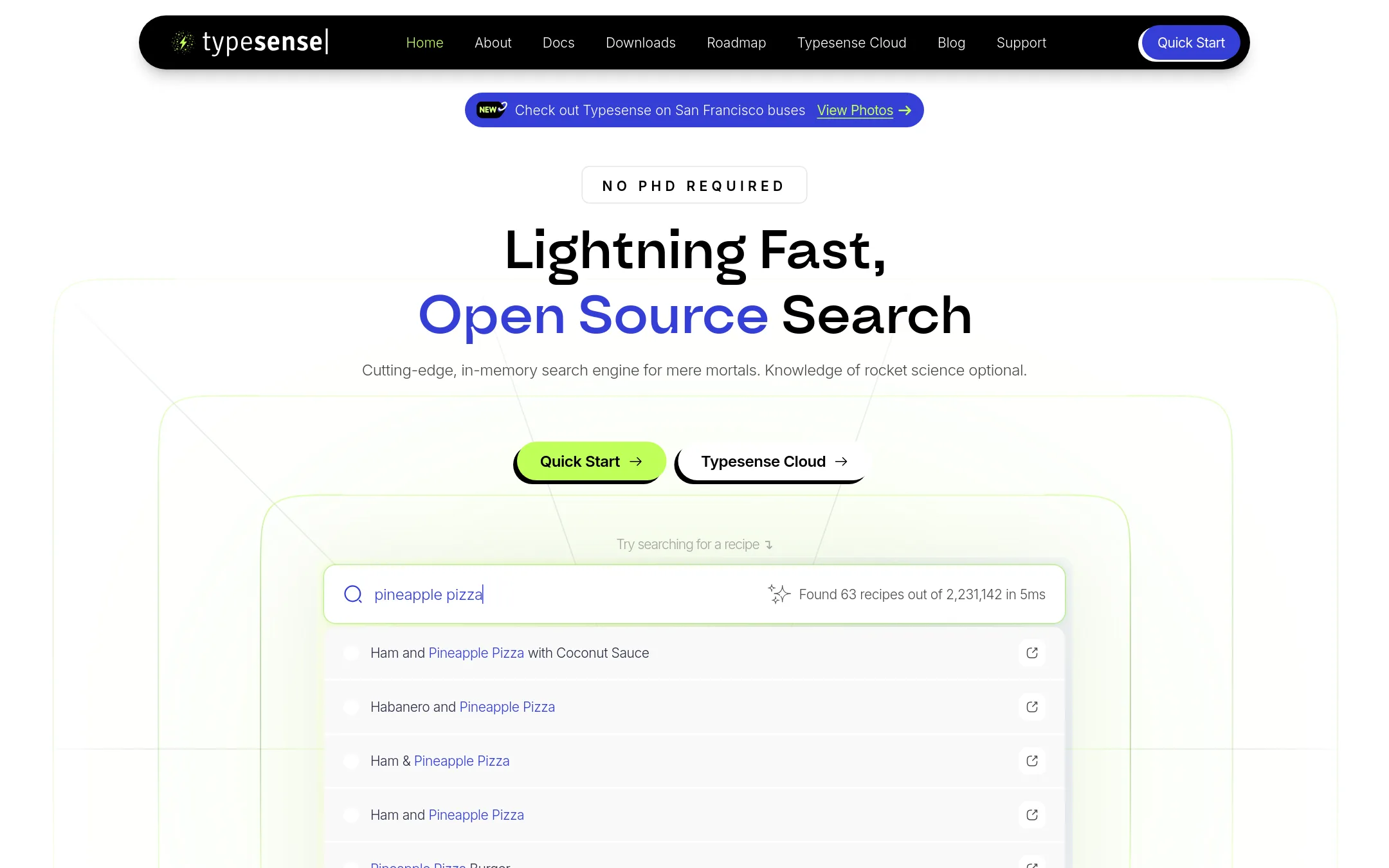
Typesense is an open-source, self-hostable search engine that gives you typo-tolerant, instant search with vector and semantic capabilities. Choose it over Swiftype if you want full control over your search infrastructure, avoid per-record pricing, and prefer a developer-friendly API.
Where it is strong
- Open source and self-hostable, so no vendor lock-in.
- Typo tolerance and fuzzy search work out of the box.
- Built-in vector search and semantic search for modern use cases.
Where it falls short
- Requires more technical setup than Swiftype's managed service.
- No SOC 2 compliance mentioned on the site, unlike Swiftype.
- Pricing:
- Pricing is not published on the site. It uses a calculator based on memory and vCPU needs, with free migration support for Algolia customers spending over $1,000/month.
- Switching from Swiftype:
- Moving from Swiftype means re-indexing your data and rewriting your search API calls, but Typesense's REST API and client libraries make the transition straightforward.
- From free trial
6.Meilisearch
Best for: Developer teams that want a fast, self-hosted search engine with semantic and hybrid search capabilities.
- Pricing
- From free trial
- Category
- AI & Machine Learning
Meilisearch is an open-source search engine that you can self-host or use as a managed cloud. It's a good fit if you want full control over your search infrastructure or need hybrid AI retrieval, which Swiftype doesn't offer.
Where it is strong
- Search-as-you-type in under 50ms
- Open source with self-hosting option
- Hybrid search combining full-text and semantic
Where it falls short
- No site search crawler like Swiftype's
- Enterprise features require custom plan
- Pricing:
- Cloud starts at a 14-day free trial with usage-based or resource-based billing. Enterprise plans are custom quoted.
- Switching from Swiftype:
- Moving from Swiftype means reindexing your data and rebuilding search UI, since Meilisearch uses its own API and doesn't crawl websites automatically.
- SNot published
7.Searchly
Best for: Developers who want a managed Elasticsearch cluster with API-level control and are comfortable handling their own search relevance tuning.

- Pricing
- Not published
- Category
- Other
Searchly is a hosted Elasticsearch service that gives you a managed search backend without running your own infrastructure. Choose it over Swiftype if you want direct control over Elasticsearch queries and indexes rather than a turnkey site search product. Its site is currently unreachable, so verify availability before committing.
Where it is strong
- Managed Elasticsearch hosting removes cluster maintenance
- Direct API access gives full control over queries and mappings
- Scales with your data without provisioning servers
Where it falls short
- Site is unreachable, so you cannot see current plans or docs
- No built-in crawler or site search UI like Swiftype offers
- Pricing:
- Pricing is not published on the site.
- SNot published
8.Sajari
Best for: Teams that already use Sajari and don't need to verify current documentation or pricing.

- Pricing
- Not published
- Category
- Other
Sajari is a search platform, but its website is currently unreachable, so we can't verify its features or pricing. If you need a reliable, documented alternative to Swiftype, Sajari isn't a safe choice right now. Choose it only if you already have direct experience with Sajari and don't need to check their site.
Where it is strong
- Known as a search platform in the industry.
- May offer AI-powered search features, though unverified.
- Could be a viable option if you have prior knowledge of it.
Where it falls short
- Website is currently unreachable, so no details are available.
- No pricing or feature information can be confirmed.
- Pricing:
- Pricing is not published on the site.
- Not published
9.Constructor
Best for: Ecommerce retailers that want search, recommendations, and AI shopping agents tied directly to sales KPIs.
- Pricing
- Not published
- Category
- E-commerce
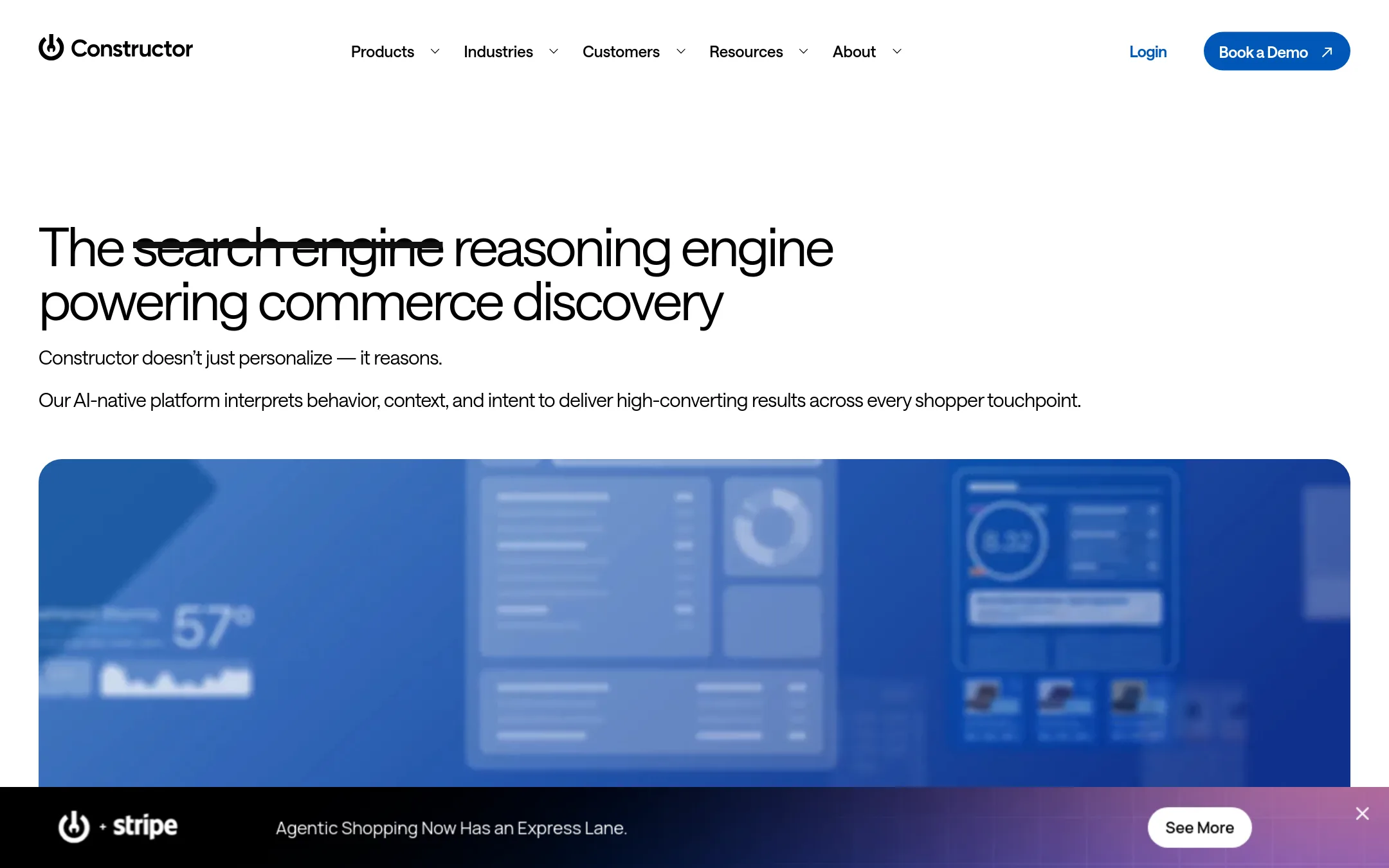
Constructor is an AI-powered search and product discovery platform built specifically for ecommerce. If you run an online store and need search that optimizes for conversions, personalization, and revenue, Constructor is a stronger fit than Swiftype's general-purpose site search.
Where it is strong
- Built for ecommerce KPIs like conversion and revenue, not just relevance.
- Includes AI shopping agents and natural language product discovery.
- API-first and headless, so it integrates with your existing stack.
Where it falls short
- Pricing is not public, likely custom and enterprise-focused.
- No self-serve trial or transparent plans, unlike Swiftype's 14-day trial.
- Pricing:
- Pricing is not published on the site.
- Custom quote
10.Yext Site Search
Best for: Multi-location businesses and franchises that need to control local listings and want search integrated with their location data.

- Pricing
- Custom quote
- Category
- Other
Yext Site Search is part of a broader platform focused on local listings and brand visibility, not a standalone site search tool like Swiftype. Choose it if you need to manage business listings across many directories and also want search capabilities tied to your verified brand data.
Where it is strong
- Manages listings across 100+ directories from one dashboard
- Updates business information within seconds in many cases
- Integrates search with a verified Knowledge Graph of brand data
Where it falls short
- Pricing is not transparent and requires a sales conversation
- Site search is not the core focus. The platform is built around listings and marketing
- Pricing:
- Pricing is not published on the site. Plans are available on request and last 12 months.
- Switching from Swiftype:
- Moving from Swiftype means adopting a broader platform, so you would need to rebuild your search experience around Yext's Knowledge Graph and APIs.
- See website
11.Lucidworks
E-commerce
AI-Powered Enterprise Search Insights Platform
- Custom quote
12.Coveo
Best for: Large enterprises with complex search needs across service, website, workplace, or commerce that require AI-driven relevance and generative answers.
- Pricing
- Custom quote
- Category
- AI & Machine Learning
Coveo is an enterprise AI search platform that unifies content across systems and adds generative answering, recommendations, and commerce discovery. Choose it over Swiftype when you need deep AI features, agentic search, and scalable enterprise-grade infrastructure for large knowledge bases or ecommerce catalogs.
Where it is strong
- Generative answering and conversational search built in
- Unified index with native connectors and document-level security
- A/B testing and query pipeline management for tuning relevance
Where it falls short
- Pricing is not transparent. Requires contacting sales for a quote
- May be overkill for small sites that just need basic site search
- Pricing:
- Pricing is not published on the site. Plans are flexible with entitlement-based or seat-based options, and each pricing unit includes 100k queries per month.
See more comparisons in AI & Machine Learning alternatives.
FAQ
Questions about Swiftype alternatives
What is the best alternative to Swiftype for a small website?
Algolia offers a generous free tier with 10K search requests per month and no credit card required, making it easy to start. Meilisearch is also a good option if you want self-hosting and fast search-as-you-type, but it requires more technical setup.
Which alternative has the most transparent pricing?
Algolia publishes usage-based pricing with clear per-request and per-record costs. Pinecone also lists flat and minimum usage tiers, including a free starter plan. Others like Elasticsearch and Coveo require contacting sales for quotes.
Can I self-host a search engine to avoid vendor lock-in?
Yes, Meilisearch and Typesense are open-source and self-hostable, giving you full control over infrastructure. Elasticsearch also runs on your own hardware or any cloud. These options require more operations expertise than Swiftype's managed service.
Which alternative is best for ecommerce search?
Constructor is built specifically for ecommerce, optimizing for conversion and revenue with AI shopping agents. Coveo also supports commerce discovery with generative answering, but it is more enterprise-focused and pricing is not public.
Are there any alternatives with compliance certifications like SOC 2?
Pinecone lists SOC 2, HIPAA, and GDPR compliance, making it suitable for regulated industries. Swiftype itself is SOC 2 compliant. Typesense does not mention SOC 2 on its site, so verify if that is a requirement.
Last updated October 15, 2026.