
Tensol alternatives
7 products compared · Updated November 24, 2026
The short answer
The three strongest alternatives to Tensol are Jama Connect, Polarion and Visure Requirements ALM. Jama Connect suits multidisciplinary engineering teams in regulated industries such as aerospace, automotive and medtech that need requirements, risk and test management in one platform. Polarion suits large engineering organisations with compliance-heavy product development that want a self-hosted ALM system. Visure Requirements ALM suits regulated engineering teams that need certification-ready traceability and prefer a perpetual license or on-premise deployment.
Your shortlist, at a glance
Read the comparisons ↓- JJama ConnectNot publishedMultidisciplinary engineering teams in regulated industries such as aerospace, automotive and medtech that need requirements, risk and test management in one platform.
 IBM watsonxNot publishedLarge enterprises that need to govern and secure AI agents across hybrid cloud estates
- PPolarionNot publishedLarge engineering organisations with compliance-heavy product development that need traceable requirements and a private or self-hosted ALM system
- CCodebeamerNot publishedRegulated engineering organisations in automotive, aviation, medical or pharmaceutical that need one ALM suite across requirements, development and testing.
 Siemens PADS ProfessionalNot publishedHardware teams whose main need is PCB schematic and layout design inside the Siemens software ecosystem.
- VVisure Requirements ALMNot publishedRegulated engineering teams that need certification-ready traceability and want a perpetual license or on-premise deployment.
- MModern Requirements4DevOpsNot publishedSoftware and mixed teams already running Azure DevOps that need requirements management and traceability without moving tools
About Tensol and its alternatives
Tensol is an AI employee platform for startups, built on OpenClaw. According to its site, AI agents keep requirements, designs and tests in sync as a hardware program iterates. The site highlights requirements traceability, support for standards such as ASPICE, ISO 26262 and DO178C, reuse across products, deployment inside a customer boundary including AWS GovCloud and air-gapped setups, and ITAR and EAR compatible architecture.
When comparing alternatives in this category, weigh how each vendor structures pricing, since many publish no prices and require a quote. Check which regions and deployment models are supported, including self-hosted, GovCloud and air-gapped options, especially for export-controlled work. Look at integrations with the tools your team already uses, the support and customer success offered, and the contract terms, including whether licenses are perpetual or subscription-based.
Explore the alternatives
- JNot published
1.Jama Connect
Best for: Multidisciplinary engineering teams in regulated industries such as aerospace, automotive and medtech that need requirements, risk and test management in one platform.
- Pricing
- Not published
- Category
- Other
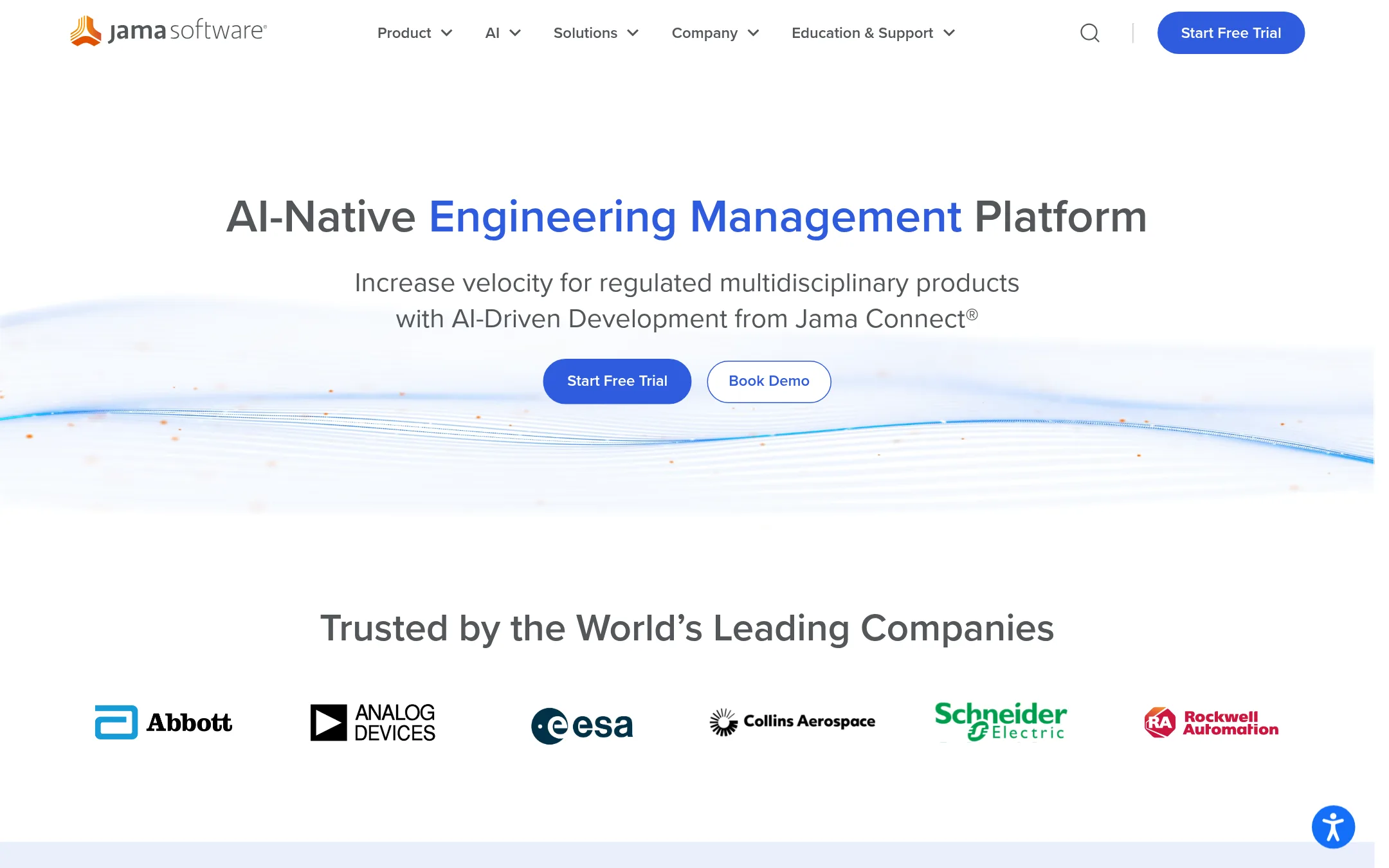
Jama Connect is a requirements management and traceability platform used by engineering teams building complex products, including aerospace, automotive, medtech and semiconductor companies. Teams choose it when they need formal reviews, test management, risk management and standards-driven compliance alongside requirements, and when they want a mature, established product with customer success programs.
Where it is strong
- Covers requirements, traceability, risk, test management and MBSE in one platform
- Lists compliance support for industry-specific standards across many sectors
- Offers security certifications including TISAX Level 2 and OWASP-aligned development
Where it falls short
- Pricing is only available on request
- The site does not mention self-hosting or GovCloud deployment, unlike Tensol
- Pricing:
- Pricing is not published on the site. The site offers a request-pricing form and lists four user license types: Creator, Stakeholder, Reviewer and Test Runner.
- Not published
2.IBM watsonx
Best for: Large enterprises that need to govern and secure AI agents across hybrid cloud estates
- Pricing
- Not published
- Category
- AI & Machine Learning
IBM watsonx is an enterprise platform for orchestrating and governing AI agents, covering their full lifecycle regardless of where they were built or run. A team would pick it over Tensol when they need agent governance across a large existing IT estate, with hybrid control and security tooling, rather than requirements traceability for hardware programs.
Where it is strong
- Manages, governs and secures AI agents regardless of where they were built or run
- Connects AI spend to measurable business value for CIO-level reporting
- Covers hybrid data, workflow and machine identity controls in one vendor
Where it falls short
- The site's material centres on general enterprise AI and does not describe hardware requirements, test traceability or standards like ASPICE
- Its published use cases are broad enterprise workloads rather than hardware development programs
- Pricing:
- Pricing is not published on the site.
- PNot published
3.Polarion
Best for: Large engineering organisations with compliance-heavy product development that need traceable requirements and a private or self-hosted ALM system
- Pricing
- Not published
- Category
- Other
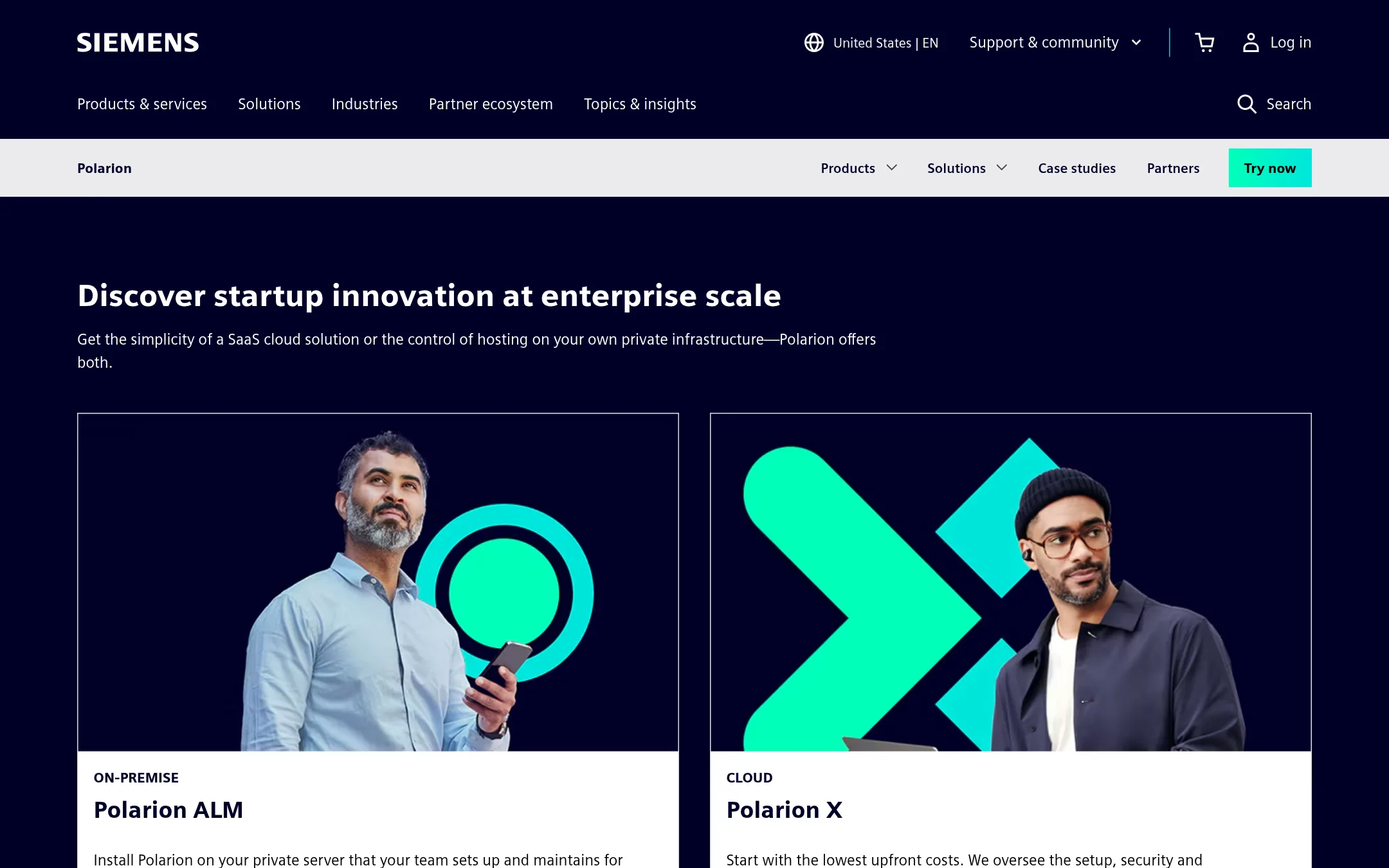
Polarion is an application lifecycle management platform for large, compliance-heavy product development. It covers requirements, software, and test management with granular traceability and change control. Teams pick it over Tensol when they need a mature, self-hosted ALM system with fine-grained permissions and over 200 extensions, rather than AI agents that keep requirements, designs and tests in sync.
Where it is strong
- Granular traceability with automatic change control on every requirement
- Choice of self-hosted Polarion ALM or the hosted Polarion X
- Over 200 extensions to extend the platform
Where it falls short
- Positioned for large-scale enterprise use, which may be more than an early startup needs
- Does not advertise AI agents that regenerate certification evidence as designs change, which is Tensol's core pitch
- Pricing:
- Pricing is not published on the site.
- CNot published
4.Codebeamer
Best for: Regulated engineering organisations in automotive, aviation, medical or pharmaceutical that need one ALM suite across requirements, development and testing.
- Pricing
- Not published
- Category
- Other
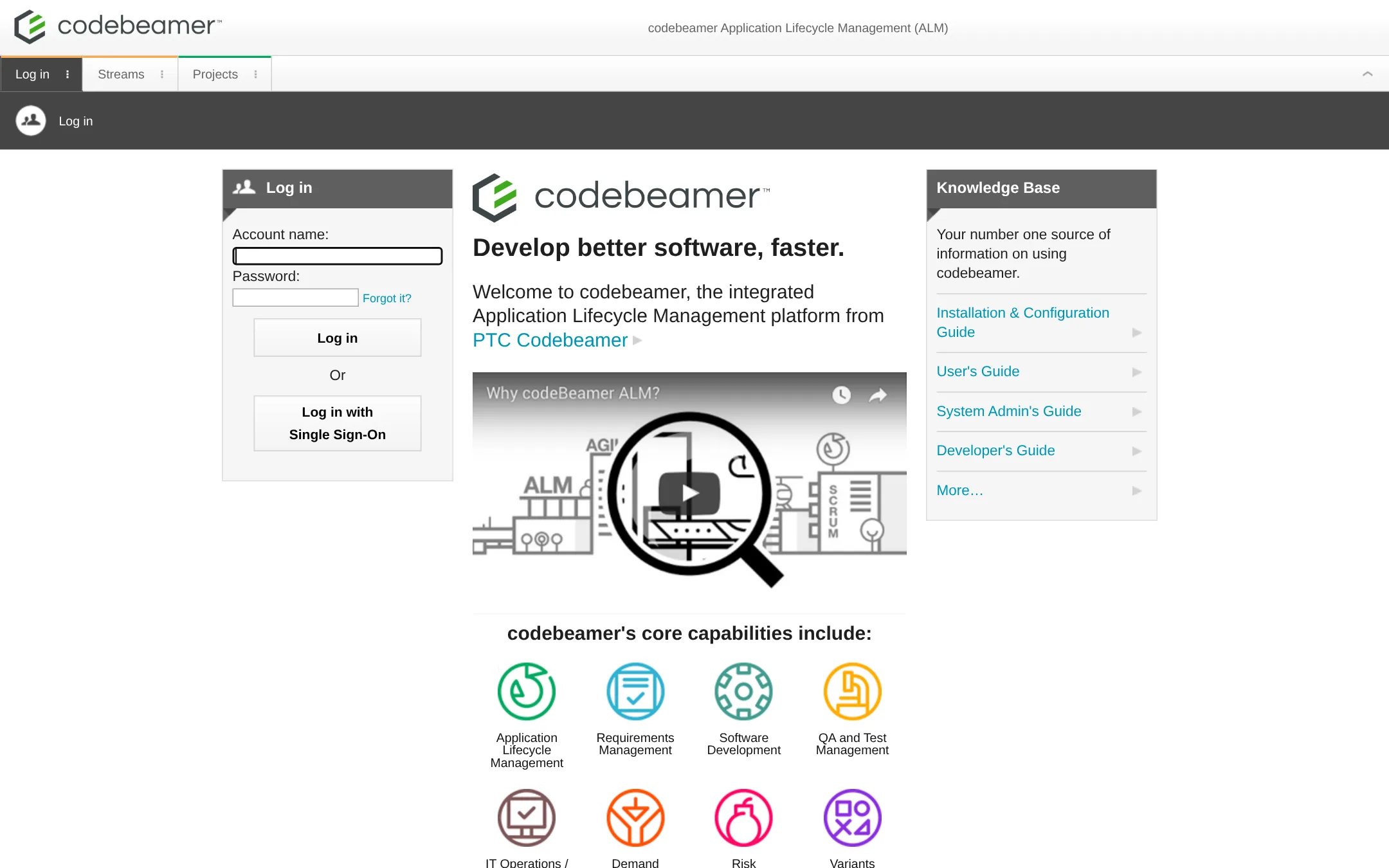
Codebeamer is an application lifecycle management suite covering requirements, software development, QA and test management, DevOps, risk and variants management. Teams choose it when they want one platform for the full ALM chain, with dedicated industry pages for medical, automotive, aviation and pharmaceutical work. Tensol focuses on keeping requirements, designs and tests in sync with AI agents, so the choice comes down to whether you want a broad lifecycle suite or an AI layer on hardware programs.
Where it is strong
- Covers requirements, development, QA, DevOps, risk and variants in one suite
- Dedicated pages for medical, automotive, aviation and pharmaceutical use
- Includes configuration management and version control alongside requirements
Where it falls short
- The site does not show AI agents or hardware-specific workflows like Tensol's live traceability demo
- The homepage gives little detail on deployment options such as GovCloud or air-gapped installs
- Pricing:
- Pricing is not published on the site.
- Not published
5.Siemens PADS Professional
Best for: Hardware teams whose main need is PCB schematic and layout design inside the Siemens software ecosystem.
- Pricing
- Not published
- Category
- Design & Creative
Siemens PADS Professional is a PCB design tool from a large industrial software vendor, covering schematic capture and board layout. Teams pick it over Tensol when their core problem is electronics design rather than requirements traceability, and when they want a long-established CAD vendor behind the software.
Where it is strong
- Comes from Siemens, a large and long-established industrial software vendor
- Sits within the wider Siemens software ecosystem for teams already using it
- Focused on PCB design work
Where it falls short
- The supplied site material does not describe requirements management or compliance evidence, which is Tensol's main focus
- Pricing is not published, so cost comparison needs a direct quote
- Pricing:
- Pricing is not published on the site.
- VNot published
6.Visure Requirements ALM
Best for: Regulated engineering teams that need certification-ready traceability and want a perpetual license or on-premise deployment.
- Pricing
- Not published
- Category
- Other
Visure is a requirements management platform for regulated engineering teams. It links requirements, tests, risks, and audit evidence in one system and generates traceability matrices and compliance reports for standards such as DO-178C, ISO 26262, and IEC 62304. Choose it over Tensol if you want a mature traceability tool that plugs into the tools you already run and that you can host on your own servers, not an AI agent layer built on top of your existing workflow.
Where it is strong
- Covers requirements, risk, FMEA, test, change impact, and cybersecurity in one platform
- Offers perpetual licensing with on-premise or cloud hosting, and air-gapped support
- Connects to existing tools such as Jira, IBM DOORS, GitLab, and Simulink without a migration
Where it falls short
- Its emphasis is on governance and traceability records rather than AI agents that keep designs and tests in sync
- Pricing is quoted case by case, so you cannot compare costs before talking to sales
- Pricing:
- Pricing is not published on the site.
- MNot published
7.Modern Requirements4DevOps
Best for: Software and mixed teams already running Azure DevOps that need requirements management and traceability without moving tools
- Pricing
- Not published
- Category
- Other
Modern Requirements4DevOps is a requirements management add-on built directly into Azure DevOps, so requirements, traceability and reviews live where engineering teams already plan and ship work. A team would pick it over Tensol if they already run on Azure DevOps and want requirements managed inside that environment rather than in a separate hardware-focused platform.
Where it is strong
- Runs inside Azure DevOps Server, Services and TFS, so there is no separate tool to adopt.
- Covers traceability, baselines, reviews and impact assessment in one add-on.
- Includes an AI assistant and agents that work across Azure DevOps tasks.
Where it falls short
- Built around Azure DevOps, so teams on other planning tools would need to change their stack.
- The site's focus is software delivery, with no hardware or systems-engineering emphasis like Tensol's CAD and supplier-exchange coverage.
- Pricing:
- Pricing is not published on the site.
See more comparisons in AI & Machine Learning alternatives.
FAQ
Questions about Tensol alternatives
What is the best alternative to Tensol for a regulated hardware team?
Jama Connect is a strong choice for multidisciplinary teams in aerospace, automotive and medtech that need requirements, risk and test management in one platform. It lists support for industry-specific standards and security certifications including TISAX Level 2. Its site does not mention self-hosting or GovCloud deployment, which Tensol does.
Which alternative is best if we need a self-hosted system?
Polarion offers a self-hosted Polarion ALM option alongside its hosted Polarion X, with granular traceability and automatic change control. It is positioned for large enterprise use, so it may be more than an early startup needs. Visure also supports on-premise and air-gapped deployment with perpetual licensing.
Do any of these alternatives use AI agents to keep designs and tests in sync?
Modern Requirements4DevOps includes an AI assistant and agents that work across Azure DevOps tasks. The other entries do not describe AI agents that regenerate certification evidence as designs change, which is Tensol's core pitch. Visure focuses on governance and traceability records instead.
Is pricing available for these tools?
Most of the listed alternatives do not publish pricing on their sites. Jama Connect offers a request-pricing form, and Visure quotes case by case. You will need to contact sales for each vendor to compare costs against Tensol.
Which alternative fits a team already working in Azure DevOps?
Modern Requirements4DevOps runs inside Azure DevOps Server, Services and TFS, so requirements, traceability and reviews sit where the team already plans and ships work. It is built around software delivery, so teams focused on hardware or systems engineering may find Tensol's coverage of CAD and supplier exchanges more relevant.
Last updated November 24, 2026.