Tensorfuse alternatives
6 products compared · Updated November 11, 2026
The short answer
The three strongest alternatives to Tensorfuse are Modal, RunPod and Replicate. Modal suits AI teams that need bursty GPU inference or fine-tuning without managing a cluster. RunPod suits teams that want rented on-demand GPUs, from inference endpoints to multi-node training. Replicate suits product teams that want to ship image, video or audio AI features through a hosted API.
Your shortlist, at a glance
Read the comparisons ↓ Modal$0 + per-second GPUAI teams that need bursty GPU inference or fine-tuning without managing their own cluster or waiting on quota requests
- RReplicatePer second, by hardwarProduct teams that want to ship image, video or audio AI features through an API without running their own GPU infrastructure
 BeamFrom $0.44/hr (RTX 409Teams running AI agents, sandboxed code execution or GPU inference endpoints who want per-second billing on hosted hardware
 RunPodFrom $1.79/hr (GPU)AI teams that want rented GPUs on demand, from inference endpoints to multi-node training, without managing their own cloud account
- BBananaNot publishedAI teams shipping inference endpoints who want autoscaling GPUs without running them in their own cloud account
- BBasetenNot publishedProduct teams serving custom or open-source models in production that need high uptime and low latency without running their own GPU infrastructure
About Tensorfuse and its alternatives
Tensorfuse is a platform for running serverless GPUs inside your own cloud. According to its site, its main offer is that GPU workloads run in the cloud account you already own, rather than on hardware the vendor hosts.
When comparing alternatives in this category, weigh the pricing structure first, including whether billing is per second, per hour or by plan, and whether idle time costs money. Then check which regions and clouds are supported, how well the product integrates with your existing stack, what support looks like at your size, and what contract terms apply, including any commitments or minimum fees.
Explore the alternatives
- $0 + per-second GPU
1.Modal
Best for: AI teams that need bursty GPU inference or fine-tuning without managing their own cluster or waiting on quota requests
- Pricing
- $0 + per-second GPU
- Category
- AI & Machine Learning
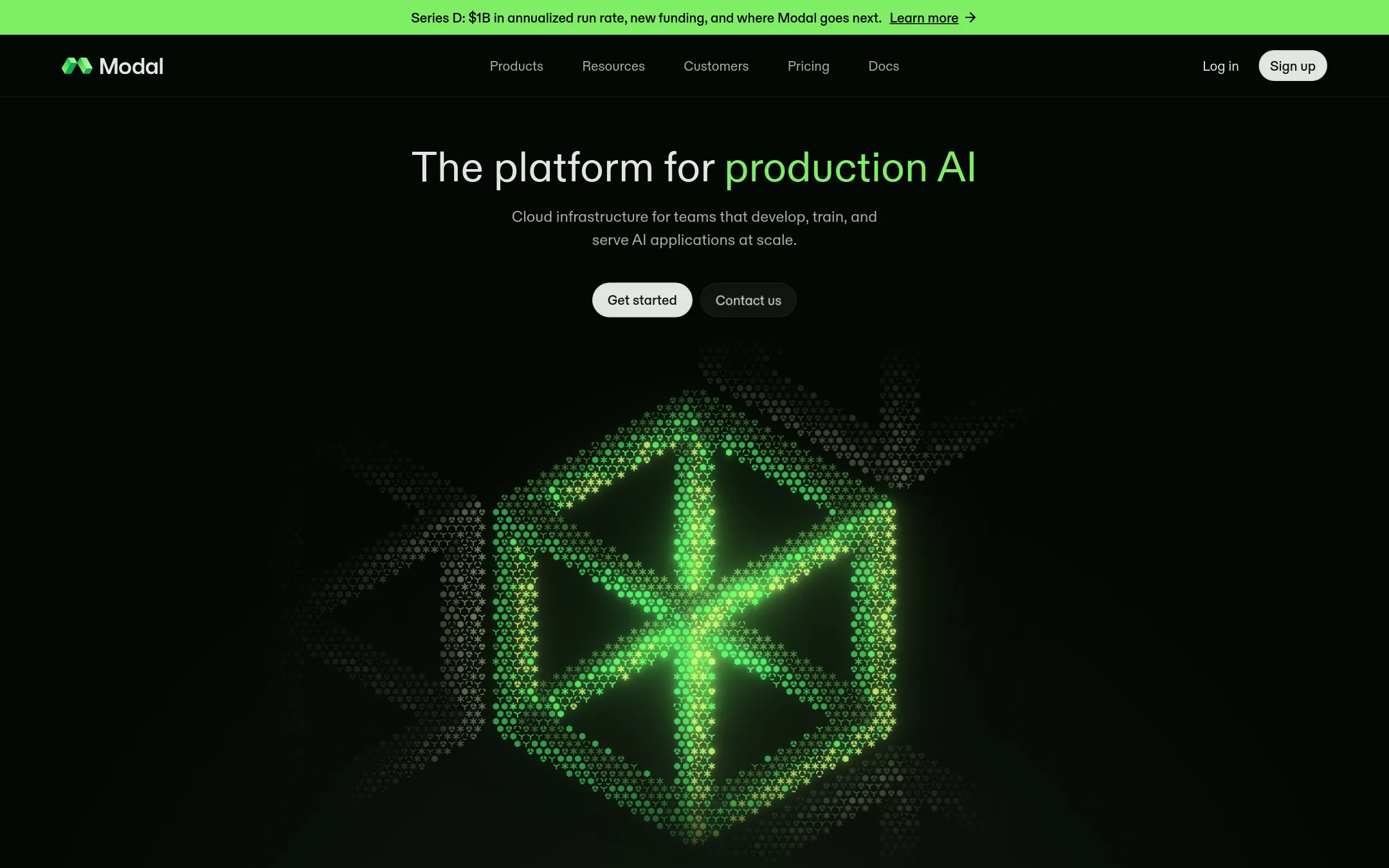
Modal is a serverless platform for running Python code, inference endpoints, fine-tuning jobs and sandboxes on GPUs and CPUs, with capacity spread across 20+ clouds. Teams pick it over Tensorfuse when they want the provider to handle cluster capacity and autoscaling instead of running GPUs in their own cloud account.
Where it is strong
- Autoscales from zero to thousands of GPUs and back, with billing by the second
- Covers inference, training, sandboxes and general Python functions in one platform
- Offers SOC 2 Type II compliance, HIPAA readiness, audit logs and SSO on the Enterprise plan
Where it falls short
- Compute runs on Modal's infrastructure across many clouds, not inside your own cloud account as with Tensorfuse
- Non-preemptible execution costs 3x base prices for Sandboxes, which adds up for long-running jobs
- Pricing:
- Pricing is published per second of GPU use, for example an H100 SXM5 at $0.001097 per second, with a Starter plan at $0 plus compute and $30 in monthly free credits, and a Team plan at $250 plus compute with $100 in monthly free credits.
- RPer second, by hardwar
2.Replicate
Best for: Product teams that want to ship image, video or audio AI features through an API without running their own GPU infrastructure
- Pricing
- Per second, by hardwar
- Category
- Other
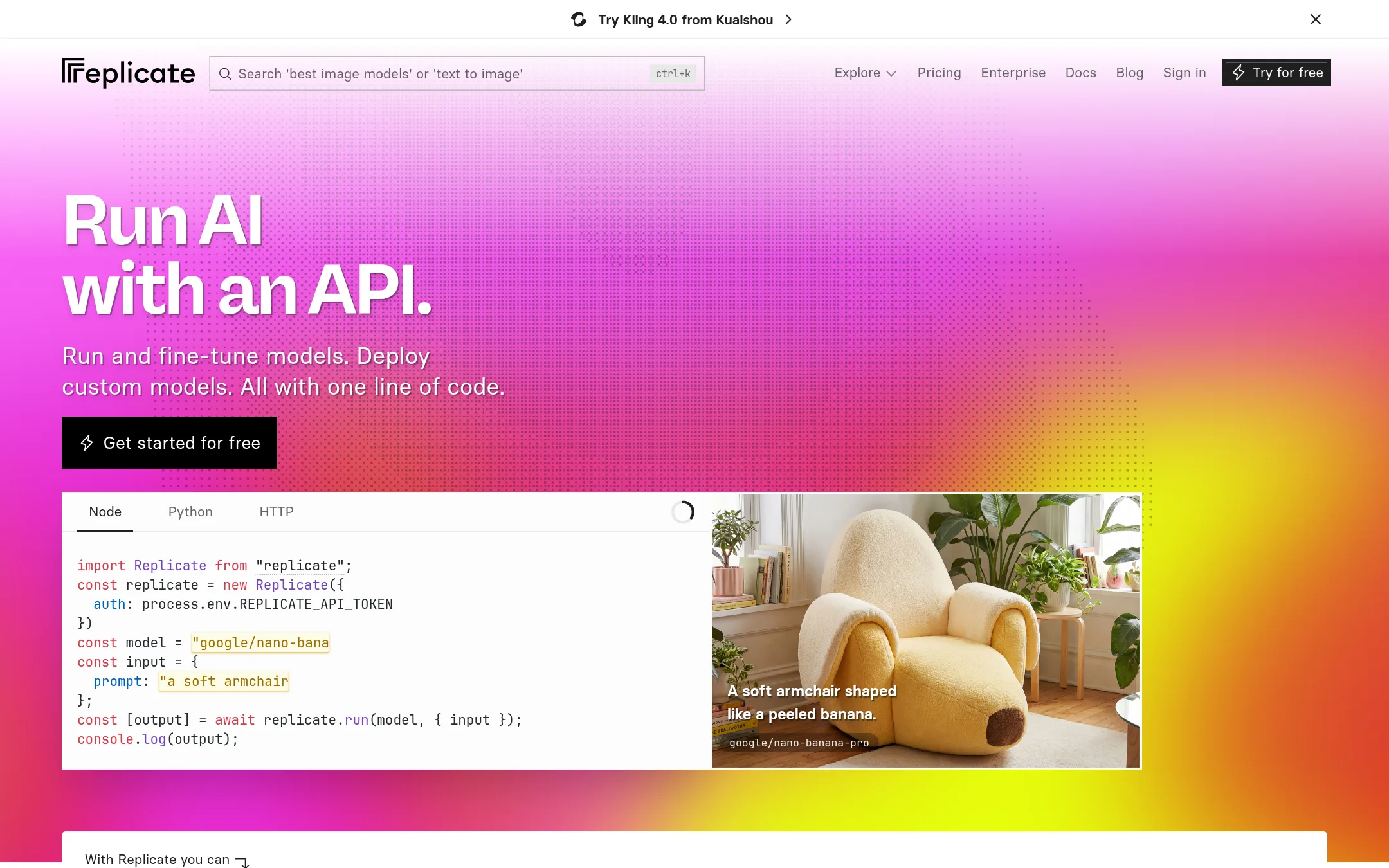
Replicate is a hosted API for running machine learning models without managing GPUs yourself. You can call thousands of community and proprietary models with one line of code, or package your own model with the open-source Cog tool and deploy it on their cloud. Pick it over Tensorfuse when you want Replicate's hosted cloud and model catalog rather than serverless GPUs running inside your own cloud account.
Where it is strong
- Thousands of ready-to-run models, including recent image and video models, callable through one API
- Deploy your own model with Cog, which generates the API server and scales up and down with demand
- Scales to zero when there is no traffic, so idle public models cost nothing
Where it falls short
- Private model deployments bill for setup and idle time, not only active requests
- Runs on Replicate's cloud, so it does not deploy GPUs inside your own cloud account the way Tensorfuse does
- Pricing:
- Replicate bills most public models by the second of run time, with hardware priced from $0.000100 per second for CPU to $0.011200 per second for 8x Nvidia A100 (80GB), and private deployments billed for online time.
- From $0.44/hr (RTX 409
3.Beam
Best for: Teams running AI agents, sandboxed code execution or GPU inference endpoints who want per-second billing on hosted hardware
- Pricing
- From $0.44/hr (RTX 409
- Category
- AI & Machine Learning
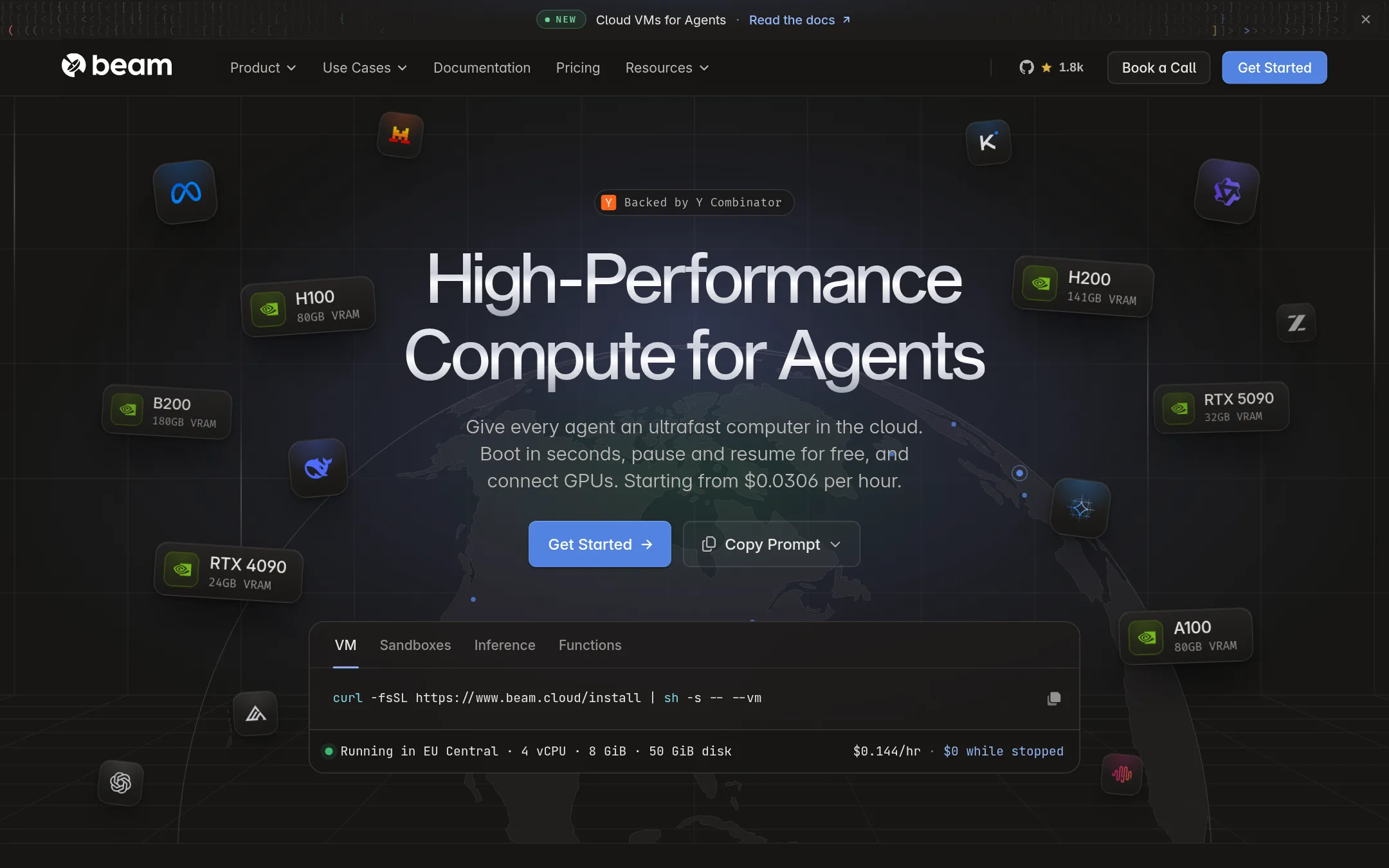
Beam runs VMs, sandboxes, task queues, functions and endpoints on bare-metal servers it sources around the world, billed only while your code runs. It suits teams running coding agents, background jobs, CI builds or GPU workloads who want to pay for active compute rather than idle capacity. Tensorfuse's model is running serverless GPUs in your own cloud, so pick Beam when you want Beam's hosted hardware and per-second billing instead.
Where it is strong
- Billed per second or millisecond, and compute stops when a VM is paused.
- Sandboxes start in about half a second, and VMs resume with RAM intact in about a second.
- No egress fees, and a bring-your-own-cloud option for AWS, GCP and Azure.
Where it falls short
- Storage is not billed yet, so the final storage cost is still unknown.
- Eight-GPU clusters with InfiniBand are quote-only, and volume pricing requires a sales call.
- Pricing:
- Whole GPU machines start at $0.44 per hour for an RTX 4090, H100s from $1.83 per hour, and no egress fees, while storage is not billed yet and the site publishes a planned rate of $0.0001 per GB-hour.
- From $1.79/hr (GPU)
4.RunPod
Best for: AI teams that want rented GPUs on demand, from inference endpoints to multi-node training, without managing their own cloud account
- Pricing
- From $1.79/hr (GPU)
- Category
- AI & Machine Learning
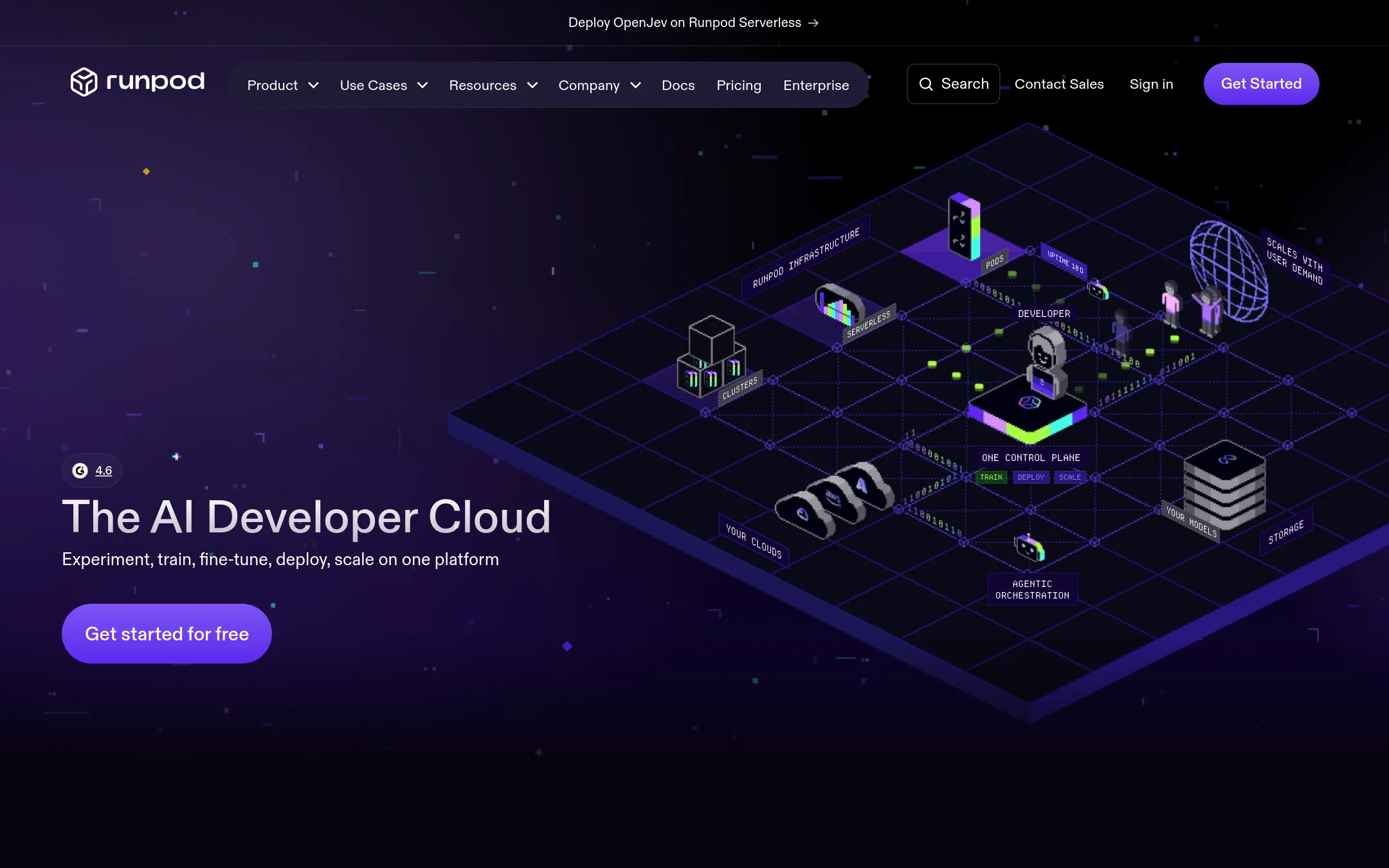
RunPod is a GPU cloud with three products: Serverless for autoscaling inference endpoints that scale to zero, Pods for persistent GPU instances for development and training, and Clusters for multi-GPU jobs. Teams pick it over Tensorfuse when they want RunPod's own managed GPU fleet and catalog rather than running serverless GPUs inside their own cloud account. The site cites lower cost than major clouds and sub-200ms cold starts.
Where it is strong
- Serverless endpoints scale from zero to many workers and charge nothing while idle.
- Pods, Serverless and Clusters share one account and GPU catalog, so projects move from experiment to production without changing platforms.
- Over 30 GPU SKUs across 31 global regions, with per-second billing and no contracts required.
Where it falls short
- Runs on RunPod's own GPU fleet, so it does not deploy into your existing AWS, GCP or Azure account the way Tensorfuse does.
- Community Cloud capacity is cheaper but the site does not publish its availability terms, and reserved capacity needs an enterprise sales co
- Pricing:
- Pricing is set by GPU type and billing model: the H100 PCIe is listed at $2.89/hr on Secure Cloud or from $1.99/hr on Community Cloud, billed per second with no commitment, and storage starts at $0.05/GB/mo.
- Switching from Tensorfuse:
- Moving from Tensorfuse means rebuilding deployment on RunPod's Serverless handler model, since the site describes writing a handler and pushing it to Serverless.
- BNot published
5.Banana
Best for: AI teams shipping inference endpoints who want autoscaling GPUs without running them in their own cloud account
- Pricing
- Not published
- Category
- Other
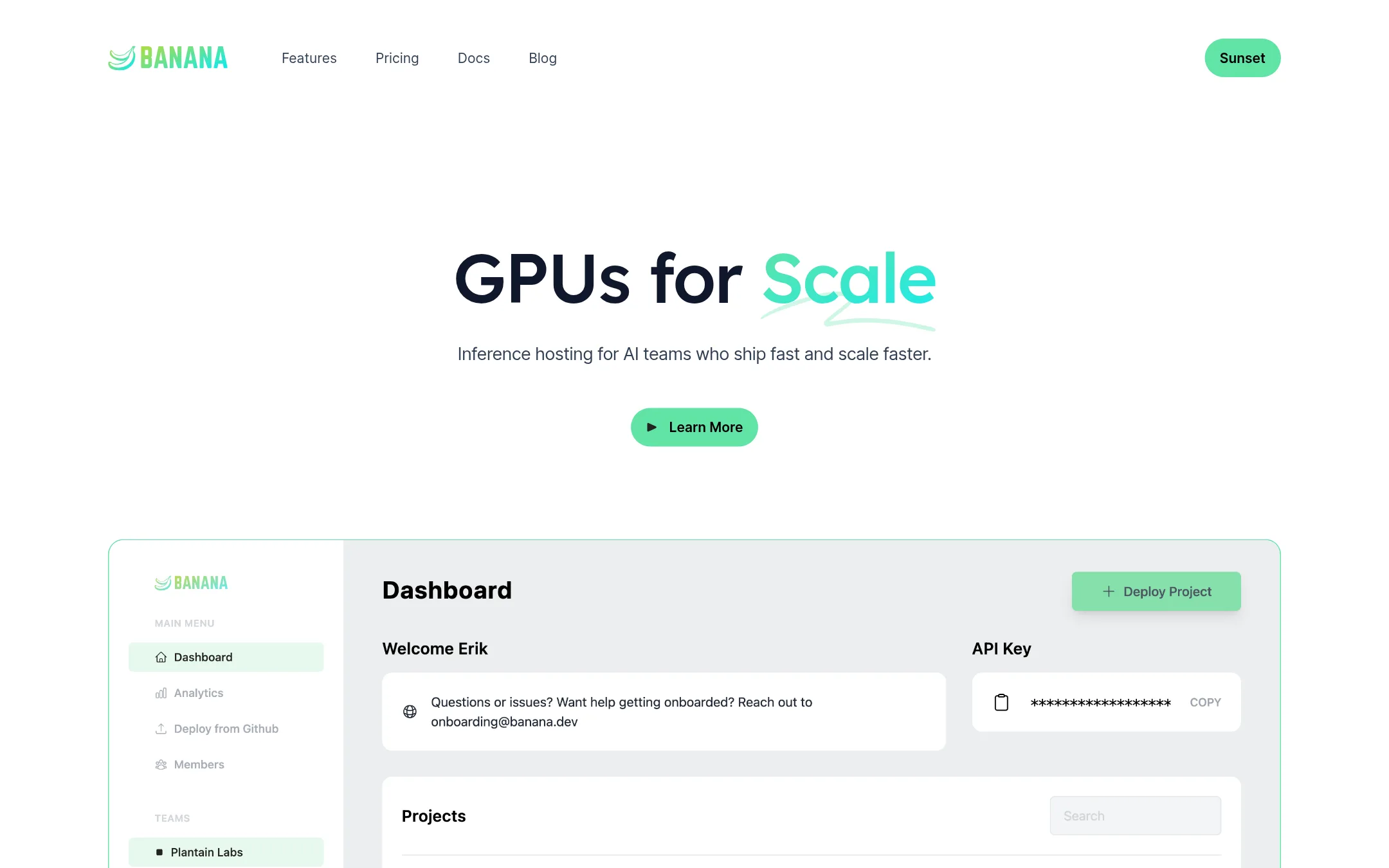
Banana is an inference hosting platform for AI teams that want GPUs to scale up and down automatically. Its pitch is pass-through pricing, with a flat monthly rate plus the cost of compute and no markup on GPU time. Choose Banana over Tensorfuse if you want a managed platform with observability, business analytics, and CI/CD built in rather than running serverless GPUs in your own cloud.
Where it is strong
- Autoscaling GPUs that scale up and down automatically
- Built-in logs, tracing, request analytics, and spend tracking
- Open API, SDKs, and CLI for automating deployments
Where it falls short
- Enterprise features such as SAML SSO and dedicated support sit behind a separate tier
- Team plan caps projects at 5 and parallel GPUs at 50
- Pricing:
- Pricing is not published on the site.
- BNot published
6.Baseten
Best for: Product teams serving custom or open-source models in production that need high uptime and low latency without running their own GPU infrastructure
- Pricing
- Not published
- Category
- Other
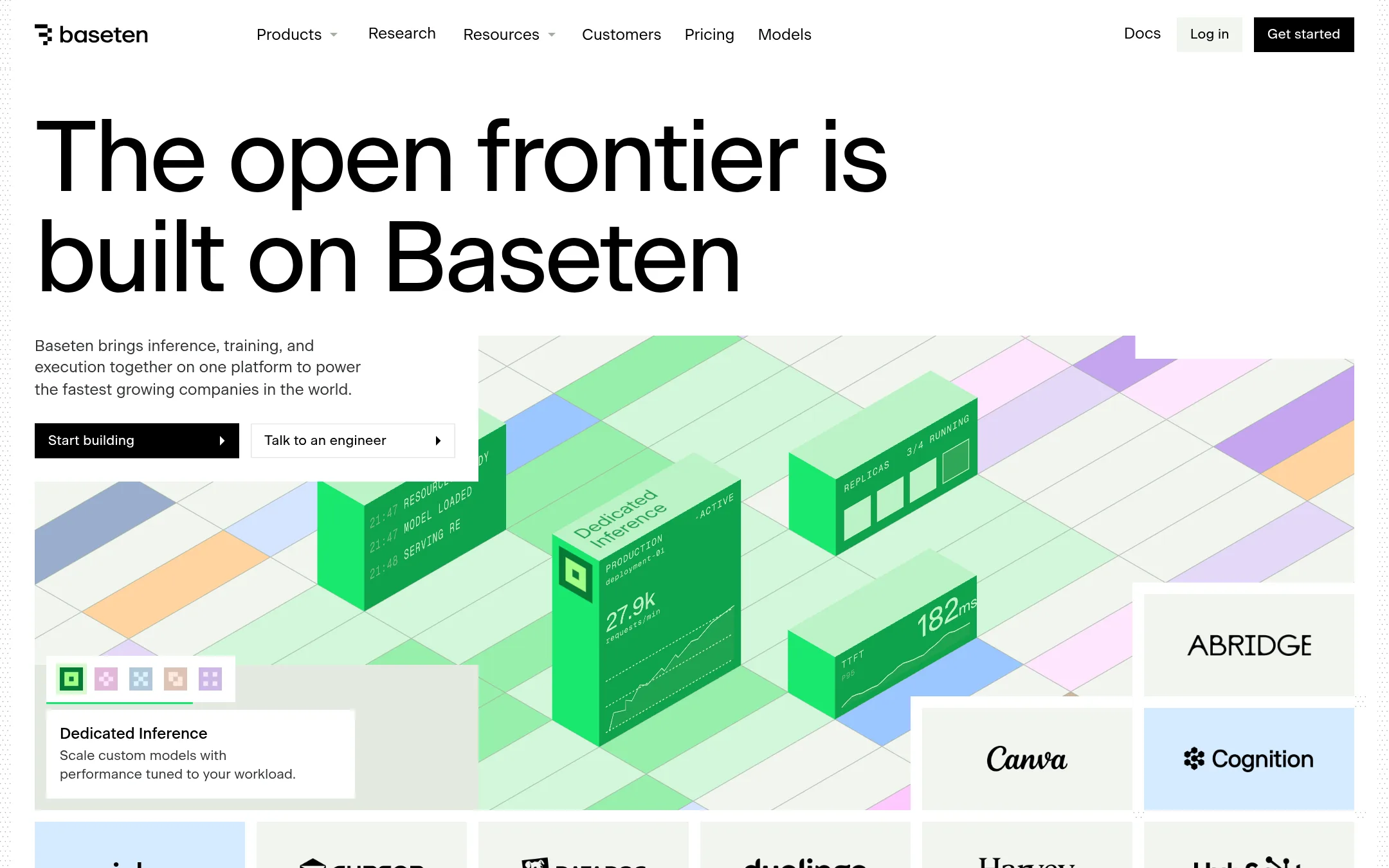
Baseten runs inference, model training and sandboxes for AI workloads on one platform, with dedicated deployments, model APIs and multi-cloud capacity. A team would pick it over Tensorfuse when it needs managed, hosted serving with failover across clouds and engineering support, rather than running GPUs inside its own cloud account.
Where it is strong
- Covers inference, training and sandboxes in one platform
- Multi-cloud capacity with failover for uptime during disruptions
- Dedicated deployments and model APIs for both custom and frontier models
Where it falls short
- Pricing is not published, so cost has to be checked directly with the vendor
- Hosted platform rather than running GPUs inside your own cloud, which is the core of Tensorfuse
- Pricing:
- Pricing is not published on the site.
See more comparisons in AI & Machine Learning alternatives.
FAQ
Questions about Tensorfuse alternatives
What is Tensorfuse best known for?
According to its site, Tensorfuse runs serverless GPUs on your own cloud. Alternatives in this list host the GPUs on their own infrastructure instead, which is the main difference to weigh.
Which alternative is best for bursty inference or fine-tuning?
Modal suits AI teams that need bursty GPU inference or fine-tuning without managing their own cluster or waiting on quota requests. It autoscales from zero to thousands of GPUs and bills by the second.
Which alternative gives me rented GPUs with more control over the hardware?
RunPod suits teams that want rented GPUs on demand, from inference endpoints to multi-node training. It offers over 30 GPU types across 31 regions, with Pods, Serverless and Clusters in one account.
Which alternative is simplest for adding AI features to a product?
Replicate suits product teams that want to ship image, video or audio AI features through a single API call. You can use thousands of hosted models, or package your own with the open-source Cog tool.
Do any of these alternatives publish their pricing?
Beam, Modal, RunPod and Replicate publish per-second or per-hour rates on their sites. Baseten and Banana do not publish pricing, so you will need to contact them directly to compare costs.
Last updated November 11, 2026.