
Tinfoil alternatives
6 products compared · Updated November 23, 2026
The short answer
The three strongest alternatives to Tinfoil are Maple AI, Venice AI and Proton Lumo. Maple AI suits individuals and small teams who want private AI chat and a desktop agent without building their own stack. Venice AI suits creators who want uncensored text, image, video and audio generation in one subscription. Proton Lumo suits people already using Proton services who want a confidential AI assistant inside an existing account.
Your shortlist, at a glance
Read the comparisons ↓- SSignalFreeIndividuals and small groups who want private everyday messaging and calls with no ads or trackers
- PProton LumoNot publishedIndividuals and teams already using Proton services who want a confidential AI assistant without adding a separate vendor.
- DDuckDuckGoNot publishedIndividuals and teams who want private search, browsing and occasional AI chat on their own devices rather than private AI infrastructure for building products.
- VVenice AIFrom $0 free, $18/mo PCreators and individual users who want uncensored text, image and video generation with some privacy controls in one subscription
- MMaple AIFrom $0 / $20 per moIndividuals and small teams who want private AI chat and a desktop agent on phone and computer, without building their own AI stack
 Hugging FaceFrom $9/mo (PRO)ML teams and researchers who need to host, share or fine-tune open models and datasets, and who do not need hardware-enforced privacy guarantees.
About Tinfoil and its alternatives
Tinfoil is a security research lab building an AI cloud for private, verifiable computation. Its site says it runs AI models inside secure hardware enclaves, so data is encrypted to the enclave and cannot be accessed by Tinfoil, and that these guarantees can be checked cryptographically. Its products cover private chat, an OpenAI-compatible inference API, containers that run in secure enclaves, and persistent private cloud computers for agents.
When comparing alternatives in this category, weigh the pricing structure first, since some tools bill per seat, some by usage credits and some by hour of compute. Check which regions and models are supported, what integrations and developer access you get, how support is offered, and what the contract terms say about data handling and cancellation.
Explore the alternatives
- SFree
1.Signal
Best for: Individuals and small groups who want private everyday messaging and calls with no ads or trackers
- Pricing
- Free
- Category
- Other
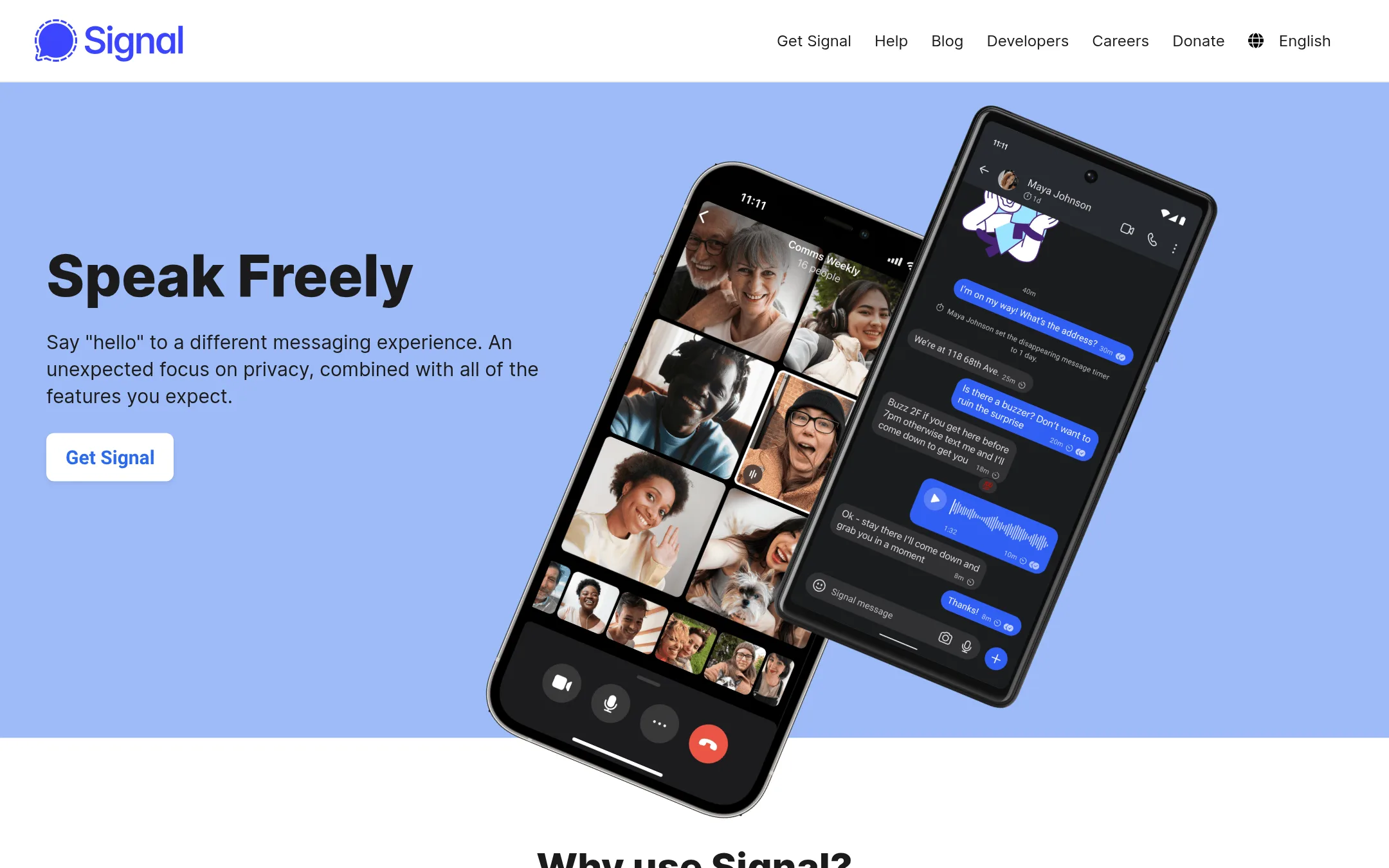
Signal is a free, nonprofit messenger that encrypts text, voice, video calls and group chats end to end. Someone would pick it over Tinfoil when they want private messaging with friends, family or coworkers rather than private AI chat or hosted model inference. Tinfoil fits teams that need verifiable privacy for AI workloads, while Signal covers everyday private communication.
Where it is strong
- End-to-end encryption on messages and calls by default
- Free voice and video calls, plus text, files and group chats
- Independent nonprofit with no ads or trackers
Where it falls short
- Does not offer AI chat, model inference or verifiable AI computation like Tinfoil
- No hosted containers or agent environments for building workloads
- Pricing:
- Signal is free to use and is funded by grants and donations, and pricing is not published on the site.
- PNot published
2.Proton Lumo
Best for: Individuals and teams already using Proton services who want a confidential AI assistant without adding a separate vendor.
- Pricing
- Not published
- Category
- Other
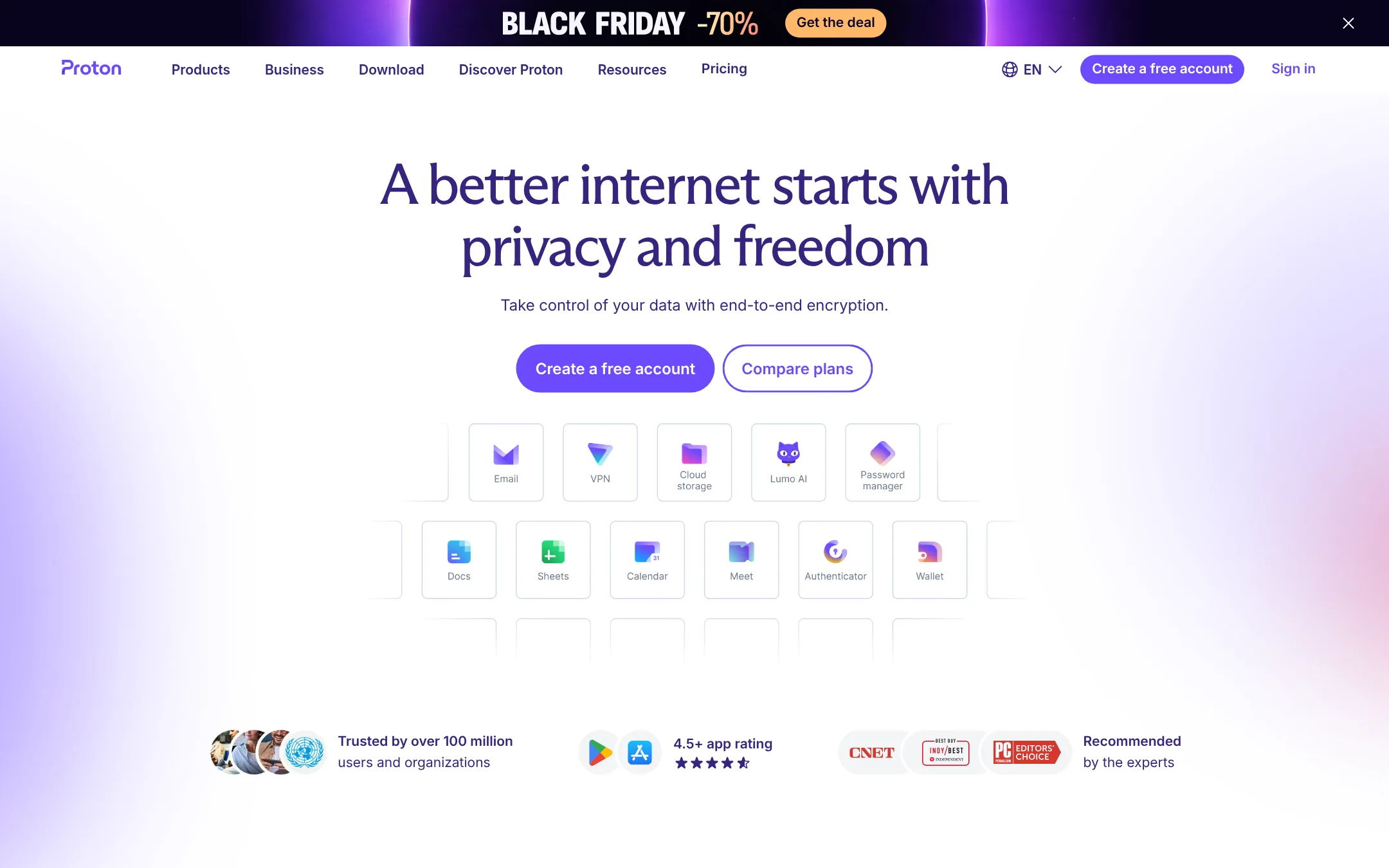
Proton Lumo is an AI assistant from Proton, the privacy company behind Proton Mail and Drive. It fits someone who wants a private chat assistant as part of a broader suite of encrypted tools. Pick it over Tinfoil when the goal is confidential everyday AI use alongside email, storage and passwords, rather than verifiable hardware enclaves or an API for building your own AI workloads.
Where it is strong
- Lumo is built by Proton, so it sits inside an existing privacy-focused account system.
- The site says every Lumo conversation is confidential.
- Proton Mail, Drive, Pass and VPN are available under the same account.
Where it falls short
- The site does not describe hardware attestation or verifiable enclaves for Lumo, which is Tinfoil's core claim.
- No developer API or container hosting is mentioned, so it does not cover building your own AI workloads.
- Pricing:
- Pricing is not published on the site.
- DNot published
3.DuckDuckGo
Best for: Individuals and teams who want private search, browsing and occasional AI chat on their own devices rather than private AI infrastructure for building products.
- Pricing
- Not published
- Category
- Other
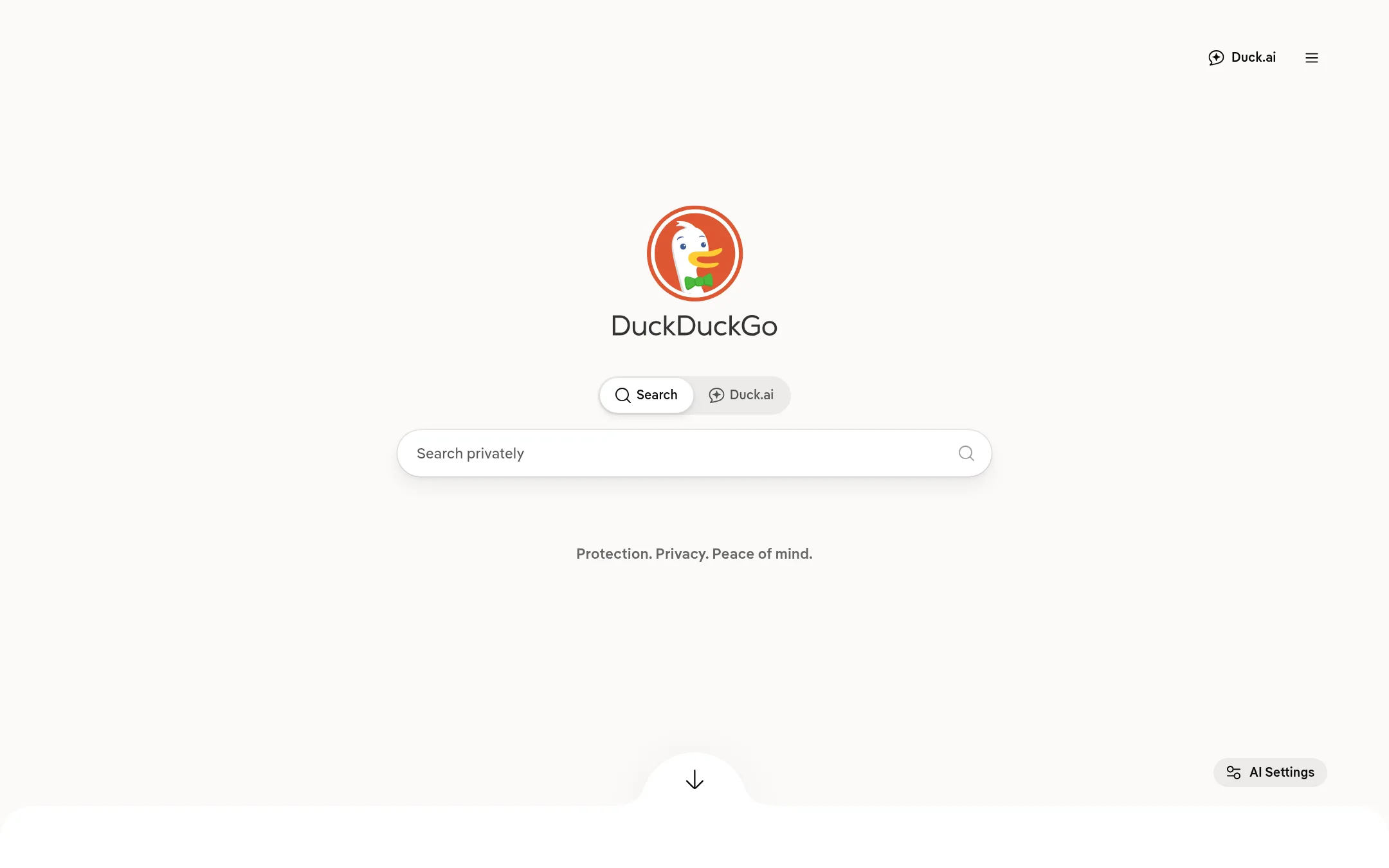
DuckDuckGo is a privacy-focused search engine and browser that blocks trackers, ads and cookie pop-ups by default, and offers optional private AI chat through Duck.ai. Someone would pick it over Tinfoil when they want everyday private browsing and search for a whole team, not a secure enclave to run their own AI models or workloads.
Where it is strong
- Blocks third-party trackers and most ads by default
- Duck.ai lets you chat with popular AI models, with chats not used to train AI
- Browser and extensions available on desktop and mobile
Where it falls short
- Does not offer enclave-based or verifiable AI inference for running your own workloads
- Does not offer hosted containers or private compute for agents
- Pricing:
- Pricing is not published on the site.
- VFrom $0 free, $18/mo P
4.Venice AI
Best for: Creators and individual users who want uncensored text, image and video generation with some privacy controls in one subscription
- Pricing
- From $0 free, $18/mo P
- Category
- Other
Venice AI is a consumer and creator platform offering text, image, video, audio and code generation from one place, with a choice of privacy tiers from anonymized third-party models to self-hosted models and hardware-enclave processing. Someone would pick it over Tinfoil when they want uncensored creative tools and many media types in one subscription, rather than a security-first enclave for running their own containers or agents.
Where it is strong
- Covers text, image, video, audio, music and code generation in one place
- Offers several privacy levels, including TEE hardware-secured processing and end-to-end encryption
- Includes an OpenAI-compatible API that works with function calling and web search
Where it falls short
- Its focus is creative and consumer use, so it has no equivalent to Tinfoil's containers or persistent private cloud computers for agents
- Many premium features run on a credit system, which makes monthly costs harder to predict
- Pricing:
- Pro is listed at $18 per month or $216 billed annually, Pro Plus at $68 per month or $816 annually, and Max at $200 per month or $2,400 annually, with a free tier available.
- MFrom $0 / $20 per mo
5.Maple AI
Best for: Individuals and small teams who want private AI chat and a desktop agent on phone and computer, without building their own AI stack
- Pricing
- From $0 / $20 per mo
- Category
- Other
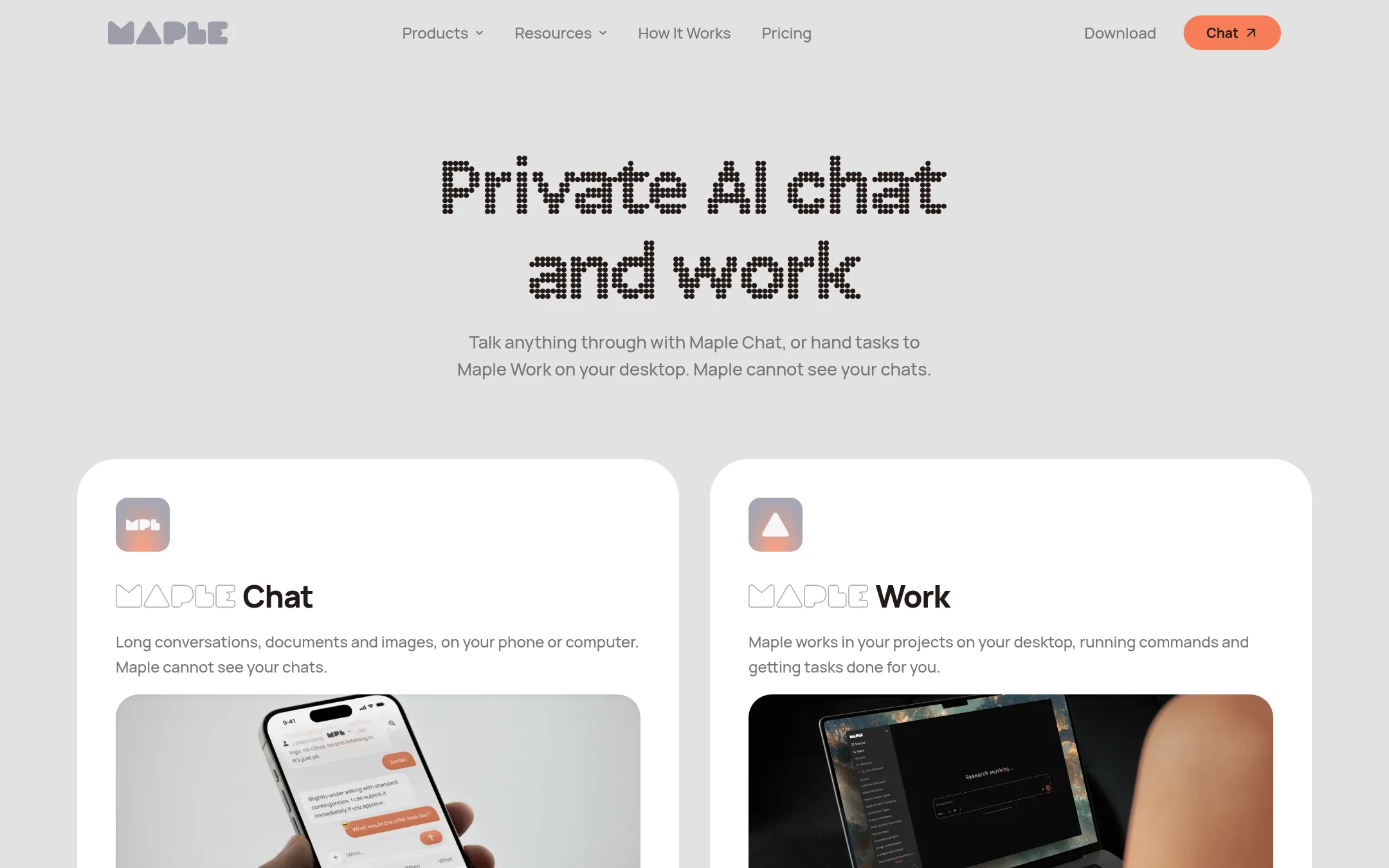
Maple AI is a private chat and desktop work app where open models run inside encrypted enclaves, so conversations stay private to the user. A team would choose Maple over Tinfoil when they want a ready-made consumer-style chat and agent app on phone and desktop instead of building on infrastructure.
Where it is strong
- Chat and a desktop agent, Maple Work, in one app on phone and computer
- Open models you can audit, with conversations encrypted end to end
- Clear dollar-based usage, with one balance shared across Chat, Work and the API
Where it falls short
- Long-term memory is listed as coming with Maple Work, not yet available
- The Free plan has no API access, and API use needs a paid plan
- Pricing:
- Maple plans are Free at $0, Pro at $20 per month with $20 of usage, Max at $100 per month with $200 of usage, Max+ at $200 per month with $400 of usage, and Team at $30 per user per month, with API tokens priced per model.
- From $9/mo (PRO)
6.Hugging Face
Best for: ML teams and researchers who need to host, share or fine-tune open models and datasets, and who do not need hardware-enforced privacy guarantees.
- Pricing
- From $9/mo (PRO)
- Category
- AI & Machine Learning
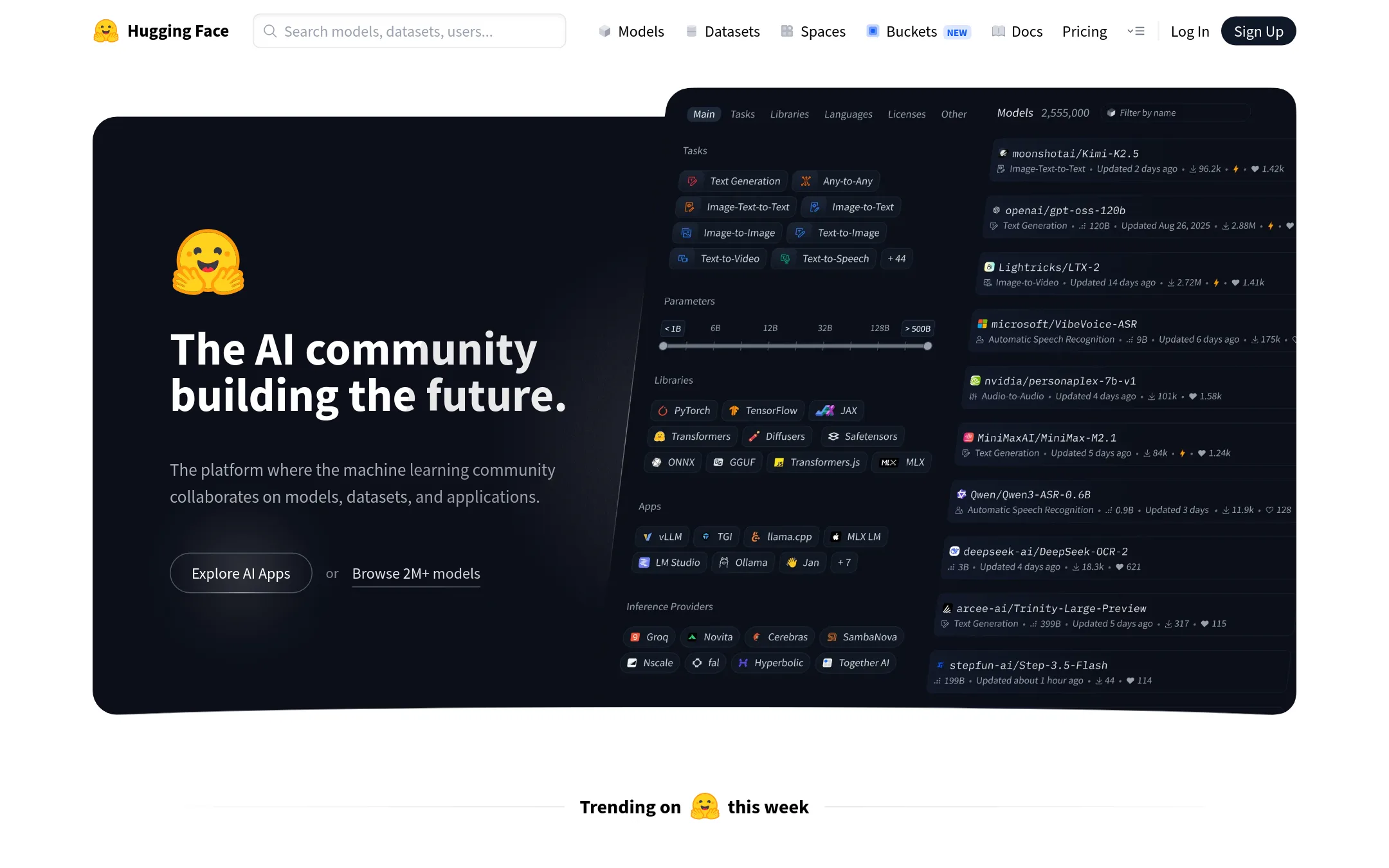
Hugging Face is a collaboration platform for machine learning. Teams use it to host, share and run models, datasets and demo apps, with a large catalog of open models and a unified inference API. Someone would pick it over Tinfoil when the goal is access to open models and ML tooling rather than verifiable privacy for their own AI workloads.
Where it is strong
- Access to a very large catalog of open models and datasets on one platform
- Pay-per-hour GPU hardware for Spaces and dedicated inference endpoints
- Open-source libraries such as transformers and datasets that the wider community already uses
Where it falls short
- The site does not describe hardware-enforced privacy or verifiable computation, which is Tinfoil's core offer
- Dedicated inference and GPU prices add up quickly for always-on workloads
- Pricing:
- Pricing is not published as a single rate for the whole platform. The site lists Team plans starting at $20 per user per month, PRO at $9 per month, GPU Spaces from $0.40 per hour, and dedicated inference from $0.033 per hour.
See more comparisons in Security & Privacy alternatives.
FAQ
Questions about Tinfoil alternatives
What does Tinfoil do that sets it apart?
According to its site, Tinfoil runs AI models inside secure hardware enclaves so that your data is encrypted to the enclave and cannot be accessed or shared, not even by Tinfoil. It states that these guarantees are cryptographically verifiable. Most of the alternatives on this page do not describe hardware-enforced verification of that kind.
Which alternative is best for private AI chat on my own devices?
Maple AI is the closest fit. It offers chat and a desktop agent called Maple Work on phone and computer, with open models and conversations encrypted end to end. Its Free plan has no API access, so developers will need a paid plan to build on it.
Which option should a developer building AI applications consider?
Hugging Face suits ML teams that need to host and share open models, datasets and demo apps, with a unified inference API and pay-per-hour GPU options. It does not describe hardware-enforced privacy, so it is a better fit when openness and tooling matter more than verifiable privacy. Venice AI also includes an OpenAI-compatible API with function calling and web search.
Is there a free option among these alternatives?
Yes. Signal is free to use and funded by grants and donations, though it is a messaging app rather than an AI tool. DuckDuckGo offers free private search and browsing with optional AI chat through Duck.ai. Maple AI and Venice AI also have free tiers, though with limited usage.
How do the costs of these alternatives compare?
Costs vary widely. Venice AI lists Pro at $18 per month, Pro Plus at $68 and Max at $200, with a credit system on many premium features. Maple AI lists Pro at $20 per month, Max at $100 and Max+ at $200, plus per-model API pricing. Hugging Face bills Team plans from $20 per user per month and GPU use from $0.40 per hour. Proton Lumo and DuckDuckGo do not publish pricing on their sites.
Last updated November 23, 2026.