
Treasury Prime alternatives
12 products compared · Updated November 15, 2026
The short answer
The three strongest Treasury Prime alternatives are Column, Unit, and Synctera. Column suits teams that want their own national bank charter and direct access to US payment rails. Unit suits startups building their own accounts, cards, and lending on one native ledger. Synctera suits fintechs that want one set of APIs for bank accounts, cards, and money movement, with a partner bank matched to their product.
Your shortlist, at a glance
Read the comparisons ↓- UUnitNot publishedStartups building their own banking, card, or lending product that want accounts, payments and cards on one ledger
- SSyncteraNot publishedFintechs building bank accounts, card programs, or payments features that want one set of APIs and a partner bank matched to their product
 ColumnNot publishedFintechs and tech companies that want direct access to US payment rails and their own card or lending programs
 GalileoNot publishedFintechs that need card issuing and core banking on a single platform
 MarqetaNot publishedFintechs and enterprises that need to issue cards and run card programs, including teams expanding across international markets
- SSolidNot publishedVenue owners and network operators in the United States, Canada, Europe, the Middle East, Africa or Australia that need in-building mobile coverage
 IncreaseNot publishedAmbitious US technology companies and vertical fintechs that want direct bank-grade payments, cards and accounts through one API-first bank
 ModernbancSee websiteAccounting software that works for you
- SSynapseSee websiteSynapse platform for financial infrastructure needs.
 BrexFree to start. Custom Startups and mid-sized companies that need corporate cards, expense management and bill pay in one tool, across multiple countries
 CowrywiseNot publishedNigerian individuals and corporates who want to save and invest through one regulated app
 MercuryFrom $0/moStartups and small businesses that want one app for banking, cards, invoicing and bookkeeping.
About Treasury Prime and its alternatives
Treasury Prime is an embedded banking software platform and marketplace. According to its site, it runs a multi-bank network of more than 20 banks, which lets fintechs launch with a partner bank and move to another in the network if that bank's risk appetite changes. Banks use it to manage fintech programs and to vet the programs they approve.
When comparing alternatives in this category, weigh how each one structures its bank relationship, since some rely on a single bank or their own charter and others on a network. Look at pricing structure, which is often not published and needs a sales conversation, and at which regions and currencies the product covers. Check integrations, support for your stage, and the contract terms that govern how you can move programs or exit.
Explore the alternatives
- UNot published
1.Unit
Best for: Startups building their own banking, card, or lending product that want accounts, payments and cards on one ledger
- Pricing
- Not published
- Category
- Other
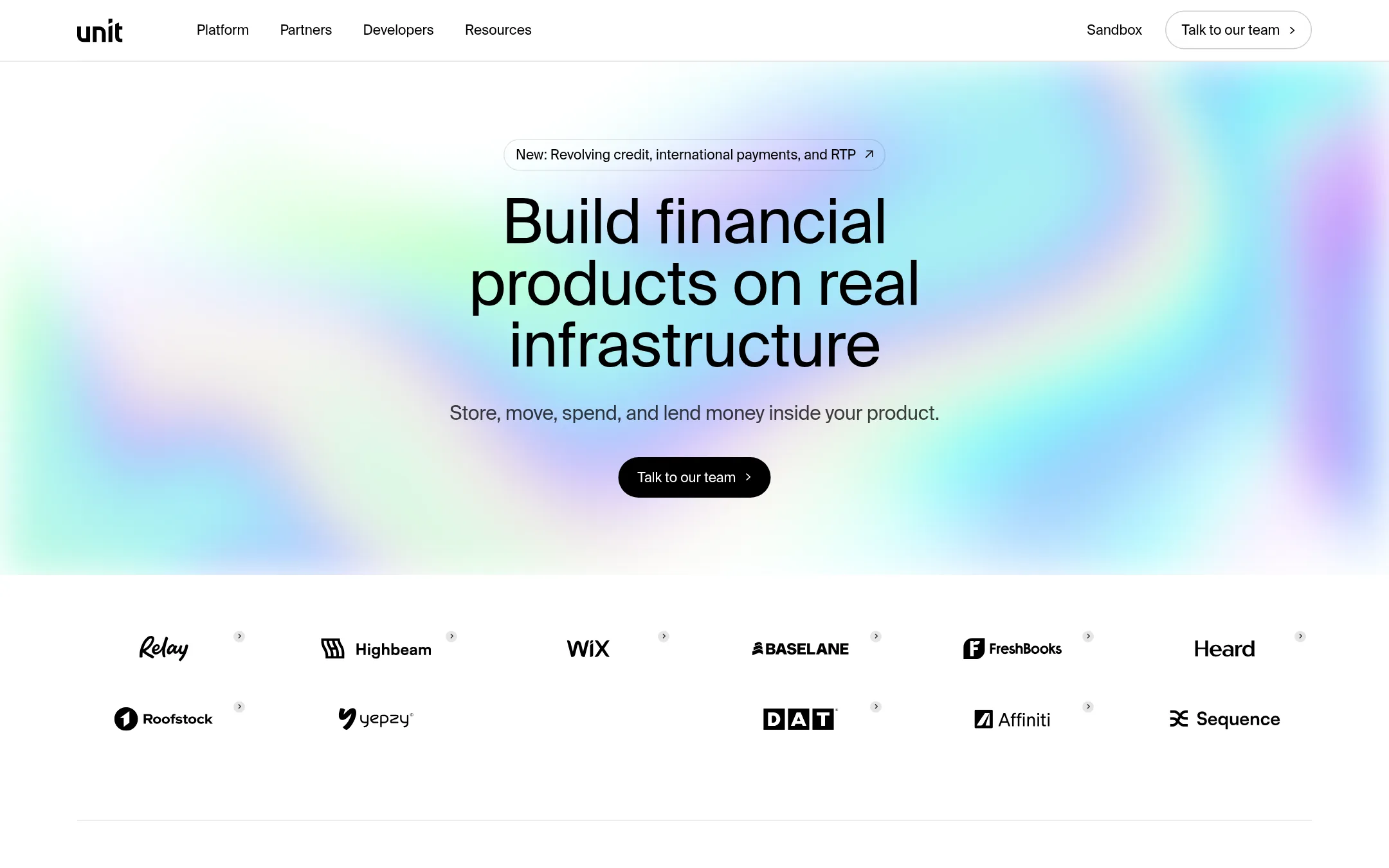
Unit is a financial infrastructure platform for building banking products into your own app. It covers storing money in accounts, moving money over ACH and wires, issuing branded cards, and offering credit. A team would choose Unit over Treasury Prime when they want one platform with a native ledger and card issuing for their own product, rather than picking from a multi-bank network of sponsor banks.
Where it is strong
- Accounts, payment rails and card issuing share one native ledger.
- Branded cards come with controls, limits and transaction data the customer owns.
- Compliance, fraud, disputes and support can be delegated to Unit's program management team.
Where it falls short
- The site does not describe a multi-bank network, so you rely on Unit's own bank partners.
- Pricing and the regions it serves are not stated on the homepage.
- Pricing:
- Pricing is not published on the site.
- Switching from Treasury Prime:
- The site does not describe a migration path from Treasury Prime, so the effort involved is not known from the facts provided.
- SNot published
2.Synctera
Best for: Fintechs building bank accounts, card programs, or payments features that want one set of APIs and a partner bank matched to their product
- Pricing
- Not published
- Category
- Other
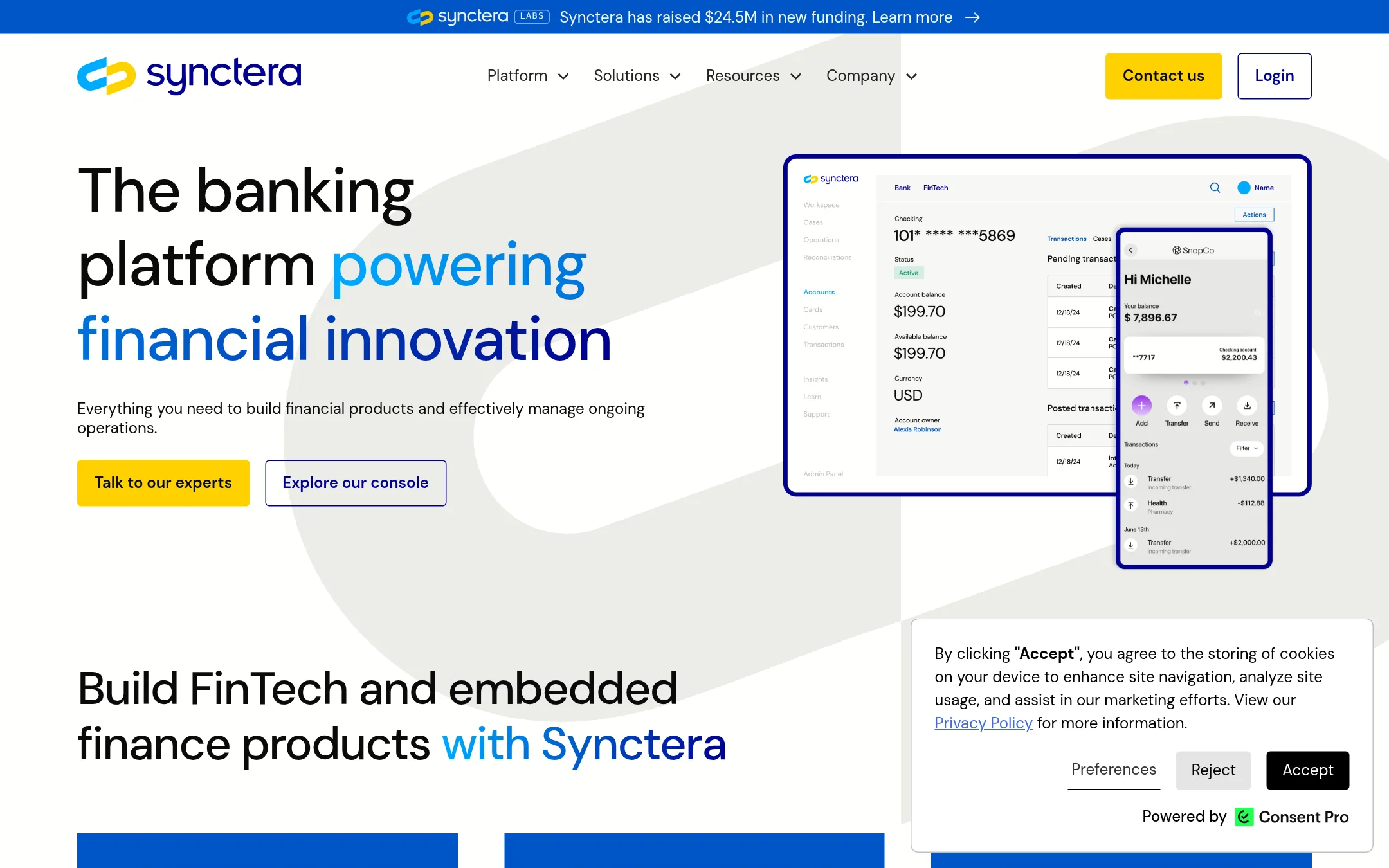
Synctera is a banking platform with APIs for bank accounts, card programs, and money movement, aimed at fintechs and embedded finance products. A team would pick it over Treasury Prime if they want a single set of APIs covering core banking, card processing, and onboarding, along with a centralized tool for operations and compliance shared with their bank partner.
Where it is strong
- Core banking, card processing, and onboarding are all covered by one API set
- Matches fintechs with partner banks based on product vision and timeline
- Central tools give both the fintech and the bank visibility into operations and reconciliation
Where it falls short
- The site does not describe a multi-bank network the way Treasury Prime does, so a bank match is the main route to a partner
- Pricing and integration counts are not published, so the scope of its partner network is hard to judge from the site alone
- Pricing:
- Pricing is not published on the site.
- Not published
3.Column
Best for: Fintechs and tech companies that want direct access to US payment rails and their own card or lending programs
- Pricing
- Not published
- Category
- Finance & Accounting
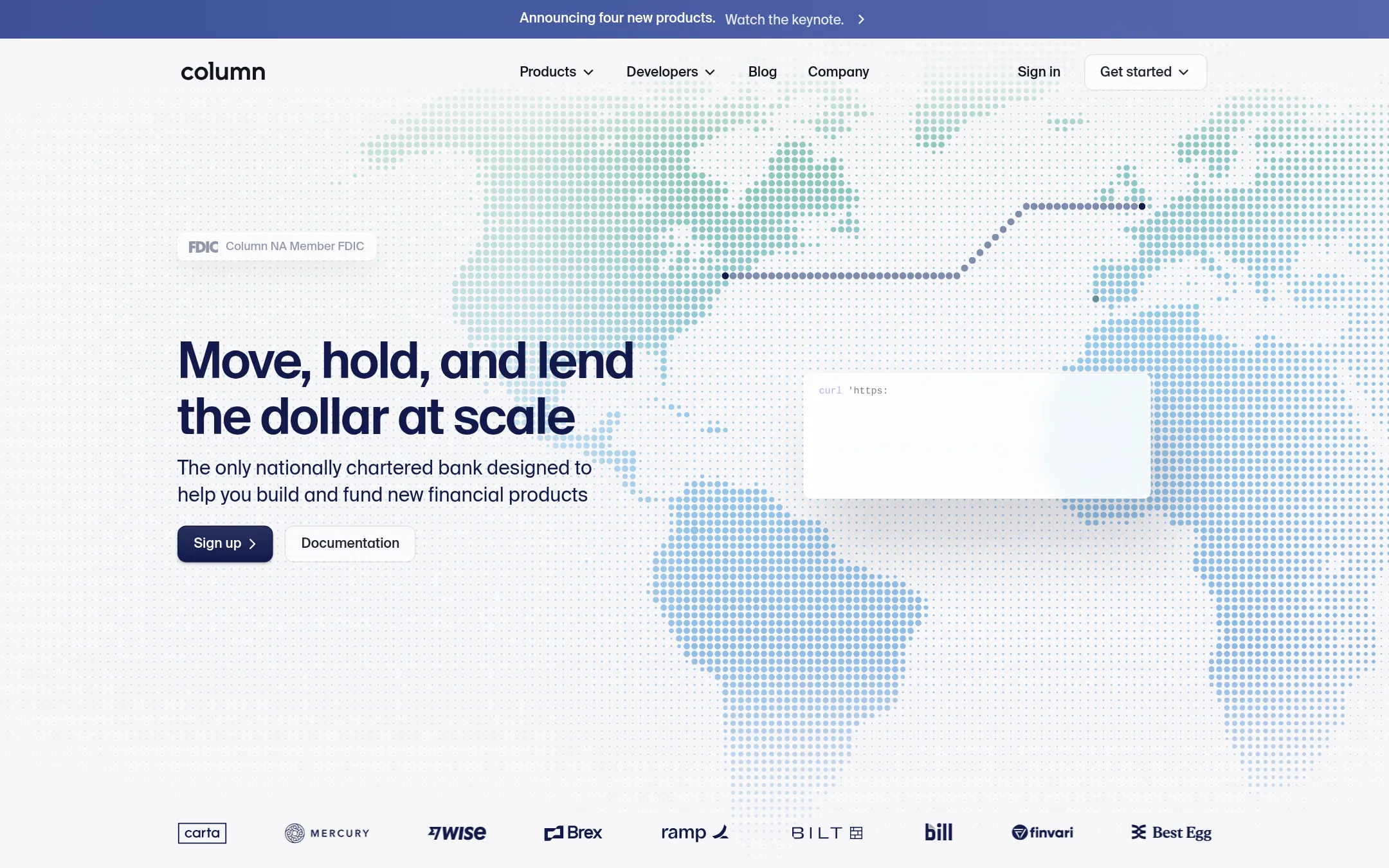
Column is a nationally chartered bank built for developers. It lets teams move money over direct connections to the Federal Reserve, The Clearing House, Swift and card networks, and open bank accounts, issue cards and originate loans through its APIs. Someone would choose Column over Treasury Prime when they want their own bank charter behind the product rather than a sponsor-bank network.
Where it is strong
- Holds a national bank charter, so it does not depend on a sponsor bank
- Direct connections to the Federal Reserve, The Clearing House, Swift and card networks
- Offers card issuing and loan origination with its own balance sheet or yours
Where it falls short
- Its focus is on US dollar products, so it is less of a fit for teams that need many local currencies
- Its published materials describe a platform for larger, technically advanced companies, which may not suit very early-stage teams
- Pricing:
- Pricing is not published on the site.
- Not published
4.Galileo
Best for: Fintechs that need card issuing and core banking on a single platform
- Pricing
- Not published
- Category
- Finance & Accounting
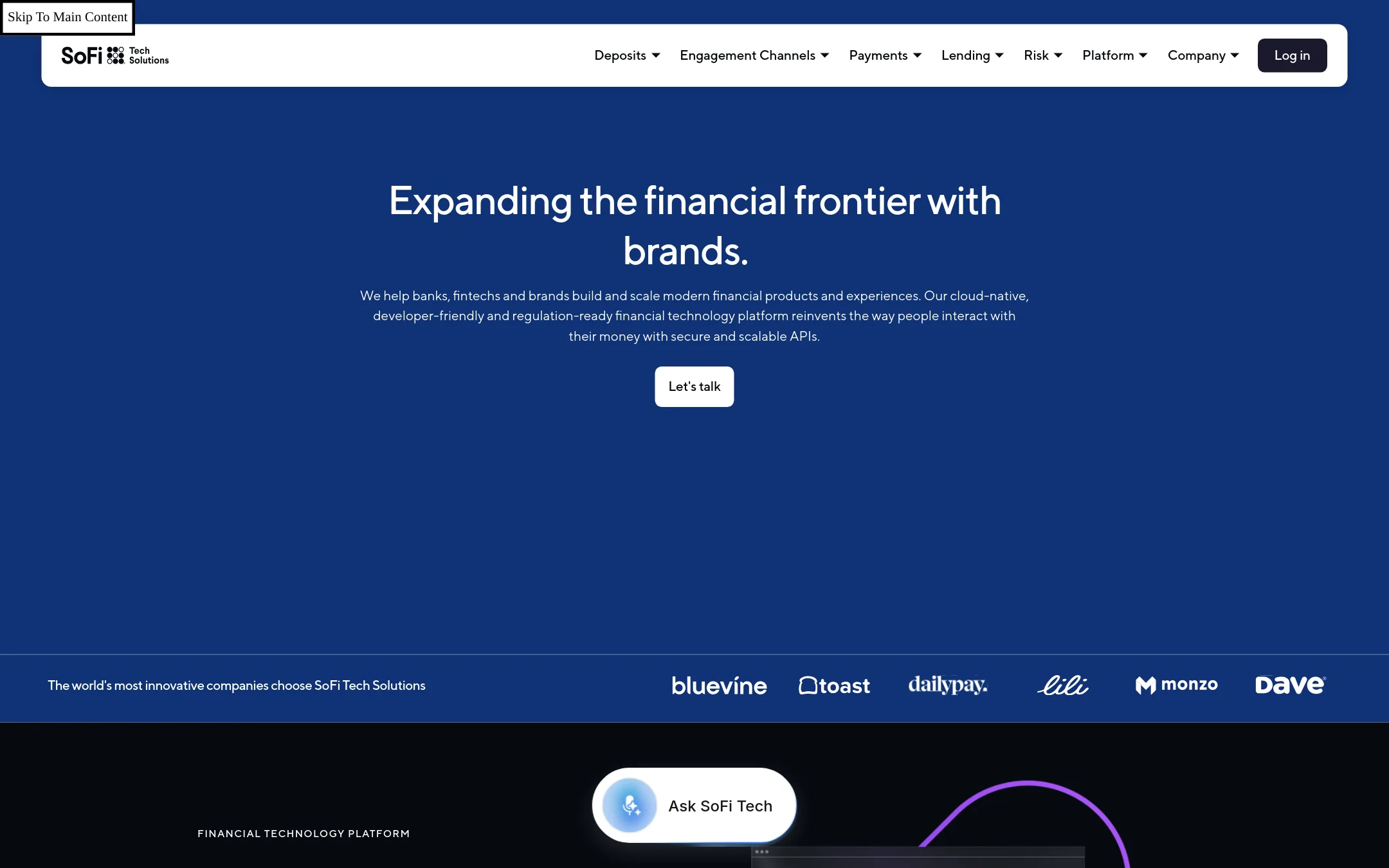
Galileo is a cloud-native platform for core banking, card issuing and payment processing, now run as part of SoFi Tech Solutions. A team would pick it over Treasury Prime when the main need is issuing cards and running core ledger and payments on one stack, rather than placing programs across a network of partner banks.
Where it is strong
- Covers core banking, card issuing and payment processing in one platform
- Backed by the SoFi Tech Solutions name and infrastructure
- Offers APIs for building banking features into a product
Where it falls short
- The site does not describe a multi-bank network, so you rely on one underlying bank relationship
- Little detail on the homepage about partner bank choice or switching banks
- Pricing:
- Pricing is not published on the site.
- Not published
5.Marqeta
Best for: Fintechs and enterprises that need to issue cards and run card programs, including teams expanding across international markets
- Pricing
- Not published
- Category
- Finance & Accounting
Marqeta is a card issuing and payment processing platform. A company would pick it over Treasury Prime when the core need is issuing debit, prepaid, or credit cards and running card programs across many countries, since Marqeta reports certification to operate in 40+ countries and handles partnerships, BIN sponsorship and card operations for the program.
Where it is strong
- Certified to operate in 40+ countries
- Handles bank partnerships, BIN sponsorship and card fulfillment for the program
- Supports debit, prepaid and credit credentials on one platform
Where it falls short
- Centered on card issuing, so it is a weaker fit for teams whose main need is bank ledger and account infrastructure
- Pricing is not published, so cost comparison requires a sales conversation
- Pricing:
- Pricing is not published on the site.
- SNot published
6.Solid
Best for: Venue owners and network operators in the United States, Canada, Europe, the Middle East, Africa or Australia that need in-building mobile coverage

- Pricing
- Not published
- Category
- Other
Solid makes distributed antenna systems and networking hardware that bring mobile coverage to large venues. Someone would pick it over Treasury Prime only if they need physical cellular coverage infrastructure, not banking software. The two products do not compete for the same job.
Where it is strong
- Covers 2G through 5G and later standards
- Offers GENESIS and ALLIANCE DAS systems plus Open RAN and optical transport options
- Sells to venues that are hard to cover, with coverage built to scale
Where it falls short
- Hardware and network equipment, so it does not offer banking, payments or ledger features
- Site does not publish pricing or a product catalogue beyond the summary
- Pricing:
- Pricing is not published on the site.
- Not published
7.Increase
Best for: Ambitious US technology companies and vertical fintechs that want direct bank-grade payments, cards and accounts through one API-first bank
- Pricing
- Not published
- Category
- Finance & Accounting
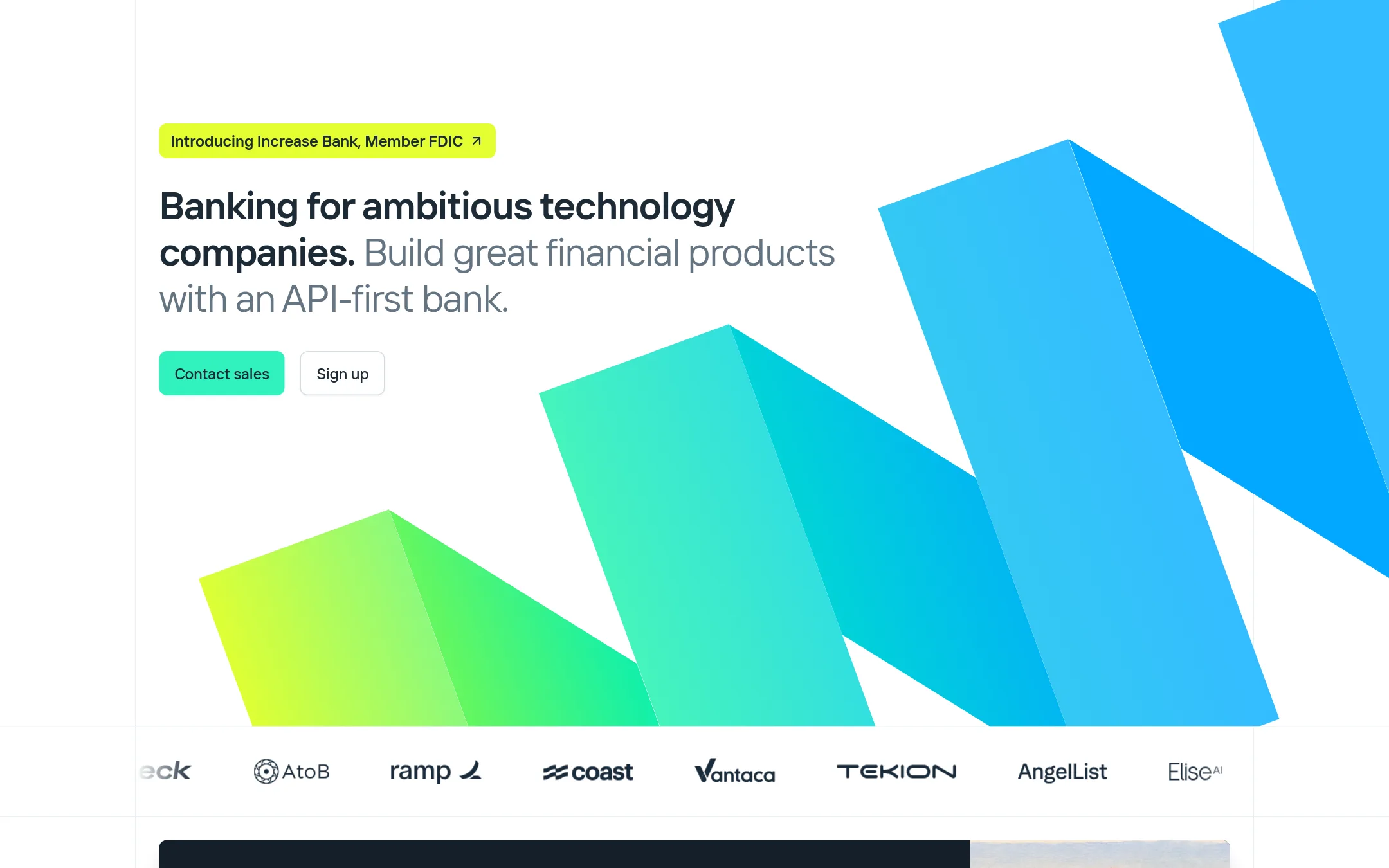
Increase is an API-first bank that gives technology companies direct access to US payment rails, card issuing, bank accounts and lending on its own banking core. A team would pick Increase over Treasury Prime when it wants one bank relationship and direct control of the rails rather than a network of partner banks.
Where it is strong
- Direct access to US payment rails with no third-party vendors in between
- Full-stack card issuing and flexibly titled bank accounts through one API
- Modular compliance and tailored loan programs for launching banking products in weeks
Where it falls short
- Covers US rails and US partner banks only, based on the site
- Built around one bank relationship rather than a multi-bank network of 20+ banks
- Pricing:
- Pricing is not published on the site.
- See website
8.Modernbanc
Finance & Accounting
Accounting software that works for you
- SSee website
9.Synapse
Finance & Accounting
Synapse platform for financial infrastructure needs.
- Free to start. Custom
10.Brex
Best for: Startups and mid-sized companies that need corporate cards, expense management and bill pay in one tool, across multiple countries
- Pricing
- Free to start. Custom
- Category
- Finance & Accounting
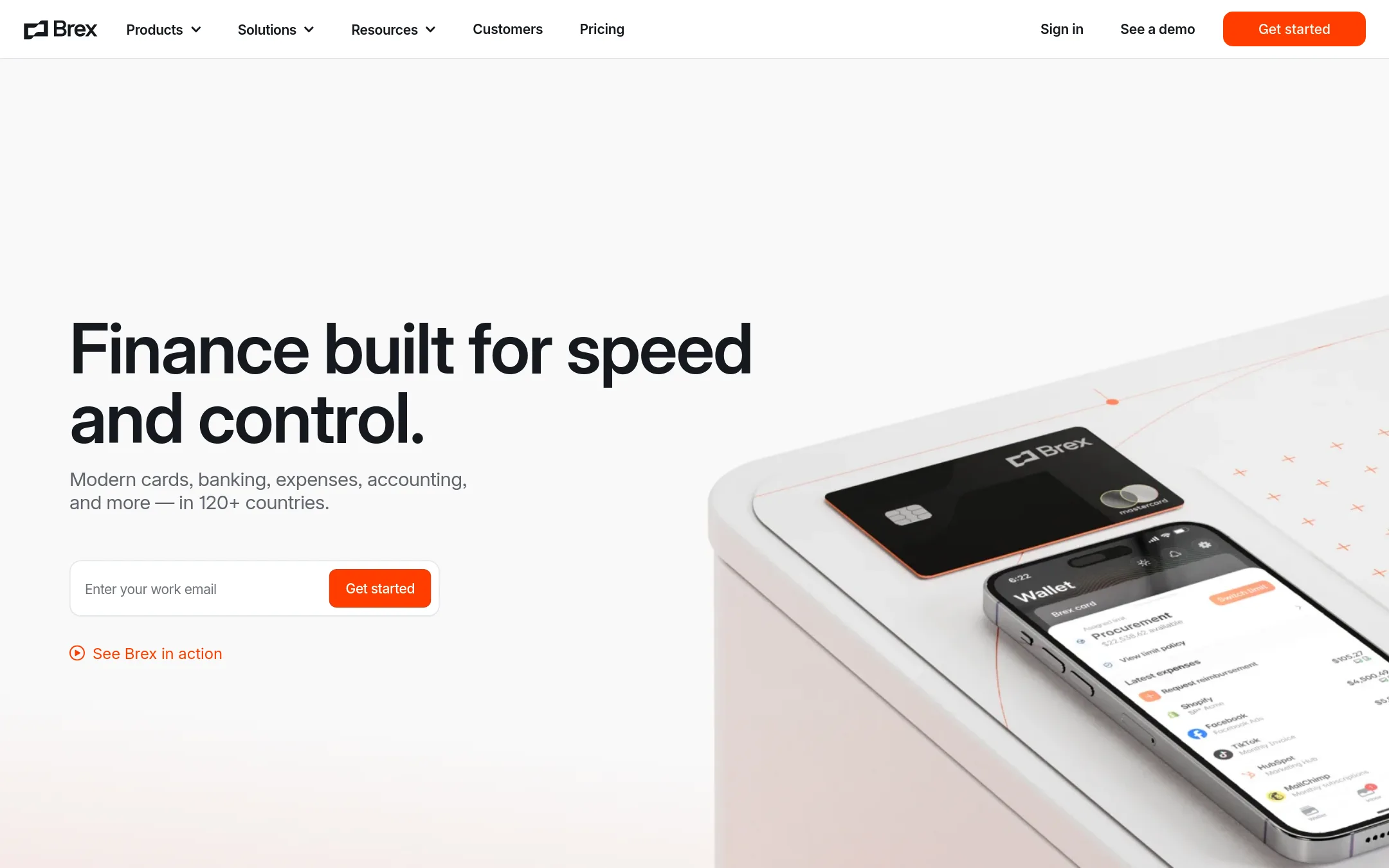
Brex is a business finance platform with corporate cards, expense management, bill pay, travel booking, and accounting automation. Teams choose it when they want to run spend, payments, and books in one product rather than build on a banking-as-a-service layer. It fits companies that need software for their own finance operations, not a sponsor bank network for building a fintech product.
Where it is strong
- Corporate cards, expenses, bill pay and travel sit in one platform
- Accounting integrations and AI-assisted coding reduce manual bookkeeping
- Local-currency cards and wires are offered in many countries
Where it falls short
- It is a finance tool for businesses, so it does not provide embedded banking infrastructure or a bank network for building fintech programs
- Higher-tier features such as multi-entity and advanced approvals sit in the Premium and Enterprise plans
- Pricing:
- Pricing is published for Essentials and Premium, which have free starting plans, while Enterprise and Smart Card are quote-based and the site does not list their prices.
- Not published
11.Cowrywise
Best for: Nigerian individuals and corporates who want to save and invest through one regulated app
- Pricing
- Not published
- Category
- Finance & Accounting
Cowrywise is a savings and investment app for individuals, high-net-worth customers and corporates in Nigeria. It automates savings toward goals, runs mutual funds, and lets people co-own shares in Nigerian companies. Someone would pick it over Treasury Prime if they want a consumer product to grow personal wealth rather than banking infrastructure for building a fintech program.
Where it is strong
- Automated savings toward specific goals
- Mutual funds handled for the user
- Regulated by the SEC, per the site
Where it falls short
- Built for individual and corporate investors, not for running banking programs
- Its focus is Nigeria, so it does not serve as a multi-bank embedded finance network
- Pricing:
- Pricing is not published on the site.
- From $0/mo
12.Mercury
Best for: Startups and small businesses that want one app for banking, cards, invoicing and bookkeeping.
- Pricing
- From $0/mo
- Category
- Finance & Accounting
Mercury is business banking software for startups and small companies. It bundles business checking, company cards, expense management, invoicing, bill pay and accounting sync in one app, with the bank accounts held through partner banks. A founder would pick it over Treasury Prime when they need a ready-made account and spend tools for their own company rather than infrastructure to run a banking program for other fintechs.
Where it is strong
- Base business account has no monthly fee, overdraft penalties or minimum balance.
- Company cards, expense management, invoicing and bill pay sit in the same app as the bank account.
- Plus and Pro tiers add invoicing features, 1099 filing and, on Pro, a relationship manager.
Where it falls short
- Mercury is a fintech company, not an FDIC-insured bank, so deposits are held through partner banks.
- It is built for a company's own banking, not for embedding banking into other companies' products.
- Pricing:
- Pricing is published: the base account is $0 per month, the Plus plan is $29.90 per month, and the Pro plan is $299 per month, with several add-ons listed.
See more comparisons in Finance & Accounting alternatives.
FAQ
Questions about Treasury Prime alternatives
What is Treasury Prime known for?
According to its site, Treasury Prime is known for a multi-bank network of more than 20 banks behind embedded finance programs. It lets fintechs launch with a partner bank and reach more banks as they grow, and it gives banks tools to manage the fintech programs they approve.
Which alternative is best if I want my own bank charter?
Column is the strongest fit for that need. It is a nationally chartered bank built for developers, so the product does not depend on a sponsor bank, and it offers direct connections to the Federal Reserve, The Clearing House, Swift and card networks.
Which alternative suits a startup building its own banking product?
Unit suits startups building accounts, payments, cards or lending into their own app. It puts accounts, payment rails and card issuing on one native ledger and can take on compliance, fraud and support for the program.
Which alternative is best for card issuing across many countries?
Marqeta is the strongest option for that. The site reports certification to operate in 40+ countries and covers bank partnerships, BIN sponsorship and card fulfillment for the program. It is centered on cards, so it fits less well for teams whose main need is a bank ledger.
Are the prices for these alternatives published?
For most of the alternatives here, pricing is not published on the site and requires a sales conversation. The exceptions are Mercury, which publishes plan prices, and Brex, which publishes prices for some plans while leaving its enterprise tiers quote-based.
Last updated November 15, 2026.