Trigger.dev alternatives
6 products compared · Updated November 18, 2026
The short answer
For teams that want durable background jobs in TypeScript, Inngest suits backend teams with existing services who want durability added without rewriting code. Temporal suits engineering teams running complex, multi-service workflows in several languages who need long-running durable execution. Hatchet suits teams running Python or Go workers who want self-hosted or bring-your-own-cloud orchestration with simple per-run pricing.
Your shortlist, at a glance
Read the comparisons ↓- TTemporal$0.042/GBhr + actionsEngineering teams running complex, multi-service backend workflows in several languages that need durable execution with saga compensation and human-in-the-loop steps
- IInngestFrom $99/moBackend teams with existing TypeScript or Python services that want durable background jobs and agent workflows without moving to a new task format
- RRestateUsage-based, free tierBackend teams building AI agents, workflows, or financial transaction flows that need low-overhead durable steps and the option to self-host.
- UUpstash KafkaNot publishedEngineering teams that already use Kafka clients and want a serverless broker for event streams instead of running their own cluster
- HHatchet$30/M runs after 1M frEngineering teams running Python or Go workers who want self-hosted or BYOC orchestration with DAG-style pipelines
- WWindmillNot publishedInternal tools teams that want scripts, workflows and apps in one self-hostable platform
About Trigger.dev and its alternatives
Trigger.dev is an open source platform for building durable AI agents and workflows in TypeScript. According to its site, it is known for long-running tasks with retries, queues, LLM observability, and streaming responses from runs to a frontend, with no timeouts and no servers to manage.
When comparing alternatives in this category, weigh how each product prices its usage, such as per-second compute, per-run fees, or action counts, since these are hard to forecast against each other. Also check which languages and SDKs are supported, which regions the workers run in, how well the product fits your existing integrations, what support is included on each plan, and what the contract terms look like for larger teams.
Explore the alternatives
- T$0.042/GBhr + actions
1.Temporal
Best for: Engineering teams running complex, multi-service backend workflows in several languages that need durable execution with saga compensation and human-in-the-loop steps
- Pricing
- $0.042/GBhr + actions
- Category
- Other
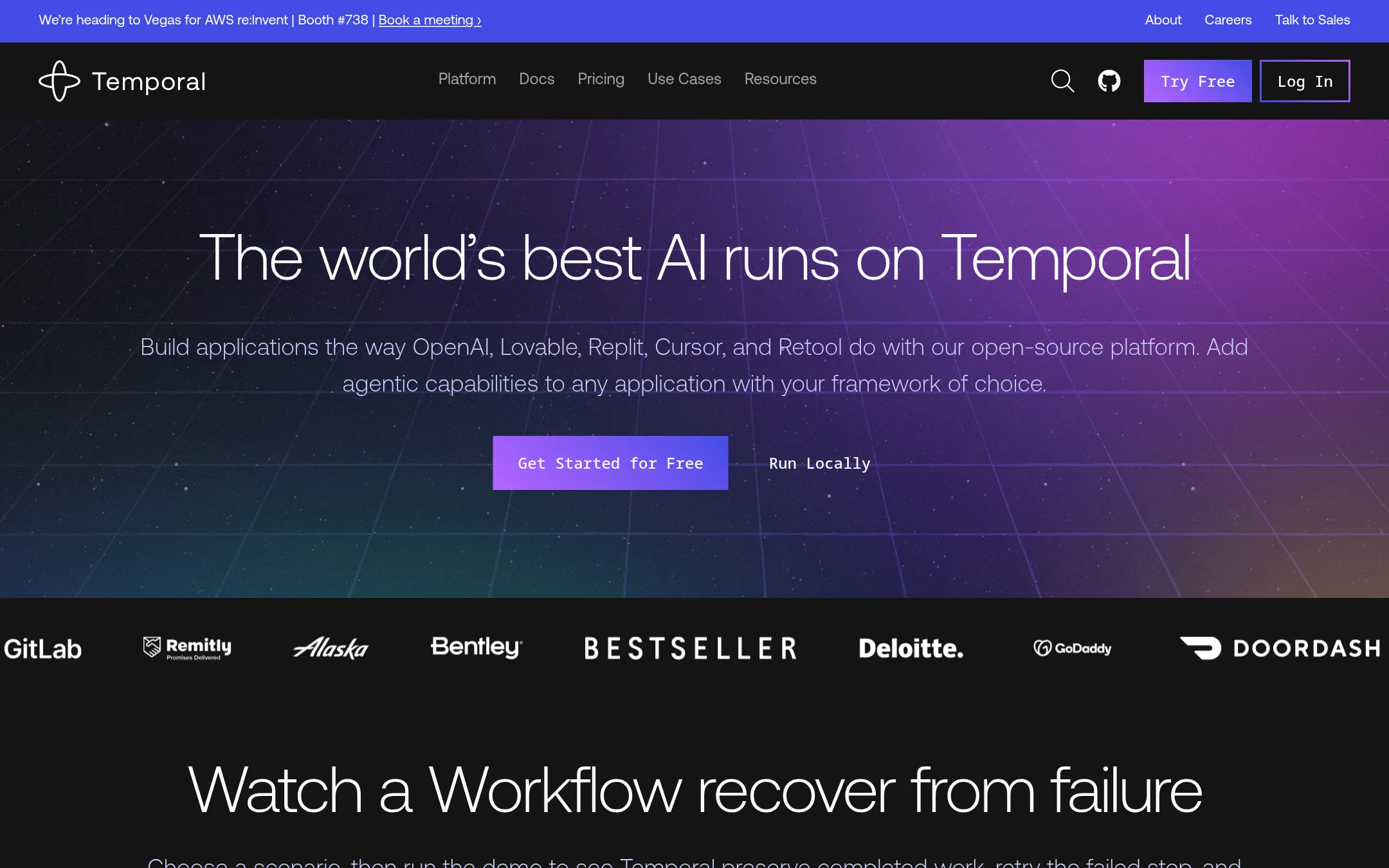
Temporal is an open-source durable execution platform. It captures workflow state at every step so code can resume exactly where it left off after crashes, retries or deploys. Teams pick it over Trigger.dev when they need a mature engine with SDKs across many languages (Go, Java, Python, TypeScript.NET, PHP, Ruby, Rust), long-running workflows that run for days or months, or a system they can host themselves under the MIT license.
Where it is strong
- Open source under MIT, and you can host it yourself or use Temporal Cloud
- SDKs for eight languages, including Go, Java, Python, TypeScript and .NET
- Workflows can run for months, with durable timers, schedules and Continue-As-New
Where it falls short
- Pricing is usage-based on actions and storage, so costs are harder to forecast than a flat plan
- Self-hosting and mental model shift from TypeScript background jobs can take real engineering effort
- Pricing:
- Temporal Cloud is pay-as-you-go starting at a free $150 in credits for 90 days, with no base monthly fee, $0.042 per GB-hour of active storage and $0.00105 per GB-hour of retained storage, and a Business support add-on at $500 per month or 10% of usage, whiche
- IFrom $99/mo
2.Inngest
Best for: Backend teams with existing TypeScript or Python services that want durable background jobs and agent workflows without moving to a new task format
- Pricing
- From $99/mo
- Category
- Other
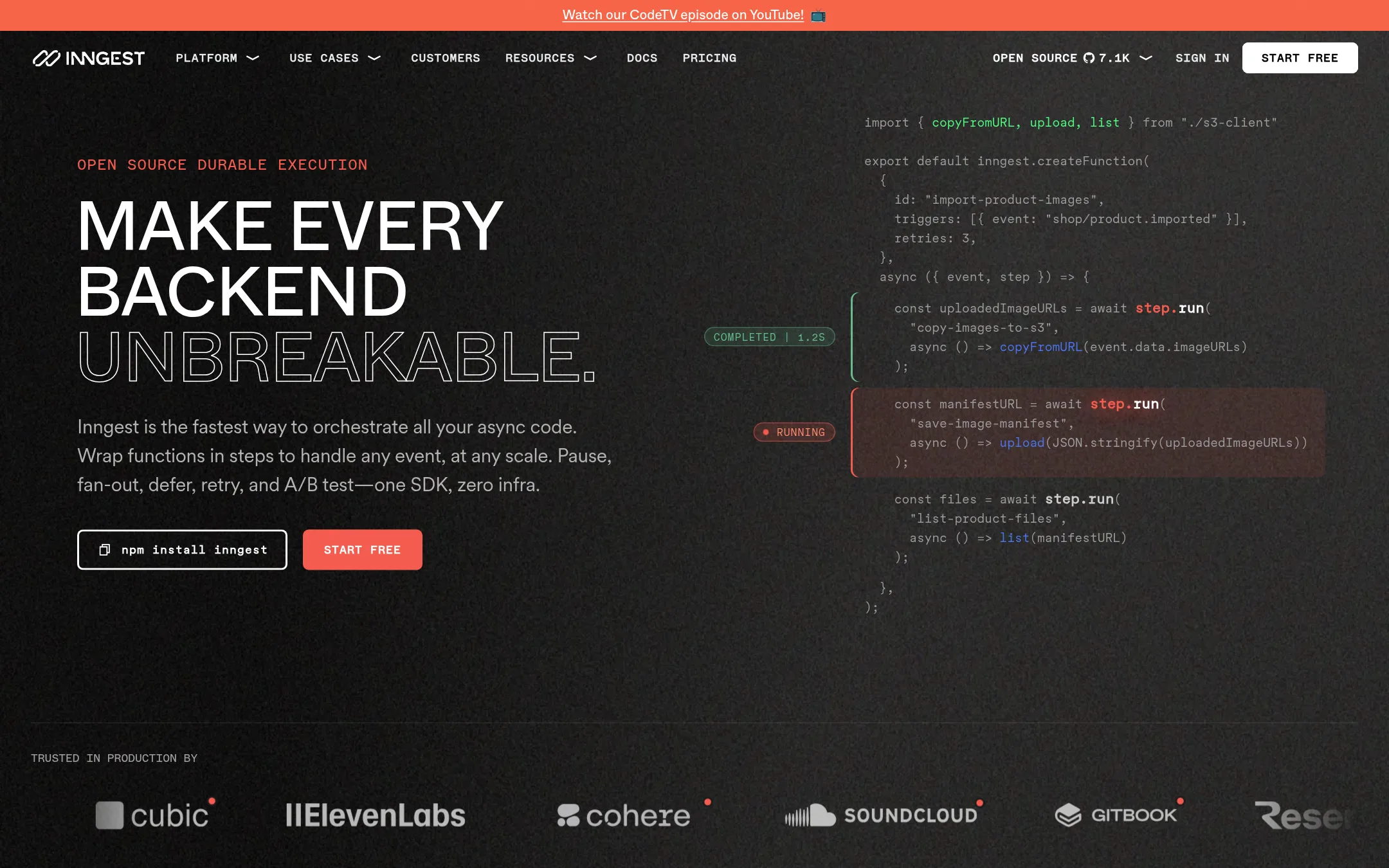
Inngest wraps existing functions in durable steps, so retries, waits and fan-out work on code you already have. Teams pick it over Trigger.dev when they want durability added to an existing codebase with a strong focus on flow control, concurrency per user, and built-in A/B testing or scoring of agent outputs.
Where it is strong
- Works by wrapping functions in steps, so existing code can be made durable with little rewriting
- Flow control handles per-user concurrency and fairness when many users compete for the same resource
- Built-in observability and scoring for comparing prompt or model variants on real traffic
Where it falls short
- Compute is billed through sandbox pricing per vCPU and RAM, which takes more work to estimate than Trigger.dev's per-second machine rates
- Trigger.dev's homepage highlights multi-region workers, static IPs and AWS PrivateLink, and the Inngest pages supplied here do not mention t
- Pricing:
- Pricing is not published as a single starting figure on the site. The Free plan is $0 per month with 50k executions and 5 seats, Pro starts at $99 per month, Business at $499 per month, and Enterprise is custom.
- RUsage-based, free tier
3.Restate
Best for: Backend teams building AI agents, workflows, or financial transaction flows that need low-overhead durable steps and the option to self-host.
- Pricing
- Usage-based, free tier
- Category
- Other
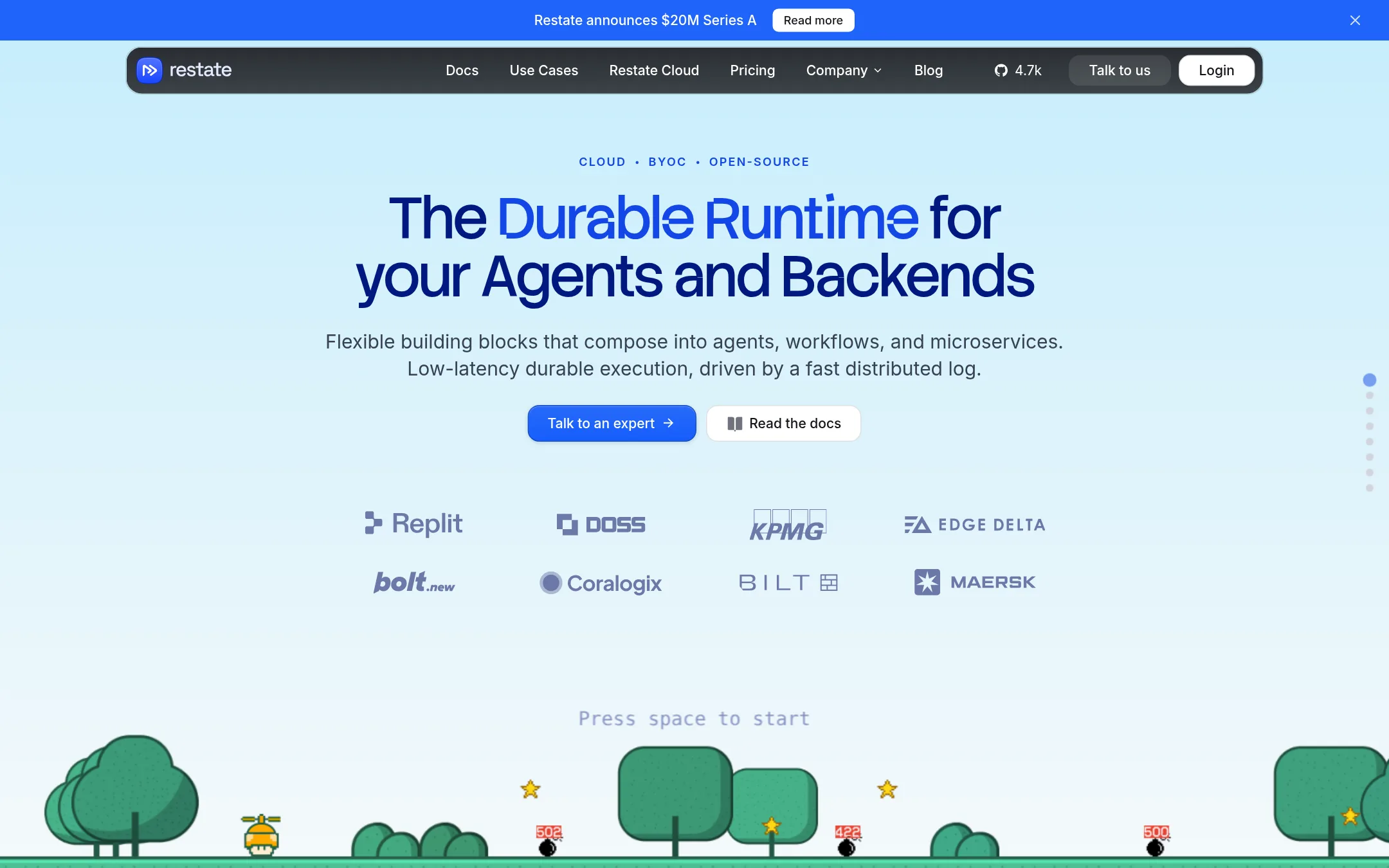
Restate is a durable execution runtime that ships as a single binary, with durable functions, workflows, and keyed state built in. Teams pick it over Trigger.dev when they want the runtime itself to hold durable state and queues, and when they want to self-host the full stack without running separate infrastructure.
Where it is strong
- Adds under 10ms overhead per durable action, according to the site.
- Open source and free to self-host as a single binary.
- Includes a dashboard to inspect journals and pause, cancel, kill, or restart executions.
Where it falls short
- Trigger.dev bundles task scheduling, queues, and a hosted compute platform, which Restate does not offer in the same way.
- Your code runs on your own infrastructure or Restate Cloud, so there is no equivalent to Trigger.dev's managed workers with per-second compu
- Pricing:
- Pricing is usage-based on durable actions, with a free tier that includes 100k actions per month, paid tiers billed per million actions above the included amount, and custom Enterprise pricing.
- UNot published
4.Upstash Kafka
Best for: Engineering teams that already use Kafka clients and want a serverless broker for event streams instead of running their own cluster
- Pricing
- Not published
- Category
- Other
Upstash Kafka is a managed Kafka service, which is a message streaming system rather than a task runner. Teams pick it over Trigger.dev when they need Kafka's topic-based event streaming or already build around Kafka clients, rather than durable TypeScript functions with retries and checkpointing.
Where it is strong
- Managed Kafka, so there is no broker cluster to run
- Serverless pricing model with no fixed infrastructure to size
- Same Upstash account as Redis, Vector and QStash if you use those too
Where it falls short
- Covers streaming and messaging, not durable task execution with retries and checkpoints
- Trigger.dev's built-in AI agent observability and LLM streaming to frontends are not part of this product
- Pricing:
- Pricing is not published on the site.
- Switching from Trigger.dev:
- Moving from Trigger.dev to Upstash Kafka means rebuilding your job logic as producers and consumers of topics, because the two products solve different problems.
- H$30/M runs after 1M fr
5.Hatchet
Best for: Engineering teams running Python or Go workers who want self-hosted or BYOC orchestration with DAG-style pipelines
- Pricing
- $30/M runs after 1M fr
- Category
- Developer Tools
Hatchet is a background task and workflow orchestration platform with native SDKs for TypeScript, Python and Go. It is MIT licensed and can be run locally with a single CLI command, which makes it a fit for teams that want to self-host or avoid a managed platform's compute billing. Teams would pick it over Trigger.dev when they want an open license with a simple local setup and per-run pricing rather than per-second compute charges.
Where it is strong
- MIT licensed and self-hostable, with local setup available through a single CLI command.
- Native SDKs for TypeScript, Python and Go, plus DAGs for data pipelines alongside durable tasks.
- Built-in OpenTelemetry collector, Prometheus metrics and a real-time web UI for monitoring.
Where it falls short
- Dedicated capacity, latency SLAs, SSO, RBAC, audit logs and HIPAA are listed only under custom plans.
- Data plane regions are listed as AWS Oregon, N. Virginia, Ireland and Sydney, with more regions on custom plans, so coverage is narrower tha
- Pricing:
- Hatchet includes 1M runs and 1M events free each month, then charges $30 per million runs and $5 per million events, with durable streams at $0.10 per GB, and the site does not state a regional pricing split.
- Switching from Trigger.dev:
- Hatchet publishes migration guides for Temporal and Celery, but the supplied facts do not include a guide for moving from Trigger.dev.
- WNot published
6.Windmill
Best for: Internal tools teams that want scripts, workflows and apps in one self-hostable platform
- Pricing
- Not published
- Category
- Developer Tools
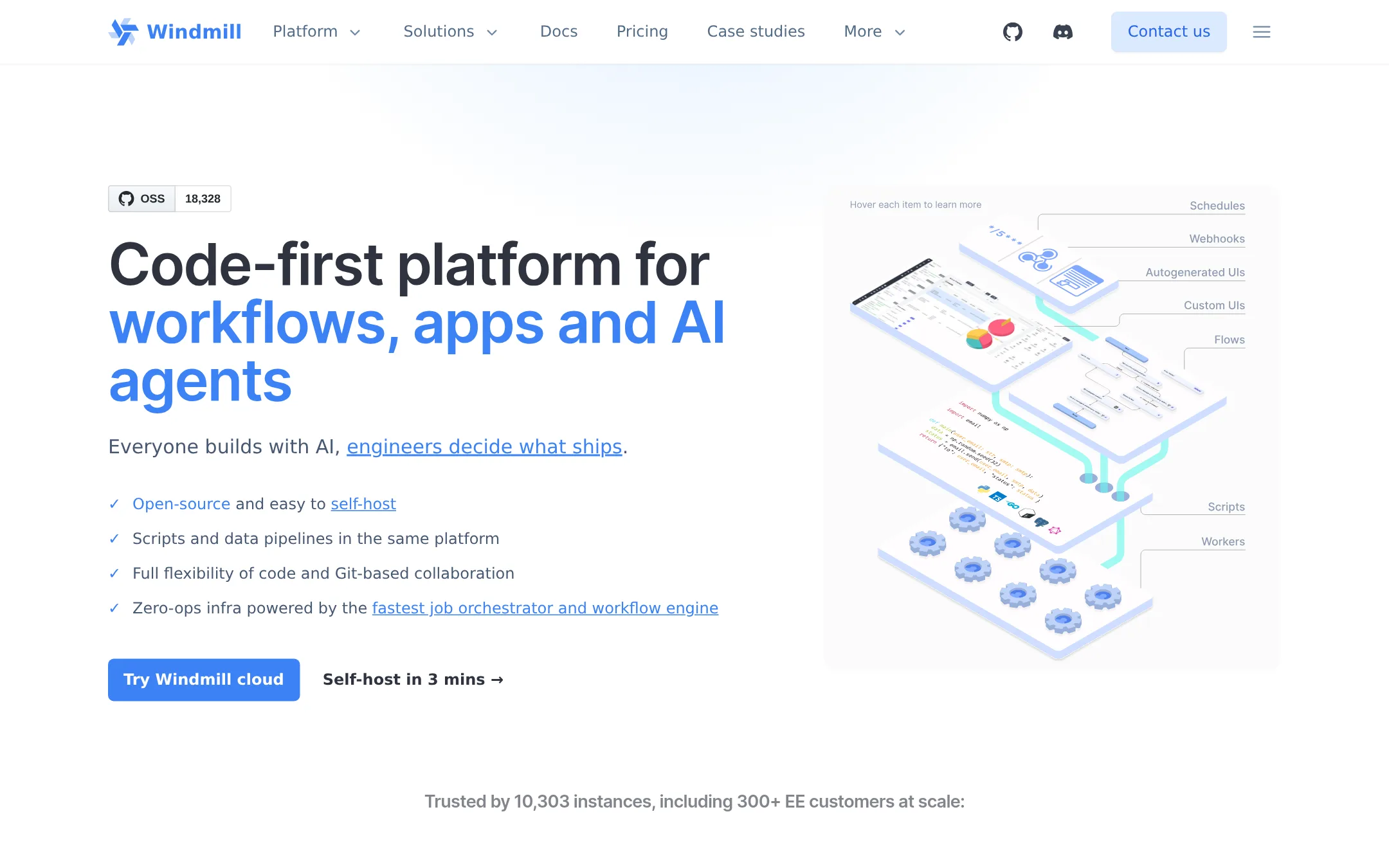
Windmill turns scripts in over 20 languages into API endpoints, workflows, internal apps and AI agents, and runs them on a self-hostable engine. Choose it over Trigger.dev when your team wants internal tools and apps built on the same runtime, with a UI for building them and per-team access controls, rather than a background job library for TypeScript.
Where it is strong
- Scripts in more than 20 languages become API endpoints and forms
- Staging and prod environments with forks, reviews and one-click rollback
- Self-hostable with Docker or Kubernetes, plus built-in run logs and OpenTelemetry traces
Where it falls short
- Its pricing page lists a free tier and Enterprise plans but the figures shown are not published in full here
- Trigger.dev's focus on durable long-running TypeScript tasks and AI agent streaming is not the core of Windmill's offering
- Pricing:
- Pricing is not published on the site.
See more comparisons in AI & Machine Learning alternatives.
FAQ
Questions about Trigger.dev alternatives
What is the main difference between Trigger.dev and Inngest?
Trigger.dev runs your task code on its managed workers and bills per second of compute plus per-run fees. Inngest adds durable steps around functions you already have, and its compute is billed through sandbox pricing per vCPU and RAM. Teams with existing services often find Inngest easier to adopt, while Trigger.dev suits teams starting new task code.
Can I self-host any of these alternatives?
Yes. Hatchet is MIT licensed and can be run locally with a single CLI command. Temporal is open source under MIT and can be self-hosted or used through Temporal Cloud. Restate is open source and ships as a single binary that you can self-host. Windmill is also self-hostable with Docker or Kubernetes.
Which alternative is best for AI agent workflows?
Restate is built for durable steps in AI agents, workflows, and financial transaction flows, and it can be self-hosted. Inngest includes built-in observability and scoring for comparing prompt or model variants. Trigger.dev itself highlights durable chat agents and LLM streaming to frontends, so compare those features directly against your agent needs.
How does pricing compare across these products?
Trigger.dev charges a per-second rate for the machine you choose plus a per-run fee, and its Free plan includes $5 of monthly credits. Hatchet includes 1M runs and 1M events free each month, then charges per million runs and events. Temporal Cloud is pay-as-you-go on storage and actions with no base fee. Pricing for Windmill is not published on the site, so you will need to request a quote.
Is Upstash Kafka a replacement for Trigger.dev?
Not directly. Upstash Kafka is a managed message streaming service rather than a task runner. It suits teams that need Kafka's topic-based event streaming or already build on Kafka clients. Teams that need durable TypeScript functions with retries and checkpointing should look at Inngest, Temporal, Restate, or Hatchet instead.
Last updated November 18, 2026.