
Trim alternatives
5 products compared · Updated November 26, 2026
The short answer
The three strongest alternatives to Trim are Ansys Cloud, COMSOL Multiphysics and Neural Concept. Ansys Cloud suits engineering teams in aerospace, automotive and energy that need validated multiphysics simulation for product design. COMSOL Multiphysics suits engineers and researchers who need to model coupled physics using CAD-linked, traditional simulation. Neural Concept suits automotive, aerospace and energy teams that want AI-assisted design exploration across product development.
Your shortlist, at a glance
Read the comparisons ↓ NVIDIA Base Command PlatformNot publishedAI teams and enterprises that need large-scale GPU compute for training and inference across data center workloads
- GGoogle DeepMindNot publishedTeams that need general-purpose frontier AI models or Google's research tools across many domains rather than physics simulation specifically
 Ansys CloudNot publishedEngineering teams in aerospace, automotive and energy that need validated multiphysics simulation for product design
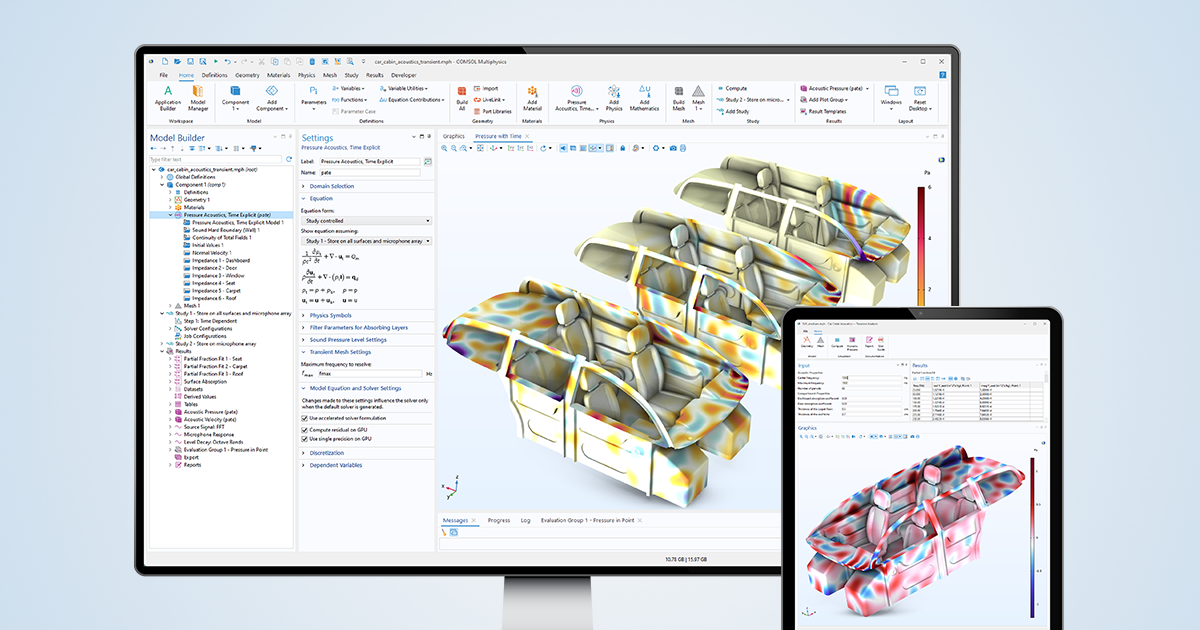 COMSOL MultiphysicsNot publishedEngineers and researchers who need to model coupled physics in designs, devices or processes using CAD-linked, traditional simulation.
- NNeural ConceptNot publishedAutomotive, aerospace and energy teams that want AI-assisted design exploration across product development
About Trim and its alternatives
Trim is building an AI model that simulates real-world physical systems as they evolve over time. Its site says the Trim Transformer scales linearly in computation time with respect to dimensions and grid size, where traditional physics simulations grow much more slowly to run. The site presents this speed as what makes latency-sensitive tasks, such as an autonomous vehicle choosing its path, and previously infeasible tasks, such as detecting gravitational waves, workable.
When comparing alternatives in this category, weigh the pricing structure first, since most of these vendors do not publish prices and you will need a direct quote. Check which physics domains and regions a tool covers, and whether it connects to the CAD, data center or design software your team already uses. Also look at the support and training offered, and at the contract terms, especially if you plan to adopt the tool across a product development cycle.
Explore the alternatives
- Not published
1.NVIDIA Base Command Platform
Best for: AI teams and enterprises that need large-scale GPU compute for training and inference across data center workloads
- Pricing
- Not published
- Category
- AI & Machine Learning
NVIDIA Base Command Platform is a managed way to run AI training and inference workloads on NVIDIA's data center hardware. The homepage material shows NVIDIA's focus on AI infrastructure, accelerated computing and simulation tools, so this is a fit for teams that already want GPU compute at scale. Choose it over Trim when you need general AI infrastructure rather than a foundation model for physical simulation.
Where it is strong
- Built on NVIDIA's data center GPU and networking stack
- Covers a wide range of workloads, from AI and HPC to simulation and digital twins
- Backed by a broad ecosystem of software libraries and open models
Where it falls short
- Pricing is not published, so cost comparison needs a direct quote
- It is an infrastructure platform, not a ready-made model for physics simulation like Trim
- Pricing:
- Pricing is not published on the site.
- GNot published
2.Google DeepMind
Best for: Teams that need general-purpose frontier AI models or Google's research tools across many domains rather than physics simulation specifically

- Pricing
- Not published
- Category
- Other
Google DeepMind is a Google research lab that builds frontier AI models across many areas, including the Gemini family, robotics, science, music, video and open models like Gemma. Someone would pick it over Trim if they want a broad, general-purpose AI lab and its models rather than a specialised foundation model for simulating physical systems over time. The site also lists Genie 4 as a world simulation product, which is the closest overlap with Trim's work.
Where it is strong
- Covers a wide range of model types, from language and image to robotics and science
- Offers open models through Gemma alongside its frontier Gemini models
- Has a named world simulation product in Genie 4 that overlaps with Trim's focus
Where it falls short
- The site does not describe physics simulation as a core product in the way Trim does
- Pricing and access terms are not stated on the page, so cost comparison is not possible from the site
- Pricing:
- Pricing is not published on the site.
- Not published
3.Ansys Cloud
Best for: Engineering teams in aerospace, automotive and energy that need validated multiphysics simulation for product design
- Pricing
- Not published
- Category
- Developer Tools
Ansys Cloud runs engineering simulation software in the cloud, covering multiphysics work such as fluids, structures and electronics. A team would pick it over Trim when they need a validated, established solver for a specific engineering product, rather than a learned model that approximates physics from simulation data.
Where it is strong
- Covers many physics domains, including fluids, structures, electronics and optics
- Offers free trials and free student access
- Includes consulting and training for teams adopting the software
Where it falls short
- Trim's pitch is faster inference than traditional solvers, which Ansys does not claim for its own products
- Positioned around established engineering workflows rather than a general physics foundation model
- Pricing:
- Pricing is not published on the site.
- Not published
4.COMSOL Multiphysics
Best for: Engineers and researchers who need to model coupled physics in designs, devices or processes using CAD-linked, traditional simulation.
- Pricing
- Not published
- Category
- Design & Creative
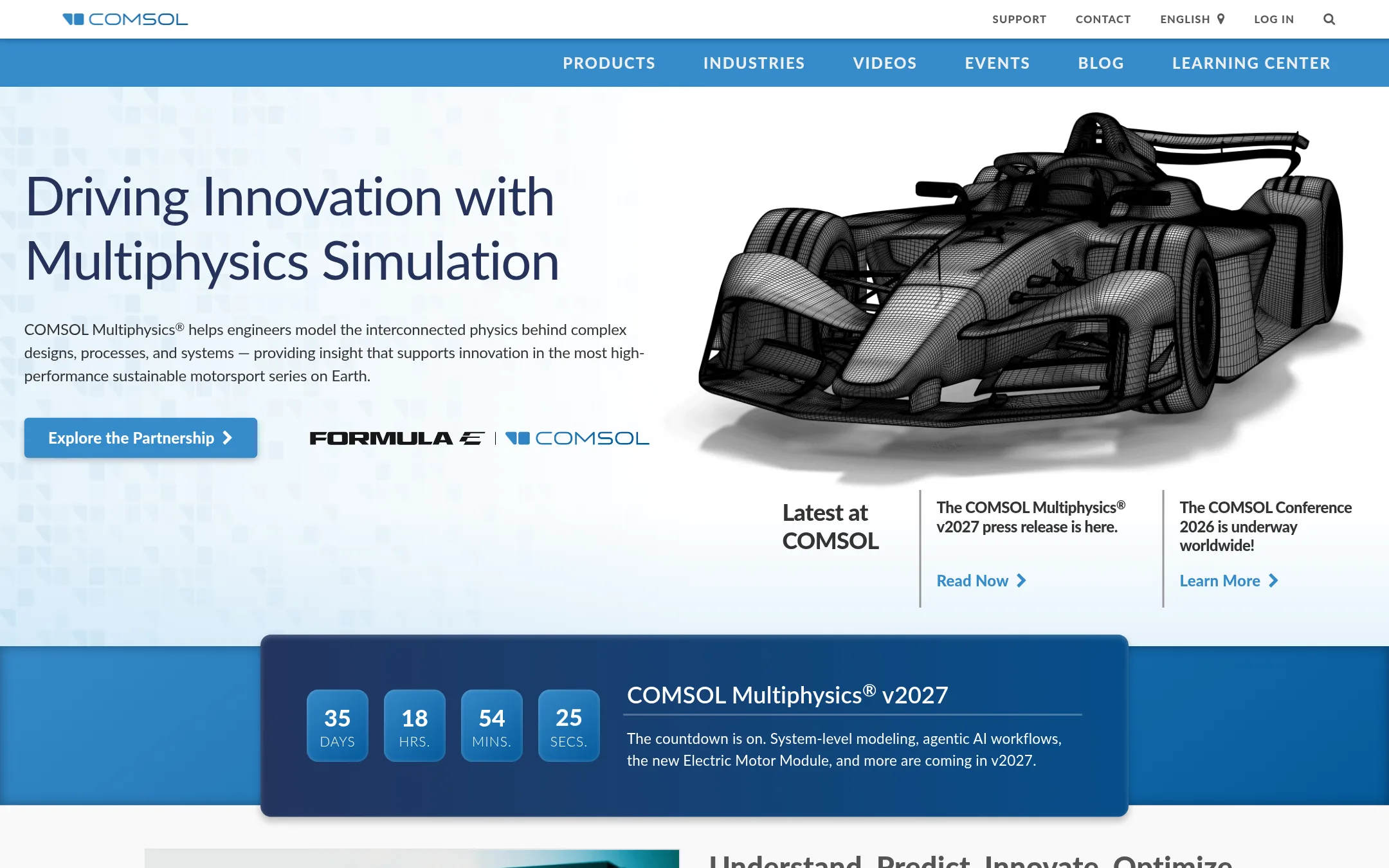
COMSOL Multiphysics is a simulation platform for engineers who need to model several physics phenomena together, such as electromagnetics, structural mechanics, fluid flow and heat transfer, in one model. Teams choose it over Trim when they need physics-based models built with specialized add-on modules and CAD links, rather than a learned model that approximates simulation output. It also lets you package simulations as standalone apps for others to run.
Where it is strong
- Covers many physics domains, from electromagnetics to chemical engineering, through add-on modules.
- Connects directly to CAD and third-party software through LiveLink products.
- Lets you deploy simulations as standalone apps with COMSOL Compiler and COMSOL Server.
Where it falls short
- It is a traditional simulation tool, so it does not offer the fast learned-model inference that Trim is built for.
- Add-on modules are needed for specialized physics, and the site does not publish their cost.
- Pricing:
- Pricing is not published on the site.
- NNot published
5.Neural Concept
Best for: Automotive, aerospace and energy teams that want AI-assisted design exploration across product development
- Pricing
- Not published
- Category
- Other
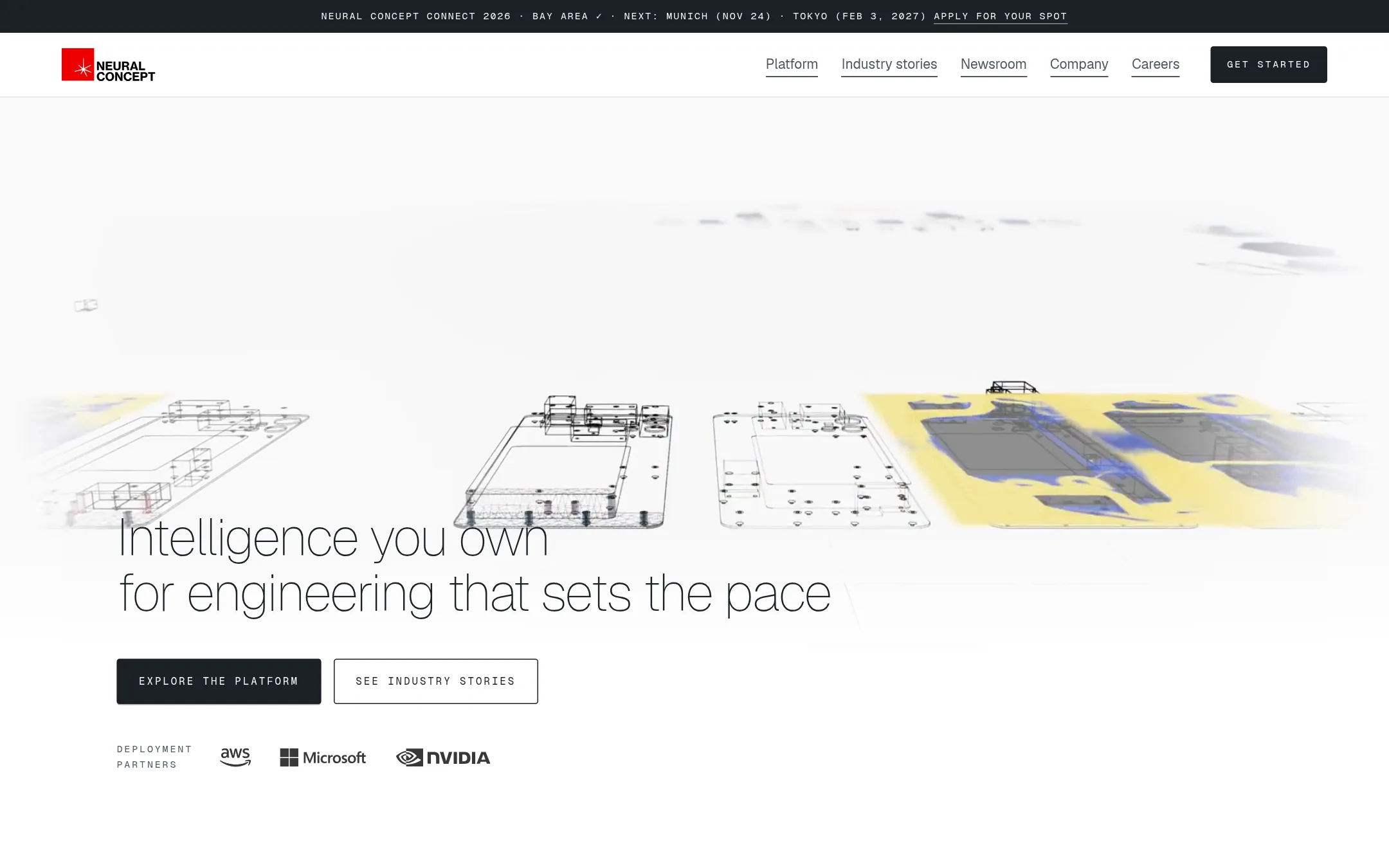
Neural Concept is an engineering AI platform for product development teams that design complex physical products. Its homepage cites automotive, aerospace and energy customers and focuses on agents working alongside human designers to explore more design options and reduce late redesigns. A team would pick it over Trim if they need engineering design workflows across the product development cycle rather than a foundation model that simulates physical systems over time.
Where it is strong
- Built around design exploration, with case studies on aerodynamic and EV component decisions
- Modular platform for human-agent collaboration across the full product development cycle
- Named deployments with large manufacturers, including GM, Airbus and JLR
Where it falls short
- Its focus is engineering design workflows, not a general model for simulating physical systems over time as Trim is
- The site does not publish pricing or describe access for smaller teams
- Pricing:
- Pricing is not published on the site.
See more comparisons in AI & Machine Learning alternatives.
FAQ
Questions about Trim alternatives
What does Trim do that a traditional simulation tool does not?
According to its site, Trim is building an AI model that generates how physical systems move forward in time, such as waves on a beach. Its Transformer scales linearly with dimensions and grid size, while traditional simulations take much longer as those grow. Trim trains its models on results from traditional simulations.
Which alternative should an engineering team pick if it needs validated simulation?
Ansys Cloud is the closest fit for that need, since it runs established engineering simulation for fluids, structures and electronics. COMSOL Multiphysics is another option for coupled physics modelled with CAD links. Both are traditional solvers rather than learned models, so they do not make the fast inference Trim claims.
Is there an alternative for teams that mainly need GPU compute for AI workloads?
NVIDIA Base Command Platform is built for teams that want large-scale GPU compute for training and inference on data center hardware. It is infrastructure rather than a ready-made model for physics simulation. Pricing is not published on the site, so you will need a quote to compare costs.
Which option fits a team designing automotive, aerospace or energy products?
Neural Concept is built for that work, using AI agents alongside human designers to explore more design options and reduce late redesigns. Its site names automotive, aerospace and energy customers. It focuses on design workflows rather than simulating physical systems over time, and it does not publish pricing.
Can I compare prices across these alternatives from their websites?
Not directly. None of the entries here publishes pricing on its site, so cost comparison requires a direct quote from each vendor. Ask each one about contract terms, what is included and what add-on modules or support cost extra.
Last updated November 26, 2026.