
Twine alternatives
8 products compared · Updated November 19, 2026
The short answer
The three strongest Twine alternatives are Ruby, Smith.ai and OpenPhone. Ruby suits businesses that want trained human receptionists answering calls and chats around the clock. Smith.ai suits law firms and practice-based businesses that need phone intake qualified and booked live. OpenPhone suits small teams that share one business number and want calls and texts in one shared inbox.
Your shortlist, at a glance
Read the comparisons ↓- DDialpadNot publishedSupport and sales teams of growing or enterprise size that need a contact center with call routing and analytics
- SSmith.aiFrom $300/mo, 30 callsLaw firms and other practice-based businesses that need phone intake qualified and booked live on the call
- RRubyFrom $250/moLaw firms, home service companies and small offices that want a live person answering calls around the clock
 AircallFrom $30/license/moSupport and sales teams that handle a lot of phone calls and need shared inboxes, call routing and CRM sync
- OOpenPhoneFrom $19/user/moSmall businesses with several staff who share one business phone number and want calls and texts in one shared inbox
 Intercom$0.99 per Fin outcomeSupport teams with existing customer volume that want an AI agent working inside a full helpdesk
 BraintrustVolume-based / CustomEnterprise talent and operations teams that need to hire at volume or automate internal workflows
WorkatoNot publishedEnterprise IT and operations teams that need to connect hundreds of internal apps and govern AI agents across the organization
About Twine and its alternatives
Twine is an AI text message receptionist for small service businesses. According to its site, it captures calls, texts, web forms, and chat in one inbox and responds to leads instantly with AI, including after hours. It is backed by Y Combinator and says it keeps the business owner as the main point of contact while the AI handles first replies.
When comparing alternatives in this category, weigh how each product prices its service, since some charge per seat, some per call or minute, and others only on contract. Check which regions and channels it covers, whether it connects to the CRM, calendar, and scheduling tools you already use, what support looks like, and what the contract terms require.
Explore the alternatives
- DNot published
1.Dialpad
Best for: Support and sales teams of growing or enterprise size that need a contact center with call routing and analytics
- Pricing
- Not published
- Category
- Other
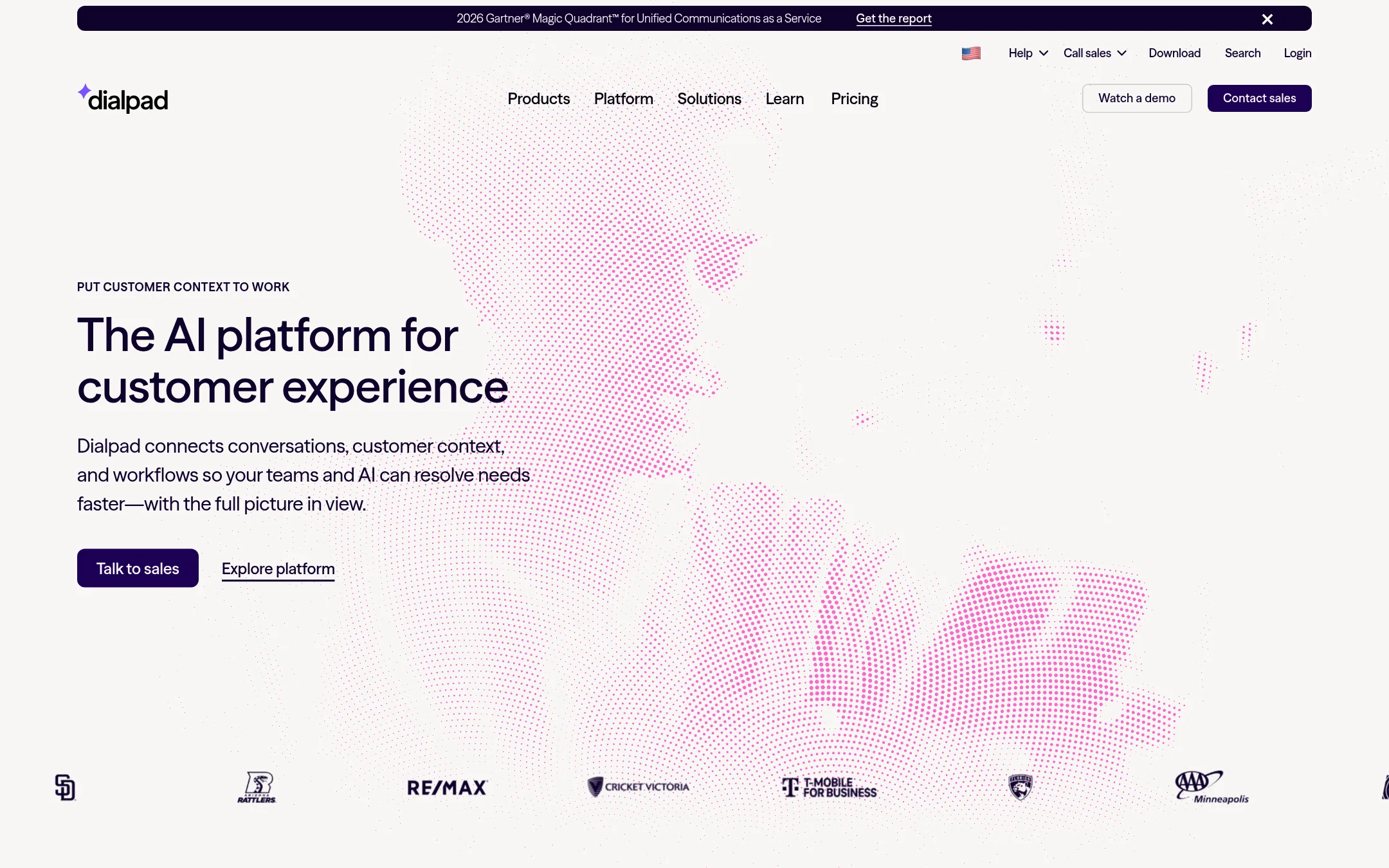
Dialpad is a business phone and contact center platform with AI features layered on top. It handles calls, video, messaging, and an AI voice and digital agent product, all connected to tools like Salesforce and Zendesk. Someone would pick it over Twine when they run a support or sales team that needs a full contact center with call routing, workforce management, and quality scoring, not just an automated first reply to leads.
Where it is strong
- Covers voice, video, messaging, and contact center in one platform
- Integrates with Salesforce, Zendesk, Microsoft Teams, and Google Workspace
- Includes real-time coaching, call transcripts, and quality management on higher tiers
Where it falls short
- Built for contact centers, which is heavier than a small service business needs
- Pricing is custom and tiered, so the cost is hard to estimate before a sales call
- Pricing:
- Pricing is not published on the site.
- SFrom $300/mo, 30 calls
2.Smith.ai
Best for: Law firms and other practice-based businesses that need phone intake qualified and booked live on the call
- Pricing
- From $300/mo, 30 calls
- Category
- Other
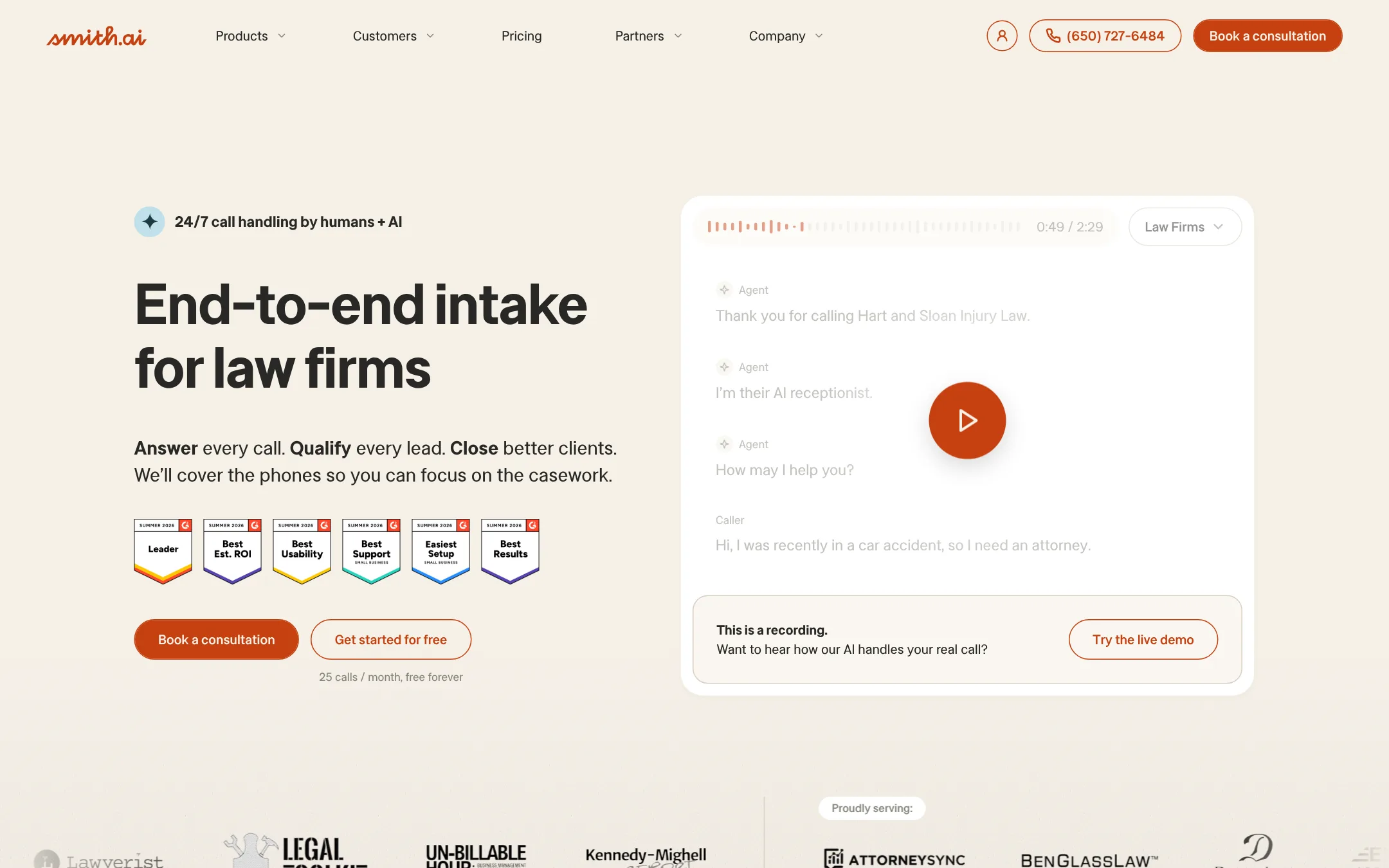
Smith.ai answers calls, qualifies leads, and books consultations on the phone, with live agents and AI working together. Firms pick it over Twine when most of their intake is phone calls that need human judgment or practice-specific questions, such as law firms that must screen conflicts and route urgent matters.
Where it is strong
- Answers calls 24/7 with live staff and can book consultations during the call
- Intake flows are built for specific practice areas such as personal injury and family law
- Connects to CRMs like Clio, HubSpot and Salesforce, and transfers urgent calls to your team
Where it falls short
- Pricing is per call, so costs rise with volume and add-ons
- Its pitch centers on phone calls, so it is less about messaging channels than Twine's text, web chat and form inbox
- Pricing:
- Plans run from $300 per month for 30 calls to $2,100 per month for 300 calls, with overage charges per call and add-ons such as CRM sync and appointment booking at $1.50 per call.
- RFrom $250/mo
3.Ruby
Best for: Law firms, home service companies and small offices that want a live person answering calls around the clock
- Pricing
- From $250/mo
- Category
- Other
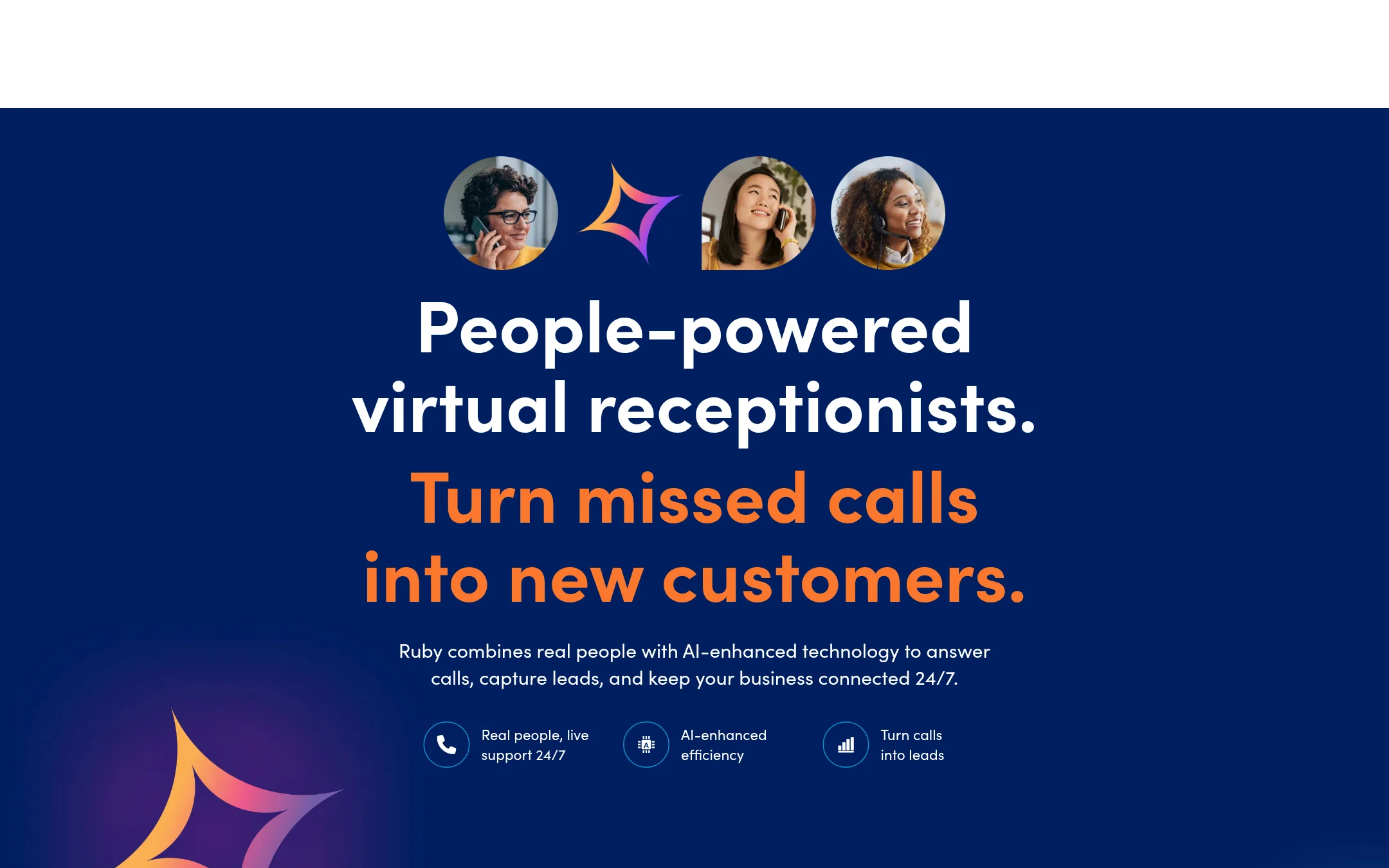
Ruby answers calls and live chat with real trained receptionists, 24/7, and can book appointments, collect payments and qualify leads. A business would pick it over Twine when it wants a human voice on the phone rather than an AI-first text response, or when callers expect to reach a person.
Where it is strong
- Real people answer calls and chats, with coverage on weekends and holidays
- Ruby reports answering in under 10 seconds on average
- Bilingual English and Spanish answering is available 24/7
Where it falls short
- Plans are priced by receptionist minutes, so heavy call volume raises the cost quickly
- Twine positions its AI as the first responder by text, which Ruby does not center its offer on
- Pricing:
- Ruby's bundled plans run from $250 per month for 100 receptionist minutes to $1,725 per month, with chat bundles from $115 for 10 chats, and Ruby says there are no hidden setup or activation fees.
- From $30/license/mo
4.Aircall
Best for: Support and sales teams that handle a lot of phone calls and need shared inboxes, call routing and CRM sync
- Pricing
- From $30/license/mo
- Category
- Customer Support
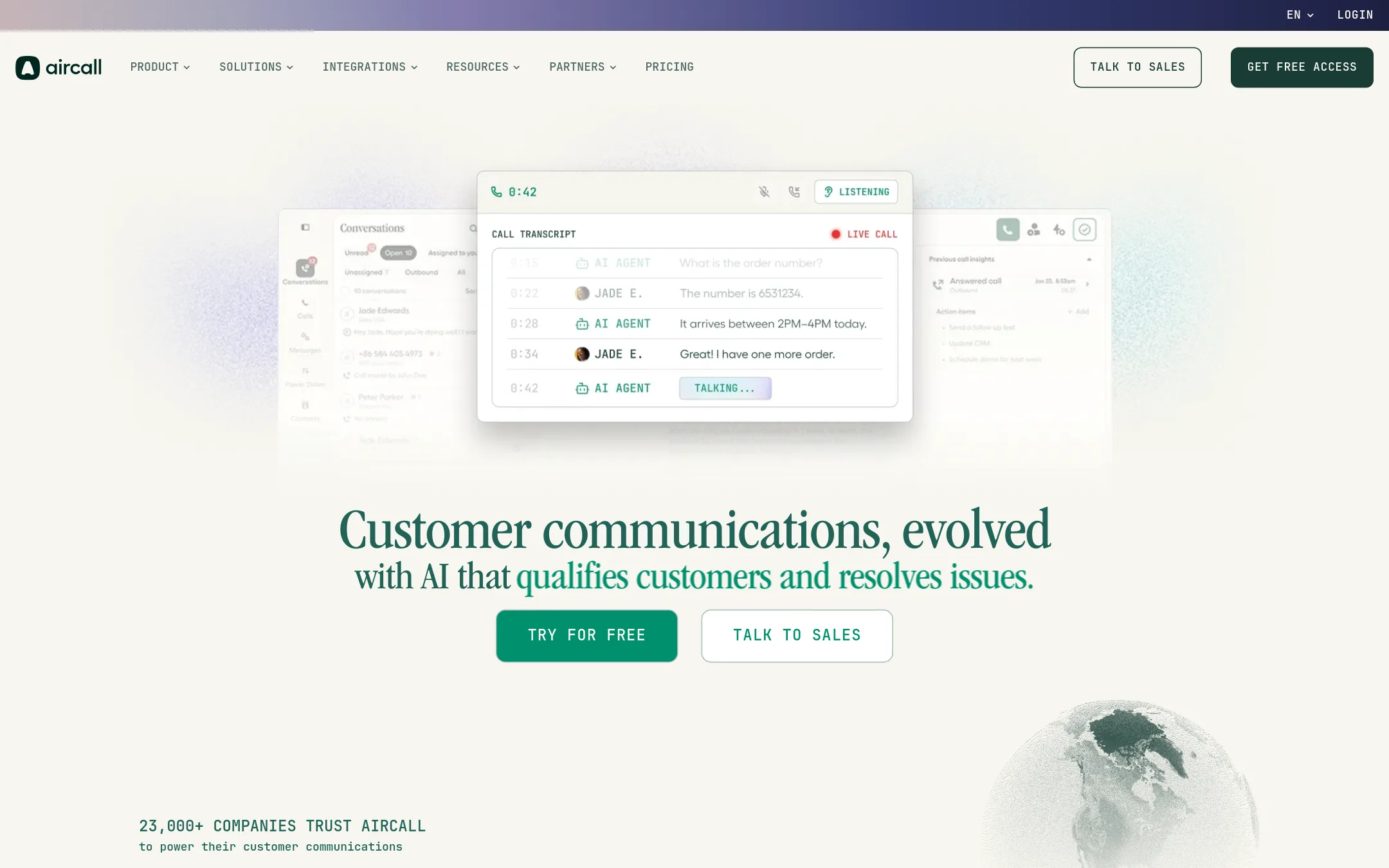
Aircall is a phone and customer communications platform with a shared inbox for calls and SMS, plus AI Voice Agents that answer calls and resolve routine requests. Someone would pick it over Twine when the work is mostly phone-based, the team already needs shared call handling with CRM and help desk sync, and they want AI that can take actions across connected systems during a call.
Where it is strong
- Shared inbox that keeps calls, SMS and messaging in one place, linked to CRM and help desk.
- AI Voice Agents can pull data and act across connected systems during a call, such as processing refunds or booking meetings.
- 250+ integrations with business tools, including HubSpot and Salesforce.
Where it falls short
- Its AI Voice Agents start at $99 per month on top of seat licenses, a larger commitment than a simple AI receptionist.
- SMS is available only in 14 countries and is domestic-only in most cases, which limits cross-border texting.
- Pricing:
- Pricing is published per license per month: Essentials at $30, Professional at $50, AI Voice Agents from $99 per month minimum, and Enterprise on custom quote, with 25% off for annual payment.
- OFrom $19/user/mo
5.OpenPhone
Best for: Small businesses with several staff who share one business phone number and want calls and texts in one shared inbox
- Pricing
- From $19/user/mo
- Category
- Other
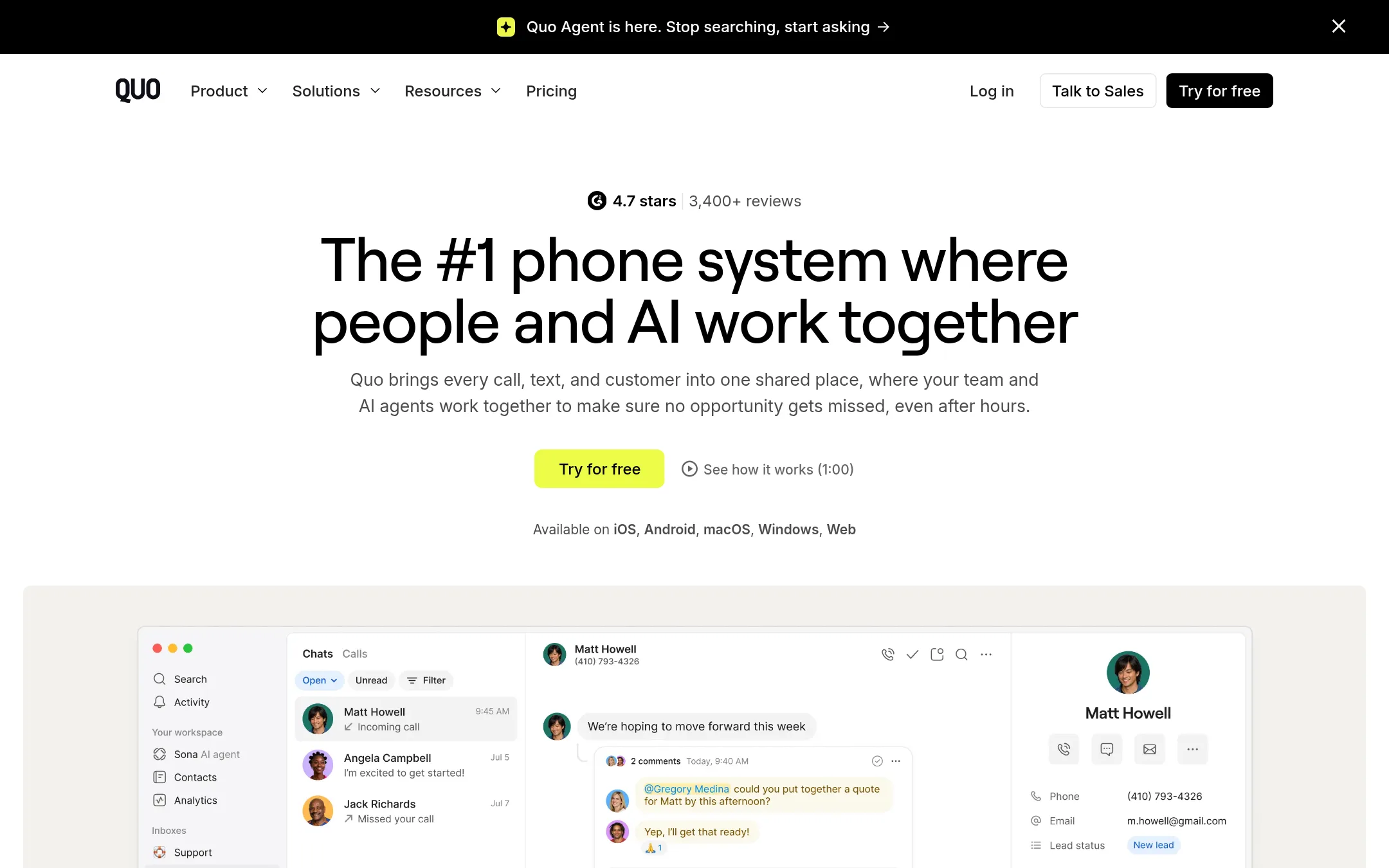
Quo, formerly OpenPhone, is a shared business phone system. Teams use one number for calls and texts, and an AI agent called Sona answers when staff can't. It suits businesses that already run calls and texts through several people and want one shared place for them. Pick it over Twine if the core need is a shared phone line for a team rather than an AI texting receptionist.
Where it is strong
- Shared number lets a whole team handle calls and texts from one line.
- Sona AI agent answers calls and texts when staff are unavailable.
- Call summaries and transcripts are generated automatically for recorded calls.
Where it falls short
- Pricing scales per user, so larger teams pay more per seat.
- International calling and messaging are billed per minute or message on top of the plan.
- Pricing:
- Plans are per user per month, from $19 to $60 billed annually on the page's standard tiers, with 1,000 automation credits included on every plan and calls and texts to US and Canadian numbers unlimited.
- Switching from Twine:
- Quo says it offers a free switch from other providers, with step-by-step guidance and priority support during the transfer.
- $0.99 per Fin outcome
6.Intercom
Best for: Support teams with existing customer volume that want an AI agent working inside a full helpdesk
- Pricing
- $0.99 per Fin outcome
- Category
- Customer Support
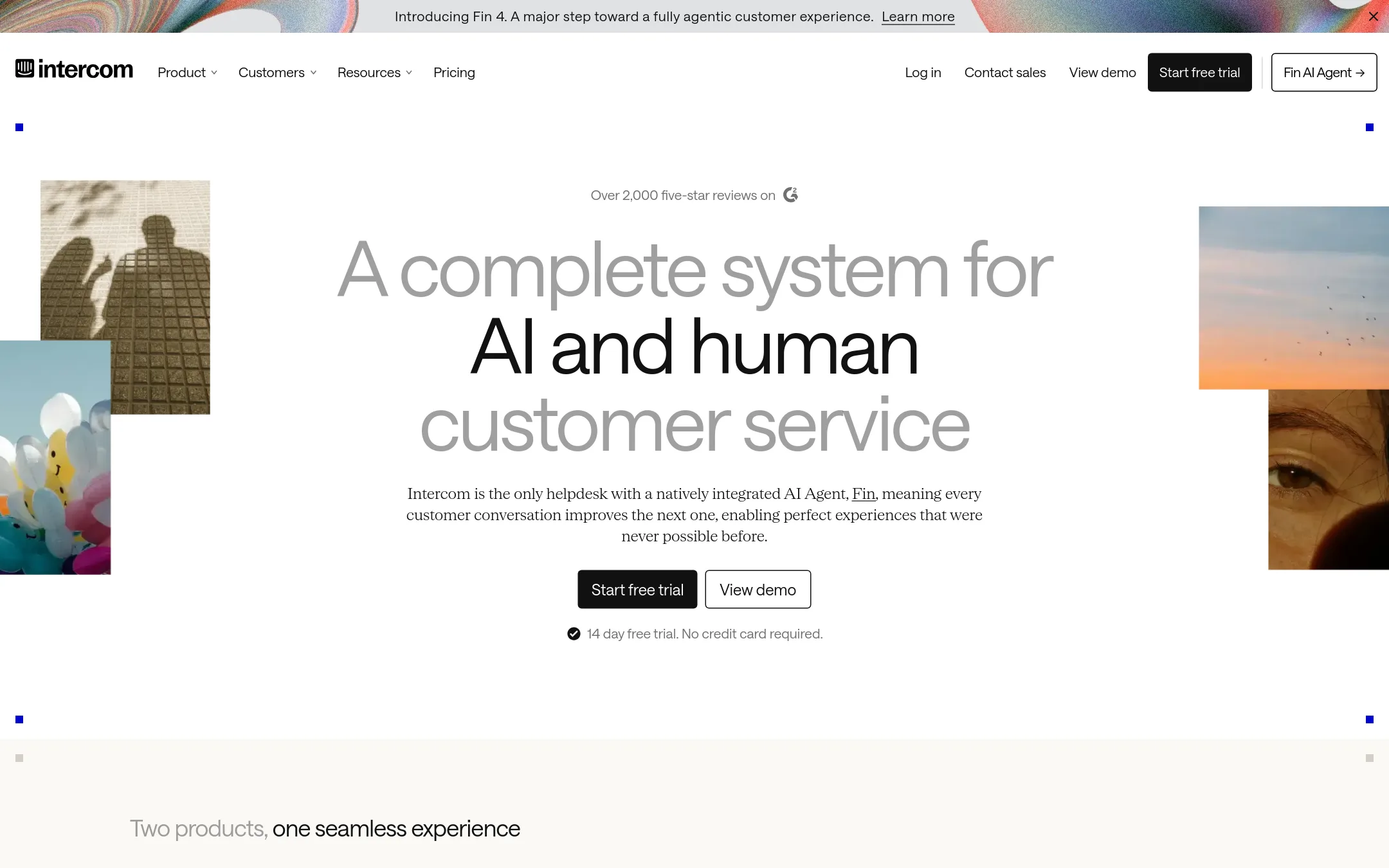
Intercom is a helpdesk with a built-in AI agent, Fin, that answers customer questions across email, live chat, and phone. It suits teams that already run a support operation and want AI to resolve routine tickets alongside human agents. Twine is aimed at small service businesses that mainly need to catch and answer leads, so a founder choosing between them is really choosing between support operations and lead intake.
Where it is strong
- Fin works with an existing helpdesk such as Salesforce, with no seat costs for the AI agent
- Covers email, live chat, phone and other channels in one shared inbox
- Fin is priced per resolved outcome, so cost follows the work it does
Where it falls short
- Costs come from several parts (seats, usage, add-ons), which makes the total harder to predict
- Built for support teams, so it is heavier than a receptionist for a small service business
- Pricing:
- Pricing is not published for Twine on the site, and Intercom charges per seat by plan (Essential, Advanced, Expert) plus usage, with Fin priced at $0.99 per outcome.
- Volume-based / Custom
7.Braintrust
Best for: Enterprise talent and operations teams that need to hire at volume or automate internal workflows
- Pricing
- Volume-based / Custom
- Category
- Other
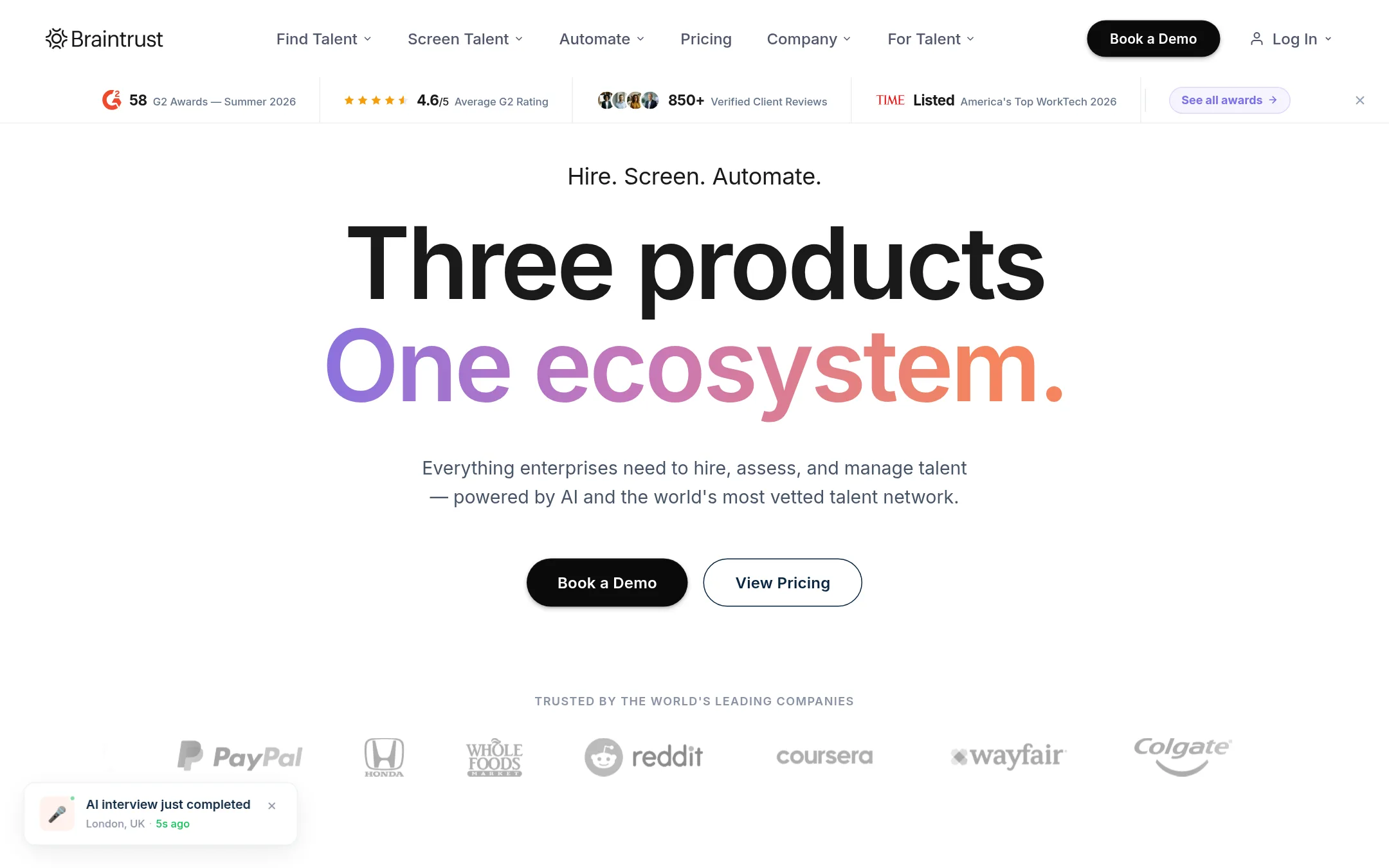
Braintrust is an enterprise talent network with three products: a marketplace of vetted contractors, an AI recruiter that runs structured interviews, and Nexus, which builds AI agents to automate operational work. Someone would pick it over Twine when their problem is hiring or back-office operations rather than answering leads from customers. Twine handles inbound customer communication for small service businesses, while Braintrust serves enterprise teams that need to fill roles or cut manual work.
Where it is strong
- AIR runs conversational voice interviews and has native integrations with Greenhouse, Lever and Workday.
- The talent marketplace covers engineering, design, product and operations across 100+ countries.
- Nexus is priced on savings, so you keep 75% of measured gains with no upfront development cost.
Where it falls short
- Pricing for AIR and the marketplace is not published as fixed numbers, so you need a sales conversation to get costs.
- It is built for enterprise teams, not a small service business handling its own customer calls and texts.
- Pricing:
- AIR is priced by interview volume with no public per-interview price, Talent Marketplace charges no platform fees for talent, and Nexus takes 25% of measured savings.
- Not published
8.Workato
Best for: Enterprise IT and operations teams that need to connect hundreds of internal apps and govern AI agents across the organization
- Pricing
- Not published
- Category
- AI & Machine Learning
Workato is an enterprise integration and automation platform that connects apps, data, and AI agents under one governance layer. Teams choose it over Twine when they need to wire many internal systems together and control AI agents at company scale, not when they want an AI receptionist that answers customer texts and calls for a small service business.
Where it is strong
- Connects to over 17,000 apps, APIs, databases, and MCP servers without custom infrastructure
- Central governance covering identity, approvals, security, observability, and cost controls for AI agents
- Built-in usage dashboard for tracking task consumption and concurrency
Where it falls short
- Built for enterprise integration, so it has no pre-built AI receptionist for answering customer calls and texts
- Pricing depends on contract terms and edition, which makes budgeting harder for a small business
- Pricing:
- Pricing is not published on the site. The pricing page lists four editions (Standard, Business MCP, Enterprise MCP, Workato ONE) with feature and concurrency details but no dollar figures, and says terms vary by contract.
See more comparisons in AI & Machine Learning alternatives.
FAQ
Questions about Twine alternatives
What is Twine best known for?
According to its site, Twine is an AI text message receptionist for small service businesses. It captures calls, texts, forms, and chat in one inbox and replies to leads instantly, including 24/7 after-hours coverage. It also offers voice AI and phone trees.
Which alternative is best if I want a human answering my calls?
Ruby is the entry built around that need. It uses trained receptionists to answer calls and live chat around the clock and can book appointments and qualify leads. Its plans are priced by receptionist minutes, so heavy call volume raises the cost quickly.
Which option suits a law firm or practice with complex phone intake?
Smith.ai is built for this case. It answers calls with live agents and AI working together, qualifies leads, and books consultations during the call. Its intake flows are shaped to specific practice areas and it connects to CRMs such as Clio.
Is there a cheaper option for a small team sharing one business number?
OpenPhone, now called Quo, is priced per user from $19 to $60 a month billed annually on its standard tiers, with 1,000 automation credits included on every plan. Its AI agent Sona answers when staff cannot, so it suits teams that share one line. Costs scale with the number of users.
How do I compare these tools when prices are not published?
Several entries, including Intercom's Fin pricing and Dialpad, do not publish full pricing on the site and rely on quotes or contract terms, so you will need a sales conversation to see costs. Ask each vendor for a total cost estimate based on your expected call, text, and seat volume, and compare it against what you pay now for missed-call losses.
Last updated November 19, 2026.