Typesense alternatives
12 products compared · Updated November 1, 2026
The short answer
For most teams, Meilisearch is the closest alternative to Typesense with hybrid AI retrieval and flexible cloud pricing. Algolia suits enterprises needing fully managed AI search with personalization and merchandising. Pinecone is best for AI teams focused on vector search at scale rather than typo-tolerant full-text search.
Your shortlist, at a glance
Read the comparisons ↓ AlgoliaFree, then usage-basedEnterprises and large e-commerce teams that need AI-driven search, personalization, and merchandising without managing infrastructure.
 MeilisearchNot publishedTeams that want a fast, developer-friendly search engine with hybrid AI retrieval and flexible cloud pricing.
 ElasticsearchCustom quoteEnterprises already invested in the Elastic stack that need search plus log analytics, security monitoring, or AI retrieval in one system.
- OOpenSearchNot publishedTeams that need a self-hosted search engine with integrated dashboards, log analytics, and security analytics, especially those migrating from Elasticsearch.
- WWeaviateFrom $45/moAI teams building production RAG or agent systems that need a dedicated vector database with built-in embedding generation and multi-tenancy.
- QQdrantFree tier. Custom quotTeams building AI-powered retrieval systems that need high-performance vector search with complex metadata filtering and hybrid dense/sparse search.
 PineconeFrom $20/mo flatTeams building AI-powered applications that need a managed vector database with automatic scaling and enterprise compliance.
 GitHub ProjectsFrom $4/user/moSoftware teams that want planning and tracking directly in their existing GitHub workflow, without adding a separate search engine.
 LucidworksSee websiteAI-Powered Enterprise Search Insights Platform
ParadeDBSee websiteThe transactional Elasticsearch alternative built on Postgres
 SolrNot publishedLarge enterprises with existing Java infrastructure that need a highly customizable, self-hosted search platform with advanced scaling and fault-tolerance requirements.
 SwiftypeNot publishedTeams that want a fully managed, secure site search without the operational overhead of self-hosting.
About Typesense and its alternatives
Typesense is an open-source, typo-tolerant search engine known for instant, in-memory search with features like vector search, semantic search, and built-in RAG. It positions itself as a faster, easier alternative to Algolia and Elasticsearch, with self-hosting or cloud options.
When comparing alternatives, weigh pricing structure (usage-based vs. flat vs. custom), deployment regions, integrations with your stack, support quality, and contract terms like minimums or sales-required quotes. Some tools are fully managed, others require self-hosting. Consider whether you need AI features like vector search or just fast full-text search.
Explore the alternatives
- Free, then usage-based
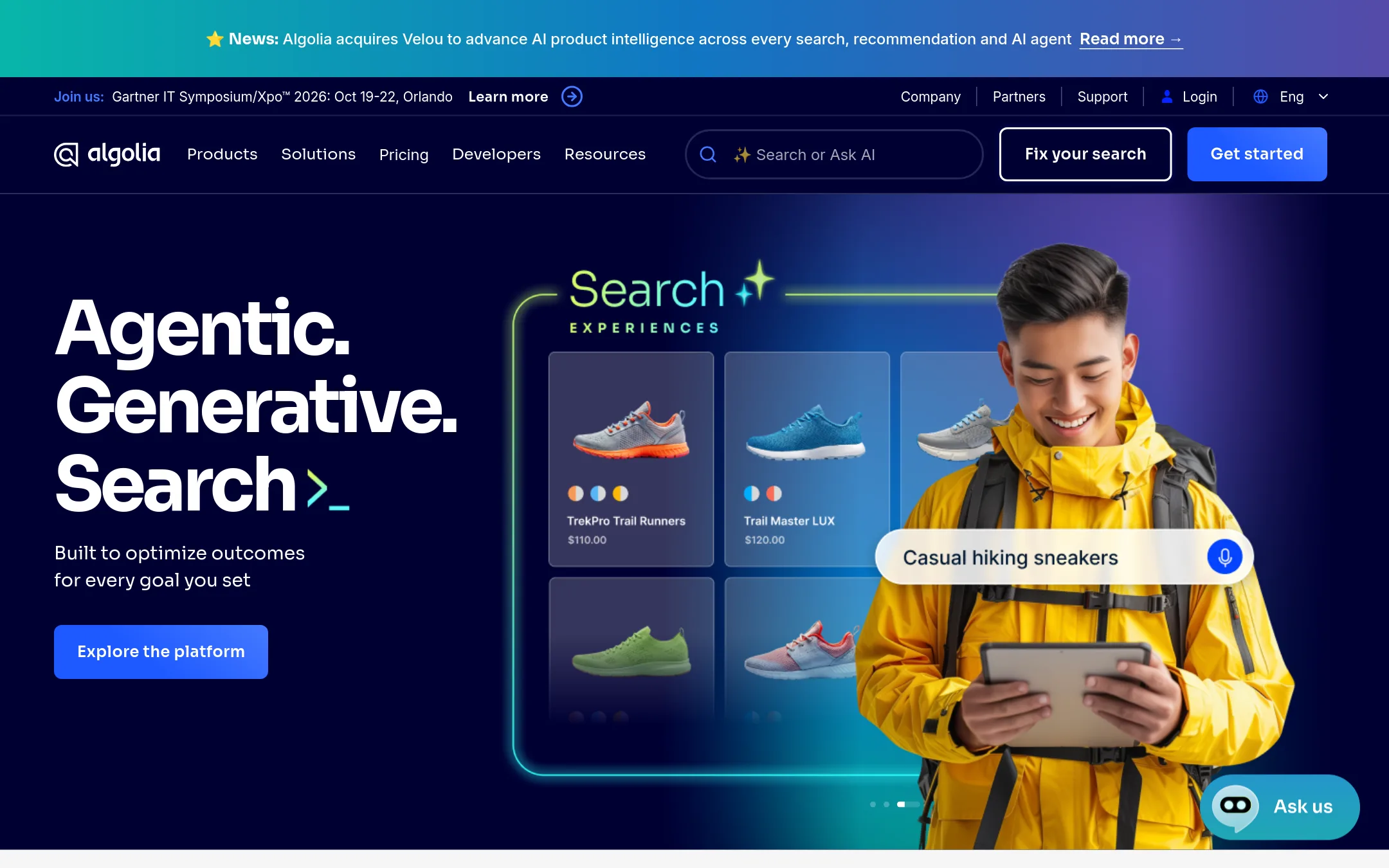
1.Algolia
Best for: Enterprises and large e-commerce teams that need AI-driven search, personalization, and merchandising without managing infrastructure.
- Pricing
- Free, then usage-based
- Category
- AI & Machine Learning
Algolia is a hosted, enterprise-grade search API with AI-powered features like neural search, personalization, and merchandising. Choose it over Typesense when you want a fully managed service with advanced AI capabilities and don't need to self-host.
Where it is strong
- AI-powered features like neural search and personalization
- Enterprise-grade support and 99.99% availability SLA
- Visual merchandising studio for non-engineers
Where it falls short
- Pricing can get expensive at scale compared to open-source options
- Less control over infrastructure since it's fully hosted
- Pricing:
- Free plan includes 10K search requests/month and 50K records. Paid plans start at $0/month for Grow, with usage-based pricing: $0.50 per additional 1K search requests and $0.40 per additional 1K records on higher tiers. Enterprise pricing is custom.
- Switching from Typesense:
- Moving from Typesense to Algolia involves reindexing your data and adapting queries to Algolia's API, but both support REST APIs and similar search features.
- Not published
2.Meilisearch
Best for: Teams that want a fast, developer-friendly search engine with hybrid AI retrieval and flexible cloud pricing.
- Pricing
- Not published
- Category
- AI & Machine Learning
Meilisearch is an open-source search engine that combines full-text, semantic, and hybrid search with vector storage. You would choose it over Typesense if you want a managed cloud with usage-based pricing and a strong focus on AI-powered retrieval, including multimodal search.
Where it is strong
- Search-as-you-type in under 50 ms
- Hybrid search combines full-text and semantic
- Multimodal search covers images, video, and audio
Where it falls short
- Pricing details are not transparent without using the estimator
- Enterprise features like sharding and personalization are not on lower tiers
- Pricing:
- Pricing is not published on the site. A cost estimator is available, and the 14-day free trial requires no credit card.
- Switching from Typesense:
- Migrating from Typesense involves reindexing your data and adapting queries to Meilisearch's API, but both are open-source and have similar REST interfaces.
- Custom quote
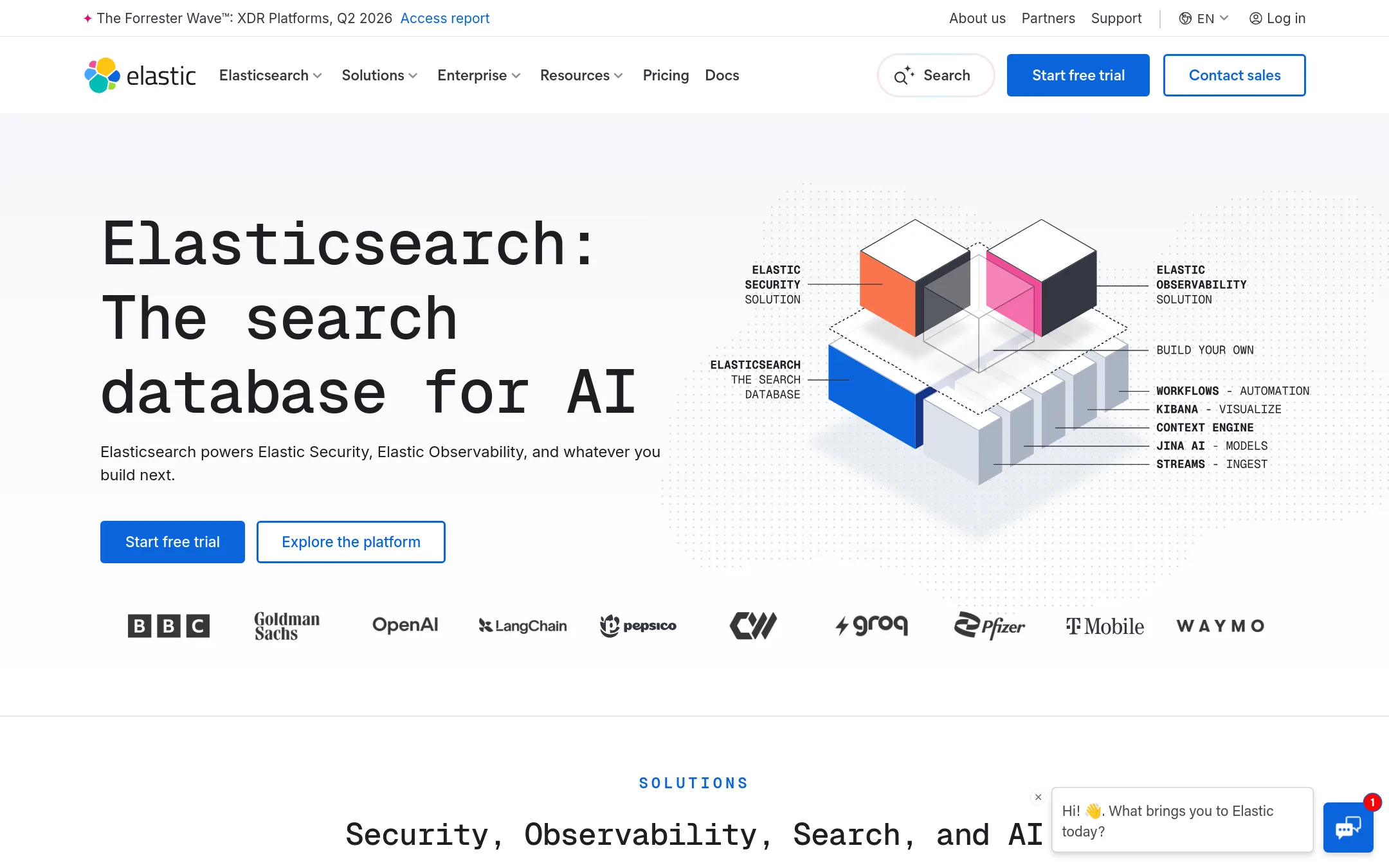
3.Elasticsearch
Best for: Enterprises already invested in the Elastic stack that need search plus log analytics, security monitoring, or AI retrieval in one system.
- Pricing
- Custom quote
- Category
- Analytics & Data
Elasticsearch is a general-purpose search database that also handles observability and security workloads. Choose it over Typesense when you need a broader data platform, not just site or app search, and you're comfortable with more operational complexity.
Where it is strong
- Mature ecosystem with broad integrations and tooling
- Handles search, observability, and security in one platform
- Flexible deployment: cloud, serverless, or self-managed
Where it falls short
- Heavier to operate and tune than Typesense
- Pricing requires contacting sales. No transparent self-serve numbers
- Pricing:
- Pricing is not published on the site. Elastic offers hosted, serverless, and self-managed options with trial access and sales contact.
- Switching from Typesense:
- Moving from Typesense to Elasticsearch means reworking your indexing and query APIs, since Elasticsearch uses a different data model and query DSL.
- ONot published
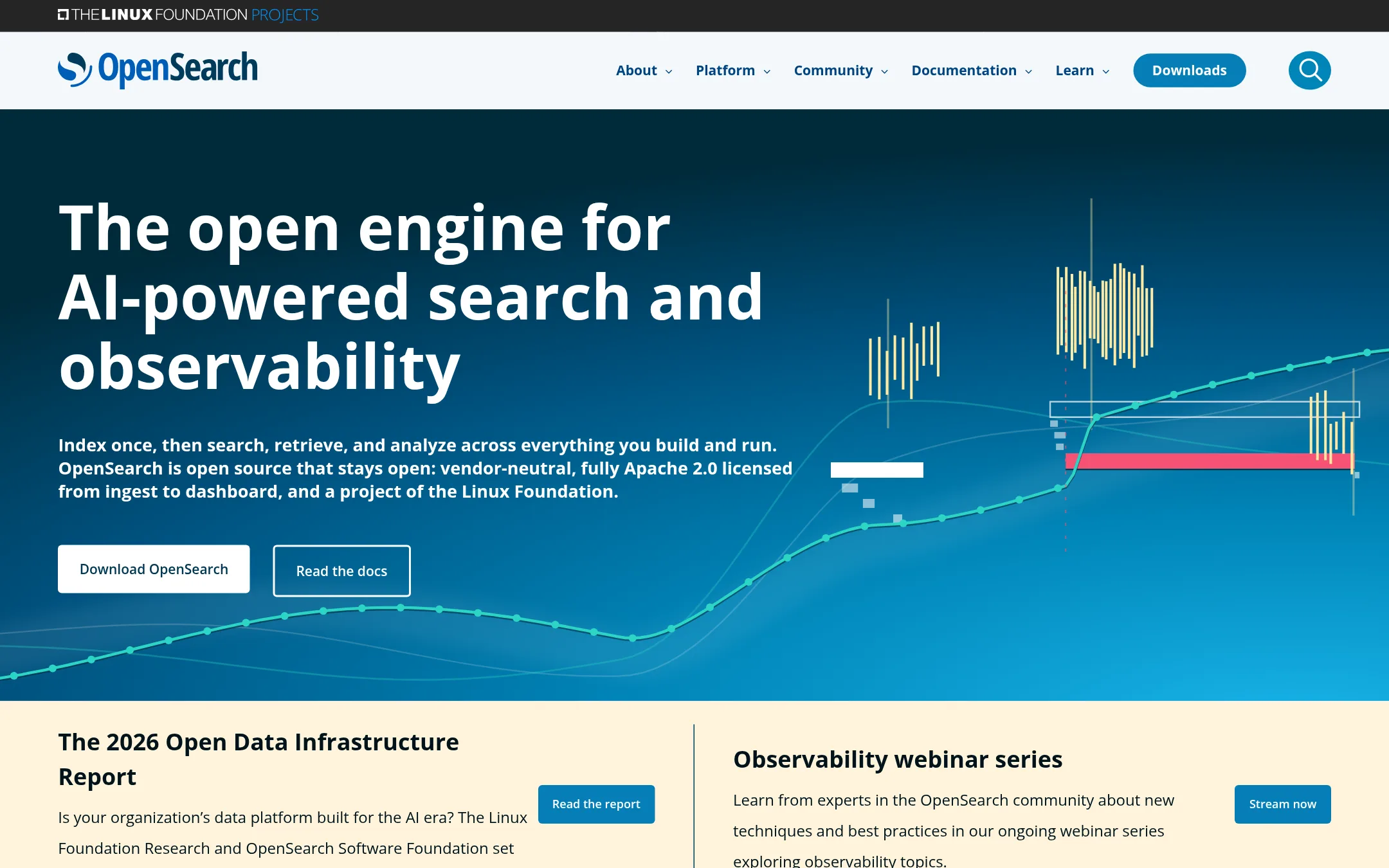
4.OpenSearch
Best for: Teams that need a self-hosted search engine with integrated dashboards, log analytics, and security analytics, especially those migrating from Elasticsearch.
- Pricing
- Not published
- Category
- Other
OpenSearch is a community-driven, Apache 2.0-licensed search and analytics suite built on Apache Lucene. It is a good fit if you already run the Elasticsearch stack and want a drop-in replacement, or if you need log analysis and observability alongside search, which Typesense does not cover.
Where it is strong
- Apache 2.0 license, fully open source and community-driven.
- Includes OpenSearch Dashboards for visualization and log analysis.
- Built-in security analytics and anomaly detection features.
Where it falls short
- Heavier and more complex to operate than Typesense's in-memory engine.
- No managed cloud offering from the project itself. You handle hosting or find a provider.
- Pricing:
- Pricing is not published on the site.
- Switching from Typesense:
- Moving from Typesense means reindexing your data and rewriting queries to match OpenSearch's API, which is similar to Elasticsearch rather than Typesense's simpler REST API.
- WFrom $45/mo
5.Weaviate
Best for: AI teams building production RAG or agent systems that need a dedicated vector database with built-in embedding generation and multi-tenancy.

- Pricing
- From $45/mo
- Category
- Other
Weaviate is an open-source AI-native database that combines vector search, RAG, and built-in embeddings. Choose it over Typesense when your primary need is a scalable vector database for AI applications like semantic search and agents, rather than a general-purpose typo-tolerant search engine.
Where it is strong
- Built-in embeddings and Query Agent reduce external pipeline work
- Billion-scale architecture with flexible index types and compression
- Multi-tenancy with up to 50K tenants in a single cluster
Where it falls short
- Free tier limited to 1 collection and 3 tenants
- Premium plan requires contacting sales for pricing
- Pricing:
- Free tier includes 100,000 objects, 1 GB memory, and 2,000 embedding requests per day. Flex starts at $45/month. Premium starts at $400/month with usage-based vector dimension and storage costs.
- Switching from Typesense:
- Moving from Typesense means re-architecting your search layer around vector indexes and RAG, since Weaviate is not a drop-in replacement for typo-tolerant keyword search.
- QFree tier. Custom quot
6.Qdrant
Best for: Teams building AI-powered retrieval systems that need high-performance vector search with complex metadata filtering and hybrid dense/sparse search.
- Pricing
- Free tier. Custom quot
- Category
- Other
Qdrant is a vector search engine written in Rust, focused on similarity search with metadata filters, hybrid search, and reranking. You would choose it over Typesense when your primary need is vector retrieval at scale with advanced filtering, rather than typo-tolerant full-text search.
Where it is strong
- Built in Rust with SIMD and custom storage for high performance.
- Native hybrid search (dense + sparse) with BM25, SPLADE++, and miniCOIL.
- One-stage filtering during HNSW traversal for low latency.
Where it falls short
- No built-in typo tolerance or full-text search features like Typesense.
- Pricing for production tiers is not transparent. Requires contacting sales.
- Pricing:
- Pricing is not published on the site. It offers a free tier (0.5 vCPU / 1GB RAM / 4GB disk) and paid Standard and Premium tiers with custom quotes.
- Switching from Typesense:
- Moving from Typesense to Qdrant means rearchitecting your search around vector embeddings and metadata filters, as Qdrant does not provide the same out-of-the-box typo-tolerant keyword search.
- From $20/mo flat
7.Pinecone
Best for: Teams building AI-powered applications that need a managed vector database with automatic scaling and enterprise compliance.
- Pricing
- From $20/mo flat
- Category
- AI & Machine Learning
Pinecone is a fully managed vector database built specifically for AI workloads like semantic search, RAG, and agent knowledge. You would choose it over Typesense when your primary need is vector search at scale with automatic indexing and managed infrastructure, rather than a general-purpose typo-tolerant search engine.
Where it is strong
- Fully managed vector database with automatic indexing and scaling
- Sub-100ms write acknowledgment and consistent query latency at scale
- SOC 2 Type II, HIPAA, GDPR, and ISO 27001 certified
Where it falls short
- No built-in typo tolerance or fuzzy search like Typesense
- Pricing has a monthly minimum on paid plans, which may be overkill for small projects
- Pricing:
- Pricing starts free for the Starter plan, then $20/month flat for Builder, $50/month minimum usage for Standard, and $500/month minimum for Enterprise, with pay-as-you-go beyond minimums.
- Switching from Typesense:
- Moving from Typesense to Pinecone requires rearchitecting your search stack, as Pinecone is a vector database without Typesense's full-text search features.
- From $4/user/mo
8.GitHub Projects
Best for: Software teams that want planning and tracking directly in their existing GitHub workflow, without adding a separate search engine.
- Pricing
- From $4/user/mo
- Category
- Productivity & Project Management
GitHub Projects is a project management layer inside GitHub, built for teams that already live in pull requests and issues. You would choose it over Typesense when your priority is tracking software work next to the code, not building a search experience for end users.
Where it is strong
- Tight integration with pull requests, issues, and code review
- Free tier includes unlimited repositories and 2,000 CI/CD minutes
- Enterprise plan includes Copilot and advanced security features
Where it falls short
- Not a search engine. No typo tolerance, faceting, or vector search
- Project management features are basic compared to dedicated tools like Jira
- Pricing:
- Free for individuals and organizations. Team is $4 per user per month. Enterprise is $21 per user per month.
- See website
9.Lucidworks
E-commerce
AI-Powered Enterprise Search Insights Platform
- See website
10.ParadeDB
Analytics & Data
The transactional Elasticsearch alternative built on Postgres
- Not published
11.Solr
Best for: Large enterprises with existing Java infrastructure that need a highly customizable, self-hosted search platform with advanced scaling and fault-tolerance requirements.
- Pricing
- Not published
- Category
- AI & Machine Learning
Solr is a mature, open-source search platform built on Apache Lucene, offering full-text, vector, and geospatial search with distributed indexing and fault tolerance. Choose it over Typesense when you need a battle-tested, self-hosted solution with deep enterprise features and are willing to manage more operational complexity.
Where it is strong
- Proven at massive scale with distributed indexing and replication
- Hundreds of features including geospatial and vector search
- Backed by the Apache Software Foundation with strong community support
Where it falls short
- Steeper learning curve and more complex setup than Typesense
- Requires more operational effort for tuning and maintenance
- Pricing:
- Pricing is not published on the site.
- Switching from Typesense:
- Moving from Typesense to Solr means reimplementing your search schema and queries, as the APIs and data models differ significantly.
- Not published
12.Swiftype
Best for: Teams that want a fully managed, secure site search without the operational overhead of self-hosting.
- Pricing
- Not published
- Category
- AI & Machine Learning
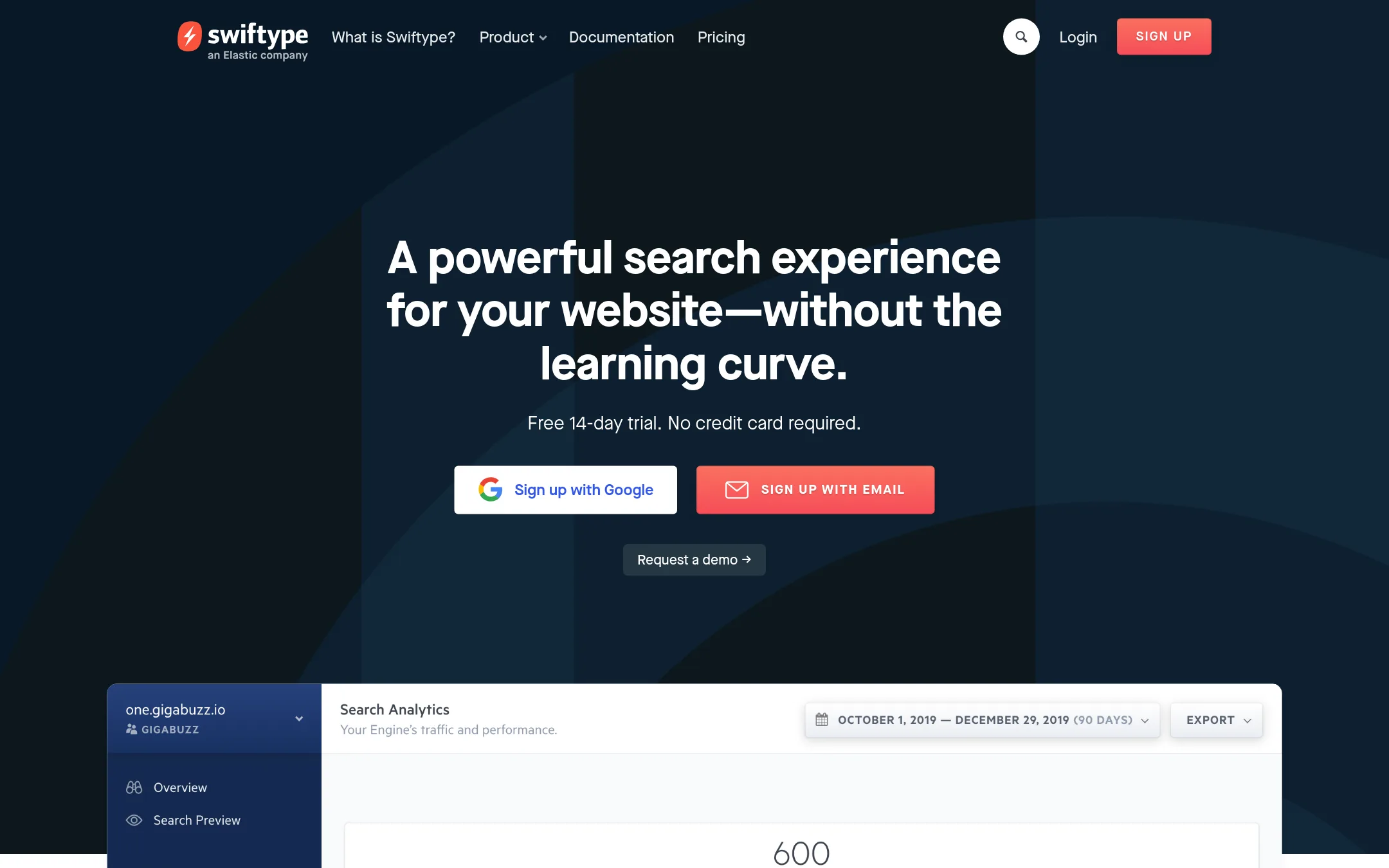
Swiftype is a cloud-based search platform for websites and applications, with a focus on security and compliance. Choose it over Typesense if you need a managed service with SOC 2 compliance and don't want to self-host or manage infrastructure.
Where it is strong
- SOC 2 compliance built in
- Unlimited users on all plans
- Includes PDF/document indexing on higher tiers
Where it falls short
- No transparent pricing on the site
- Less developer flexibility than Typesense's open-source API
- Pricing:
- Pricing is not published on the site.
See more comparisons in AI & Machine Learning alternatives.
FAQ
Questions about Typesense alternatives
What is the main difference between Typesense and Meilisearch?
Both are open-source, typo-tolerant search engines. Meilisearch offers hybrid search combining full-text and semantic, plus multimodal search for images, video, and audio. Typesense emphasizes in-memory speed and a broader feature set including federated search and merchandising.
Which alternative is best for a small team with limited budget?
Meilisearch offers a 14-day free trial and usage-based pricing, though details require an estimator. Algolia has a free plan with 10K search requests and 50K records. Typesense itself is open-source and can be self-hosted, which may be the cheapest option.
Which tool is best for AI-powered vector search?
Pinecone is a fully managed vector database built for AI workloads like semantic search and RAG. Weaviate and Qdrant are also strong options with built-in embeddings and hybrid search. Typesense includes vector search but is not a dedicated vector database.
Are there any alternatives with transparent pricing?
Algolia publishes a free plan and usage-based pricing for paid tiers. Pinecone lists flat monthly prices starting at $20 for Builder. Weaviate has a free tier and starts at $45/month for Flex. Others like Elasticsearch, Coveo, and Solr do not publish pricing.
Which alternative is easiest to migrate to from Typesense?
Meilisearch is the closest in terms of developer experience and open-source nature, so migration may be straightforward. Algolia offers migration support if you spend over $1,000/month. For self-hosted teams, OpenSearch or Solr are options but require more operational effort.
Last updated November 1, 2026.