
Unbound alternatives
6 products compared · Updated November 21, 2026
The short answer
The three strongest alternatives to Unbound are Lakera Guard, Pillar Security and Noma Security. Lakera Guard suits engineering teams shipping LLM-powered products that need real-time protection against prompt attacks and data leakage. Pillar Security suits security teams at larger organizations that need to discover, red-team and guardrail AI agents in production. Noma Security suits enterprise security teams that need runtime control over agents across endpoint, SaaS and cloud environments.
Your shortlist, at a glance
Read the comparisons ↓- LLakera Guard$0 Community, quote EnEngineering teams shipping LLM-powered products that need real-time prompt attack and data leakage protection
- PPrompt SecurityNot publishedSecurity teams that want a broad AI security program covering general AI use, not only coding agents
- PProtect AINot publishedSecurity teams already on Palo Alto Networks that need to govern AI apps, agents and models across the enterprise
- HHiddenLayerNot publishedSecurity teams in regulated industries like finance or US federal agencies that need to protect models and AI applications from adversarial attacks
- PPillar SecurityNot publishedSecurity teams at larger organizations that need to discover, red-team and guardrail AI agents across their production environment.
- NNoma SecurityNot publishedEnterprise security teams that need runtime control over agents across endpoint, SaaS and cloud environments
About Unbound and its alternatives
Unbound is an AI governance platform for coding agents. According to its site, it is known for helping engineering teams get better results from agents, tracking agent spend against shipped work, discovering the agents and MCP servers on a fleet, and stopping risky actions before they run.
When comparing alternatives in this category, weigh the pricing structure first, since some vendors publish plans and others only offer quotes. Check which regions and deployment options are available, whether the tool covers developer coding agents or AI applications in production, which integrations it offers with your existing stack, what support levels come with each plan, and what the contract terms require.
Explore the alternatives
- L$0 Community, quote En
1.Lakera Guard
Best for: Engineering teams shipping LLM-powered products that need real-time prompt attack and data leakage protection
- Pricing
- $0 Community, quote En
- Category
- Other
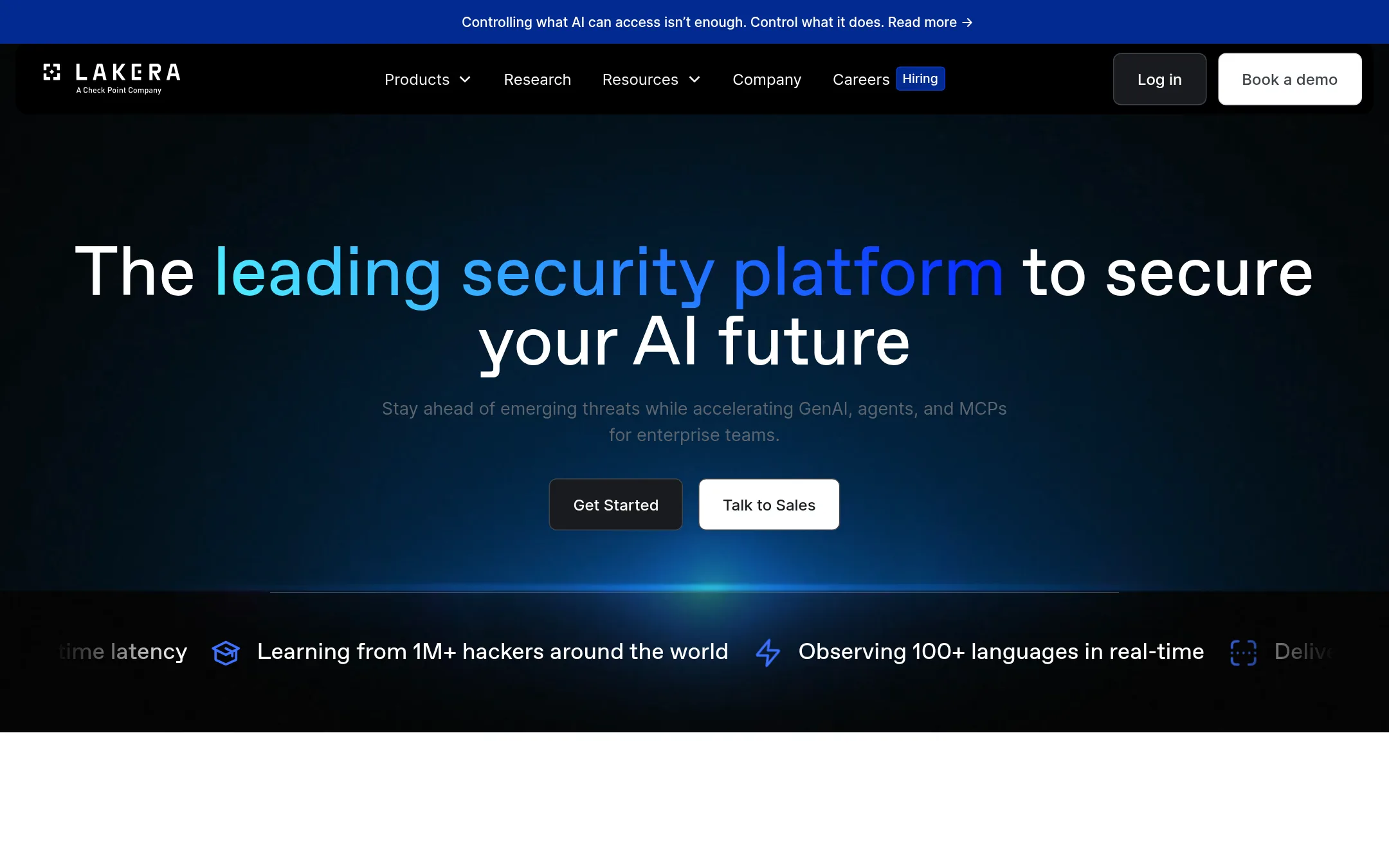
Lakera Guard is a runtime security layer for AI applications. It screens prompts and responses for prompt injection, jailbreaks and data leakage, and it also covers employee use of AI apps and red teaming. Teams building their own LLM features would pick it over Unbound when the concern is protecting the application itself, not governing coding agents that engineers run on their laptops.
Where it is strong
- Real-time screening of prompts and responses for injections, jailbreaks and data leakage in AI apps
- Sub-50 ms runtime latency and an API-first setup that fits into existing applications
- Enterprise option includes self-hosted deployment, SSO, role-based access control and SIEM integration, plus EU/US data residency
Where it falls short
- It is built to protect AI applications at runtime, so it does not discover or govern coding agents and MCP servers on engineer machines the
- The free Community tier is capped at 10k requests a month, and advanced features require talking to sales
- Pricing:
- The Community plan is $0 per month with 10k requests per month, and Enterprise pricing is by quote, with SaaS or self-hosted deployment.
- PNot published
2.Prompt Security
Best for: Security teams that want a broad AI security program covering general AI use, not only coding agents
- Pricing
- Not published
- Category
- Other
Prompt Security is a security platform that covers AI use across an organization, and its site leans toward resources, open-source tools and research on AI security. Someone would pick it over Unbound if they want a broader AI security program with its blog, research and open-source tooling such as ps-fuzz or ClawSec, rather than governance specifically built around coding agents.
Where it is strong
- Open-source tools such as ps-fuzz for testing system prompts and ClawSec for agent skill security
- Regular research and commentary on AI security threats
- Covers AI use across the organization, not only coding tools
Where it falls short
- The site does not describe coding agent governance, spend tracking or MCP server discovery the way Unbound does
- Pricing and plan details are not published, so cost comparison is not possible from the site
- Pricing:
- Pricing is not published on the site.
- PNot published
3.Protect AI
Best for: Security teams already on Palo Alto Networks that need to govern AI apps, agents and models across the enterprise
- Pricing
- Not published
- Category
- Other
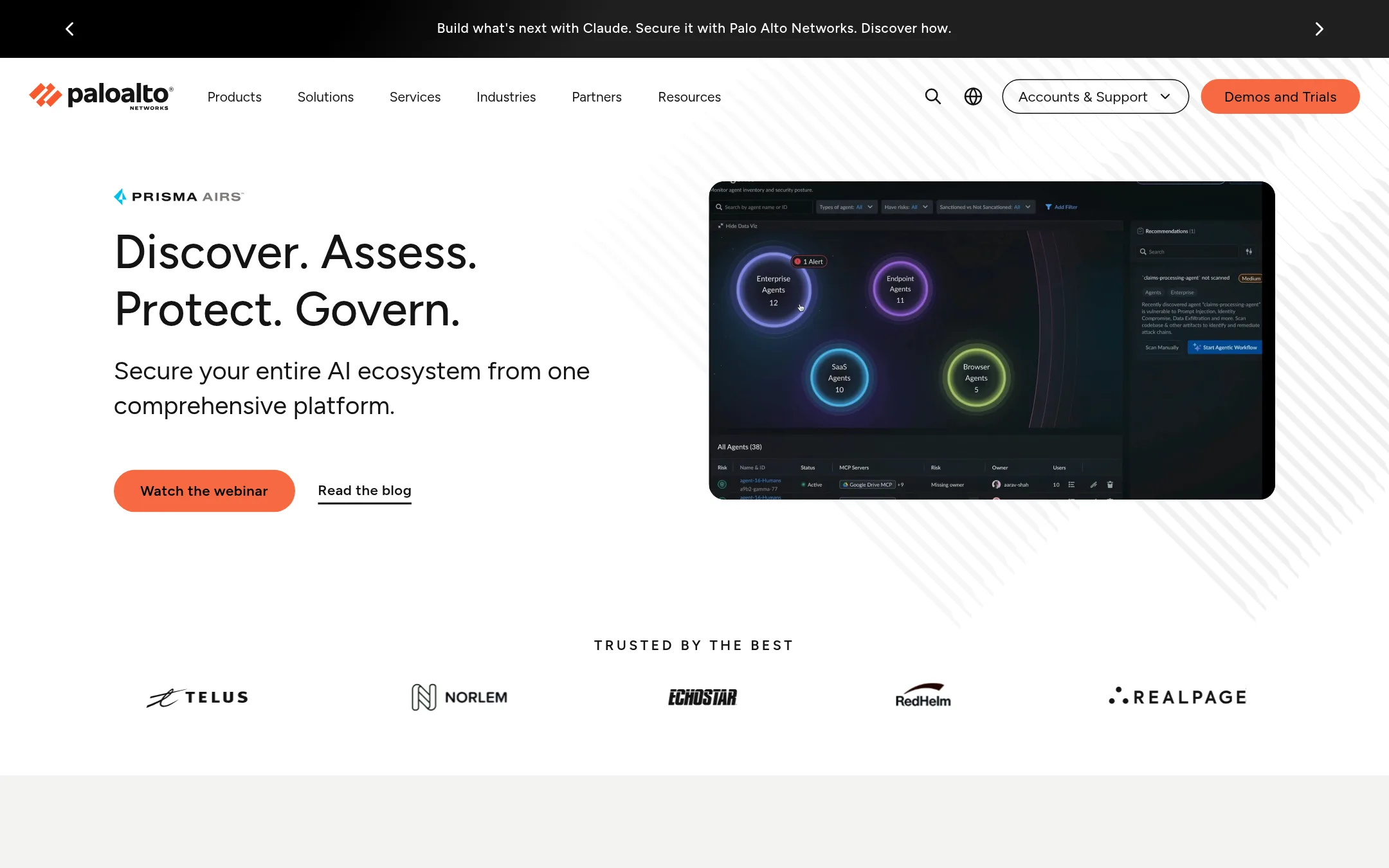
Protect AI, now part of Palo Alto Networks as Prisma AIRS, is an AI security platform that covers discovery, assessment, protection and governance of AI apps, agents and models. A team would pick it over Unbound if their main concern is securing AI systems they build or run in production, rather than governing coding agents used by their developers.
Where it is strong
- Covers AI apps, agents and models, not only coding tools
- Sits within the Palo Alto Networks security platform
- Offers discovery and assessment of the AI ecosystem
Where it falls short
- Its public description focuses on securing AI systems rather than governing developer coding agents, which is Unbound's focus
- Pricing is not published, so cost comparison needs a direct quote
- Pricing:
- Pricing is not published on the site.
- PNot published
5.Pillar Security
Best for: Security teams at larger organizations that need to discover, red-team and guardrail AI agents across their production environment.
- Pricing
- Not published
- Category
- Other
Pillar Security is an AI security platform that discovers and inventories AI agents, models, MCP servers and skills, red-teams them for exploitable attack paths, and applies runtime guardrails to protect sensitive data. A team would choose it over Unbound when the main concern is securing AI applications and agent systems that they build or run in production, rather than governing how developers use coding agents day to day.
Where it is strong
- Covers the full agent lifecycle, from inventory and discovery through red teaming, runtime protection and governance.
- Red teaming produces attack transcripts and reproduction steps for validated findings.
- Runtime guardrails detect and mask PII, PHI, credentials and secrets in AI interactions.
Where it falls short
- Its focus is securing AI systems in production, so it does not describe a developer-facing layer for coding agent usage like Unbound does.
- The site does not describe spend tracking or engineering productivity features.
- Pricing:
- Pricing is not published on the site.
- NNot published
6.Noma Security
Best for: Enterprise security teams that need runtime control over agents across endpoint, SaaS and cloud environments
- Pricing
- Not published
- Category
- Other
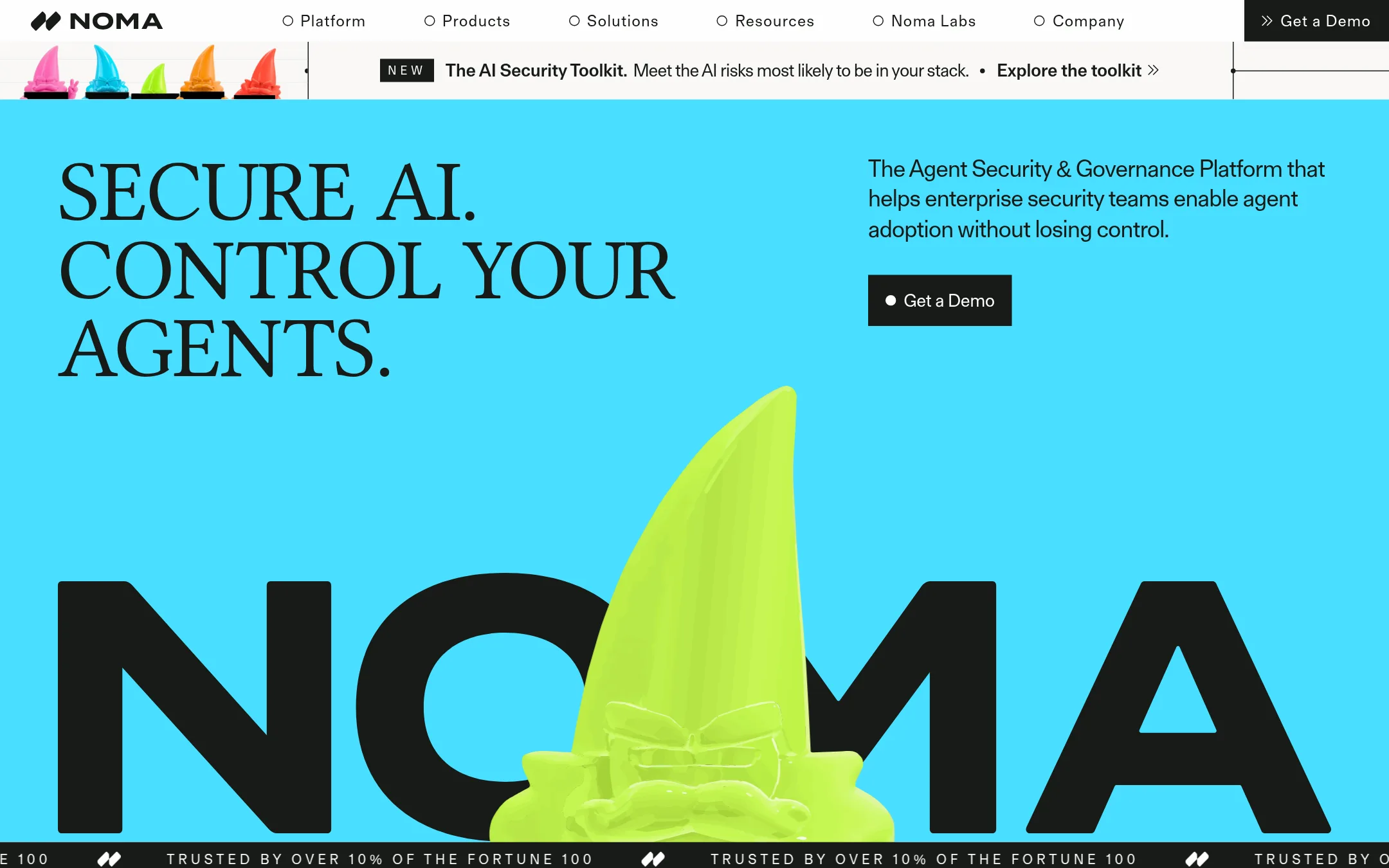
Noma Security is an agent security and governance platform for enterprise security teams. It discovers agents, MCP servers and skills, and checks each agent action at runtime against the full session, the user it acts for, and the data it can reach. Choose it over Unbound when the main concern is runtime threat control across endpoint, SaaS and cloud environments, not coding-agent habits and spend.
Where it is strong
- Checks each agent action against the full session, not in isolation
- Covers agents running across endpoint, SaaS and cloud
- Lets you approve, review or block agents, MCP servers and skills by user, team or tool sensitivity
Where it falls short
- The site does not describe coding-agent spend tracking or engineer playbooks, which Unbound focuses on
- The site does not publish pricing, so cost comparison needs a direct conversation
- Pricing:
- Pricing is not published on the site.

See more comparisons in Security & Privacy alternatives.
FAQ
Questions about Unbound alternatives
What does Unbound do that the alternatives do not?
Unbound focuses on governing coding agents that engineers run, including discovering agents and MCP servers on the fleet, tracking agent spend against shipped work, and warning developers before risky actions run. Most of the alternatives listed here focus on securing AI applications or models in production instead.
Which alternative is best for a team building its own LLM features?
Lakera Guard is the closest fit for that case. It screens prompts and responses in real time for prompt injection, jailbreaks and data leakage, and it offers an enterprise option with self-hosted deployment and SIEM integration.
Can I compare pricing across these tools?
Only partly. Lakera Guard publishes a free Community tier of $0 per month with 10k requests, while Enterprise pricing is by quote. Pricing for Prompt Security, Protect AI, HiddenLayer, Pillar Security and Noma Security is not published on their sites, so you will need a direct conversation to compare costs.
Which option suits a security team already using Palo Alto Networks?
Protect AI is the better fit for that setup, since it is now part of Palo Alto Networks as Prisma AIRS. It covers discovery, assessment, protection and governance of AI apps, agents and models across the enterprise.
Should I choose Unbound or Noma Security for controlling agent behaviour?
Choose Unbound if your priority is developer habits, coding agent spend and engineer productivity. Choose Noma Security if your priority is runtime threat control across endpoint, SaaS and cloud, with each agent action checked against the full session and the data it can reach.
Last updated November 21, 2026.