
Undermind alternatives
8 products compared · Updated November 11, 2026
The short answer
The three strongest alternatives to Undermind are Semantic Scholar, Elicit, and Consensus. Semantic Scholar suits students, independent researchers and developers who need free literature search across all fields. Elicit suits research teams and reviewers who need systematic literature reviews with extraction tables and screening workflows. Consensus suits students, clinicians and researchers who need fast, evidence-based answers from peer-reviewed sources.
Your shortlist, at a glance
Read the comparisons ↓- EElicitFrom $0 / user / moResearch teams and reviewers who need systematic literature reviews with extraction tables and screening workflows
- CConsensusNot publishedStudents, clinicians and researchers who need fast evidence answers from peer-reviewed sources, especially at universities whose library already provides access
- SSemantic ScholarNot publishedStudents, independent researchers and developers who need free literature search across all scientific fields
- SSciteNot publishedResearchers and academic writers who need to verify whether a paper's claims are supported or disputed by later work
- LLitmapsFrom $10/mo or $120/yrResearchers and students who want visual citation maps built from seed papers and alerts for new publications in their field
- CConnected PapersNot publishedResearchers and students who are entering a new field and want a visual map of papers around a known seed paper
- RResearch RabbitSee websiteOther
- PPerplexity AINot publishedFounders and operators who need fast, cited answers to general questions across any topic rather than deep scientific literature reviews
About Undermind and its alternatives
Undermind is an AI agent for scientific research. According to its site, it finds more relevant papers than AI web search, reads full texts and figures, and cites every source it uses. Its site also describes a living library and monitoring for future publications.
When comparing alternatives in this category, look at how each product is priced, including whether plans are per person or flat, and whether annual billing is required. Check which regions and academic or institutional access rules apply, and which integrations and data sources are supported. Consider the level of support on offer, and read the contract terms, especially for enterprise and team use.
Explore the alternatives
- EFrom $0 / user / mo
1.Elicit
Best for: Research teams and reviewers who need systematic literature reviews with extraction tables and screening workflows
- Pricing
- From $0 / user / mo
- Category
- Other
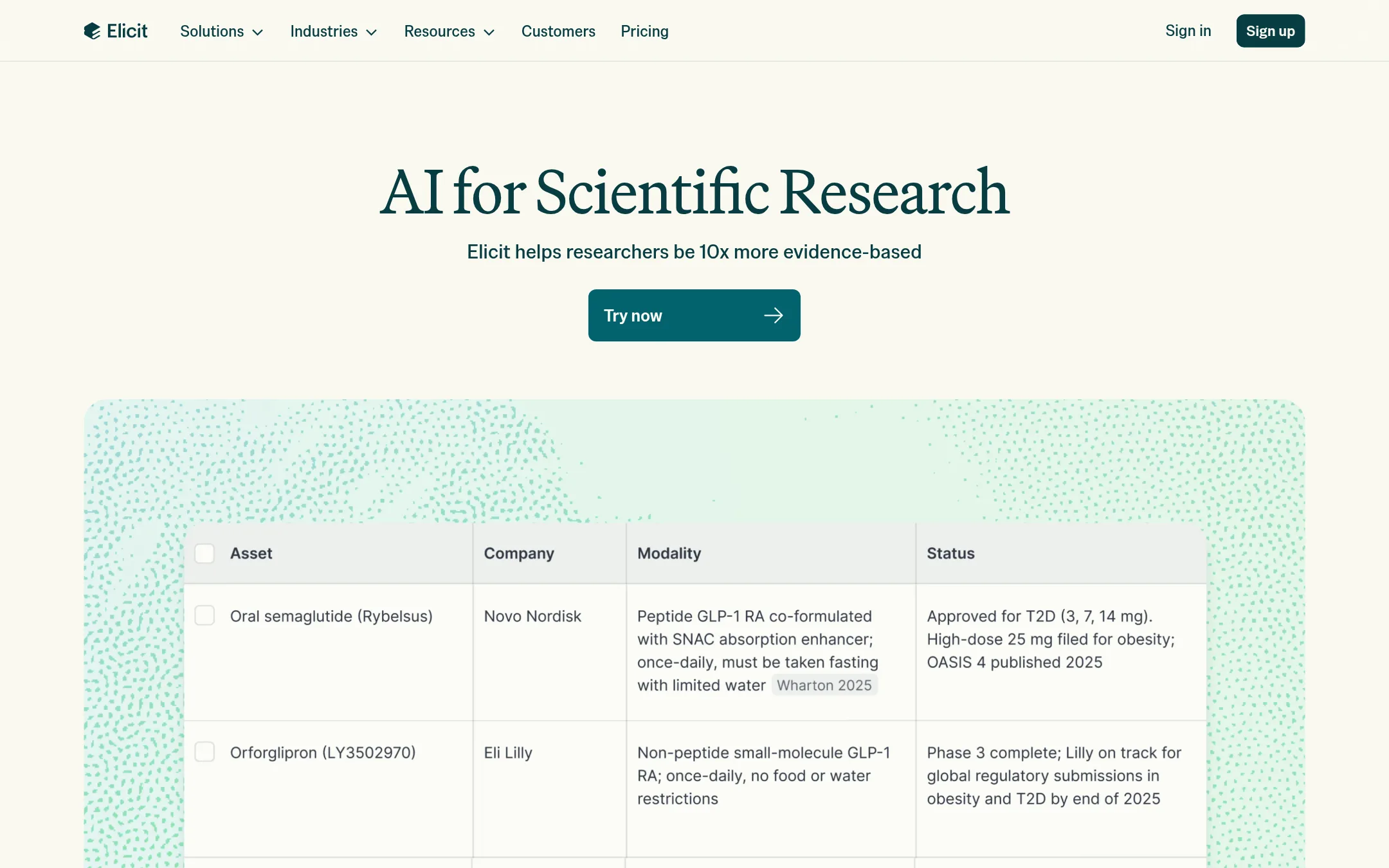
Elicit is an AI research assistant for synthesizing evidence across a large paper index, with tools for summarizing papers, extracting data into tables, and running systematic literature reviews. Teams pick it over Undermind when their work is structured review rather than finding hard-to-surface papers, such as screening thousands of studies or pulling specific fields into a table.
Where it is strong
- Covers more than 138 million papers in search
- Builds extraction tables that pull specific data from papers
- Includes a dedicated workflow for systematic reviews
Where it falls short
- Enterprise pricing is custom and requires a sales conversation
- Free usage of the Research Agent and Research Reports is limited
- Pricing:
- Plans run from a free Basic tier to Plus at $11 per user per month billed annually, Pro at $39, Scale at $89, and a custom Enterprise plan, with prices shown per user per month.
- CNot published
2.Consensus
Best for: Students, clinicians and researchers who need fast evidence answers from peer-reviewed sources, especially at universities whose library already provides access
- Pricing
- Not published
- Category
- Other
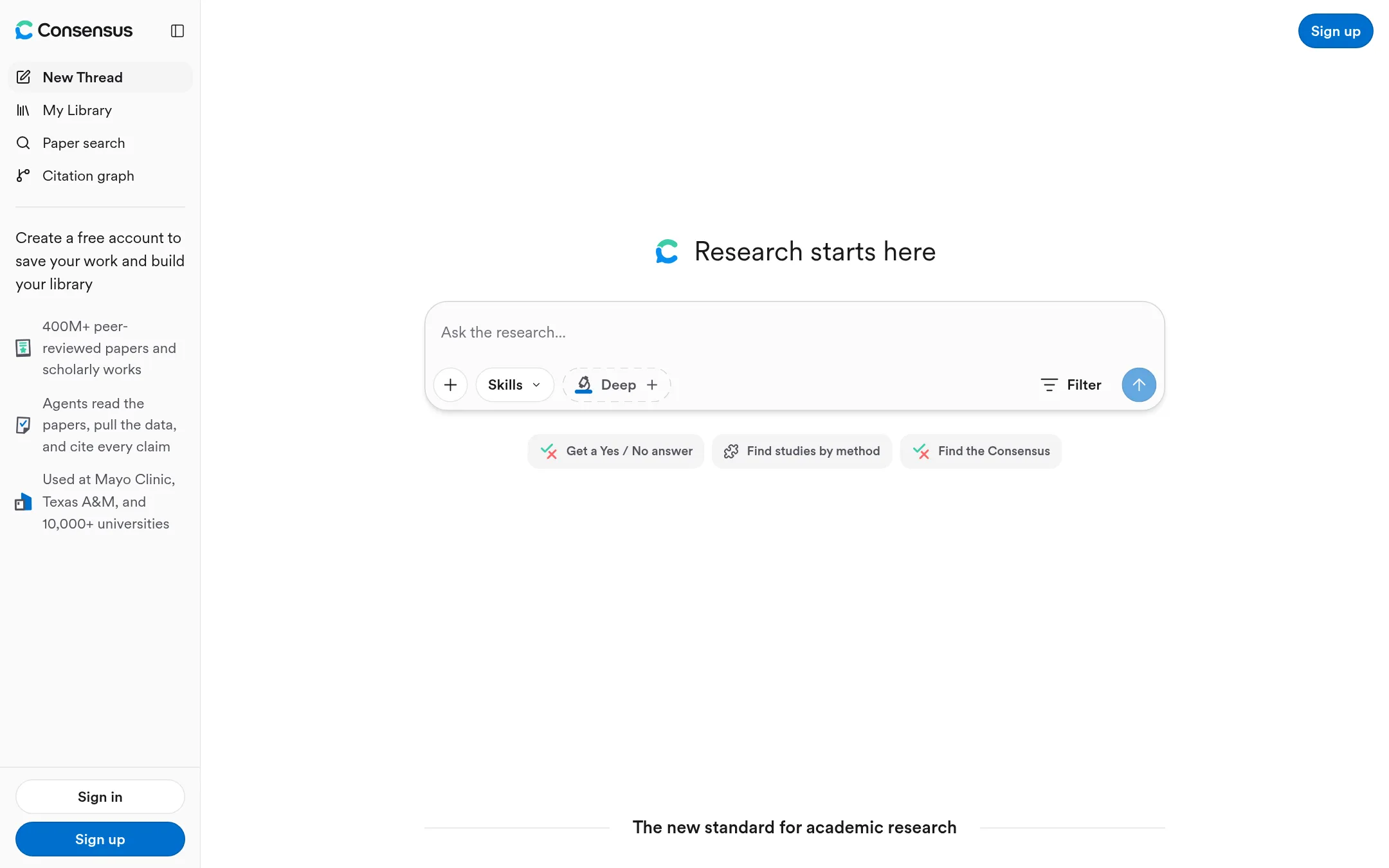
Consensus is an AI search engine over peer-reviewed literature, drawing on 250M+ papers including licensed full text from publishers. Someone would pick it over Undermind when the job is quick, clinically oriented answers, such as a Medical mode that narrows results to clinical guidelines and top medical journals, or a yes-or-no question shown on a Consensus Meter.
Where it is strong
- Covers 250M+ peer-reviewed papers, with licensed full text from leading publishers
- Medical mode limits results to clinical guidelines and top medical journals
- Yes-or-no questions get a visual Consensus Meter showing how far the evidence agrees
Where it falls short
- Its pricing page lists no plan prices in the text supplied, so cost is unclear
- It focuses on answering questions from the literature, and the supplied text does not mention Undermind's library of full-text PDFs or figur
- Pricing:
- Pricing is not published on the site.
- SNot published
3.Semantic Scholar
Best for: Students, independent researchers and developers who need free literature search across all scientific fields
- Pricing
- Not published
- Category
- Other
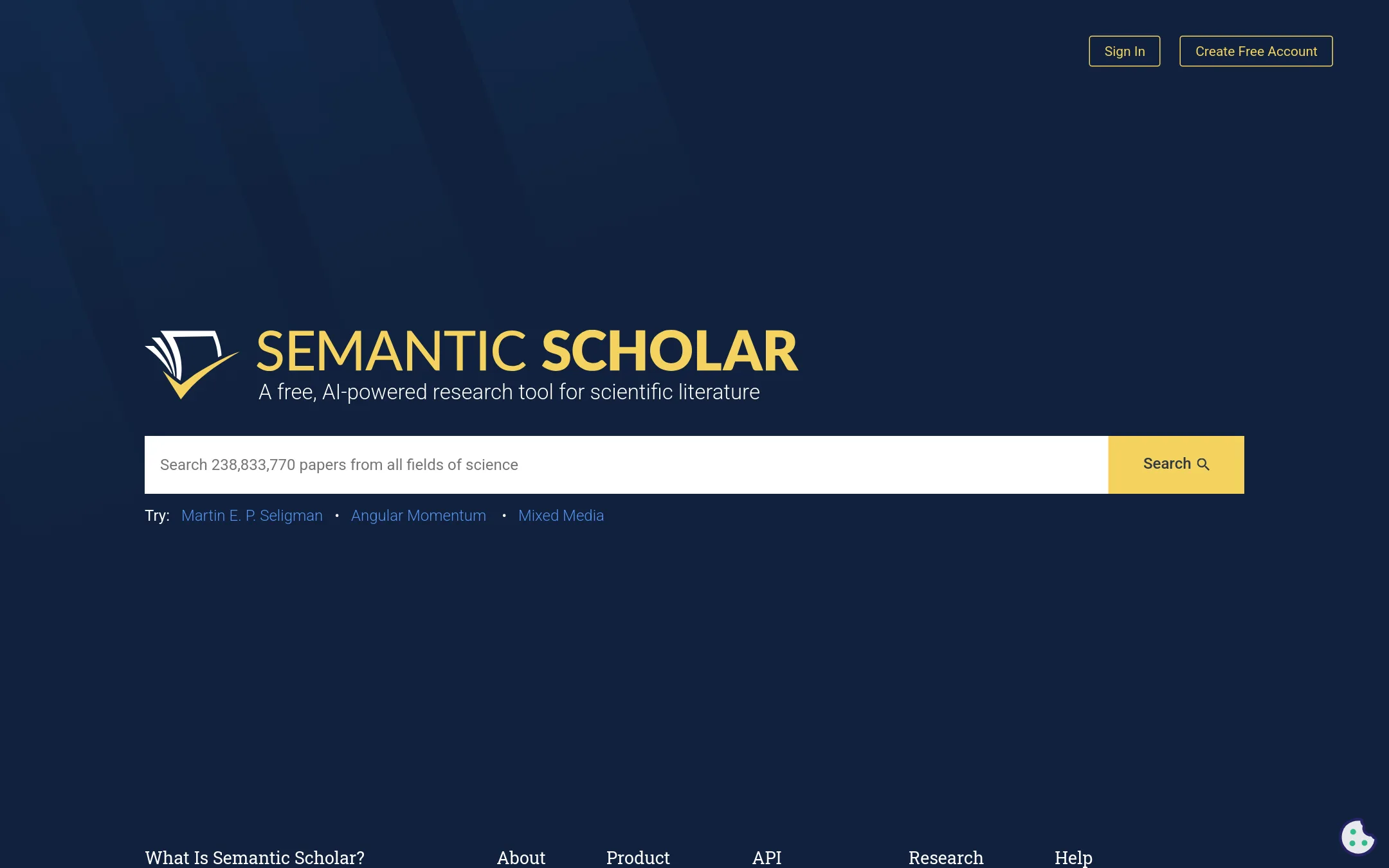
Semantic Scholar is a free AI-powered search engine over more than 241 million papers across all fields of science. Someone would choose it over Undermind when they want a free, broad search tool for quick lookups, or access through a public API for building their own scholarly apps, rather than a paid agent that runs deep multi-round searches and writes research summaries.
Where it is strong
- Covers more than 241 million papers from all fields of science
- Free to use for search
- Offers a public API for developers, with paper search and documentation
Where it falls short
- Its homepage describes search and reading tools, not a deep multi-round research agent like Undermind
- Its homepage does not mention figure analysis or verified writeups, which Undermind offers
- Pricing:
- Pricing is not published on the site.
- SNot published
4.Scite
Best for: Researchers and academic writers who need to verify whether a paper's claims are supported or disputed by later work
- Pricing
- Not published
- Category
- Other
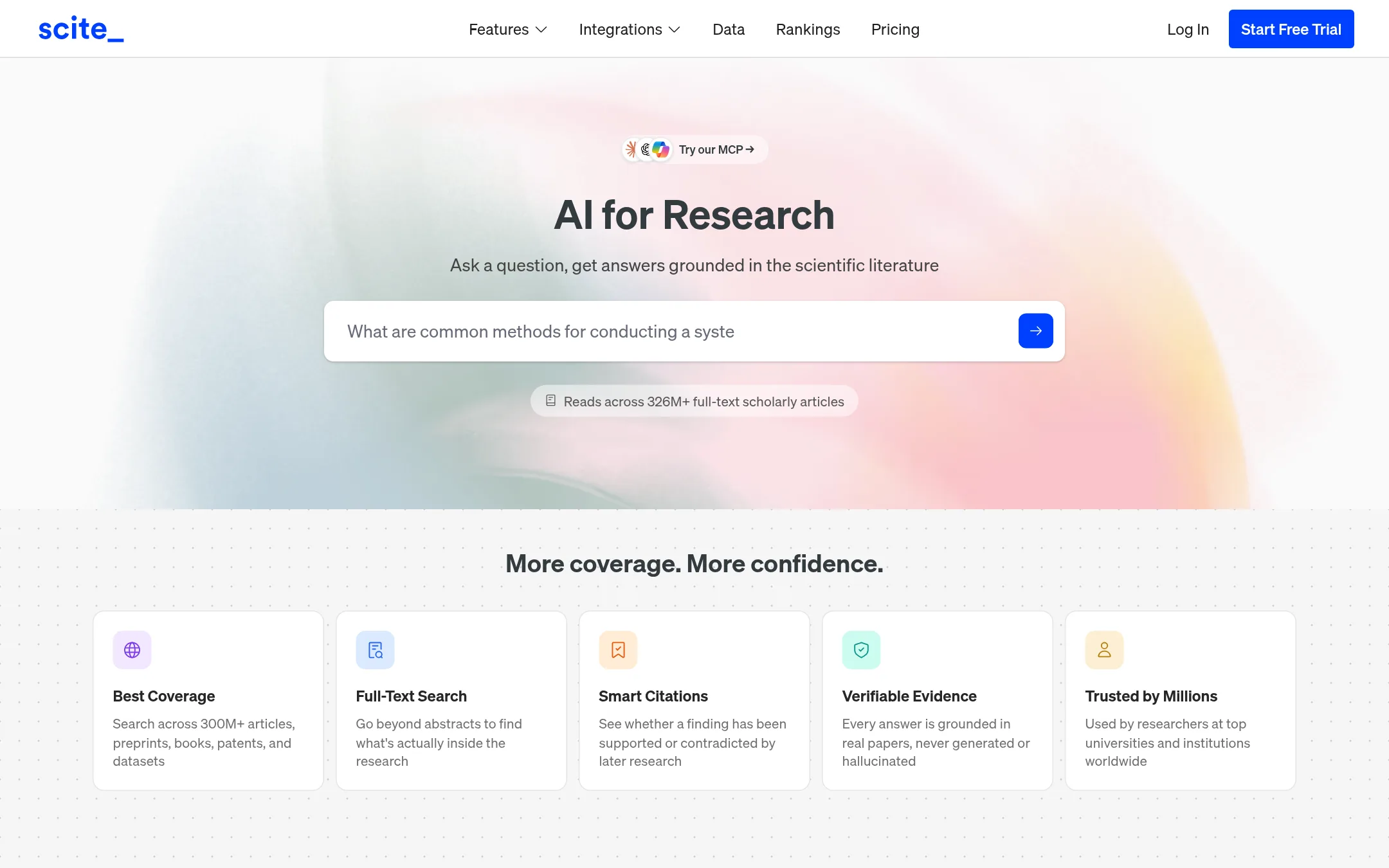
Scite searches a large licensed corpus of scholarly articles and shows whether later papers support, contrast, or discuss a given claim, with each AI answer tied to the sentence it came from. Pick it over Undermind when your main need is checking whether a finding holds up in the literature, or when you want citation-level verification inside tools like Zotero, Claude, or ChatGPT.
Where it is strong
- Smart Citations show whether later papers support, challenge, or discuss a claim
- Every AI answer links back to the specific sentence in the source paper
- Works inside Claude, ChatGPT, Zotero, and via an API
Where it falls short
- Undermind's deep search reports a higher recall of relevant papers in its own benchmark, and Scite's comparable figures are not published
- Enterprise access requires contacting sales
- Pricing:
- Pricing is listed on Scite's pricing page, which offers a 7-day free trial and a separate enterprise plan, but the specific plan prices are not shown in the text supplied.
- LFrom $10/mo or $120/yr
5.Litmaps
Best for: Researchers and students who want visual citation maps built from seed papers and alerts for new publications in their field
- Pricing
- From $10/mo or $120/yr
- Category
- Other
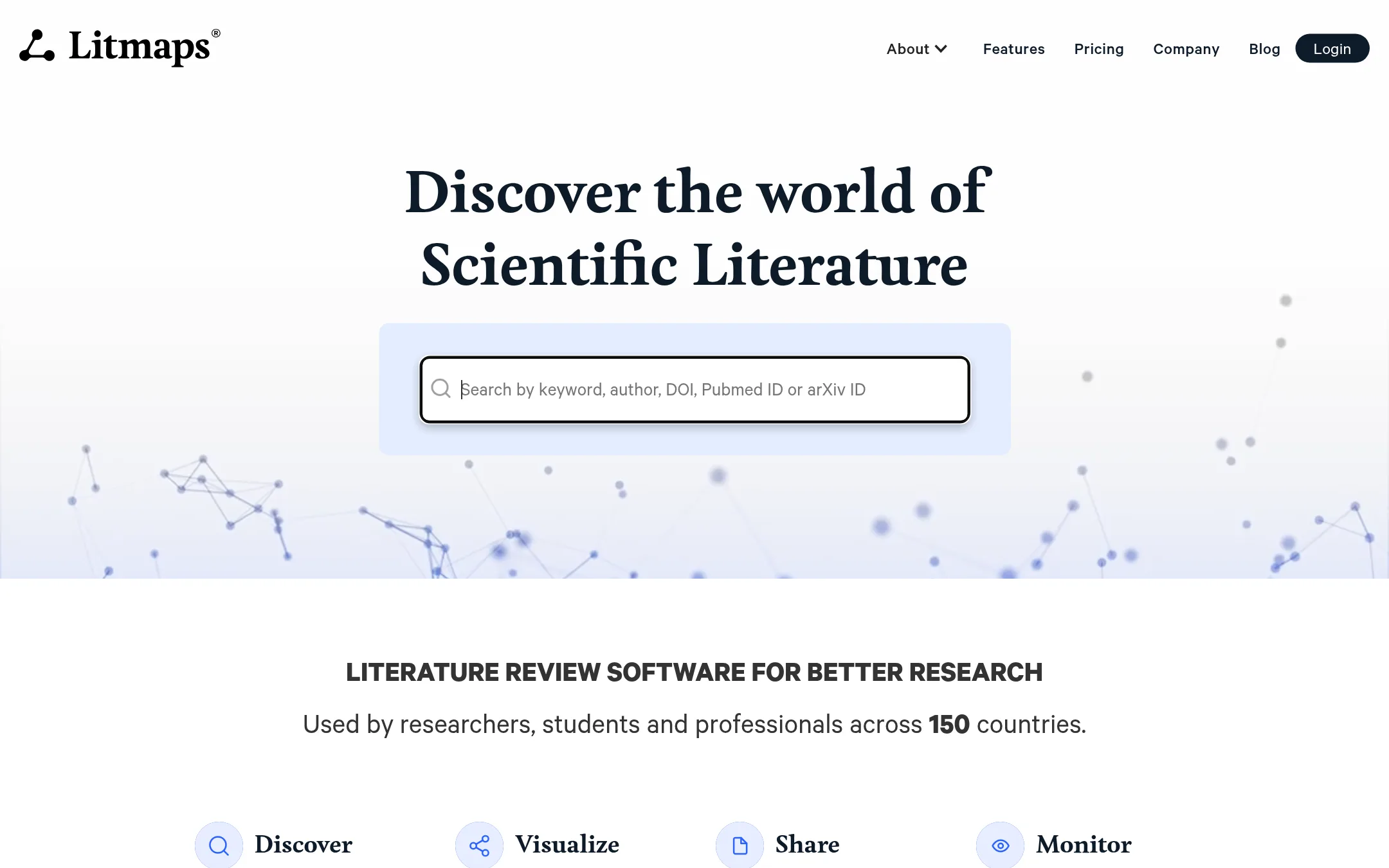
Litmaps builds visual citation maps from a few seed papers, so you can see how the literature connects by date and citation count. It suits a researcher who wants to get oriented in a field and keep track of new publications over time. Pick it over Undermind when you want to browse and map the citation network yourself rather than have an agent run a deep search and write up findings.
Where it is strong
- Seed maps show how papers connect by date and citation count, which makes a field easy to scan.
- Free plan lets you try it with a limited number of inputs and maps.
- Literature alerts can keep you current on new publications in your area.
Where it falls short
- Its homepage makes no claim about full-text reading or figure analysis, which Undermind advertises.
- The Team plan requires an academic email address, so industry teams may need the enterprise route.
- Pricing:
- Litmaps lists a Free plan with up to 20 inputs and 2 Litmaps, a Pro plan at $10 per month billed monthly or $120 per year, and a Team plan at $10 per user with a requirement for an academic email address, plus custom enterprise pricing.
- CNot published
6.Connected Papers
Best for: Researchers and students who are entering a new field and want a visual map of papers around a known seed paper
- Pricing
- Not published
- Category
- Other
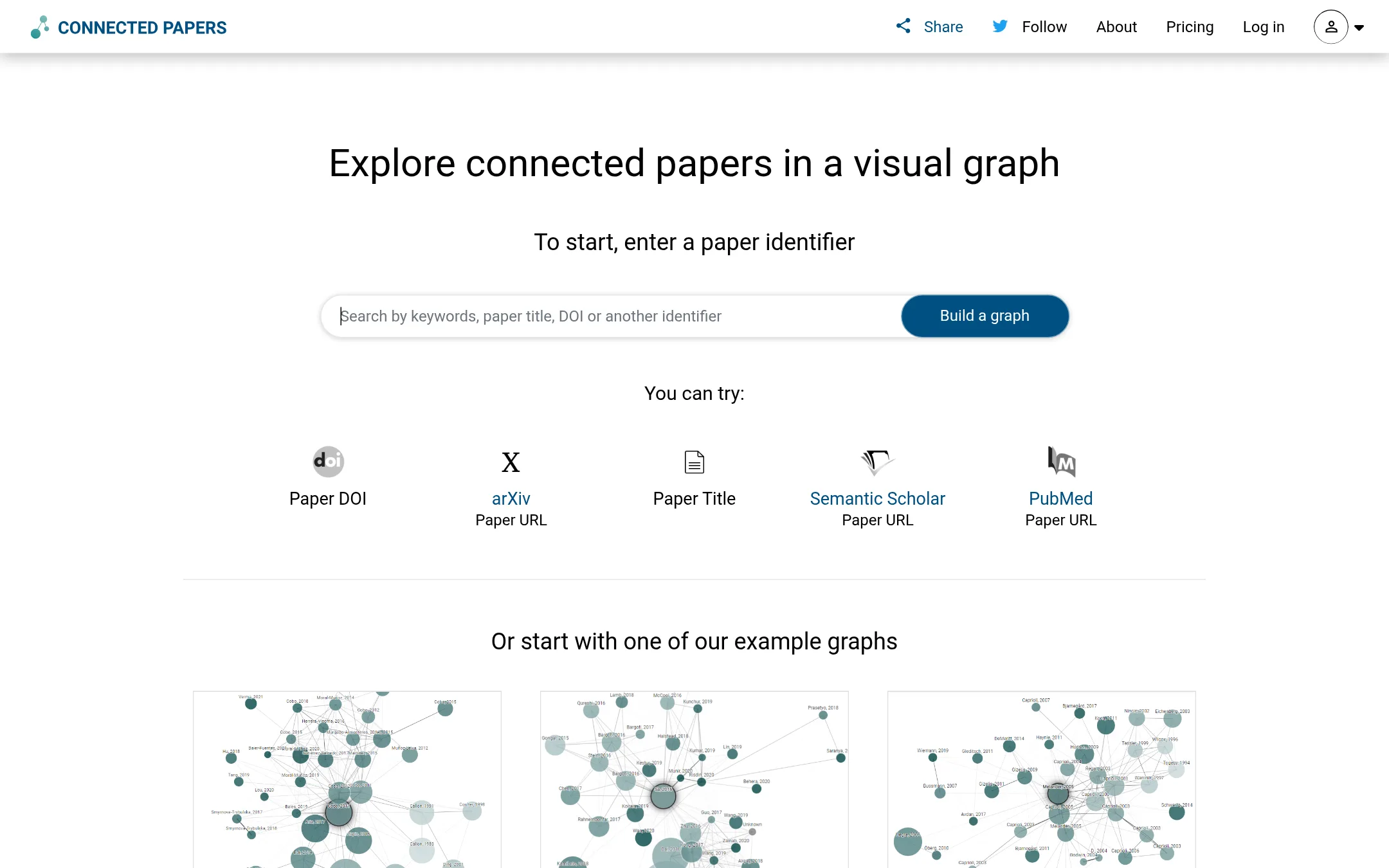
Connected Papers builds a visual graph from one seed paper, showing related prior and derivative works so you can grasp a field's shape quickly. Choose it over Undermind when you already have a starting paper and want to explore its neighbourhood visually rather than run a natural-language research search.
Where it is strong
- Starts from a single DOI, arXiv link, title, or PubMed URL
- Covers papers from all scientific fields through the Semantic Scholar database
- Gives a quick visual overview that helps spot papers you might have missed
Where it falls short
- Works from a seed paper rather than a free-text research goal, so it does not run a deep search from a question
- Does not read full texts or figures the way Undermind's agent does
- Pricing:
- Pricing is not published on the site.
- RSee website
7.Research Rabbit
Other
A free literature discovery platform that recommends related papers and organizes collections based on a researcher's reading.
- PNot published
8.Perplexity AI
Best for: Founders and operators who need fast, cited answers to general questions across any topic rather than deep scientific literature reviews
- Pricing
- Not published
- Category
- Other
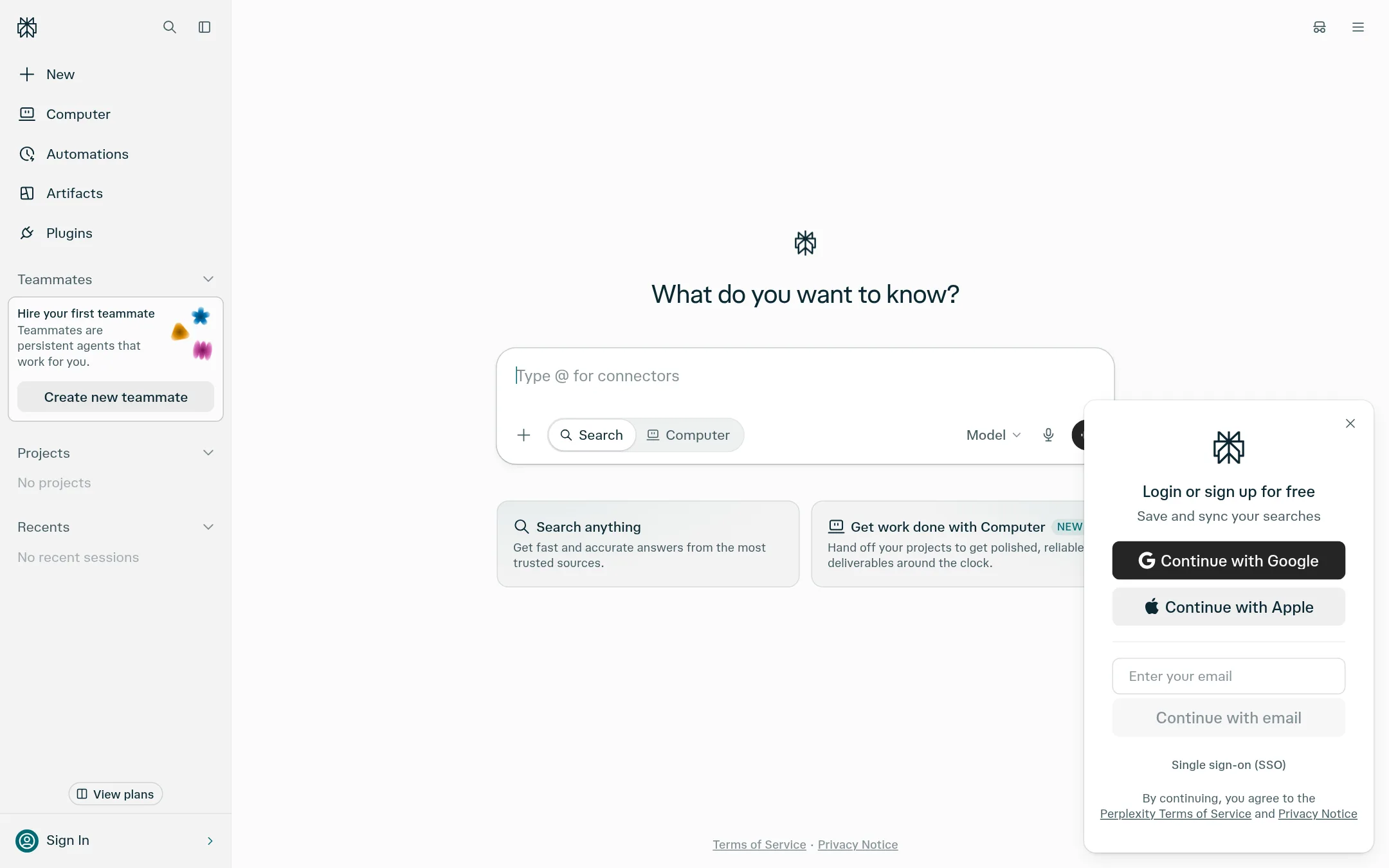
Perplexity is a general AI answer engine that searches the web and returns cited answers to any question, with a Computer feature for handing off longer projects. Someone would pick it over Undermind when they need quick, cited answers across any topic rather than a deep, exhaustive sweep of the scientific literature.
Where it is strong
- Returns fast answers with sources for any question
- Lets users save and sync their searches after signing in
- Offers a Computer feature for longer, hands-off projects
Where it falls short
- The materials provided do not show it reading full-text papers or figures the way Undermind does
- The materials provided do not describe a literature-focused search for scientific research
- Pricing:
- Pricing is not published on the site.
See more comparisons in AI & Machine Learning alternatives.
FAQ
Questions about Undermind alternatives
What is the cheapest alternative to Undermind?
Semantic Scholar is free to use for search and offers a public API for developers. Litmaps also has a free plan with a limited number of inputs and maps. Pricing for other products is either not published on the site or not shown in the text available.
Which alternative is best for systematic literature reviews?
Elicit is built for systematic reviews, with extraction tables that pull specific data from papers and a dedicated workflow for review screening. Its plans run from a free Basic tier to Plus at $11 per user per month billed annually, with custom enterprise pricing.
Which alternative gives the fastest answers to clinical questions?
Consensus has a Medical mode that narrows results to clinical guidelines and top medical journals, and it shows yes-or-no questions on a Consensus Meter. It draws on more than 250 million peer-reviewed papers, including licensed full text from publishers.
Which tool should I use to check whether a finding is supported by later work?
Scite shows whether later papers support, contrast, or discuss a given claim through its Smart Citations. Every AI answer links back to the specific sentence in the source paper, and it works inside tools like Zotero and ChatGPT.
Can I start from one paper and explore the field around it?
Connected Papers builds a visual graph from a single seed paper, starting from a DOI, arXiv link, title, or PubMed URL. Litmaps also builds citation maps from seed papers and can send alerts for new publications, so it is a good choice if you want to browse the citation network yourself.
Last updated November 11, 2026.