
Validic alternatives
12 products compared · Updated November 2, 2026
The short answer
For startups needing lab testing alongside wearable data, Junction is the strongest alternative. For health systems that need a full EHR rather than device integration, Epic or Cerner are the top choices. For broad healthcare data exchange across EHRs and payers, Redox is the best fit.
Your shortlist, at a glance
Read the comparisons ↓ RedoxFrom $15k/yearHealthcare vendors, providers, and payers that need to exchange clinical and administrative data across EHRs, payers, and cloud platforms like Azure, AWS, or GCP.
Health GorillaNot publishedEHRs, payviders, and digital health companies that need a full cross-setting patient record and regulatory compliance, not just wearable device data.
- CCernerNot publishedHealth systems that want an enterprise EHR platform and are not focused on aggregating patient-generated health data from many devices.
 EpicNot publishedHospitals and large health systems that need a complete EHR platform with patient portals, scheduling, and clinical documentation.
- CCare InnovationsNot publishedOrganizations that already work with Care Innovations through a sales contact and need a remote patient monitoring platform without relying on public documentation.
- VVitalConnectNot publishedHealth systems and cardiac care teams that want a single wearable biosensor with real-time vital sign streaming and telehealth-enabled software.
- BBiofourmisNot publishedHealth systems and payers that want an end-to-end platform for AI-driven in-home care and remote patient monitoring programs.
- CCurrent HealthNot publishedHealth systems, community practices, and life science companies that want to run outpatient CAR-T, bispecifics, or Hospital at Home programs with turnkey safety infrastructure.
 JunctionFrom $300/moStartups and digital health clinics that want to add lab testing and wearable data without building integrations themselves.
- TTerra APISee websiteAPI for developers to access health data
 1upHealthNot publishedHealth plans and payers that need to meet CMS interoperability mandates and exchange clinical and claims data across their ecosystem.
 Human APINot publishedLife insurance carriers in the U.S. that need EHRs and medical insights for underwriting at scale.
About Validic and its alternatives
Validic is a platform that normalizes data from over 700 health devices into a single standard, used by health systems, wellness platforms, and developers. It is known for its enterprise-grade device integration layer and remote care programs that integrate with EHRs like Epic and Cerner.
When comparing alternatives, consider what you actually need: device data normalization, lab testing, EHR interoperability, or payer compliance. Check pricing structure, whether it is published or custom, and whether the product covers your region and integrations. Also weigh support and contract terms, especially if you need self-serve onboarding or enterprise-level services.
Explore the alternatives
- From $15k/year
1.Redox
Best for: Healthcare vendors, providers, and payers that need to exchange clinical and administrative data across EHRs, payers, and cloud platforms like Azure, AWS, or GCP.
- Pricing
- From $15k/year
- Category
- Healthcare
Redox is a healthcare data integration platform that connects EHRs, payers, and vendors through a single API, with a focus on real-time data exchange and AI workflows. Choose it over Validic if you need broad EHR interoperability, payer connections, or cloud data pipelines rather than device data normalization.
Where it is strong
- Single API connects to multiple EHRs, payers, and HIEs
- Real-time data streaming for AI and analytics workflows
- HITRUST and SOC 2 certified
Where it falls short
- Sandbox tier excludes providers, payers, and enterprises
- Pricing scales with volume, so costs can grow quickly
- Pricing:
- Pricing starts at $15k/year for the Sandbox tier (for companies under 500 employees), $35k/year for Core, and Advanced is custom-quoted. Consumption and managed services fees are added on top.
- Switching from Validic:
- Moving from Validic to Redox means shifting from device data normalization to clinical data exchange, so you'd need to rework integrations around EHR and payer APIs rather than device feeds.
- Not published
2.Health Gorilla
Best for: EHRs, payviders, and digital health companies that need a full cross-setting patient record and regulatory compliance, not just wearable device data.
- Pricing
- Not published
- Category
- Healthcare
Health Gorilla is a national health data network and API platform focused on interoperability and TEFCA compliance, rather than device data normalization. Choose it over Validic if you need to pull complete patient records across hospitals, labs, and networks, or if you must comply with US data exchange frameworks like TEFCA or California's DxF.
Where it is strong
- Dual-designated QHIN and QHIO, so it supports TEFCA and California DxF compliance out of the box.
- Provides a complete, de-duplicated patient record with source traceability and access logging.
- Clinical Alerts monitor network activity for changes, not just hospital data.
Where it falls short
- No device or wearable integrations, unlike Validic's 700+ device normalization.
- Pricing is not public, so you must contact sales for a quote.
- Pricing:
- Pricing is not published on the site.
- Switching from Validic:
- Moving from Validic means shifting from device data normalization to a broader health data network, so you would need to re-architect integrations around clinical record retrieval rather than device feeds.
- CNot published
3.Cerner
Best for: Health systems that want an enterprise EHR platform and are not focused on aggregating patient-generated health data from many devices.

- Pricing
- Not published
- Category
- Healthcare
Cerner is a large EHR vendor, not a device data normalization platform. You would choose it instead of Validic if you are a healthcare organization already standardizing on Cerner's EHR and need a full clinical system, not a device integration layer.
Where it is strong
- Full EHR and clinical workflow system
- Deep integration with hospital operations
- Widely used across large health systems
Where it falls short
- Not a device data normalization platform
- No published pricing or self-serve onboarding
- Pricing:
- Pricing is not published on the site.
- Not published
4.Epic
Best for: Hospitals and large health systems that need a complete EHR platform with patient portals, scheduling, and clinical documentation.
- Pricing
- Not published
- Category
- Healthcare
Epic is a full EHR platform that manages patient records, clinical workflows, and hospital operations, not a device data normalization layer. You would choose Epic instead of Validic if you need an entire electronic health record system for a hospital or large health system, rather than just integrating wearable and home monitoring devices into an existing EHR.
Where it is strong
- Complete EHR with patient records, scheduling, and billing in one system
- Strong patient portal (MyChart) for communication and self-scheduling
- Large installed base across US hospitals, with interoperability via TEFCA
Where it falls short
- Not a device integration or remote patient monitoring data platform like Validic
- Implementation is a major multi-year project, not a plug-in API
- Pricing:
- Pricing is not published on the site.
- CNot published
5.Care Innovations
Best for: Organizations that already work with Care Innovations through a sales contact and need a remote patient monitoring platform without relying on public documentation.

- Pricing
- Not published
- Category
- Other
Care Innovations is a remote care platform, but its website was unreachable during review, so we could not verify its current capabilities, integrations, or pricing. You would only consider it if you already have a relationship with the company or receive a direct proposal, since public information is unavailable.
Where it is strong
- Known player in remote patient monitoring
- Focus on chronic care management
- Established in the healthcare space
Where it falls short
- Website is down, so no public details on features or integrations
- No pricing or self-serve information available
- Pricing:
- Pricing is not published on the site.
- VNot published
6.VitalConnect
Best for: Health systems and cardiac care teams that want a single wearable biosensor with real-time vital sign streaming and telehealth-enabled software.
- Pricing
- Not published
- Category
- Other
VitalConnect sells the VitalPatch biosensor and a remote patient monitoring platform that streams up to 11 vital signs, including live ECG, for hospital-at-home and cardiac monitoring. Choose it instead of Validic if you need a hardware-plus-software monitoring solution rather than a device-agnostic data normalization layer.
Where it is strong
- Real-time streaming of up to 11 vitals including live ECG
- VitalPatch biosensor designed for hospital and home use
- Now part of iRhythm Holdings, expanding cardiac monitoring reach
Where it falls short
- No device-agnostic integration layer like Validic's 700+ device platform
- Pricing not published, likely enterprise contract only
- Pricing:
- Pricing is not published on the site.
- BNot published
7.Biofourmis
Best for: Health systems and payers that want an end-to-end platform for AI-driven in-home care and remote patient monitoring programs.

- Pricing
- Not published
- Category
- Other
Biofourmis is a connected care platform that partners with health systems, payers, and life science companies to deliver AI-driven in-home care and remote patient monitoring. Choose it over Validic if you want a full care delivery solution with clinical programs and outcomes tracking, not just a data normalization layer.
Where it is strong
- Partners with 50+ health systems and payers worldwide
- Reported 70% reduction in 30-day readmissions and 21-hour earlier deterioration detection
- Merged with CopilotIQ to create an end-to-end in-home care platform
Where it falls short
- Pricing is not public, likely enterprise-only
- Focuses on care delivery, not a general-purpose device data standard like Validic
- Pricing:
- Pricing is not published on the site.
- CNot published
8.Current Health
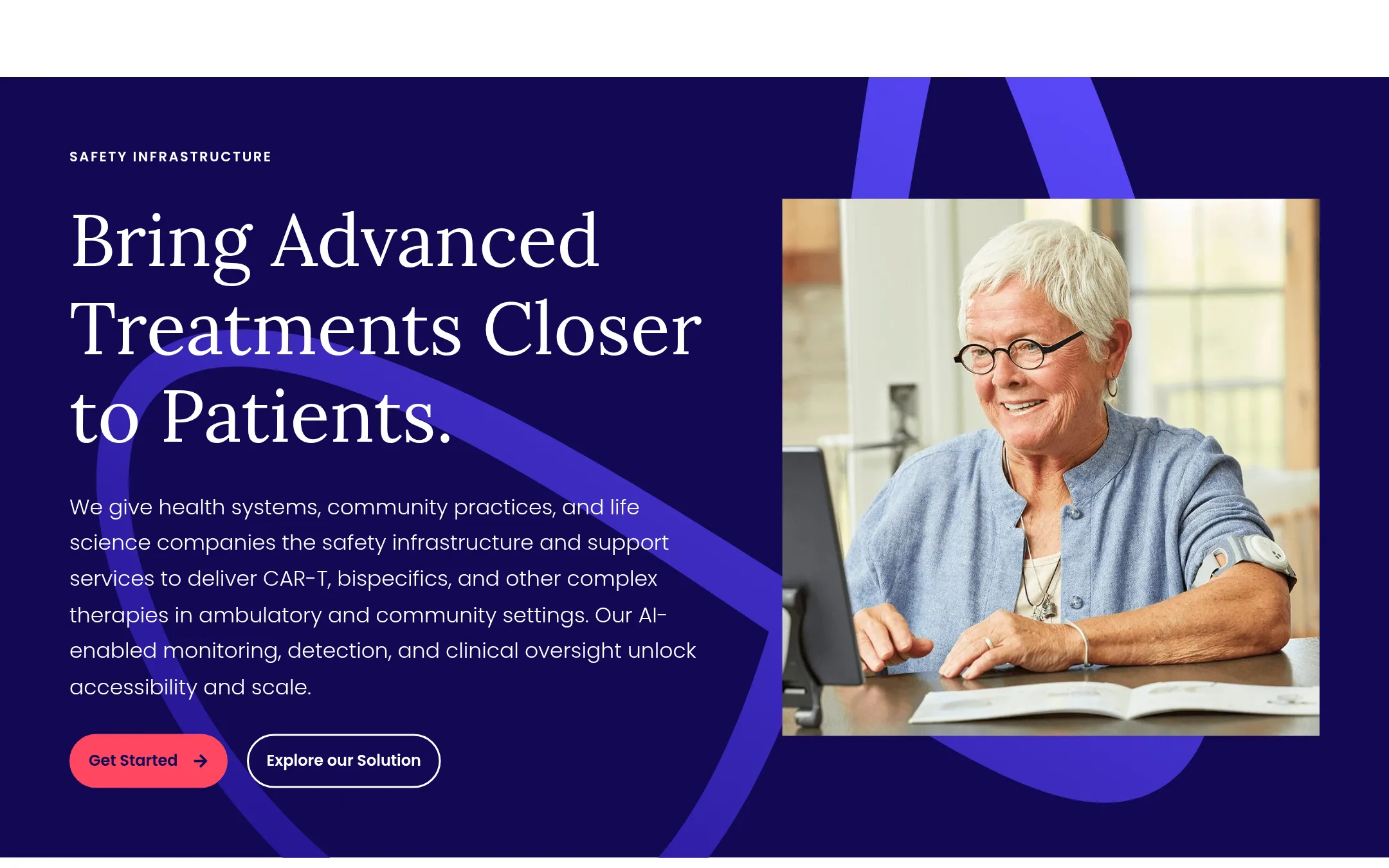
Best for: Health systems, community practices, and life science companies that want to run outpatient CAR-T, bispecifics, or Hospital at Home programs with turnkey safety infrastructure.
- Pricing
- Not published
- Category
- Other
Current Health provides the clinical and operational infrastructure to deliver advanced therapies like CAR-T and high-acuity care outside the hospital. Choose it over Validic if you need a full program with 24/7 clinical monitoring, logistics, and payer negotiation, not just a device data normalization layer.
Where it is strong
- FDA-cleared passive monitoring with a clinical dashboard
- 24/7 command center staffed by ICU/ED-trained RNs
- Consulting team handles program design and payer contracts
Where it falls short
- Pricing not public, likely enterprise contracts only
- Focused on high-acuity therapies, not general device integration
- Pricing:
- Pricing is not published on the site.
- From $300/mo
9.Junction
Best for: Startups and digital health clinics that want to add lab testing and wearable data without building integrations themselves.
- Pricing
- From $300/mo
- Category
- Healthcare
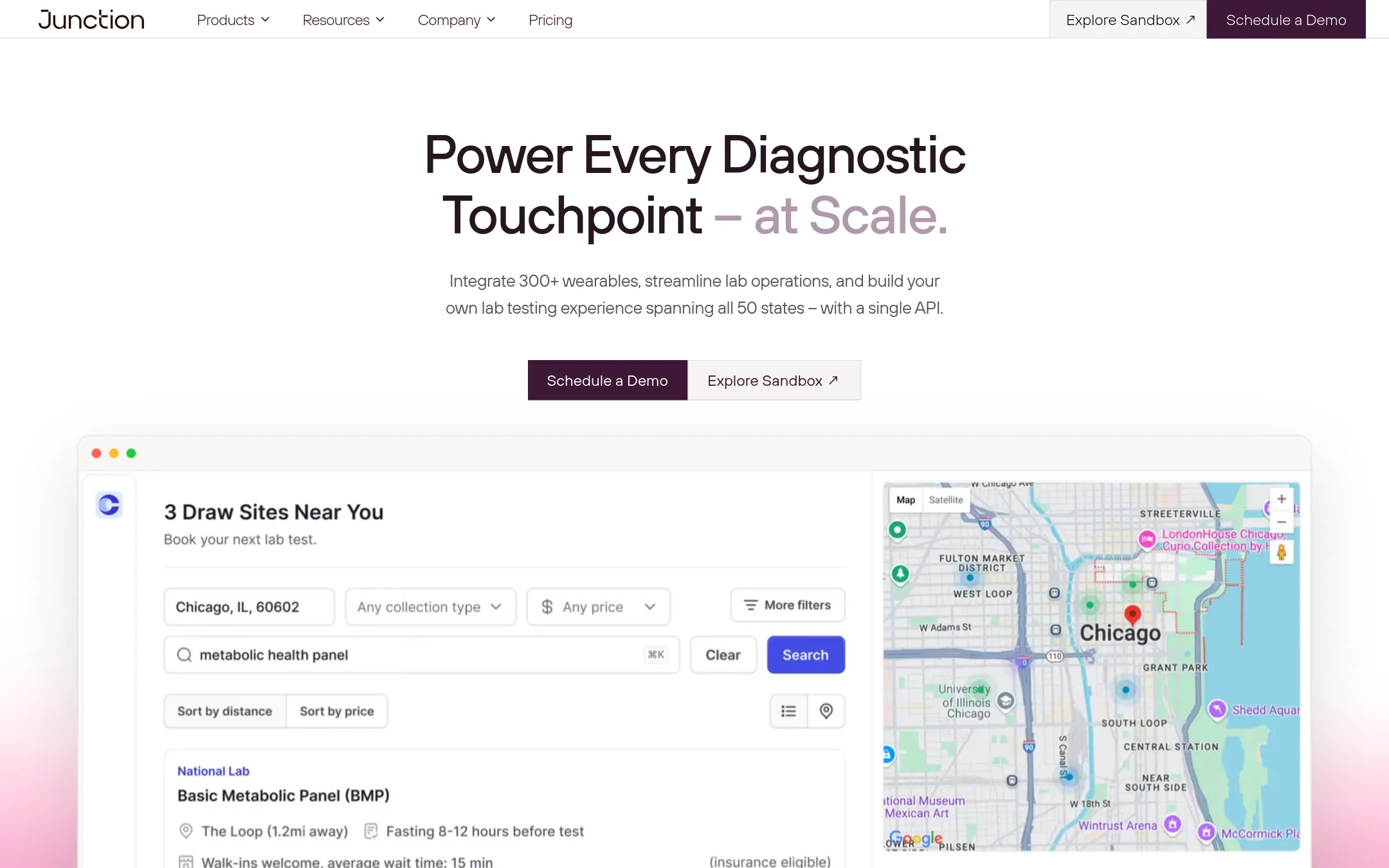
Junction combines wearable device data with lab testing in one API, which Validic does not cover. Choose Junction if you need at-home or in-person lab workflows alongside device connectivity, especially for virtual-first clinics or consumer diagnostics.
Where it is strong
- Includes lab testing API and nationwide lab network
- Flat $300/mo for up to 500 users on Launch
- HIPAA compliant with SOC 2 Type 2 and ISO 27001
Where it falls short
- Lab testing only on Enterprise plan
- Minimum order of 250 kits for lab tests
- Pricing:
- Launch is $300 per month billed monthly. Enterprise is custom and billed annually.
- Switching from Validic:
- Moving from Validic means replacing your device normalization layer with Junction's API, and adding lab testing if you need it. Device data typically flows within days.
- TSee website
10.Terra API
Healthcare
API for developers to access health data
- Not published
11.1upHealth
Best for: Health plans and payers that need to meet CMS interoperability mandates and exchange clinical and claims data across their ecosystem.
- Pricing
- Not published
- Category
- Healthcare
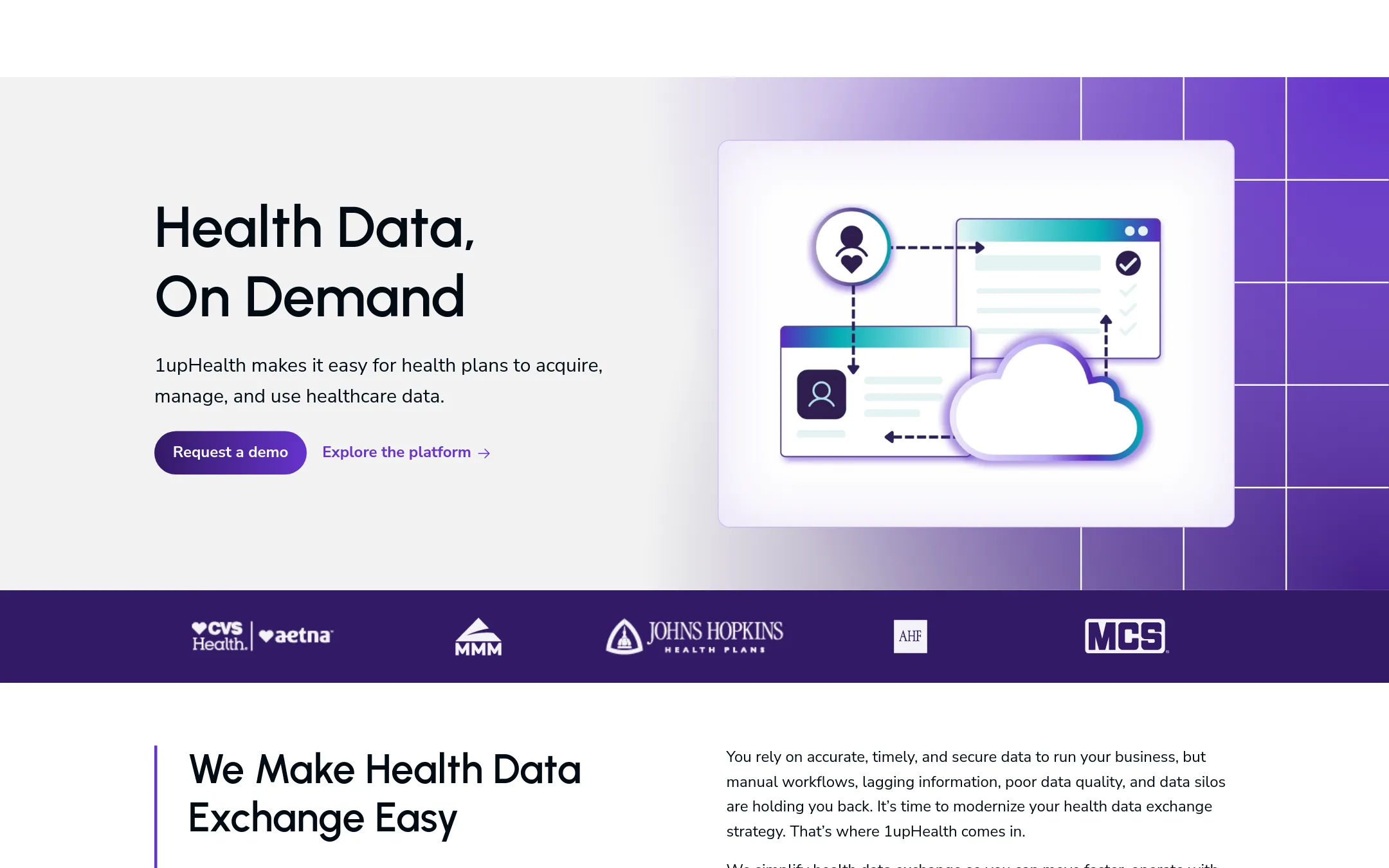
1upHealth is a FHIR-first interoperability platform for health plans, covering CMS compliance, prior authorization, and payer-to-payer exchange. Choose it over Validic when your primary need is payer-side regulatory data exchange rather than patient-generated health data from wearables and devices.
Where it is strong
- Built specifically for payer interoperability and CMS compliance
- Modular products for prior auth, provider access, and patient access
- Lakehouse architecture handles large-scale data exchange
Where it falls short
- No device or wearable data normalization like Validic's 700+ integrations
- Focused on payers, not health systems or wellness platforms
- Pricing:
- Pricing is not published on the site.
- Switching from Validic:
- Moving from Validic means shifting from device data normalization to payer-centric FHIR APIs, which is a different data domain and integration approach.
- Not published
12.Human API
Best for: Life insurance carriers in the U.S. that need EHRs and medical insights for underwriting at scale.
- Pricing
- Not published
- Category
- Healthcare
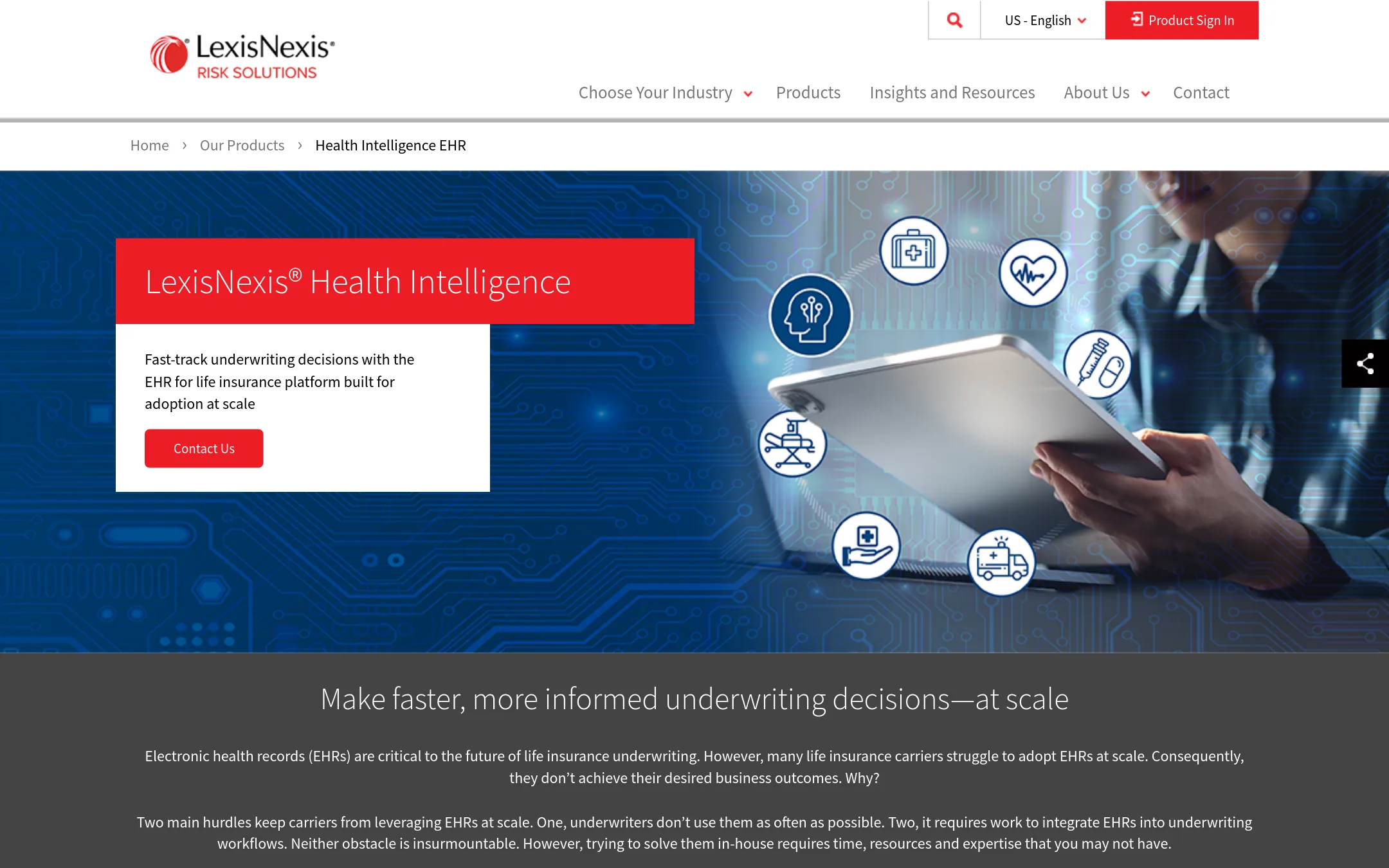
Human API, now LexisNexis Health Intelligence, is built for life insurance underwriting, not for continuous health data platforms. It delivers EHRs and medical insights to carriers, with automatic APS fulfillment when EHRs aren't available. Choose it if you're a life insurer needing fast, underwriting-specific health data, not a health system building on device data.
Where it is strong
- Connects to over 30,000 U.S. data sources covering 270 million lives
- EHRs are up to 30% shorter while retaining clinical info underwriters need
- Automatic APS fulfillment through affiliate Human API, Inc. when no EHR is available
Where it falls short
- Focused on life insurance underwriting, not general health data platforms
- No device integrations or continuous health data normalization like Validic
- Pricing:
- Pricing is not published on the site.
See more comparisons in Healthcare alternatives.
FAQ
Questions about Validic alternatives
What is the best alternative to Validic for a startup that needs device data and lab testing?
Junction is the strongest choice because it combines wearable device data with lab testing in one API. It has a flat $300 per month plan for up to 500 users, making it accessible for startups. Lab testing is only on the Enterprise plan, so check that if you need it.
Which alternative is best for a hospital that already uses an EHR?
If you need a full EHR system, Epic or Cerner are the top choices. Epic is known for its patient portal and large installed base, while Cerner integrates deeply with hospital operations. Both are major projects, not plug-in APIs, so consider your long-term commitment.
Is there an alternative that focuses on payer interoperability and CMS compliance?
1upHealth is built specifically for health plans and payers to meet CMS mandates. It covers prior authorization, provider access, and patient access. It does not handle device data, so it is only suitable if your primary need is payer-side data exchange.
What is the most cost-effective alternative for a small company?
Junction offers a published $300 per month plan, which is the only transparent pricing among the alternatives. Redox has a Sandbox tier at $15k per year, but it excludes providers and payers. Most other alternatives require contacting sales for a quote.
Which alternative provides the broadest access to clinical records?
Particle Health gives access to 320+ million patient records from 160,000+ organizations through a single API. Health Gorilla also provides a complete patient record across settings with TEFCA compliance. Both are strong if you need EHR and claims data, not device streams.
Last updated November 2, 2026.