WalletConnect alternatives
10 products compared · Updated November 2, 2026
The short answer
For most teams, Thirdweb offers the broadest developer toolkit with published pricing, while Privy and Dynamic are the strongest choices for fintechs needing embedded wallets and policy controls. Web3Modal suits teams that want a ready-made wallet connection UI with analytics, and RainbowKit is best for React frontend teams that only need a polished connect button.
Your shortlist, at a glance
Read the comparisons ↓ Web3ModalNot publishedTeams building DeFi or onchain finance apps that need wallet connection, embedded wallets, and payment flows in one SDK.
- RRainbowKitNot publishedWeb3 frontend teams building dApps who want a ready-made, themeable wallet connection UI in React.
- CConnectKitNot publishedIndividual Ethereum users on iOS who want a beautifully designed, self-custodial wallet with strong NFT viewing and simple onboarding.
- WWeb3AuthNot publishedConsumer apps and games that want to convert new users quickly with social logins and pre-generated wallets.
- PPrivyNot publishedFintechs and platforms that need embedded wallets, stablecoin payments, and programmable treasury operations with policy-based controls.
- DDynamicNot publishedFintechs and platforms that want to offer embedded wallets and stablecoin accounts with enterprise-grade security and governance.
 ThirdwebFrom $99/mo + usageDevelopment teams building crypto apps or AI agents on EVM and Solana that need wallet, token, and payment infrastructure in one platform.
- PParticle NetworkNot publishedTeams building consumer crypto apps that want social logins and gasless transactions without forcing users to manage wallets.
 DialectNot publishedWeb3 apps on Solana, Monad, or EVM that want one-click transactions and notifications inside their own interface.
 Push ProtocolNot publishedWeb3 developers building universal apps that need to reach users across multiple chains with a single deployment.
About WalletConnect and its alternatives
WalletConnect is a global connectivity network for wallets, banks, fintechs, and institutions. It provides one integration to connect to 700+ wallets, 900M end users, and $2 trillion in value, with payments, compliance, and security features built to institutional standards.
When comparing alternatives, weigh pricing structure, supported chains and wallets, integration complexity, and whether you need payments or compliance features. Some tools publish transparent pricing, while others require contacting sales. Consider your team's stack, target users, and whether you need a full network or just a wallet connection UI.
Explore the alternatives
- Not published
1.Web3Modal
Best for: Teams building DeFi or onchain finance apps that need wallet connection, embedded wallets, and payment flows in one SDK.
- Pricing
- Not published
- Category
- Security & Privacy
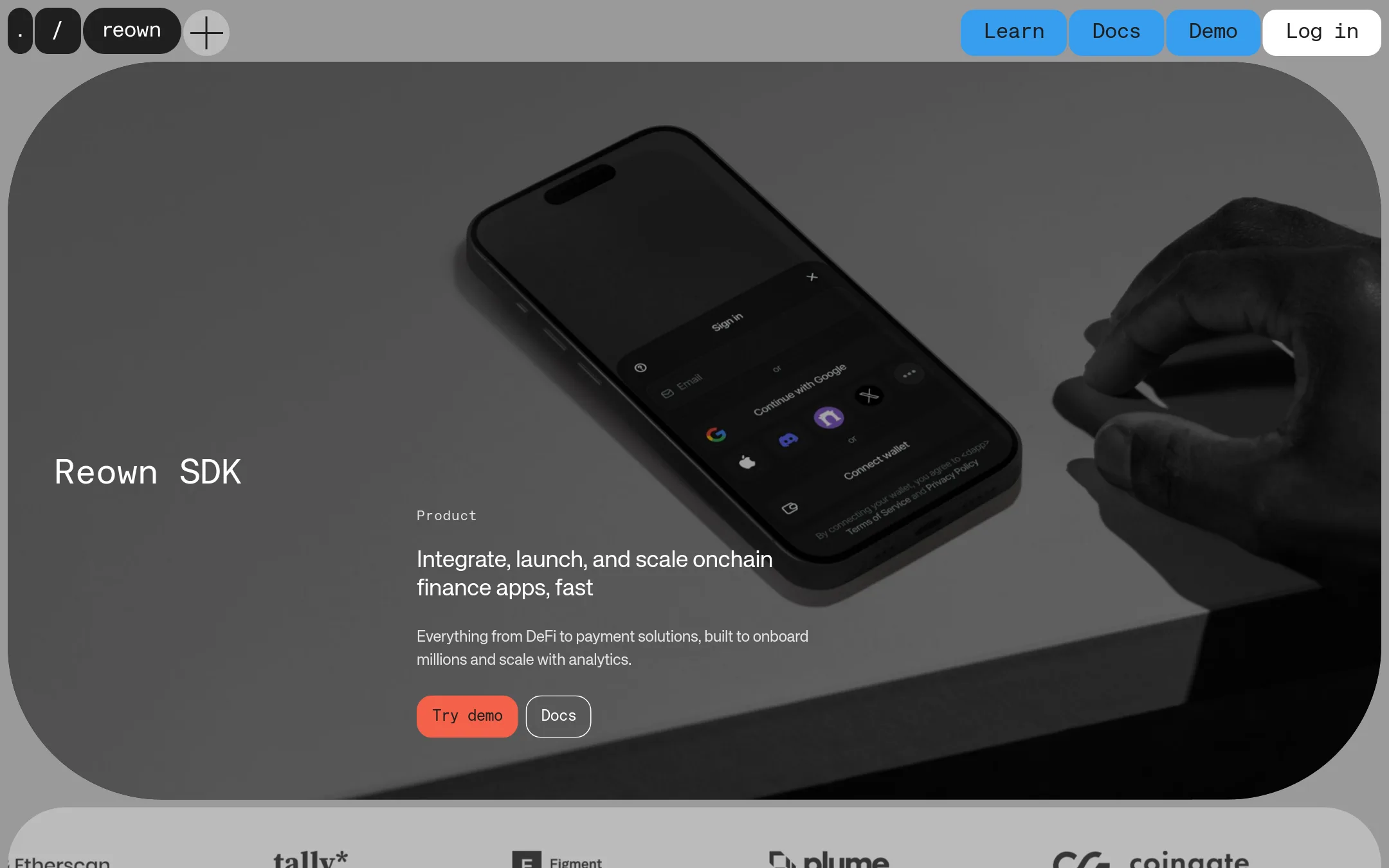
Web3Modal is a developer SDK for building onchain apps, covering wallet connection, logins, embedded wallets, and payments. Choose it instead of WalletConnect when you want a ready-made UI and analytics for your own app, rather than building on a raw connectivity network.
Where it is strong
- Connects to 500+ wallets across EVM, Solana, and Bitcoin
- Includes email/social login and embedded wallets with no seed phrase
- Built-in analytics for sessions, drop-offs, and user behavior
Where it falls short
- Pricing is not published on the site
- Free plan caps at 500 MAUs and 2.5M RPC calls per month
- Pricing:
- Pricing is not published on the site.
- Switching from WalletConnect:
- Moving from WalletConnect to Web3Modal means replacing your raw connectivity integration with a higher-level SDK that adds UI and analytics, but you still rely on WalletConnect for wallet connections underneath.
- RNot published
2.RainbowKit
Best for: Web3 frontend teams building dApps who want a ready-made, themeable wallet connection UI in React.
- Pricing
- Not published
- Category
- Other
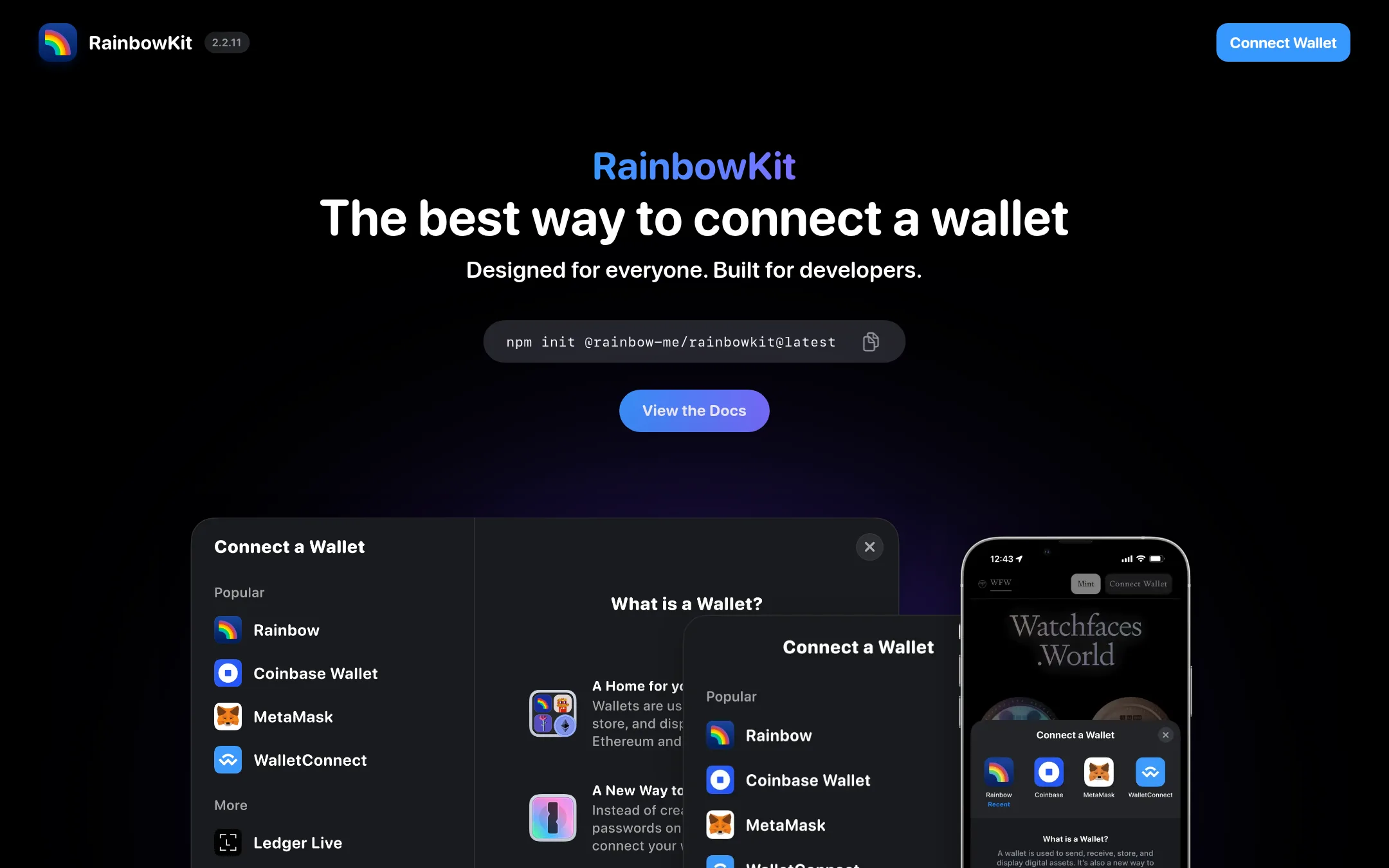
RainbowKit is an open-source React library that adds a polished, customizable wallet connection flow to your app. Choose it over WalletConnect when you are a frontend developer who wants a quick, branded connect button without building the UI yourself, and you don't need WalletConnect's broader payments and compliance infrastructure.
Where it is strong
- Easy to install and integrate into a React app
- Highly customizable themes and connect button
- Supports light/dark mode and custom wallet lists
Where it falls short
- Limited to wallet connection UI, no payments or compliance features
- Requires React, so not suitable for non-React stacks
- Pricing:
- Pricing is not published on the site.
- Switching from WalletConnect:
- Moving from WalletConnect means replacing a full connectivity and payments platform with a frontend component, so you would need to handle backend infrastructure separately.
- CNot published
3.ConnectKit
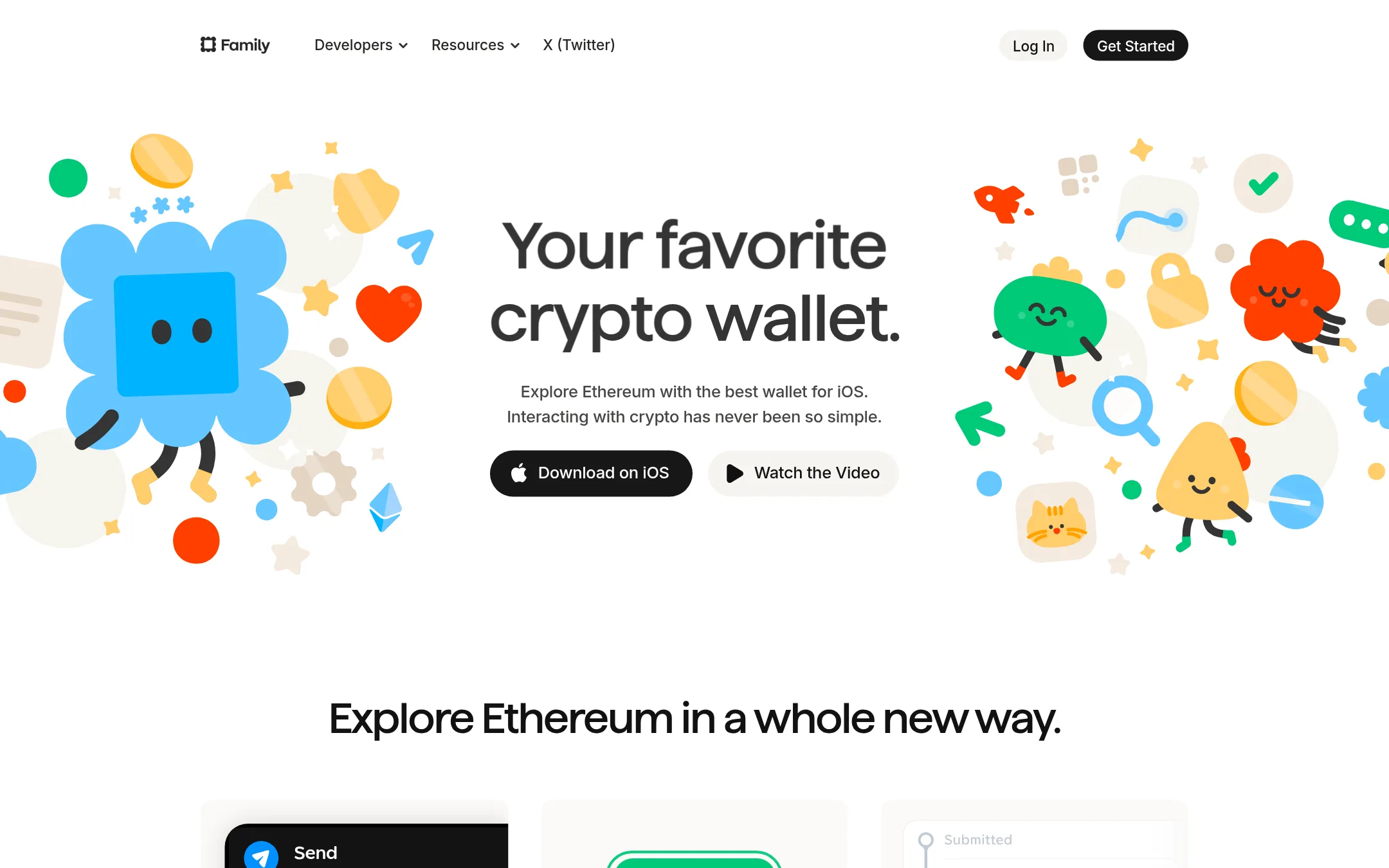
Best for: Individual Ethereum users on iOS who want a beautifully designed, self-custodial wallet with strong NFT viewing and simple onboarding.
- Pricing
- Not published
- Category
- Other
ConnectKit is a self-custodial Ethereum wallet for iOS, focused on a polished, beginner-friendly experience. Choose it over WalletConnect if you want a consumer wallet app with rich NFT support and human-readable activity, rather than infrastructure for connecting apps to wallets.
Where it is strong
- Self-custodial with private keys under your control
- Excellent NFT support including video, audio, and 3D models
- Works without email or phone number for privacy
Where it falls short
- Only available on iOS, no Android or desktop
- No built-in payment or compliance infrastructure like WalletConnect
- Pricing:
- Pricing is not published on the site.
- WNot published
4.Web3Auth
Best for: Consumer apps and games that want to convert new users quickly with social logins and pre-generated wallets.
- Pricing
- Not published
- Category
- Other
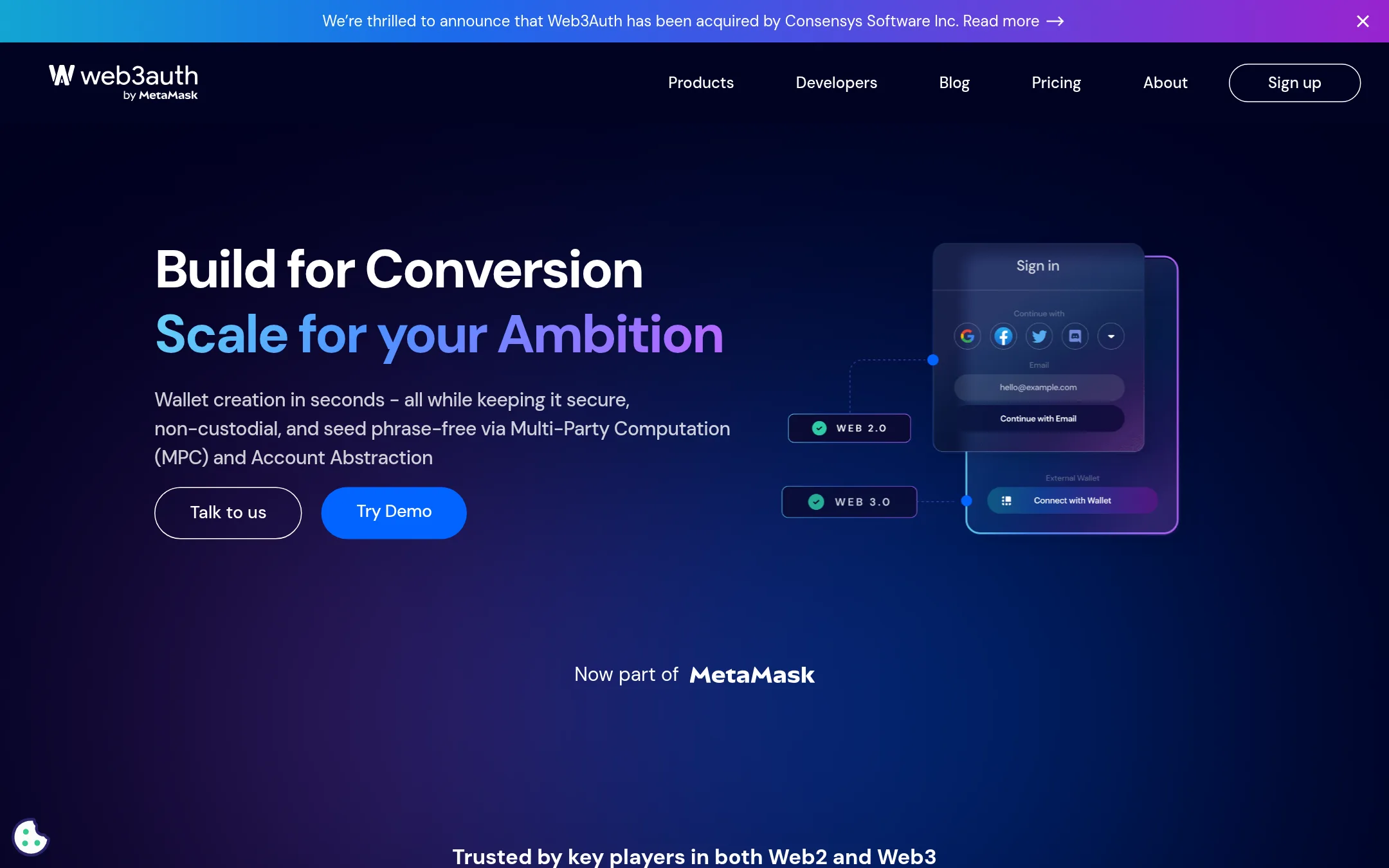
Web3Auth is a key management SDK that lets users log in with social accounts or email, using MPC and account abstraction. Choose it over WalletConnect when you want to onboard users without seed phrases and need a wallet infrastructure that is more developer-focused than a payment network.
Where it is strong
- Social login and email-based onboarding, no seed phrases
- MPC and account abstraction support for flexible key management
- Integrates in about 8 minutes, with whitelabel options
Where it falls short
- Pricing details are not publicly available
- Lacks the payment and compliance infrastructure that WalletConnect offers
- Pricing:
- Pricing is not published on the site. The pricing page returns a 404 error.
- Switching from WalletConnect:
- Moving from WalletConnect to Web3Auth means replacing your wallet connection layer with a key management SDK, so you will need to rework your authentication flow.
- PNot published
5.Privy
Best for: Fintechs and platforms that need embedded wallets, stablecoin payments, and programmable treasury operations with policy-based controls.
- Pricing
- Not published
- Category
- Other
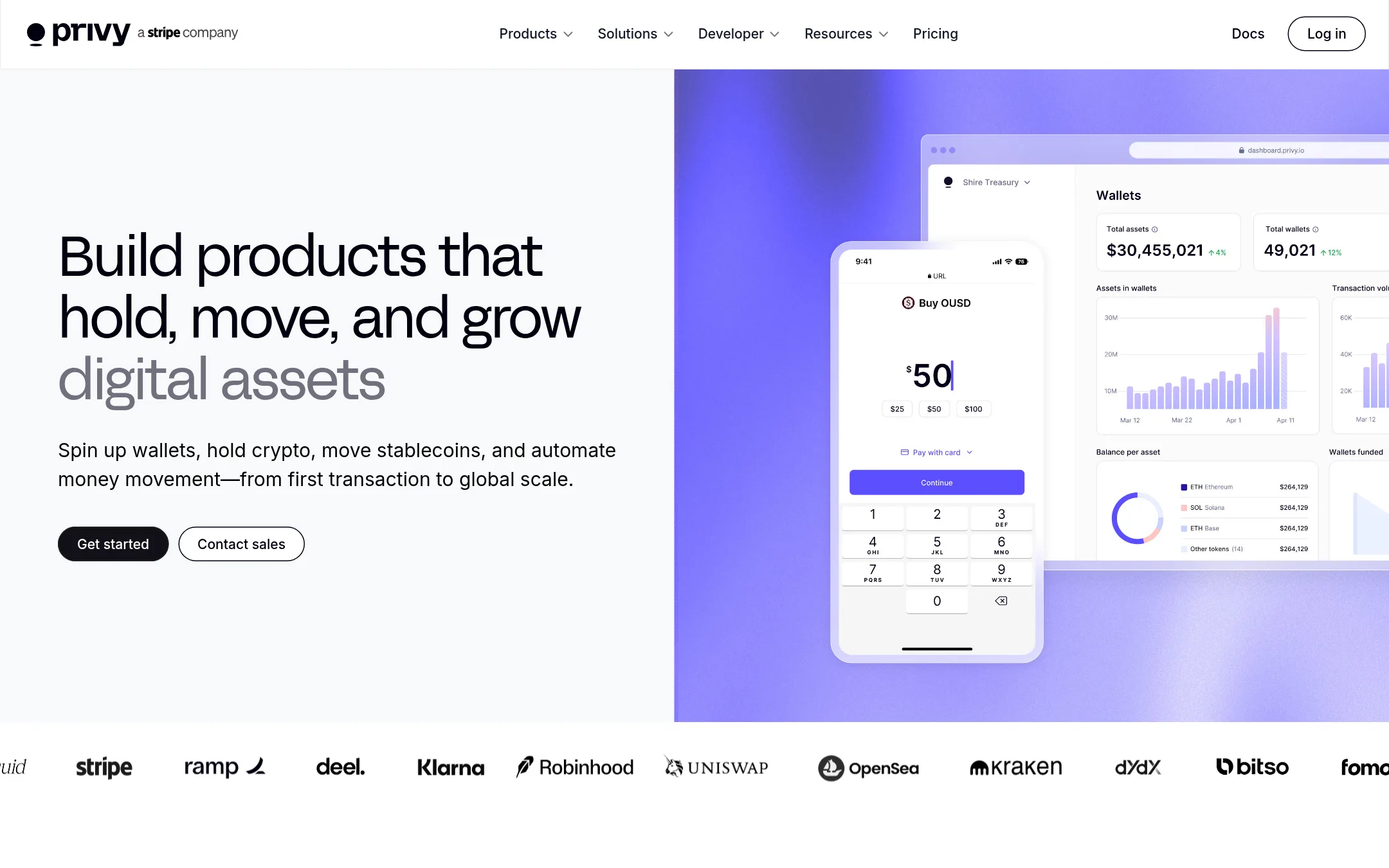
Privy is a digital asset infrastructure platform that lets you build embedded wallets, move stablecoins, and automate money movement. You would choose it over WalletConnect when you need programmable wallets and financial flows with fine-grained policy controls, rather than just a wallet connection network.
Where it is strong
- Free tier includes 50K signatures and $1M transaction volume monthly
- Hardware-isolated key management with policy engine and quorum approvals
- SDKs for web, mobile, and gaming with whitelabel UI components
Where it falls short
- Pricing tiers are based on MAU and signatures, which can get complex
- Enterprise features like advanced SSO and custodial wallets are add-ons
- Pricing:
- Pricing is not published on the site.
- DNot published
6.Dynamic
Best for: Fintechs and platforms that want to offer embedded wallets and stablecoin accounts with enterprise-grade security and governance.
- Pricing
- Not published
- Category
- Other
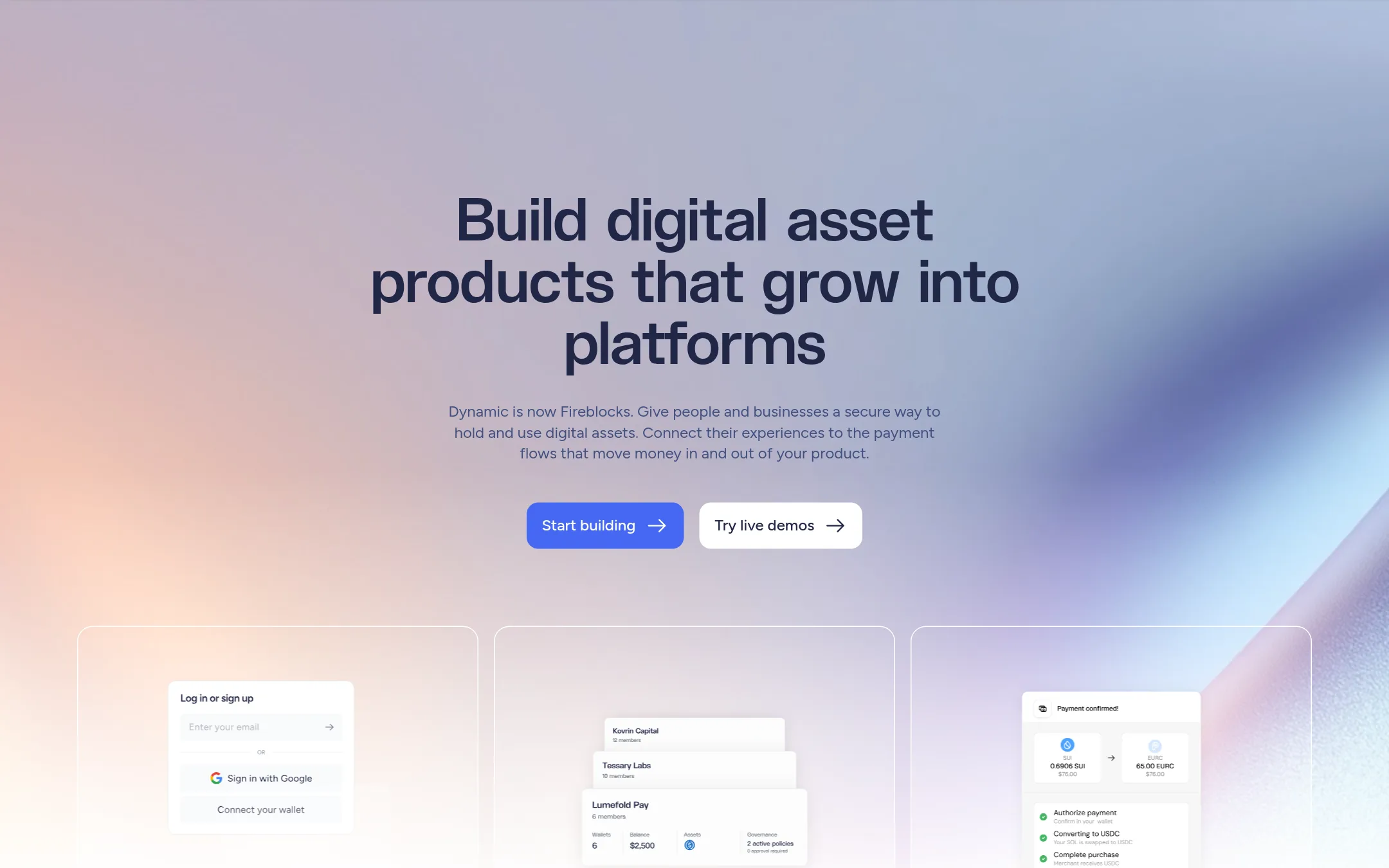
Dynamic, now part of Fireblocks, provides embedded wallets and business accounts so you can add digital asset holding and payments to your product without building crypto infrastructure yourself. Choose it over WalletConnect when you need managed wallet custody, key recovery, and policy controls rather than just wallet connectivity and payment routing.
Where it is strong
- Embedded wallets with distributed key management and independent recovery
- Business accounts with roles, approvals, and spending policies
- Supports 800+ external wallets and 80+ blockchains
Where it falls short
- Pricing is not public. Requires contacting sales
- No standalone wallet connection network like WalletConnect's 700+ wallet integration
- Pricing:
- Pricing is not published on the site.
- From $99/mo + usage
7.Thirdweb
Best for: Development teams building crypto apps or AI agents on EVM and Solana that need wallet, token, and payment infrastructure in one platform.
- Pricing
- From $99/mo + usage
- Category
- Developer Tools
Thirdweb is a developer platform for building crypto apps and AI agents, with tools for tokens, wallets, payments, and blockchain data. Choose it over WalletConnect when you need a broader developer toolkit for building and scaling your own app, rather than a network for connecting to existing wallets and payment flows.
Where it is strong
- Supports 2500+ chains across EVM and Solana
- Usage-based pricing scales with your app
- Includes audited smart contracts and account abstraction
Where it falls short
- No compliance or regulatory features like WalletConnect
- Not a payment network. You build the payment flows yourself
- Pricing:
- Growth is $99/month, Scale is $499/month, Pro starts at $1,499/month. Usage-based fees apply for user wallets, server wallet requests, gas sponsorship, and swaps.
- PNot published
8.Particle Network
Best for: Teams building consumer crypto apps that want social logins and gasless transactions without forcing users to manage wallets.
- Pricing
- Not published
- Category
- Other
Particle Network is a universal transaction layer that handles account abstraction, social logins, and gas sponsorship for crypto apps. Choose it over WalletConnect when you want to onboard users without seed phrases or wallet downloads, and need multi-chain operations abstracted away.
Where it is strong
- Social logins with OAuth, no seed phrases
- Gas sponsorship and stablecoin gas payments
- Chain-agnostic in under 30 lines of code
Where it falls short
- No mention of compliance or institutional features
- No wallet network scale like WalletConnect's 700+ wallets
- Pricing:
- Pricing is not published on the site.
- Not published
9.Dialect
Best for: Web3 apps on Solana, Monad, or EVM that want one-click transactions and notifications inside their own interface.
- Pricing
- Not published
- Category
- Other
Dialect embeds onchain transactions and notifications directly into existing apps and platforms, so users can swap, stake, or vote without leaving the page. Choose it over WalletConnect when your priority is in-context actions and alerts rather than wallet-to-app connectivity at global scale.
Where it is strong
- Embed transactions directly into your app, no redirects
- Actionable alerts for positions, prices, and governance
- Integrates in minutes with APIs and SDKs
Where it falls short
- No published pricing or enterprise tiers
- Smaller network than WalletConnect, fewer supported chains
- Pricing:
- Pricing is not published on the site.
- Not published
10.Push Protocol
Best for: Web3 developers building universal apps that need to reach users across multiple chains with a single deployment.
- Pricing
- Not published
- Category
- Security & Privacy
Push Protocol is a Layer 1 blockchain for universal apps, letting you deploy once and reach users across any chain. Choose it over WalletConnect if you want to build a dApp that works with any wallet and any token without needing a separate connectivity or payment layer.
Where it is strong
- Deploy once and reach users on any chain
- Use any wallet or gas token
- Native finality and fast block time
Where it falls short
- No published pricing or fee structure
- Not a payments or compliance platform like WalletConnect
- Pricing:
- Pricing is not published on the site.
See more comparisons in Security & Privacy alternatives.
FAQ
Questions about WalletConnect alternatives
Which alternative has the most transparent pricing?
Thirdweb is the only one with published pricing: Growth at $99/month, Scale at $499/month, and Pro starting at $1,499/month, plus usage-based fees. Privy offers a free tier with 50K signatures and $1M transaction volume monthly, but higher tiers are not public. All other alternatives either have no published pricing or require contacting sales.
Which alternative supports the most blockchains?
Thirdweb supports 2500+ chains across EVM and Solana, the widest range among the listed tools. Dynamic supports 80+ blockchains, and Web3Modal connects to 500+ wallets across EVM, Solana, and Bitcoin. WalletConnect itself supports 700+ wallets and any asset on any chain.
Which alternative is best for a fintech needing embedded wallets and policy controls?
Privy and Dynamic are the strongest for fintechs. Privy offers hardware-isolated key management, a policy engine, and quorum approvals, plus SDKs for web, mobile, and gaming. Dynamic, now part of Fireblocks, provides embedded wallets with distributed key management, independent recovery, and business accounts with roles and spending policies.
Which alternative is easiest for a frontend team to integrate?
RainbowKit is a React library that adds a polished, themeable wallet connection UI with minimal setup. Web3Modal also provides a ready-made UI with built-in analytics, but it has a free plan capped at 500 MAUs and 2.5M RPC calls per month. Both are simpler than building on a raw connectivity network like WalletConnect.
Which alternative is best for onboarding users without seed phrases?
Web3Auth and Particle Network both support social logins and eliminate seed phrases. Web3Auth uses MPC and account abstraction, integrates in about 8 minutes, and is good for consumer apps and games. Particle Network offers social logins, gas sponsorship, and chain-agnostic operations in under 30 lines of code, but lacks compliance features.
Last updated November 2, 2026.