
WarpBuild alternatives
12 products compared · Updated November 3, 2026
The short answer
WarpBuild is a drop-in replacement for GitHub Actions runners that promises 2x faster builds at 50% lower cost. The strongest alternatives are CircleCI for teams wanting a mature platform with a free tier, Buildkite for teams needing flexible self-hosted orchestration, and Semaphore for teams that want an open-source, agent-friendly CI with pay-as-you-go pricing. Each suits different priorities: CircleCI for ecosystem maturity, Buildkite for control, and Semaphore for agent-native workflows.
Your shortlist, at a glance
Read the comparisons ↓ GitHub ProjectsFree, $4/user/moTeams already on GitHub that want lightweight project management without leaving their code repository.
 BuildkiteFrom $30/user/moTeams that need flexible, self-hosted CI orchestration with advanced pipeline control and test analytics.
 CircleCINot publishedTeams that want a well-known CI/CD platform with a free tier and flexible credit-based pricing.
 GitLabFrom $12/user/moTeams that want an integrated DevSecOps platform with built-in security scanning and compliance, rather than a standalone CI runner replacement.
 Travis CINot publishedTeams that need a straightforward CI/CD tool with on-premise or private cloud deployment options and support for non-GitHub version control systems.
JenkinsFree (self-hosted)Teams that already run their own infrastructure and want a free, extensible CI/CD server they fully control.
Microsoft Azure CycleCloudPay-as-you-goResearch teams and enterprises running HPC workloads on Azure that need full control over cluster infrastructure.
 Amazon BusinessNot publishedTeams that need to manage and control purchasing of business supplies, from office products to MRO items, with approval flows and spend reporting.
- RRecordBookNot publishedSmall business owners on Android who want a lightweight Airtable-style database app on their phone.
 TeamCityNot publishedTeams that want a self-hosted CI/CD server with advanced build configuration and JetBrains ecosystem integration
 DroneNot publishedTeams that prefer self-hosting their CI and want deep integration with multiple Git providers without per-minute runner costs.
 SemaphoreFrom $0.003/minTeams that want an open-source, agent-friendly CI/CD platform with pay-as-you-go compute and built-in support for coding agents.
About WarpBuild and its alternatives
WarpBuild is a managed CI service that replaces GitHub Actions runners. It promises 2x faster builds, 50% lower cost, and supports Linux, macOS, and Windows across x86-64 and ARM64. It offers unlimited concurrency, incremental builds, and fast caching, with deployment options in its managed cloud or your own AWS, GCP, or Azure VPC. Pricing is per-minute, starting at $0.004 for 2vCPU, with BYOC at $0.002/min. It is SOC2 Type 2 compliant and provides 24x7 support.
When comparing alternatives, weigh pricing structure (per-minute vs. per-user vs. free tier), deployment options (managed vs. self-hosted), integration with your existing Git provider, support for your operating systems and architectures, and contract terms (annual commitments, free credits). Consider whether you need a full DevSecOps platform or just a runner replacement, and whether you want to manage infrastructure yourself or use a managed service.
Explore the alternatives
- Free, $4/user/mo
1.GitHub Projects
Best for: Teams already on GitHub that want lightweight project management without leaving their code repository.
- Pricing
- Free, $4/user/mo
- Category
- Productivity & Project Management
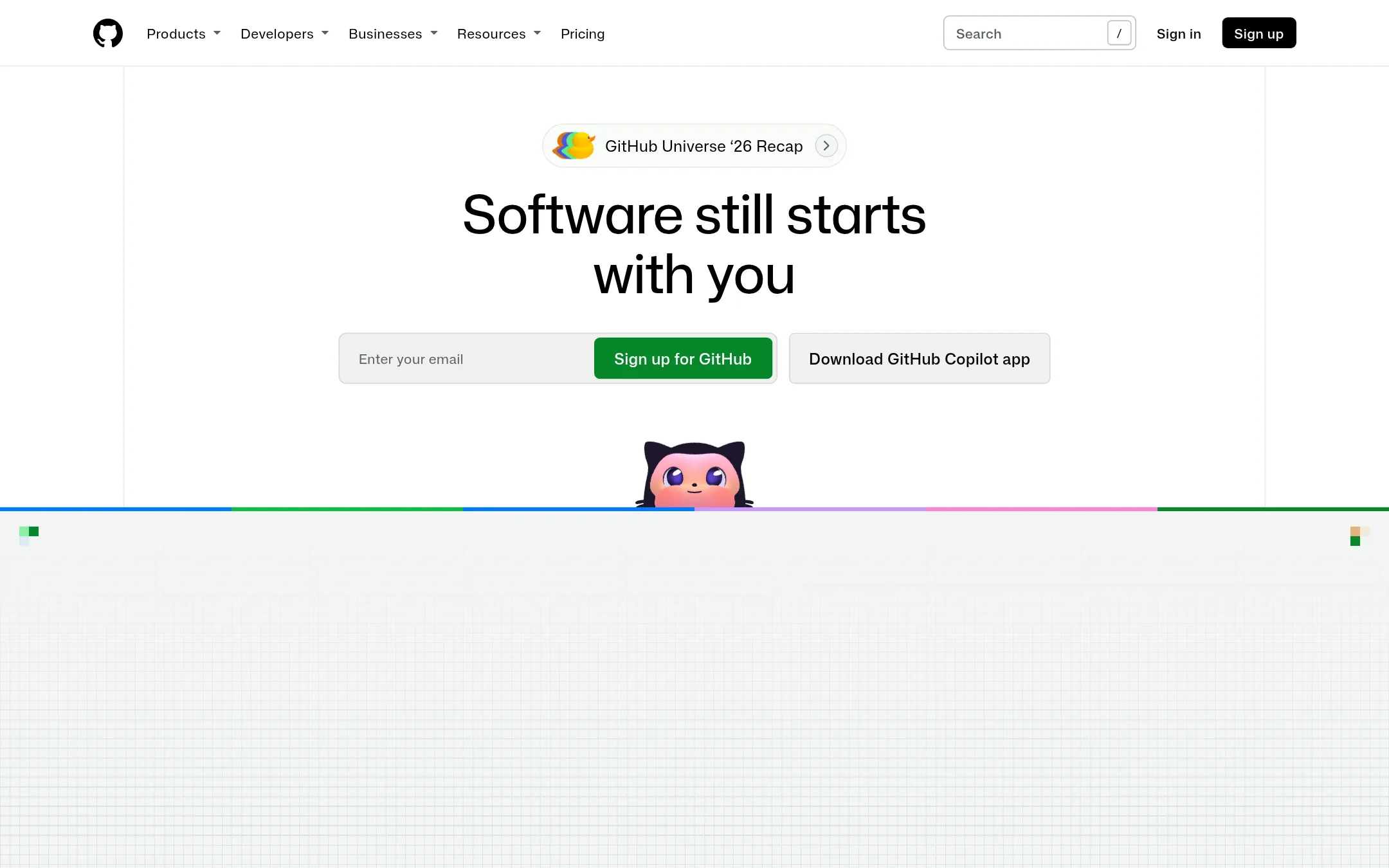
GitHub Projects is the built-in issue tracking and project planning tool inside GitHub. Choose it instead of WarpBuild if you want to manage tasks, track work, and plan sprints right next to your code, without paying for a separate CI runner service.
Where it is strong
- Native integration with GitHub issues and pull requests.
- Free tier includes unlimited repositories and 2,000 CI minutes.
- Simple board and list views for tracking work.
Where it falls short
- Not a CI runner replacement. Only includes basic CI minutes.
- Limited to GitHub's ecosystem, no external runner performance boost.
- Pricing:
- Free for individuals and organizations with unlimited repositories and 2,000 CI/CD minutes per month. Team is $4 per user per month, and Enterprise is $21 per user per month.
- Switching from WarpBuild:
- Moving from WarpBuild to GitHub Projects means giving up faster CI runners and using GitHub's built-in minutes, which may slow builds.
- From $30/user/mo
2.Buildkite
Best for: Teams that need flexible, self-hosted CI orchestration with advanced pipeline control and test analytics.

- Pricing
- From $30/user/mo
- Category
- Other
Buildkite is a programmable CI/CD platform that lets you run builds on your own infrastructure or on Buildkite-hosted agents. It's a good fit if you need deep control over pipelines, want to use your existing cloud compute, or need features like dynamic pipelines and test analytics that go beyond what WarpBuild offers.
Where it is strong
- Run agents on your own infrastructure for full control and cost efficiency.
- Dynamic pipelines and conditional logic for complex workflows.
- Built-in test analytics and flaky test isolation.
Where it falls short
- Per-user pricing can get expensive for large teams.
- Hosted agents are billed per vCPU minute, which may be less predictable than WarpBuild's flat per-minute rates.
- Pricing:
- Free plan includes up to 5 users and 10 concurrent jobs. Pro plan is $30 per active user per month, including 4,000 Linux vCPU minutes. Hosted Linux agents are $0.004 per vCPU minute, Mac agents $0.02 per vCPU minute, Windows agents $0.008 per vCPU minute.
- Switching from WarpBuild:
- Moving from WarpBuild involves rewriting pipeline definitions and configuring agents, since Buildkite uses its own pipeline format and agent setup.
- Not published
3.CircleCI
Best for: Teams that want a well-known CI/CD platform with a free tier and flexible credit-based pricing.
- Pricing
- Not published
- Category
- Developer Tools
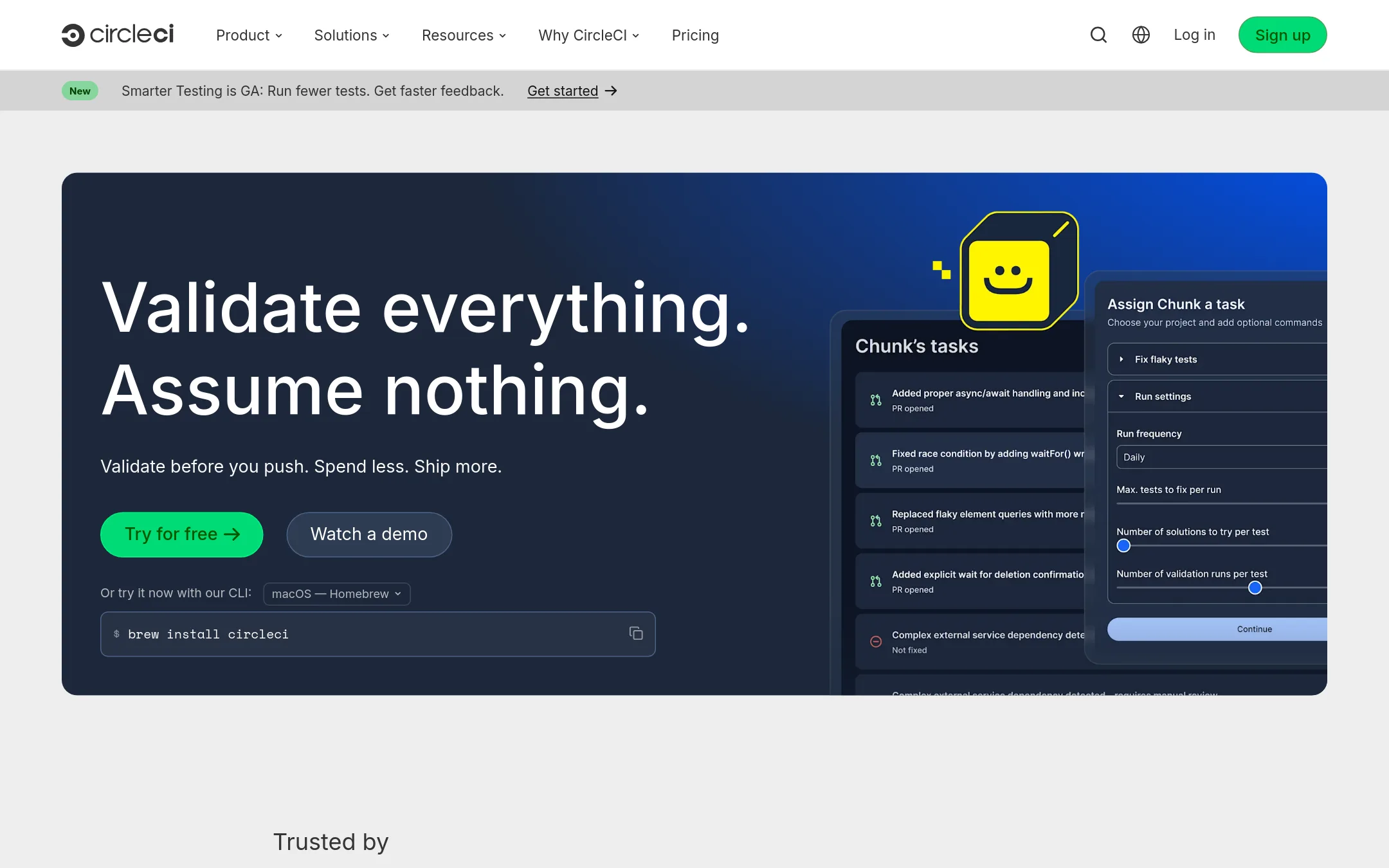
CircleCI is a mature CI/CD platform with flexible usage-based pricing and a large ecosystem of integrations. You would choose it over WarpBuild if you need a long-established platform with extensive configuration options, or if you want a free tier with 6,000 build minutes.
Where it is strong
- Free tier with 6,000 build minutes per month
- Supports Docker, Windows, Linux, Arm, macOS, and GPU resource classes
- Smarter Testing features like intelligent test selection and dynamic test splitting
Where it falls short
- Pricing is not transparently published, requires contacting sales for Scale plan
- Credit-based system can be complex to estimate costs compared to per-minute pricing
- Pricing:
- Pricing is not published on the site.
- Switching from WarpBuild:
- Moving from WarpBuild to CircleCI requires rewriting your workflow configuration, as CircleCI uses its own YAML syntax and orbs, not GitHub Actions.
- From $12/user/mo
4.GitLab
Best for: Teams that want an integrated DevSecOps platform with built-in security scanning and compliance, rather than a standalone CI runner replacement.
GitLab is a full DevSecOps platform that includes source control, CI/CD, security scanning, and AI orchestration in one place. You would choose it over WarpBuild if you want a single tool for the entire software lifecycle, not just faster CI runners, and you need built-in compliance and audit trails.
Where it is strong
- Full platform: source control, CI/CD, security, and AI in one
- Built-in compliance and audit trails for regulated industries
- Flexible pricing with GitLab Flex annual commitment
Where it falls short
- Compute minutes are limited on lower tiers, unlike WarpBuild's unlimited concurrency
- Not a drop-in replacement for GitHub Actions. Migration involves moving workflows
- Pricing:
- Free tier includes 5 users and 400 compute minutes per month. Premium is $12 per user/month with 10,000 compute minutes. Ultimate is $24 per user/month with 50,000 compute minutes.
- Switching from WarpBuild:
- Moving from WarpBuild means migrating your CI pipelines to GitLab CI/CD, which is a different syntax and runner model.
- Not published
5.Travis CI
Best for: Teams that need a straightforward CI/CD tool with on-premise or private cloud deployment options and support for non-GitHub version control systems.
- Pricing
- Not published
- Category
- Other
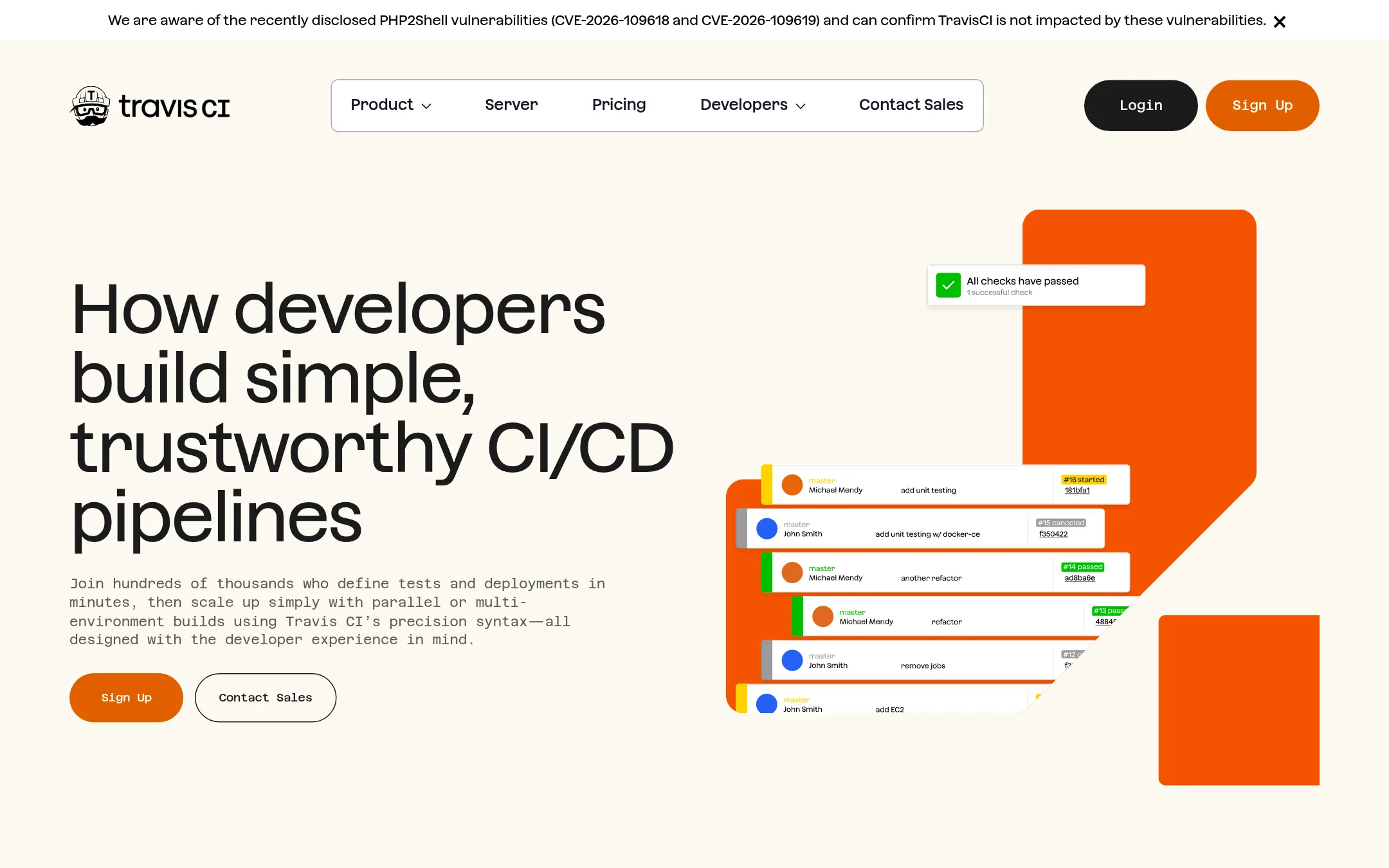
Travis CI is a long-standing CI/CD tool that offers both cloud and on-premise options, with a focus on simplicity and flexibility. Teams that need to run builds on their own infrastructure or require support for Perforce and Subversion would choose Travis CI over WarpBuild, which is tightly integrated with GitHub Actions.
Where it is strong
- Offers on-premise or private cloud deployment for full control.
- Supports Perforce and Subversion in addition to Git.
- Provides engineering-driven customer support and a genuine community.
Where it falls short
- Pricing details are not publicly listed, requiring a sales conversation.
- May not offer the same level of GitHub Actions integration as WarpBuild.
- Pricing:
- Pricing is not published on the site.
- Free (self-hosted)
6.Jenkins
Best for: Teams that already run their own infrastructure and want a free, extensible CI/CD server they fully control.
- Pricing
- Free (self-hosted)
- Category
- Developer Tools
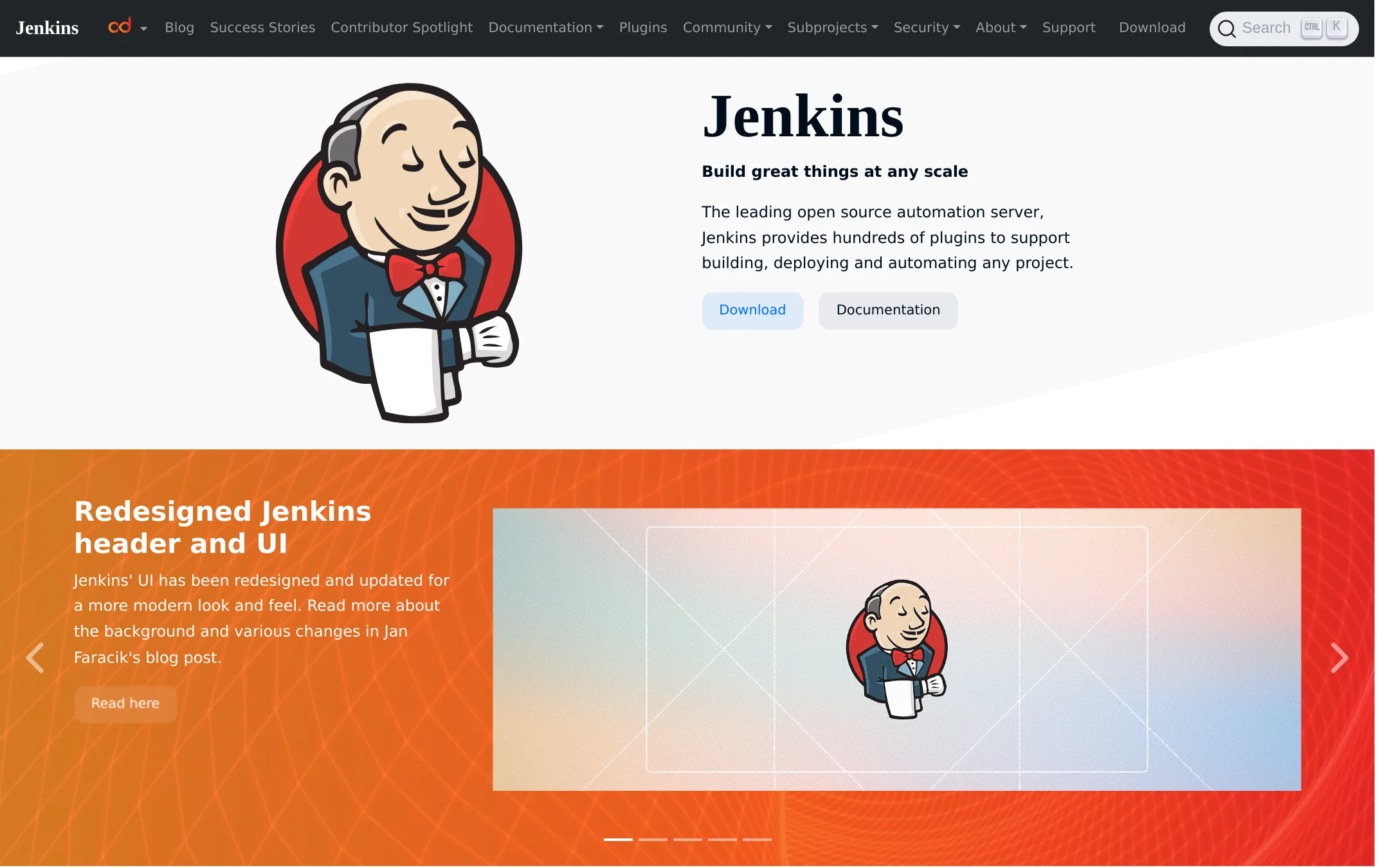
Jenkins is a self-hosted, open-source automation server that you install and manage yourself. Choose it over WarpBuild if you need full control over your CI/CD infrastructure, want to avoid per-minute runner costs, or require deep customization through its 2300+ plugins.
Where it is strong
- Open source with no per-minute or per-seat fees
- Huge plugin ecosystem for nearly any tool integration
- Runs on your own hardware or cloud, so data stays in your perimeter
Where it falls short
- You manage installation, maintenance, and scaling yourself
- No managed macOS or Windows runners. You must provision those
- Pricing:
- Pricing is not published on the site.
- Switching from WarpBuild:
- Moving from WarpBuild means replacing managed runners with your own Jenkins agents and rewriting pipeline definitions, since Jenkins uses its own pipeline syntax rather than GitHub Actions workflows.
- Pay-as-you-go
7.Microsoft Azure CycleCloud
Best for: Research teams and enterprises running HPC workloads on Azure that need full control over cluster infrastructure.

- Pricing
- Pay-as-you-go
- Category
- Developer Tools
Azure CycleCloud is a cluster management tool for running HPC and batch workloads on Azure. You would choose it instead of WarpBuild if you need to orchestrate large, custom compute clusters for scientific or engineering simulations, not just CI runners.
Where it is strong
- Deep integration with Azure services and virtual machines.
- Supports a wide range of HPC schedulers and workloads.
- Scales to thousands of cores for large compute jobs.
Where it falls short
- Requires significant setup and management compared to a managed CI service.
- No built-in GitHub Actions runner support. You must configure it yourself.
- Pricing:
- In the United States, Azure pricing is consumption-based. You pay only for the resources you use, with options like reservations and savings plans for consistent usage.
- Not published
8.Amazon Business
Best for: Teams that need to manage and control purchasing of business supplies, from office products to MRO items, with approval flows and spend reporting.

- Pricing
- Not published
- Category
- E-commerce
Amazon Business is a procurement platform for buying supplies and equipment, not a CI runner. You would choose it instead of WarpBuild only if your team's bottleneck is purchasing and spend management, not build speed. It offers approval workflows, spend analytics, and bulk discounts across Amazon's catalog.
Where it is strong
- Wide product selection with quantity discounts
- Approval workflows and spend analytics
- Free account creation. Prime Business trial available
Where it falls short
- Not a CI/CD tool. No build runners
- Pricing not transparent. Requires account for quotes
- Pricing:
- Pricing is not published on the site.
- RNot published
9.RecordBook
Best for: Small business owners on Android who want a lightweight Airtable-style database app on their phone.

- Pricing
- Not published
- Category
- Productivity & Project Management
RecordBook is a mobile app that positions itself as an Airtable-like tool for small businesses, but it is not a CI/CD product. You would choose it instead of WarpBuild only if you are not looking for faster GitHub Actions runners and instead need a simple database or spreadsheet app on Android.
Where it is strong
- Mobile-first, designed for Android users.
- Positioned for SMBs, potentially simpler than full CI tools.
- Free to install from Google Play.
Where it falls short
- No relation to CI or GitHub Actions, so it cannot replace WarpBuild's core function.
- Only available on Android, no web or desktop version mentioned.
- Pricing:
- Pricing is not published on the site.
- Not published
10.TeamCity
Best for: Teams that want a self-hosted CI/CD server with advanced build configuration and JetBrains ecosystem integration

- Pricing
- Not published
- Category
- Developer Tools
TeamCity is a self-hosted CI/CD server from JetBrains that gives you full control over your build infrastructure and pipeline configuration. Choose it over WarpBuild if you need deep customization, on-premises hosting, or tight integration with JetBrains IDEs and tools.
Where it is strong
- Self-hosted, so you control infrastructure and data
- Deep integration with JetBrains IDEs and tools
- Advanced build pipelines with intelligent suggestions
Where it falls short
- Requires you to manage and maintain your own servers
- No per-minute billing or managed runner scaling like WarpBuild
- Pricing:
- Pricing is not published on the site.
- Not published
11.Drone
Best for: Teams that prefer self-hosting their CI and want deep integration with multiple Git providers without per-minute runner costs.
- Pricing
- Not published
- Category
- Other
Drone is a self-hosted CI/CD platform that runs pipelines in Docker containers and integrates with GitHub, GitLab, and Bitbucket. Choose it if you want full control over your CI infrastructure and don't need managed runners or per-minute billing. It's a good fit for teams that already use containers and want a simple, single-binary installation.
Where it is strong
- Runs every build in an isolated Docker container, avoiding conflicts.
- Supports Linux, ARM, ARM64, and Windows x64 natively.
- Installs from a single binary and scales automatically.
Where it falls short
- No managed cloud option. You must host and maintain it yourself.
- No per-minute billing or built-in cost controls like WarpBuild.
- Pricing:
- Pricing is not published on the site.
- Switching from WarpBuild:
- Moving from WarpBuild means setting up your own Drone server and rewriting pipeline configs from GitHub Actions syntax to Drone's YAML format.
- From $0.003/min
12.Semaphore
Best for: Teams that want an open-source, agent-friendly CI/CD platform with pay-as-you-go compute and built-in support for coding agents.
- Pricing
- From $0.003/min
- Category
- Developer Tools
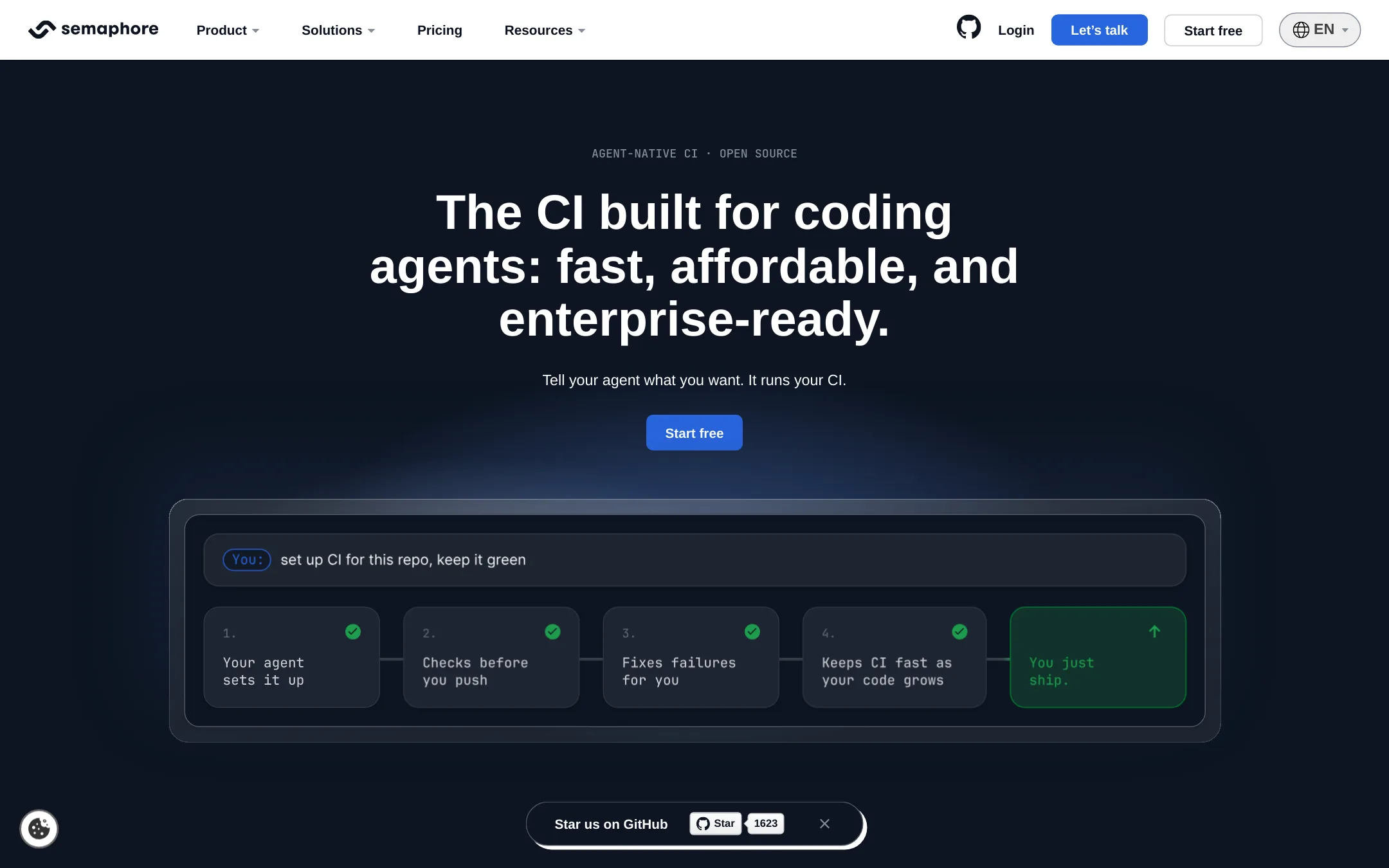
Semaphore is a CI/CD platform that bills per compute minute and includes a free monthly credit, so you only pay for what you run. It also offers an MCP server that lets coding agents set up and run CI directly. Choose it over WarpBuild if you want an open-source, agent-native CI tool with predictable per-job pricing and no per-seat fees.
Where it is strong
- Open source, so you can self-host or audit the code.
- Free $15 monthly credits for every org.
- MCP server lets agents set up and run CI without manual config.
Where it falls short
- No Windows runners listed on the pricing page.
- Higher concurrency limits require a request and may not be immediate.
- Pricing:
- Ubuntu ARM runners start at $0.003/min for 2vCPU, Ubuntu x64 at $0.0075/min, macOS at $0.09/min, and self-hosted at $0.0025/min. Every org gets $15 free usage per month.
- Switching from WarpBuild:
- Moving from WarpBuild means rewriting your GitHub Actions workflows to Semaphore's pipeline format and reconfiguring any GitHub-specific integrations.
See more comparisons in Developer Tools alternatives.
FAQ
Questions about WarpBuild alternatives
What is the cheapest way to get faster CI runners?
WarpBuild offers per-minute pricing starting at $0.004 for 2vCPU, with BYOC at $0.002/min. Semaphore has a free $15 monthly credit and Ubuntu ARM runners at $0.003/min. Buildkite's free plan includes 10 concurrent jobs, but hosted agents cost $0.004 per vCPU minute.
Can I use these alternatives with GitHub Actions?
WarpBuild is a drop-in replacement for GitHub Actions runners. CircleCI and Buildkite integrate with GitHub but require workflow migration. Semaphore supports GitHub integration but is not a drop-in replacement. Jenkins and Drone are self-hosted and can be configured to work with GitHub.
Which alternatives support macOS runners?
WarpBuild supports macOS, Windows, and Linux. CircleCI offers macOS resource classes. Buildkite has Mac agents at $0.02 per vCPU minute. Semaphore lists macOS at $0.09/min. Jenkins and Drone do not provide managed macOS runners.
Are there free tiers or trials available?
WarpBuild requires a payment method after free usage or credit limits. CircleCI offers a free tier with 6,000 build minutes per month. Semaphore gives every org $15 free usage monthly. Buildkite has a free plan with 10 concurrent jobs. GitHub Projects includes 2,000 CI minutes free.
What if I need to self-host for data residency or control?
WarpBuild offers BYOC on AWS, GCP, or Azure with data residency options. Jenkins, Drone, and TeamCity are fully self-hosted. Buildkite lets you run agents on your own infrastructure. Travis CI offers on-premise or private cloud deployment. Azure CycleCloud is for HPC clusters, not CI runners.
Last updated November 3, 2026.