
Whaly alternatives
6 products compared · Updated November 10, 2026
The short answer
The three strongest alternatives to Whaly are ThoughtSpot, Looker and Domo. ThoughtSpot suits data teams and product builders who need governed, natural-language analytics embedded in apps or used company-wide. Looker suits enterprise data teams that need a governed semantic layer and embedded dashboards inside their own product. Domo suits companies that want one governed platform for BI, AI agents and automation across many departments rather than a field-sales copilot.
Your shortlist, at a glance
Read the comparisons ↓- TTableauSee websiteData visualization and analytics platform
Microsoft Azure CycleCloudConsumption-basedEngineering and research teams that run HPC or batch simulation workloads on Azure
 LookerNot publishedEnterprise data teams that need a governed semantic layer and embedded analytics inside their own product
 Qlik SenseNot publishedMid-size and large enterprises that need self-hosted or on-prem analytics across many internal systems.
DomoCustom quoteCompanies that want one governed data platform for BI, AI agents and automation across many departments, not only sales field teams
 ThoughtSpotFrom $25/user/moData teams and product builders who need governed metrics and analytics embedded in apps or used across the whole company.
About Whaly and its alternatives
Whaly is an AI platform that aggregates a company's data and turns it into real-time insights and alerts. According to its site, it is known for a sales copilot for field teams, along with retail execution and perfect store monitoring, and for a blended model in which the platform does the analysis and a team of data experts handles implementation.
When comparing alternatives in this category, weigh the pricing structure first. Some vendors publish per-user tiers, others use credit-based consumption, and some keep pricing custom, so budgets may need a sales conversation. Also check regional availability, which can change prices and currency, the integrations you need, the support model, and the contract terms that apply to a pilot versus a full rollout.
Explore the alternatives
- TSee website
1.Tableau
Analytics & Data
A leading data visualization and BI platform for turning data into actionable insights.
- Consumption-based
2.Microsoft Azure CycleCloud
Best for: Engineering and research teams that run HPC or batch simulation workloads on Azure
- Pricing
- Consumption-based
- Category
- Developer Tools
Azure CycleCloud is an orchestration tool for high performance computing clusters on Azure. Teams pick it when they run schedulers and large batch or simulation workloads and need to spin compute up and down on demand. It does not do sales analytics, so it only fits Whaly's buyers if they are looking at infrastructure rather than field insight.
Where it is strong
- Manages scalable HPC clusters on Azure
- Pay-as-you-go consumption pricing with reservation and savings plan options
- Sits inside the wider Azure platform for teams already on it
Where it falls short
- Built for compute orchestration, not sales performance or field analytics
- Requires cloud and HPC expertise to operate
- Pricing:
- In the United States, pricing for Azure products is consumption-based and set per service, and the supplied text does not give a CycleCloud-specific figure.
- Not published
3.Looker
Best for: Enterprise data teams that need a governed semantic layer and embedded analytics inside their own product
- Pricing
- Not published
- Category
- Analytics & Data
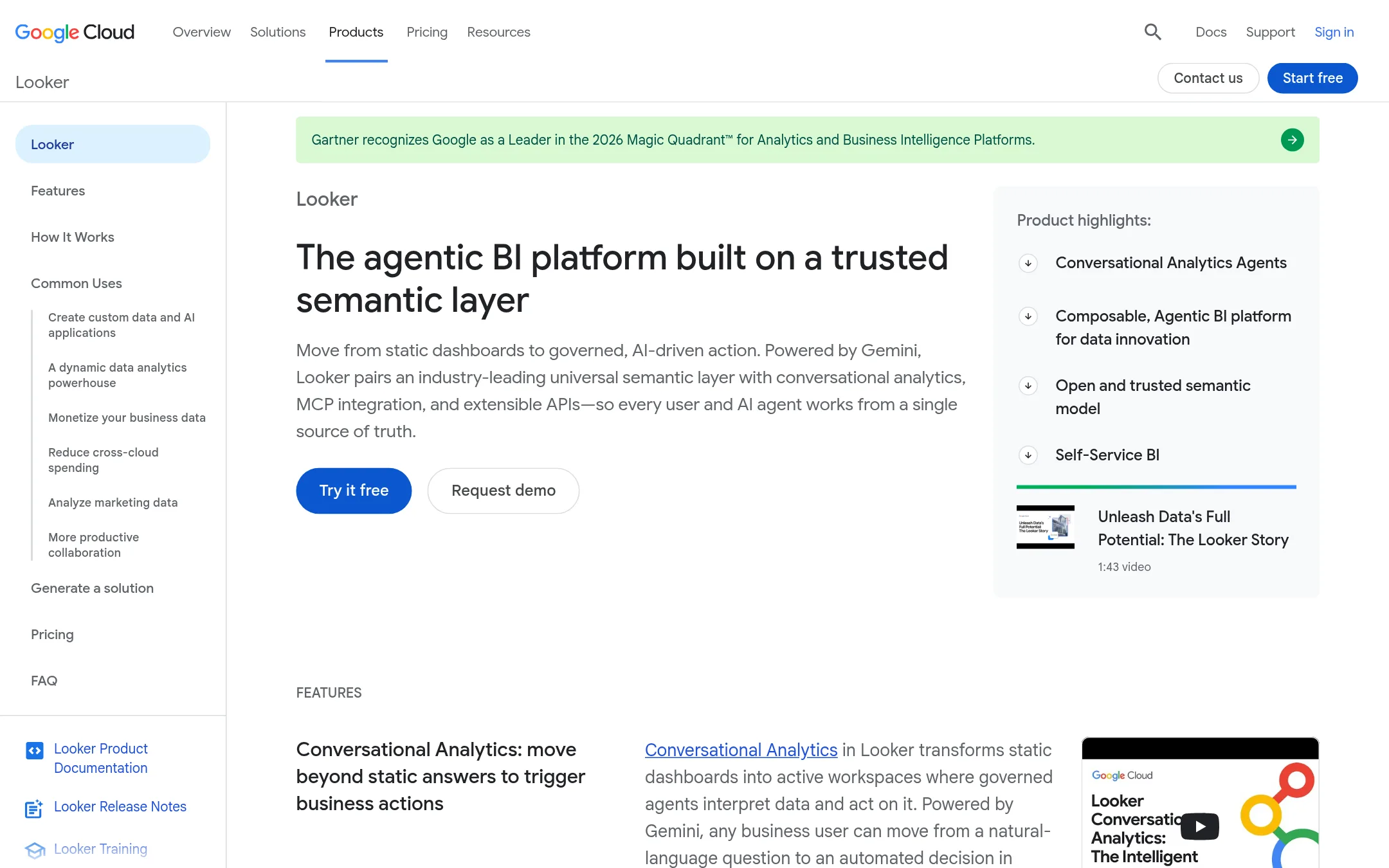
Looker is an enterprise BI platform built around a semantic layer, so metric definitions live in one governed model that dashboards, embedded analytics and Gemini-powered agents all share. Teams pick it over Whaly when they want to build analytics inside their own product or need a single governed source of metrics across a large organization. Whaly's pitch is field-level recommendations for sales reps, which Looker does not cover out of the box.
Where it is strong
- Semantic layer keeps metric definitions consistent across every dashboard and report.
- Embedded analytics lets you put dashboards inside your own product.
- Gemini-powered conversational agents answer questions in natural language.
Where it falls short
- It is a BI platform, so it does not deliver the field recommendations and visit preparation that Whaly offers sales reps.
- Pricing could not be verified from the site, so budgeting requires a direct conversation with Google Cloud.
- Pricing:
- Pricing is not published on the site, because the pricing page returned a 404 error when checked.
- Not published
4.Qlik Sense
Best for: Mid-size and large enterprises that need self-hosted or on-prem analytics across many internal systems.
- Pricing
- Not published
- Category
- Analytics & Data
Qlik Sense is a data analytics platform that connects to many data sources and builds interactive dashboards, with its data integration and quality tools now part of the wider Qlik portfolio after the Talend acquisition. Choose it over Whaly when you want to run analytics on your own infrastructure and need broad multi-system data integration rather than a field sales copilot that pushes next-best actions to reps.
Where it is strong
- Connects many data sources and combines them into one analytics layer.
- Supports on-prem deployment for teams that need data kept inside their own environment.
- Pairs analytics with data integration and data quality tools from the wider Qlik and Talend portfolio.
Where it falls short
- Built around dashboards and exploration, so it does not deliver field-ready next-best actions to sales reps the way Whaly does.
- Setup and data modeling usually need technical staff, which is a heavier lift for non-technical sales teams.
- Pricing:
- Pricing is not published on the site.
- Custom quote
5.Domo
Best for: Companies that want one governed data platform for BI, AI agents and automation across many departments, not only sales field teams
- Pricing
- Custom quote
- Category
- Analytics & Data
Domo is a cloud platform that connects to more than 1,000 data sources, prepares the data, and adds dashboards, self-service BI, AI agents, and workflow automation. Teams pick it over Whaly when they want one platform for broad BI across the whole company rather than a field-sales copilot.
Where it is strong
- Connects to more than 1,000 data sources, with data kept in your existing cloud environment
- Unlimited users with no per-seat fees under its credit model
- Covers BI, AI agents, workflow automation and data governance in one product
Where it falls short
- Built as a general data platform, so it does not focus on field-sales copilot workflows the way Whaly does
- Credit-based pricing makes monthly costs harder to forecast before a trial
- Pricing:
- Pricing is not published on the site, beyond a 30-day free trial, credit-based consumption pricing with unlimited users, and custom quotes.
- From $25/user/mo
6.ThoughtSpot
Best for: Data teams and product builders who need governed metrics and analytics embedded in apps or used across the whole company.
- Pricing
- From $25/user/mo
- Category
- Analytics & Data
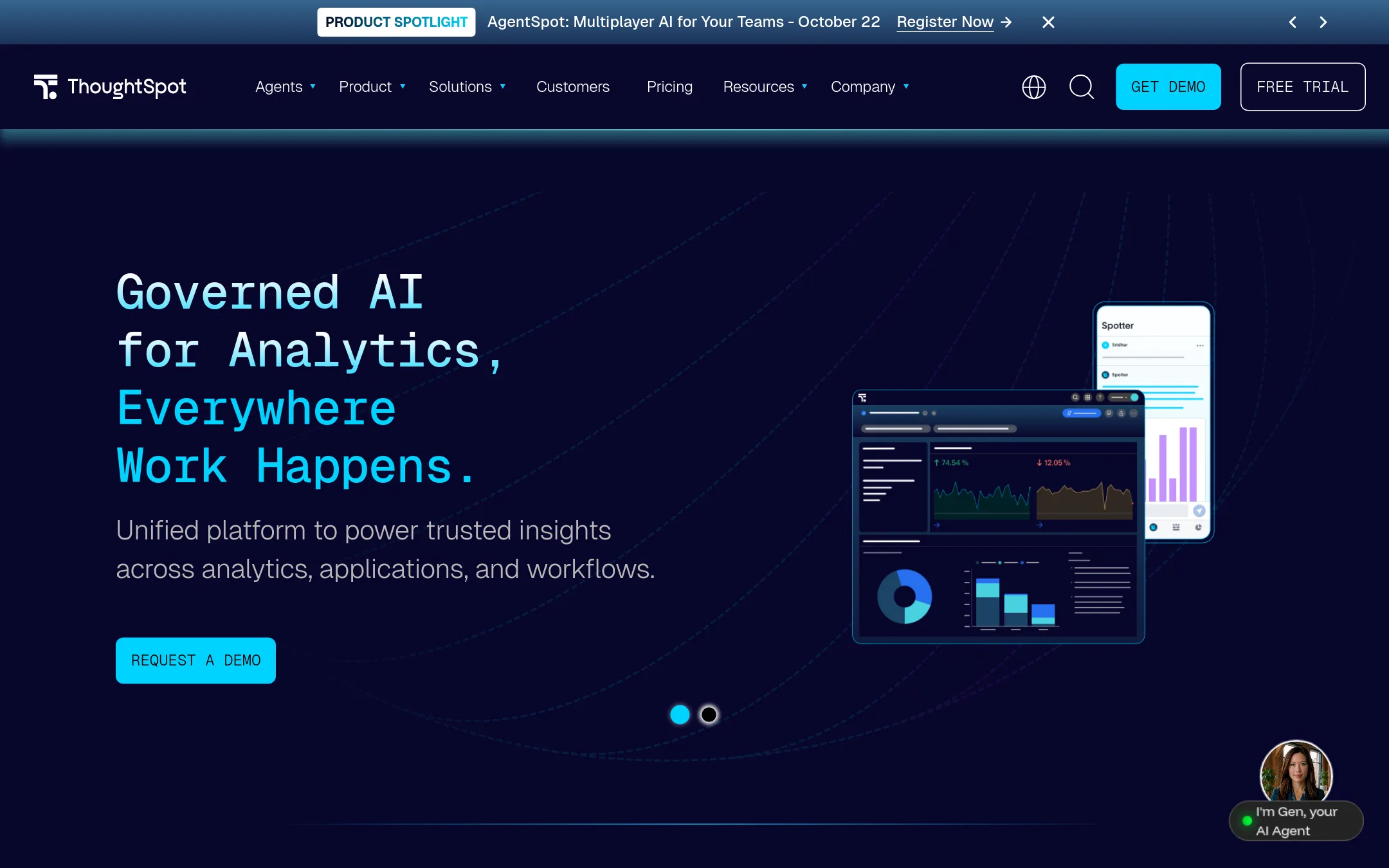
ThoughtSpot is an agentic analytics platform built around a governed semantic layer, so business definitions, joins, calendars and security are set before anyone asks a question. Teams use it for natural-language answers, explainable change analysis and analytics embedded inside their own apps. Choose it over Whaly when your main need is trusted, governed self-service analytics across the company, or when you want to embed AI analytics into a product.
Where it is strong
- Semantic layer defines metrics once so teams get consistent answers
- Natural-language questions return answers grounded in verified definitions
- Embedded analytics and an SDK let teams add analytics inside their own products
Where it falls short
- Its focus is governed analytics rather than field sales execution, so it lacks Whaly's visit prep and retail monitoring
- Enterprise pricing is custom and not published, so budgeting takes a sales conversation
- Pricing:
- Pricing is listed starting at $25 per user per month billed annually on the Developer tier, $50 per user per month billed annually on the Pro tier, and custom pricing for Enterprise, with a free tier for embedded use.
See more comparisons in Analytics & Data alternatives.
FAQ
Questions about Whaly alternatives
Which alternative is best if I need a field-sales copilot rather than general BI?
None of the entries on this list is a direct field-sales copilot. Domo and ThoughtSpot are broader data platforms, and Looker is a BI platform, so they do not deliver the visit preparation and next-best-action workflows Whaly targets for reps. You would need to pair one of them with your own sales workflow.
Which option is strongest for governed, company-wide metrics?
Looker and ThoughtSpot both center on a semantic layer that defines metrics once, so dashboards and answers stay consistent. Looker is aimed at enterprise data teams building governed analytics, while ThoughtSpot adds natural-language answers that are grounded in those verified definitions.
Can I see pricing before I talk to sales?
It depends on the vendor. ThoughtSpot publishes starting prices, with Developer at $25 per user per month billed annually and Pro at $50 per user per month billed annually, plus a free tier for embedded use. Looker's pricing page could not be verified, and Domo and Qlik Sense publish only partial or no pricing, so those usually require a quote.
Which option works best if data must stay in my own environment?
Qlik Sense supports on-prem deployment, which suits teams that need data kept inside their own environment. Domo keeps data in your existing cloud environment and connects to more than 1,000 sources. Check each vendor's deployment details against your own security requirements before deciding.
Do these alternatives require a technical team to operate?
Most of them do. Qlik Sense's setup and data modeling usually need technical staff, and Azure CycleCloud requires cloud and HPC expertise. ThoughtSpot and Domo are more accessible to business users once data is connected, but initial modeling and governance still benefit from data or IT involvement.
Last updated November 10, 2026.