
Worklytics alternatives
7 products compared · Updated November 14, 2026
The short answer
The three strongest alternatives to Worklytics are Culture Amp, Lattice and Visier, each suited to a different buyer. Culture Amp suits HR teams at companies of 200 or more people that want surveys, performance reviews and development tracking in one platform. Lattice suits HR and people teams that need reviews, OKRs and compensation cycles in a single system of record. Visier suits large enterprises with many HR systems that need governed people data for AI and workforce decisions.
Your shortlist, at a glance
Read the comparisons ↓Microsoft Azure CycleCloudNot publishedEngineering and research teams running HPC or batch compute workloads on Azure
- RRecordBookNot publishedSmall businesses that want a mobile app to organize their own records in shared tables
- CCulture AmpNot publishedHR teams at companies of 200 or more people that want engagement surveys, performance reviews, and development tracking in one platform
 LatticeFrom $4/seat/moHR and people teams that need performance reviews, OKRs and compensation cycles in one system of record
- EEightfold AINot publishedHR leaders at large enterprises who need hiring, skills, and workforce planning in one talent platform
- VVisierNot publishedLarge enterprises with 80+ HR systems that need governed people data for AI and workforce decisions
 Workday PeakonNot publishedHR and people teams at larger companies that want to run regular employee surveys and act on retention and engagement feedback
About Worklytics and its alternatives
Worklytics is a workplace analytics platform. According to its site, it helps leaders understand how teams work and collaborate, and it is known for measuring AI adoption and ROI from data teams already have, using aggregated, de-identified metrics from calendars, chat, code and project tools.
When comparing alternatives in this category, weigh the pricing structure first, since some tools charge per seat, some by headcount and some only on quote. Check which data sources and integrations are supported, the regions and privacy certifications offered, the level of support included, and the contract terms such as minimum annual agreements.
Explore the alternatives
- Not published
1.Microsoft Azure CycleCloud
Best for: Engineering and research teams running HPC or batch compute workloads on Azure
- Pricing
- Not published
- Category
- Developer Tools
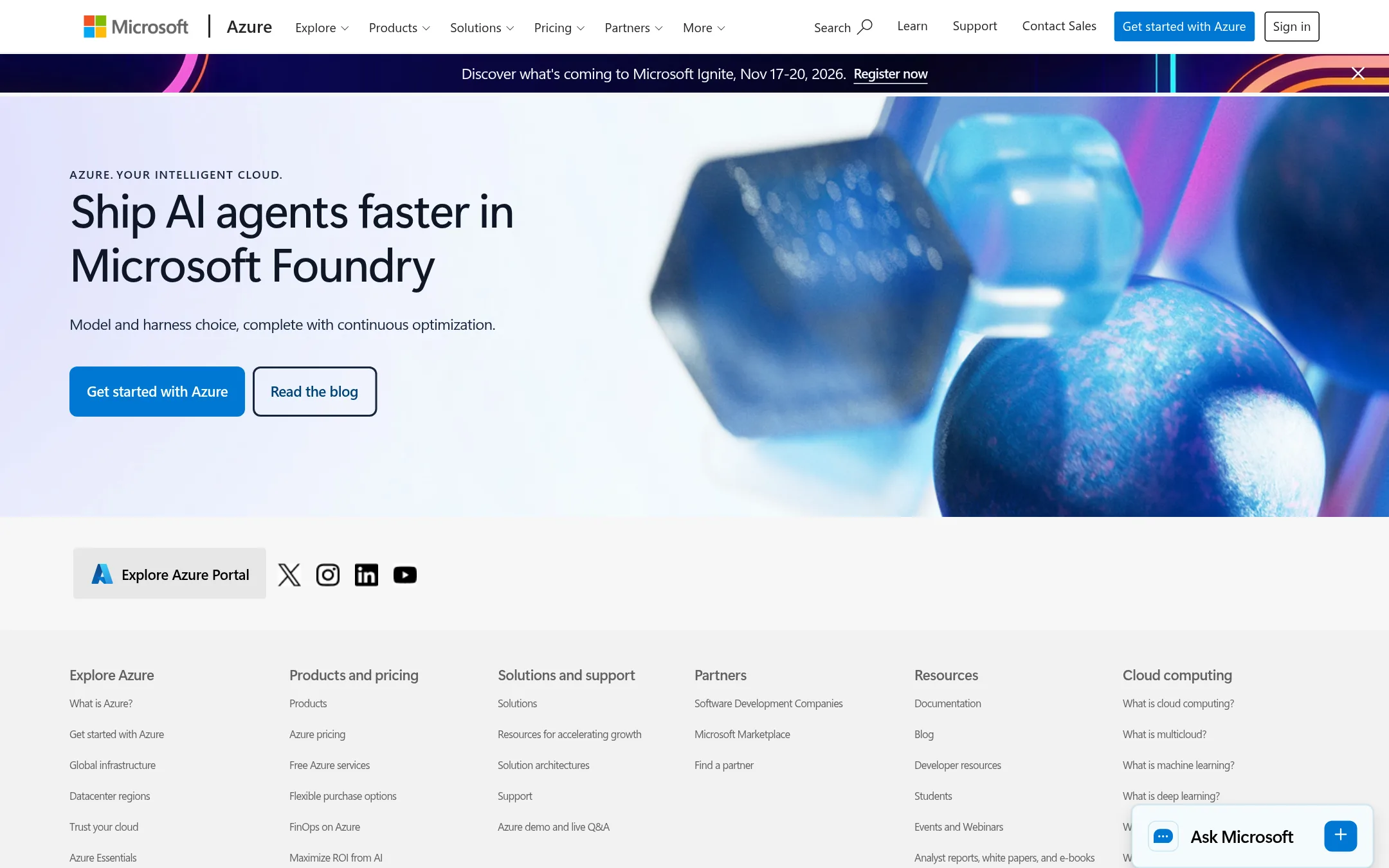
Microsoft Azure CycleCloud is an orchestration tool for running and scaling high performance computing clusters on Azure. Someone would pick it over Worklytics when they need to manage HPC or compute clusters, not measure how people work, since Worklytics is a workplace analytics product and CycleCloud is developer and infrastructure tooling.
Where it is strong
- Manages scalable HPC cluster deployment on Azure
- Part of the broad Azure platform with existing account and billing
- Fits teams already running workloads on Azure infrastructure
Where it falls short
- Does not measure employee collaboration, meetings or AI adoption like Worklytics
- Pricing details are not published on the site, so costs need a direct check
- Pricing:
- Pricing is not published on the site.
- RNot published
2.RecordBook
Best for: Small businesses that want a mobile app to organize their own records in shared tables
- Pricing
- Not published
- Category
- Productivity & Project Management
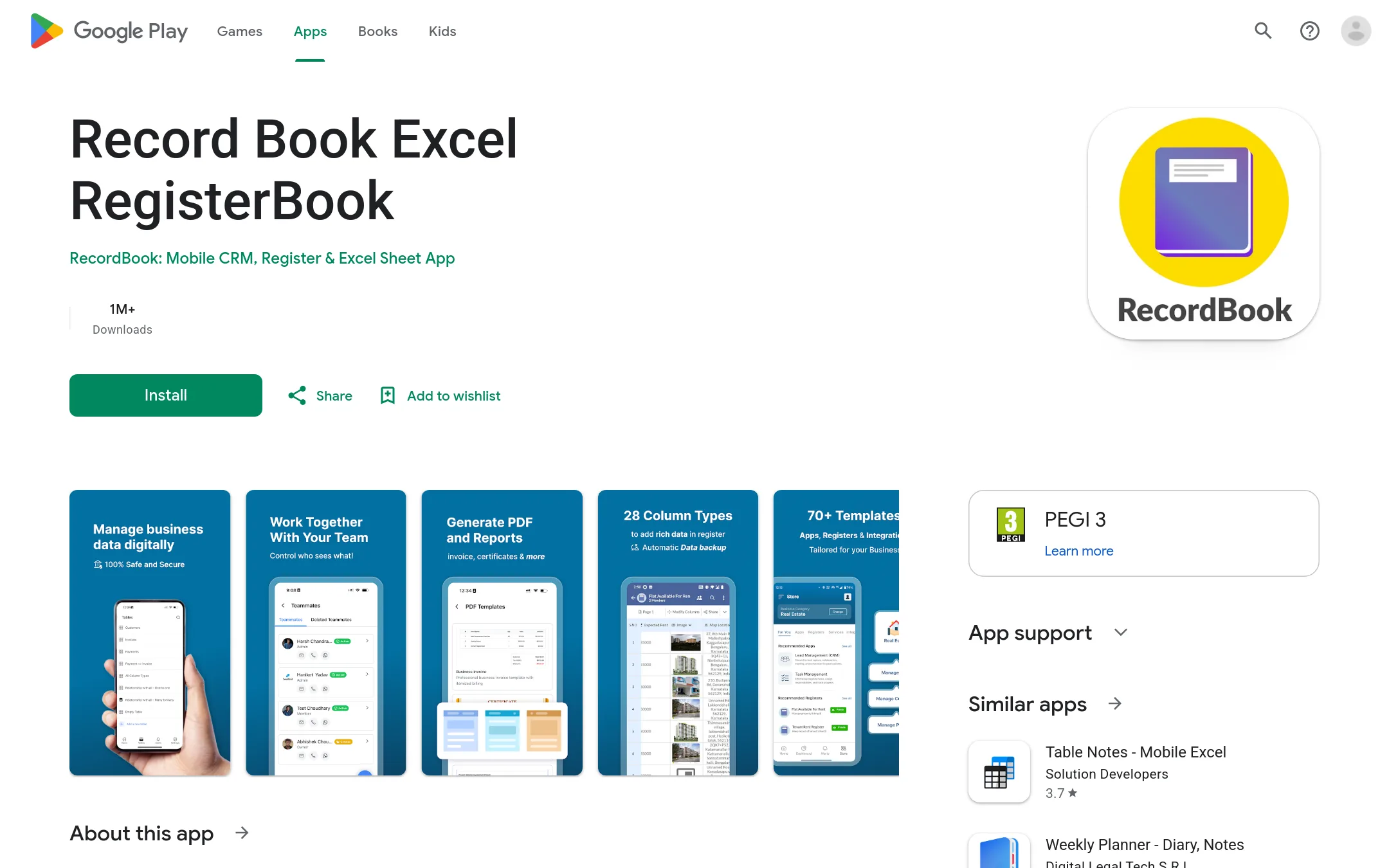
RecordBook is a mobile app from Foodmonk, listed on Google Play, that positions itself as a simple Airtable-style database for small businesses. Choose it over Worklytics if you want to track your own business records, inventory or customer lists rather than analyze how your team spends time in meetings and collaboration tools.
Where it is strong
- Mobile-first app available on Google Play
- Built for small business record keeping, not analytics
- Simpler setup than a workplace analytics platform
Where it falls short
- Does not measure meeting time, focus time or collaboration patterns like Worklytics
- No published details on integrations or enterprise controls in the supplied material
- Pricing:
- Pricing is not published on the site.
- CNot published
3.Culture Amp
Best for: HR teams at companies of 200 or more people that want engagement surveys, performance reviews, and development tracking in one platform
- Pricing
- Not published
- Category
- HR & Recruiting
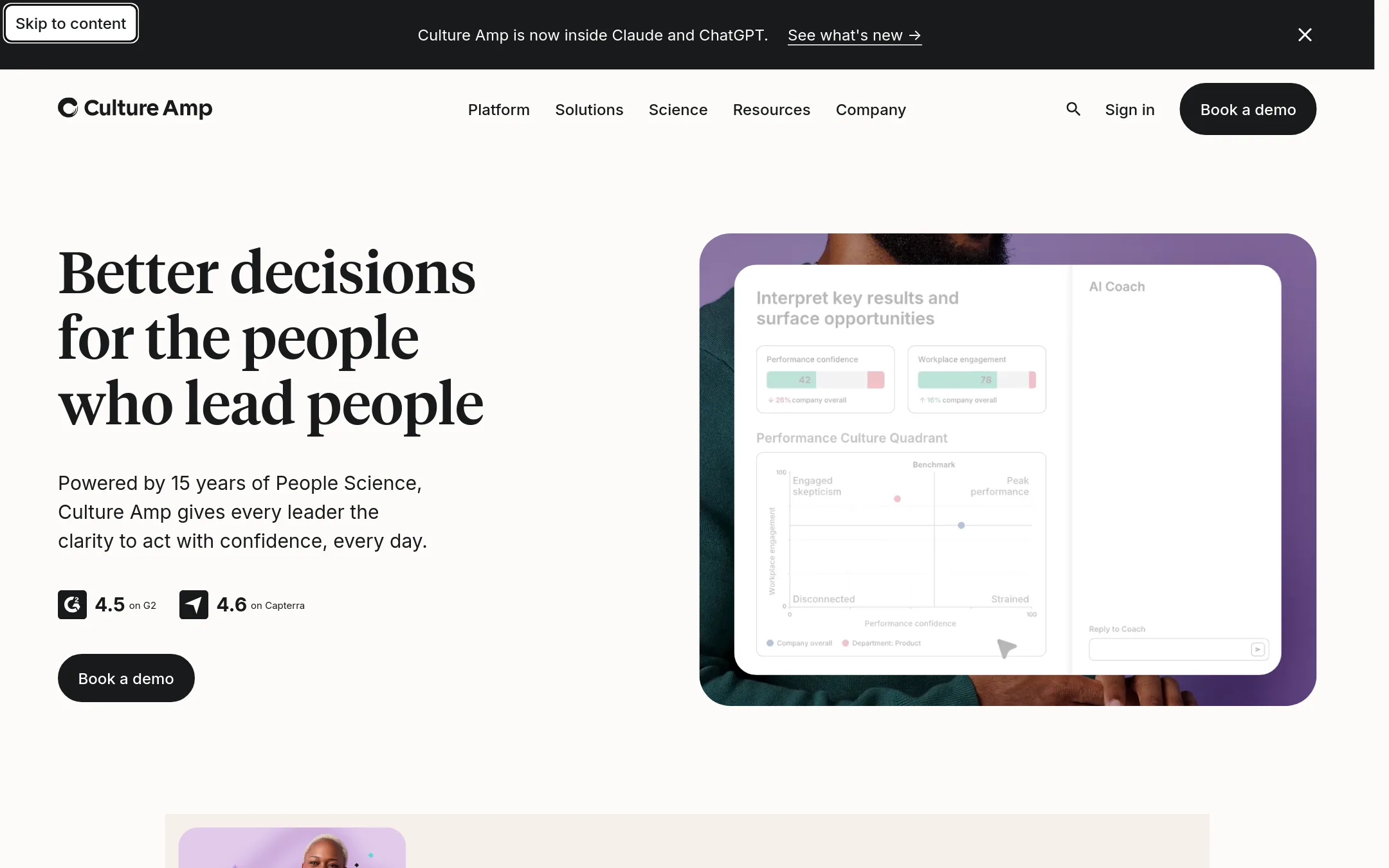
Culture Amp is an employee experience platform covering engagement surveys, performance reviews, one-on-ones, and development plans. A team would pick it over Worklytics when the main goal is measuring how people feel and running the review cycle, not analysing how work and time are spent through calendar, chat, and code data.
Where it is strong
- Covers surveys, performance reviews, one-on-ones, and development plans in one platform
- Includes AI comment summaries and proven action plans for survey results
- Lists SOC 2, ISO 27001, and GDPR compliance, with HRIS integrations
Where it falls short
- Built around people feedback and HR processes rather than work-pattern data from calendars, chat, and code tools
- Pricing depends on headcount, product, and service tier, so costs need a quote
- Pricing:
- Pricing is not published on the site.
- From $4/seat/mo
4.Lattice
Best for: HR and people teams that need performance reviews, OKRs and compensation cycles in one system of record
- Pricing
- From $4/seat/mo
- Category
- HR & Recruiting
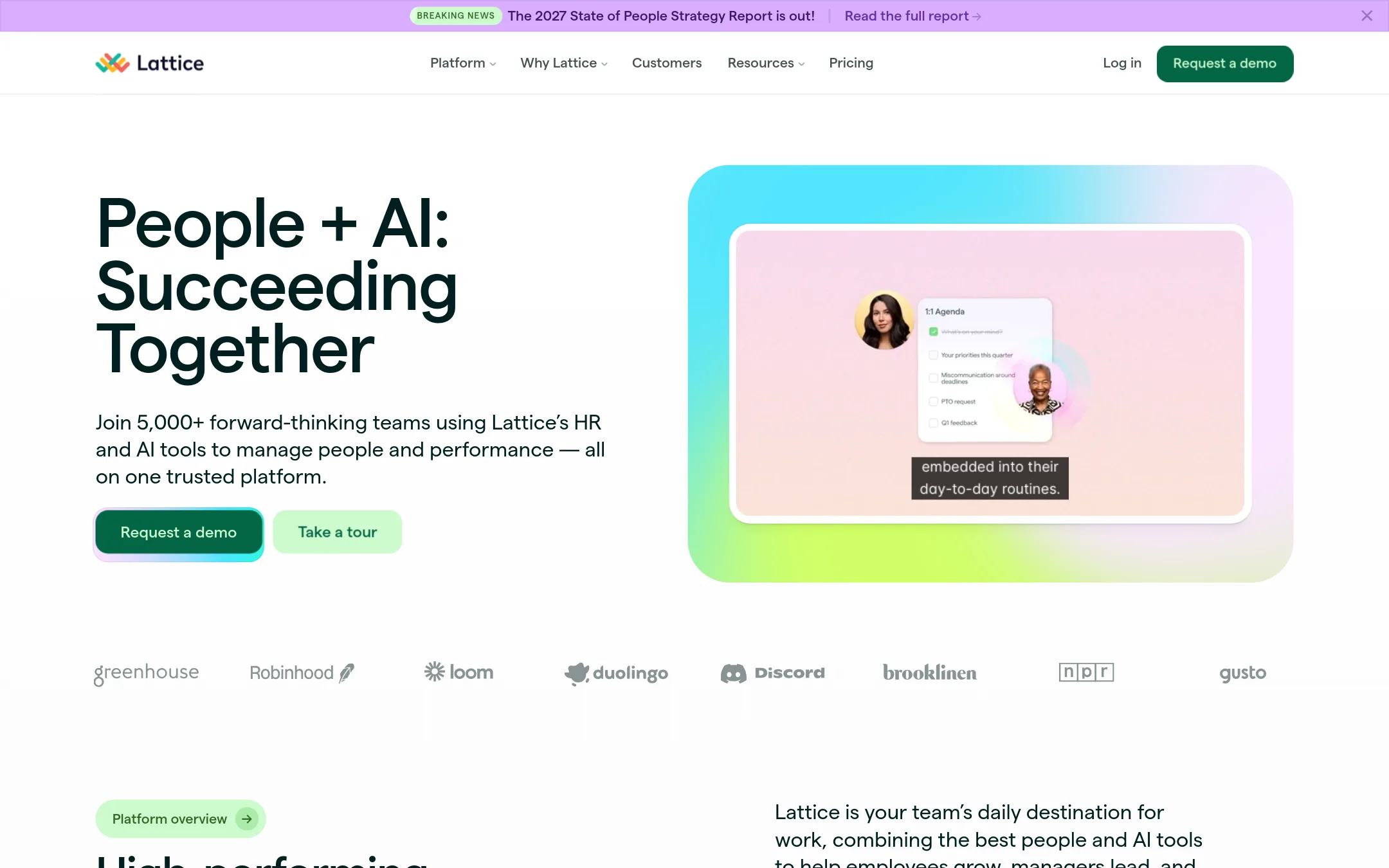
Lattice is a people management platform covering performance reviews, goals and OKRs, engagement surveys, career growth and compensation. Someone would pick it over Worklytics when the need is HR process rather than analytics on how work gets done, such as running review cycles, setting goals and managing pay decisions.
Where it is strong
- Covers performance reviews, goals, engagement and compensation in one platform
- Modules can be bought separately, so you can start with Performance or Goals
- Integrates with HRIS tools, Slack, Teams and Jira
Where it falls short
- It is an HR platform, so it does not measure how teams spend time or use AI tools the way Worklytics does
- Pricing is per seat across several modules, which can add up quickly for larger teams
- Pricing:
- Pricing is modular and per seat, starting at $4 per seat per month for Engagement, $8 for Goals & OKRs and $10 for Performance, with a minimum annual agreement of $4,000.
- ENot published
5.Eightfold AI
Best for: HR leaders at large enterprises who need hiring, skills, and workforce planning in one talent platform
- Pricing
- Not published
- Category
- Other
Eightfold AI is a talent intelligence platform aimed at HR leaders. It covers hiring, employee development, and workforce planning, built on a large dataset of career trajectories and skills. Someone would pick it over Worklytics if the question is about talent decisions rather than how teams spend their time and whether AI tools are paying off.
Where it is strong
- Built on a large dataset of career trajectories and skills
- Covers hiring, development, and workforce planning in one platform
- Lists ISO/IEC 42001 certification, FedRAMP Moderate authorization, and third-party bias audits
Where it falls short
- Focused on talent decisions, not on measuring collaboration or meeting time like Worklytics
- Does not describe measuring AI tool ROI the way Worklytics does
- Pricing:
- Pricing is not published on the site.
- VNot published
6.Visier
Best for: Large enterprises with 80+ HR systems that need governed people data for AI and workforce decisions
- Pricing
- Not published
- Category
- Other
Visier is a people analytics platform that has repositioned as a workforce context layer for enterprise AI. It pulls data from many HR systems into one governed workforce model, with 2,000+ pre-built metrics and benchmarks. Choose it over Worklytics when the question is about HR and people data governance at scale, such as pay equity or succession planning, rather than how teams spend time in meetings and tools.
Where it is strong
- Unifies data from many HR systems into one workforce model with 2,000+ pre-built metrics
- Enforces permissions down to the individual record, carried through to AI agents
- Includes built-in benchmarks drawn from 250M+ HR and 2B+ compensation data points
Where it falls short
- Built for HR and people data rather than collaboration and calendar activity, so it does not replace Worklytics for meeting or tool-usage an
- Aimed at complex enterprises, so it may be more than a small team needs
- Pricing:
- Pricing is not published on the site.
- Not published
7.Workday Peakon
Best for: HR and people teams at larger companies that want to run regular employee surveys and act on retention and engagement feedback
Workday Peakon is an employee listening platform built around surveys, sentiment, and engagement tracking, with AI that turns survey feedback into action plans. Someone would pick it over Worklytics when the main question is how employees feel and why they might leave, rather than how work time and collaboration patterns look in calendars and tools.
Where it is strong
- Built around ongoing employee surveys and sentiment tracking
- AI coaching agent flags burnout and retention risks early
- Part of the wider Workday platform for companies already using it
Where it falls short
- Measures what employees report, not how work actually happens in calendars and tools
- No pricing is published, so cost has to come from a sales conversation
- Pricing:
- Pricing is not published on the site.
See more comparisons in Analytics & Data alternatives.
FAQ
Questions about Worklytics alternatives
What is Worklytics mainly used for?
According to its site, Worklytics is used to understand how work happens and to measure the impact of AI, including productivity gains and ROI. It analyzes aggregated data from tools like calendars, chat and code platforms, rather than individual message content. Alternatives in this list take different approaches, from HR process to talent planning.
Which alternative is best for HR teams focused on employee surveys?
Culture Amp and Workday Peakon are both built around surveys and engagement tracking. Culture Amp also covers performance reviews, one-on-ones and development plans, and is aimed at companies of 200 or more people. Peakon is positioned for larger companies that want regular sentiment tracking and retention signals.
Is there a free alternative to Worklytics?
The entries in this list do not publish free tiers, so a free option cannot be confirmed here. RecordBook is a free-to-check mobile app on Google Play, but it is built for small business records rather than workplace analytics. Pricing for the other tools is either per seat from a set minimum or available only on quote.
Which alternative fits a large enterprise with many HR systems?
Visier is built for large enterprises with 80 or more HR systems, unifying that data into one governed workforce model with 2,000 or more pre-built metrics. It enforces permissions down to the individual record. Eightfold AI is another option at enterprise scale, focused on hiring, skills and workforce planning.
Do these alternatives measure AI tool usage the way Worklytics does?
The entries generally focus on HR, talent or infrastructure rather than measuring how teams use AI tools against productivity outcomes. Lattice, Culture Amp, Eightfold and Visier are described around people processes or talent data, and Azure CycleCloud is an HPC orchestration tool. Anyone whose main need is AI ROI measurement should compare Worklytics directly against these options.
Last updated November 14, 2026.