
Zenysis alternatives
11 products compared · Updated November 3, 2026
The short answer
For ministries and NGOs in low- and middle-income countries, DHIS2 is the strongest alternative for locally owned, configurable health data systems. CommCare suits frontline programs needing offline mobile data collection, while OpenSRP is best for field-level service delivery with full code control. Choose based on whether you need national-level analytics, mobile data collection, or offline patient management.
Your shortlist, at a glance
Read the comparisons ↓- DDHIS2Not publishedMinistries and NGOs in low- and middle-income countries that need a locally owned, configurable data system for health, education, or logistics.
- OOpenMRSNot publishedClinics and health programs in low-resource settings that need a free, customizable EMR with community support and FHIR/REST APIs.
- CCommCareFrom $100/moNGOs and public health programs that need offline-capable mobile data collection and case management for frontline workers.
- TTableauSee websiteData visualization and analytics platform
Microsoft Azure CycleCloudPay-as-you-goResearch and engineering teams that need flexible, on-demand HPC clusters on Azure for compute-heavy workloads.
 Qlik SenseNot publishedTeams in commercial or public sectors that need on-prem or hybrid analytics across many business systems.
- SSAPNot publishedLarge enterprises that need an integrated ERP and AI workflow platform across finance, supply chain, and HR.
 Esri ArcGISNot publishedOrganizations in logistics, natural resources, or government that need enterprise-grade mapping and spatial analytics across many use cases.
- RRapidSMSNot publishedNGOs and government programs in low-connectivity areas that need simple SMS-based data collection and alerts.
- OOpenSRPNot publishedHealth programs in low-connectivity settings that need offline patient registration and service delivery, especially immunization registries.
- iiHRISNot publishedHealth ministries and organizations in low- and middle-income countries that need to manage and plan their health workforce data.
About Zenysis and its alternatives
Zenysis is a health intelligence infrastructure company that helps governments in low- and middle-income countries integrate data from disconnected health systems into a unified analytical environment. It is known for its Harmony platform, which is open-source, government-owned, and AI-ready, and for its work in over 15 countries to improve health planning and outbreak response.
When comparing alternatives, weigh pricing structure, since most do not publish prices and require contacting sales. Consider regions and integrations, as some tools are built for low-connectivity settings and others for commercial use. Also evaluate support and contract terms, especially for open-source options that require local technical capacity.
Explore the alternatives
- DNot published
1.DHIS2
Best for: Ministries and NGOs in low- and middle-income countries that need a locally owned, configurable data system for health, education, or logistics.
- Pricing
- Not published
- Category
- Other
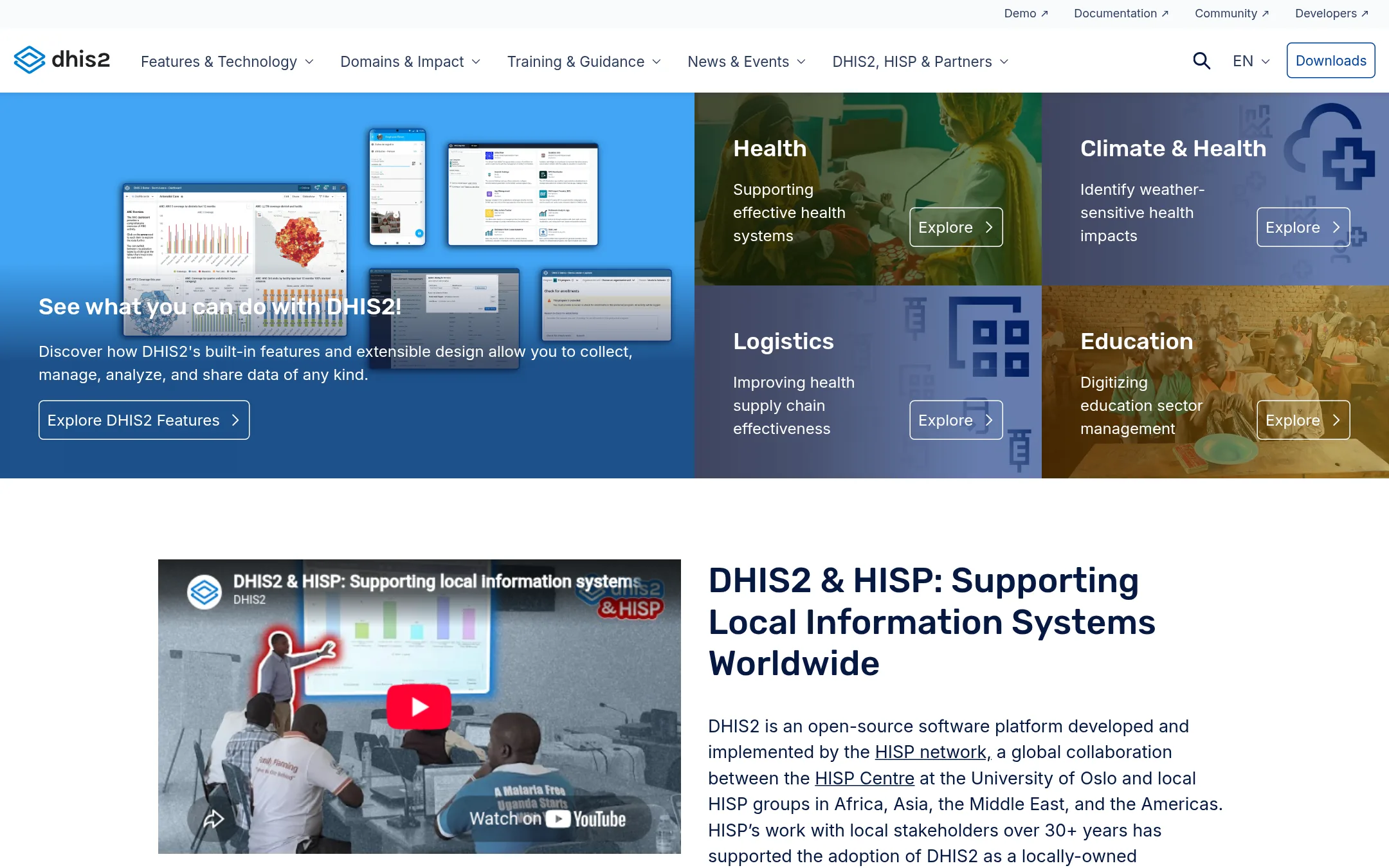
DHIS2 is an open-source platform for collecting, managing, and analyzing health and other sector data, used in over 80 countries. Choose it over Zenysis if you want a self-hosted, fully customizable system with a large global community and no vendor lock-in, rather than a government-owned health intelligence infrastructure.
Where it is strong
- Open-source and fully configurable through the UI
- Works offline on PCs and mobile devices
- Backed by a global HISP network and 30+ years of implementation
Where it falls short
- No AI-ready data environment or predictive analytics built in
- Requires local technical capacity for setup and customization
- Pricing:
- Pricing is not published on the site.
- Switching from Zenysis:
- Moving from Zenysis means rebuilding your data integration and analytics workflows in DHIS2, which is a different platform with its own configuration and training requirements.
- ONot published
2.OpenMRS
Best for: Clinics and health programs in low-resource settings that need a free, customizable EMR with community support and FHIR/REST APIs.
- Pricing
- Not published
- Category
- Other
OpenMRS is an open-source electronic medical record system that you can self-host and adapt to local clinical workflows. Choose it over Zenysis if your primary need is a patient-level EMR for direct care delivery, not a national health data warehouse for cross-program analytics.
Where it is strong
- Open source with no license fees or vendor lock-in.
- Adaptable to local needs across HIV, TB, malaria, maternal care, and more.
- Built on REST and FHIR APIs for easier integration with other tools.
Where it falls short
- Requires technical capacity to deploy, customize, and maintain.
- No built-in national-level analytics or cross-system data harmonization like Zenysis.
- Pricing:
- Pricing is not published on the site. The pricing page shows placeholder tiers like $15/month and $99/month, but these are not real product prices.
- CFrom $100/mo
3.CommCare
Best for: NGOs and public health programs that need offline-capable mobile data collection and case management for frontline workers.
- Pricing
- From $100/mo
- Category
- Other
CommCare is a mobile-first data collection and case management platform for frontline service delivery, with offline support and a no-code app builder. Choose it over Zenysis when your team needs to build and deploy field data collection apps quickly, rather than integrating national health information systems into a unified analytics environment.
Where it is strong
- No-code mobile app builder works offline, so field teams can collect data without connectivity.
- Tiered plans include case management, SMS, and PowerBI/Tableau integration at higher levels.
- SOC 2 Type 2, HIPAA, and GDPR compliance are listed, with cloud hosting in US, EU, and India.
Where it falls short
- Designed for program-level data collection, not for integrating multiple national health systems like Zenysis does.
- Advanced analytics and AI features are limited compared to Zenysis's health intelligence platform.
- Pricing:
- Plans start at $100 per month billed annually, with a free edition for testing. Pro is $500/mo, Advanced is $1,000/mo, and Enterprise is $4,000/mo.
- TSee website
4.Tableau
Analytics & Data
General-purpose data visualization and analytics platform used for health intelligence dashboards.
- Pay-as-you-go
5.Microsoft Azure CycleCloud
Best for: Research and engineering teams that need flexible, on-demand HPC clusters on Azure for compute-heavy workloads.
- Pricing
- Pay-as-you-go
- Category
- Developer Tools
Azure CycleCloud is a cluster orchestration tool for running and managing HPC workloads on Azure. You would choose it instead of Zenysis if your team needs to spin up and scale compute clusters for simulations, rendering, or other batch jobs, rather than integrating and analyzing national health data.
Where it is strong
- Integrates with Azure's full range of VM and storage options
- Supports popular schedulers like Slurm and PBS
- Scales clusters up and down automatically based on workload
Where it falls short
- Requires Azure expertise to set up and manage
- No built-in data integration or analytics for health programs
- Pricing:
- Pricing is not published on the site. Azure charges per resource used, such as VMs and storage.
- Not published
6.Qlik Sense
Best for: Teams in commercial or public sectors that need on-prem or hybrid analytics across many business systems.
- Pricing
- Not published
- Category
- Analytics & Data
Qlik Sense is a general-purpose analytics platform that connects to many data sources and lets you build interactive dashboards and reports. Choose it over Zenysis if you need a flexible BI tool for a commercial or multi-sector organization, not a government health program.
Where it is strong
- Associative engine lets you explore data freely without predefined queries.
- Strong data integration with Talend for combining multiple systems.
- On-prem deployment option for data sovereignty needs.
Where it falls short
- No built-in health ontology or public health focus like Zenysis.
- Requires more setup and technical skill to model health data.
- Pricing:
- Pricing is not published on the site.
- SNot published
7.SAP
Best for: Large enterprises that need an integrated ERP and AI workflow platform across finance, supply chain, and HR.
- Pricing
- Not published
- Category
- Productivity & Project Management
SAP is a broad enterprise software suite covering finance, supply chain, HR, and customer experience, with AI agents and workflow automation built in. Choose it over Zenysis if you need a general-purpose ERP and operations platform for a commercial business, not a health-data integration system for governments.
Where it is strong
- Covers many business functions in one suite
- Built-in AI agents and workflow automation
- Strong partner ecosystem for implementation
Where it falls short
- No health-specific data integration or ontology
- Pricing requires contacting sales. No public numbers
- Pricing:
- Pricing is not published on the site.
- Not published
8.Esri ArcGIS
Best for: Organizations in logistics, natural resources, or government that need enterprise-grade mapping and spatial analytics across many use cases.
- Pricing
- Not published
- Category
- Analytics & Data
Esri ArcGIS is a general-purpose geographic information system for mapping and spatial analysis, used across logistics, natural resources, and government. You would choose it over Zenysis when your core need is geospatial data integration and map-based decision-making, not health program analytics.
Where it is strong
- Mature, widely adopted GIS platform with a large ecosystem.
- Strong spatial analytics and mapping capabilities for any sector.
- Integrates with Microsoft Fabric for location-aware data work.
Where it falls short
- Not tailored to health program data integration or outbreak response.
- Requires GIS expertise to set up and use effectively.
- Pricing:
- Pricing is not published on the site.
- RNot published
9.RapidSMS
Best for: NGOs and government programs in low-connectivity areas that need simple SMS-based data collection and alerts.
- Pricing
- Not published
- Category
- Other
RapidSMS is an open-source platform for building mobile data collection and communication tools, often used in public health and development programs. Choose it over Zenysis when you need a lightweight, SMS-based field data tool rather than a full national health intelligence infrastructure.
Where it is strong
- Works on basic mobile phones via SMS, no internet needed
- Open-source and customizable to fit program needs
- Simple deployment for field-level data collection
Where it falls short
- No built-in data warehousing or cross-system analytics
- Site is currently down, so documentation and support are hard to access
- Pricing:
- Pricing is not published on the site.
- ONot published
10.OpenSRP
Best for: Health programs in low-connectivity settings that need offline patient registration and service delivery, especially immunization registries.
- Pricing
- Not published
- Category
- Other
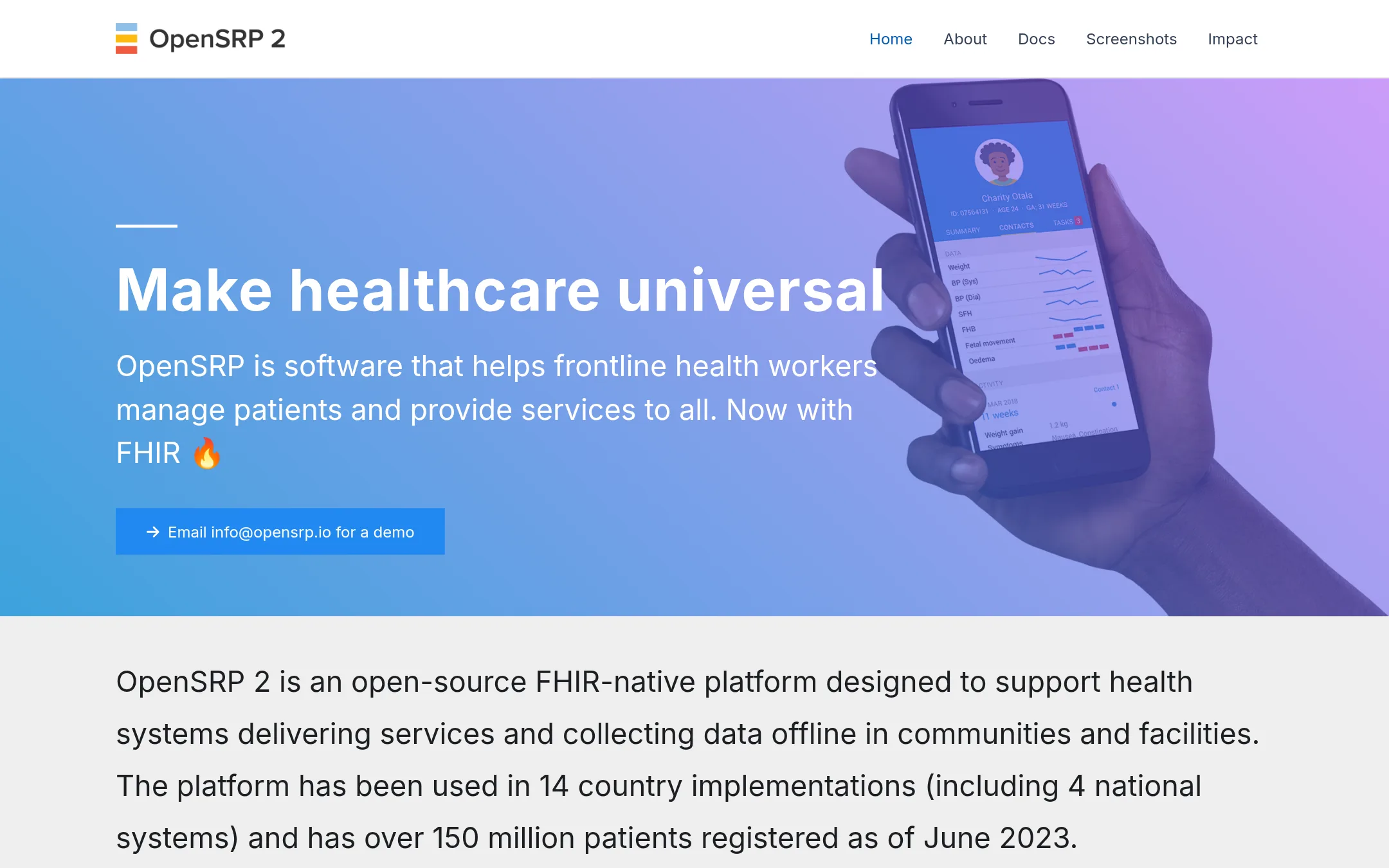
OpenSRP is an open-source FHIR-native platform for frontline health workers to manage patients and deliver services offline. Choose it over Zenysis if you need a field-level service delivery tool rather than a national health data warehouse, and you want full control of the code.
Where it is strong
- Open-source and FHIR-native, so you can customize and own the platform.
- Works offline, which suits community and facility settings with poor connectivity.
- Proven scale: 150 million patients registered across 14 country implementations.
Where it falls short
- No published pricing, so budgeting requires contacting the team.
- Focuses on service delivery workflows, not the cross-program analytics Zenysis provides.
- Pricing:
- Pricing is not published on the site.
- iNot published
11.iHRIS
Best for: Health ministries and organizations in low- and middle-income countries that need to manage and plan their health workforce data.

- Pricing
- Not published
- Category
- Other
iHRIS is a human resources information system for health workers, focused on managing workforce data like training, licenses, and deployment. You would choose it instead of Zenysis if your core need is tracking and planning your health workforce rather than integrating and analyzing disease, supply chain, and program data across multiple systems.
Where it is strong
- Purpose-built for health workforce data, not general analytics
- Open-source, so governments can own and customize it
- Tracks worker training, licenses, and deployment
Where it falls short
- Site was unreachable at review time, so details are unverified
- No analytics features for disease, supply chain, or program data
- Pricing:
- Pricing is not published on the site.
See more comparisons in Analytics & Data alternatives.
FAQ
Questions about Zenysis alternatives
What is the best free alternative to Zenysis?
DHIS2 is the strongest free alternative, being open-source and widely used in over 80 countries. It offers full configurability and no license fees, but requires local technical capacity for setup and maintenance.
Which alternative works offline for frontline workers?
CommCare and OpenSRP both work offline. CommCare is a no-code mobile app builder for data collection, while OpenSRP is FHIR-native and designed for patient registration and service delivery in low-connectivity settings.
Are there alternatives with published pricing?
Only CommCare publishes pricing, starting at $100 per month billed annually. Most others, including DHIS2 and OpenSRP, do not list prices and require contacting the vendor.
Which alternative is best for national health data integration?
DHIS2 is the closest match for national-level health data management, as it is used by ministries in over 80 countries. However, it lacks the AI-ready data environment and predictive analytics that Zenysis offers.
What should I consider when choosing between these alternatives?
Consider your primary need: national analytics, mobile data collection, or workforce management. Also assess your technical capacity, since open-source tools like DHIS2 and OpenSRP require local expertise, while commercial tools like Qlik Sense may need more setup for health data.
Last updated November 3, 2026.