
Apprentice Health alternatives
6 products compared · Updated November 15, 2026
The short answer
The three strongest alternatives to Apprentice Health are Qventus, Phreesia and LeanTaaS. Qventus suits hospitals and health systems that want to cut pre-admission testing and discharge delays and grow surgical volume. Phreesia suits independent practices, specialty groups and U.S. health systems that want to reduce front-desk work and improve collections. LeanTaaS suits U.S. health systems that want to improve operating room, infusion and bed capacity through scheduling and forecasting.
Your shortlist, at a glance
Read the comparisons ↓ QventusNot publishedHospitals and health systems that want to grow surgical volume and cut pre-admission testing or discharge delays
LeanTaaSNot publishedHealth systems and hospitals in the US that want to improve operating room, infusion and bed capacity through scheduling and forecasting
 EpicNot publishedLarge hospital systems and health networks that need a full electronic health record across many departments
- CCernerNot publishedHospital systems looking for enterprise healthcare software under a single vendor brand
 PhreesiaCustom quoteIndependent practices, specialty groups and health systems in the U.S. that want to cut front-desk work and improve time-of-service collections
- KKyruusNot publishedHealth systems, medical groups and health plans that need a managed provider directory and online patient self-scheduling
About Apprentice Health and its alternatives
Apprentice Health is a healthcare company that deploys sensors and software to increase hospital efficiency. According to its site, it is known for reducing waiting room occupancy, increasing exam room capacity and cutting patient wait times through ambient sensors, simulation and artificial intelligence. Its modules cover scheduling templates, ambient workflows, a smart hospital sensor layer and analytics, and it serves clinics, infusion suites, peri-operative units, emergency departments and inpatient units.
When comparing alternatives in this category, weigh the problem each product solves first, since some focus on front-desk intake, some on surgical and bed capacity, and some on patient access and booking. Then check pricing structure, regions served, integrations with your electronic health record, support and implementation model, and contract terms. Many vendors in this space do not publish prices, so expect to get quotes through a sales conversation.
Explore the alternatives
- Not published
1.Qventus
Best for: Hospitals and health systems that want to grow surgical volume and cut pre-admission testing or discharge delays
- Pricing
- Not published
- Category
- Healthcare
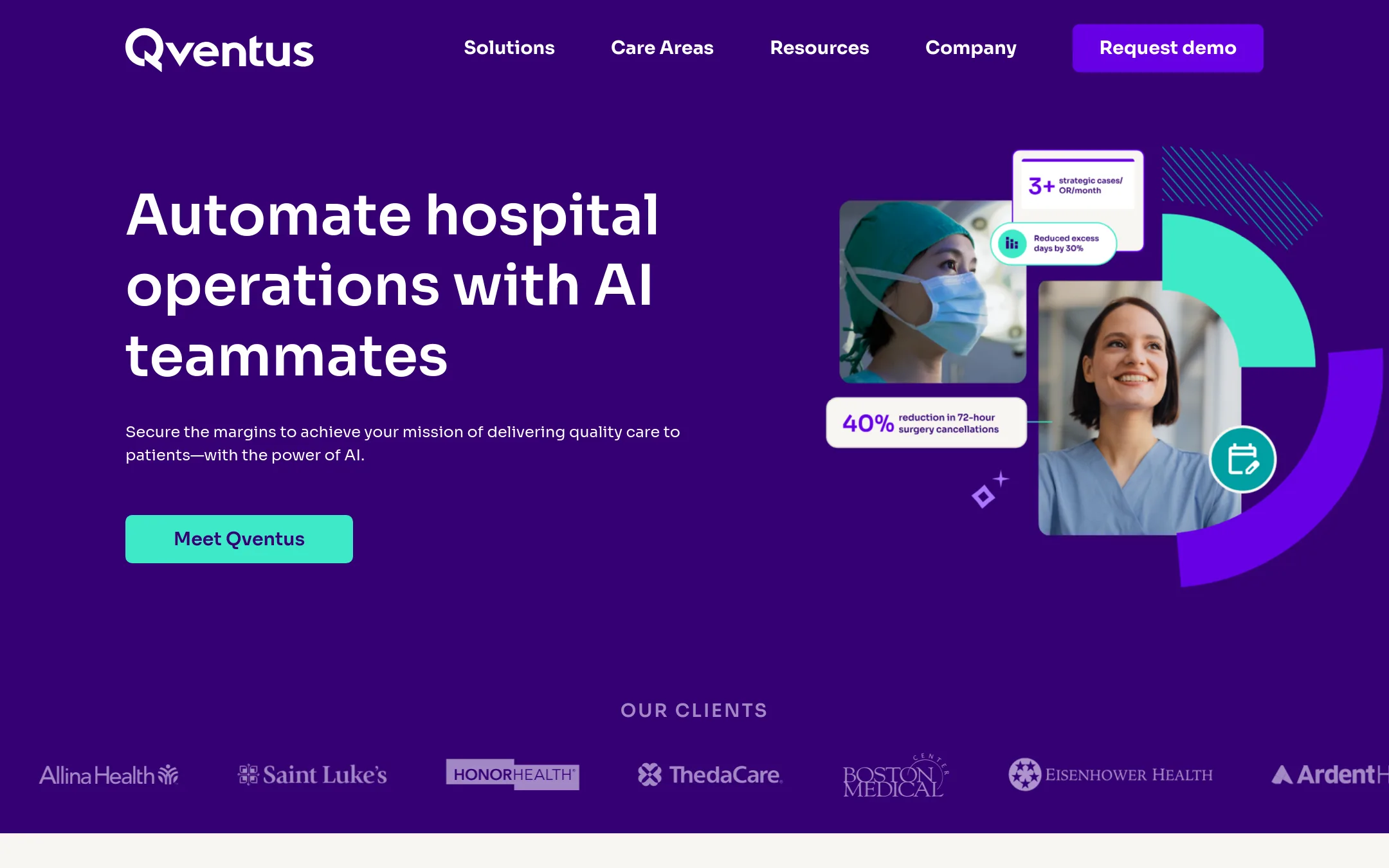
Qventus builds AI teammates that automate hospital operations, with modules for surgical scheduling, pre-admission testing, and inpatient discharge planning. A health system would choose it over Apprentice Health when the main problem is administrative workload and surgical or inpatient throughput, rather than physical waiting room and exam room occupancy.
Where it is strong
- Dedicated modules for surgical growth, perioperative care coordination, and inpatient capacity
- Case studies from named hospital systems such as HonorHealth, BMC and Allina Health
- Claims cancellation reductions of up to 40% in pre-admission testing
Where it falls short
- Its focus is administrative and surgical operations, so it does not offer the ambient sensor and room-level tracking that Apprentice Health
- The site does not describe use in clinics, infusion suites or emergency departments the way Apprentice Health does
- Pricing:
- Pricing is not published on the site.
- Not published
2.LeanTaaS
Best for: Health systems and hospitals in the US that want to improve operating room, infusion and bed capacity through scheduling and forecasting
- Pricing
- Not published
- Category
- Healthcare
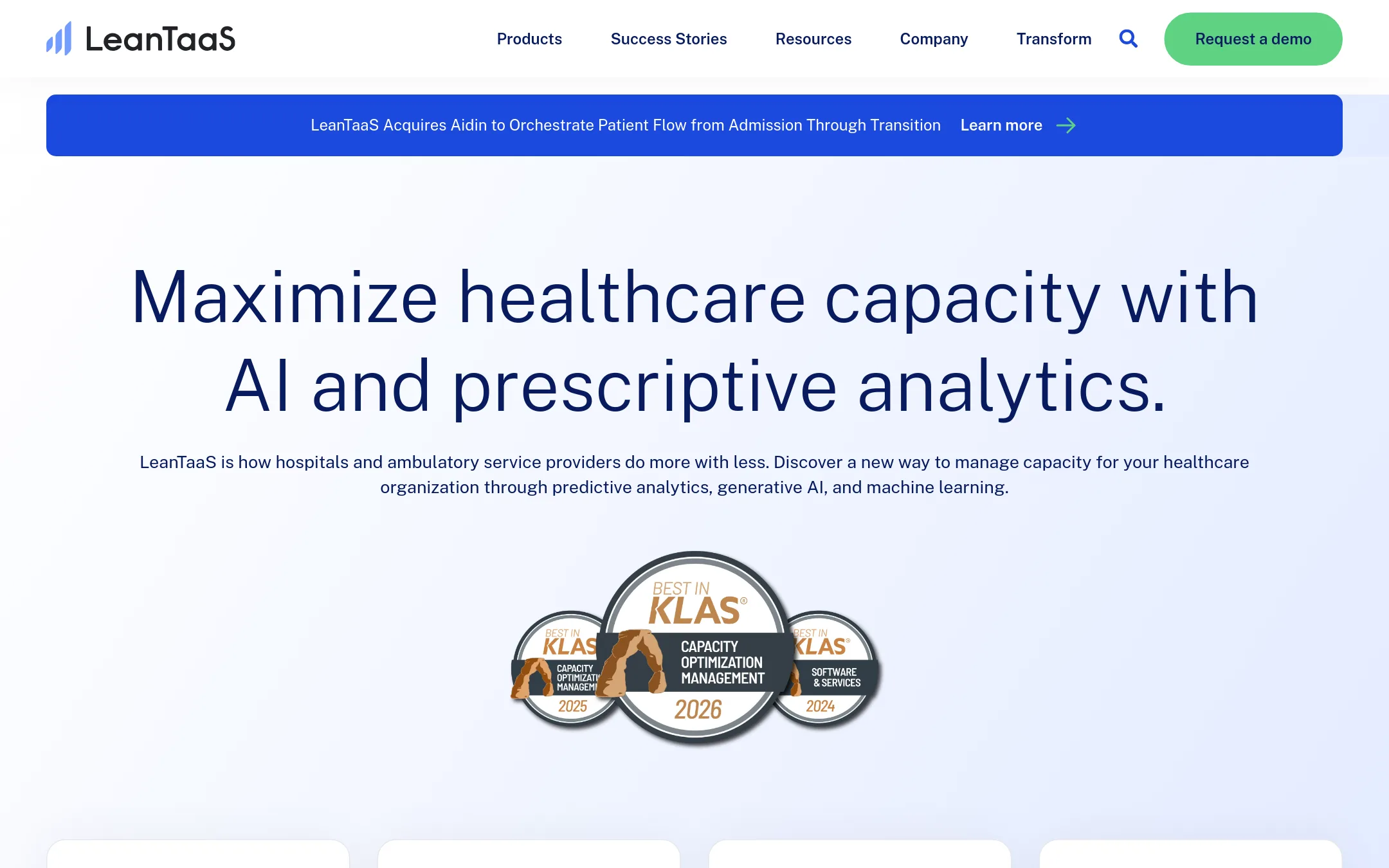
LeanTaaS uses AI, machine learning and predictive analytics to manage hospital capacity across operating rooms, infusion chairs and inpatient beds. It suits health systems that want forecasting for scheduling, staffing and patient flow, delivered as a cloud service with a dedicated implementation team. A team would pick it over Apprentice Health when the main problem is scheduling and capacity planning from EHR data, not physical sensing of rooms and patients.
Where it is strong
- Covers OR block scheduling, infusion chairs and inpatient beds in one suite
- Uses a small amount of EHR data for predictions, so it does not require new hardware
- Offers a Transformation as a Service option with a dedicated team for implementation and change management
Where it falls short
- Its focus is scheduling and forecasting rather than real-time sensor tracking of rooms and patients
- The site cites ROI figures and client counts but does not describe a self-serve or small-clinic option
- Pricing:
- Pricing is not published on the site.
- Not published
3.Epic
Best for: Large hospital systems and health networks that need a full electronic health record across many departments
- Pricing
- Not published
- Category
- Healthcare
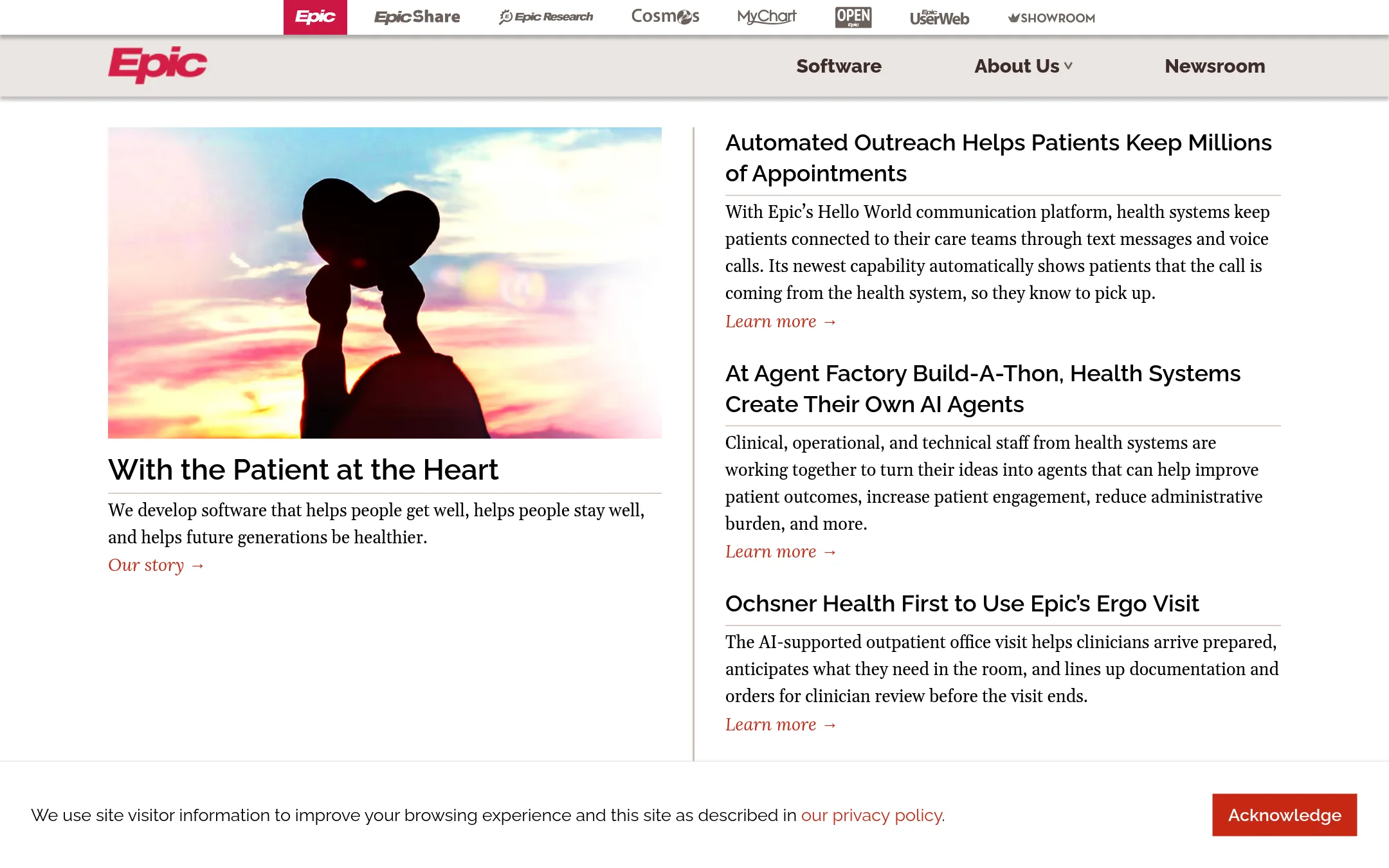
Epic builds the electronic health record and patient-facing software used by large hospital systems and health networks. A team would choose Epic over Apprentice Health when the main need is a full clinical record, charting, orders and patient portal across an entire organization, rather than sensor-driven room utilization and scheduling optimization.
Where it is strong
- Covers the electronic health record, patient portal and clinical workflows in one platform
- Published research and case studies from health systems that use it
- Patient-facing tools such as MyChart for messaging and appointments
Where it falls short
- Does not focus on ambient sensors or real-time room tracking the way Apprentice Health does
- The site shows no pricing, so cost has to be found through a sales conversation
- Pricing:
- Pricing is not published on the site.
- CNot published
4.Cerner
Best for: Hospital systems looking for enterprise healthcare software under a single vendor brand

- Pricing
- Not published
- Category
- Healthcare
Cerner is an enterprise healthcare software brand, and the site returned a connection error when we tried to read it, so we have no product detail beyond its name and category. Teams who want a broad hospital records and operations platform, rather than sensor-driven workflow tools for exam room and waiting room flow, may look at it instead of Apprentice Health.
Where it is strong
- Enterprise healthcare software brand with a established name in the category
- Listed under the Healthcare category alongside Apprentice Health
- Suits organisations that want a broad software suite rather than a single workflow module
Where it falls short
- Our attempt to read the website failed, so we could not confirm its current modules
- No pricing or deployment details could be verified from the source
- Pricing:
- Pricing is not published on the site.
- Custom quote
5.Phreesia
Best for: Independent practices, specialty groups and health systems in the U.S. that want to cut front-desk work and improve time-of-service collections
- Pricing
- Custom quote
- Category
- Healthcare
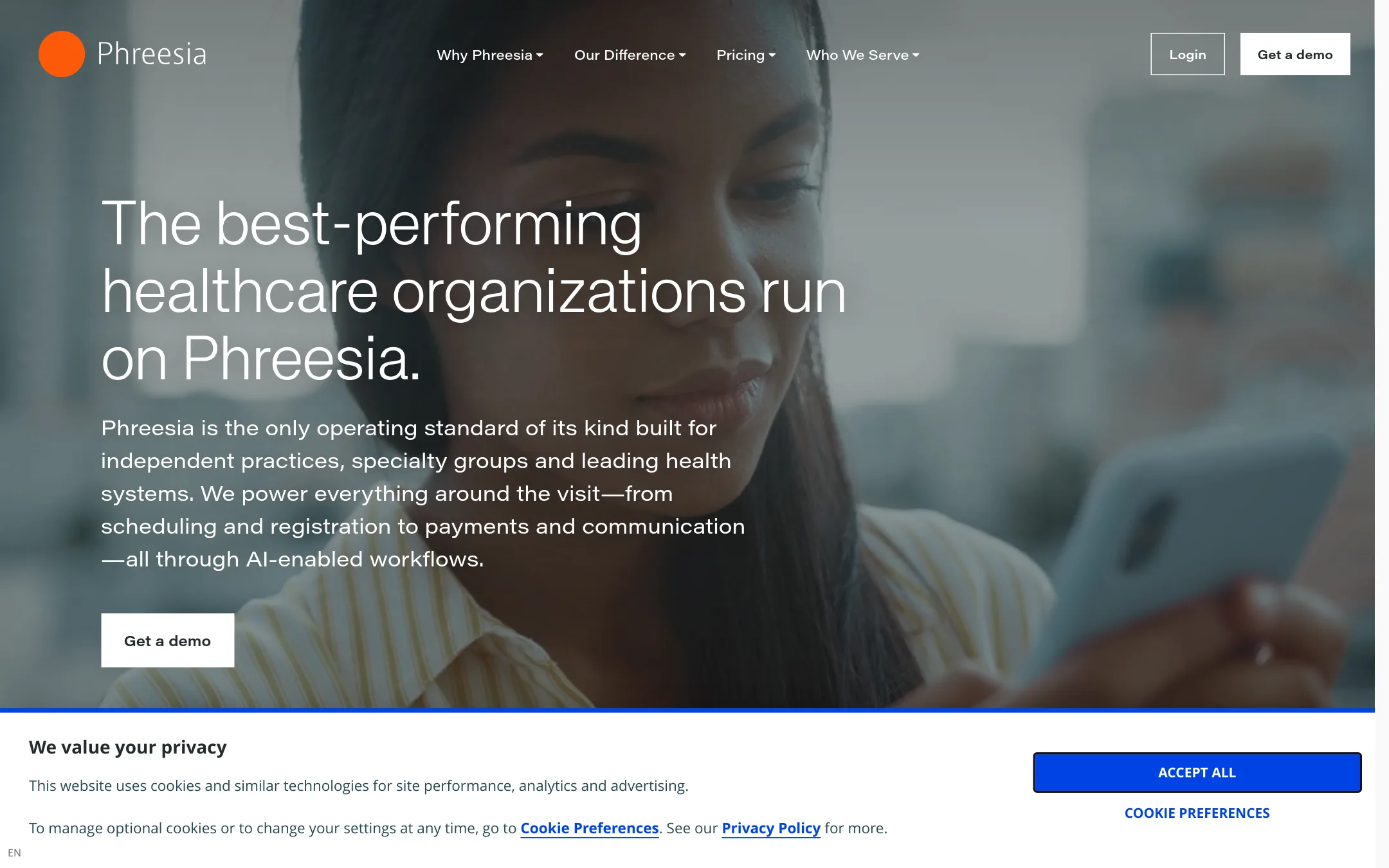
Phreesia handles the patient side of a visit: scheduling, registration, check-in, copay collection and patient messaging, plus a voice agent for phone calls. Teams choose it over Apprentice Health when the problem is front-desk load, collections and intake rather than room flow and waiting room occupancy.
Where it is strong
- Covers scheduling, registration, payments and patient communication in one platform
- Reports higher time-of-service collections and copay collection rates on its customer pages
- Integrates bidirectionally with many leading EHRs
Where it falls short
- Focused on the patient intake and payments side, not on room utilization or sensor-based workflow tracking the way Apprentice Health is
- Pricing requires a sales conversation before you know the cost
- Pricing:
- Pricing is not published on the site, and quotes are built around organization size, workflows and products used, with free access to the Intake platform through spring 2027 according to the page.
- KNot published
6.Kyruus
Best for: Health systems, medical groups and health plans that need a managed provider directory and online patient self-scheduling
- Pricing
- Not published
- Category
- Other
Kyruus Health is a care access platform for provider organizations and payers. It handles provider directory data, online search, self-scheduling and digital check-in, so patients can find and book the right clinician without calling. A health system or medical group would choose it over Apprentice Health when the main problem is patient access and scheduling rather than the physical flow of patients through a clinic or hospital.
Where it is strong
- Covers provider data management, search, scheduling and check-in in one care access platform
- Offers provider search, availability and scheduling APIs for integration
- Lists direct integrations with Epic, Oracle Health, MEDITECH and athenahealth
Where it falls short
- Focuses on the patient access journey, not on sensors, room allocation or in-clinic workflow orchestration as Apprentice Health does
- The site describes its customers as health systems, medical groups and payers, so it may not suit smaller independent clinics
- Pricing:
- Pricing is not published on the site.
See more comparisons in Healthcare alternatives.
FAQ
Questions about Apprentice Health alternatives
What does Apprentice Health do?
Apprentice Health deploys ambient sensors and software to reduce waiting room occupancy, keep exam rooms in use and shorten patient waits. Its modules include optimized scheduling templates, ambient workflows, a smart hospital sensor layer and analytics. It is designed for clinics, infusion suites, peri-operative units, emergency departments and inpatient units.
Which alternative is best for reducing front-desk work and improving collections?
Phreesia is the best fit for that goal. It covers scheduling, registration, check-in, copay collection and patient messaging, and it adds a voice agent for phone calls. It is aimed at independent practices, specialty groups and U.S. health systems, and it reports higher time-of-service collections on its customer pages.
Which alternative should a hospital pick if surgical and inpatient throughput is the main problem?
Qventus is the closer match. It offers dedicated modules for surgical growth, perioperative care coordination and inpatient capacity, and it cites up to 40% reductions in pre-admission testing cancellations. Its focus is administrative and surgical operations rather than the room-level sensing Apprentice Health offers.
Do any of these alternatives publish their pricing?
No. Qventus, Epic, LeanTaaS, Kyruus and Cerner do not publish pricing on their sites as far as we could read them. Phreesia notes that quotes depend on organization size, workflows and products used, and says its Intake platform is free through spring 2027. Plan to request a quote from any vendor you shortlist.
How do I choose between these tools and Apprentice Health?
Start by naming the bottleneck you need to fix. Choose Apprentice Health or a similar sensor-based tool when the problem is physical room occupancy and patient flow. Choose Phreesia for intake and payments, LeanTaaS for scheduling and capacity forecasting, Qventus for surgical and discharge operations, or Kyruus for patient self-scheduling and provider directories. Then compare integrations with your electronic health record and the contract terms each vendor offers.
Last updated November 15, 2026.