8 Best AI Simulation Software in 2026
Updated November 8, 2026
The short answer
The strongest AI simulation software picks on this list are Artificial Societies, Godela and DeepSim. Artificial Societies suits communications, policy and investor relations teams at large organisations making high-stakes decisions. Godela suits hardware and engineering teams that already have simulation data and want faster design what-if answers. DeepSim suits semiconductor and AI chip design teams that need fast multi-scale physics simulation.
The shortlist, at a glance
Read the comparisons ↓ PrecipNot publishedFarmers, landscapers, construction crews and anyone planning outdoor work at one exact site who needs a forecast for that spot rather than the nearest airport.
 Vibrant LabsNot publishedResearch teams and AI labs training long-horizon agents who need environments that keep up with the model's ability.
 DeepSim, Inc.Not publishedSemiconductor and AI chip design teams that need fast, multi-scale physics simulation to get design insights sooner.
 TrimNot publishedResearch teams and engineers who run physics simulations and need faster results on large grids or many dimensions.
 Artificial SocietiesNot publishedCommunications, policy and investor relations teams at large organisations that face high-stakes decisions with regulators, shareholders or the public.
 RefreshNot publishedFrontier AI labs and enterprises that need objective benchmarks and training signals for computer use and coding agents.
 GodelaNot publishedHardware and engineering teams that already have simulation data and want to query design changes faster than rerunning solvers.
 TraverseNot publishedEnterprises that want to own and maintain their own models and run long horizon agent training with a small, hands-on team.
About AI Simulation Software
AI simulation software uses machine learning to model how a system behaves, so teams can test a change, a design or a decision before committing to it. Some products model physical systems such as airflow, heat or chip physics. Others simulate people, markets or software environments where AI agents can act and be scored.
The products on this list differ in approach, scale and pricing model. Some are built for physics and engineering, some for audience and public response modelling, and some for training and benchmarking AI agents. Most do not publish their pricing, so cost is a question to put to each vendor directly.
The 8 best AI Simulation Software, compared
- Not published
1.Precip
Best for: Farmers, landscapers, construction crews and anyone planning outdoor work at one exact site who needs a forecast for that spot rather than the nearest airport.
- Pricing
- Not published
- Category
- AI & Machine Learning
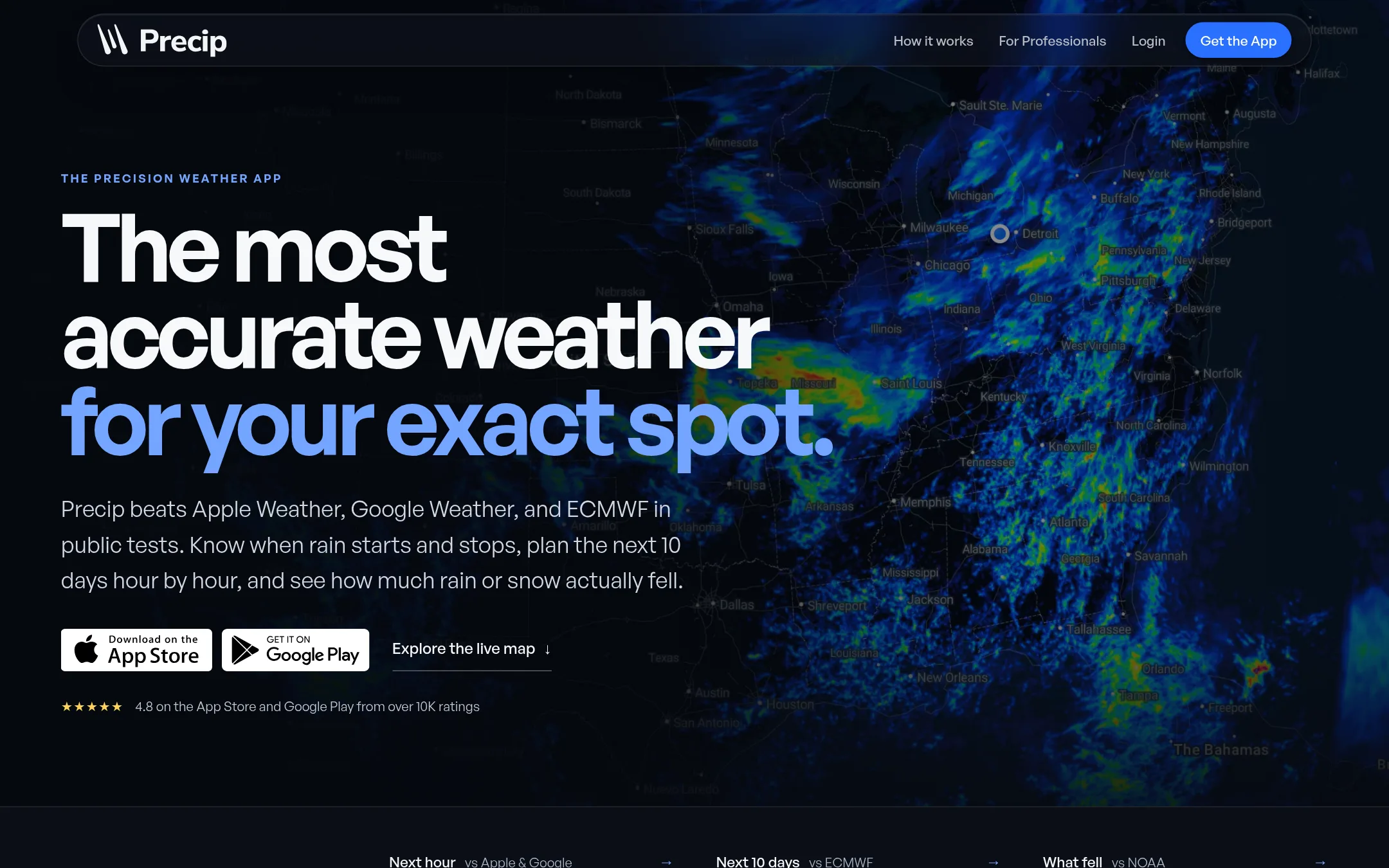
Precip is a weather app that sharpens global forecast models to 2.5 km for a specific spot, not just a town. It publishes its accuracy scores against Apple Weather, Google Weather and ECMWF, and its virtual rain gauge measures how much rain or snow actually fell at your location.
Where it is strong
- Forecasts at 2.5 km and 1 km scale for exact coordinates like a back yard or job site
- Publishes accuracy scores against Apple Weather, Google Weather and ECMWF, with a side-by-side model comparison
- Virtual rain gauge shows measured rainfall totals, not just predictions
Where it falls short
- Pricing is not published, so the cost of any paid tier is unknown until you check the app
- Its strongest features are built around rain and local precision, so teams needing deep multi-site weather data may need another tool
- Pricing:
- Pricing is not published on the site.
- Not published
2.Vibrant Labs
Best for: Research teams and AI labs training long-horizon agents who need environments that keep up with the model's ability.
- Pricing
- Not published
- Category
- AI & Machine Learning
Vibrant Labs builds reinforcement learning environments for long-horizon AI agents. Its environments adapt to the agent and generate tasks at the edge of what the agent can currently do, following curriculum learning and regret-based UED methods. It also builds self-evolving benchmarks, where coding agents create environments and verifiers that get rebuilt as models improve.
Where it is strong
- Environments adapt to the agent and generate tasks at its current difficulty edge
- Benchmarks are rebuilt as models improve, so they do not get outgrown
- Published research includes verifiable shopping task benchmarks and a tool-use task miner
Where it falls short
- Pricing is not published, so cost has to be discussed with the team directly
- The site describes a research lab, so it may suit research-driven teams more than teams wanting a packaged product
- Pricing:
- Pricing is not published on the site.
- Not published
3.DeepSim, Inc.
Best for: Semiconductor and AI chip design teams that need fast, multi-scale physics simulation to get design insights sooner.
- Pricing
- Not published
- Category
- AI & Machine Learning
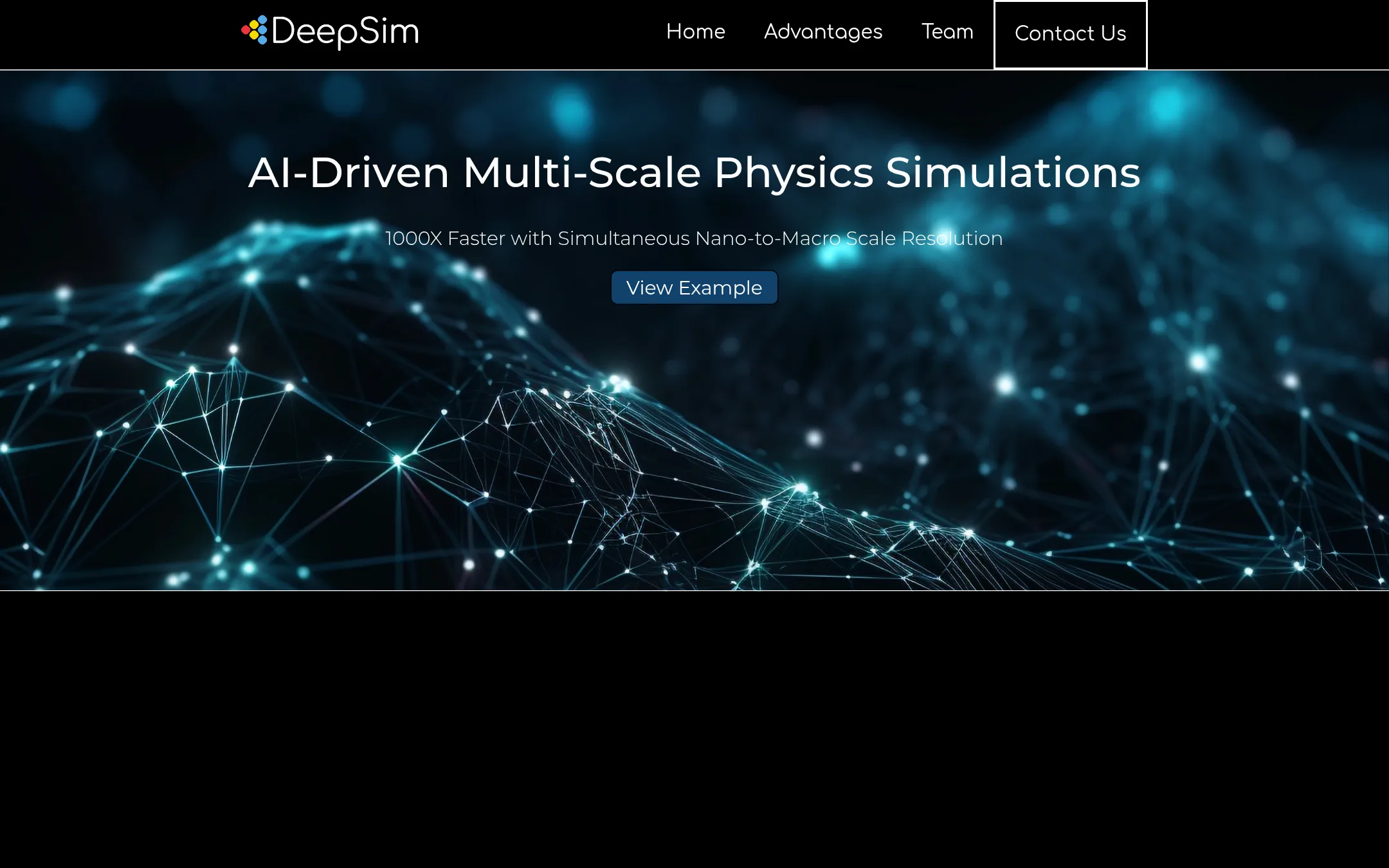
DeepSim is an AI physics simulator aimed at engineers who design AI chips. It runs multi-scale physics simulations that the company says are 1000 times faster than traditional methods, while resolving effects from the nano scale to the macro scale at the same time. The specific focus on AI chip design sets it apart from general simulation tools.
Where it is strong
- Claims 1000x faster simulation than traditional methods
- Resolves nano-to-macro scale effects in a single run
- Built with a simple workflow so engineers can start without a steep learning curve
Where it falls short
- Pricing and plan details are not published, so cost is hard to judge up front
- Scoped to AI chip physics, so it is not a fit for teams simulating other kinds of systems
- Pricing:
- Pricing is not published on the site.
- Not published
4.Trim
Best for: Research teams and engineers who run physics simulations and need faster results on large grids or many dimensions.
- Pricing
- Not published
- Category
- AI & Machine Learning
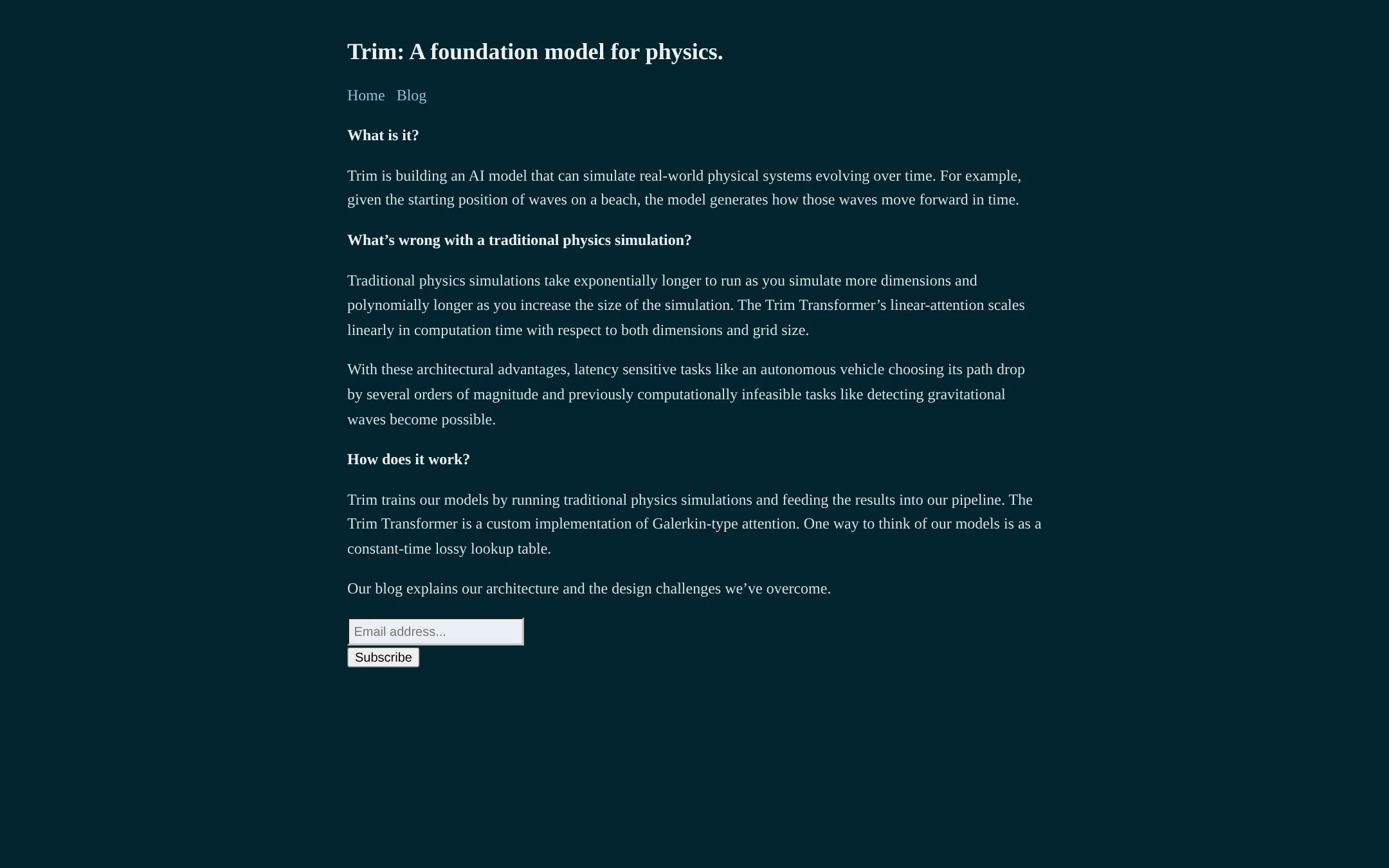
Trim builds an AI model that simulates how physical systems change over time, such as waves moving across a beach from a starting state. Traditional simulations get much slower as dimensions and grid size grow, but Trim's Transformer uses linear attention, so computation scales linearly with both. That speed is what makes latency-sensitive work like autonomous vehicle pathing practical.
Where it is strong
- Computation time scales linearly with dimensions and grid size, not exponentially.
- Trained on outputs from traditional physics simulations, so it learns from known results.
- Built for latency-sensitive tasks like autonomous vehicle path choice.
Where it falls short
- The model is lossy, so it approximates results rather than reproducing exact simulation output.
- The site does not list pricing, plans or access terms, so it is hard to evaluate for a small budget.
- Pricing:
- Pricing is not published on the site.
- Not published
5.Artificial Societies
Best for: Communications, policy and investor relations teams at large organisations that face high-stakes decisions with regulators, shareholders or the public.
- Pricing
- Not published
- Category
- AI & Machine Learning
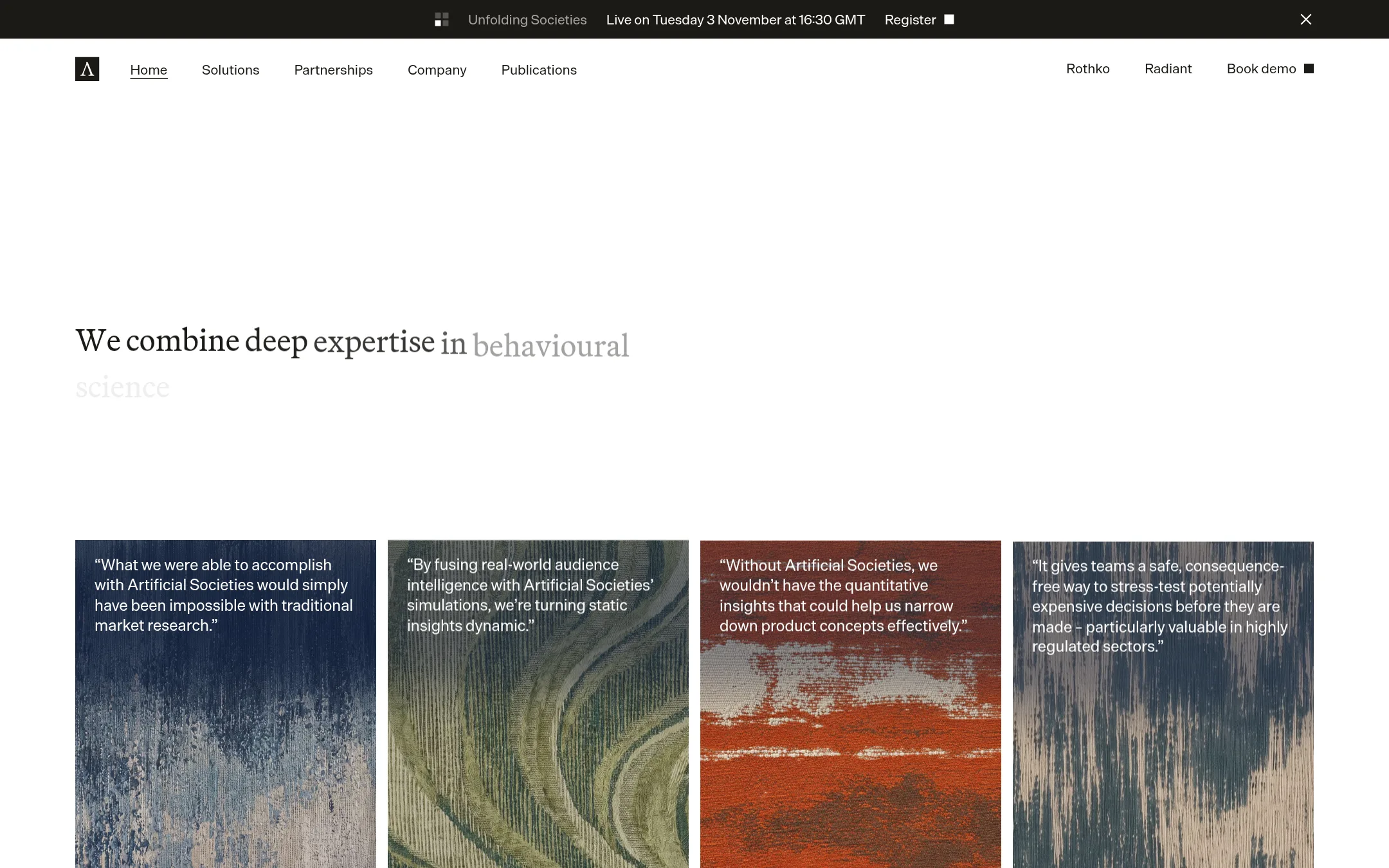
Artificial Societies builds personas from real-world observations and connects them into social networks, then runs simulations to predict how audiences will respond to a decision before it is made. It covers strategic comms, crisis planning, market expansion, investor relations and government affairs. Its claim of 86% distribution accuracy against human self-replication across 1000 panels gives buyers a concrete figure to test.
Where it is strong
- Runs experiments on full samples with no order effects or cross-contamination between tests.
- Maps second and third order impacts so you can see how a sequence of events might unfold.
- GDPR and SOC-2 compliant and EU hosted, which matters in regulated sectors.
Where it falls short
- Pricing is not published, so you must book a demo before you know the cost.
- Built for large, consequential decisions, so it is likely overkill for small teams or routine research.
- Pricing:
- Pricing is not published on the site.
- Not published
6.Refresh
Best for: Frontier AI labs and enterprises that need objective benchmarks and training signals for computer use and coding agents.
- Pricing
- Not published
- Category
- AI & Machine Learning
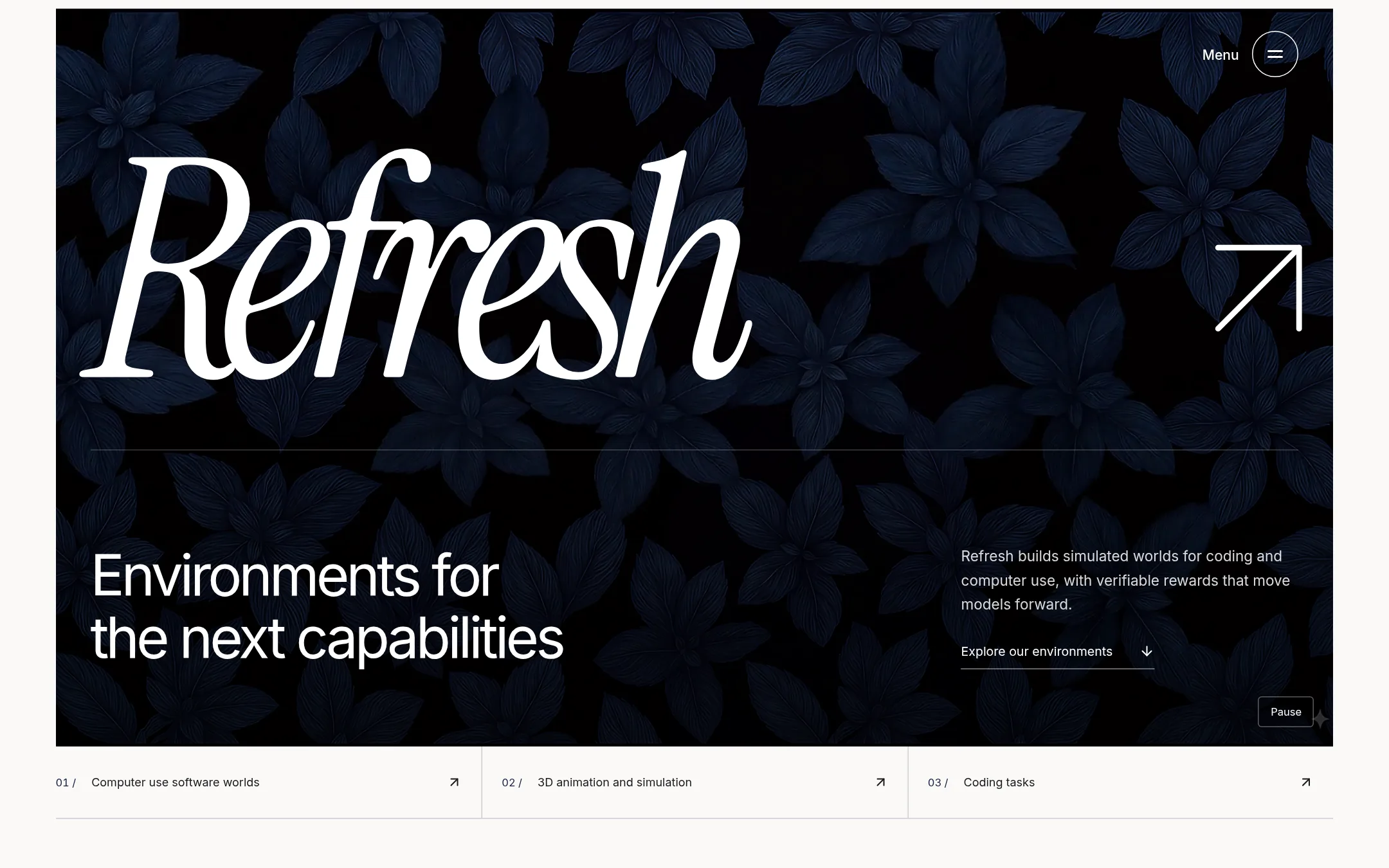
Refresh builds simulated software worlds where AI agents can act inside realistic applications, terminals, and workflows, and it measures success automatically. The company offers these environments both as evals and as training gyms that use verifiable rewards, such as a passing pytest suite or a correctly filled form field. Its environments include high-fidelity clones of enterprise software suites, from EHRs to other connected apps.
Where it is strong
- Success is scored by verifiable rewards, not subjective judgment
- Tasks are sourced from expert engineers and checked to fail on frontier models
- Covers computer use, coding, and Blender-based 3D animation work
Where it falls short
- Pricing is not published, so budgeting requires an email conversation
- Built for labs and enterprises, so small teams or individual developers may find it out of scope
- Pricing:
- Pricing is not published on the site.
- Not published
7.Godela
Best for: Hardware and engineering teams that already have simulation data and want to query design changes faster than rerunning solvers.
- Pricing
- Not published
- Category
- Other
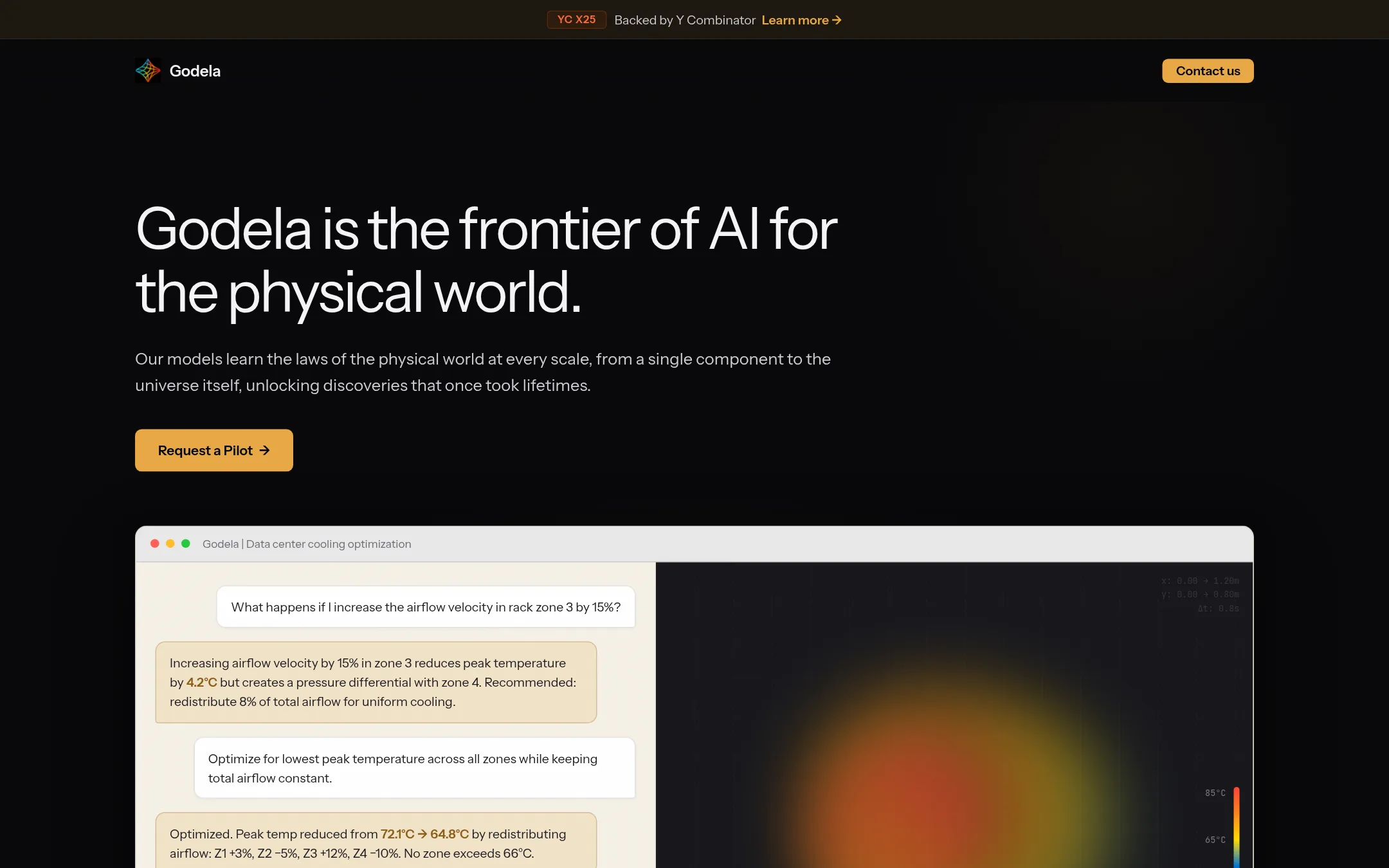
Godela trains a physics-constrained AI model on your existing simulation data, then answers what-if questions about airflow, geometry, and materials in seconds. It covers thermal, aerodynamic, magnetic, and structural problems, and the site claims solver-level accuracy with far less waiting than a full simulation run. It is built on a team of physicists and ML researchers, which is the core of its claim to be taken seriously.
Where it is strong
- Learns from your existing simulation data instead of starting from scratch
- Covers thermal, aerodynamic, magnetic, and structural domains in one product
- Answers design what-if questions in seconds rather than days
Where it falls short
- The site does not publish pricing, integrations, or customer examples, so evaluation requires a direct conversation
- Its value depends on having usable simulation data to train on, which may not suit very early-stage teams
- Pricing:
- Pricing is not published on the site.
- Not published
8.Traverse
Best for: Enterprises that want to own and maintain their own models and run long horizon agent training with a small, hands-on team.
- Pricing
- Not published
- Category
- AI & Machine Learning
Traverse builds reinforcement learning environments for long horizon agent journeys, aimed at enterprises that want to run frontier intelligence faster and for less. Its stated approach is to treat an organization's models as owned assets, maintained like a codebase. The team is small and works closely with a handful of companies at a time, and it is backed by researchers and leaders from OpenAI, Anthropic, Google DeepMind, and Meta.
Where it is strong
- Built around reinforcement learning environments for long horizon agent work
- Models are treated as owned assets maintained like a codebase
- Small team that works closely with each customer
Where it falls short
- Pricing is not published, so budget fit needs a direct conversation
- Engagement appears limited to a handful of companies at a time, so access may be restricted
- Pricing:
- Pricing is not published on the site.
How to choose AI Simulation Software
Start with pricing structure. None of the products on this list publish their prices, so you will need to request a demo or quote before you can compare costs. Ask whether pricing is per seat, per project, per simulation or tied to an enterprise contract.
Check who the product is built for. Physics tools such as DeepSim and Trim target engineers and researchers. Godela needs existing simulation data to learn from. Artificial Societies is built for high-stakes communications decisions. Refresh and Vibrant Labs serve AI labs training agents. A mismatch here is the most common reason a tool goes unused.
Look at integrations and the data you already have. Godela's value depends on training on your own simulation outputs, so confirm you have that data before buying. Ask what file formats, APIs and workflows each vendor supports.
Consider data and compliance requirements. Artificial Societies states it is GDPR and SOC-2 compliant and EU hosted, which matters in regulated sectors. Ask other vendors for equivalent documentation before you share sensitive design or customer data.
Finally, review support and contract terms. Several of these vendors work closely with a small number of customers, so ask about onboarding, support levels, contract length and what happens to your models and data if you leave.
FAQ
Questions about AI Simulation Software
What is AI simulation software?
AI simulation software uses machine learning to model how a system behaves, so teams can test changes before making them. Some tools model physical systems like airflow and chip physics, while others model audiences or AI agent environments. The right type depends on what you need to test.
How much does AI simulation software cost?
None of the products on this list publish their pricing, so you will need to request a quote or demo for each. Ask whether costs are per seat, per project, per simulation or set by an enterprise contract. Compare the total cost over the contract term, not just the first invoice.
Which AI simulation tool is best for engineering teams?
Godela suits hardware and engineering teams that already have simulation data and want to query design changes faster than rerunning solvers. DeepSim suits semiconductor and AI chip design teams that need fast multi-scale physics simulation. Both require checking pricing and integrations directly with the vendor.
Do I need existing data to use AI simulation software?
It depends on the product. Godela learns from your existing simulation data, so it needs usable outputs to train on. Artificial Societies builds personas from real-world observations, and Refresh provides its own simulated environments, so those are less dependent on your existing data.
How can I check whether an AI simulation product meets my compliance needs?
Ask each vendor for written documentation on data hosting, privacy and security certifications before sharing any sensitive information. Artificial Societies states it is GDPR and SOC-2 compliant and EU hosted, which is a useful benchmark. Other vendors on this list do not state their compliance status on their sites, so request it directly.
Last updated November 8, 2026.