6 Best Computer Vision Platforms in 2026
Updated November 7, 2026
The short answer
The three strongest computer vision platforms on this list are Roboflow, Ultralytics and Superb AI. Roboflow suits manufacturers, logistics operators and robotics teams that need to run vision on cameras or production lines. Ultralytics suits engineering teams building real-time detection into their own products, starting on open models and moving to a commercial license later. Superb AI suits industrial teams in mobility, security, defense, logistics or manufacturing that need vision AI to run on-site or offline.
The shortlist, at a glance
Read the comparisons ↓ RoboflowFree plan, $39/moManufacturers, logistics operators, and robotics teams that need to put computer vision on cameras or production lines and keep it running
 UltralyticsFree, Pro $29/seat/moEngineering teams building real-time detection into their own products who want to start on open models and move to a commercial license later
 Superb AICustom quoteIndustrial teams in mobility, security, defense, logistics or manufacturing that need vision AI to run in real operating conditions, including on-site or offline.
 Protex AINot publishedIndustrial operators such as factories, warehouses and logistics sites that want safety and operations insight from cameras they already own.
 OpenCVNot publishedEngineering teams building custom computer vision features who want a free, cross-platform library they can run and modify themselves.
 Bucket RoboticsNot publishedManufacturing and sustainment teams that have changing parts and no time to collect large labeled image datasets before starting an inspection project.
About Computer Vision Platforms
Computer vision platforms help teams build, train and run software that reads images and video. They cover tasks such as labeling training data, training detection models, and deploying those models to cloud servers or edge hardware on cameras and machines.
The products on this list differ in approach, scale and pricing. Roboflow and Ultralytics offer published starting prices and free tiers, with Roboflow metering cloud inference in credits. Superb AI, Protex AI and Bucket Robotics do not publish pricing and focus on industrial sites. OpenCV is a free open source library rather than a hosted platform, so it needs engineering work to become a finished product.
The 6 best Computer Vision Platforms, compared
- Free plan, $39/mo
1.Roboflow
Best for: Manufacturers, logistics operators, and robotics teams that need to put computer vision on cameras or production lines and keep it running
- Pricing
- Free plan, $39/mo
- Category
- AI & Machine Learning
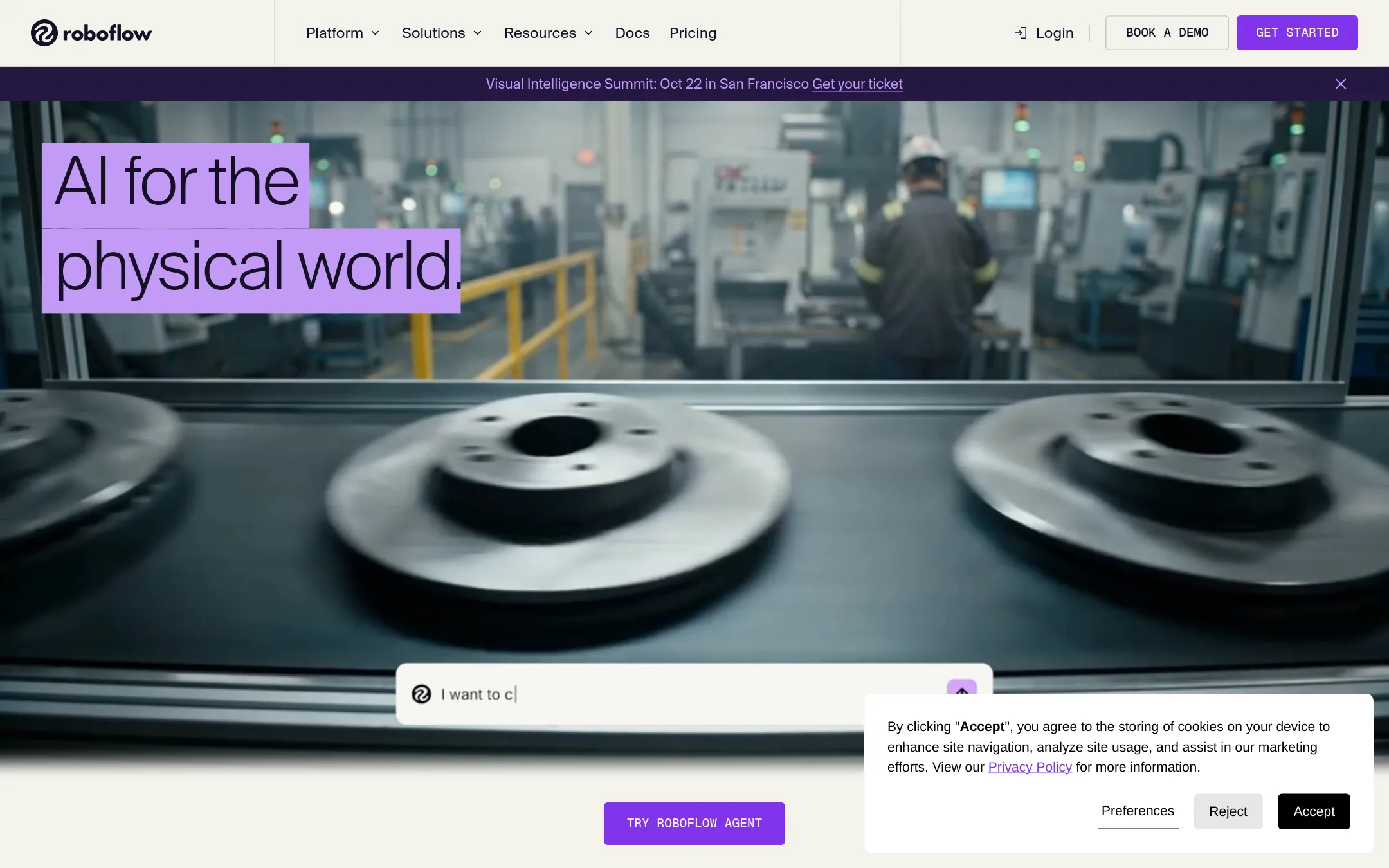
Roboflow is an end-to-end vision AI platform that covers annotation, training, workflows, and deployment in one place. Its open source libraries, including supervision with about 51.5K GitHub stars and rf-detr with about 10K, give it a visible track record. BNSF uses it to inspect train wheels and run intermodal yard inventory across its network.
Where it is strong
- Covers labeling, training, workflows, and deployment on one platform
- Runs on edge hardware like NVIDIA Jetson and Raspberry Pi as well as in the cloud
- Open source libraries with large community adoption, including supervision and inference
Where it falls short
- Usage is metered in credits, so cloud inference costs are harder to forecast than a flat seat price
- Industrial features such as OPC/PLC triggers and audit logs sit in Enterprise add-ons with custom pricing
- Pricing:
- The Free Tier includes 10 credits a month, the Core plan is $39 per month with 20 credits, and Enterprise pricing is custom, with credit-based cloud inference priced per image or per stream hour.
- Free, Pro $29/seat/mo
2.Ultralytics
Best for: Engineering teams building real-time detection into their own products who want to start on open models and move to a commercial license later
- Pricing
- Free, Pro $29/seat/mo
- Category
- AI & Machine Learning
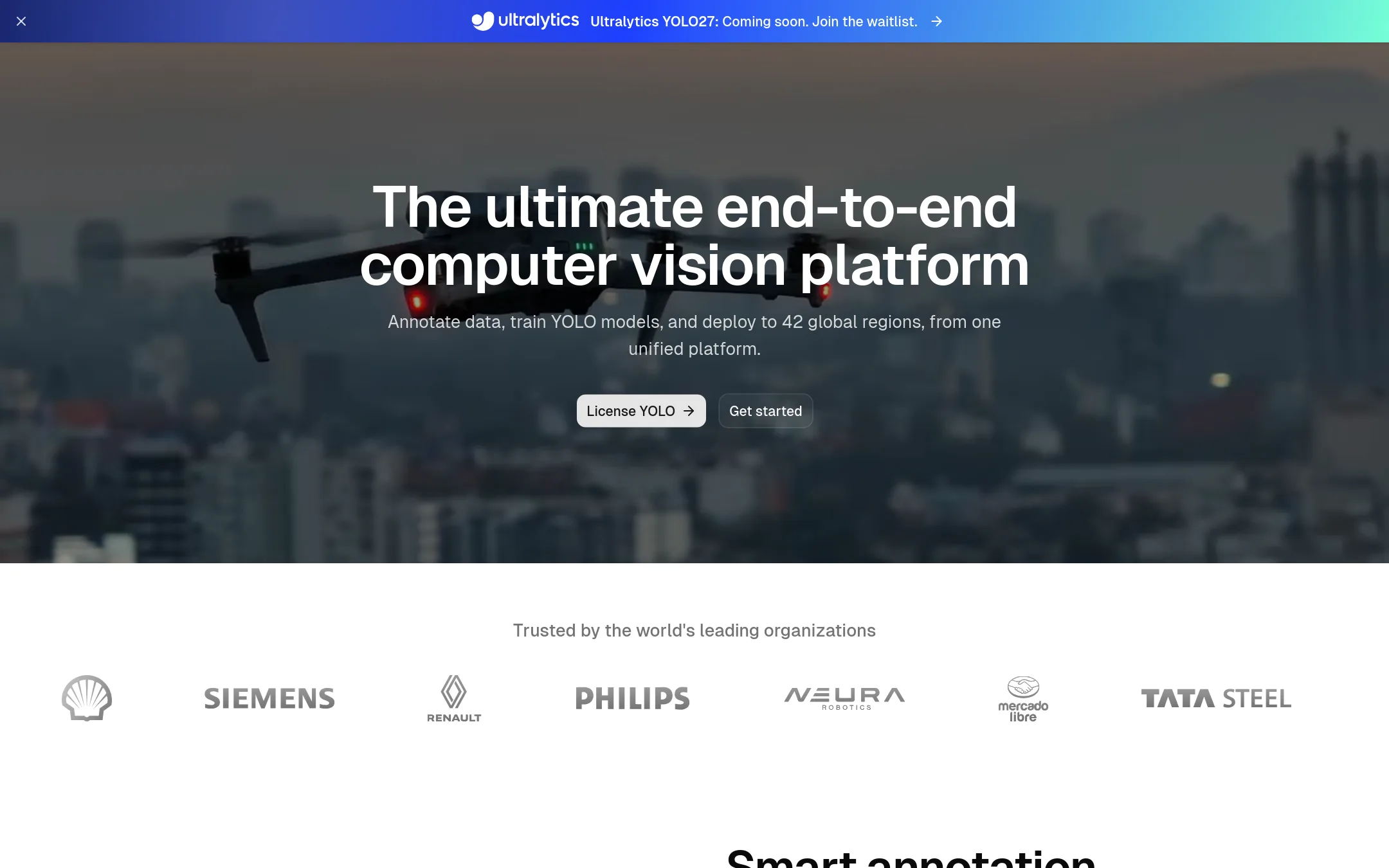
Ultralytics builds the YOLO family of real-time detection models and packages them with a platform for labeling data, training on cloud GPUs and deploying. Its credibility comes from the open-source YOLO models that many developers already use, plus an Enterprise License that removes open-source obligations for closed-source products. The platform supports 6 annotation task types and exports to 22 formats, including ONNX and TensorRT.
Where it is strong
- Supports 6 annotation task types with SAM-powered smart annotation
- Exports to 22 formats, including ONNX, TensorRT and CoreML
- Deployment to 42 global regions that scale to zero when idle
Where it falls short
- Enterprise pricing is custom and not published, so budgeting at scale needs a sales conversation
- Advanced controls like SSO/SAML and on-premise compute sit in the Enterprise tier
- Pricing:
- The Free plan is $0 with 100 GB storage and 3 concurrent cloud training jobs, Pro is $29 per seat per month with 500 GB and 10 concurrent jobs, and Enterprise is custom priced.
- Custom quote
3.Superb AI
Best for: Industrial teams in mobility, security, defense, logistics or manufacturing that need vision AI to run in real operating conditions, including on-site or offline.
- Pricing
- Custom quote
- Category
- AI & Machine Learning
Superb AI runs an end-to-end computer vision MLOps stack, covering data labeling, model training, deployment and video analytics on one platform. It is built for large video volumes, and the site says it has processed tens of millions of frames with automated labeling that cuts processing time by 90% on autonomous driving footage. Its on-premise option runs in air-gapped networks, which matters for security and defense buyers.
Where it is strong
- Covers labeling, training, deployment and video analytics in one platform
- Supports on-premise and air-gapped deployment for sensitive environments
- Defect detection can start with as few as 100 normal images and no defect data
Where it falls short
- Pricing depends on configuration, so budgeting requires a sales conversation
- Heavy industrial focus means small teams with general-purpose vision needs may find it more than they need
- Pricing:
- Pricing is not published on the site. Cloud and on-premise plans are described by feature set and quoted per customer, with AI Credits and seat counts varying by configuration.
- Not published
4.Protex AI
Best for: Industrial operators such as factories, warehouses and logistics sites that want safety and operations insight from cameras they already own.
- Pricing
- Not published
- Category
- AI & Machine Learning
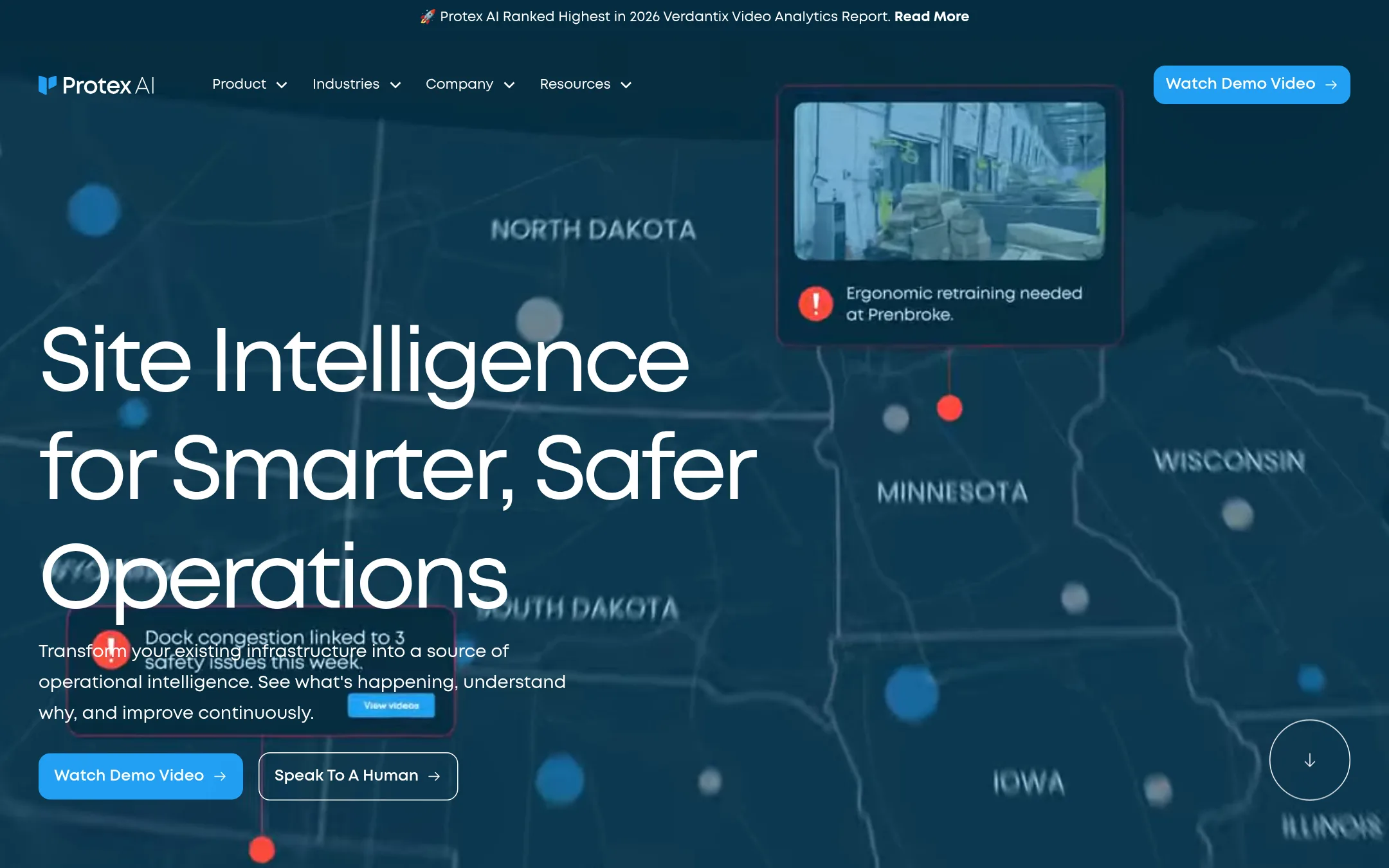
Protex AI turns the security cameras a site already has into a source of safety and operations data. It connects cameras to systems like WMS, MES, TMS and EHS, then detects risks across shifts and zones and explains likely causes. Its edge devices process video on site, so the platform does not require new camera hardware.
Where it is strong
- Works with existing CCTV through RTSP, so no camera replacement is needed.
- Fuses video with enterprise data from systems like WMS, MES and TMS to explain why risks happen.
- Edge processing handles event detection, blurring and encryption on site before anything is uploaded.
Where it falls short
- Pricing is not listed, so buyers must request a quote to compare costs.
- It is built for physical industrial sites, so it is not a fit for office or purely digital teams.
- Pricing:
- Pricing is not published on the site.
- Not published
5.OpenCV
Best for: Engineering teams building custom computer vision features who want a free, cross-platform library they can run and modify themselves.
- Pricing
- Not published
- Category
- AI & Machine Learning
OpenCV is an open source computer vision library with over 2500 algorithms, operated by the non-profit Open Source Vision Foundation since June 2000. It is optimized for real-time work and offers C++, Python and Java interfaces that run on Linux, macOS, Windows, iOS and Android. Its Apache 2 License is free for commercial use, which makes it a strong starting point for teams building their own vision features.
Where it is strong
- Released under the Apache 2 License and free for commercial use
- Contains over 2500 algorithms with a focus on real-time applications
- Works from C++, Python or Java across Linux, macOS, Windows, iOS and Android
Where it falls short
- It is a library, so teams need engineering skills to turn it into a finished product
- Paid support runs through separate OpenCV Enterprise and consulting offerings, which the site does not price
- Pricing:
- Pricing is not published on the site.
- Not published
6.Bucket Robotics
Best for: Manufacturing and sustainment teams that have changing parts and no time to collect large labeled image datasets before starting an inspection project.
- Pricing
- Not published
- Category
- AI & Machine Learning
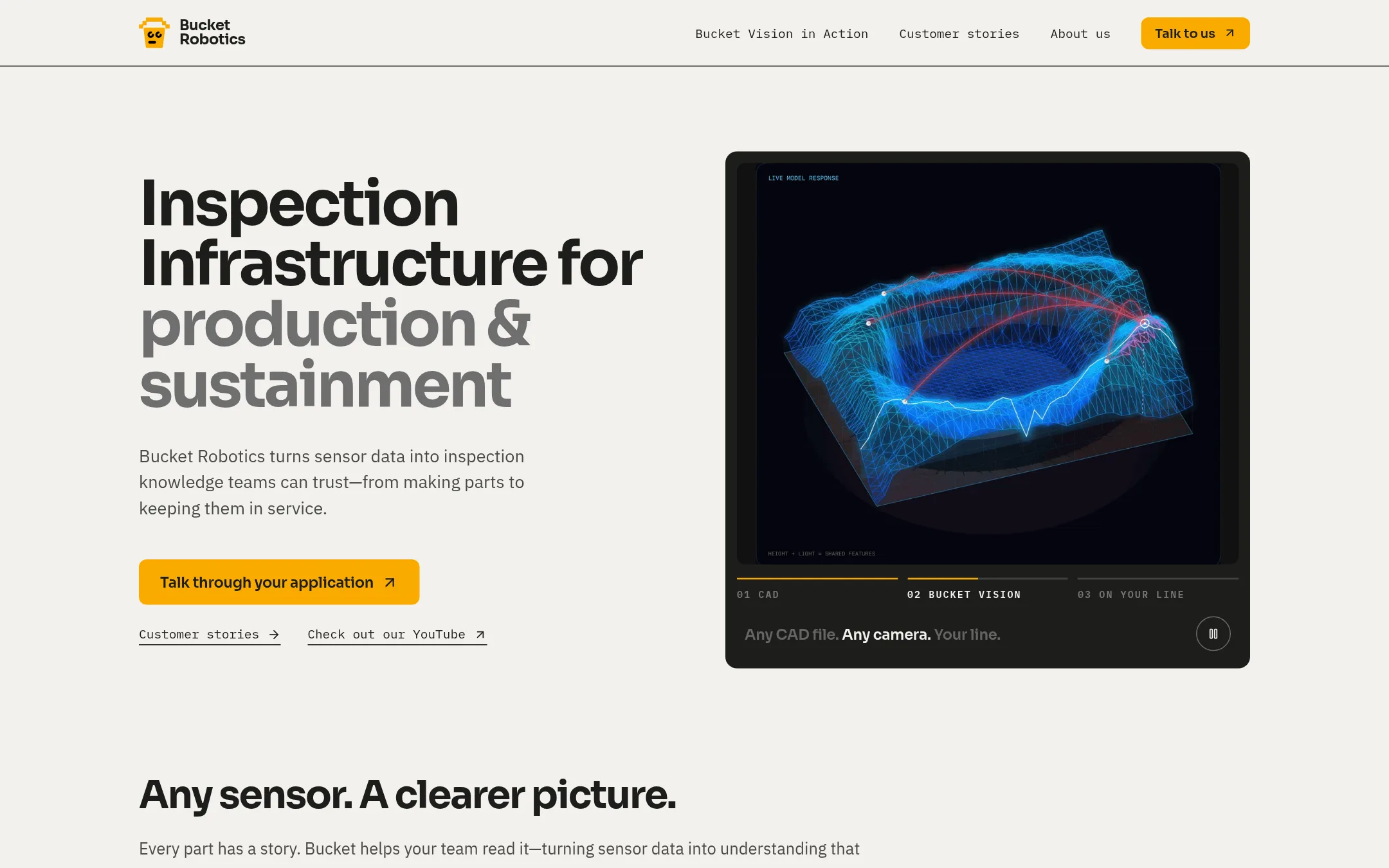
Bucket Robotics builds inspection software that reads sensor data from cameras, X-ray, and other sensors, and keeps that knowledge with the part from first inspection through years in service. Its flagship Bucket Vision starts from the CAD file, so teams do not need a perfect image dataset before they begin. It is built for variable lighting and imperfect setups, which is where many vision systems struggle.
Where it is strong
- Starts from your CAD file, so setup does not wait on image datasets
- Works across many hardware types, from iPhones to fixed multi-camera stations and robot workcells
- Pilots run 8 to 10 weeks on one station with acceptance criteria agreed upfront
Where it falls short
- Dimensional and non-visible inspection are listed as coming soon, so those capabilities are not yet available
- No public pricing, so budget fit needs a direct conversation with the vendor
- Pricing:
- Pricing is not published on the site.
How to choose Computer Vision Platforms
Look closely at how pricing is structured. Some platforms charge per seat, some meter usage in credits, and some quote custom prices. Credit-based cloud inference can be harder to forecast than a flat seat price, so model your expected image or stream volume before you commit.
Check who the product is built for. Platforms aimed at engineering teams, such as Ultralytics and OpenCV, assume you can build and maintain the software yourself. Platforms aimed at industrial operators, such as Protex AI and Bucket Robotics, are designed to fit into existing sites and workflows with less in-house development.
Confirm integrations and deployment options before you sign. Protex AI connects to systems like WMS, MES and TMS, and Roboflow and Ultralytics export to multiple edge and cloud formats. If your models must run on-premise or in air-gapped networks, Superb AI lists that option.
Think about data and compliance. Protex AI processes video on site and blurs and encrypts footage before upload. Ultralytics offers an Enterprise License for closed-source products, and Superb AI supports sensitive environments. Ask each vendor how your image and video data is stored and who can access it.
Review support and contract terms. Several products keep key features such as SSO, audit logs and on-premise compute in higher tiers, and some vendors do not publish pricing at all. Ask for written details on support levels, pilot terms and what happens to your data if you leave.
FAQ
Questions about Computer Vision Platforms
What is a computer vision platform?
A computer vision platform is software that helps teams label image and video data, train models that recognize what is in that data, and deploy those models to cloud servers or edge devices. Some platforms cover the full cycle on one product, while others provide a single part such as a library.
Which computer vision platform is free to start?
Roboflow offers a Free Tier with 10 credits a month, and Ultralytics offers a Free plan at $0 with 100 GB of storage and 3 concurrent cloud training jobs. OpenCV is a free open source library under the Apache 2 License, free for commercial use.
How do I choose between an open source library and a hosted platform?
OpenCV is a library that engineering teams can run and modify themselves, so it suits teams with the skills to build a finished product. Hosted platforms such as Roboflow and Superb AI bundle labeling, training and deployment, which can reduce the engineering work but adds a vendor relationship and usage costs.
Can computer vision run without sending video to the cloud?
Yes, for some products. Superb AI offers an on-premise option that runs in air-gapped networks, and Protex AI processes video on site on its edge devices before anything is uploaded. Roboflow also runs on edge hardware such as NVIDIA Jetson and Raspberry Pi.
Why do some computer vision platforms list no prices?
Superb AI, Protex AI, Bucket Robotics and OpenCV do not publish pricing on their sites. Buyers must request a quote or contact the vendor to understand costs, and Enterprise tiers at Roboflow and Ultralytics are also custom priced.
Last updated November 7, 2026.