9 Best Mental Health Apps in 2026
Updated November 6, 2026
The short answer
The three strongest mental health apps on this list are Headspace, Modern Health, and Therify. Headspace suits individuals and employers who want guided meditation, sleep tools and optional therapy in one app. Modern Health suits multinational employers that need benefits covering many countries and languages, and Therify suits self-insured employers who want their health plan spend to reach in-network care quickly.
The shortlist, at a glance
Read the comparisons ↓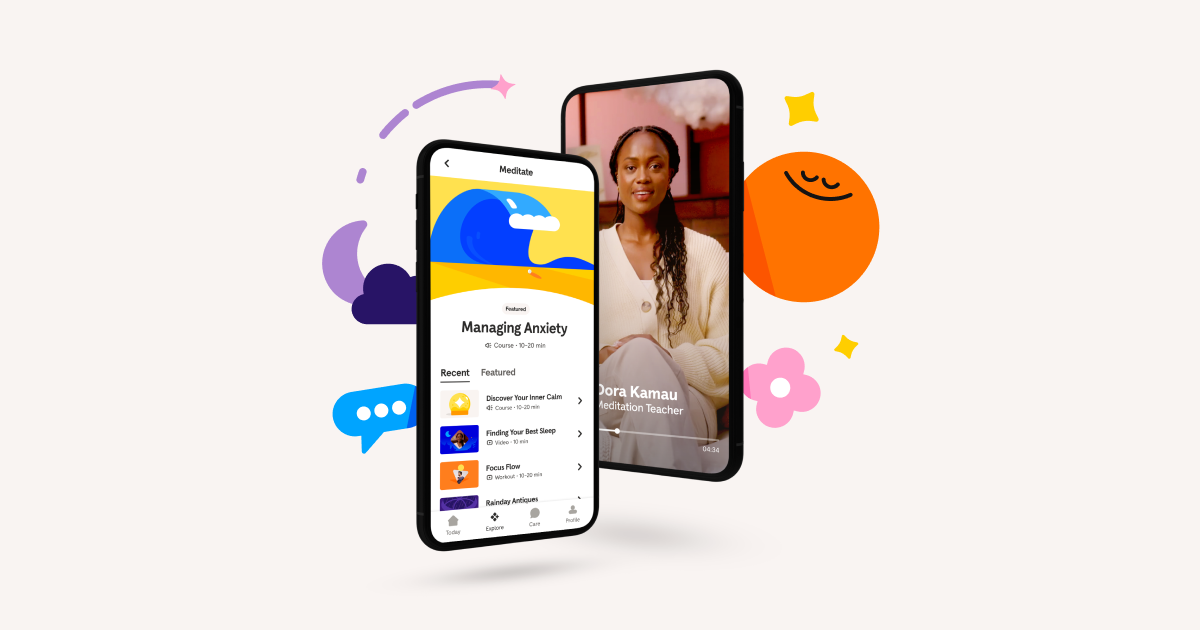 HeadspaceNot publishedIndividuals and employers who want guided meditation and sleep tools, with optional therapy or coaching, through one app.
 AuraNot publishedIndividuals and teams looking for a consumer wellness app that combines meditation and sleep support with some structured CBT content
 Modern HealthNot publishedMultinational employers that need mental health benefits for a globally distributed workforce in many languages and countries.
 Relay HealthNot publishedMen looking for a peer-support recovery app to quit pornography, rather than a general mental health tool.
 stoic.Free to start, PremiumIndividuals and small teams who want a simple daily habit for reflection and stress relief, not a clinical or team-based tool.
 MindFiNot publishedHR leaders at companies with employees spread across several countries who need one EAP that covers therapy, coaching and reporting.
 KokoNot publishedYouth-focused organizations, schools and public health teams looking for a free way to reach young people who are struggling online
 TherifyCustom quoteSelf-insured employers and HR or benefits teams that want their existing health plan spend to reach in-network mental health care quickly.
 SoniaNot publishedIndividuals and employee wellbeing programs looking for an on-demand AI companion for everyday emotional support, with enterprise partnerships available for organizations.
About Mental Health Apps
Mental health apps are software products that help people manage stress, anxiety, sleep, mood and other emotional needs. Some are consumer tools for self-guided practice, such as meditation, journaling and CBT exercises. Others are employer benefits or employee assistance programs that connect people with licensed therapists, coaches and crisis support.
The products on this list differ in approach, scale and pricing model. Some focus on self-guided tools for individuals, while others sell therapy networks or benefits platforms to employers. Several focus on a narrow need, such as peer support for pornography recovery or free youth support. Most do not publish pricing, so cost has to be confirmed directly with each vendor.
The 9 best Mental Health Apps, compared
- Not published
1.Headspace
Best for: Individuals and employers who want guided meditation and sleep tools, with optional therapy or coaching, through one app.
- Pricing
- Not published
- Category
- Healthcare
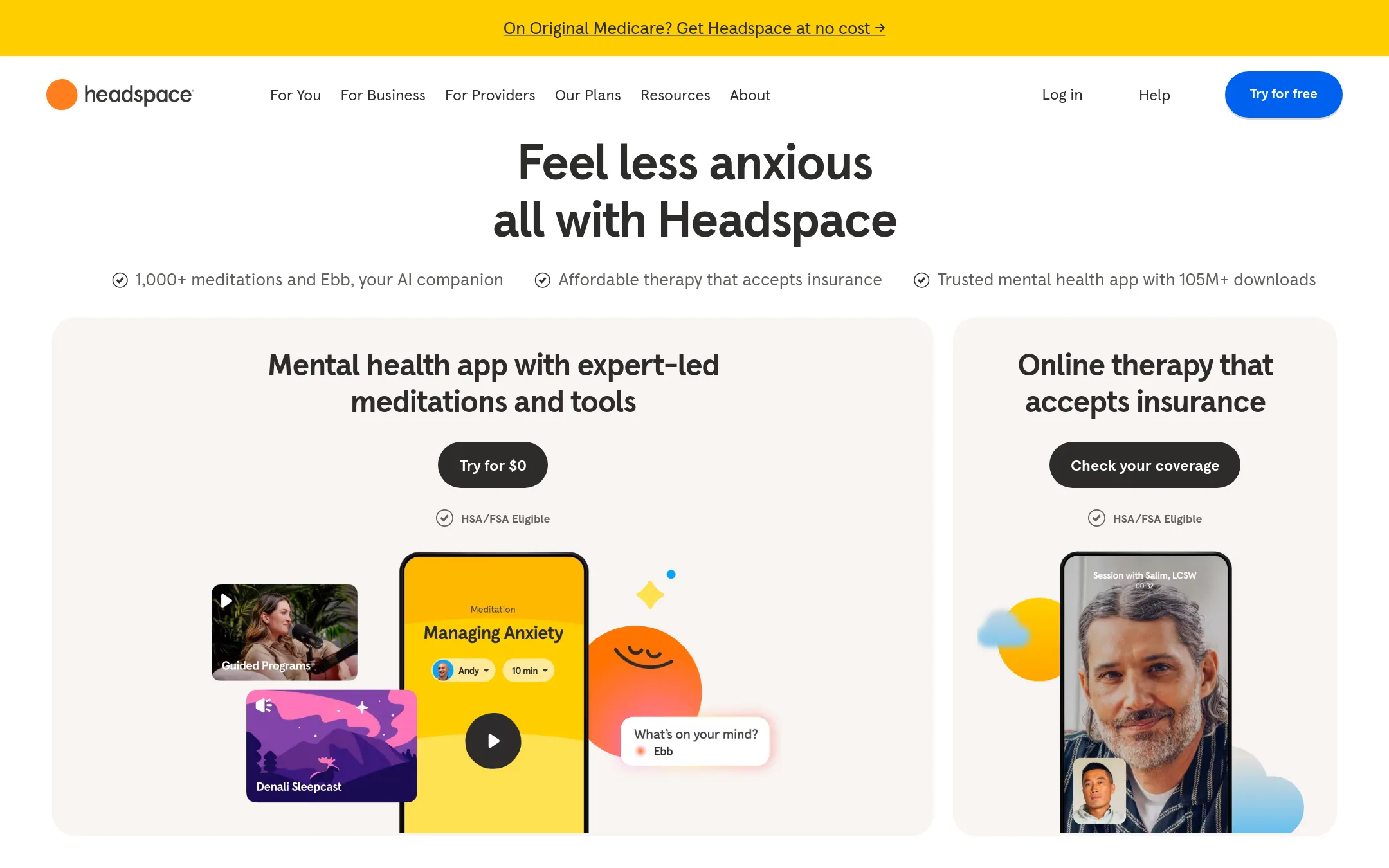
Headspace is a mental health app built around guided meditation, mindfulness, sleep, and online therapy, with over 1,000 expert-led exercises in its library. It is a credible pick because it covers several needs in one place: stress, sleep, anxiety, and access to therapy that accepts insurance. The site also says it is trusted by thousands of employers and health plans, and it lists HSA/FSA eligibility for subscriptions.
Where it is strong
- Over 1,000 expert-led meditations and mindfulness exercises
- Sleep tools including wind-downs, soundscapes, and sleepcasts
- Online therapy that accepts insurance, plus HSA/FSA eligibility
Where it falls short
- Pricing is not published on the site, so costs need to be checked directly
- Therapy and coaching are add-ons beyond the core subscription, so they may not suit teams wanting only self-guided tools
- Pricing:
- Pricing is not published on the site.
- Not published
2.Aura
Best for: Individuals and teams looking for a consumer wellness app that combines meditation and sleep support with some structured CBT content
- Pricing
- Not published
- Category
- Media & Entertainment
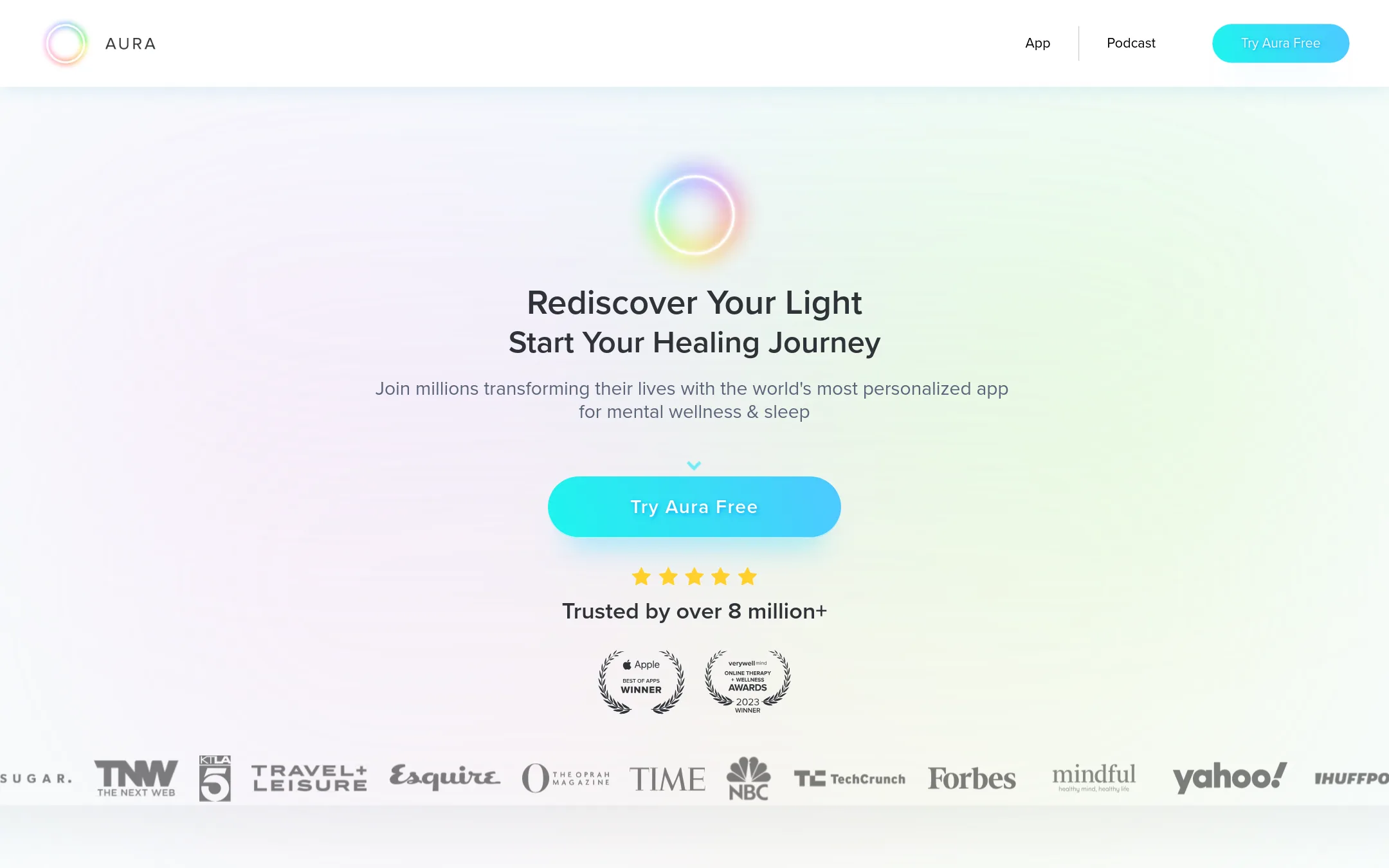
Aura is a mental wellness and sleep app that gathers meditation, sleep stories, hypnosis, CBT content, coaching, breathwork and ASMR in one place, and uses AI to personalize what each user sees. It claims over 8 million users and more than 45,000 five-star reviews on its site. The app has also been named a top new app by Apple, which is a concrete outside signal worth weighing.
Where it is strong
- Covers meditation, sleep, CBT, coaching and breathwork in one app
- AI personalization picks tracks from thousands of sleep options
- Sessions can be as short as three minutes, which suits beginners
Where it falls short
- Pricing is not published, so cost comparisons need a direct check
- User numbers and reviews come from the vendor, not independent audits
- Pricing:
- Pricing is not published on the site.
- Not published
3.Modern Health
Best for: Multinational employers that need mental health benefits for a globally distributed workforce in many languages and countries.
- Pricing
- Not published
- Category
- Healthcare
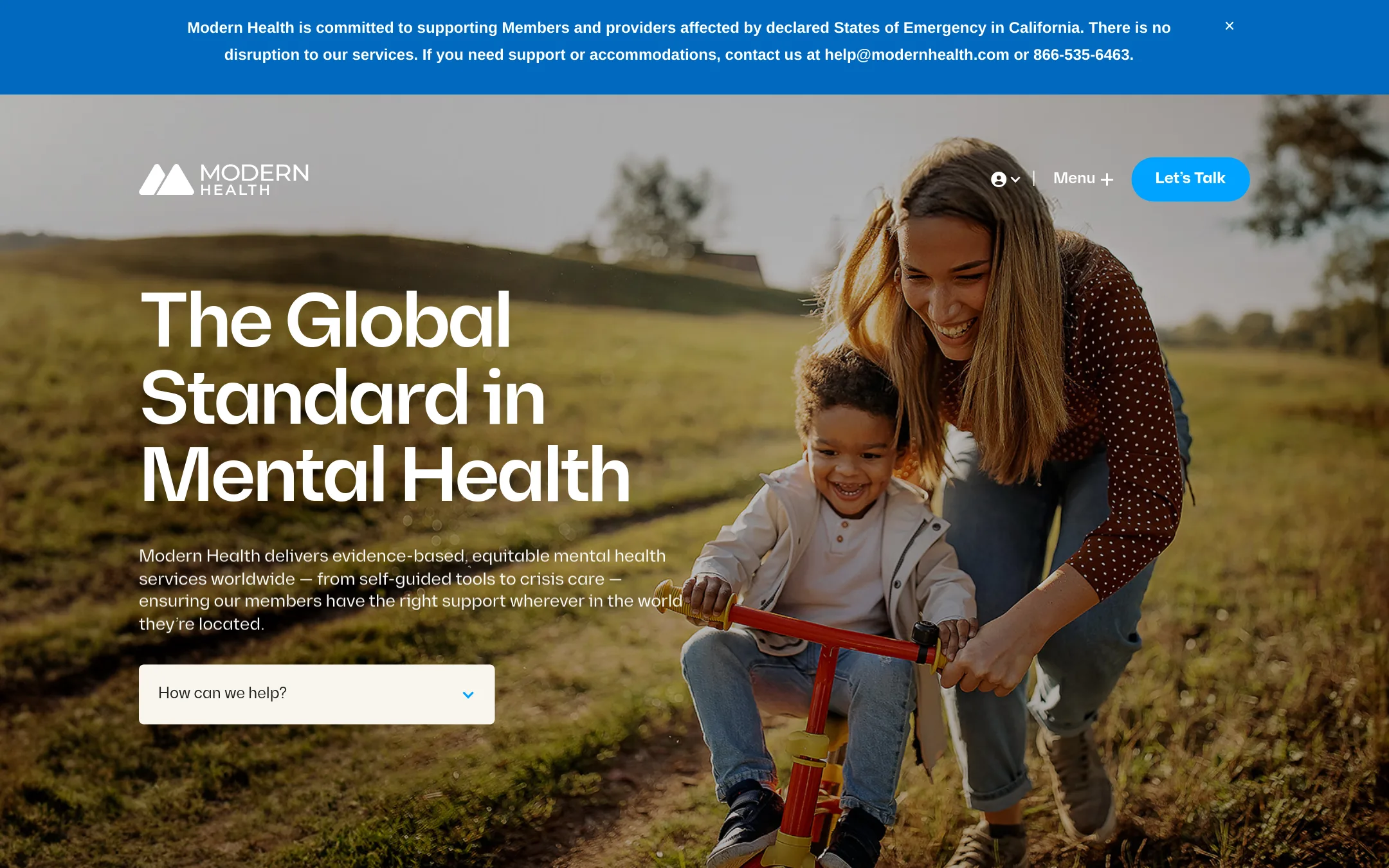
Modern Health is a mental health benefits platform sold to employers, covering everything from self-guided tools to crisis care for employees and their families. It uses an Adaptive Care Model and Stepped Care methodology so support matches each member's needs and preferences. The provider network spans 200+ countries and 80+ languages, and a third-party analysis of 13,000+ members is cited on the site.
Where it is strong
- Care spans 200+ countries and territories.
- Supports 80+ languages, with culturally centered care.
- Covers a range of needs, from self-guided tools to crisis care.
Where it falls short
- Pricing is not published, so you need a demo or consultant call to get numbers.
- Its employer-focused model means individuals cannot buy it directly.
- Pricing:
- Pricing is not published on the site. The site says pricing can be per-employee-per-month or usage-based.
- Not published
4.Relay Health
Best for: Men looking for a peer-support recovery app to quit pornography, rather than a general mental health tool.

- Pricing
- Not published
- Category
- Healthcare
Relay Health is a recovery app for men trying to quit pornography. It pairs each user with a small group of peers working toward the same goal, and adds daily check-ins, trigger tracking, and lessons designed by licensed therapists. Its credibility rests mainly on its group structure: users in the listing describe live group sessions and a community that checks in daily.
Where it is strong
- Pairs users with a small group of peers working on the same goal
- Daily check-ins and trigger tracking build consistency and self-awareness
- Lessons are built by licensed therapists and aim at the root of the habit
Where it falls short
- Narrow focus on pornography recovery, so it does not cover broader mental health needs
- Pricing is not disclosed, so cost is hard to compare before signing up
- Pricing:
- Pricing is not published on the site.
- Free to start, Premium
5.stoic.
Best for: Individuals and small teams who want a simple daily habit for reflection and stress relief, not a clinical or team-based tool.

- Pricing
- Free to start, Premium
- Category
- Healthcare
Stoic is a daily journaling app built around short reflection sessions with prompts curated by therapists and experts. It adds mood tracking, meditation, and breathing practices, and it keeps journals private on the user's own devices. Its strongest credibility signal is scale: the directory listing cites over 3 million users, and the site reports over 4 million downloads.
Where it is strong
- Expert-curated daily prompts keep reflection from feeling repetitive
- Journals stay on your devices, and only you can access them
- Reminders, streaks, and badges make it easy to keep a daily habit
Where it falls short
- Syncing across devices and the web requires the paid Premium tier
- AI features send journal entries to third-party AI providers, so privacy-focused users must opt out
- Pricing:
- Pricing is not published on the site.
- Not published
6.MindFi
Best for: HR leaders at companies with employees spread across several countries who need one EAP that covers therapy, coaching and reporting.

- Pricing
- Not published
- Category
- Healthcare
MindFi is an employee assistance platform for distributed teams, offering therapy and coaching with 1,500+ providers across 60+ countries and 70+ languages. It includes a 24/7 web, WhatsApp and phone line, plus an HR analytics dashboard that reports anonymized engagement and wellbeing data.
Where it is strong
- Covers 60+ countries and 70+ languages from one platform.
- Anonymized analytics show engagement and wellbeing without exposing individual data.
- Therapy is billed per session, so you pay only for the care employees use.
Where it falls short
- Pricing is not published, so you must request a quote to compare costs.
- The site lists WhatsApp and phone support, but it does not describe SSO or HRIS sync.
- Pricing:
- Pricing is not published on the site.
- Not published
7.Koko
Best for: Youth-focused organizations, schools and public health teams looking for a free way to reach young people who are struggling online
- Pricing
- Not published
- Category
- Healthcare
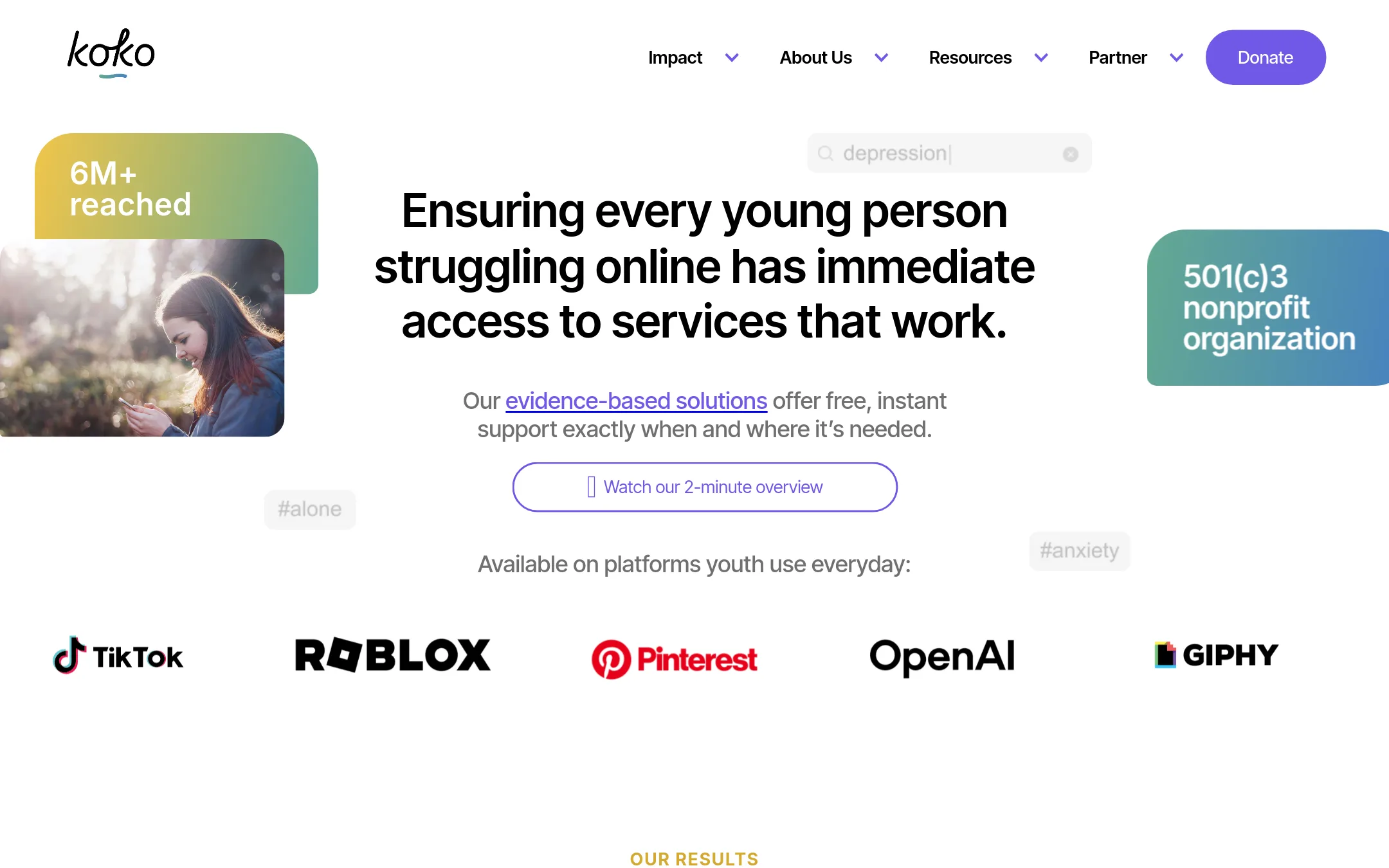
Koko is a nonprofit that offers free digital mental health support directly on the social platforms young people already use, detecting users who may be struggling and directing them to help. Its credibility rests on research: the platform has been analyzed in over eight peer-reviewed publications, including three randomized controlled trials.
Where it is strong
- Free access for users through getsupport.org
- Backed by three randomized controlled trials and peer-reviewed research
- Reports on outcomes such as hopefulness and suicidal ideation, with independent third-party safety review
Where it falls short
- Available through platform integrations, advertising and direct targeting rather than as a product a team can sign up for
- Not designed for employees, clinical teams or businesses buying software for their own staff
- Pricing:
- Pricing is not published on the site.
- Custom quote
8.Therify
Best for: Self-insured employers and HR or benefits teams that want their existing health plan spend to reach in-network mental health care quickly.

- Pricing
- Custom quote
- Category
- Healthcare
Therify connects employees to in-network licensed therapists and coaches, with provider availability guaranteed so a company's health plan spend turns into actual care. It reports that employees typically get seen within 48 hours, which is a concrete advantage over waiting for a referral. Named customers on the site include Indeed, Omnicom Media, and Thumbtack.
Where it is strong
- Matches employees with in-network providers, which can reduce out-of-network spend for self-insured employers
- Guarantees provider availability and reports access within about 48 hours
- Includes wellness and DEIB programming alongside clinical care
Where it falls short
- Pricing is not published, so you need to request a custom plan to compare costs
- The reported 92% outcome and $1,260 savings figures are the company's own claims and are not independently verified in the supplied facts
- Pricing:
- Pricing is not published on the site.
- Not published
9.Sonia
Best for: Individuals and employee wellbeing programs looking for an on-demand AI companion for everyday emotional support, with enterprise partnerships available for organizations.

- Pricing
- Not published
- Category
- Healthcare
Sonia is an AI companion for emotional support, letting users talk through stress, relationships, grief, anxiety and personal growth at any hour. Its credibility rests on a 400-participant university study that reported mood improvements and stress reductions, and on development with licensed mental health professionals. It also states HIPAA-compliant privacy and security.
Where it is strong
- Available 24/7 for conversations about everyday stress and life transitions
- Backed by a 400-participant university study that the company says showed mood and stress improvements
- States HIPAA-compliant privacy and security and includes meditations and journaling
Where it falls short
- Pricing is not published, so cost must be confirmed directly with the company
- It is an AI companion and not a replacement for professional mental health care, so it does not suit users who need clinical treatment
- Pricing:
- Pricing is not published on the site.
How to choose Mental Health Apps
Pricing structure is the first thing to weigh. Most products on this list do not publish prices, so a buyer should ask for the model in advance. Modern Health says its pricing can be per-employee-per-month or usage-based, and MindFi bills therapy per session, which means costs can vary widely with actual use.
Check who the product is built for. Headspace, Aura and stoic. sell to individuals, while Modern Health, MindFi and Therify sell to employers. Relay Health is aimed at men recovering from pornography use, and Koko is a free service for young people rather than a product a business can buy for staff.
Consider how the tool fits with existing benefits and systems. Therify matches employees to in-network providers, which can reduce out-of-network spend for self-insured employers. MindFi offers an HR analytics dashboard with anonymized engagement data, but the listing does not describe SSO or HRIS sync, so those integrations should be checked before buying.
Review data handling and compliance. Sonia states HIPAA-compliant privacy and security. stoic. keeps journals on the user's own devices, but its AI features send journal entries to third-party AI providers, so privacy-focused buyers should look at the opt-out.
Finally, look at support and contract terms. MindFi provides a 24/7 web, WhatsApp and phone line, and Therify reports that employees are typically seen within about 48 hours. Ask each vendor for the service levels, contract length and cancellation terms before committing.
FAQ
Questions about Mental Health Apps
What is the difference between a consumer mental health app and an employer mental health platform?
Consumer apps such as Headspace, Aura and stoic. are sold to individuals who sign up on their own. Employer platforms such as Modern Health, MindFi and Therify are sold to companies and offered to employees as a benefit, often with therapy networks and HR reporting.
Do these mental health apps publish their prices?
In most cases, no. Pricing is not published on the sites for most products on this list, so you will need to request a quote or demo to compare costs. Modern Health says its pricing can be per-employee-per-month or usage-based.
Can a mental health app replace a therapist?
Not for clinical treatment. Sonia describes itself as an AI companion and not a replacement for professional mental health care. Products that offer therapy, such as Headspace with its online therapy option and Therify with in-network providers, connect users with licensed clinicians.
How do employers protect employee privacy when using these platforms?
MindFi says its HR analytics dashboard reports anonymized engagement and wellbeing data rather than individual information. Sonia states HIPAA-compliant privacy and security. Buyers should confirm data handling and compliance terms directly with each vendor before signing.
Are the outcome claims on these pages independently verified?
Not always. Some figures, such as Aura's user numbers and reviews and Therify's reported 92% outcome and $1,260 savings, come from the vendors themselves. Koko is supported by three randomized controlled trials and peer-reviewed research, but buyers should check the evidence behind any claim that matters to their decision.
Last updated November 6, 2026.